






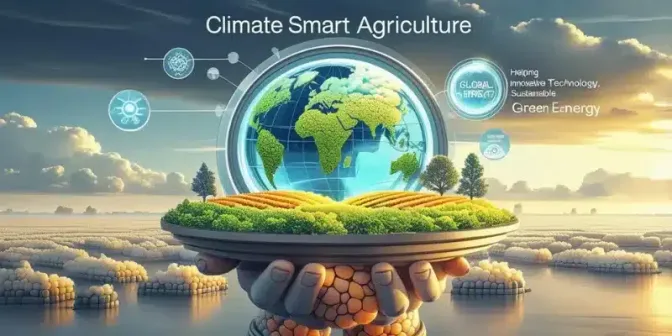
Agriculture is facing bigger pressure as the global population moves toward 9.7 billion by 2050. Rising food demand, unpredictable weather, and drought risks make traditional farming harder to rely on for long-term food security.
Climate Smart Agriculture helps agribusinesses build more resilient and sustainable farming systems. Based on the recent research from Researchgate, the adoption of smart farming technologies in Malaysia highlights that user intention is driven primarily by ease of use and the presence of strong supporting infrastructure.
By combining climate-smart practices with digital tools, agribusinesses can improve productivity, reduce environmental risks, and stay prepared for future farming challenges.
Key Takeaways
Understanding the smart agriculture is an approach that helps farmers produce food more sustainably while dealing with the impact of climate change.
The Three Pillars of Climate Smart Agriculture, including : Increasing Productivity, Adapting, and Removing Greenhouse Gas Emissions
Key Practices and Techniques in Climate Smart Farming have to get translated into a practical results. Requires agronomic techniques that optimize ecosystem properties
The Role of Technology in Modern Farming have evolved into sophisticated data driven ecosystems accelerated by the integration of several advanced technologies
Understanding the Core of Climate Smart Agriculture
Climate smart agriculture is an approach that helps farmers produce food more sustainably while dealing with the impact of climate change. It focuses on three main goals: improving productivity, helping farms adapt to changing weather conditions, and reducing greenhouse gas emissions where possible.
Instead of following one fixed method, climate smart agriculture uses practices that fit local conditions, such as better water management, healthier soil practices, climate-resilient crops, and more efficient use of inputs. This is why it is often seen as a practical way to protect both farm output and long-term environmental stability.
The Three Pillars of Climate Smart Agriculture
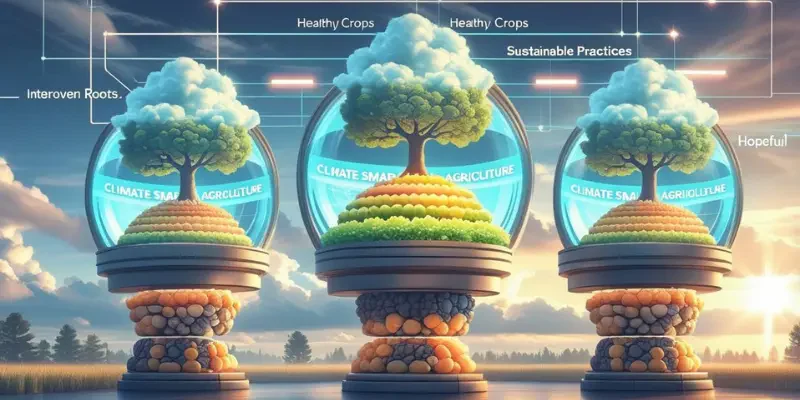
Truly climate smart initiatives address three interconnected objectives simultaneously to balance food security with environmental health. These pillars guide all policies and technological interventions within the framework.
Pillar 1: Increasing Productivity and Incomes
To meet 2050 food demands, output must rise significantly without clearing new land. Sustainable intensification focuses on producing more nutrition and income from existing resources. By utilizing high yielding varieties and precise nutrient management, farmers improve profit margins. This economic boost creates a positive feedback loop where growers reinvest in sustainable technologies.
Pillar 2: Adapting and Building Resilience
This pillar builds the capacity to withstand climate shocks and long term shifts. Adaptation is highly localized: arid regions prioritize drought tolerant crops while coastal areas adopt saline resistant varieties. Resilience also requires systemic support such as early warning systems and agricultural insurance to protect farming communities from catastrophic financial loss.
Pillar 3: Reducing and Removing Greenhouse Gas Emissions
Mitigation targets a reduction in emissions intensity per unit of food produced. Strategies focus on lowering methane from livestock and rice plus nitrous oxide from fertilizers. Agriculture also serves as a carbon sink through agroforestry and cover cropping, which effectively pull carbon dioxide from the atmosphere to sequester it in the soil.
Key Practices and Techniques in Climate Smart Farming
Translating theory into practical results requires agronomic techniques that optimize ecosystem properties. While specific combinations vary by region, several core strategies have proven effective globally.
Soil and Water Management Strategies
Conservation agriculture relies on minimum soil disturbance (no till), permanent organic cover, and species diversification. Avoiding tillage protects soil biodiversity and enhances moisture retention plus carbon sequestration. Efficient water management replaces flood irrigation with precision drip systems or micro sprinklers to reduce evaporation. Landscape tools like swales plus the Alternate Wetting and Drying (AWD) method for rice optimize moisture while lowering methane emissions.
Crop Diversification and Genetic Innovation
Moving beyond monocultures reduces vulnerability to climate shocks and pest outbreaks. Spreading risk through temporal crop rotations and spatial intercropping ensures a stable harvest during extreme weather. Complementary genetic innovation utilizes biotechnology to develop climate smart crops. These resilient varieties tolerate heat, salinity, and drought, securing food production as optimal growing zones shift.
Agroforestry and Integrated Livestock Management
Agroforestry integrates trees as windbreaks and carbon sinks to protect soil and crops. Techniques like alley cropping or silvopasture maximize land efficiency plus biodiversity. Integrated livestock management focuses on rotational grazing to prevent overgrazing and enhance soil organic matter. Furthermore, anaerobic digesters convert manure into renewable biogas, while improved animal genetics reduce the overall environmental footprint of livestock.
The Role of Technology in Modern Farming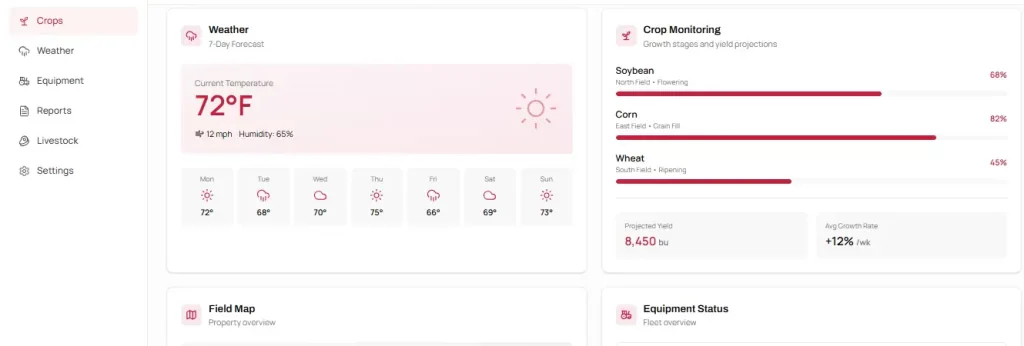
The practical effectiveness of climate smart agriculture depends heavily on the quality of data that farmers and operators can access and act on. Three layers of technology are now central to how this works in modern farm operations.
Field-level monitoring uses lot soil sensors, weather stations, and crop canopy imagery to generate continuous data on moisture levels, temperature, and plant health. This replaces seasonal guesswork with real-time visibility-allowing intervention before a problem becomes a yield loss.
Precision input management uses GPS-guided machinery and Variable Rate Technology (VRT) to adjust fertiliser, seed, and water application rates automatically across different zones within a field. In practice, this means high-productivity areas receive what they need, and lower-potential zones are not over-dosed – reducing both input waste and nitrous oxide emissions from excess nitrogen.
Farm management software ties these layers together. A centralised agriculture ERP platform connects field data with procurement records, cost tracking, and financial planning-giving management a single view of how operational decisions are affecting both yield performance and input expenditure. Without this integration, field data often stays isolated from business decisions. which limits the practical value of the sensors and machinery in place.
Economic Implications and Financial Sustainability
Transitioning to Climate Smart Agriculture (CSA) is more than an environmental pivot; it is a fundamental restructuring of an agribusiness’s financial DNA. While conventional farming often relies on a cycle of high recurring expenses, a climate-smart framework shifts the focus toward long-term technological assets that build resilience.
Understanding this economic evolution, specifically the move from high variable operational costs to strategic upfront capital investments is essential for ensuring that digital adoption leads to genuine, long-term financial sustainability.
The following table provides a comparative breakdown of how CSA redefines the traditional economic landscape, transforming reactive spending into proactive financial growth
| Economic Factor | Conventional Approach | Climate Smart (CSA) Solution | The Financial Impact |
|---|---|---|---|
| Cost Profile | Higher recurring variable costs for seeds, fuel, and chemical fertilizers. | Increased fixed costs through initial investments in smart machinery and tech. | A strategic shift from high OPEX to long-term CAPEX efficiency. |
| Operational Math | Heavy reliance on a balanced fixed cost vs variable cost structure with high waste. | Optimized input usage via precision agriculture and automated irrigation. | Drastic reduction in the long-term cost of water, fuel, and raw materials. |
| Risk Profile | High vulnerability to climate shocks, leading to potential total income loss. | Built-in resilience through enhanced soil health and water retention. | Acts as a natural insurance policy, protecting income during extreme weather. |
| Revenue Model | Singular income stream dependent entirely on physical crop yield. | Diversified income through carbon credits and performance-based incentives. | Access to lucrative carbon markets and preferential green loan rates. |
Enhancing Operational Efficiency in Agriculture
Environmental sustainability and operational efficiency are directly connected in climate smart agriculture. Waste in water, fertilizer, or energy directly increases greenhouse gas emissions and financial losses. Optimizing every operational aspect is a core tenet of this approach to ensure both ecological health and economic success.
Machinery and Overall Equipment Effectiveness
Maximizing agricultural machinery productivity is essential for reducing fossil fuel consumption. Managers often utilize overall equipment effectiveness (OEE) to measure asset utility. This metric evaluates Availability, Performance, and Quality to ensure machines run reliably at maximum speed without producing defective output.
Boosting Agricultural OEE through Technology
Applying OEE to farming prevents crop spoilage caused by machine breakdowns and fuel waste from poorly calibrated equipment. Implementing preventative maintenance and IoT sensors boosts agricultural efficiency. Higher OEE results in less fuel burned per ton of crop, aligning operational reliability with climate smart goals.
Efficiency in Post-Harvest Management
Operational efficiency also encompasses post harvest management to combat global food waste. Utilizing cold chain technologies and optimized transportation routes prevents the squandering of resources like water and land. Reducing supply chain waste effectively increases the global food supply without expanding production footprints.
Industry Use Cases of Climate Smart Agriculture
Row Crops and Precision Technology
Large scale agribusinesses utilize variable rate technology (VRT) to optimize fertilizer application. By applying nutrients exactly where and when needed, operations drastically reduce Nitrous Oxide emissions while lowering input costs. This data driven approach maintains high yields and proves that ecological stewardship directly supports profitability.
Livestock and Waste Management
Dairy operations address methane emissions through anaerobic digesters that convert animal waste into renewable biogas for farm use. This provides a decentralized energy source while preventing greenhouse gas release. Additionally, seaweed feed additives can reduce bovine Methane production by over 80 percent without impacting milk quality or animal health.
Smallholder Resilience and Agroforestry
Farmers in the Global South employ agroforestry by intercropping shade trees with coffee or cocoa. This method stabilizes microclimates and prevents soil erosion during heavy rains. Beyond protecting crops from heat stress, timber and fruit yields provide a vital economic safety net for vulnerable farming communities.
Step-by-Step Implementation Steps for Farmers and Agribusinesses
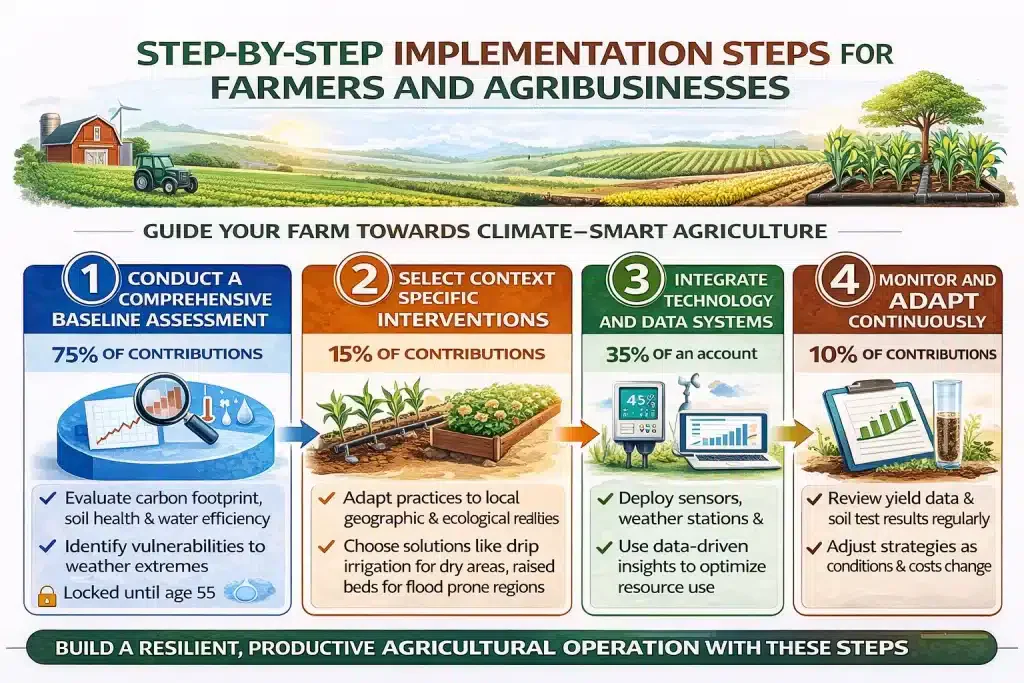
Step 1: Conduct a Comprehensive Baseline Assessment
Evaluate current carbon footprints, soil health, and water efficiency to establish a benchmark. This data identifies historical vulnerabilities to weather extremes and serves as the foundation for measuring the success of future interventions.
Step 2: Select Context Specific Interventions
Choose practices tailored to geographic and ecological realities rather than universal models. For example, arid regions should prioritize subsurface drip irrigation, while flood prone valleys benefit from raised beds and cover cropping to manage drainage.
Step 3: Integrate Technology and Data Systems
Deploy soil sensors, automated weather stations, and management software to enable real time monitoring. This technological backbone replaces historical guesswork with data driven decisions, ensuring resources are utilized with maximum efficiency.
Step 4: Monitor and Adapt Continuously
Review yield data and soil test results regularly to refine strategies. Climate smart agriculture is an iterative process requiring flexibility to adjust techniques as environmental patterns and input costs shift over time.
Common Mistakes and Challenges to Avoid
Climate smart agriculture can improve farming resilience, but poor planning may slow down adoption. Here are common mistakes and challenges to avoid:
1. Using a one-size-fits-all approach
Methods from other regions may not work in local farming conditions. Each practice should match the soil, weather, crop type, and farm capacity.
2. Ignoring upfront costs
Tools like sensors, precision irrigation, and no-till equipment need proper budgeting before implementation.
3. Expecting instant results
Soil recovery, water efficiency, and biodiversity improvement take time, often across several planting seasons.
4. Lack of technical support
Without training and expert guidance, farmers may apply climate smart practices incorrectly.
5. Low user readiness
New systems must be easy to use, supported by clear workflows, and backed by strong infrastructure.
Advanced Practices Shaping the Future of Climate Smart Agriculture
1. AI and machine learning
Drive farm management during the climate crisis. Processing satellite imagery and soil data produces precise predictive models. Farmers utilize these insights to anticipate pests and optimize harvests while accurately mitigating extreme weather risks.
2. CRISPR and genomic editing
Accelerate crop resilience beyond traditional breeding speeds. These techniques create varieties tolerant to salinity, heat, and drought. Such climate proofed seeds secure global food supplies in regions where staple crops frequently fail.
3. Blockchain provides transparency
For climate smart agriculture through carbon sequestration tracking. Immutable ledgers record environmental data from seed to harvest. Verifiable records unlock carbon credit markets, ensuring sustainable transitions are both ecologically vital and highly profitable.
Conclusion
Balancing productivity, adaptation, and mitigation provides a roadmap through population and climate pressures. Data-driven ecosystems transform farms from climate problems into global solutions. This shift ensures long-term viability in a volatile world.
Transitioning requires moving from high variable costs toward strategic technology investments. AI and specialized systems act as insurance policies against potential crop failure. Initial hurdles like upfront costs are outweighed by optimized margins and carbon market revenues. These investments secure a sustainable financial future for the enterprise.
The future of farming combines ecosystem-based practices with digital technology. For businesses planning this shift, a free demo can help them see how the right system supports smarter and more sustainable agribusiness operations.

Frequently Asked Questions About Climate Smart Agriculture
While both prioritize sustainability, Climate Smart Agriculture specifically focuses on the triple challenge of increasing productivity, building climate resilience, and mitigating greenhouse gas emissions. Organic farming emphasizes the elimination of synthetic inputs and chemicals. Climate Smart Agriculture often integrates advanced technologies like GPS and AI which may or may not be used in traditional organic systems.
Smaller operations can start with low cost interventions like mobile based weather alerts or simple soil moisture probes. Cooperative models allow groups of farmers to share the costs of expensive equipment like drones or centralized ERP platforms. Phased implementation allows for gradual technology adoption as profit margins improve from early efficiency gains
Practices like agroforestry and cover cropping create diverse habitats for beneficial insects and local wildlife. By reducing chemical runoff and soil erosion, these methods protect nearby water sources and encourage a healthier natural ecosystem. This holistic approach ensures that the farm thrives as a part of the surrounding environment rather than an isolated monoculture.
Predictive analytics and machine learning can forecast pest outbreaks by analyzing weather patterns and humidity levels. Early detection allows farmers to use targeted biological controls or precise applications before an infestation spreads. Genetic innovation also provides varieties with natural resistance to diseases that are becoming more common due to rising temperatures.