









 Limited to 100 registrants

In today’s complex global economy, supply chains have evolved from linear transactions into intricate webs. This shift has elevated Supplier Relationship Management (SRM) from a back-office task to a core strategic imperative, where mastering partnerships ensures business continuity and a significant competitive edge.
Effective SRM transcends simple price negotiations, Based on a recent research by Malaysian Journal of Industrial Technology, SRM is focusing on long-term collaboration to unlock hidden efficiencies, mitigate risks, and drive innovation. In volatile markets, these strong professional bonds are essential for navigating crises and capitalizing on new opportunities.
This guide explores SRM’s strategic importance through frameworks like the Kraljic Matrix, risk mitigation, and KPIs. It equips procurement leaders with the technology and insights needed to build resilient, innovative, and high-value supplier partnerships
Key Takeaways
Supplier relationship management (SRM) is a strategic approach to managing supplier interactions in a way that supports business goals, improves supplier performance, and creates long-term value.
In today’s business environment, supplier relationship management plays an important role in helping companies build stronger, more resilient supply chains.
Kraljic Matrix is a matrix that categorizes suppliers into four quadrants based on two dimensions: profit impact (how much the supplier contributes to the bottom line) and supply risk (how difficult it is to replace the supplier or the item). a structured approach for managing supplier interactions.
Procurement software helps teams manage supplier data, purchase requests, approvals, and contract records in one place, making supplier coordination easier and more consistent.
What Is Supplier Relationship Management?
Supplier relationship management (SRM) is a strategic approach to managing supplier interactions to support business goals, improve supplier performance, and create long-term value. Instead of focusing only on price, SRM helps companies build stronger supplier partnerships across the entire relationship lifecycle.
As procurement shifts from low-cost buying to strategic sourcing, SRM helps businesses improve quality, reduce risk, control total costs, and support innovation. With better transparency, trust, and coordination, companies can strengthen strategic procurement activities and build a more stable supply chain.
SRM vs. Supplier Management
Supplier relationship management and supplier management are often used interchangeably, but they are not exactly the same. Supplier management focuses more on operational tasks, such as maintaining supplier records, tracking contracts, monitoring delivery status, and ensuring suppliers meet basic requirements.
SRM goes deeper by focusing on long-term collaboration, supplier performance, risk reduction, innovation, and strategic value. For Malaysian businesses, this matters because supplier relationships can affect cost control, delivery timelines, product quality, SST-related documentation, and business continuity. A company may use supplier management to track daily transactions, but it needs SRM to build stronger partnerships with critical suppliers and improve long-term supply chain stability.
Supplier Relationship Management Examples
Supplier relationship management can look different across industries because every sector has different supplier risks, quality needs, and operational priorities. In Malaysia, SRM is especially useful for businesses that depend on stable supply, accurate documentation, and consistent supplier performance.
- In manufacturing: SRM helps companies work closely with raw material, packaging, and component suppliers. For example, a manufacturer in Penang may review supplier performance regularly to prevent production delays, reduce quality issues, and secure alternative supply when demand changes.
- In retail and F&B: SRM helps businesses maintain product availability, freshness, and stable pricing. A restaurant group in Kuala Lumpur may rely on trusted food suppliers to manage delivery timing, ingredient quality, and price changes during peak demand.
- In construction: SRM supports better coordination with subcontractors, material suppliers, and equipment providers. Since project delays can affect budgets and client commitments, stronger supplier relationships help teams manage timelines, documentation, and site requirements more consistently.
- In healthcare and pharmaceuticals: SRM plays an important role in product quality, traceability, and compliance. Businesses need reliable suppliers for medical equipment, medicine, or safety-related products, where late delivery or poor quality can create serious operational risks.
Strategic Importance of Procurement in Modern Business
In today’s business environment, procurement has evolved far beyond simple purchasing. It now plays a critical role in helping companies build stronger, more resilient supply chains through effective supplier relationship management. With ongoing disruptions such as pandemics, geopolitical tensions, and market volatility, modern procurement teams must go beyond cost negotiation and focus on supplier collaboration, risk mitigation, and long-term value creation.
"Anchors bring standards, predictability and volume. Vendors bring speed, technical expertise, ingenuity and talent. When those strengths work in rhythm, value is created and more importantly, retained in Malaysia. That is how we build supply-chain resilience and compound national capability."
Strengthening supply chain resilience
Modern procurement functions are responsible for ensuring business continuity during disruptions. By building trusted relationships with key suppliers, procurement teams secure priority support during shortages, delays, or unexpected crises, turning the procurement department into a frontline defense against supply chain shocks.
Enabling strategic sourcing
Strategic sourcing is at the heart of modern procurement. Instead of focusing only on short-term buying decisions, procurement teams now work closely with critical suppliers to evaluate long-term value, stability, and total performance, shifting the function from transactional buying to value-driven partnership management.
Driving innovation through supplier collaboration
Procurement teams are uniquely positioned to tap into supplier expertise. By collaborating with suppliers who bring specialized knowledge, market insights, and technical capabilities, procurement can directly contribute to product innovation, process improvements, and better material choices, positioning itself as a driver of competitive advantage.
Reducing total cost of ownership (TCO)
A mature procurement function does not measure success by purchase price alone. It evaluates the total cost of ownership, addressing hidden cost drivers such as poor quality, late deliveries, process inefficiencies, and unplanned operational expenses. This broader view allows procurement to deliver savings that impact the entire business, not just the purchasing line.
Creating long-term business value
By treating suppliers as strategic partners rather than vendors, procurement teams create sustainable relationships, improve performance across the supply chain, and deliver measurable results over time. This long-term orientation is what transforms procurement from a support function into a core strategic lever for growth.
How to Build an Effective SRM Framework

Building an effective supplier relationship management framework requires a clear structure that aligns supplier strategies with overall business goals. Without defined processes and governance, SRM efforts can become inconsistent and less effective over time.
- Set clear SRM objectives
The first step is to define what the business wants to achieve through supplier relationship management. Common goals include improving supplier performance, reducing supply chain risk, supporting innovation, and strengthening sustainability efforts. - Develop the right processes and tools
After setting objectives, companies need the right processes, systems, and internal support to manage supplier relationships effectively. This includes assigning responsibilities, creating communication workflows, and using technology to organize supplier data. - Create a strong governance structure
Governance is essential in any SRM framework because it defines how the company works with different suppliers. Strategic suppliers may require executive meetings, joint planning, and regular collaboration, while other suppliers may be managed through routine performance reviews. - Ensure accountability and consistency
A clear framework helps both the company and its suppliers understand expectations, solve problems faster, and maintain consistent engagement across the supplier lifecycle.
Supplier Segmentation Strategies
The most widely used tool for supplier segmentation is the Kraljic Matrix. This matrix categorizes suppliers into four quadrants based on two dimensions: profit impact (how much the supplier contributes to the bottom line) and supply risk (how difficult it is to replace the supplier or the item). The four categories are:
Aspect |
Strategic Suppliers |
Leverage Suppliers |
Bottleneck Suppliers |
Non-Critical Suppliers |
Profit Impact |
High | High | Low | Low |
Supply Risk |
High | Low | High | Low |
Strategic Objective |
Build long-term partnership and co-innovate with the supplier. | Maximize commercial value and drive cost savings. | Secure supply continuity and minimize disruption risk. | Maximize administrative efficiency and automate transactions. |
Management Approach |
Joint business planning, shared R&D, multi-year contracts, executive sponsorship. | Competitive bidding, volume consolidation, reverse auctions, performance-based pricing. | Buffer stock, alternative sourcing, long-term supply agreements, continuous risk monitoring. | Catalog buying, P-cards, e-procurement automation, standardized ordering. |
Relationship Style |
Deep, collaborative, trust-based partnership. | Competitive and transactional, with strong buyer leverage. | Close coordination focused on supply security. | Arms-length, fully transactional. |
Example Items |
Custom engine components, proprietary software, critical raw materials. | Packaging, standard electronics, MRO supplies. | Specialty chemicals, niche spare parts, rare certifications. | Office supplies, cleaning services, generic stationery. |
By segmenting the supply base, organizations can tailor their management approach for each category. For example, strategic suppliers might involve joint business planning and shared R&D, while leverage suppliers might be managed through competitive bidding and volume consolidation. This targeted approach ensures that the organization is not over-investing in low-value relationships or under-investing in critical ones.
Mitigating Procurement Risks through SRM
SRM shifts risk management from reactive to proactive, providing the visibility into supplier operations and sub-tier chains needed to identify disruptions early. For modern leaders, mastering procurement risk management is vital for maintaining this oversight.
A robust program addresses financial, operational, reputational, and geopolitical risks. While audits and assessments are standard, trust and open communication are the ultimate tools; when treated as partners, suppliers proactively share issues, enabling collaborative solutions and effective contingency planning.
Common Mistakes and How to Avoid Them
Despite the clear benefits, many SRM programs fail to deliver their full potential. Recognizing these common pitfalls is the first step toward avoiding them:
- The “Price-Only” Trap: Focusing exclusively on cost savings can damage trust and lead suppliers to cut corners on quality or service. To avoid this, balance cost objectives with value-add metrics.
- Lack of Transparency: If a buyer hides information about demand forecasts or strategic shifts, the supplier cannot plan effectively. Open communication is the bedrock of SRM.
- Data Silos: SRM requires a “single version of the truth.” If procurement, finance, and operations are using different data to evaluate a supplier, it leads to confusion and friction. Centralizing supplier data in a dedicated SRM platform or ERP system is essential.
- Ignoring the “Human” Element: SRM is, at its core, about relationships. Relying solely on automated dashboards and ignoring the need for face-to-face (or screen-to-screen) interaction can lead to a breakdown in partnership spirit.
- Short-Termism: Treating SRM as a series of quarterly checkpoints rather than a multi-year strategy. Long-term value often takes time to materialize through joint innovation and process optimization.
How Technology Improves Supplier Relationship Management
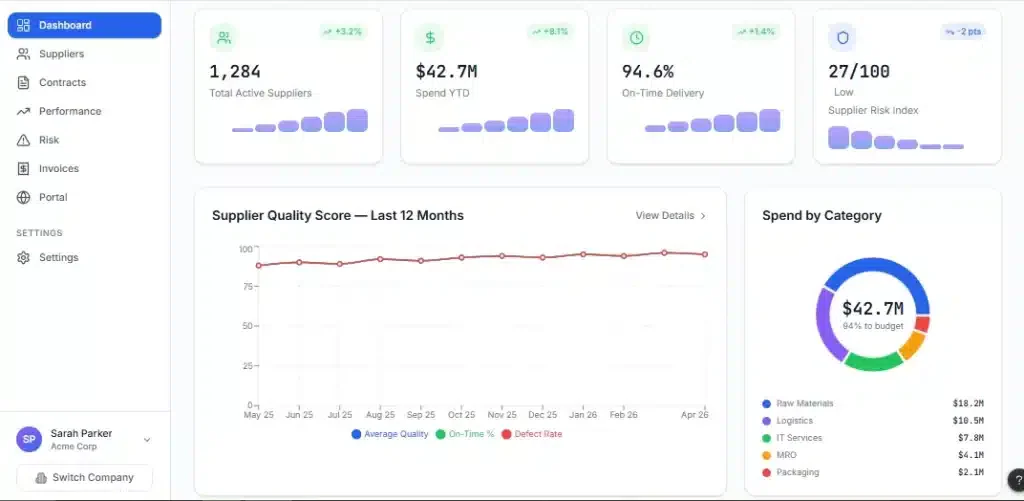
In the digital age, managing complex supplier relationships manually is no longer feasible. Technology plays a pivotal role in enabling effective SRM by providing a “single source of truth” for all supplier-related information. Digital platforms allow organizations to automate routine tasks, track performance in real-time, and facilitate collaboration across borders.
Modern SRM software centralizes supplier data contracts, certifications, and performance ensuring transparency across procurement, finance, and operations. Advanced analytics detect hidden trends, such as quality declines or risky spend concentration, that human observation might miss.
Cloud-based platforms further streamline collaboration via supplier portals, where self-service invoicing and updates reduce administrative overhead. To achieve this synergy, many look for the best procurement system with integrated SRM capabilities. HashMicro offers solutions to optimize these interactions and maintain end-to-end data integrity.
Measuring SRM Success: KPIs and Metrics
As the saying goes, “what gets measured gets managed.” To ensure that an SRM program is delivering value, organizations must establish a set of Key Performance Indicators (KPIs) that track both the health of the relationship and the performance of the supplier. These metrics should be aligned with the overall objectives of the SRM program and shared with the suppliers themselves.
Common performance metrics include:
- On-time delivery (OTD): The percentage of orders delivered on or before the requested date.
- Quality rate: The percentage of goods or services that meet the specified quality standards.
- Cost savings: Reductions in price or total cost of ownership achieved through collaboration.
- Lead time: The time from placing an order to receiving the goods.
However. Performance metrics only tell half the story. Relationship metrics including satisfaction scores, meeting frequency, joint innovation, and dispute resolution speed are equally vital. Tracking both identifies strained partnerships or healthy ones failing targets. This balanced view enables targeted intervention and continuous improvement.
The Future of Supplier Relationship Management
The future of SRM is defined by autonomous procurement, where AI-driven systems manage transactions, allowing humans to focus on strategic relationships and shared assets. Beyond one-on-one management, ecosystem management will orchestrate entire partner networks to solve complex problems collectively, driving value through cohesion.
Viewing suppliers as strategic assets rather than vendors is the ultimate competitive advantage. This fundamental business philosophy ensures companies remain resilient, innovative, and profitable in an increasingly interconnected world.
Conclusion
Supplier relationship management is a journey, not a destination. It requires a long-term commitment, a willingness to change, and a focus on mutual value. By moving beyond transactional thinking and embracing a collaborative approach, organizations can transform their supply chains into a source of sustainable competitive advantage. Whether it’s through better risk management, increased innovation, or optimized costs, the benefits of strong supplier relationships are clear and compelling.
In an increasingly uncertain world, the partnerships we build today will determine our success tomorrow. By investing in SRM, companies are not just managing their suppliers; they are building the foundation for a more resilient, innovative, and successful future. The tools, frameworks, and strategies discussed in this guide provide a roadmap for any organization looking to master this critical discipline and unlock the full potential of its supply base.
FAQ About Supplier Relationship Management
The primary goal of SRM is to maximize the value of supplier interactions by fostering collaboration, reducing total cost of ownership, and mitigating supply chain risks through long-term partnerships.
Traditional procurement is often transactional and focused on the lowest purchase price, whereas SRM is relational and focuses on long-term value, innovation, and shared goals between the buyer and supplier.
Trust enables open communication, which is essential for identifying potential risks early, sharing innovative ideas, and resolving conflicts constructively for mutual benefit.