







Many businesses in Malaysia struggle to identify and convert potential B2B customers because most website visitors leave without sharing their information. To solve this, companies need a more effective B2B lead generation strategy that helps capture buyer intent, attract qualified prospects, and improve conversion opportunities.
This is becoming increasingly important as Malaysia now has over 1.2 million SMEs, contributing 38.9% to the national GDP, according to annual report SME Corp Malaysia. With SMEs making up the majority of businesses in the country, competition continues to grow, pushing companies to adopt smarter lead generation strategies to stay competitive.
This is where a well-structured B2B lead generation strategy becomes not just useful, but essential for sustained growth and market competitiveness in Malaysia.
Key Takeaways
Unlike B2C, B2B lead generation involves longer sales cycles, multiple decision-makers, and highly specific business needs that require tailored messaging at every stage.
The B2B buyer journey follows four distinct stages: Problem Awareness → Solution Research → Vendor Comparison → Internal Approval
A resilient lead generation strategy combines inbound marketing, outbound outreach, and strategic partnerships rather than relying on any single channel
Sustaining a competitive edge depends on how effectively your organization nurtures its most valuable asset: the customer. By centralizing lead management and communication histories within an integrated CRM, your teams can deliver the personalized experiences that drive long-term business growth.

What Is B2B Lead Generation?
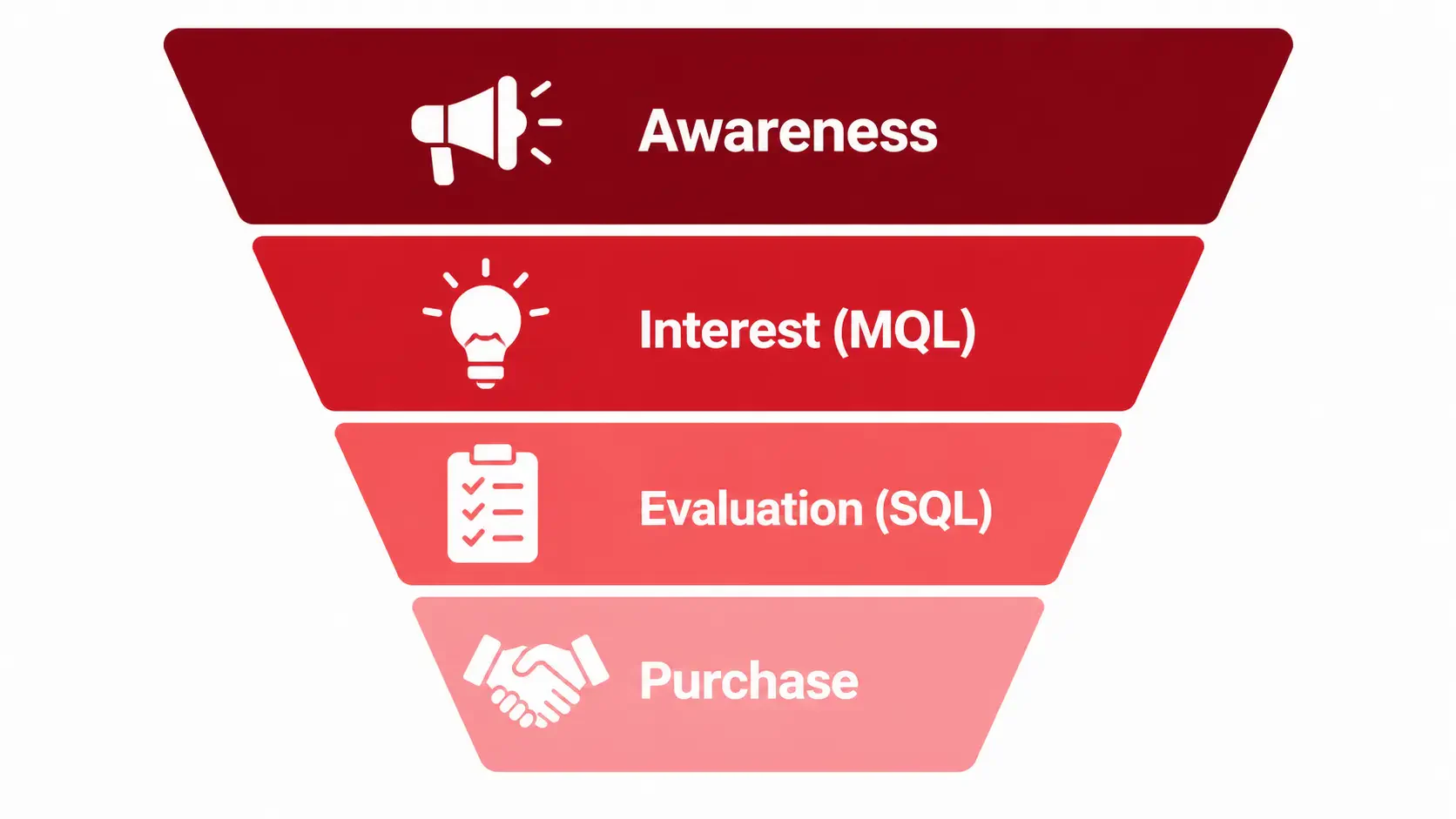
B2B lead generation is the process of finding potential business customers, reaching the right decision-makers, and guiding them toward a purchase. Unlike B2C marketing, which often focuses on individual emotions and quick buying decisions, B2B lead generation involves longer sales cycles, multiple stakeholders, and more specific business needs.
The main objective is not only to gain attention, but also to generate qualified leads that need the offered solution. Businesses can achieve this by understanding customer challenges, creating relevant content, and building trust throughout the buying journey. In Malaysia’s competitive SME market, an effective B2B lead generation strategy plays an important role in supporting consistent business growth.
How the B2B Buyer’s Journey Works?
The B2B buyer’s journey is considerably longer and more complex than the consumer buying process. Before making a purchase, businesses typically pass through several stages:
Problem Awareness → Solution Research → Vendor Comparison → Internal Approval
This is why effective lead generation is not just about attracting attention it is about providing the right information at the right stage.
Moreover, a typical B2B purchase in Malaysia involves multiple decision-makers, including department heads, finance teams, IT leads, and end-users. Each stakeholder has different concerns, from ROI and cost justification to system integration and ease of use. Therefore, businesses need content and messaging that speaks to these different perspectives throughout the process.
Modern B2B lead generation no longer prioritises volume. Today, a smaller number of well-qualified leads is far more valuable than a large list of contacts with no real buying intent. This shift is why businesses increasingly focus on defining a clear Ideal Customer Profile (ICP) based on industry, company size, business needs, and buying signals.
Sales and Marketing Alignment in B2B Lead Generation
Strong sales and marketing alignment is essential for improving conversion rates. When both teams operate in silos, marketing may focus on lead volume while sales focuses on lead quality creating a gap that weakens follow-up and hurts overall results.
- Define what a qualified lead looks like:
The first step is agreeing on what makes a lead worth pursuing. Marketing and sales should work together to define clear criteria for qualified leads based on company profile, buyer role, and level of interest. This helps both teams focus on the same target audience.
- Use shared goals and service level agreements:
To improve accountability, businesses can set clear expectations between marketing and sales through shared KPIs or service level agreements. For example, marketing may be responsible for delivering qualified leads, while sales is expected to follow up within a specific timeframe. - Maintain regular communication:
Alignment also depends on continuous feedback. Regular meetings between sales and marketing can help both teams review lead quality, discuss buyer objections, and improve messaging based on real market insights.
By improving sales and marketing alignment, businesses can generate better leads, increase conversion rates, and create a more effective B2B lead generation process.
Step-by-Step B2B Lead Generation Strategy
Building an effective B2B lead generation strategy requires a clear process, the right tools, and strong alignment between marketing and sales. Instead of focusing only on lead volume, businesses should create a system that attracts qualified prospects and moves them through the sales funnel more efficiently.
1. Define your ideal customer profile:
Start by identifying the type of companies most likely to buy from you. A clear ideal customer profile should include industry, company size, business needs, and buying behavior. This helps improve targeting and supports a more effective B2B lead generation process.
2. Align marketing and sales teams
Make sure both teams agree on what counts as a qualified lead. Defining clear MQL and SQL criteria helps create a smoother handoff and improves lead follow-up.
3. Use the right lead generation tools
A strong B2B lead generation strategy depends on the right tech stack. CRM systems, marketing automation platforms, lead capture forms, and tracking tools all help businesses identify, manage, and nurture potential leads more effectively.
4. Create content for each stage of the buyer’s journey
Different prospects need different types of content. Use blogs, case studies, whitepapers, checklists, and landing pages to support awareness, consideration, and decision-making.
5. Launch, measure, and improve
Once campaigns go live, track performance regularly. Monitor metrics such as lead quality, conversion rate, and cost per lead to improve your B2B lead generation efforts over time.
Core B2B Lead Generation Strategies 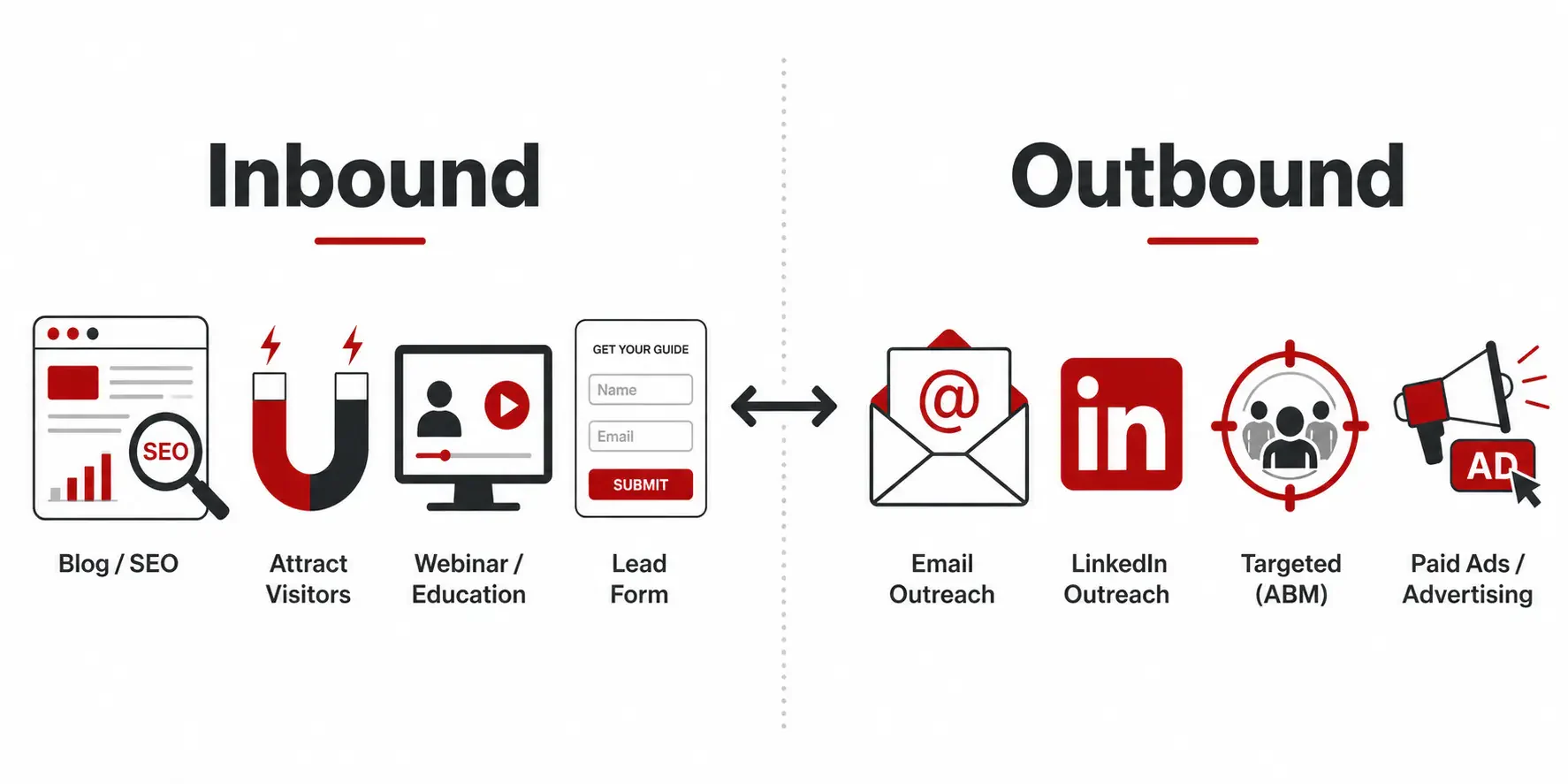
A strong B2B lead generation strategy should use more than one channel. Relying on a single source of leads can be risky because market trends, search algorithms, and buyer behavior can change over time. To build a steady pipeline, businesses need to reach potential customers across different touchpoints and attract them with relevant content and offers.
1. Inbound Marketing: Attracting the Right Prospects
Inbound marketing draws potential customers in by offering genuine value, rather than interrupting them with unsolicited messages.
- Content marketing and SEO:
High-quality content is one of the most important parts of inbound lead generation. Blog articles, guides, case studies, and research-based content can help businesses rank for keywords that show buying intent.To make this content more effective, businesses also need strong customer segmentation so each piece of content matches the needs of specific industries, company sizes, and buyer personas.
- Gated content and lead magnets:
While blog content is useful for attracting traffic, lead magnets help convert visitors into leads. Businesses can offer valuable resources such as reports, templates, calculators, or webinar recordings in exchange for contact details. The more relevant and useful the offer is, the higher the chance of conversion. - Webinars and virtual events:
Webinars are a useful way to generate B2B leads because they allow businesses to share expertise, explain solutions, and engage directly with potential buyers. They also help teams understand common questions, challenges, and objections from their target audience.
2. Outbound Marketing: Reaching Prospects Directly
While inbound marketing creates organic pull, outbound marketing accelerates pipeline creation by proactively targeting specific accounts.
- Email Outreach & Cold Prospecting
Email remains one of the most effective outbound channels when done correctly. The key is personalisation tailoring messages based on industry, company needs, and job roles rather than sending generic blasts. - LinkedIn & Professional Networking
LinkedIn is especially valuable in Malaysia’s B2B landscape. Sales and marketing teams can use it to connect with decision-makers, share industry insights, and initiate conversations with high-potential prospects. - Account-Based Marketing (ABM)
For businesses targeting high-value clients, ABM is particularly powerful. Instead of reaching a broad audience, this approach concentrates effort on a specific list of target companies and customises every touchpoint content, ads, and outreach to match each account’s challenges and goals. - Paid Campaigns & Retargeting
Paid advertising accelerates outbound reach by placing your brand directly in front of targeted audiences. Retargeting campaigns re-engage visitors who have already interacted with your brand, significantly increasing conversion likelihood.
3. Strategic Partnerships and Ecosystem Referrals
Beyond direct marketing, the most resilient B2B organisations leverage their partner ecosystems. When a trusted vendor or complementary service provider recommends your solution to an existing client, the trust transfers shortening the sales cycle and increasing close rates.
For example, if you provide inventory management software, partnering with logistics consultants or warehouse hardware vendors in Malaysia can unlock a steady stream of warm referrals.
Key Metrics to Measure B2B Lead Generation Success
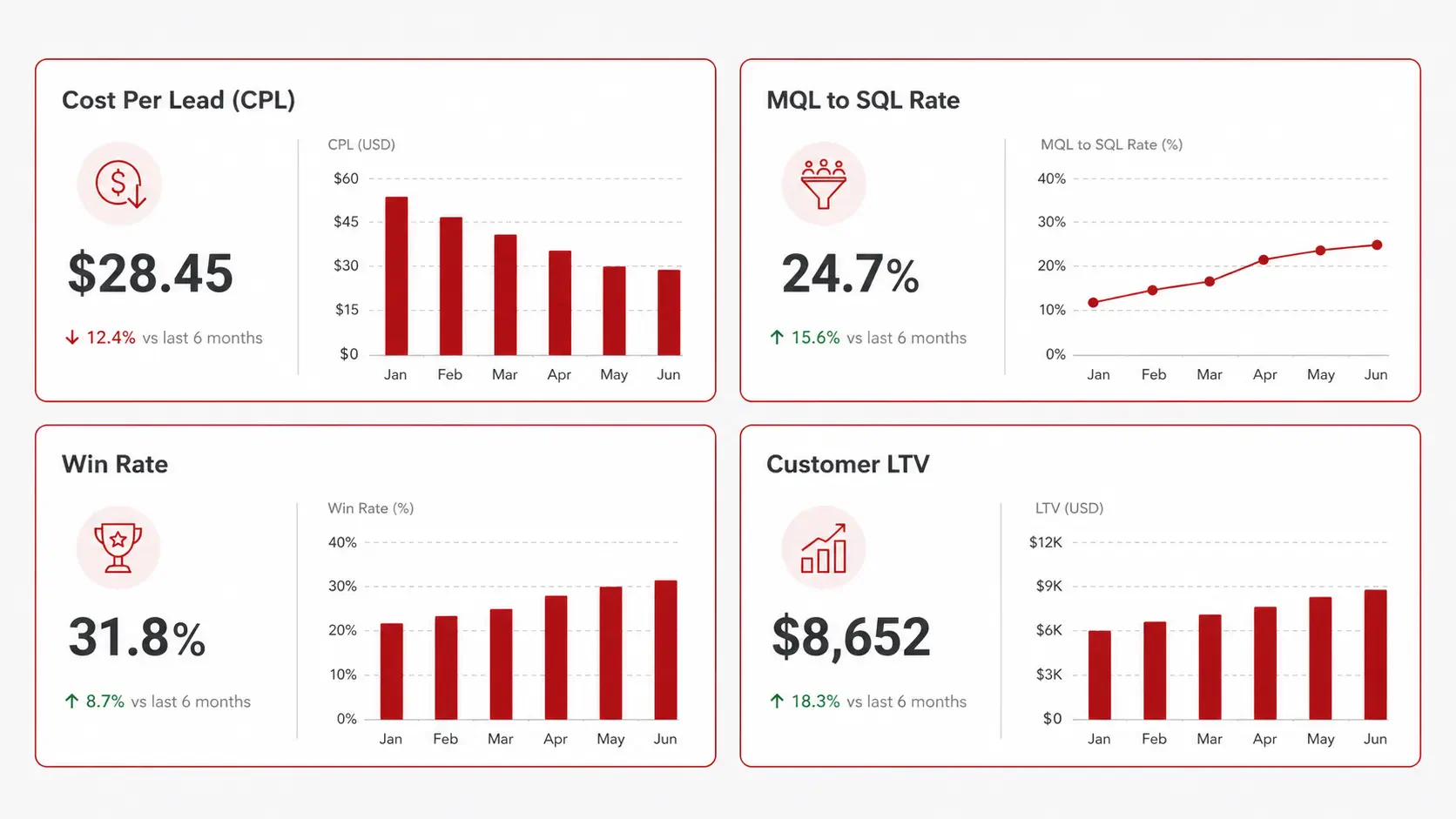
In the digital age, B2B lead generation is a highly quantifiable discipline. However, the sheer volume of available data can be overwhelming. To optimize performance and demonstrate return on investment, revenue leaders must focus on tracking the right Key Performance Indicators (KPIs) at every stage of the funnel.
1. Top-of-Funnel Metrics
At the top of the funnel, the focus is on volume and initial engagement. Key metrics include:
- Website Traffic and Source: Understanding how many people are visiting your site and whether they are arriving via organic search, paid advertising, social media, or referral links.
- Conversion Rate: The percentage of website visitors who take a desired action, such as filling out a form to download a whitepaper or registering for a webinar.
- Cost Per Lead (CPL): The total cost of a specific marketing campaign divided by the number of prospects generated. This helps determine the financial efficiency of different acquisition channels.
2. Middle-of-Funnel Metrics
As prospects move deeper into the pipeline, the focus shifts to qualification and progression:
- MQL to SQL Conversion Rate: The percentage of Marketing Qualified Leads that are accepted by sales and converted into Sales Qualified Leads. A low conversion rate here often indicates a misalignment in qualification criteria between the two departments.
- Time to Conversion: The average amount of time it takes for a newly acquired contact to become a qualified sales opportunity. Tracking this helps in forecasting and identifying bottlenecks in the nurturing process.
3. Bottom-of-Funnel and Revenue Metrics
Ultimately, the success of any B2B lead generation strategy is judged by its impact on the bottom line:
- Win Rate: The percentage of qualified sales opportunities that result in a closed-won deal.
- Customer Acquisition Cost (CAC): The total cost of sales and marketing efforts required to acquire a single new customer. This is a critical metric for evaluating the overall sustainability of the business model.
- Customer Lifetime Value (CLV): The total projected revenue a customer will generate throughout their relationship with your company. Comparing CLV to CAC is the ultimate test of business health; ideally, CLV should be at least three times higher than CAC.
By obsessively tracking these metrics within a robust analytics dashboard, organizations can move away from relying on gut feelings and instead make data-driven decisions.
Conclusion
Mastering B2B lead generation requires a strategic blend of inbound content, targeted outbound outreach, sales and marketing alignment, and disciplined metric tracking. For Malaysian businesses especially SMEs navigating a rapidly digitising economy building a structured, scalable lead generation system is no longer optional.
By understanding the buyer’s journey, defining clear lead qualification criteria, and continuously measuring what works, organisations can transform their sales pipeline from unpredictable to consistently high-performing. The right tools, particularly an integrated CRM and ERP system, make this process significantly more manageable and scalable as your business grows.
If you’re still comparing options and want to see how a CRM handles your sales process, a free consultation with our team can help clarify which setup makes sense for your business.

FAQ About B2B Lead Generation
B2B lead generation in Malaysia refers to the process of identifying and attracting potential business clients such as SMEs, enterprises, or government-linked companies who may be interested in your products or services. Given that Malaysia has over 1.2 million SMEs, effective B2B lead generation strategies help vendors reach the right decision-makers at the right time.
A Marketing Qualified Lead (MQL) is a prospect who has shown early interest such as downloading a guide or signing up for a webinar but is not yet sales-ready. A Sales Qualified Lead (SQL) has demonstrated stronger buying intent, such as requesting a demo or asking for pricing. Converting MQLs to SQLs is a key goal of any B2B lead generation strategy.
Results vary by channel. Paid advertising and outbound email outreach can generate leads within days, while inbound strategies like SEO and content marketing typically take 3–6 months to build significant momentum. Most Malaysian businesses see measurable pipeline growth within 90 days of launching a structured B2B lead generation programme.
Yes, when done correctly. Cold email works best when it is highly personalised, targets a clearly defined Ideal Customer Profile, and offers immediate value rather than a generic sales pitch. Malaysian businesses should also ensure their outreach complies with the Personal Data Protection Act 2010 (PDPA) when handling prospect data.
Track key metrics such as Cost Per Lead (CPL), MQL-to-SQL conversion rate, sales cycle length, and Customer Acquisition Cost (CAC). If your LTV:CAC ratio is 3:1 or higher, your strategy is likely sustainable. Regularly reviewing these KPIs ideally through a CRM dashboard helps you identify what is working and where to improve.