









 Limited to 100 registrants

HR software in Malaysia is becoming essential for managing payroll, attendance, and employee data more efficiently. Payroll mistakes, scattered leave requests, and inconsistent records can quickly turn routine HR work into daily frustration.
With many platforms offering similar features, choosing the right system can be difficult. According to The Edge Malaysia, many SMEs still manage payroll manually with Excel, which can increase errors and slow daily HR work.
This article reviews the best HR software in Malaysia for 2026, helping you compare features, pricing, and use cases to find the right fit for your business.
Key Takeaways
HR software helps simplify payroll, attendance, leave, and employee records in one system.
With more HRMS options in Malaysia, comparing features and compliance support matters more than ever.
The right HR software depends on your business size, HR priorities, and payroll complexity.
Choosing HR software requires more than comparing feature lists. Malaysian businesses must ensure that the selected system can support their payroll structure, statutory contributions, attendance policies, leave rules, approval workflows, and employee data security.
Top HR Software Shortlist
Here are the top HR software options in Malaysia for 2026, selected based on feature coverage, payroll compliance, and fit for both SMEs and enterprises.


Best Because
Simple payroll and leave management with auto statutory processing.

Best Because
Tailored for Malaysian SMEs with local compliance.
Quick Comparison of Best HR Software in Malaysia
The quick comparison below provides an initial overview of the 20 shortlisted platforms. Use it to identify the most relevant options before reviewing each software’s features, pros, cons, and suitability in the following sections.
| Brand | Best For | Features | Malaysia Support | Pricing |
|---|---|---|---|---|
| HashMicro | Medium to large, multi-site companies | Payroll, attendance, leave, recruitment, performance, ESS | Supports EPF, SOCSO, EIS, and LHDN workflows | Quote-based |
| Kakitangan | Malaysian SMEs | Payroll, leave, claims, employee records | Local statutory payroll support | Public subscription |
| Swingvy | SMEs and distributed teams | Core HR, payroll, leave, claims, ESS | EPF, SOCSO, EIS, and PCB support | Tiered per employee |
| HR2eazy | Local SMEs and mid-market companies | Payroll, attendance, ESS, employee records | EPF, SOCSO, EIS, PCB, and HRD Corp support | Quote-based |
| BrioHR | Growing companies focused on employee development | Core HR, payroll, leave, performance | Malaysian payroll support | Quote-based |
| PayrollPanda | Small businesses needing payroll first | Payroll, payslips, tax and statutory calculations | Strong Malaysian statutory payroll focus | Public plans and limited free tier |
| SAP | Large and multinational enterprises | Core HR, talent, workforce management, payroll, analytics | Malaysia localization depends on implementation scope | Quote-based |
| BOSS | Malaysian businesses needing essential HR tools | Payroll, leave, core HR, training | Designed around local HR requirements | Quote-based |
| factoHR | Companies prioritizing attendance and reporting | Payroll, attendance, core HR, dashboards | Malaysia localization should be verified | Tiered or quote-based |
| altHR | Mobile-first and shift-based SMEs | Leave, rostering, onboarding, ESS, calendar | Strong local HR workflow fit; verify payroll scope | Quote-based |
| Employment Hero | SMEs needing HR, payroll, and hiring | HR, payroll, ATS, learning, engagement | Malaysia support available; confirm selected plan | Tiered or quote-based |
| PeopleHum | Companies focused on engagement and performance | Recruitment, performance, engagement, analytics | Local statutory payroll is not its core strength | Quote-based |
| Oracle | Large enterprises with complex global structures | Core HR, talent, workforce, payroll, analytics | Localization requires appropriate implementation | Quote-based |
| HR2000 | Traditional Malaysian payroll-heavy businesses | Payroll, leave, claims, ESS, bank files | EPF, SOCSO, EIS, LHDN, and local bank formats | Quote-based |
| Talenox | SMEs needing straightforward payroll | Payroll, leave, time tracking | EPF, SOCSO, and PCB support | Public tiers and trial options |
| Apploye | Remote and project-based teams | Time tracking, monitoring, tasks, payroll-ready reports | Malaysian statutory payroll is not a core function | Public per-user plans |
| Omni HR | Growing companies operating across Asia | Core HR, payroll, attendance, expense, ATS, performance | EPF, SOCSO, EIS, PCB, and LHDN reporting readiness | Modular per employee; typically annual |
| Info-Tech HRIS | Local mid-sized companies needing full lifecycle HR | Core HR, payroll, onboarding, attendance, career management | EPF, SOCSO, and LHDN support | Quote-based |
| Akrivia HCM | Regional and multi-country companies | Recruitment, attendance, payroll, LMS, performance | Multi-country payroll including Malaysia; verify submission scope | Quote-based |
| GreatDay HR | Mobile-first workforces | Attendance, payroll, ESS, payslips | Verify current Malaysian statutory payroll coverage | Quote-based |
What is HR Software?
HR software refers to any technology designed specifically to help HR teams manage their employees. It combines tasks like hiring, payroll, admin work, employee records, and performance tracking into a single database, giving HR a centralized view of all employee information across the company.
As people become recognized as a company’s most valuable asset, a HR system Malaysia has evolved to simplify administrative tasks while enabling a stronger focus on talent development. With data-driven insights, businesses can now improve both workforce and overall performance.
"HR software helps HR teams handle admin tasks more efficiently while keeping employee data more organized in one system. This makes it easier to manage day to day operations and support better workforce planning"
Why HR Software Is Important for Malaysian Businesses
Running a business in Malaysia comes with unique HR challenges: complex statutory requirements, multi-ethnic workforce management, and rising employee expectations for digital experiences. Here’s why investing in the right HR software is essential:
1. Stay Compliant with Malaysian Labour Laws & Statutory Requirements.
Malaysia’s employment landscape involves multiple regulations include: Employment Act 1955 (amended 2022), EPF, SOCSO, EIS, and LHDN PCB. Manual processes can increase risks of:
- Late submission penalties (up to 10% per month for EPF/SOCSO)
- Audit triggers from incorrect PCB deductions
- Legal disputes from miscalculated overtime or leave
A comprehensive HR system auto-updates with regulatory changes and generates audit-ready reports making compliance automatic, not a constant worry.
2. Save Time & Reduce Costly Human Errors.
HR teams in Malaysia spend an average of 15–20 hours per month just on payroll processing. Common manual pitfalls include double-entry errors, missed probation reviews, and lost leave applications.
HR software automates workflows: attendance flows directly to payroll, leave requests trigger instant approvals, and payslips are distributed digitally. According to a Malaysian case study by Snappymob, the implementation solved approximately 80% of HR operational challenges while reducing payroll processing time by 75%.
3. Improve Employee Experience & Retention
Today's workforce increasingly expects greater flexibility and convenience at work. Data from JobStreet by SEEK Malaysia shows that 45% of employers now provide flexible working arrangements and family-friendly policies, highlighting growing expectations for digital and employee-centric workplace experiences. Key features that can boost satisfaction include:
- Mobile apps for leave requests, payslip access, and profile updates
- Transparent performance tracking with real-time feedback
- Integrated onboarding workflows that reduce first-week confusion
When employees manage their HR needs independently, HR teams shift from administrative tasks to strategic talent development directly impacting retention.
4. Turn Workforce Data into Strategic Insights
Manual records make it hard to answer critical questions like “Which departments have the highest turnover?” or “How will salary increments impact cash flow?”. Modern HR platforms provide real-time dashboards that visualize:
- Headcount trends, attrition rates, and recruitment efficiency
- Payroll cost breakdowns by department or role
- Compliance status across EPF, SOCSO, EIS, and LHDN
These insights empower leadership to make proactive and based on data-driven decisions.
5. Protect Employee Data Under Malaysia’s PDPA
HR teams manage sensitive employee information such as NRIC numbers, bank details, payroll records, medical certificates, attendance logs, and performance data. When this data is stored across spreadsheets, emails, or chat apps, it becomes harder to control access and increases the risk of misuse.
Modern HR platforms help businesses manage employee data more securely through:
- Centralized employee records
- Role-based access permissions
- Audit trails for data updates
These controls support better alignment with Malaysia’s PDPA and help HR teams protect sensitive employee data while keeping daily administration more organized.
6. Support HRD Corp and HRDF Training Requirements
For eligible Malaysian employers, HRD Corp, formerly known as HRDF, plays an important role in employee training and workforce development. Registered employers may need to manage levy-related records, training participation, claim documents, and employee upskilling activities properly.Modern HR software helps businesses manage HRD Corp-related processes through:
- Training records and attendance tracking
- Employee skill and certification history
- Centralized documents for grant and claim support
This helps HR teams connect compliance, training investment, and workforce development in one organized system instead of managing HRD Corp records separately.
Now that you understand why HR software matters, the next question is: which one fits your needs? Below, we’ve shortlisted the top-performing HR systems in Malaysia evaluated across compliance, usability, automation, and local support so you can compare quickly and choose with confidence.
20 Best HR Software in Malaysia for SMEs and Enterprises
As stated before, there are simply too many choices in the market now. Therefore, to help you choose, we’ve curated the top 10 HR software you can implement in Malaysia.
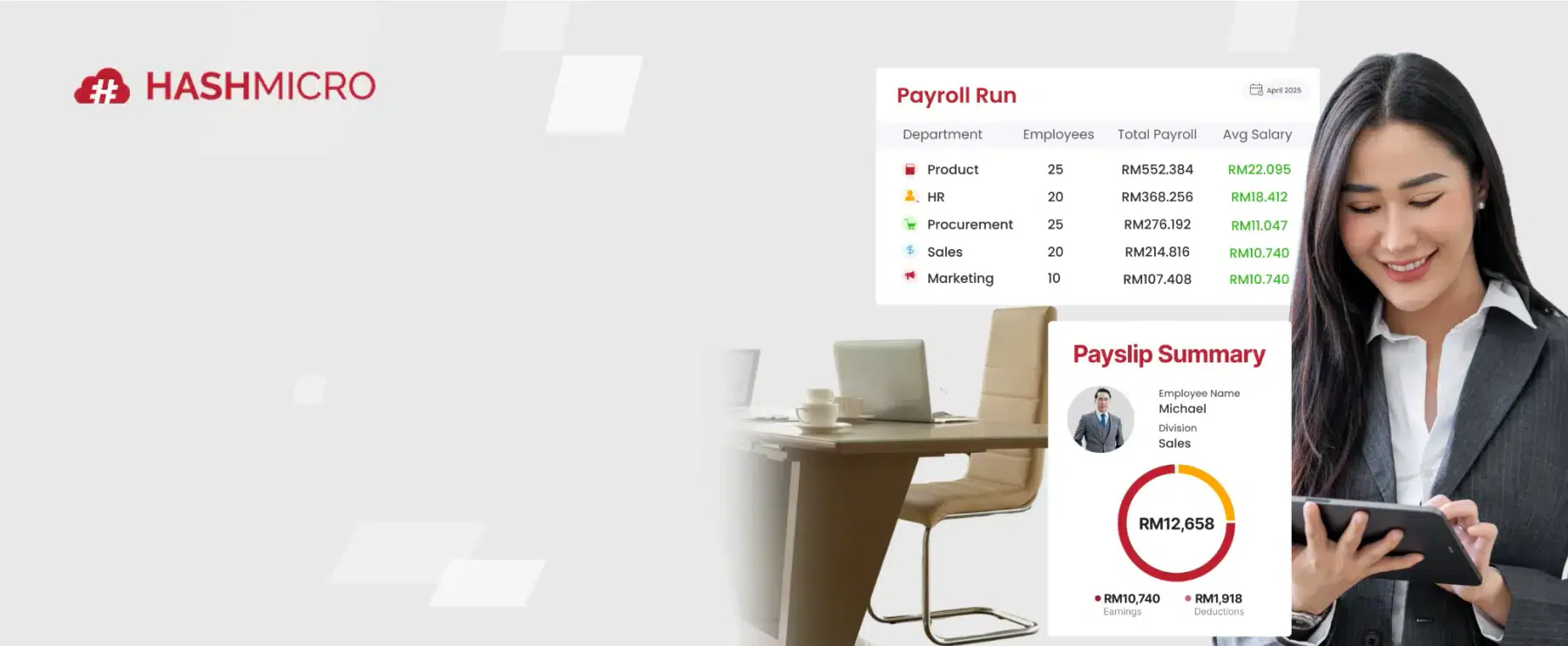
1. HashMicro HR software in Malaysia
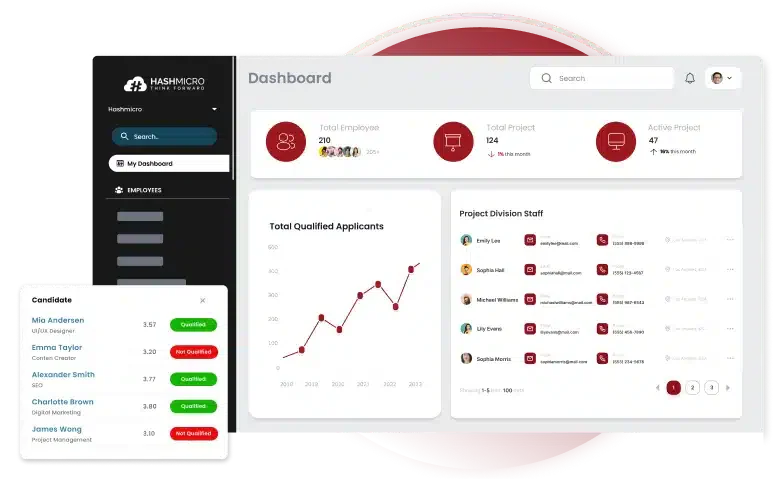
HashMicro is an all-in-one HR software designed to support Malaysian businesses across various industries. It simplifies critical HR tasks like payroll, attendance, leave, and performance management, helping teams save time and reduce manual errors.
With built-in compliance for EPF, SOCSO, EIS, and LHDN, the system helps ensure every payout and report meets Malaysian requirements, accurately and on time.
Trusted by over 2,000 companies in Singapore, Indonesia, the Philippines, and Malaysia, HashMicro adapts to medium to large businesses like retail, manufacturing, logistics, and construction, making it easier to handle everything from shift planning to salary adjustments in one place.
HashMicro key features:
- Employee Self Service: Lets employees manage profiles, leave requests, and payslips in one place.
- Payroll and Compliance Support: Helps businesses handle payroll while staying aligned with EPF, SOCSO, EIS, and LHDN requirements.
- Attendance and Shift Management: Supports attendance tracking, roster planning, and shift scheduling for daily operations.
- Performance and HR Administration: Helps HR teams manage employee records, approvals, and performance related processes more efficiently.
- Reporting and System Integration: Provides clearer HR reporting and supports integration with other business workflows.
Pros Cons Supports EPF, SOCSO, EIS, and PCB payroll requirements Pricing based on customization Connects attendance, overtime, leave, and payroll data Multi-module implementation requires data preparation and user training Supports GPS and facial-recognition attendance for distributed teams May be excessive for small businesses needing only basic payroll Covers recruitment, onboarding, performance, and employee administration GPS and facial-recognition features require clear employee privacy policies Offers configurable approvals and integration with other business modules
HashMicro is built with strong localization for Malaysia, including full compliance with EPF, SOCSO, EIS, and LHDN requirements. It supports multi-industry operations, making it a practical choice for retail, manufacturing, and logistics companies. Its all-in-one system helps businesses manage payroll, attendance, and performance in a single platform.
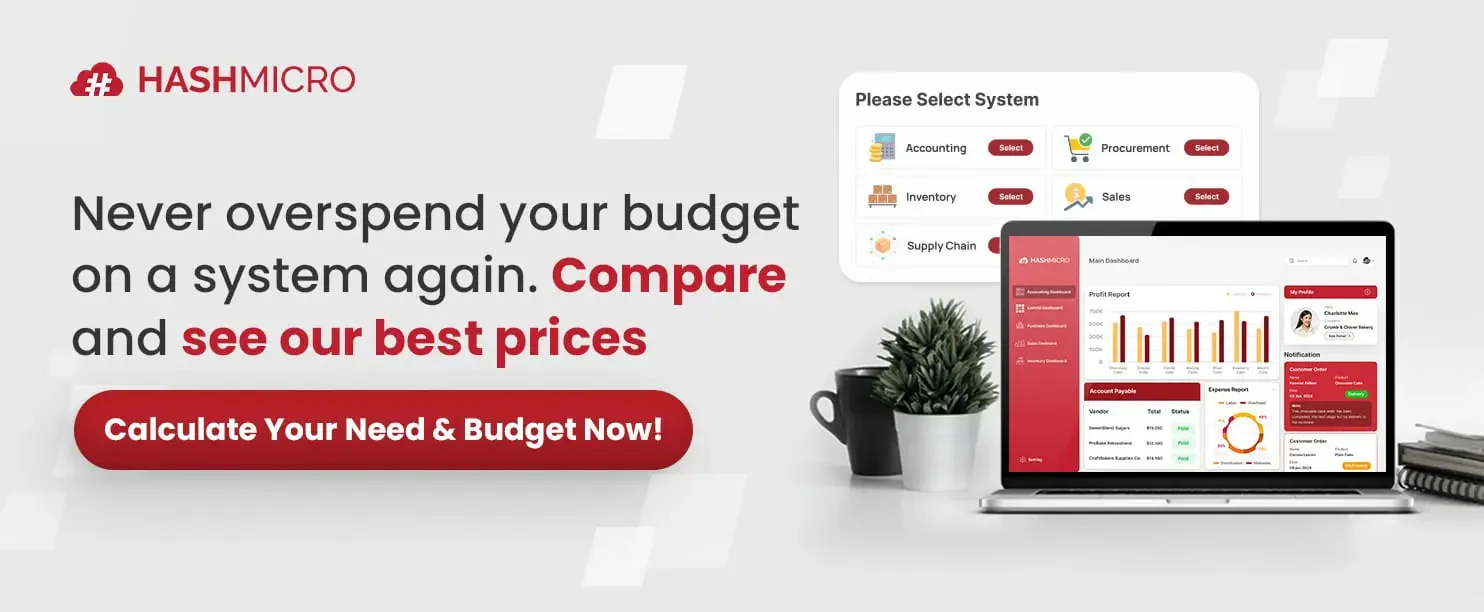
If pricing is one of the factors you are reviewing, the banner below provides a clearer overview of the available plan structure for easier comparison.
2. Kakitangan
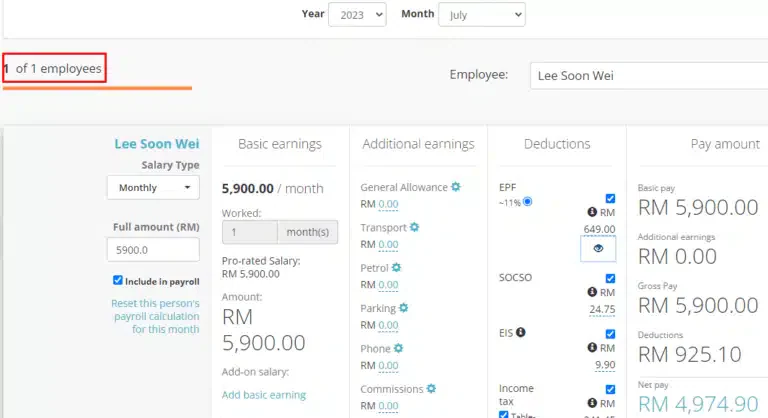 Kakitangan is an employee management system designed to simplify HR processes for companies in Malaysia. It highlights user-friendly features and easy accessibility for both employers and employees.
Kakitangan key features:
- Unified Dashboard: Manage core HR tasks from a single, centralized interface.
- Online Leave Management: Make it easier for staff to apply for leave and for managers to approve requests digitally.
- Automated Payroll: Simplify monthly salary calculations and reduce manual effort in payroll processing.
- E-Claim Module: Let employees submit expense claims digitally, track their status, and get reimbursed faster.
Pros Cons Simple interface for Malaysian SMEs Limited advanced talent management Strong local payroll support Fewer enterprise-level configurations Less suitable for multinational operations
Kakitangan is designed specifically for Malaysian SMEs that need a simple and accessible HR system. It supports essential functions like payroll and leave management while aligning with local employment practices. Its straightforward interface makes it easy for teams to adopt without heavy training.
3. Swingvy
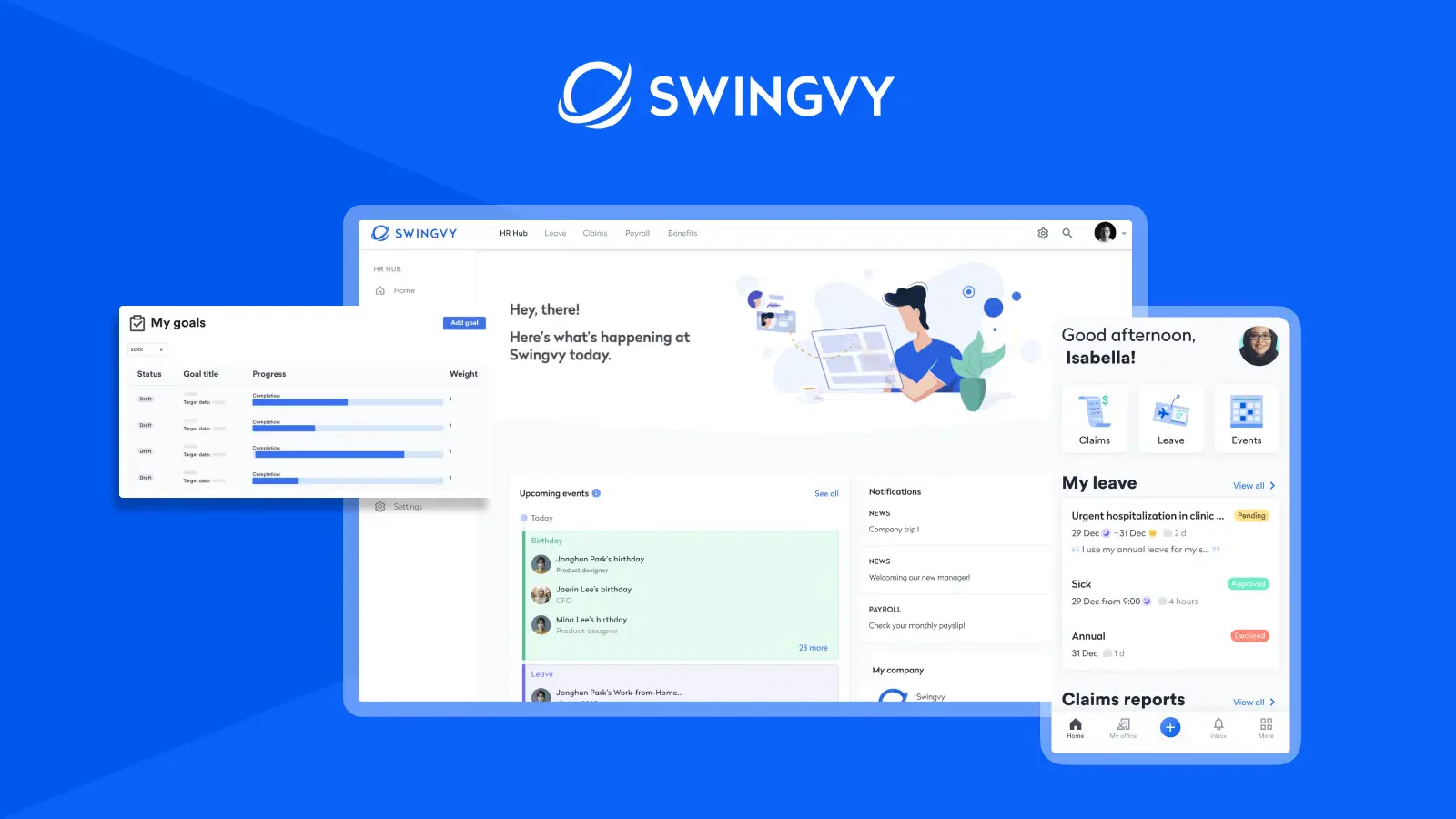 Swingvy is payroll software built for small to medium-sized businesses in Malaysia. It brings together core HR functions like employee records, payroll, leave, and claims into one connected platform, helping teams manage HR tasks with less manual work.
Swingvy key features:
- HR Hub: A centralized place to store and manage employee profiles, job details, documents, and important HR data.
- Leave Management: Enables employees to request leave online and lets managers track balances and approve time off easily.
- Claims Management: Employees can submit expense claims digitally, while HR can review, approve, and reimburse directly from the system.
- Payroll Management: Automates monthly payroll processing with built-in compliance for statutory contributions like EPF, SOCSO, and PCB (LHDN).
Pros Cons User-friendly HR platform Costs increase with additional modules Good mobile employee access Limited complex workflow configuration Covers payroll, leave, and claims
Swingvy offers a cloud-based HR platform with built-in compliance for Malaysian statutory contributions. It is well-suited for SMEs looking to manage payroll, claims, and employee data in one system. The platform also supports remote access, which is useful for modern and distributed teams.
4. HR2eazy
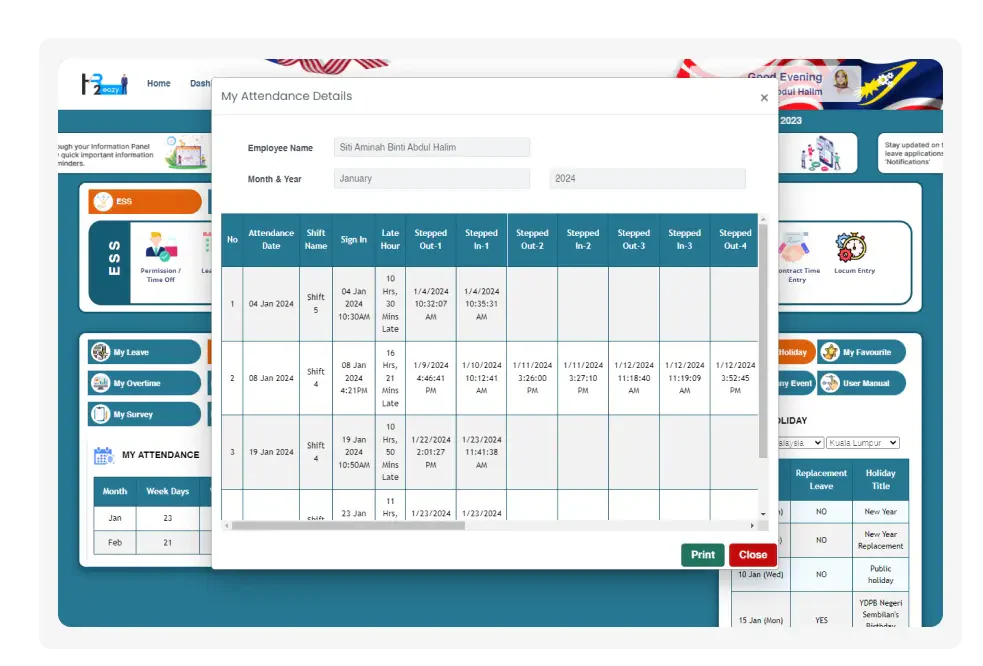 HR2eazy is a locally developed HR system tailored for Malaysian businesses of all sizes. It simplifies HR operations with a user-friendly interface and dedicated support, while keeping up with local compliance requirements.
HR2eazy Key Features:
- Payroll Processing: Handles salary payouts while staying fully compliant with Malaysian requirements, LHDN (PCB), EPF, SOCSO, EIS, and HRDF.
- Employee Self-Service Portal: Lets employees update their details, apply for leave, and access payslips directly.
- Attendance Management: Accurately records working hours to support better time tracking and workforce productivity.
Pros Cons Broad Malaysian statutory coverage Initial setup may require training Comprehensive payroll tools Interface may take time to learn Supports attendance and leave management Pricing is not publicly transparent
HR2eazy is locally developed, making it well-aligned with Malaysian payroll regulations and HR practices. It supports statutory compliance including EPF, SOCSO, EIS, and HRDF. Its local support team also helps businesses handle implementation more efficiently.
5. BrioHR
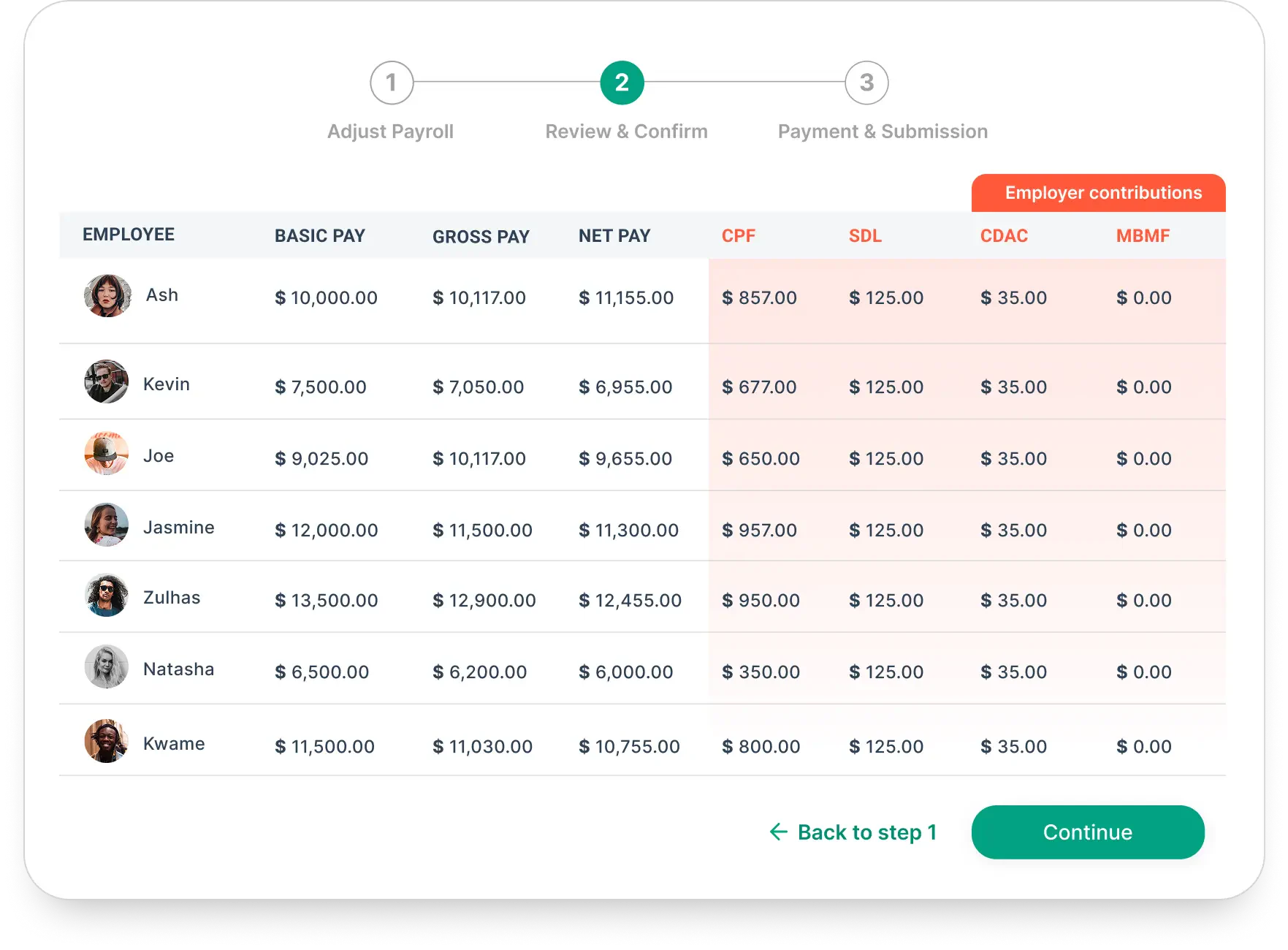 BrioHR is a modern HR platform designed to simplify core HR processes for businesses in Malaysia and beyond. Built with a user-friendly interface, it helps HR teams manage employee data, performance, and payroll from a single platform.
BrioHR Key Features:
- Digital Employee Profile: Centralizes employee information including personal data, job history, and documents for easy access and updates.
- Leave & Time-Off Management: Simplifies the process of applying for, approving, and tracking employee leave.
- Performance Management: Enables structured performance reviews and goal tracking to support employee development.
- Payroll: Automates salary processing with compliance features to support accurate payouts and local statutory contributions.
Pros Cons Modern and intuitive interface Some modules require detailed setup Covers payroll and performance management Certain workflows offer limited flexibility
BrioHR combines core HR functions with performance management tools in a single platform. It supports Malaysian payroll compliance while helping businesses track employee development. This makes it a good fit for companies focused on both operations and workforce growth.
6. Payrollpanda
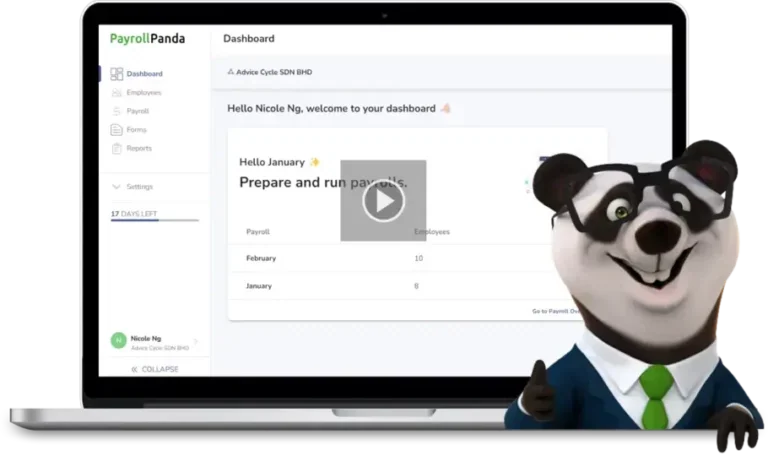 PayrollPanda is a professional payroll solution designed specifically for Malaysian businesses. It focuses on making payroll management easy, accurate, and fully compliant—ideal for companies that want a no-fuss solution for salary disbursement.
PayrollPanda Key Features:
- Payroll Calculations: Handles salary, tax, and statutory contributions with built-in compliance for Malaysian regulations.
- Employee Portals: Lets employees securely access payslips, tax documents, and personal payroll records online.
- Automatic Calculations: Minimizes manual work and reduces errors by auto-calculating deductions, allowances, and net pay.
Pros Cons Easy Malaysian payroll processing Limited talent management features Quick setup for smaller businesses Fewer advanced HR workflows Less suitable for complex organisations
PayrollPanda focuses on accurate and compliant payroll processing for Malaysian companies. It automates tax calculations and statutory contributions to reduce manual errors. This makes it ideal for businesses that prioritise payroll accuracy and simplicity.
7. SAP HANA
SAP HANA is a cloud-based HR platform built for large organizations that need advanced tools to manage their workforce. It combines core HR functions with real-time analytics to support data-driven decision-making across departments.
SAP HANA Key Features:
- Talent Management: Supports end-to-end talent lifecycle including recruitment, onboarding, development, and succession planning.
- Time and Attendance Management: Tracks employee working hours, absences, and leave efficiently, integrated with payroll and compliance workflows.
- Payroll Management: Delivers global and local payroll processing with automation, accuracy, and compliance with statutory requirements.
Pros Cons Extensive global HCM capabilities High implementation complexity Strong talent management Steep learning curve Advanced workforce analytics May be costly for SMEs Suitable for large enterprises
SAP HANA is designed for large enterprises that require advanced HR and analytics capabilities. It supports complex workforce management and multi-country payroll, including Malaysia. Its real-time insights help companies make data-driven HR decisions.
8. BOSS
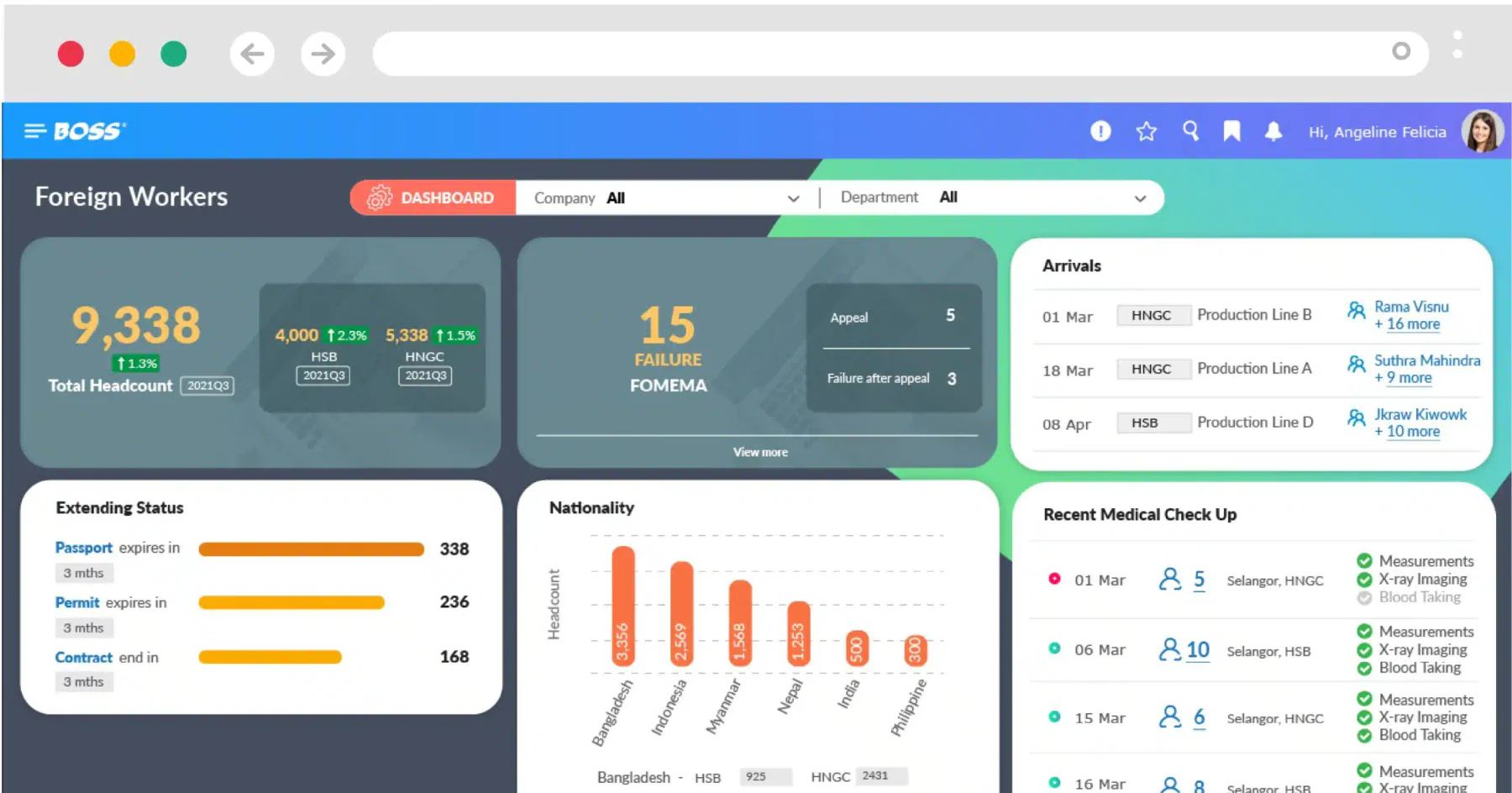 BOSS is a comprehensive HR system Malaysia tailored for Malaysian businesses, offering essential tools to manage employee data, payroll, and leave while maintaining compliance with local labor laws. It helps organizations improve day-to-day HR efficiency without overcomplicating the process.
BOSS Key Features:
- Employee Center: Centralizes employee records, personal details, and job-related information in one accessible hub.
- Payroll Management: Processes salaries in line with local statutory requirements.
- Leave Management: Enables digital leave requests, tracking, and approvals to reduce paperwork and miscommunication.
- Training and Development: Supports employee skill-building by organizing training programs and tracking development progress.
Pros Cons Covers essential Malaysian HR processes Limited advanced workforce analytics Includes payroll and training management Integration depth requires verification
BOSS provides essential HR tools tailored to Malaysian labour regulations. It supports payroll, leave, and employee data management in one system. This makes it suitable for businesses looking for a balanced and practical HR solution.
9. factoHR
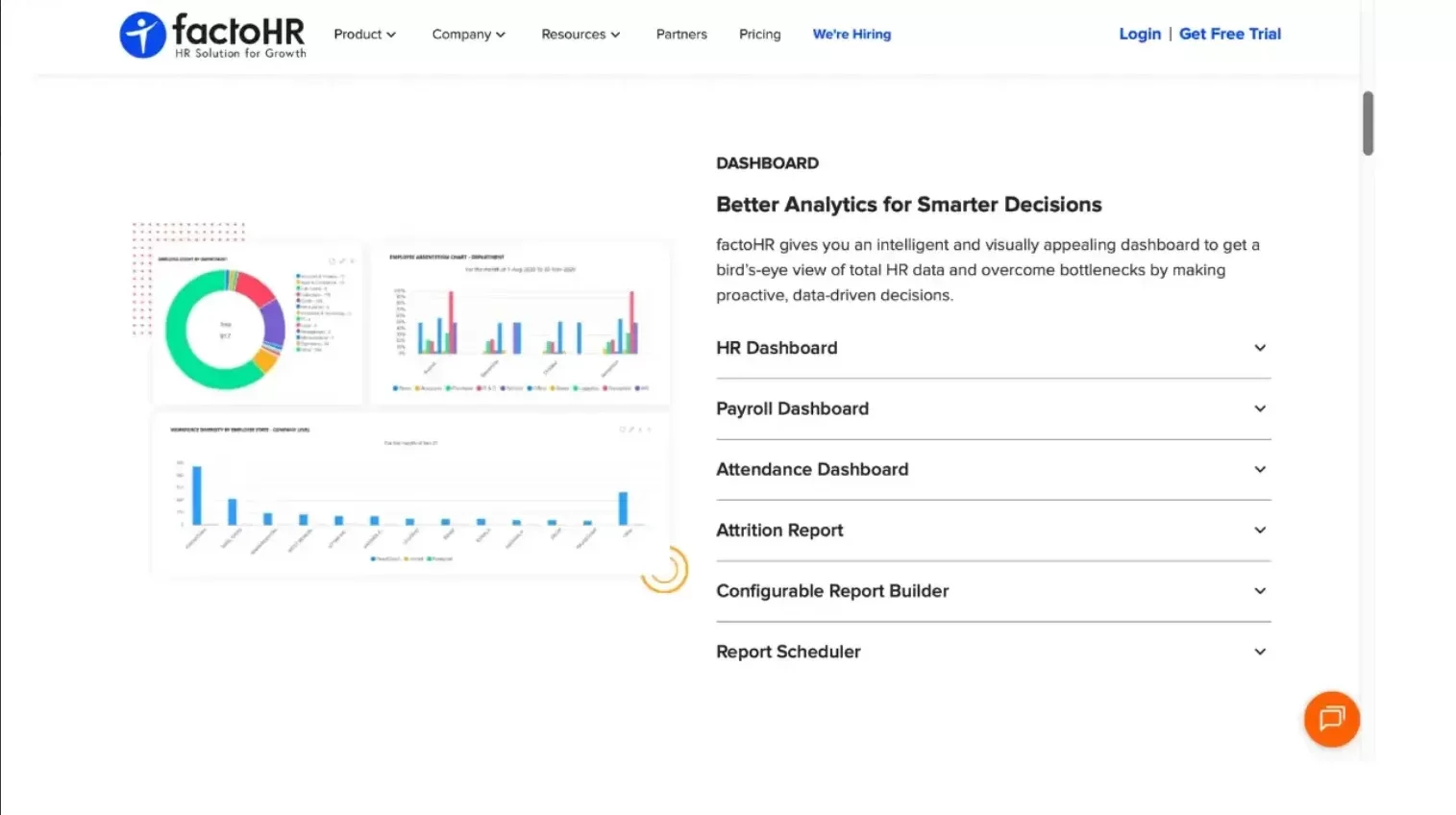 factoHR is a versatile HR and payroll platform built for businesses of all sizes. By automating repetitive HR processes and offering real-time visibility through interactive dashboards, it helps organizations save time and reduce manual workload.
factoHR Key Features:
- HR Dashboard: Offers a quick overview of employee data, announcements, and pending HR tasks in one place.
- Payroll Dashboard: Displays real-time salary summaries, contribution details, and payroll status for easier monitoring and approvals.
- Attendance Dashboard: Tracks employee attendance, punctuality, and absenteeism using integrated tools.
- Report Scheduler: Automatically generates and sends scheduled HR reports to selected stakeholders, no manual setup required.
Pros Cons Useful payroll dashboards Occasional synchronisation delays Strong attendance management Limited custom reporting flexibility Automates recurring HR reports
factoHR helps automate repetitive HR tasks while offering real-time visibility through dashboards. It supports payroll and attendance tracking for better workforce monitoring. This makes it useful for companies aiming to improve efficiency and reporting accuracy.
10. altHR
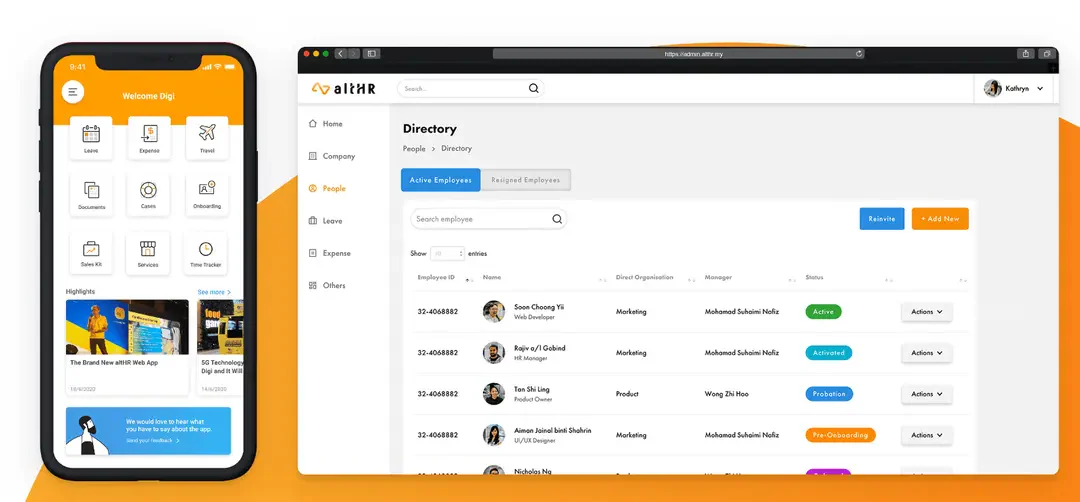 altHR is a user-friendly HR solution made for modern Malaysian businesses. Designed to scale with your company’s growth, it helps manage core HR functions while offering employees a more connected and seamless experience.
altHR Key Features:
- Leaves: Allows employees to apply for leave and managers to approve or track entitlements with full visibility.
- Rostering: Supports shift planning and scheduling for businesses with dynamic or rotating work hours.
- Onboarding: Streamlines the onboarding process with digital tools that make employee setup faster and more structured.
- Company Calendar: Centralizes key dates like public holidays, company events, and deadlines for better coordination.
Pros Cons Mobile-friendly employee experience Some payroll functions require integration Useful rostering tools Limited global HCM capabilities Supports digital onboarding Less suitable for complex enterprises
altHR is designed for growing Malaysian companies that need flexible HR tools. It supports onboarding, rostering, and leave management for dynamic work environments. Its system also improves coordination through shared calendars and structured workflows.
11. Employment Hero
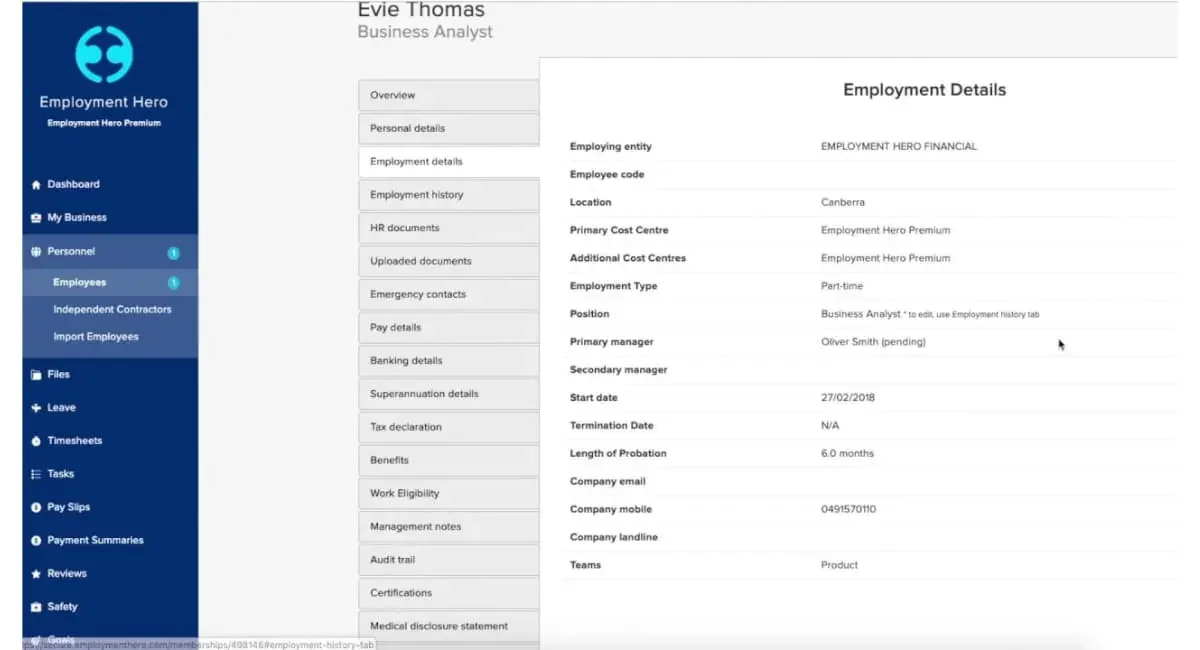
Employment Hero is cloud-based HR and payroll software designed to manage employee processes from recruitment to payroll and workforce administration. It brings key HR functions together in one platform, helping businesses manage employee data, hiring, payroll, leave, and other people-related tasks more efficiently.
Employment Hero key features:
- Applicant tracking system (ATS): Enables HR teams to streamline the hiring process by posting jobs, tracking candidates, and managing applications in one centralized platform.
- Payroll management: Helps businesses process salaries accurately, manage tax calculations, and ensure timely payments while maintaining compliance with local regulations.
- Employee learning management: Allows organizations to deliver, track, and manage employee training programs, supporting continuous skill development and performance improvement.
Pros Cons Broad HR functionality Features vary by subscription tier Recruitment management included Customisation can be limited Strong employee self-service
Employment Hero offers a wide range of HR tools including payroll, recruitment, and training management. It helps Malaysian businesses stay compliant while improving employee engagement. This makes it suitable for companies investing in long-term workforce development.
12. PeopleHum
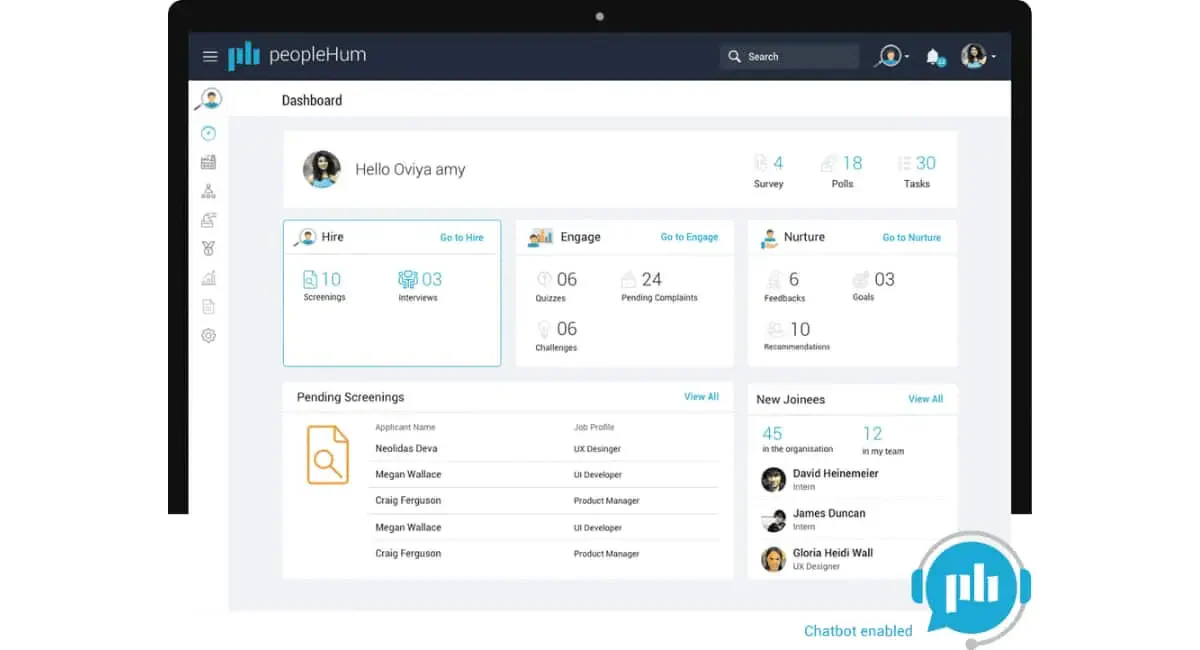
PeopleHum is a global HR software platform that focuses on employee experience and performance management. It integrates AI-powered tools to help businesses make data-driven decisions, improve employee satisfaction, and optimize overall HR operations.
PeopleHum key features:
- Automated hiring: Automates job postings, screening, and interview scheduling to speed up recruitment.
- Performance Management: Helps track goals, monitor performance, and manage employee evaluations.
- Analytics for data-driven decision making: Provides insights and reports to support better HR decisions.
Pros Cons Strong recruitment tools Malaysian payroll depth requires verification Supports performance management Integrations may need vendor support Provides AI-assisted HR insights
PeopleHum focuses on employee experience and performance using AI-driven insights. It helps businesses improve hiring, engagement, and decision-making through analytics. This is useful for companies looking to modernise their HR strategy.
13. Oracle HRMS
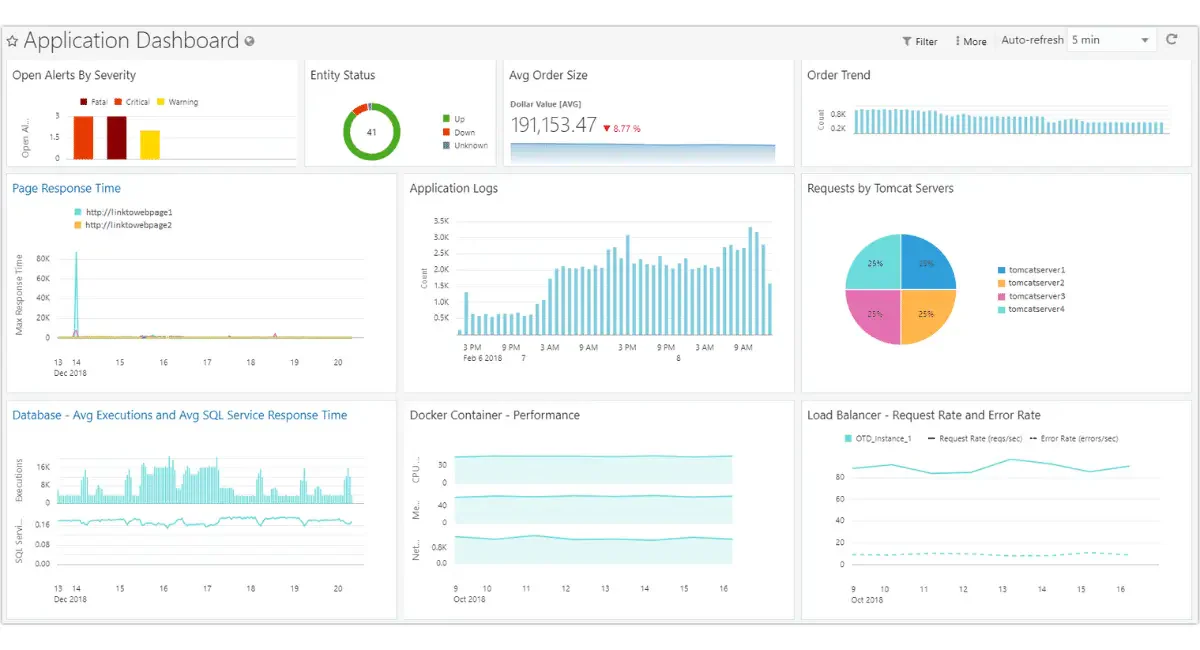
Oracle Human Capital Management Cloud is an HR software solution designed for large enterprises in Malaysia. Oracle’s software enhances efficiency and reduces the risk of errors in resource management.
Oracle HR software key features:
- Talent management: Helps develop, retain, and optimize employee potential.
- Workforce management: Supports scheduling, attendance tracking, and workforce planning.
- Payroll: Automates salary processing, tax calculations, and payments.
Pros Cons Scalable for global enterprises Complex implementation Comprehensive talent management Requires experienced administrators Advanced workforce planning May be excessive for SMEs Strong reporting capabilities
Oracle HRMS is built for large enterprises that need scalable and integrated HR solutions. It supports workforce planning, payroll, and talent management across regions, including Malaysia. Its system is ideal for organisations managing complex HR structures.
14. HR2000
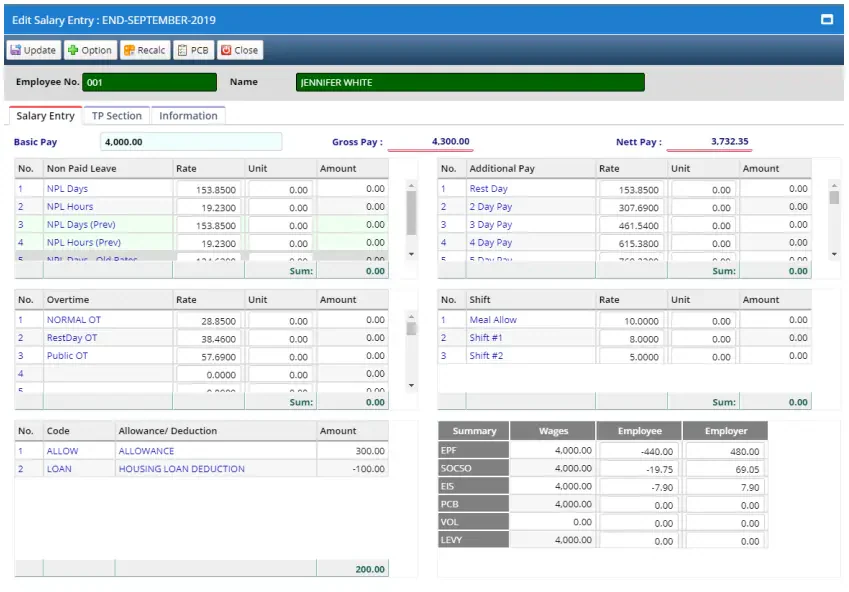
HR2000 is a long-standing HR system Malaysia provider offering cloud and desktop payroll tools with local bank integration and compliance features. It’s ideal for traditional businesses looking for a proven and reliable HRMS system Malaysia solution.
HR2000 key features:
- i-Payroll and QuickPay: Offers both cloud-based (i-Payroll) and desktop (QuickPay) payroll versions to suit different business setups and IT infrastructure preferences.
- Leave, claim, and payslip self-service: Lets employees apply for leave, submit expense claims, and access payslips independently without manual HR involvement.
- Local bank integration: Supports over 50 Malaysian bank payment formats to simplify salary disbursement and statutory payment processing.
- Automated government reports: Generates statutory reports for EPF, SOCSO, EIS, and LHDN automatically to reduce manual compliance preparation.
Pros Cons Strong Malaysian payroll experience Interface may feel traditional Supports multiple local bank formats Limited advanced talent features Covers core statutory requirements
HR2000 is a long-established provider with strong local payroll and banking integration. It supports multiple Malaysian bank formats and government reporting requirements. This makes it a reliable choice for traditional businesses.
15. Talenox
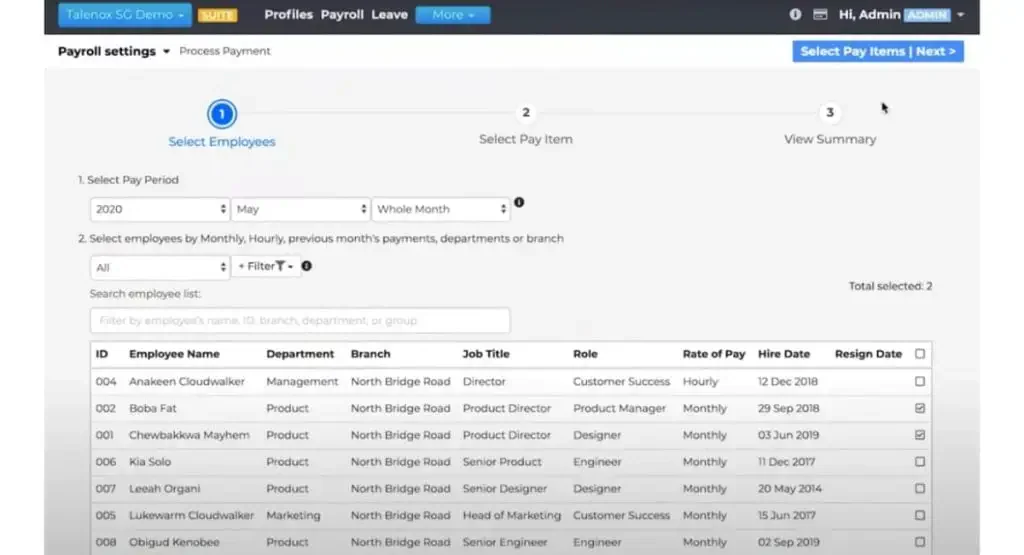
Talenox is a user-friendly HRM system Malaysia designed for SMEs, offering automated payroll, statutory deductions, and integration with leave and time tracking. With transparent pricing and full-feature trials, it’s ideal for businesses looking for a simple and compliant HR software Malaysia.
Talenox key features:
- Automatic EPF, SOCSO, and PCB deductions: Automatically calculates and applies statutory deductions to ensure compliance.
- Multi-country payroll: Supports payroll processing across multiple countries from a single system.
- Leave and time tracking: Manages employee leave requests and tracks working hours efficiently.
- 21-day free trial with all features: Gives full access to all features for 21 days to explore the system.
Pros Cons Transparent pricing Limited recruitment tools Simple payroll and leave management Basic performance management Less suited to complex enterprises
Talenox is designed for SMEs that need an easy-to-use and compliant HR system. It automates EPF, SOCSO, and PCB calculations to reduce manual work. Its transparent pricing and trial access also help businesses evaluate the system easily.
16. Apploye
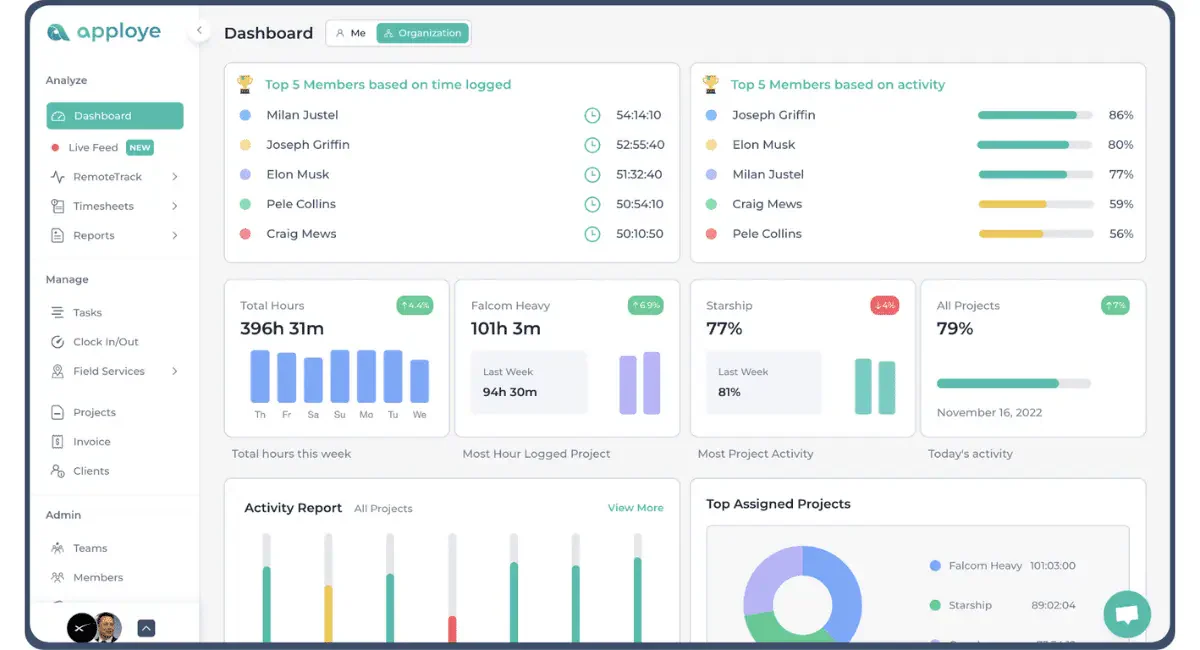
Apploye is an HR software solution focusing on time tracking, employee monitoring and payroll management. This solutions can increase productivity and ensure accurate payroll processing through detailed time and activity tracking. Here are the features of Apploye.
Apploye key features:
- Employee monitoring: Tracks employee activity, screen usage, and working hours to help managers maintain productivity visibility across teams.
- Project and task management: Allows teams to assign tasks, set timelines, and monitor project progress within the same platform.
- Reports and analytics: Generates detailed time and activity reports to support accurate payroll processing and workforce performance reviews.
Pros Cons Accurate time tracking Not a complete Malaysian HRMS Useful productivity reports Limited payroll functionality Suitable for remote teams Limited payroll functionality Monitoring features may raise privacy concerns
Apploye focuses on time tracking and employee monitoring to support accurate payroll processing. It helps businesses track productivity through detailed activity reports. This is useful for teams managing remote or project-based work.
17. Omni HR
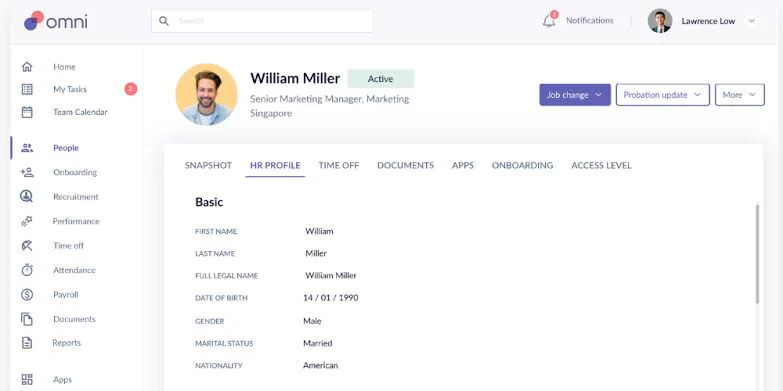
Omni HR is a cloud-based HR platform that combines employee records, payroll, attendance, leave, recruitment, and performance management in one system. Its modular structure allows growing companies to select the HR functions they need without adopting every module at once.
For Malaysian businesses, Omni HR supports payroll calculations for EPF, SOCSO, EIS, and PCB. It is best suited for mid-sized or regional companies that need to connect core HR processes, although businesses requiring only basic payroll may find a simpler platform more cost-efficient.
- Malaysia Payroll: Calculates EPF, SOCSO, EIS, and PCB while preparing payroll records and digital payslips.
- Attendance and Leave Management: Records attendance, overtime, shifts, and leave before transferring approved data into payroll.
- Employee Database and Self-Service: Centralises employee documents, personal information, payslips, and leave balances.
- Recruitment and Onboarding: Tracks candidates from application and interview stages through to employee onboarding.
- Performance Management: Manages employee goals, review cycles, feedback, and performance records.
| Pros | Cons |
|---|---|
| Modern and modular HR platform | Advanced workflows may require additional configuration |
| Supports key Malaysian payroll requirements | Costs may increase as more modules are added |
| Connects payroll with attendance and employee data |
Growing and mid-sized companies managing HR and payroll operations across Malaysia and other Asian markets.
18. Info-Tech HRIS
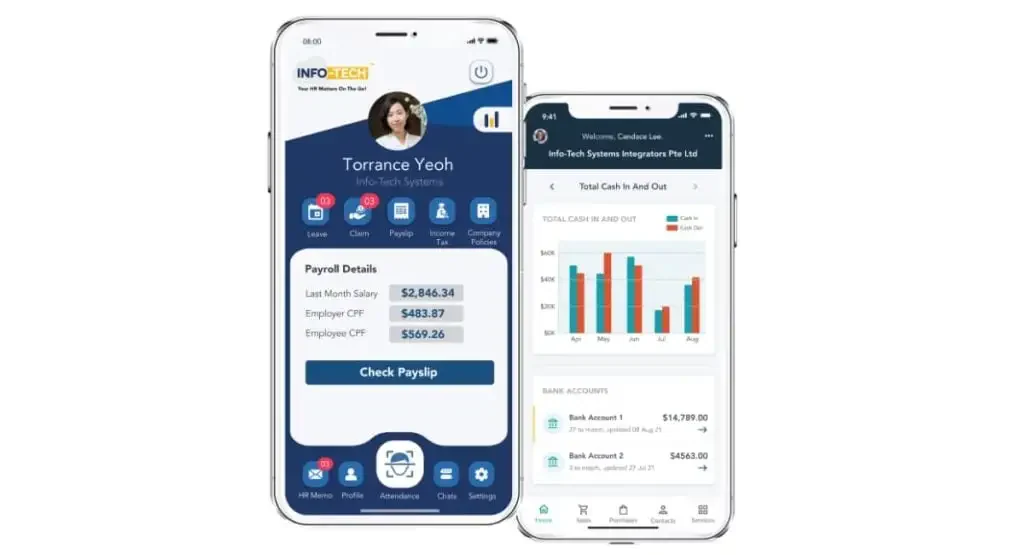
Info-Tech HRIS is a comprehensive HR software Malaysia with features supporting your business operations.
Info-Tech HRIS key features:
- Staff management: Centralises employee records, personal details, and job history in one system for easier HR administration and data retrieval.
- Payroll processing: Handles monthly salary calculations and statutory deductions, including EPF, SOCSO, and LHDN compliance requirements.
- Onboarding module: Streamlines the new employee setup process with digital tools to reduce manual paperwork and speed up onboarding completion.
- Career progression: Helps HR teams track employee development, manage promotions, and plan internal growth paths within the business.
Pros Cons Comprehensive local HRMS coverage Setup may require administrator training Strong payroll functionality User experience varies across modules Supports attendance management Pricing requires vendor consultation Comprehensive local HRMS coverage Strong payroll functionality Supports attendance management Covers employee administration
Info-Tech HRIS provides a comprehensive HR system with strong local compliance support. It includes payroll, onboarding, and career progression tools. This makes it suitable for companies looking to manage the full employee lifecycle.
19. Akrivia HCM
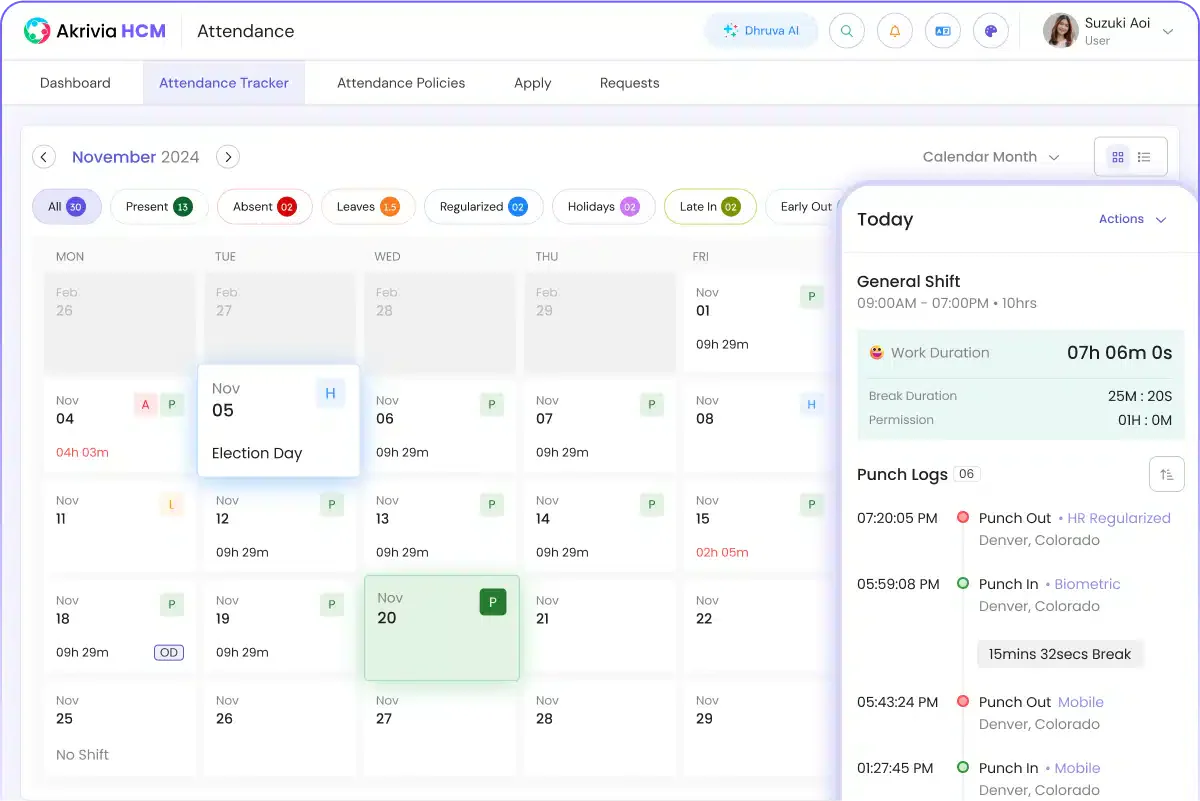
Akrivia HCM is a customizable HR software Malaysia solution with modular tools for managing recruitment, attendance, payroll, and employee performance. Its broad feature set and multi-country payroll support make it suitable for growing businesses needing flexible HRMS Software Malaysia capabilities.
Features include:
- Time and attendance tracking: Monitors employee working hours, shifts, and absences with automated records to support accurate payroll calculations.
- Recruitment and learning management: Manages the hiring process and supports employee training programmes from a single platform.
- Performance evaluation and workflow automation: Enables structured performance reviews and automates HR approval workflows to reduce manual coordination.
- Multi-country payroll with analytics: Processes payroll across multiple countries including Malaysia, with built-in reporting tools to support data-driven HR decisions.
Pros Cons Configurable end-to-end HCM suite Reporting can be complex Supports multi-country payroll Requires structured implementation Covers recruitment and performance Mobile functions may need improvement
Akrivia HCM offers flexible and customizable HR modules for growing companies. It supports multi-country payroll and advanced analytics, including Malaysia. This makes it ideal for businesses expanding across regions.
20. GreatDay HR
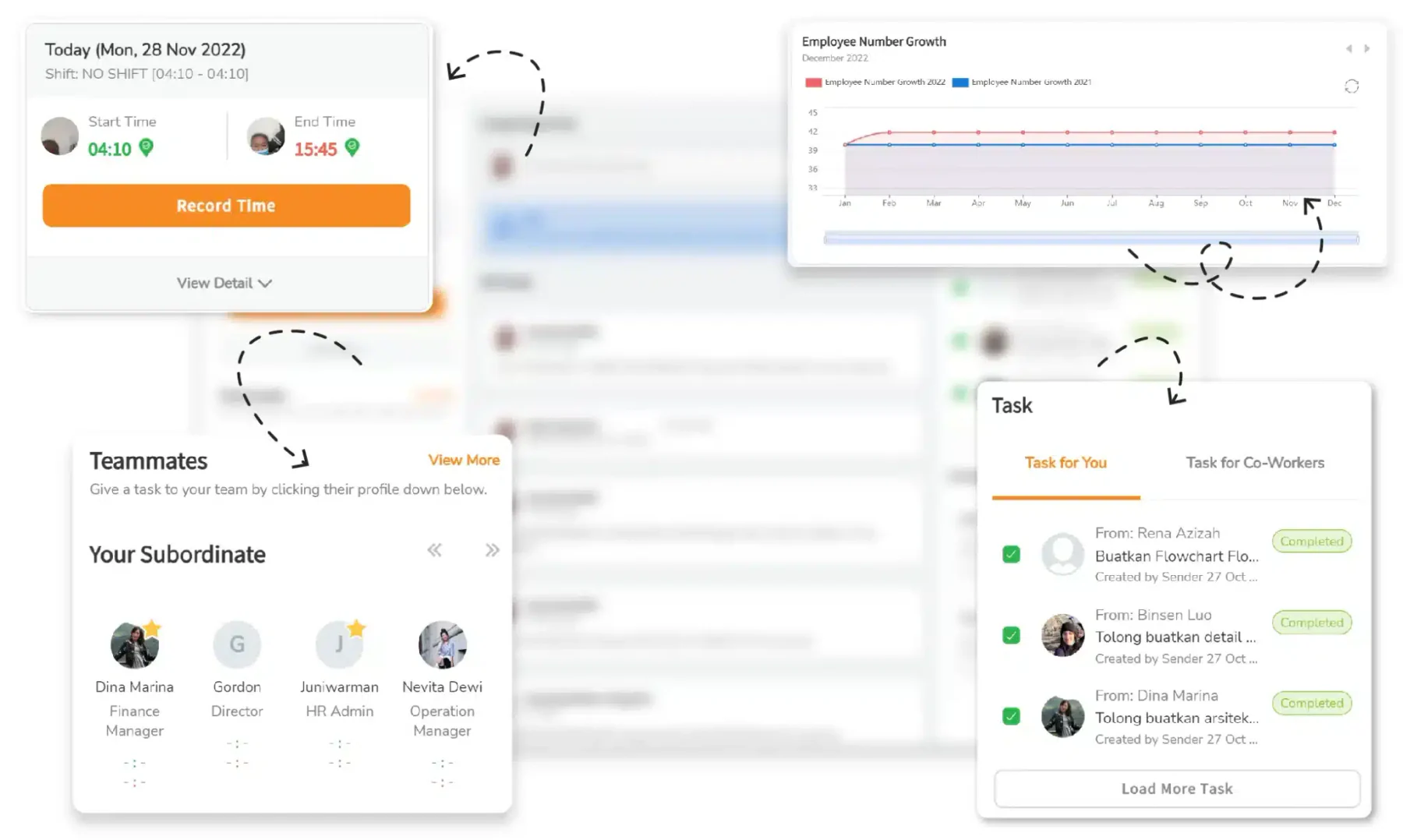 GreatDay HR is a mobile-first HR management system Malaysia that offers face recognition attendance, automated payslips, and employee self-service features. Its app-based system helps companies simplify HR processes while keeping everything accessible on the go.
Key features include:
- Face recognition and GPS attendance: Tracks employee clock-in and clock-out using facial recognition and location data, reducing buddy punching and manual attendance errors.
- Leave and claim management: Allows employees to apply for leave and submit expense claims through the app, with manager approval handled digitally.
- Integrated payroll and payslip automation: Processes monthly payroll and generates payslips automatically based on attendance records and approved claims.
- Built-in HRIS for self-service requests: Gives employees direct access to their personal HR data, payslips, and requests without needing to contact HR directly.
Pros Cons Mobile-first attendance management Depends heavily on mobile access Useful for field-based teams GPS and facial data require privacy controls Supports employee self-service
GreatDay HR is a mobile-first platform that supports on-the-go HR management. It includes features like GPS attendance and automated payslips aligned with local needs. This makes it suitable for companies with mobile or field-based teams.
How to Choose the Right HR Software for Your Business in Malaysia?

Choosing HR software is not really about finding the platform with the most features. What matters more is whether the system can actually reduce the daily admin work that keeps slowing your team down, especially when payroll, attendance, leave, and employee records are still handled across separate tools.
This is even more important in Malaysia, where HR teams are not only expected to work efficiently, but also to stay aligned with requirements such as EPF, SOCSO, EIS, and LHDN. A system may look strong during a demo, but if it does not match how your team works every day, it can easily add more friction instead of solving the problem.
To make the decision easier, here are the main things worth reviewing before choosing an HR system:
| Factor to Consider | What to Check | Why It Matters |
|---|---|---|
| Business Needs and Size | Determine whether you need basic payroll and attendance tools or broader functions such as recruitment, performance, and multi-branch management. | Prevents the business from paying for unnecessary features or choosing a system that cannot support future growth. |
| Malaysian Payroll Compliance | Check support for EPF, SOCSO, EIS, PCB, and statutory payroll reporting. | Helps HR teams calculate deductions accurately and keep payroll processes aligned with Malaysian requirements. |
| HR and Attendance Features | Review leave, overtime, shift scheduling, employee self-service, and attendance tracking. | Ensures the software supports the daily workflows handled by HR teams and employees. |
| Integration and Scalability | Confirm whether the software connects with payroll, accounting, or existing business systems and can accommodate more employees or branches. | Reduces duplicate data entry and supports business expansion. |
| Pricing and Implementation Support | Compare module costs, data migration, training, implementation requirements, and local customer support. | Provides a clearer view of the total cost and resources required to adopt the software. |
Which HR Software Suits Your Business?
The table below helps you find the right HR software based on business size, HR needs, and operational priorities.
| Business Scenario | Recommended HR Software | Why It Fits |
|---|---|---|
| SME that needs a simple HR system for payroll, leave, and claims | Kakitangan | Kakitangan fits smaller businesses that want to handle core HR tasks without using a more complex platform. Its main strengths are payroll, online leave management, and e-claims, which are often enough for teams that want a practical day to day HR setup. |
| SME that wants a cloud based HR and payroll system in one platform | Swingvy | Swingvy is suitable for SMEs that want employee records, payroll, leave, and claims in one connected system. It also supports statutory contributions such as EPF, SOCSO, and PCB, which makes it more relevant for Malaysian businesses trying to reduce manual admin work. |
| Business that mainly prioritizes payroll accuracy and statutory compliance | HR2eazy or PayrollPanda | HR2eazy is a better fit if your business wants broader statutory coverage including LHDN, EPF, SOCSO, EIS, and HRDF. PayrollPanda is a stronger option if you want a more focused payroll tool that handles salary, tax, and statutory calculations quickly and accurately. |
| Company that wants stronger employee profiles and performance tracking | BrioHR | BrioHR is a better match for businesses that want more than just payroll. It helps centralize employee information while supporting performance reviews, goal tracking, leave management, and payroll, which makes it suitable for teams that want a more balanced HR platform. |
| Medium to large business that needs HR, payroll, attendance, and recruitment in one system | HashMicro | HashMicro is more suitable for companies with broader HR needs across departments, locations, or shift based teams. It combines payroll, attendance, leave, performance management, recruitment, employee self service, and roster control in one platform, while also supporting compliance with EPF, SOCSO, EIS, and LHDN. |
| Large enterprise that needs advanced analytics and workforce planning | SAP HANA | SAP HANA is more suitable for enterprise environments that need deeper analytics, talent lifecycle management, and more complex workforce structures. It is a stronger fit when a business needs broader strategic HR capabilities, not just core day to day administration. |
| Business that wants HR visibility through dashboards and automated reports | factoHR | factoHR is useful for businesses that want better visibility into HR, payroll, and attendance data. Its dashboards and report scheduler make it more suitable for teams that want faster monitoring and recurring reports without relying heavily on manual reporting. |
| Business that wants payroll and workforce administration together with training support | BOSS | BOSS is a practical fit for businesses that want payroll, leave management, employee records, and training features in one system. It works better for teams that want to improve daily HR coordination without moving to a more advanced enterprise platform. |
| Modern team that depends on rostering, onboarding, and smoother employee administration | altHR | altHR is a stronger fit for businesses that care about onboarding, scheduling, and employee experience. Its rostering and company calendar features make it more useful for teams with dynamic work schedules and a more modern HR workflow. |
Conclusion
Choosing the right HR software in Malaysia comes down to what your business actually needs today and what may become more complex as your team grows. Some companies may only need simpler tools for payroll and leave, while others may need a broader system that can handle attendance, recruitment, reporting, and compliance in one place.
That is why it helps to compare each option based on your team size, HR priorities, and the level of automation you expect from the system. Once you narrow down the essentials, it becomes much easier to find software that supports daily operations without adding unnecessary complexity.
If you want to see how an HR system can support payroll, attendance, leave, and compliance more efficiently, you can explore a free demo to evaluate how it fits your current workflow.
FAQ on HR Software Malaysia
No. Most cloud-based HR platforms only require a laptop or mobile device and internet access. HR software vendors usually handle all backend infrastructure—there’s no need for on-prem servers or IT setup.
Yes. Reputable HR software vendors use enterprise-grade security, such as two-factor authentication, role-based permissions, daily backups, and data encryption.
Yes. Some services offer free or freemium tiers covering basic features like employee and leave management. For advanced tools like payroll or performance tracking, a subscription is usually required.
Several HR software options in Malaysia support statutory payroll requirements such as EPF, SOCSO, EIS, and LHDN PCB, including HashMicro, Swingvy, HR2eazy, PayrollPanda, Talenox, and Info-Tech HRIS. The key is to check whether the system only calculates deductions or also supports reports, approvals, payslips, and payroll audit trails.
HR software can support HRD Corp training claims by keeping employee training records, attendance, approvals, and cost details in one place. However, businesses should confirm whether the system directly supports HRD Corp claim workflows or only helps prepare the required training documentation.
Payroll software mainly focuses on salary calculation, statutory deductions, payslips, and tax-related payroll tasks. HRMS covers a broader scope, including employee records, leave, attendance, recruitment, performance, claims, and reporting, making it more suitable for businesses that want to manage the full employee lifecycle.
HR software can help businesses align with the Employment Act 1955 by managing leave, attendance, overtime, employee records, and payroll rules more consistently. Still, compliance depends on how the system is configured, so companies should review settings for working hours, leave entitlement, overtime calculation, and statutory reporting before using it live.