





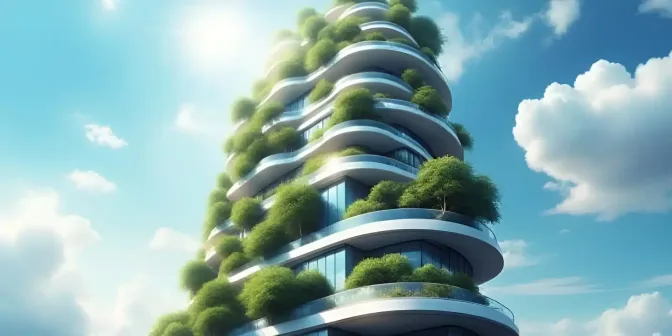
Green building is reshaping urban development as sustainability becomes a top priority. With rapid urbanization and climate concerns, eco-friendly construction is now essential for long-term property value and environmental impact. Developers and investors are increasingly adopting green practices to stay competitive.
This shift is driven by growing awareness, changing market demand, and stricter environmental regulations. In Malaysia, green building focuses on reducing environmental impact while improving energy and resource efficiency. As a result, it is becoming a standard approach in modern property development.
Today, green buildings use energy-saving technologies and efficient water systems to improve performance. These innovations are transforming Malaysia’s property sector. This guide explores key trends, benefits, and the future of green building in Malaysia.
Key Takeaways
Green building in Malaysia has evolved into a sustainability-driven standard supported by policies, global frameworks, and ESG requirements.
Green building in Malaysia is guided by key certifications that standardize sustainability and ensure consistent building performance.
Sustainable design in Malaysia requires an integrated approach to ensure sustainability is embedded from the very beginning of the project.
While each strategy has its benefits, experiencing the solution firsthand offers greater clarity. Click the banner below to explore how green building can transform your property.
The Evolution of Green Building in Malaysia
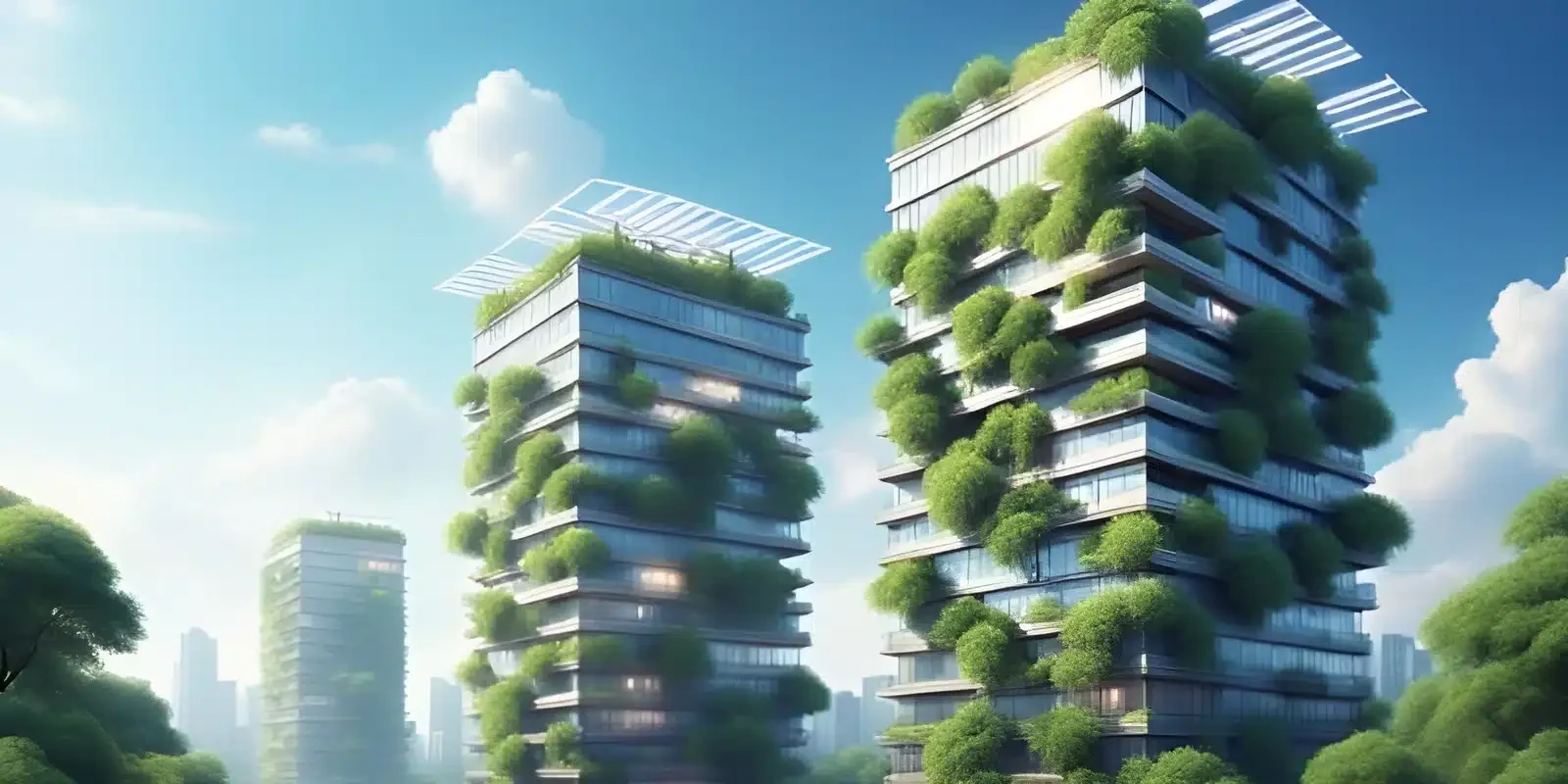
Sustainable architecture in Malaysia has developed through shifting priorities and stronger policy direction. In the late 20th century, the construction sector focused on rapid growth to support economic expansion and urban demand. During this phase, conventional building methods dominated with limited focus on environmental impact.
Buildings depended heavily on artificial cooling and lighting, leading to high energy use and increased carbon emissions. Sustainability was not yet a key consideration in property development strategies. This approach highlighted the need for more efficient and environmentally responsible construction.
In the early 2000s, global awareness of climate change began shaping Malaysia’s development agenda. The government introduced key initiatives, including the National Green Technology Policy under the Ministry of Energy, Green Technology and Water (KeTTHA). These efforts positioned green building in Malaysia as a national priority.
At the same time, industry stakeholders adapted global standards to local conditions. International frameworks like Leadership in Energy and Environmental Design (LEED) were refined alongside local efforts led by the Construction Industry Development Board (CIDB). This helped ensure sustainable practices were more suitable for Malaysia’s tropical climate.
Today, green building in Malaysia is a standard practice supported by Environmental, Social, and Governance (ESG) requirements. Developers are expected to integrate sustainability into both construction and reporting processes. This progress reflects Malaysia’s commitment to responsible and future-ready urban development.
Key Certifications and Standards of Green Building
To measure and standardize building sustainability, several certification systems have been introduced. These frameworks help developers benchmark performance while assuring investors and tenants of environmental quality. In green building in Malaysia, the main rating systems include certification Green Building Index (GBI), GreenRE, and MyCREST.
1. The Green Building Index (GBI)
Launched in 2009, the Green Building Index (GBI) is Malaysia’s first comprehensive green building rating tool. It was developed by the Malaysian Institute of Architects (PAM) and the Association of Consulting Engineers Malaysia (ACEM) to suit the country’s tropical climate. GBI assesses buildings based on six key criteria:
- Energy Efficiency (EE): Evaluates the building’s orientation, insulation, and the integration of renewable energy sources to minimize energy consumption.
- Indoor Environmental Quality (EQ): Assesses air quality, acoustic control, visual comfort, and thermal comfort, ensuring a healthy environment for occupants.
- Sustainable Site Planning & Management (SM): Focuses on the selection of appropriate sites, access to public transportation, and the preservation of natural topography.
- Materials & Resources (MR): Encourages the use of environmentally friendly, recycled, and locally sourced construction materials.
- Water Efficiency (WE): Measures the implementation of rainwater harvesting, water recycling, and efficient plumbing fixtures.
- Innovation (IN): Rewards exceptional performance or innovative design strategies that exceed standard requirements.
Buildings are awarded a rating of Certified, Silver, Gold, or Platinum based on the total points accumulated across these categories.
2. GreenRE (Green Real Estate)
Introduced by the Real Estate and Housing Developers’ Association Malaysia (REHDA) in 2013, GreenRE focuses on promoting sustainability within the real estate sector. While similar to GBI, it emphasizes passive design and cost-effective solutions to improve efficiency. Its practical approach and alignment with international standards, make it highly relevant for modern developments.
3. MyCREST (Malaysian Carbon Reduction and Environmental Sustainability Tool)
Developed by the Ministry of Works through the Public Works Department (JKR) and the Construction Industry Development Board (CIDB), MyCREST prioritizes carbon reduction across a building’s entire lifecycle. It evaluates environmental impact from design and construction to operation and demolition. This lifecycle approach ensures more comprehensive and measurable sustainability outcomes.
Step-by-Step Implementation Guide for Developers
Shifting from conventional construction to a certified green building in Malaysia requires a structured and well-planned approach. Successful execution depends on early collaboration, clear sustainability targets, and consistent evaluation throughout the project lifecycle. Here is a practical guide for developers and project managers.
Step 1: Feasibility Analysis and Financial Planning
The process starts with a site assessment covering climate, solar orientation, and environmental factors. Developers should involve a Green Building Index (GBI) Facilitator or GreenRE Manager early to set certification targets such as Platinum, Gold, or Silver. This stage also includes financial planning, using incentives like Green Income Tax Exemption (GITE) and Green Investment Tax Allowance (GITA) to reduce costs.
Step 2: The Integrated Design Process (IDP)
An Integrated Design Process (IDP) brings together architects, engineers, and consultants from the start. Teams use Building Information Modeling (BIM) to evaluate energy performance and optimize design decisions. Key elements include passive cooling strategies, shading systems, and the use of sustainable, low-carbon materials.
Step 3: Sustainable Construction and Site Management
During construction, strict environmental practices must be followed to reduce impact. Contractors implement waste management systems, recycling materials and minimizing landfill use. Additional measures include controlling erosion, reducing pollution, and using low-VOC (Volatile Organic Compounds) materials to maintain indoor air quality.
Step 4: Commissioning and Facility Handover
After construction, all building systems are tested to ensure optimal performance. Mechanical and electrical components, such as cooling and lighting systems, must meet design expectations. Ongoing monitoring of energy and water usage is required to secure and maintain green building certification.
Environmental and Economic Benefits
The growth of green building in Malaysia is largely fueled by the wide range of benefits it provides. While environmental advantages receive the most attention, the economic and social gains are just as significant. These benefits make sustainable development an attractive and strategic choice for businesses.
| Aspect | Environmental Benefits | Economic Benefits |
|---|---|---|
| Energy Efficiency | Reduces greenhouse gas emissions through energy-efficient HVAC (Heating, Ventilation, and Air Conditioning) and high-performance facades | Lowers electricity bills and reduces long-term operational and overhead costs |
Water Management |
Decreases water usage with greywater recycling and rainwater harvesting systems | Reduces water expenses and reliance on municipal supply, especially in urban areas |
Sustainable Materials |
Minimizes resource depletion and construction waste sent to landfills | Improves cost efficiency across the material lifecycle and reduces waste management costs |
Operational Efficiency |
Enhances overall resource management and environmental performance | Significantly lowers operational expenses and improves long-term financial savings |
Property Value |
Promotes sustainable and future-ready developments | Increases rental yields and capital appreciation compared to conventional buildings |
Market Demand |
Supports ESG (Environmental, Social, and Governance) alignment and sustainability goals | Attracts premium tenants and maintains high occupancy rates with better lease terms |
Investment Potential |
Strengthens environmental credibility and performance metrics | Viewed as lower-risk assets, often qualifying for better financing rates |
Indoor Environmental Quality (IEQ) |
Improves air quality with low-VOC (Volatile Organic Compounds) materials and better ventilation | Enhances occupant productivity, reduces health-related costs, and supports workforce performance |
These benefits show that green buildings go beyond sustainability by improving financial performance. Lower energy, water, and maintenance use helps reduce overhead costs while increasing long-term asset value.
Sustainable Design and Construction Practices
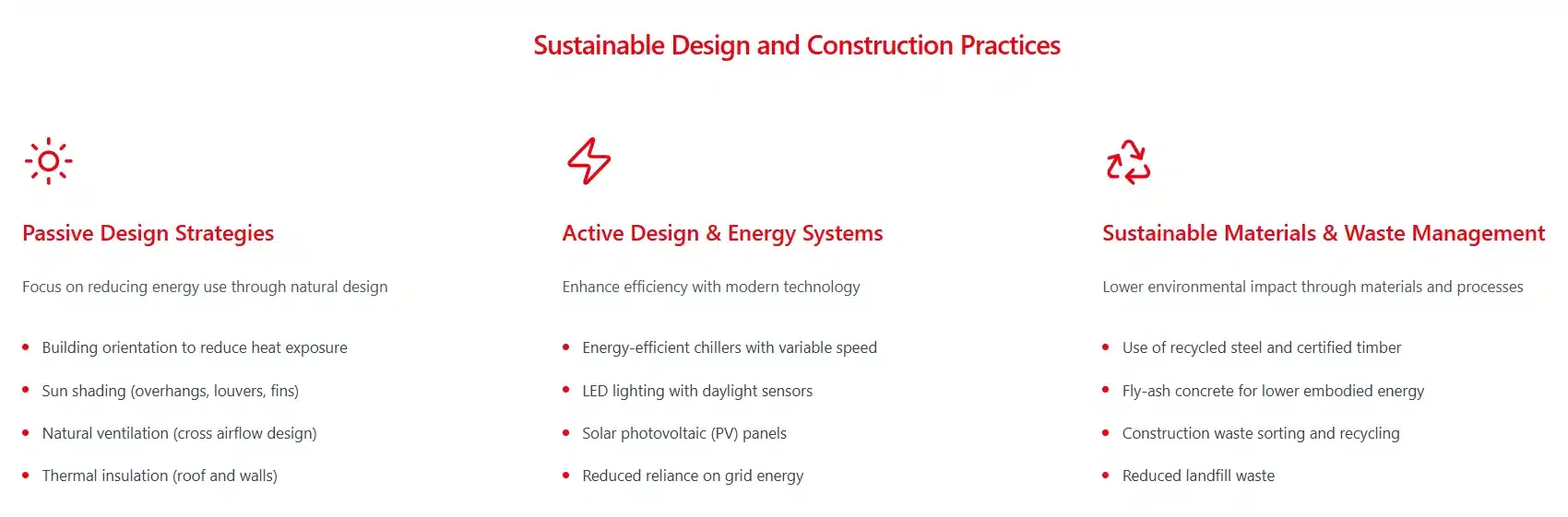
Developing a green building in Malaysia requires a shift away from conventional construction methods. It involves an integrated design approach where architects, engineers, and designers collaborate from the early stages of the project. This ensures sustainability is embedded into the building from the start, not added later.
Passive Design Strategies
In Malaysia’s hot and humid climate, passive design plays a key role in reducing energy use. It focuses on using natural elements to maintain indoor comfort with minimal reliance on mechanical systems. This approach helps improve efficiency while lowering overall energy consumption. Key strategies include:
- Optimal Building Orientation: Aligning the building to minimize direct exposure to the harsh east-west sun paths, thereby reducing solar heat gain.
- Sun Shading Devices: Utilizing architectural elements such as deep overhangs, louvers, and vertical fins to block direct sunlight while allowing natural light to penetrate the interior.
- Natural Ventilation: Designing floor plans that encourage cross-ventilation, allowing prevailing winds to naturally cool the building spaces, which is particularly effective in residential and semi-open commercial areas.
- Thermal Insulation: Incorporating high-quality insulation in the roof and walls to prevent heat transfer from the exterior to the interior.
Active Design and Energy Systems
While passive design reduces cooling needs, active systems remain essential for maintaining comfort in large buildings. Green buildings use energy-efficient systems such as advanced chillers with variable speed drives that adjust output based on demand. LED lighting with daylight sensors and solar photovoltaic (PV) panels further improve efficiency by reducing energy consumption and reliance on the grid.
Sustainable Materials and Waste Management
Material selection plays a major role in a building’s environmental impact. Sustainable construction favors low embodied energy materials like recycled steel, certified timber, and fly-ash concrete. In addition, strict waste management practices help sort, recycle, and reduce construction waste sent to landfills.
The Role of Technology in Green Real Estate
Green building in Malaysia has evolved into a dynamic, data-driven system rather than a static structure. The integration of sustainable design with digital technology has led to the rise of smart green buildings. This combination is essential to maintain performance and meet ongoing certification standards.
Building Management Systems (BMS) and the Internet of Things (IoT)
At the core of smart buildings is the Building Management System (BMS), which controls and monitors key systems such as lighting, ventilation, and power. Supported by Internet of Things (IoT) smart farming sensors, the system collects real-time data on temperature, occupancy, and air quality. This allows automatic adjustments, such as reducing cooling and lighting in unused spaces, to improve efficiency and reduce energy waste.
Advanced analytics also help predict energy demand based on usage patterns and external factors like weather. This enables better energy planning, including optimizing usage during off-peak hours. As a result, buildings can operate more efficiently while lowering energy costs.
Digital Integration in Property Management
Managing smart green buildings requires strong digital support to handle operations effectively. Property management system helps track maintenance, monitor energy usage, and manage tenant needs in one system. By leveraging advanced systems, managers can align daily operations with sustainability goals while maintaining high tenant satisfaction.
Government Policies and Incentives
The Malaysian government plays a key role in promoting sustainable development through policies and incentives. Since market adoption alone may be slow, authorities have introduced various programs to encourage green building practices. These efforts help accelerate the transition toward environmentally responsible construction.
Green Technology Financing Scheme (GTFS)
The Green Technology Financing Scheme (GTFS) supports investment in green technology, including property development. It offers financial incentives such as interest or profit rate rebates and partial government guarantees. This reduces financial risk and lowers the cost of developing green buildings.
Tax Incentives: ITA and GITE
The Malaysian Investment Development Authority (MIDA) provides tax incentives to support green initiatives. The Investment Tax Allowance (ITA) allows companies to offset capital expenditure on green assets, while the Green Income Tax Exemption (GITE) offers tax relief for green service providers. These incentives improve returns for businesses adopting sustainable practices.
Local Authority Mandates
Local councils are also enforcing stricter sustainability requirements in urban development. Authorities such as Kuala Lumpur City Hall (DBKL) and Petaling Jaya City Council (MBPJ) require minimum green standards for major projects. Some areas also offer benefits like higher plot ratios or faster approvals for certified green developments.
Case Studies: Iconic Green Buildings in Malaysia
Sustainable architecture is best understood through real-world examples. Malaysia features several landmark projects that highlight the success of green building practices. These developments showcase how design and technology can work together to create efficient and environmentally responsible spaces.
The Energy Commission Diamond Building (Putrajaya)
Completed in 2010, the Diamond Building serves as the headquarters of the Energy Commission of Malaysia. Its inverted pyramid design functions as a passive strategy, reducing heat gain by shading lower floors. The building also uses natural daylight through a central atrium, along with rainwater harvesting and efficient cooling systems, earning Platinum ratings from Green Building Index (GBI) and Singapore’s Green Mark.
Menara Ken TTDI (Kuala Lumpur)
Menara Ken TTDI is a multi-award-winning office tower that combines sustainability with modern design. It uses a zoning system for air conditioning to cool only occupied spaces and maximizes natural ventilation in common areas. With a strong focus on energy efficiency and indoor environmental quality, it has achieved a Platinum GBI rating and attracts ESG-focused tenants.
Merdeka 118 (Kuala Lumpur)
Merdeka 118, one of the tallest buildings in the world, represents a major milestone in sustainable skyscraper design. It holds triple Platinum certifications from LEED (Leadership in Energy and Environmental Design), GBI, and GreenRE. The building features high-performance glass, advanced cooling systems, smart sensors, and integrated public spaces that support low-carbon urban living.
Common Challenges and How to Avoid Them
Despite the long-term advantages, green building in Malaysia still presents several challenges that developers must manage carefully. Without proper planning, these issues can impact costs, timelines, and overall sustainability outcomes.
- Greenwashing vs. Genuine Certification: Making sustainability claims without recognized certifications like Green Building Index (GBI) or GreenRE can harm credibility and deliver minimal real benefits.
- Late-Stage Design Alterations: Adding green features late in the project increases costs and reduces effectiveness, as sustainability should be planned from the start.
- The Split Incentive Dilemma: Developers often bear upfront costs while tenants gain utility savings, which can be addressed through green lease agreements.
- Inadequate Post-Occupancy Management: Without proper operation and trained teams, energy-efficient systems may not perform as expected.
Conclusion
Green building in Malaysia is no longer just a trend, but a strategic approach to future-ready property development. Driven by regulations, market demand, and technological advancements, sustainable buildings now deliver both environmental impact and strong economic value. From design and certification to operation and management, every stage plays a crucial role in achieving long-term performance.
As the industry continues to evolve, developers who adopt integrated design, leverage smart technologies, and align with sustainability standards will gain a clear competitive advantage. With strong government support and increasing investor interest, green building is set to become the foundation of Malaysia’s urban development.
To see how technology can support your green building strategy, explore a free demo and discover the right solution for your property.

FAQ about Green Building
The initial cost of green building construction is usually higher than conventional projects due to sustainable materials and advanced technologies. However, long-term savings from energy, water, and maintenance can offset the upfront investment.
Green building solutions can be applied to projects of all sizes. Options such as energy-efficient lighting and water-saving systems are scalable and cost-effective for smaller developments.
The certification process depends on project size and the chosen standard, such as GBI, GreenRE, or MyCREST. Most projects require several months to over a year, including design review and post-construction evaluation.
Tenants support green building performance by practicing energy efficiency and following sustainability guidelines within the property. Active participation helps maintain long-term efficiency and environmental targets.