







Manufacturers in Malaysia often face challenges such as disconnected systems, inventory inaccuracies, and limited visibility into production activities. To improve coordination across departments and gain better operational control, many businesses implement ERP software that integrates manufacturing, inventory, procurement, finance, and reporting in a single platform.
In Malaysia, manufacturing digitalization initiatives under Industry4WRD have increased demand for integrated systems and real-time operational visibility. As a result, many manufacturers are replacing spreadsheets and standalone software with ERP solutions to support more efficient operations.
While Oracle NetSuite is a popular cloud ERP solution, many Malaysian manufacturers evaluate alternatives to find a better fit for their operational requirements, budget, and support needs.
Key Takeaways
Oracle NetSuite provides a centralized cloud ERP platform that helps businesses improve visibility and control across core operations.
Oracle NetSuite alternatives offer different strengths for manufacturers in Malaysia, depending on their operational needs and growth plans.
Comparison table makes it easier to evaluate Oracle NetSuite alternatives and identify which solution best fits your business needs.
Choosing an Oracle NetSuite alternative can be challenging because each manufacturing ERP offers different capabilities, costs, and implementation requirements. Comparing the leading solutions can help you find the best fit for your operational needs, budget, and growth plans.
Why Oracle NetSuite Is a Reliable ERP Solution?
Oracle NetSuite is a cloud ERP solution that helps businesses manage finance, inventory, procurement, reporting, and other core operations in a centralized system. It is commonly used by growing companies and enterprises that need better visibility and control across multiple departments or business entities.
For manufacturers, NetSuite supports processes such as production planning, work orders, order management, and inventory tracking. These capabilities help improve coordination between materials, production, and fulfillment activities.
However, not every manufacturer in Malaysia has the same requirements. Factors such as budget, customization needs, implementation approach, and local support often lead businesses to compare Oracle NetSuite alternatives before making a long-term ERP investment.
Why Some Manufacturers Consider Oracle NetSuite Alternatives?
ERP systems affect multiple areas of the business, including production, inventory, procurement, finance, and reporting. As a result, many manufacturers compare different ERP solutions to find the best fit for their operational and growth requirements.
Cost and Implementation Considerations
ERP projects involve more than software costs alone. Businesses must also consider implementation, training, data migration, integrations, customization, and ongoing support. Comparing different vendors helps manufacturers assess overall project value and select a solution that aligns with their budget and implementation readiness.
Customization and Workflow Fit
Manufacturing processes vary significantly between companies. Requirements for production planning, BoM management, work orders, quality control, warehouse operations, and accounting integration can differ depending on the business model. For this reason, manufacturers often review Oracle NetSuite alternatives to find a system that better fits their workflows and reporting needs.
Script Performance on Large Records
As transaction volumes grow, some manufacturers may experience slower performance when processing large datasets or running complex scripts. This can affect workflows involving high-volume inventory movements, production transactions, or custom automations. Evaluating alternative ERP solutions allows businesses to assess whether the system can maintain performance as operations scale.
Integration Headaches (APIs, Data Mismatches)
Manufacturers often rely on multiple business applications, including CRM, e-commerce platforms, warehouse systems, and third-party logistics providers. Integrating these systems can become challenging if APIs are limited or data formats are inconsistent. Comparing ERP alternatives helps businesses identify solutions with stronger integration capabilities and more reliable data synchronization across systems.
How to Compare Oracle NetSuite Alternatives for Manufacturing?
A useful comparison should start with operational needs before vendor preference. Decision-makers should review how each ERP supports manufacturing execution, data integration, scalability, customization, and local implementation support.
Manufacturing Functionality
Evaluate whether the ERP supports production planning, BoM management, work orders, inventory control, quality control, and production reporting. These functions help management monitor output, material availability, and production efficiency.
Integration with Accounting, Inventory, and Procurement
A manufacturing ERP should connect shop floor activity with finance, procurement, sales, and warehouse operations. Strong integration reduces manual updates and helps teams understand production costs, purchase needs, stock movement, and order fulfilment more clearly.
Customization and Scalability
Manufacturers should consider whether workflows, approvals, reports, and multi-location operations can be adapted as the business grows. Scalability matters when companies plan to expand production sites, product lines, or regional operations.
Local Support in Malaysia
Local support can influence onboarding, training, response time, and implementation quality. Businesses should review the support model carefully without assuming that any vendor lacks local coverage unless this has been verified directly.
Shortlisted Oracle NetSuite Alternatives for Malaysian Manufacturers
This shortlist is selected based on ERP relevance, manufacturing feature fit, scalability, and track record of availability for companies in or serving Malaysia. Oracle NetSuite is excluded because it is the comparison benchmark.



Best Because
Acumatica integrates cloud based business management and financial visibility.


Best Because
Demand planning uses data and AI to forecast demand and reduce inventory risk

Best Because
Epicor Kinetic is a cloud ERP for manufacturers that connects finance, supply chain, production, quality, and analytics.

Best Because
AI-powered platform that connects ERP, EAM, SCM, ITSM, AIP, and FSM for smarter business operations.

Best Because
ERP system that connects business functions such as sales, accounting, inventory, manufacturing, HR, and CRM in one platform
7 Best Oracle NetSuite Alternatives for Manufacturing Software in Malaysia
The following Oracle NetSuite alternatives offer different strengths for manufacturers in Malaysia, depending on their operational needs and growth plans.
1. SAP
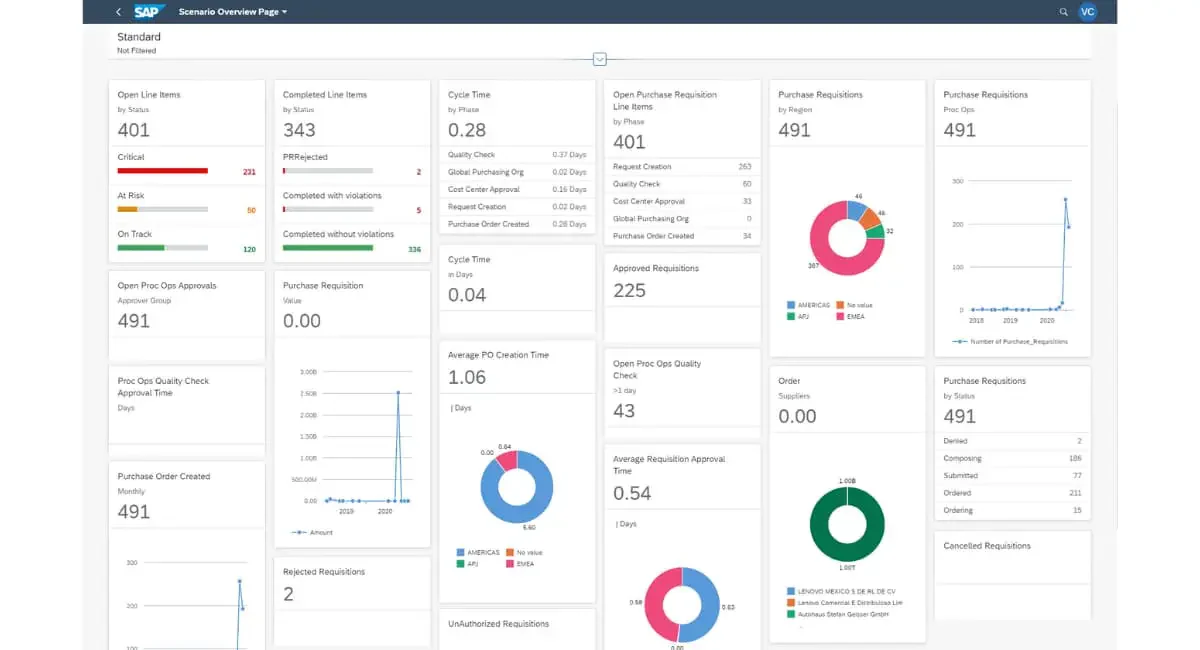
SAP is an enterprise ERP platform that supports finance, procurement, manufacturing, supply chain, and reporting in a single system. It is commonly used by large manufacturers that require standardized processes across multiple entities, plants, and business units.
Compared with Oracle NetSuite, SAP may be a better fit for manufacturers that require deeper enterprise functionality across multiple plants, business units, and global operations. Its advanced manufacturing and governance capabilities also make it suitable for organizations managing highly standardized processes at scale.
Features:
- Advanced production planning
- Materials management
- Quality management
- Procurement management
- Enterprise analytics and reporting
Best for: Large enterprises with complex structures.
Pricing: Average implementation time is 8 months, with an estimated ROI of 22 months and an average reported discount of 16%.
| Pros | Cons |
|---|---|
| Comprehensive manufacturing capabilities | High implementation cost |
| Strong scalability for large enterprises | Requires significant implementation readiness |
| Extensive reporting and governance tools | May be complex for smaller manufacturers |
SAP may suit large Malaysian manufacturers with multiple facilities and complex operations. It helps standardize processes across production, procurement, inventory, finance, and reporting.
2. Blue Yonder
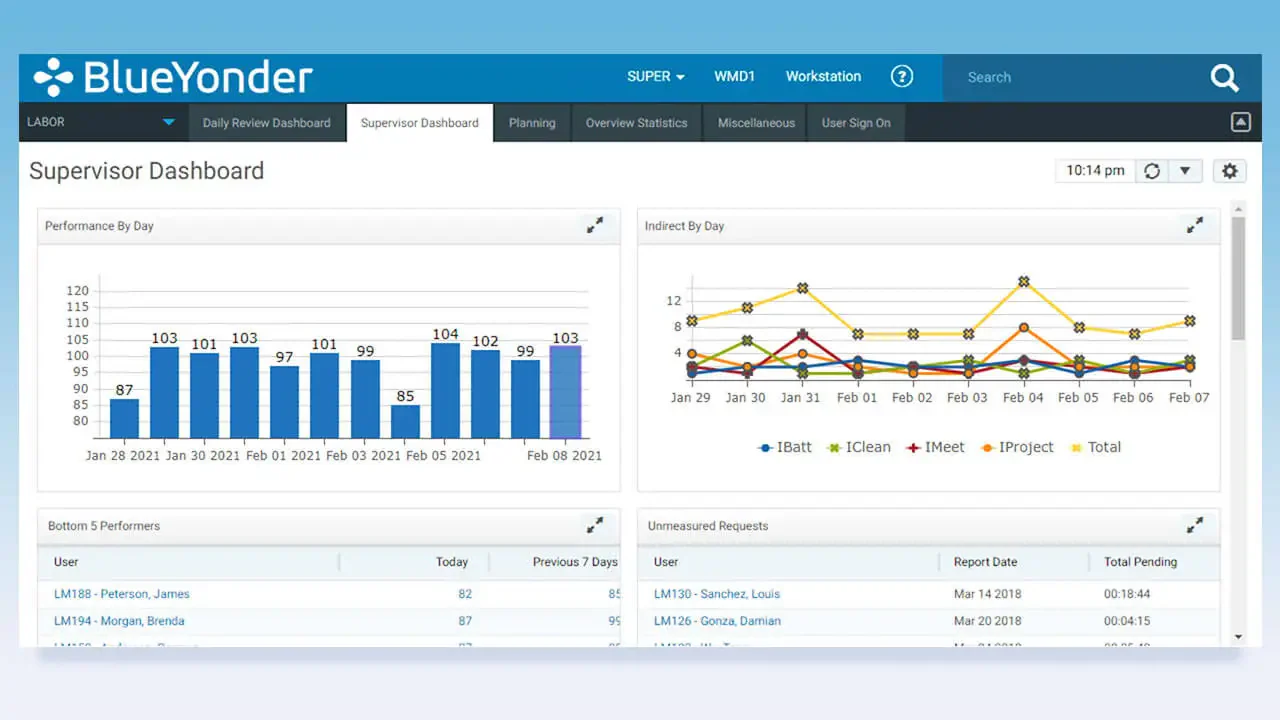
Blue Yonder focuses on manufacturing planning, supply chain visibility, inventory optimization, and demand forecasting. It is often considered by manufacturers seeking greater control over complex production and distribution networks.
Manufacturers that prioritize supply chain planning and demand forecasting may consider Blue Yonder as an alternative to Oracle NetSuite. Its specialized planning capabilities help improve inventory visibility, production planning, and supply chain coordination in complex manufacturing environments.
Features:
- Demand forecasting
- Supply chain planning
- Inventory optimization
- Manufacturing planning
- Operational decision support
Best for: Planning and supply chain-focused manufacturers.
Pricing: Pricing information is not publicly available. Contact the vendor for a custom quote.
| Pros | Cons |
|---|---|
| Strong planning and forecasting capabilities | Implementation can be complex |
| Improves supply chain visibility | Integration requirements should be evaluated |
| Supports demand-driven operations | May require user training and process adjustments |
Blue Yonder may suit manufacturers that prioritize supply chain planning and inventory optimization. Its forecasting capabilities can help improve demand planning and operational efficiency.
3. HashMicro
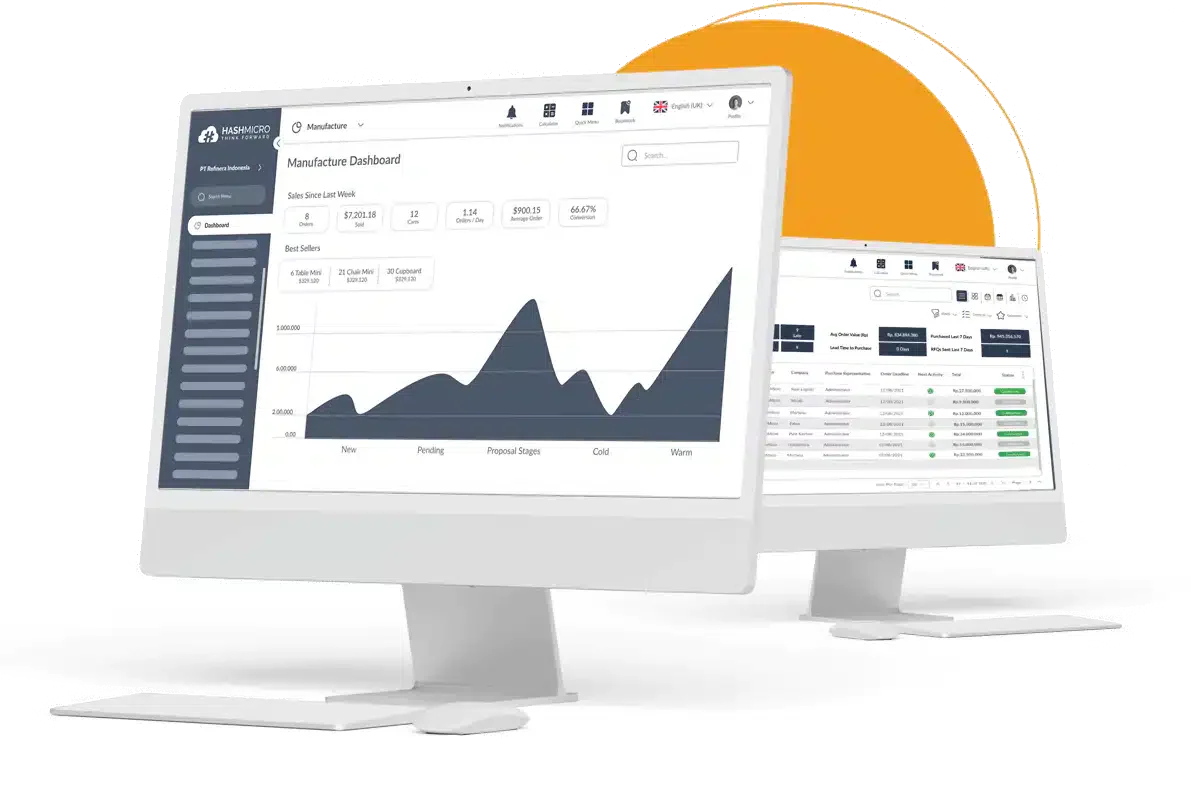
HashMicro offers manufacturing ERP software that combines production planning, inventory management, procurement, accounting, and reporting in a single platform. It is designed to support local operational requirements and business workflows.
Compared with Oracle NetSuite, HashMicro offers greater flexibility for manufacturers that require workflow customization and local implementation support. Its integrated ERP modules can be adapted to specific operational processes, helping businesses reduce implementation complexity while maintaining connected production, inventory, procurement, and finance data.
Features:
- Production planning
- Inventory management
- Procurement management
- Work order control
- Accounting integration
Best for: Manufacturers needing customization and local support.
Pricing: Pricing is available upon request and follows a one-time purchase model.
| Pros | Cons |
|---|---|
| Flexible customization options | Suitability depends on project scope |
| Local implementation support | Requires evaluation of integration needs |
| Integrated manufacturing and ERP modules | May not fit companies seeking fully standardized global templates |
HashMicro may suit manufacturers seeking integrated ERP functionality with customization flexibility and local support. Its modules can be adapted to local operational and reporting requirements.
4. Epicor Kinetic
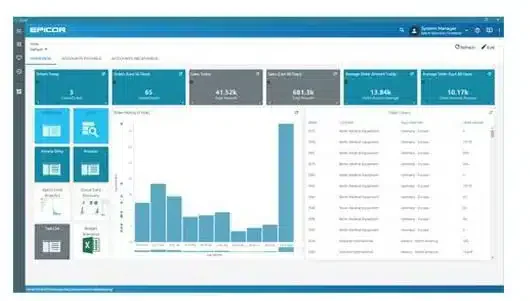
Epicor is a manufacturing-focused ERP solution designed to support production execution, inventory management, scheduling, quality control, and operational reporting.
Epicor may be a suitable alternative for manufacturers seeking stronger shop floor management and production control. Its manufacturing-focused capabilities provide greater visibility into scheduling, production execution, inventory, and quality management for day-to-day operations.
Features:
- Production management
- Scheduling and planning
- Materials control
- Quality management
- Costing and reporting
Best for: Technical and production-focused manufacturers.
Pricing:
Implementation Time: 6 months (average); Perceived Cost: 4/5 (based on user reviews).
| Pros | Cons |
|---|---|
| Strong manufacturing functionality | Local support availability should be assessed |
| Good production visibility | Implementation partner quality varies |
| Supports shop floor operations | Integration needs require evaluation |
Epicor may suit manufacturers that need strong production control and shop-floor visibility. Its capabilities help coordinate production, inventory, quality, and costing processes.
5. IFS Cloud
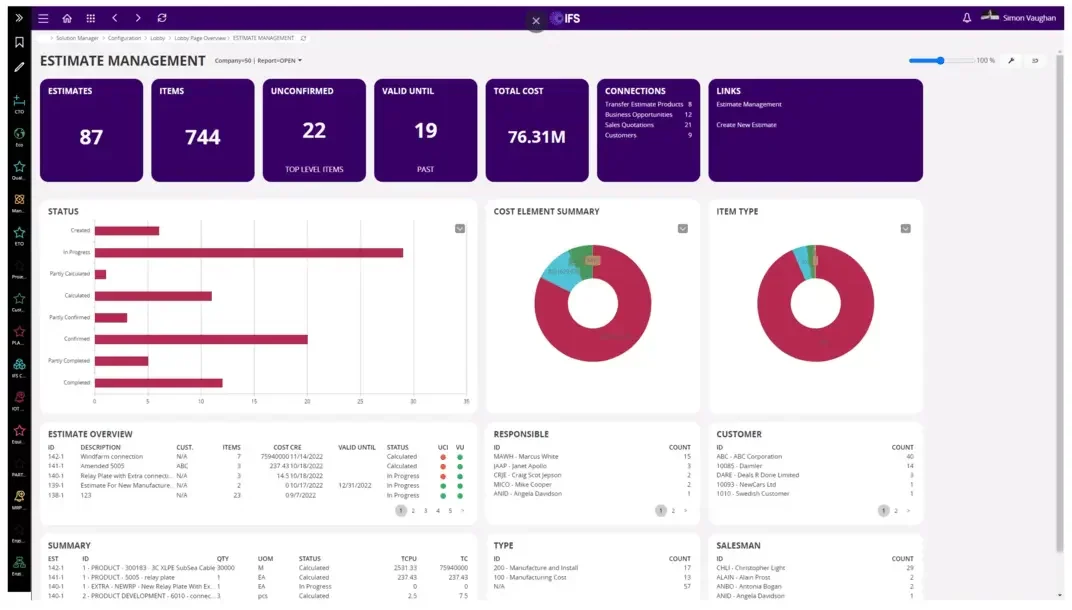
IFS Cloud combines ERP, manufacturing, asset management, service management, and project operations into a unified platform. It is commonly considered by asset-intensive manufacturers.
Compared with Oracle NetSuite, IFS Cloud offers broader capabilities for manufacturers that manage production alongside assets, maintenance, projects, or field service operations. This makes it well suited for businesses requiring a unified platform across multiple operational functions.
Features:
- Manufacturing management
- Asset management
- Service management
- Project operations
- Enterprise resource planning
Best for: Asset-intensive and service-heavy manufacturers.
Pricing: Average implementation time is 10 months, with an estimated ROI of 32 months and an average reported discount of 12%.
| Pros | Cons |
|---|---|
| Strong asset and service management | May exceed requirements of simpler manufacturers |
| Supports project-based operations | Implementation scope can be significant |
| Broad enterprise functionality | Best suited for complex environments |
IFS Cloud may suit asset-intensive manufacturers that manage production alongside maintenance, projects, or service operations. It helps connect these activities within a single platform.
6. Odoo
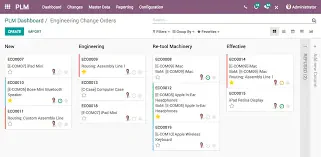
Odoo is a modular ERP platform that allows manufacturers to implement selected applications and expand functionality over time based on operational requirements.
Manufacturers looking for a more gradual ERP implementation may find Odoo to be a practical alternative to Oracle NetSuite. Its modular approach allows businesses to start with essential applications and expand functionality over time, providing greater flexibility as operational requirements evolve.
Features:
- Manufacturing orders
- Bill of Materials (BoM)
- Inventory management
- Purchasing management
- Quality and maintenance modules
Best for: Modular and gradual ERP adoption.
Pricing: Pricing includes a free plan, with paid plans starting at $24.90 per user/month.
| Pros | Cons |
|---|---|
| Modular implementation approach | Requires careful customization planning |
| Flexible deployment options | Complexity can increase as modules grow |
| Supports gradual ERP adoption | Implementation quality varies by partner |
Odoo may suit businesses that prefer a modular ERP approach. Companies can start with essential functions and expand the system as operational needs grow.
7. Acumatica
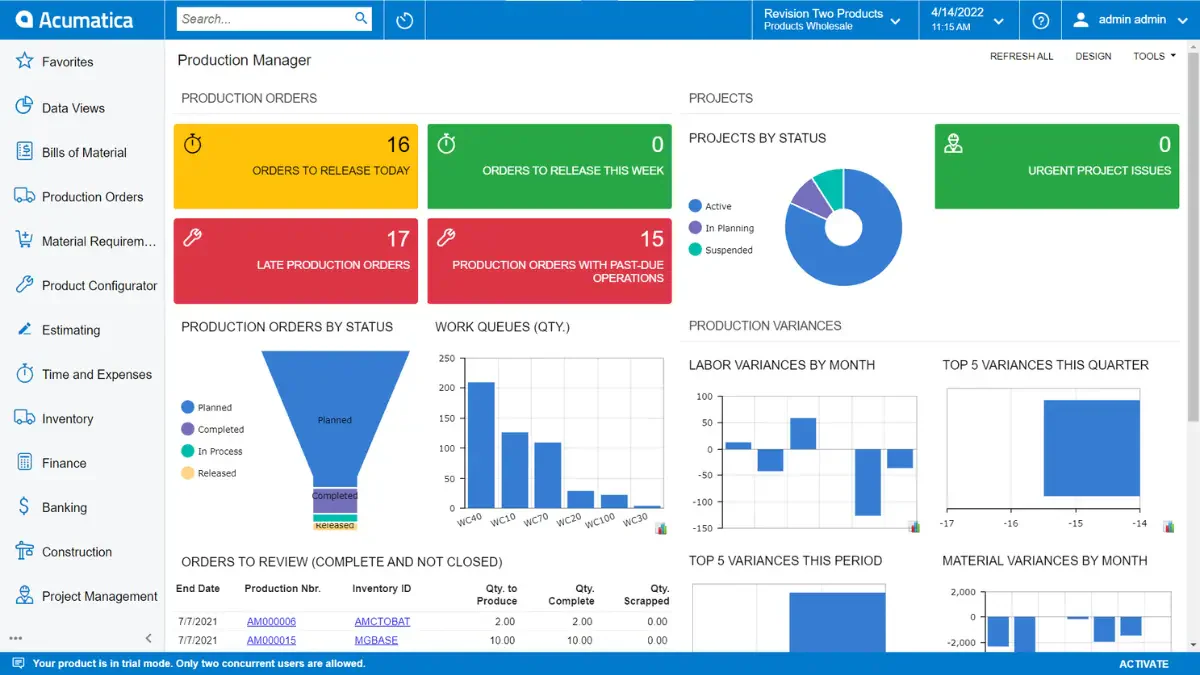
Acumatica is a cloud ERP solution that integrates finance, inventory, procurement, order management, and manufacturing-related processes into a single platform.
Compared with Oracle NetSuite, Acumatica may appeal to growing manufacturers seeking a flexible cloud ERP with integrated financial and operational management. Its scalable architecture supports business expansion while helping organizations maintain visibility across inventory, procurement, order management, and reporting.
Features:
- Financial management
- Inventory control
- Order management
- Procurement management
- Business reporting
Best for: Growing cloud ERP users.
Pricing: Average implementation time is 7 months, with an estimated ROI of 16 months and an average reported discount of 11%.
| Pros | Cons |
|---|---|
| Cloud-first architecture | Local partner availability should be assessed |
| Integrated financial and operational data | Manufacturing depth may vary by requirement |
| Scalable for growing manufacturers | Production-specific needs require evaluation |
Acumatica may suit growing manufacturers looking for cloud ERP capabilities across finance, inventory, procurement, and order management. Its flexibility supports business expansion and operational visibility.
When Oracle NetSuite May Still Be Suitable
Oracle NetSuite may still be suitable for many manufacturers, especially when business requirements align with global ERP governance, centralized data visibility, and enterprise-level implementation readiness. Considering alternatives should not be viewed as rejecting NetSuite, but as part of a careful buying process.
For Companies with Global ERP Requirements
NetSuite can remain suitable for companies with large global operations, multiple entities, and mature reporting requirements. Its cloud ERP structure can help standardize financial and operational visibility across markets.
For Businesses Ready for Enterprise-Level Implementation
NetSuite may also suit businesses that are ready for enterprise-level implementation, including sufficient budget, internal project ownership, user training, data preparation, and change management. Companies with these foundations may be better positioned to gain value from a comprehensive ERP deployment.
Which Alternative Suits My Business the Most?
The best alternative depends on business priorities: SAP for complex enterprises, Blue Yonder for supply chain planning, HashMicro for customization and local support, Epicor for production control, IFS Cloud for asset-intensive operations, Odoo for modular ERP, and Acumatica for flexible cloud ERP.
A practical decision flowchart can help the evaluation team filter options by priority:
- Need enterprise-scale governance and multi-entity complexity?
Consider SAP. - Need advanced planning and supply chain optimization?
Consider Blue Yonder. - Need flexible customization and direct local support in Malaysia?
Consider HashMicro. - Need technical production control and manufacturing depth?
Consider Epicor. - Need asset-intensive or service-heavy operations?
Consider IFS Cloud. - Need modular implementation and gradual ERP expansion?
Consider Odoo. - Need flexible cloud ERP for growing manufacturing operations?
Consider Acumatica.
Oracle NetSuite Alternatives Comparison Table
To simplify the evaluation process, the table below compares several Oracle NetSuite alternatives across key manufacturing ERP criteria, including functionality, scalability, customization, local support, and implementation considerations.
| Vendor | Best For | Manufacturing Fit | Customization | Local Support Relevance | Scalability | Considerations |
|---|---|---|---|---|---|---|
| SAP | Large enterprises with complex structures | Strong enterprise manufacturing and cross-functional control | High, with structured implementation | Depends on selected implementation partner | Very High | Requires significant budget and governance readiness |
| Blue Yonder | Planning and supply chain-focused manufacturers | Strong planning, demand, and supply chain operations | Project-dependent | Depends on implementation model | High | Complex scope should be assessed carefully |
| HashMicro | Manufacturers needing customization and local support | Production, inventory, procurement, accounting, and workflow control | Flexible for workflow adaptation | High relevance for companies wanting direct local implementation support | Suitable for mid-sized to large growth needs | Review modules and implementation scope |
| Epicor | Technical and production-focused manufacturers | Strong manufacturing orientation | Configurable by process needs | Depends on partner capability and localization | High | Evaluate local support and localization depth |
| IFS Cloud | Asset-intensive and service-heavy manufacturers | Strong for complex manufacturing with asset and service operations | High for complex workflows | Depends on regional implementation structure | High | Most relevant for high-complexity operations |
| Odoo | Modular and gradual ERP adoption | Useful for staged manufacturing deployment | Flexible, but planning is important | Depends on partner and implementation team | Moderate to High | Early configuration affects long-term usability |
| Acumatica | Growing cloud ERP users | Relevant for finance, inventory, order, and manufacturing visibility | Flexible cloud configuration | Local partner availability should be evaluated | Moderate to High | Review manufacturing depth and Malaysia support coverage |
How to Switch from Oracle NetSuite?
Migrating from Oracle NetSuite to another ERP system with structured migration approach helps manufacturers transfer business data while maintaining continuity across production, inventory, procurement, and finance. The following steps can help ensure a smoother transition.
1. Review Your Current ERP Data
Start by auditing the data stored in Oracle NetSuite, including customer records, suppliers, inventory, bills of materials (BoM), financial data, and production history. Remove duplicate or outdated records before exporting the data to improve migration accuracy.
2. Plan Data Migration and Process Mapping
Map your existing workflows to the new ERP system and identify how key processes such as production planning, procurement, inventory management, and accounting will be handled. This step helps minimize workflow disruptions after implementation.
3. Reconnect Business Integrations
Identify all third-party applications connected to Oracle NetSuite, such as CRM, e-commerce platforms, warehouse management systems, payment gateways, or manufacturing equipment. Reconfigure these integrations to ensure data continues to flow correctly between systems.
4. Test the New System Before Go-Live
Before fully replacing Oracle NetSuite, conduct testing using real business scenarios. Verify that transactions, production workflows, inventory movements, financial reports, and user permissions function as expected before deployment.
5. Train Users and Go Live
Provide training for employees before launching the new ERP system. Once testing is complete and users are familiar with the new workflows, migrate to the new platform and monitor operations closely during the initial implementation period to resolve any issues quickly.
Conclusion
Choosing the right Oracle NetSuite alternative depends on factors such as business size, budget, manufacturing complexity, customization requirements, and implementation goals. Solutions like SAP, Blue Yonder, HashMicro, Epicor, IFS Cloud, Odoo, and Acumatica each offer different strengths, making them suitable for different manufacturing environments.
For Malaysian manufacturers, it is important to compare vendors based on operational needs, scalability, integration capabilities, and support availability. Conducting a thorough evaluation and consulting with ERP specialists can help businesses identify the solution that best aligns with their long-term objectives.
Try a free demo can also provide valuable insight into how the system fits your manufacturing processes before making a final decision.

FAQ about Oracle NetSuite Alternatives for Manufacturing Software
The best alternative depends on business size, manufacturing complexity, budget, and support needs. SAP may suit large enterprises, HashMicro may suit companies needing customization and local support, while Odoo may suit modular adoption.
Yes, HashMicro can be a relevant Oracle NetSuite alternative for Malaysian manufacturers that need flexible customization, integrated workflows, and local implementation support. Businesses should still compare it against their specific module and implementation needs.
SAP, IFS Cloud, Blue Yonder, and Oracle NetSuite may be suitable for large or complex manufacturing enterprises. The right choice depends on governance needs, production complexity, and implementation readiness.
Identify the right ERP by mapping your production workflows, BoM complexity, inventory processes, accounting integration, budget, and local support needs. A vendor demo and workflow consultation can help validate the fit before purchase.
Manufacturers look for alternatives to compare cost structure, implementation scope, workflow fit, customization options, and support models. This helps them choose an ERP that fits both current operations and future growth.