










 Limited to 100 registrants

The restaurant business is booming right now, it seems that because so many start a restaurant business, it seems easy to run this business. Starting a restaurant business does have its own problem and challenges. One of the keys to the success of a restaurant business is consumers who feel happy and want to come back again.
To ensure the success of your restaurant business, the entire team from management to staff must dedicate to the well-being of consumers. There are several important things that must be known and prepared before running a restaurant business. Based on this, advanced restaurant software is needed for the sustainability and problem of the food business that you are living in.
Enhance your business decisions and streamline customer order processing with restaurant software. The top features of POS Restaurant Software boost company efficiency. A Mobile Restaurant POS offers numerous benefits for managing transactions, including enabling customers to view the menu digitally.
Why Restaurants Struggle in Competitive Times?
In highly competitive times, restaurants face challenges because competition has expanded far beyond nearby outlets. Delivery platforms let customers compare dozens of options instantly, while ghost kitchens can enter the market quickly with lower overhead.
At the same time, rising labor, rent, and ingredient costs put constant pressure on thin margins. Guests also expect faster service, flexible payments, and consistent experiences across dine-in, takeaway, and delivery.
Staffing issues intensify these challenges, as labor shortages and high turnover make service quality harder to maintain. When systems stay manual or fragmented, decisions rely on incomplete data, which leads to waste, stockouts, and missed growth opportunities.
The Importance of Thriving VS. Just Surviving
In the restaurant business, there is a clear difference between surviving and thriving. Surviving often means breaking even, reacting to daily problems, and operating under ongoing financial stress, with tight cash flow and short-term decisions.
Thriving is about building a profitable, scalable, and sustainable operation. Restaurants that thrive have healthier margins, clearer visibility into performance, and the ability to reinvest in people, systems, and customer experience. This also helps employee satisfaction, as teams work with clearer processes and growth paths.
When a restaurant moves beyond survival mode, customer experience improves naturally, because consistency, service quality, and long-term planning become possible.
9 Essential Strategies for Thriving in the Competitive Restaurant Industry
No single tactic keeps a restaurant ahead of the competition. These nine strategies work together, so start with the ones that fit your operation best.
Strategy 1: Focus on exceptional quality
Quality is the foundation of pricing power, reviews, repeat visits, and long-term loyalty. Customers forgive a busy night, but they rarely forgive inconsistency.
Define quality in measurable terms, such as taste consistency, portion control, plating standards, and food temperature. Then reinforce it with prep checklists, station audits, and short refresher training for peak periods.
- Standardize recipes and portioning tools to reduce variance.
- Use weekly “top complaint” reviews to fix recurring issues fast.
- Track returns, remakes, and comps to identify quality leaks.
Strategy 2: Build a memorable dining experience
Restaurants don’t compete on food alone. Guests remember how the place made them feel, including speed, warmth, ambience, cleanliness, and how problems are handled.
Make the experience consistent across dine-in, takeaway, and delivery, with the same service standard, order accuracy, and care every time.
- Avoid over-decorating while neglecting service flow.
- Keep greetings and table handover practices consistent.
- Communicate wait times during peak hours.
Strategy 3: Implement effective loyalty programs
Repeat customers are usually cheaper to retain than new customers are to acquire. A loyalty program gives occasionally satisfied guests a reason to return sooner.
Keep it simple and valuable, with points, tiers, birthday offers, or members-only bundles that are easy to redeem.
- Repeat rate and visit frequency
- Redemption rate (too low means irrelevant, too high means margin risk)
- Average order value of members vs. non-members
Strategy 4: Master online presence and digital marketing
Your online presence is the new storefront. For many customers, the first impression comes from Google results, reviews, menus, photos, and delivery listings.
Win the basics first with accurate store details, an updated menu, strong photos, and consistent review responses. Then scale what performs, such as short-form content, local SEO, and campaigns that target high-intent searches.
- Keep your Google Business Profile updated weekly.
- Build content around best-sellers and seasonal drops.
- Track promotions by channel so discounts don’t become blind margin loss.
Strategy 5: Leverage email marketing effectively
Email is an owned channel, so you control the reach. It works best for bringing customers back through targeted offers, event announcements, and seasonal reminders.
Segment the list early into frequent diners, lapsed customers, delivery-first buyers, and high spenders. Simple segmentation usually beats one promo for everyone.
Strategy 6: Engage your community actively
Local relationships still matter, because community engagement builds trust and word-of-mouth beyond paid ads.
Think of partnerships with gyms, offices, and schools, small events, and support for local causes. The goal is to show up consistently, not to run expensive campaigns.
Strategy 7: Stay agile and embrace trends
Diet preferences, ordering behavior, and content formats change quickly. Restaurants that stay relevant usually test small, learn fast, and keep what works.
Treat innovation as controlled experimentation, such as limited-time menu items and delivery bundles, and gather feedback before rolling changes out to all locations.
- Pilot in one outlet first.
- Set success metrics such as sales volume, margin, and repeat orders.
- Avoid permanent menu expansion without performance proof.
Strategy 8: Invest in your staff
Staff performance directly affects guest experience, speed, and cost control. High turnover creates hidden costs in recruiting time, training gaps, and operational mistakes.
Make retention practical with clear SOPs, predictable scheduling, structured training, and recognition. When staff know what good looks like and feel supported, service becomes more consistent.
- Turnover rate and training completion
- Labor cost % vs. sales
- Service speed and complaint trends by shift or team
Strategy 9: Leverage data and business systems
Without reliable numbers, restaurants often over-order, under-staff, run unprofitable promos, or miss early warning signs like rising food costs and increasing voids.
A modern POS restaurant system unifies sales, payments, discounts, and reporting across outlets. When inventory and purchasing are connected, you can reduce stockouts, control waste, and track ingredient usage more accurately.
A kitchen display integration system also improves coordination by sending orders directly to the kitchen in real time. Combined dashboards help you spot issues early, such as rising refund rates or shifting bestsellers.
Problems in Restaurant Industry
To find out what restaurant business problems and problems often occur. By understanding what are the restaurant business problems and the obstacles in the restaurant business, you can be more careful and know the loopholes to manage your restaurant.
Standard food and drink menu list
The menu problem is one of the issues that restaurant owners encounter most frequently. Do you have too many or not enough menus? You must carefully consider the amount of menus that restaurants offer. It’s time to start thinking about offering fewer menu options while keeping quality standards if you already have a large number of menu options. You must purchase a greater variety and quantity of ingredients the more options your menu offers. Additionally, you’ll take longer to place orders.
Choosing the wrong kind of packing
The mistakes in the sort of packaging will significantly impact the customer satisfaction. because food cannot be kept pleasant and fresh for long enough. The consumer will be disappointed, for instance, if you provide ice cream, yogurt, or other menu items that must be served cold but the packaging you select does not preserve the flavor or flavor of your meal.
Packaging is important because it can increase consumer interest in your items or increase their popularity. Consider designing your packaging in accordance with your brand’s identity to help shape the consumers’ emotions.
The Usage of POS Restaurant Software as a Solution to Problems in the Restaurant Industry
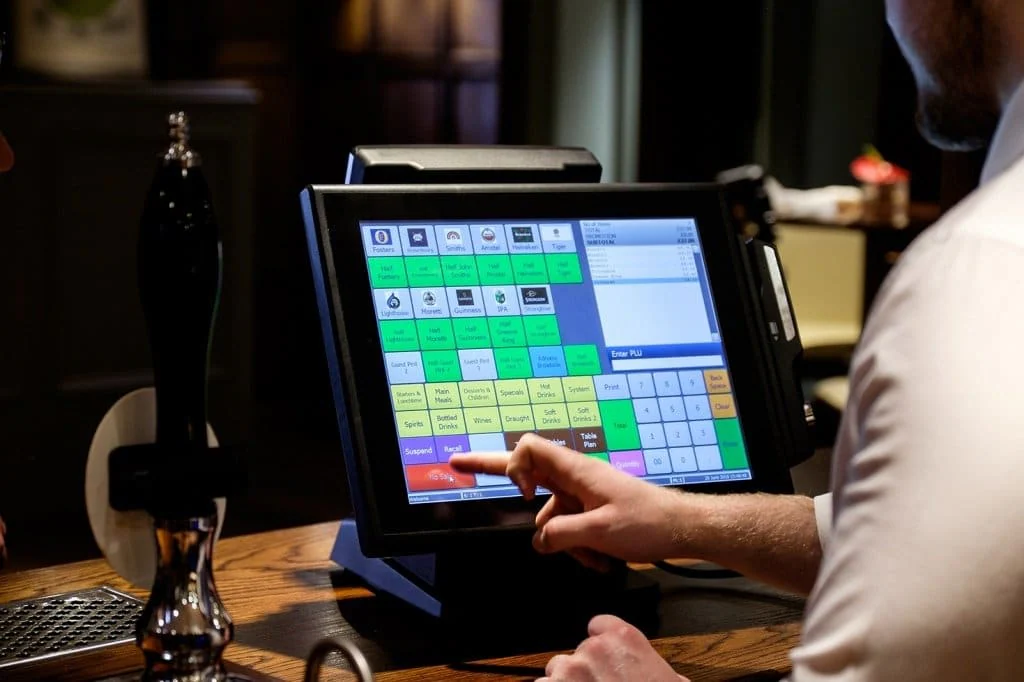
A system called POS, or point of sale, is to handle retail sales transactions, such as those that take place at restaurants. A POS system typically consists of many computers and a cash register. You can acquire summary data about your restaurant business and track inventory using this system. Your inventory records will always be current since POS can record every sales transaction in real time.
As a business owner, you’ll be able to track unit costs, determine when to refill, and perform item-by-item inventory analysis thanks to this digital cash register system. You can avoid one of the most typical issues in the restaurant industry using this system. Typically, restaurant owners prepare financial reports, and since POS systems can only provide sales reports and not financial ones, accounting software is also required. It’s best to look for POS or accounting software that already integrates the two online when you wish to use it. since doing so will make it easier to oversee our restaurant operation and lessen the workload. With the right and automated POS software, you can automate restaurant management problems, and can also be used anywhere and anytime. Using HashMicro’s POS also helps you in maintaining all company data with the best security.

Benefits of POS Restaurant Software in Restaurant Industry
This system provides various benefits to streamline business processes in the food and beverage industry so that it can increase the number of sales and customer satisfaction. Some of the benefits of the F&B management software are as follows:
Mobile restaurant POS offers convenient service
Mobile restaurant POS allows customers to order food via E-Menu. This means that the waiter can perform other tasks during the food ordering process. Through the E-Menu you can also reduce the risk of ordering errors such as ordering errors or not recording customer orders. Immediately after the customer ordered the food and drink, the data was directly entered into the POS system and displayed on the kitchen screen so that the chef staff could immediately process the order.
Improves service quality
Most cloud-based POS systems can record customer identity and order history. As we know before, this is very important considering they have different health conditions. Some customers may have certain conditions such as peanut allergies, for example. They will ensure that the waiter does not serve food containing nuts because it can be fatal. This information is very important for chefs to know because it needs to consider the cooking process and place. That way, customers will feel more secure when enjoying the serving dishes.
Updates food menu quickly and easily
At certain times such as Ramadan, restaurants will definitely add or update the menu. With a mobile restaurant POS system, this can be easily done through the website. Because of this system, managers can check changes even when they are not in the restaurant.
Faster ordering and payment process
The mobile restaurant POS system allows for a faster order process because the POS system will record all orders. After recording the data, the price list for each food menu will immediately be clearly visible. This will also lead to a much faster payment process. The reason is, that customers already know how much money they have to pay including what method they want to use.
Lowering employee costs
We know one of the keys to a restaurant’s success is having waiters who can serve customers well. But sadly, when a restaurant has a lot of diners, waiters get demands to work quickly. Therefore the staff will be too busy to ensure that all customers are well served. However, by using the E-Menu, customers can create their own orders. Thus the restaurant does not require many waiters, which means you can reduce the cost of employee expenses.
Why Integrated ERP Is Key to Multi-Branch Restaurant Growth
Multi-branch restaurant growth is usually limited by control, not demand. When each outlet runs on its own spreadsheets, manual stock logs, or disconnected apps, leaders lose real-time visibility into inventory usage, labor costs, table turnover, and customer behavior.
Small leaks multiply across branches. Waste erodes margins, stockouts disrupt service and damage repeat visits, and delayed reporting means problems are spotted after the losses have happened.
An integrated ERP helps by centralizing data and standardizing workflows, so purchasing, inventory, finance, and operations move in sync across all locations. With a restaurant POS system, table availability and peak-hour seating can also be managed more accurately across outlets.
Adding a kitchen display integration system improves kitchen coordination further, with real-time order tracking that reduces miscommunication and supports consistent execution.
Conclusion
Best restaurant software can simplify the operation or management of your restaurant effectively and efficiently. With advances in technology, currently, manual operations must be transformed using digital technology. So that it can carry out restaurant sales management automatically, quickly, and accurately. You will get many benefits according to the explanation above.
In addition, you can also use the restaurant POS software from HashMicro to manage transactions, set tables, and monitor the status of orders in the kitchen. To find out the budget projections that you have to prepare using the Food & Beverage software or restaurant POS software from HashMicro, you can download the ERP software price calculation scheme from HashMicro. You can also consult further so that you can choose the software that suits your company’s needs and get a free demo, by visiting our dashboard.