






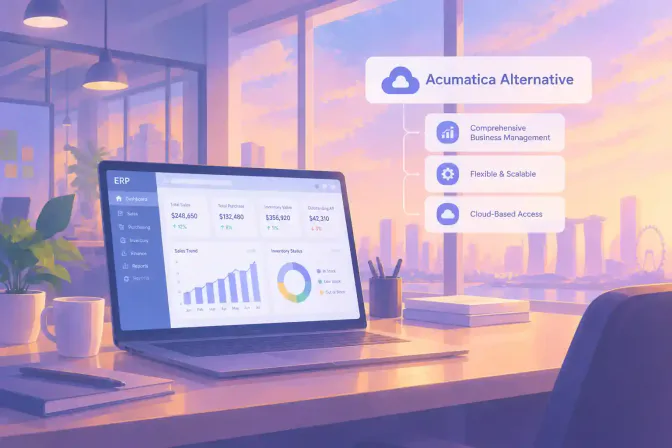
Acumatica brings finance, distribution, manufacturing, and project work into a cloud ERP. Singapore buyers still need to test local fit, total cost, and support before they switch.
Acumatica alternatives can offer a different balance of financial depth, warehouse control, integrations, or implementation support. Compare platforms by the work your team must complete every day.
This shortlist covers HashMicro HMX, Oracle NetSuite, Microsoft Dynamics 365 Business Central, SAP Business One, Sage Intacct, Epicor Prophet 21, and ERPNext. Use each section to focus your next demo.
Key Takeaways
Acumatica is a modular cloud ERP for finance, distribution, manufacturing, projects, field service, and CRM; Singapore buyers should test local fit.
Businesses consider Acumatica alternatives when transaction-based costs, partner support, or integration and workflow fit no longer meet their needs.
The seven Acumatica alternatives are HashMicro HMX, NetSuite, Business Central, SAP Business One, Sage Intacct, Epicor Prophet 21, and ERPNext.
Choosing a distribution alternative means testing warehouse and order workflows, multi-location stock, connected finance, Singapore GST, and InvoiceNow.

Best Because
Connected finance, inventory, procurement, and operations for Singapore businesses.


Best Because
Multi-entity finance and a broad cloud suite for growing groups.
Best Because
Microsoft-aligned ERP for finance, inventory, and operations.

Best Because
Broad ERP foundation for small and midsize businesses, delivered through partners.

Best Because
Finance-led reporting and controls for accounting-heavy groups.

Best Because
Distribution-focused ERP for wholesale and branch operations.
Best Because
Open-source ERP for budget-conscious teams with technical resources.
What Is Acumatica?
Acumatica is a cloud ERP for small and midsize businesses. Its modular design lets teams add financial management, distribution, manufacturing, project accounting, field service, and CRM capabilities.
Its consumption-based pricing supports broad user access, while partner-led delivery shapes implementation. Singapore teams should confirm GST, InvoiceNow, integrations, and support scope before signing.
"Acumatica is a modular cloud ERP that lets growing businesses add finance, distribution, and project capabilities as they scale. Singapore buyers should still test GST, InvoiceNow, and partner support before committing."
Why Consider Acumatica Alternatives?
Businesses compare Acumatica when their operating model changes or requirements become more complex. A structured review shows whether another platform offers better control, reporting, or industry fit.
1. Pricing as transaction volumes grow
Acumatica links pricing to usage and transaction volume rather than only user numbers. Model sales orders, invoices, stock movements, and growth in Singapore before comparing subscription quotes.
2. Implementation and partner support
Acumatica implementations usually involve a value-added reseller. Review the partner's Singapore experience, delivery plan, training, and support terms because service quality can affect the outcome.
3. Fit with existing systems and workflows
Alternatives may connect more naturally with your current finance, warehouse, CRM, or e-commerce stack. Map approvals, fulfilment, reporting, and tax tasks before you judge a replacement.
Acumatica Competitors at a Glance
The following table groups leading Acumatica competitors by the business need they commonly address. Treat it as a shortlist, then test each platform with your own Singapore workflows.
| Platform | Strong fit | Singapore evaluation point |
|---|---|---|
| HashMicro HMX | Finance, inventory, and operational workflows | Check local implementation, GST, InvoiceNow, and warehouse needs. |
| Oracle NetSuite | Multi-entity finance and a broad cloud suite | Assess total cost, subsidiary controls, and integrations. |
| Microsoft Dynamics 365 Business Central | Microsoft-centric teams | Confirm licences, extensions, and local tax setup. |
| SAP Business One | Small and midsize businesses with broad ERP needs | Test inventory depth, manufacturing, and partner support. |
| Sage Intacct | Finance-led reporting and controls | Check operational coverage beyond accounting. |
| Epicor Prophet 21 | Distribution-focused operations | Test warehouse, pricing, and fulfilment fit. |
| ERPNext | Budget-conscious businesses seeking open-source flexibility | Confirm hosting, support, security, and local compliance. |
For market context, compare the Acumatica alternatives overview, Rand Group comparison, Versich's ERP assessment, and Premier's 2026 list. Use them to test each platform's stated strengths.
7 Acumatica Alternatives Worth Comparing
These seven platforms cover different priorities, from local operational fit to finance depth and distribution specialisation. Compare the workflow, cost, and support evidence behind each claim.
Pricing notes under each profile come from the vendor's own published information. Figures are in US dollars as listed by the vendor and exclude Singapore GST. Where a vendor only sells by quote, the note says so.
1. HashMicro
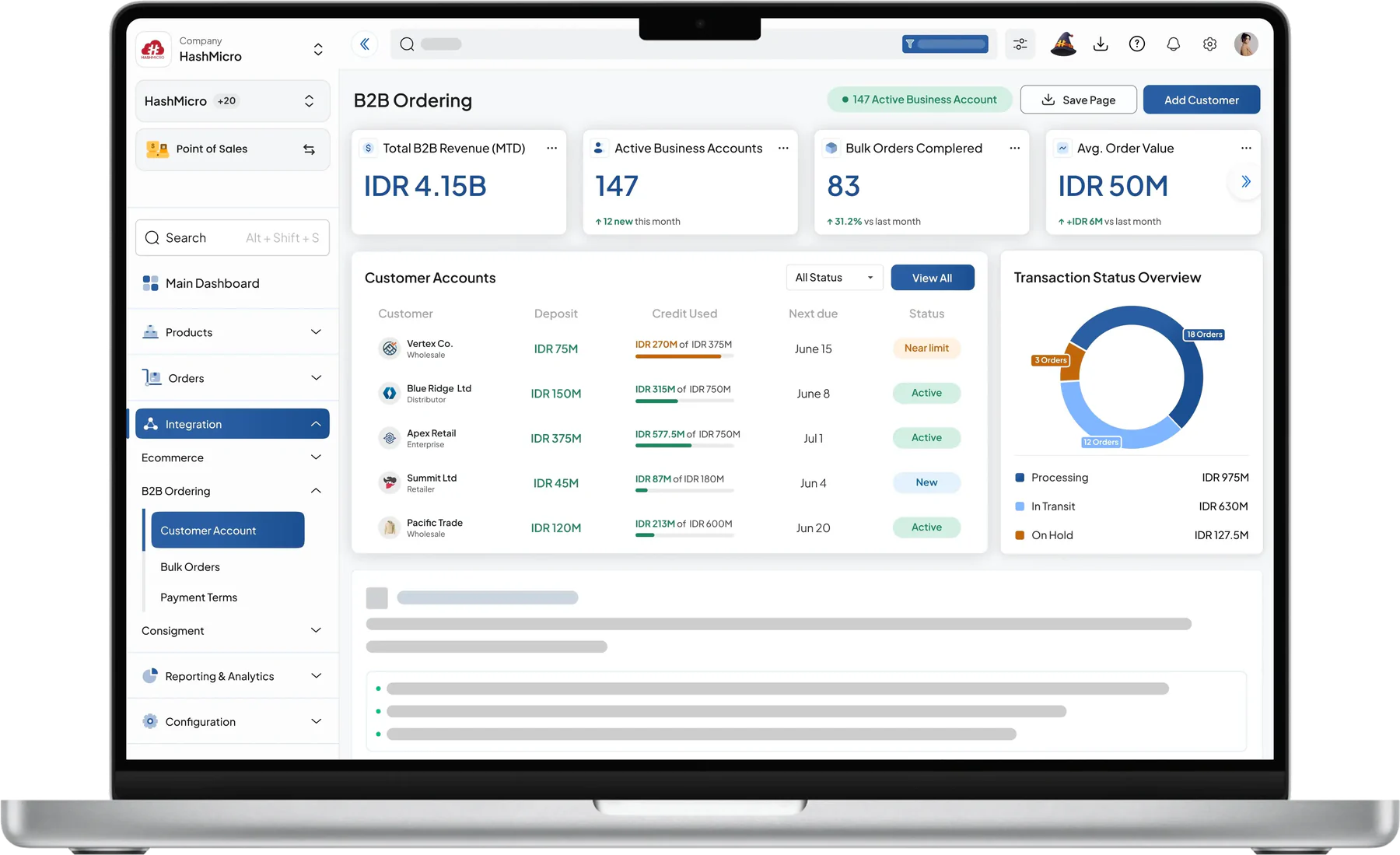
HashMicro HMX connects finance, inventory, procurement, sales, and operations in one enterprise platform. Singapore businesses can test local tax, warehouse, and reporting needs with a regional implementation team.
For an Acumatica alternative for distribution, request a demo using purchase receipts, multi-location stock, fulfilment, approvals, and financial postings. Ask how it supports Singapore GST and InvoiceNow.
Key Features:
- Connected Platform: Finance, inventory, procurement, sales, and operations together.
- Regional Implementation: A regional team supports local tax, warehouse, and reporting needs.
- Operational Workflows: Covers inventory, procurement, sales, and fulfilment.
- Enterprise Scope: Built for businesses with connected finance and operations.
Best for: Singapore businesses that want finance and distribution operations in one platform.
Pricing: HashMicro does not list fixed plan prices. Because it is modular, the cost is tailored to the modules you need and the expected implementation timeline. The quickest way to see what that means for your business is to select your requirements in the pricing calculator below.
2. Oracle NetSuite
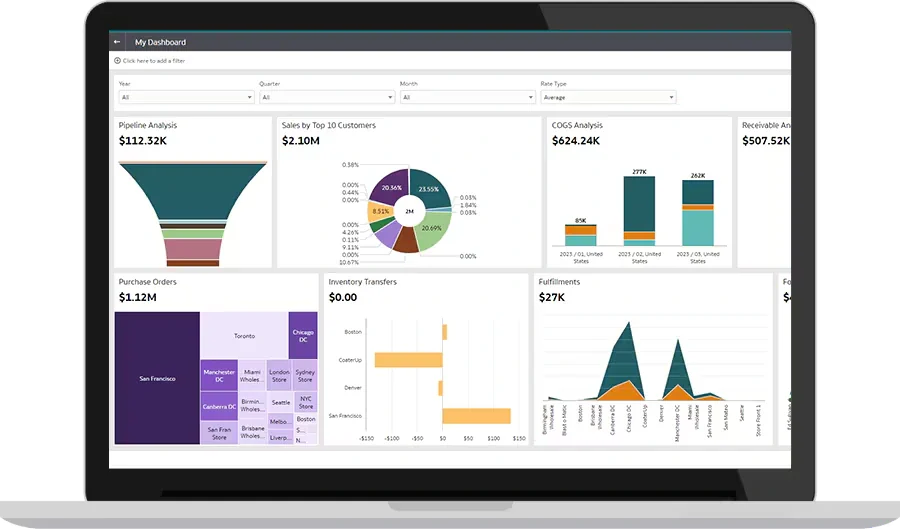
Oracle NetSuite combines finance with inventory, procurement, order management, CRM, and e-commerce. It suits groups that need multi-subsidiary controls, multiple currencies, and a broad cloud ecosystem.
Check the full subscription and implementation scope, including modules, users, integrations, and support. Singapore distributors should also test landed costs, warehouse transfers, and GST reporting in a realistic demo.
Key Features:
- Finance with Operations: Inventory, procurement, order management, CRM, and e-commerce.
- Multi-Subsidiary Controls: Manages several entities within one system.
- Multiple Currencies: Supports groups trading across currencies.
- Broad Cloud Ecosystem: One suite covering many business functions.
Best for: Groups that need multi-subsidiary controls, multiple currencies, and a broad cloud suite.
Pricing: NetSuite is quote-based and does not publish a public price list. Your quote depends on the users, modules, entities, and contract term you choose, and implementation is typically scoped separately. Request a written quote that covers all of these.
3. Microsoft Dynamics 365 Business Central
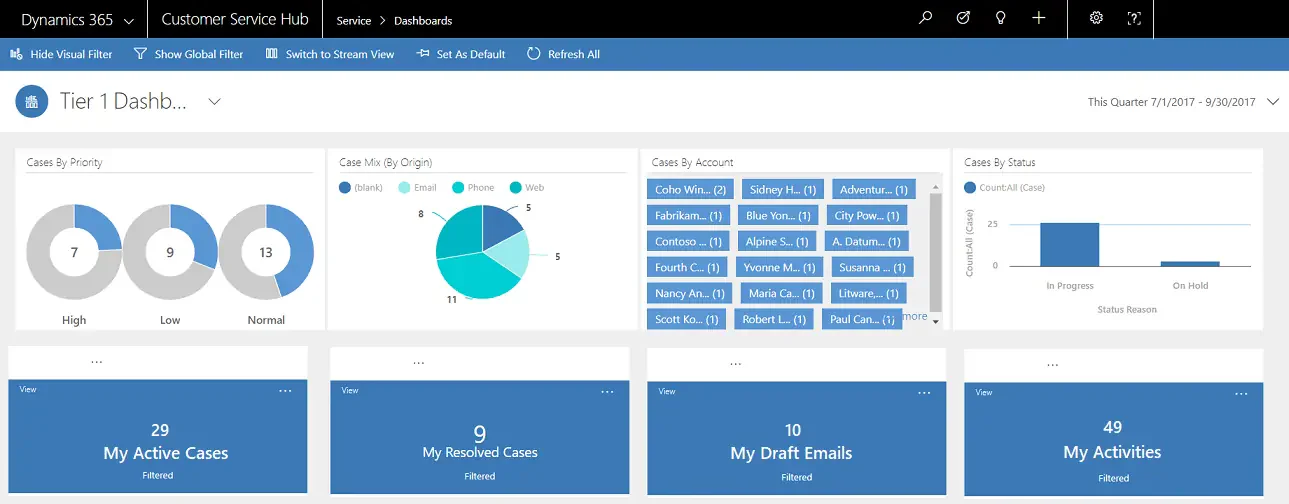
Business Central brings finance, sales, purchasing, inventory, warehousing, projects, service, and manufacturing into the Microsoft ecosystem. It suits teams using Microsoft 365 and Power Platform.
Confirm which features sit in the selected licence and which require extensions or partner work. Test approval flows, stock availability, fulfilment, and Singapore tax reporting with your current data.
Key Features:
- Microsoft Ecosystem: Works alongside Microsoft 365 and Power Platform.
- Core ERP Modules: Finance, sales, purchasing, inventory, and warehousing.
- Projects and Service: Extends into projects, service, and manufacturing.
- Licence-Based Features: Some capabilities depend on the licence or extensions.
Best for: Teams already using Microsoft 365 and Power Platform.
Pricing: Microsoft lists Business Central per user per month, paid yearly, excluding GST. Essentials costs US$80 and Premium costs US$110, which adds service management and manufacturing. Team Members cost US$8 and give limited access to read data, approve workflows, and update selected information. Licences are bought through a Microsoft partner, and a 30-day free trial is available. Copilot credits for the AI agents are sold separately.
4. SAP Business One

SAP Business One supports accounting, purchasing, inventory, sales, and customer management for small and midsize businesses. It can fit companies that want a broad ERP foundation and a mature partner network.
Ask the partner to show warehouse receipts, batch or serial tracking, purchasing approvals, and financial reports. Confirm which Singapore requirements are standard, configurable, or handled through extensions.
| Alternative | Best starting point | Demo evidence to request |
|---|---|---|
| HashMicro HMX | Connected finance and operations | Receipts, stock, fulfilment, approvals, and postings |
| Oracle NetSuite | Multi-entity and cross-border growth | Consolidation, landed cost, and GST reporting |
| Business Central | Microsoft-aligned teams | Extensions, Power BI, and inventory availability |
| SAP Business One | Broad SME ERP foundation | Warehouse tracking, purchasing, and financial reports |
Key Features:
- Core ERP Coverage: Accounting, purchasing, inventory, sales, and customer management.
- Partner Network: Delivered and supported through a mature partner network.
- Broad Foundation: Suits companies that want a wide ERP base.
- SME Focus: Designed for small and midsize businesses.
Best for: Small and midsize businesses that want a broad ERP foundation with partner support.
Pricing: SAP Business One is quote-based and sold through authorised partners, so there is no public price list. Your quote comes from the partner you choose and depends on your users, modules, and implementation scope. Compare itemised quotes from more than one partner.
5. Sage Intacct
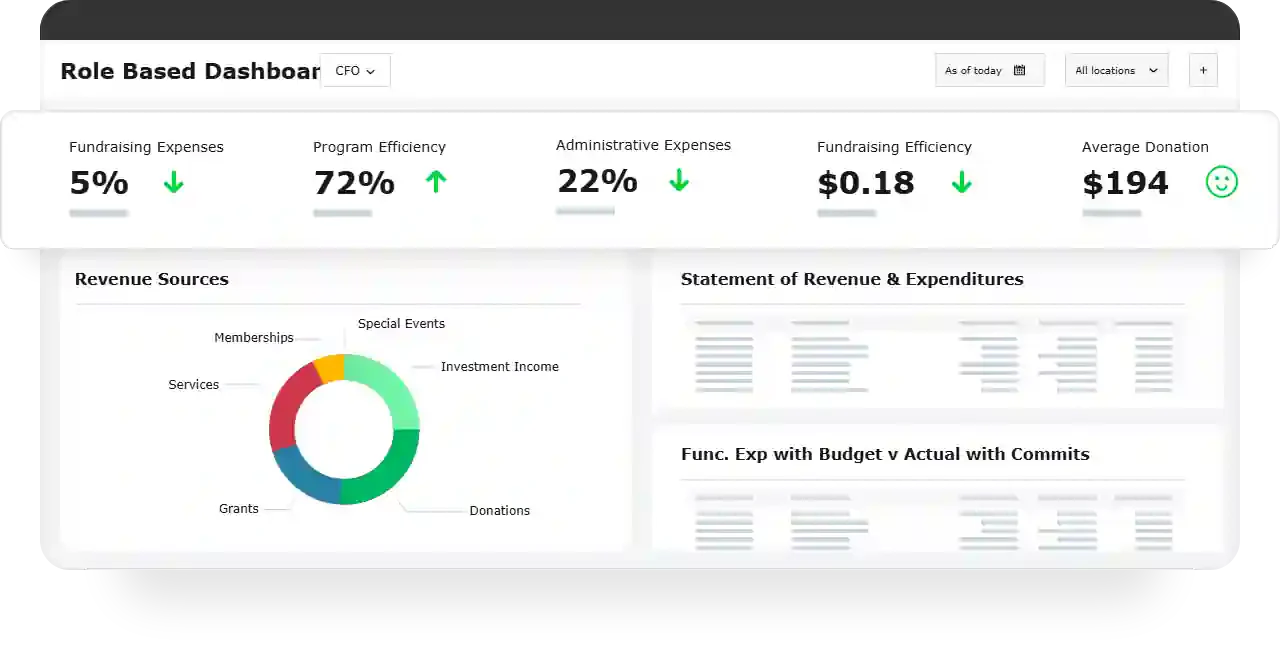
Sage Intacct focuses on financial management, reporting and control. It may suit groups that prioritise accounting depth while using other tools for warehouse operations.
Distribution teams should test order, inventory and purchasing requirements in detail. Confirm whether the proposed setup uses Sage modules, connected applications or both.
Key Features:
- Financial Management: Core accounting depth for finance teams.
- Reporting and Control: Finance-led reporting across the business.
- Modules and Integrations: Extends through industry modules and connected applications.
- Finance-Led Setup: Often paired with other tools for warehouse operations.
Best for: Groups that prioritise accounting depth and finance-led reporting.
Pricing: Sage Intacct is priced by quote, built around the modules, users, and entities you need. Implementation, data migration, and training are quoted separately from the software licence, so ask for a full breakdown before committing.
6. Epicor Prophet 21

Epicor Prophet 21 focuses on wholesale distribution and branch operations. It may suit businesses that need detailed inventory, pricing and fulfilment workflows.
Ask for a demonstration using transfers, replenishment and customer orders. Then confirm how the proposed setup handles Singapore accounting, tax and support requirements.
Key Features:
- Distribution Focus: Built around wholesale distribution operations.
- Branch Operations: Supports multi-branch distribution workflows.
- Inventory Workflows: Detailed inventory handling for distributors.
- Pricing and Fulfilment: Covers pricing and customer order fulfilment.
Best for: Distributors that need detailed inventory, pricing, and fulfilment workflows.
Pricing: Epicor Prophet 21 is quote-based. Pricing depends on your users, modules, and implementation scope, so request a custom quote from Epicor or a local partner and ask what Singapore support is included.
7. ERPNext
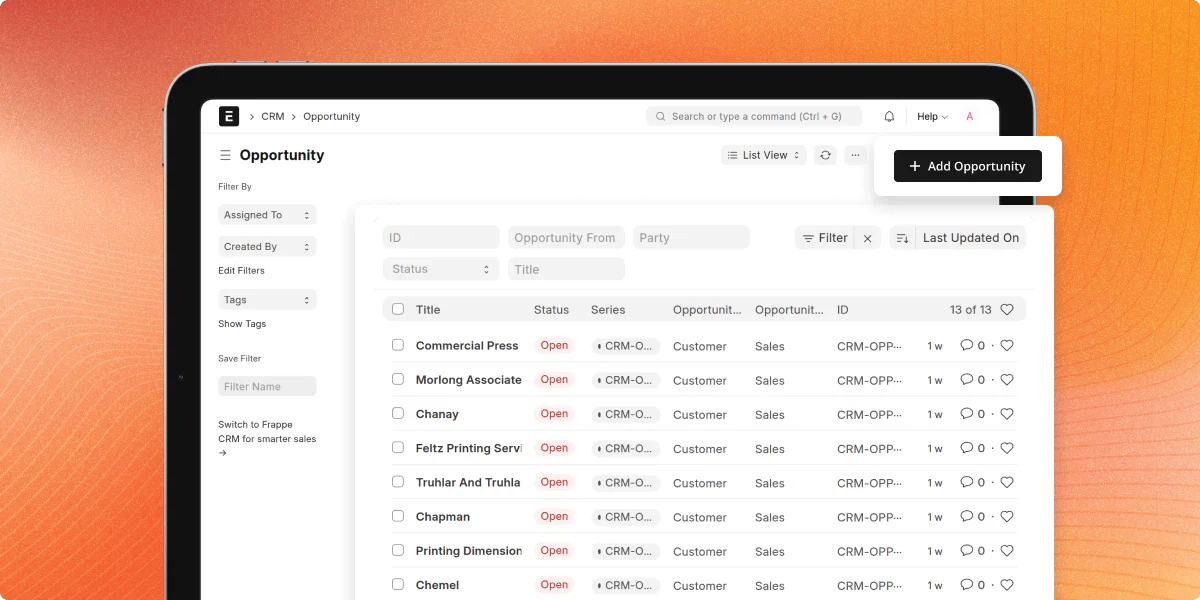
ERPNext combines accounting, purchasing, sales and stock management in an open-source platform. It may appeal to businesses with internal technical resources and a need for flexibility.
Lower licence costs do not remove implementation responsibilities. Compare hosting, support, security, integrations and local compliance before choosing it as a cheaper alternative to Acumatica.
Key Features:
- Open-Source Platform: No licence fee for the software itself.
- Core Modules: Accounting, purchasing, sales, and stock management.
- Flexibility: Suits teams that want to adapt the system.
- Hosting Choice: Self-host or use managed hosting.
Best for: Budget-conscious businesses with internal technical resources.
Pricing: The ERPNext software is free and open source, with no per-user licence fee. Costs come from hosting, support, and implementation. Frappe Cloud, the official managed hosting, bills by compute rather than per user. Product support is bought separately, and customisation delivered by a partner is quoted separately.
How to Choose an Acumatica Alternative for Distribution
Distribution ERP selection should follow the movement of goods and money through your business. Test each platform with the same scenarios so the comparison stays consistent.
1. Compare warehouse and order fulfilment workflows
Start with receiving, put-away, picking, packing and dispatch. Include returns and backorders because these often expose gaps in a demonstration.
Ask the vendor to show each status change in real time. Confirm whether warehouse users can complete tasks without switching between disconnected systems.
2. Check inventory visibility across locations
Review stock by warehouse, branch, bin and status. Singapore distributors may need visibility across central stores, retail sites and third-party locations.
Test transfers, reservations and available-to-promise quantities. Then check whether managers can see the same stock position in purchasing, sales and finance.
3. Test purchasing, sales and accounting together
Trace one purchase from approval to receipt and supplier invoice. Trace one customer order through fulfilment, invoicing and the resulting financial entries.
This approach reveals integration gaps earlier than separate module demonstrations. It also shows whether teams can work from one consistent transaction record.
4. Confirm Singapore GST and InvoiceNow requirements
Ask how the proposed ERP supports Singapore GST reporting and InvoiceNow obligations. Confirm which functions are standard and which require configuration or an external service.
Request examples of tax codes, invoice formats and submission controls. Your implementation scope should state who owns setup, testing and future compliance changes.
| Workflow test | Evidence to request |
|---|---|
| Inbound stock | Purchase approval, receipt, put-away and supplier invoice |
| Outbound order | Availability check, pick, pack, dispatch and customer invoice |
| Multi-location control | Transfers, reservations, replenishment and consolidated visibility |
| Singapore compliance | GST treatment, InvoiceNow process and testing responsibilities |
How to Find a Cheaper Alternative to Acumatica
Price should be assessed across the full ownership period. A lower subscription can become more expensive when integrations and support sit outside the quotation.
1. Compare three-year total costs
Request a three-year estimate for licences, implementation, migration, training and support. Use the same user numbers, transaction volumes and required modules for every vendor.
Include expected growth in orders, invoices and warehouses. This shows whether pricing remains sustainable after the first contract period.
2. Account for implementation and integrations
List every system that must connect to the ERP. Include ecommerce, payment services, warehouse tools, CRM, banking and reporting platforms.
Ask for separate costs for interfaces, data cleansing and testing. These items often affect the final budget more than the initial software quote.
3. Check what each quote includes
Compare support hours, response times, upgrades and user training. Confirm whether tax updates, reports and workflow changes are included after launch.
A cheaper alternative to Acumatica should still meet your operating needs. Review exclusions carefully before accepting a lower headline price.
| Cost category | Questions for vendors |
|---|---|
| Subscription | Which modules, users, entities and transaction levels are included? |
| Implementation | What migration, configuration, testing and training work is covered? |
| Integrations | Which interfaces are included, and who maintains them? |
| Ongoing support | What response times, upgrades and change services are provided? |
How Inventory Software Supports Growing Distributors
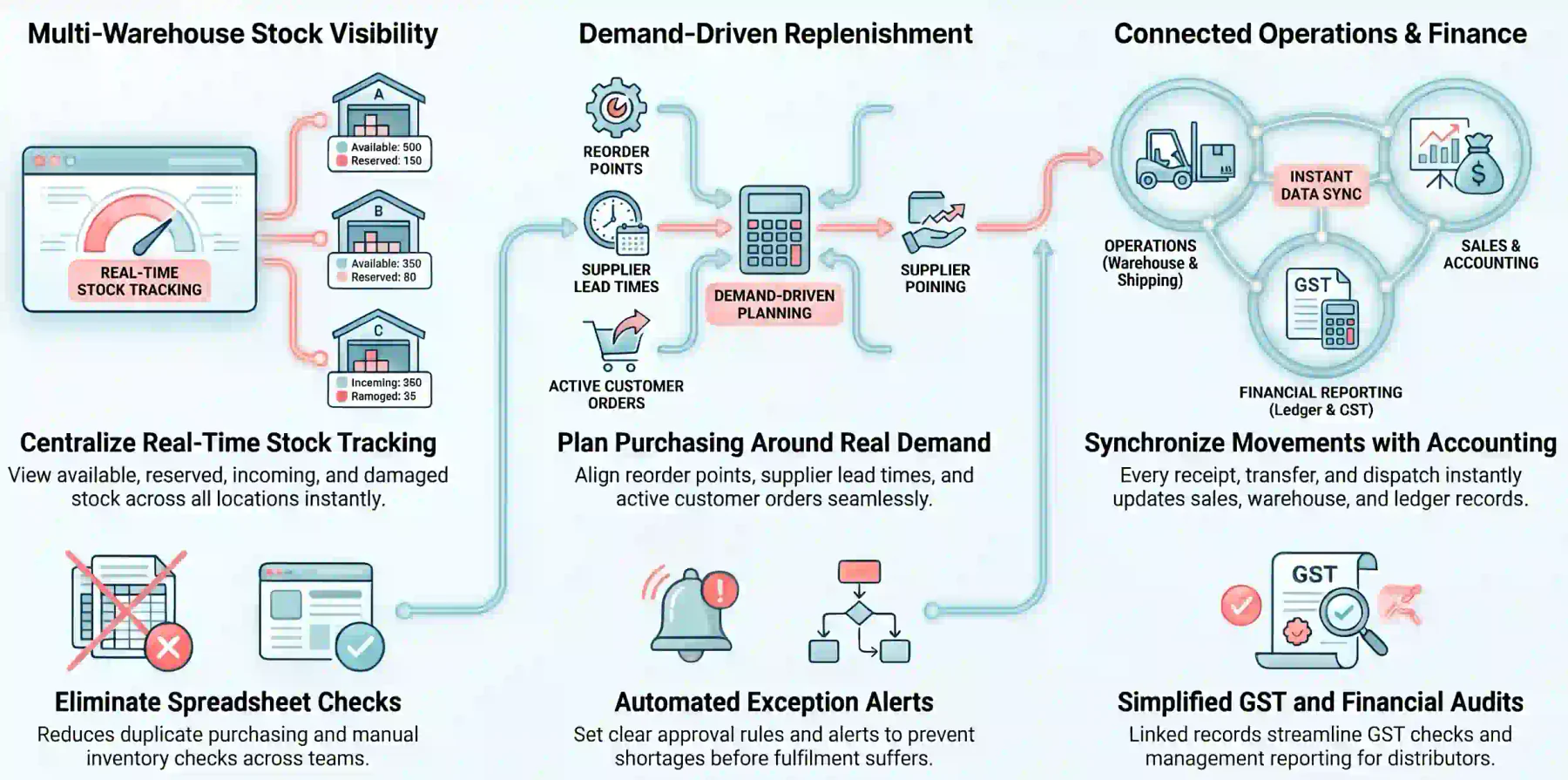
Inventory software can give distributors a clearer view of stock and order commitments. It also connects warehouse activity with purchasing, sales and financial reporting.
1. Keep stock levels visible across warehouses
Centralised inventory records show what is available, reserved, incoming and damaged. Managers can use that view to make faster allocation and replenishment decisions.
Accurate visibility also reduces duplicate purchasing and manual spreadsheet checks. Teams can respond to customer questions with current information.
2. Plan replenishment from current demand
Review reorder points, supplier lead times and open customer orders together. This helps buyers plan replenishment using current demand instead of isolated estimates.
Test whether the system supports approvals and exception alerts. Clear rules help teams act before shortages affect fulfilment.
3. Connect stock movements to orders and finance
Every receipt, transfer and dispatch should update the relevant records. This keeps sales availability, warehouse quantities and accounting entries aligned.
For Singapore distributors, connected records can simplify GST checks and management reporting. Ask vendors to trace these links during the final demonstration.
Distribution decisions depend on current stock, orders and financial records. Hashy AI brings those records together so teams can spot exceptions before they affect fulfilment.






Conclusion
The best Acumatica alternative depends on your workflows, growth plans and implementation scope. Singapore businesses should weigh distribution control, financial reporting, local compliance and support together.
Run the same purchase, warehouse and sales scenarios in every demo, then review three-year costs and quote inclusions. HashMicro HMX, NetSuite and the others each suit different priorities.
To learn more about Acumatica alternatives, you can book a free consultation with our experts today and gain expert business insights with us.
Frequently Asked Questions
There is no single best option for every business. Compare HMX, NetSuite, Business Central and SAP Business One against your workflows and compliance needs.
Business Central, NetSuite and SAP Business One offer broad ERP functions across finance, sales, purchasing and inventory. Judge similarity by workflow fit, pricing and implementation support.
HMX, NetSuite, Business Central and Epicor Prophet 21 are suitable to evaluate. Test warehouse control, order fulfilment, stock visibility and financial integration before deciding.
Some platforms may give a lower initial quote, but total cost depends on setup, integrations and support. Compare three-year ownership costs using the same requirements.
Check data migration, warehouse workflows, integrations, GST treatment and InvoiceNow readiness. Confirm partner responsibilities, support terms and future change costs.