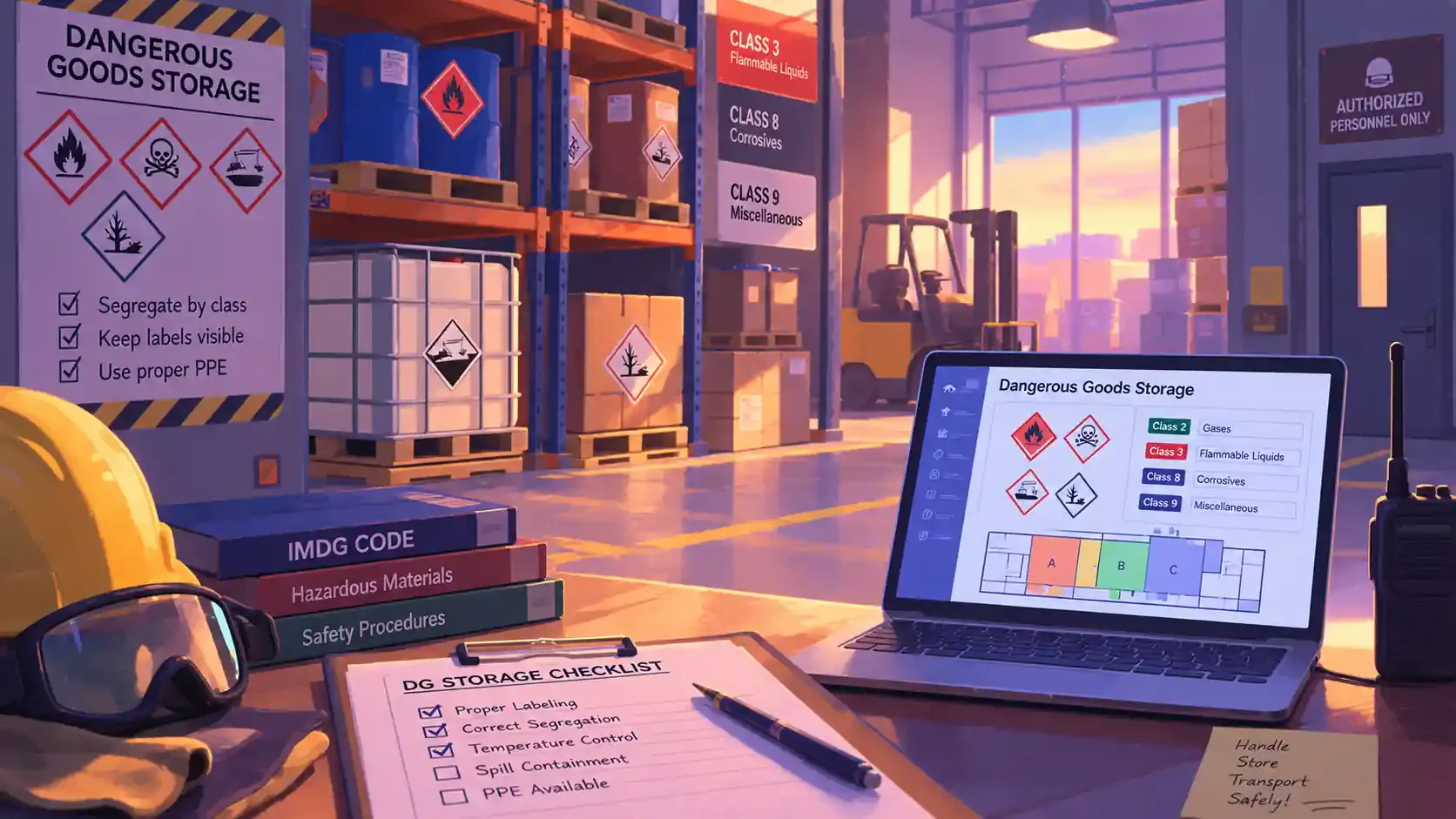








Warehouse relocation can disturb stock accuracy, order fulfilment, labour schedules, and customer promises at the same time. A clear plan helps the business move the warehouse without losing control of daily operations.
This article explains what warehouse relocation involves and how to prepare it for Singapore operations. It covers planning, stocktake, checklist items, cost drivers, and software support.
Use it before you pack the first carton or dismantle the first rack. The goal is to keep inventory visible, protect active orders, and restart work with fewer surprises.
Key Takeaways
Warehouse relocation transfers inventory, racking, equipment, records, and workflows, ending only when new-site locations and system records match.
Why warehouse relocation matters for Singapore businesses: rushed moves can disrupt fulfilment, access, and compliance, so protect dispatch windows and confirm approvals early.
Warehouse relocation checklist covers site readiness, labelling, humidity protection, racking, transport sequencing, temporary storage, and post-move verification.
Managing warehouse relocation with inventory software keeps stock, locations, and transfers visible through barcode scans, live records, and reconciliation reports.
What Is Warehouse Relocation?
Warehouse relocation is the planned transfer of inventory, storage systems, equipment, records, and workflows from one facility to another. It includes preparation, movement, and post-move checks.
A simple transport job ends when items arrive. A warehouse relocation ends only when stock locations, picking paths, access rules, and system records match the new site.
In Singapore, this often involves tight loading bays, shared industrial estates, and strict handover dates. Therefore, the plan must cover people, permits, packing, and data.
"Warehouse relocation is not finished when the last truck unloads. It is finished when every pallet sits in its system location and the first orders ship accurately from the new site."
Why Warehouse Relocation Matters for Singapore Businesses
Singapore warehouses often support retail, ecommerce, manufacturing, food supply, or regional distribution. When the move is rushed, errors affect revenue before the first pallet is unpacked.
Market pressure also keeps space decisions active. SingStat's warehousing and storage benchmark helps firms review asset use, expenses, and cash flow.
1. Limited warehouse space and rising operational pressure
Rising order volume can make an existing layout feel smaller before the lease ends. As a result, businesses move to improve rack density, loading access, and fulfilment flow.
A warehouse relocation should fix the constraint that triggered the move. If the same receiving delays follow the team, the new site only shifts the problem.
2. Downtime risks during fulfilment and dispatch
Downtime rarely comes from truck travel alone. It usually comes from blocked aisles, unclear labels, missing tools, delayed racking, and staff waiting for stock locations.
Protect core fulfilment windows before planning the move date. Keep fast-moving SKUs, packing materials, scanners, and dispatch stations available until the last safe point.
3. Compliance, access, and handover requirements
Before using the new site, confirm whether fire safety works or fit-out changes affect the move. The SCDF Fire Safety Certificate and Temporary Fire Permit page explains related approval checks.
Also review loading access, lift bookings, reinstatement scope, and waste removal dates. These details can delay handover even when transport is ready.
Warehouse Relocation Plan: What to Prepare First
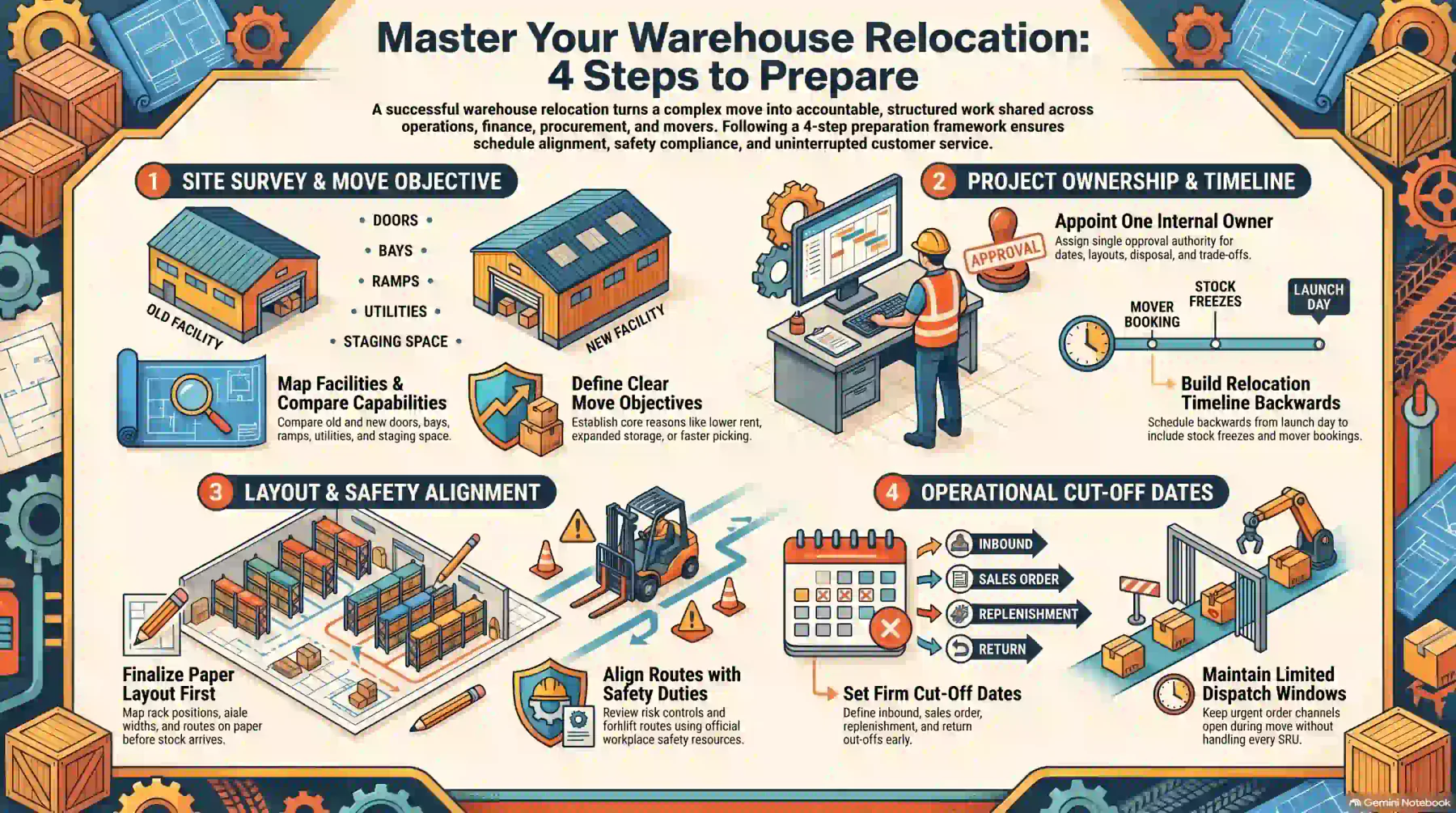
A warehouse relocation plan turns the move into accountable work. It should show who owns each decision, what moves first, what stops last, and how stock records stay reliable.
Use the plan as one shared source for operations, finance, procurement, and movers. When teams work from separate notes, small date changes can break the whole schedule.
1. Site survey and move objective
Start with a site survey before cartons, labels, or contractors are ordered. Map the old and new warehouse, then compare doors, bays, ramps, lifts, utilities, and staging space.
Next, define the reason for moving in plain terms. The objective may be lower rent, more storage, faster picking, better loading, or consolidation across sites.
2. Internal project owner and relocation timeline
Appoint one internal owner with authority to approve dates, disposal, layouts, and operational trade-offs. This prevents every issue from waiting on a group decision.
Build the timeline backwards from the first day of work at the new site. Include stock freeze periods, final receiving dates, mover booking, cleaning, and reinstatement.
3. New warehouse layout, racking, and loading access
The new layout should exist on paper before stock arrives. Confirm racking and aisle widths, picking routes, dispatch zones, returns areas, and emergency access.
If forklifts or pallet jacks are used, align routes with workplace safety duties. MOM's workplace safety and health resources can help teams review risk controls before the move.
4. Cut-off dates for receiving, picking, and dispatch
Set cut-off dates for inbound goods, sales orders, replenishment, and returns. Then tell customers or internal teams which orders may need earlier confirmation.
For high-volume operations, keep a limited dispatch window open during the move. This protects urgent orders without forcing the team to handle every SKU at once.
Stocktake Before Relocation
A stocktake before relocation gives the business a clean inventory baseline. It also stops teams from paying to move damaged, obsolete, expired, or unassigned stock.
Treat the count as both an audit and a cleanup activity. The final stock position should match the system before packing starts and again after put-away.
1. SKU, pallet, and storage-zone audit
Count inventory in the same structure your team uses every day. For most warehouses, that means SKU, batch, pallet, aisle, rack, bin, or storage zone.
Use barcode scans where possible and isolate exceptions immediately. If the count starts with vague location data, the move will amplify the error.
2. Dead stock, damaged goods, and obsolete inventory
Relocation is a useful time to separate items that should not move. Flag expired, damaged, slow-moving, returned, quarantined, or obsolete stock before transport.
For licensed or duty-suspended goods, check movement and discrepancy duties before changing premises. Singapore Customs explains stock control responsibilities under licensed warehouse schemes.
3. Equipment, tools, scanners, and packing stations
Small operational items often cause the first day of trouble. Count scanners, printers, cages, trolleys, labels, charging cables, tools, bins, PPE, and packing benches.
Assign every shared item to a department owner before moving day. This makes the first receiving and dispatch cycle easier to restart.
4. Stock reconciliation before and after the move
Reconcile inventory before packing, after loading, after receiving, and after put-away. Each checkpoint narrows the point where a variance may have happened.
Keep variance codes simple enough for the warehouse team to use. Common codes include damage, shortage, wrong location, duplicate label, and pending recount.
Warehouse Relocation Checklist for Singapore Operations
A checklist keeps hundreds of small tasks visible while the move date gets closer. It also gives every team one view of what is done, what is pending, and who is responsible.
Work through the stages below in order, because each one protects the next. Finish site checks before packing starts, and close verification before the old lease ends.
1. Site readiness and regulatory checks
Walk the new site with your mover and check door heights, floor loading limits, bay booking rules, and lift access. Photograph anything that could block pallet movement later.
Confirm that fire safety measures, signage, and any fit-out approvals are complete before stock arrives. This prevents goods from landing in a building the team cannot yet operate in.
2. Packing, labelling, and humidity protection
Singapore's humidity can damage cartons, electronics, paper records, and packaging stock during transport or storage. Use wrapped pallets, desiccants, and sealed containers for sensitive items.
Label every carton and pallet with the SKU range, destination zone, and move sequence number. Movers can then place items correctly on arrival without opening each box.
3. Racking dismantling and reassembly
Engage the original racking supplier or a qualified contractor to dismantle and rebuild the racks. Keep bolts, anchors, and beams grouped by bay so reassembly stays quick.
Inspect every upright and beam for damage before it is reused. Replacement lead times in Singapore can take weeks, so order parts early if the inspection finds problems.
4. Transport sequencing and temporary storage
Sequence lorries so fast-moving SKUs and packing stations arrive first. Slower stock, archives, and spare equipment can follow in later trips.
Book temporary storage if handover and collection dates do not align. Confirm insurance coverage for goods held off site, because standard policies may exclude third-party warehouses.
5. Post-move verification and damage reporting
Check received quantities against the physical count baseline as each lorry arrives. Photograph damage immediately and file claims while the mover's liability window is still open.
Run a put-away confirmation so every pallet lands in its assigned system location. Close unresolved variances within an agreed number of days instead of leaving them open.
| Checklist stage | Key tasks | Timing |
|---|---|---|
| Site readiness | Access checks, permits, bay and lift booking | Before packing starts |
| Packing and labelling | SKU labels, sequence numbers, humidity protection | 1 to 2 weeks before the move |
| Racking work | Dismantle, inspect, rebuild, and secure anchors | Scheduled before stock arrival |
| Transport | Sequenced lorries with priority SKUs loaded last | Move day or days |
| Post-move checks | Receiving counts, put-away scans, damage claims | Arrival week |
Warehouse Relocation Cost: What Affects the Budget?
Relocation budgets vary widely because every move combines different volumes, distances, and site conditions. JTC's industrial land and space page helps you match unit type to access needs.
Ask movers for itemised quotes instead of one lump sum. Itemised pricing makes it easier to compare companies and to see which service pushes the total up.
1. Warehouse size and inventory volume
Costs rise with floor area, racking height, and pallet count because each adds labour, handling time, and trips. Multi-level units or ramp access can add time to every load.
Volume also decides the crew size and the number of working days. Count pallets and cartons early so quotes reflect the real job.
2. Labour, lorry trips, and handling equipment
Manpower rates depend on crew size, trip count, and whether forklifts, cranes, or tail-gate trucks are needed. Weekend and night work usually carries surcharges.
Distance affects fuel and time, though most cross-island moves in Singapore stay within a short driving range. Loading difficulty often costs more than distance.
3. Packing materials and protective supplies
Budget for cartons, stretch wrap, bubble wrap, pallet covers, desiccants, and labels. These items look small on a quote but scale quickly with inventory volume.
Check whether the mover includes materials or bills them separately. Some companies reuse crates and pallets, which lowers both cost and packaging waste.
4. Downtime, fulfilment delays, and reinstatement
The largest relocation cost is often lost throughput rather than the mover's invoice. Every day of delayed dispatch affects revenue, service levels, and customer trust.
Old premises usually require reinstatement to the landlord's handover condition. Include making-good works, cleaning, and disposal so the final bill does not surprise the finance team.
5. Hidden costs from poor planning
Unplanned spending appears as emergency storage, repeated trips, damaged stock, overtime, and penalty charges. Most of it traces back to late surveys, vague labels, or missing cut-off dates.
A contingency buffer gives the project room to absorb surprises without new approvals. Track actual spending against the estimate weekly so overruns surface early.
| Cost item | What drives it | Common overspend point |
|---|---|---|
| Movers and transport | Volume, trips, distance, access limits | Extra trips from poor sequencing |
| Packing materials | SKU count and protection needs | Last-minute purchases at retail prices |
| Racking | Bay count, height, and site conditions | Replacement parts ordered too late |
| Downtime | Move duration and cut-off handling | Orders missed during the stock freeze |
| Reinstatement | Lease handover requirements | Unplanned disposal and cleaning |
How to Reduce Disruption During Warehouse Relocation
Disruption control starts during planning, not on moving day. The tactics below keep orders flowing while the physical move happens around them.
Choose the mix that fits your order profile. A business with daily ecommerce dispatch needs tighter protection than one with weekly bulk deliveries.
1. Separate critical and non-critical stock
List the SKUs that support daily revenue and keep them moving until the last safe day. Slow movers, seasonal stock, and archives can travel in the earliest trips.
Share this priority list with the movers so loading order follows it. Clear priorities stop the team from unpacking decorative stock while urgent orders wait.
2. Move in phases instead of all at once
Split the warehouse into zones and relocate one zone at a time. Phased moves keep part of the operation picking and packing while the rest transfers.
Update system locations as each zone lands so pickers never search for stock. Each phase also gives you a checkpoint to fix issues before they spread.
3. Keep buffer stock for active orders
Hold a small buffer of fast-moving items near the dispatch team during the move window. This covers orders that arrive while main stock sits in transit.
Set a firm release date so the buffer does not become a second mini-warehouse. Return unused items to their system locations once the window closes.
4. Schedule night or weekend moves when needed
Some operations cannot pause during business hours at all. Night and weekend moves cost more in surcharges but protect daytime fulfilment completely.
Check estate or building rules before locking the schedule, because some premises restrict heavy vehicle access at night. Book lift and bay slots early for popular weekend windows.
Managing Warehouse Relocation with Inventory Software
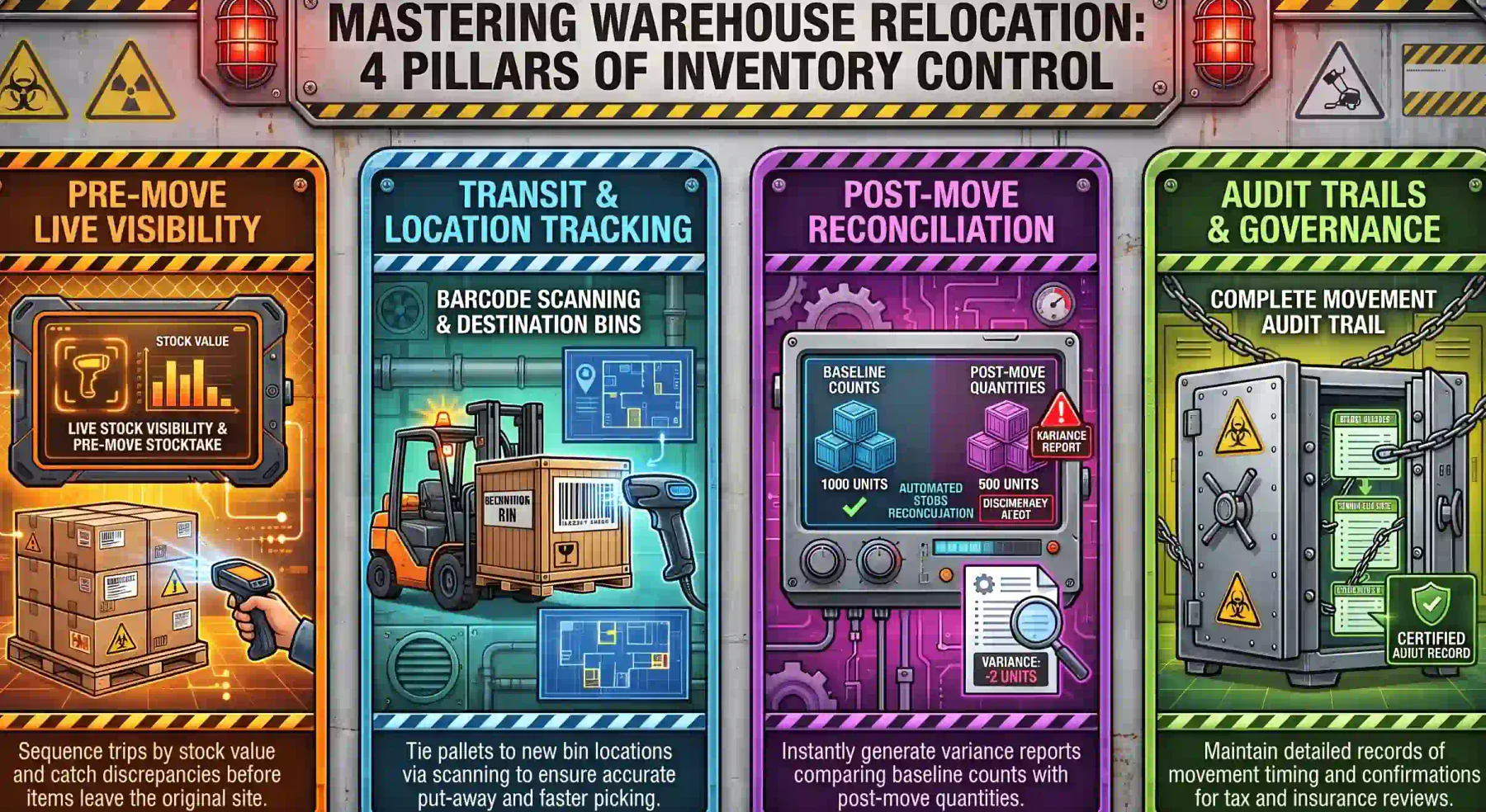
Spreadsheets struggle once thousands of SKUs change location at the same time. Inventory software keeps counts, locations, and transfers accurate while the physical move happens.
It also builds an audit trail showing what moved, when, and who confirmed it. That record matters during reconciliation and any insurance or tax review afterwards.
1. Real-time stock visibility before the move
Live stock levels by location let you plan trips around real volumes instead of estimates. You can see which zones hold the most value and sequence them first.
Visibility also supports the pre-move stocktake, because counts update as the team scans rather than days later. Discrepancies surface while stock is still in its old home.
2. Barcode labelling and location tracking
Barcode labels tie every pallet and carton to a destination bin in the new warehouse. Scanning at loading and put-away confirms each item arrived where the plan says it should.
Location tracking also speeds up the first week of picking, because staff search by SKU instead of memory. Temporary staff can find stock without a floor tour.
3. Automated stock reconciliation
Reconciliation reports compare the baseline count with post-move quantities automatically. Variances by SKU, zone, or batch appear in one view instead of buried in files.
Fast closure matters because claims, write-offs, and customer updates all wait on confirmed numbers. Clean records keep the new site trustworthy from day one.
4. How HashMicro supports Singapore warehouse operations
HashMicro's warehouse management system gives Singapore businesses real-time stock levels across warehouses, barcode scanning, and stock opname tools on one platform. Teams see quantities without manual updates.
Teams can run inter-warehouse transfers, follow every movement through an audit trail, and generate reconciliation reports after the relocation. Book a free demo to see how it fits your move plan.
Warehouse relocation stays controlled when every transfer matches the physical stock. Hashy AI reads locations, scan records and variances together, then flags what needs review






Conclusion
A warehouse relocation succeeds on preparation rather than transport muscle. A clear plan, an honest stocktake, and firm cut-off dates protect fulfilment while racks and cartons change address.
Itemised quotes and managed downtime keep costs predictable. For Singapore sites, check access rules, humidity, and lease handover early, and use inventory software to keep stock data accurate throughout.
If you are interested in learning further about warehouse relocation, then you can book a free consultation with our team today and start optimizing.
Frequently Asked Questions
Warehouse relocation is the planned transfer of inventory, racking, equipment, and workflows from one facility to another. It ends when records and operations run correctly at the new site, not when trucks unload.
Start with a site survey and a written move objective. Then appoint one project owner, map the new layout, set receiving and dispatch cut-off dates, and book movers against that timeline.
Cover site readiness, packing and labelling, humidity protection, racking work, transport sequencing, temporary storage, and post-move verification. Assign an owner and a date to every line.
It depends on inventory volume, floor area, distance, access conditions, packing needs, and racking work. Most moves also carry indirect costs such as downtime, storage, and reinstatement.
A stocktake confirms true quantities before anything is packed, so variances are found while stock is still traceable. It also stops the business paying to move dead, damaged, or obsolete items.