






Pronto Xi offers a range of ERP capabilities, but it may not suit every Singapore business. Companies should compare how well each system handles finance, inventory, purchasing, and daily operations while meeting local requirements.
Five alternatives worth considering are HashMicro, SAP Business One, Oracle NetSuite, Microsoft Dynamics 365 Business Central, and Epicor Kinetic. Each serves different business needs, depending on industry, operational complexity, and budget.
Key Takeaways
Businesses can compare five Pronto Xi alternatives to understand their features, strengths, and suitability for different operational needs
Singapore businesses need to evaluate ERP systems based on GST reporting, InvoiceNow requirements, accounting record retention, and local compliance considerations.
Choosing the right Pronto Xi alternative requires comparing implementation costs, migration plans, operational requirements, and long-term support before making a final decision.
What Is Pronto Xi, and Why Consider Other ERP Systems?

Pronto Xi is an ERP and analytics platform covering financial management, supply chain, manufacturing, and other business operations. It offers cloud-hosted and on-premises deployment options.
Businesses may explore alternatives when expanding into new markets, adding warehouses, or finding that existing systems no longer support their workflows efficiently.
Before comparing vendors, identify your current challenges and required improvements. Use the same business scenarios to evaluate every shortlisted system, including Pronto Xi, for a fair comparison.
| ERP system | Why consider it | What to check during a Singapore demo |
|---|---|---|
| HashMicro | Connects finance, sales, procurement, and inventory | Test GST, InvoiceNow, and approval workflows |
| SAP Business One | Covers core finance and inventory for small and midsize businesses | Confirm localisation and implementation scope |
| Oracle NetSuite | Combines cloud financial management, inventory, and order management | Review module costs and integrations |
| Microsoft Dynamics 365 Business Central | Connects financial and operational processes | Check partner-led localisation and support |
| Epicor Kinetic | Focuses on manufacturing and supply chain operations | Test production and accounting workflows |
These options are starting points, not a ranking or confirmation of compliance. Ask each vendor to demonstrate your requirements and document what is included.
"The right ERP system helps businesses streamline operations, improve visibility, and make better decisions as they grow."
Five Pronto Xi Alternatives to Consider
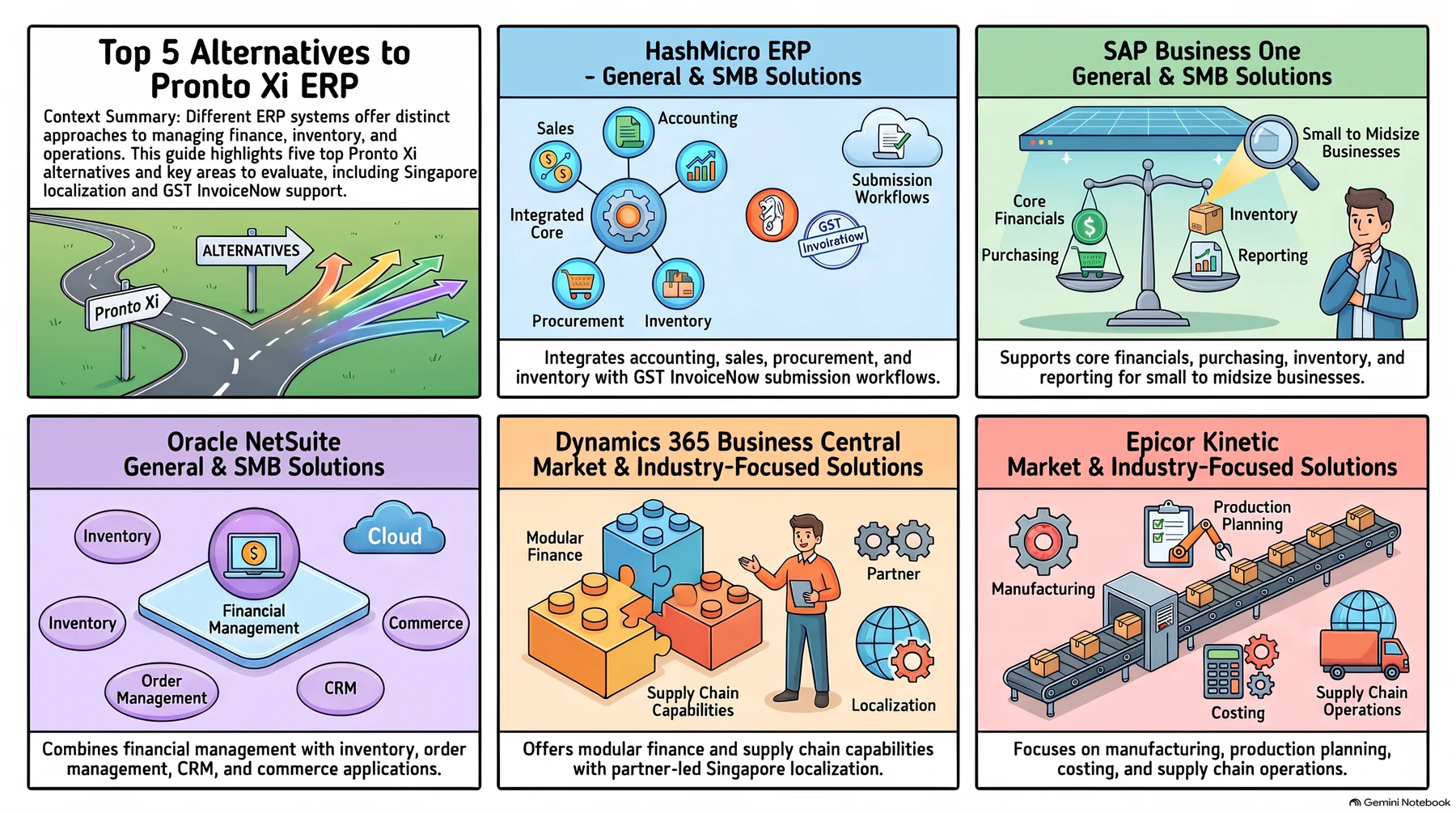
ERP systems differ in their approach to finance, inventory, and operational management. Comparing their strengths can help you narrow down the options that suit your business.
1. HashMicro
HashMicro's Singapore ERP solution connects accounting, sales, procurement, and inventory through integrated workflows. During a demo, test purchasing and sales transactions, GST treatment, audit trails, and the proposed GST InvoiceNow submission process.
2. SAP Business One
SAP Business One supports financial management, purchasing, inventory, sales, and reporting for small and midsize businesses. Ask the implementation partner to demonstrate your accounting and inventory workflows, then confirm Singapore localisation, migration services, integrations, and ongoing support.
3. Oracle NetSuite
Oracle NetSuite combines financial management with inventory, order management, CRM, and commerce applications. Test complete purchasing and sales cycles, and confirm which modules, integrations, and Singapore-specific requirements are covered by the proposed configuration.
4. Microsoft Dynamics 365 Business Central
Microsoft Dynamics 365 Business Central supports finance, sales, purchasing, and inventory. Microsoft identifies Singapore as an available market with partner-led localisation, so clarify which features are standard, which need customisation, and how GST InvoiceNow will be handled.
5. Epicor Kinetic
Epicor Kinetic focuses on manufacturing, production planning, financial management, and supply chain operations. Ask the vendor to demonstrate material availability, production scheduling, costing, and financial entries, while confirming Singapore tax and InvoiceNow arrangements.
Singapore-Specific ERP Requirements
ERP selection in Singapore involves more than comparing accounting and inventory features. Businesses must also consider tax reporting, electronic invoicing, record retention, and relevant data requirements.
According to IRAS, compulsory GST registration generally applies when taxable turnover exceeds S$1 million under the retrospective or prospective tests. Ask vendors to demonstrate GST calculations, invoice outputs, adjustments, and reporting using your actual business scenarios.
GST InvoiceNow requirements are also being extended in phases, with the remaining GST-registered businesses scheduled across the period from 1 April 2028 to 1 April 2031, according to IMDA and IRAS. Additionally, ACRA requires companies to retain accounting records for at least five years after the relevant financial year. Confirm your applicable deadlines, submission arrangements, and historical data access with each vendor.
Questions to Ask During Every ERP Demonstration
Using the same questions for every vendor makes comparisons more reliable. Prepare sample customers, suppliers, products, and tax scenarios to see how each proposed system handles your requirements.
Ask vendors to demonstrate a transaction from approval through fulfilment, invoicing, and the general ledger. Clarify which functions are standard, configured, integrated, or custom-built, and how GST records and reports are generated.
Also confirm InvoiceNow arrangements, data migration, integration maintenance, and Singapore support. Request a full cost breakdown covering software, implementation, training, ongoing support, and future changes, with outstanding issues documented.
Planning an ERP Migration From Pronto Xi
A successful migration starts with identifying the information that must move to the new system. This may include customer and supplier records, product data, accounting balances, inventory, outstanding orders, and historical records.
Next, clean the data, map fields, and test the migration before going live. Reconcile inventory and opening balances against existing reports, then test everyday transactions and exceptions such as returns, credit notes, and partial receipts.
Before cutover, confirm which records will be transferred or archived and how accuracy will be checked. Involve end users, assign owners to outstanding issues, and agree on a timeline that reflects your data and integration requirements.
How to Compare ERP Costs
Compare the total cost of the proposed ERP solution rather than the software fee alone. Include implementation, localisation, integrations, migration, training, support, and future modifications.
Account for internal staff time and any temporary costs from running Pronto Xi alongside the replacement system. These expenses can affect the overall budget even when they are not included in vendor quotations.
Ensure every proposal covers the same requirements before comparing prices. Check written assumptions and exclusions, especially for integrations, InvoiceNow-related services, and post-launch support.
Which Pronto Xi Alternative Is Right for Your Business?
Choosing the right ERP system depends on your business needs, operational complexity, and plans for growth. While Pronto Xi may suit some companies, alternatives such as HashMicro, SAP Business One, Oracle NetSuite, Microsoft Dynamics 365 Business Central, and Epicor Kinetic offer different capabilities worth exploring.
Before making a decision, compare each system's features, Singapore compliance requirements, implementation costs, and ongoing support. A practical demonstration can help you identify the solution that best fits your workflows and long-term goals.
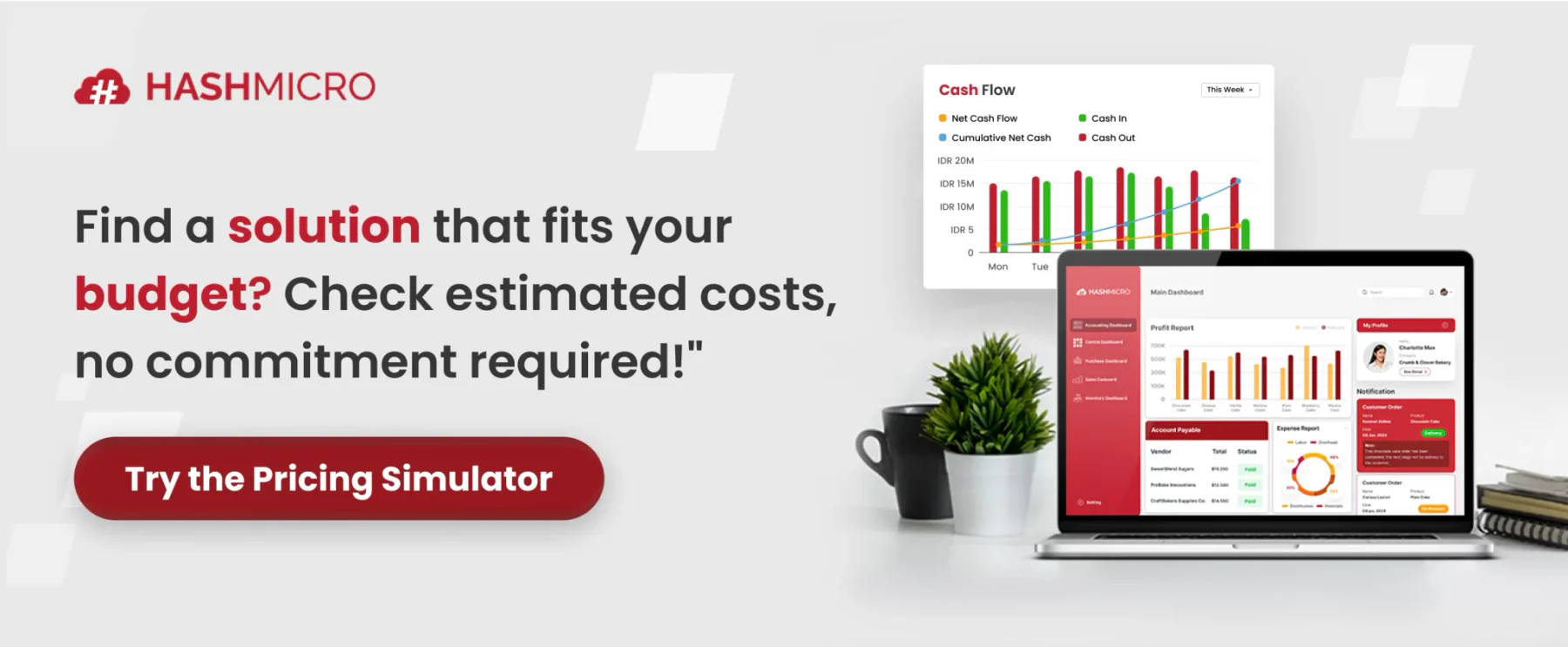
If you're looking for an ERP solution that connects your business operations and supports your company's growth, explore HashMicro's ERP software and consult with our experts for free.
FAQ
There is no single best alternative for every business. HashMicro, SAP Business One, NetSuite, Business Central, and Epicor Kinetic address different priorities. Compare them against the same operational scenarios and Singapore requirements before ranking them.
Costs depend on the proposed modules, users, implementation, integrations, migration, support, and later changes. Request itemised proposals with the same scope; a licence figure alone does not establish total cost.
The timeline depends on data quality, transaction history, integrations, workflow changes, testing, and staff availability. Ask each vendor for a schedule tied to your agreed migration and acceptance scope.
This article does not certify the GST InvoiceNow readiness of any listed configuration. Ask each vendor to document how its proposed solution meets your applicable requirement, including submission of invoice data to IRAS, and demonstrate the process.