






Many Philippine merchants accept card payments without knowing what the Merchant Discount Rate (MDR) takes from each swipe. A 2024 JIP study of 50 retail owners and managers in Legazpi City examined that gap. It named financial costs from banks and fintech firms among their main obstacles to cashless payments.
Unchecked, MDR shrinks your margin and muddles your pricing. The Bangko Sentral ng Pilipinas monitors these rates so merchants and consumers share the gains from digital payments. Gaps remain, and micro and small enterprises still pay more than large retailers.
This guide explains how MDR works, what shapes your rate, and how to negotiate better terms. It also shows where HashMicro POS Software helps you track and manage MDR across your Philippine retail operations.
Key Takeaways
Merchant Discount Rate (MDR) is the fee charged to merchants for processing digital payment transactions, playing a crucial role in sustaining the payment ecosystem.
MDR is important because it ensures fair compensation for banks and payment processors while helping merchants manage costs and maintain smooth, secure transactions.
HashMicro POS Software helps businesses in the Philippines manage MDR efficiently with features like multi-payment support, real-time reporting, and Hashy AI for intelligent cost tracking and optimization.
What is Merchant Discount Rate (MDR)?
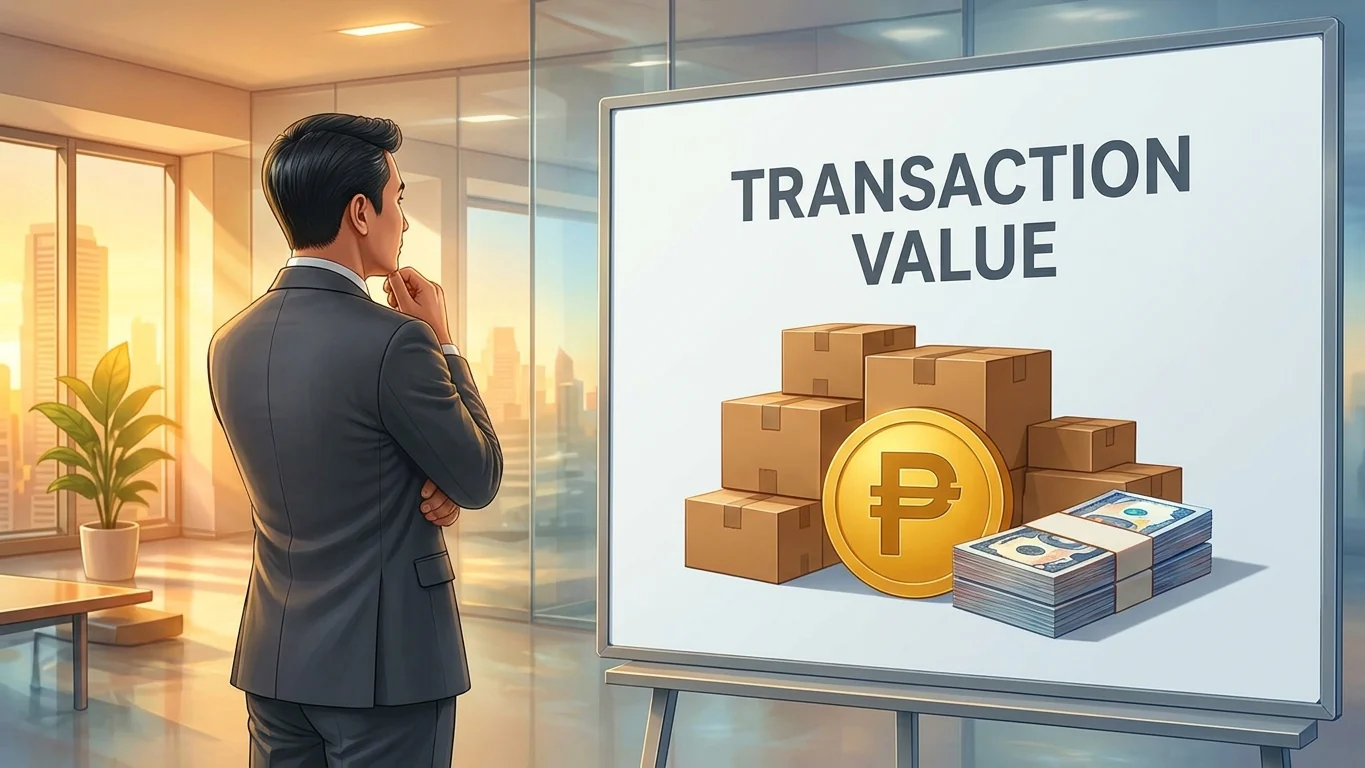
The Merchant Discount Rate (MDR) is the fee banks and payment processors charge merchants on every digital card transaction. It usually takes a percentage of the transaction value. The charge applies whenever a customer swipes, taps, or keys in a card.
MDR bundles several costs, including interchange fees, payment gateway charges, and the acquiring bank's service fee. Each party in the payment chain gets paid for processing the transaction securely. The rate looks small, but it directly reduces margins in retail and food service.
In the Philippines, MDR matters more as cashless payments spread from malls to neighborhood stores. The Bangko Sentral ng Pilipinas pushes banks and payment providers to keep rates reasonable. Its rules protect micro and small enterprises, so digital adoption does not erode their earnings.
Small retailers running POS for sari-sari store operations feel this most, since thin margins leave little room for extra fees. Choose a provider with transparent MDR terms, and review them as e-wallets and contactless payments keep reshaping local pricing.
How MDR Works
The merchant discount rate becomes clearest when you trace one card payment from tap to payout. Your acquiring bank or payment provider deducts the fee automatically, before the sale amount reaches your account. You never receive a separate bill, so many merchants overlook it.
Your provider sets the rate in advance, and it varies by card type. Credit cards usually cost more than debit cards. The terms you negotiate with your acquiring bank also shape the final percentage you pay on every sale.
- Step 1: The customer pays at your terminal. A shopper taps, swipes, or keys in a card. Your POS sends the transaction to the acquiring bank for authorization.
- Step 2: The card issuer approves the amount. The issuer checks the available balance or credit limit and responds in seconds. Approval locks in the full sale value.
- Step 3: The MDR comes off the top. Your provider subtracts the agreed percentage from that value. On a PHP 1,000 purchase at a 2% MDR, you keep PHP 980.
- Step 4: The fee splits three ways. The PHP 20 goes to the card issuer as interchange, to the payment gateway as a processing charge, and to the acquiring bank as a service fee.
- Step 5: Net proceeds settle to your bank. Your provider transfers the remaining balance on the schedule written into your merchant agreement, not on the day of the sale.
- Step 6: Your volume resets the rate. High-volume merchants negotiate lower percentages. Small stores, including sari-sari shops, usually pay more and must weigh the fee against faster checkout.
Understanding and managing the Merchant Discount Rate (MDR) shouldn't be overwhelming or expensive. With the right solution, you can gain full transparency over transaction fees while optimizing your payment processing system. Click the banner below to discover flexible options and find the best fit for your business's financial needs!
Why is MDR Important?

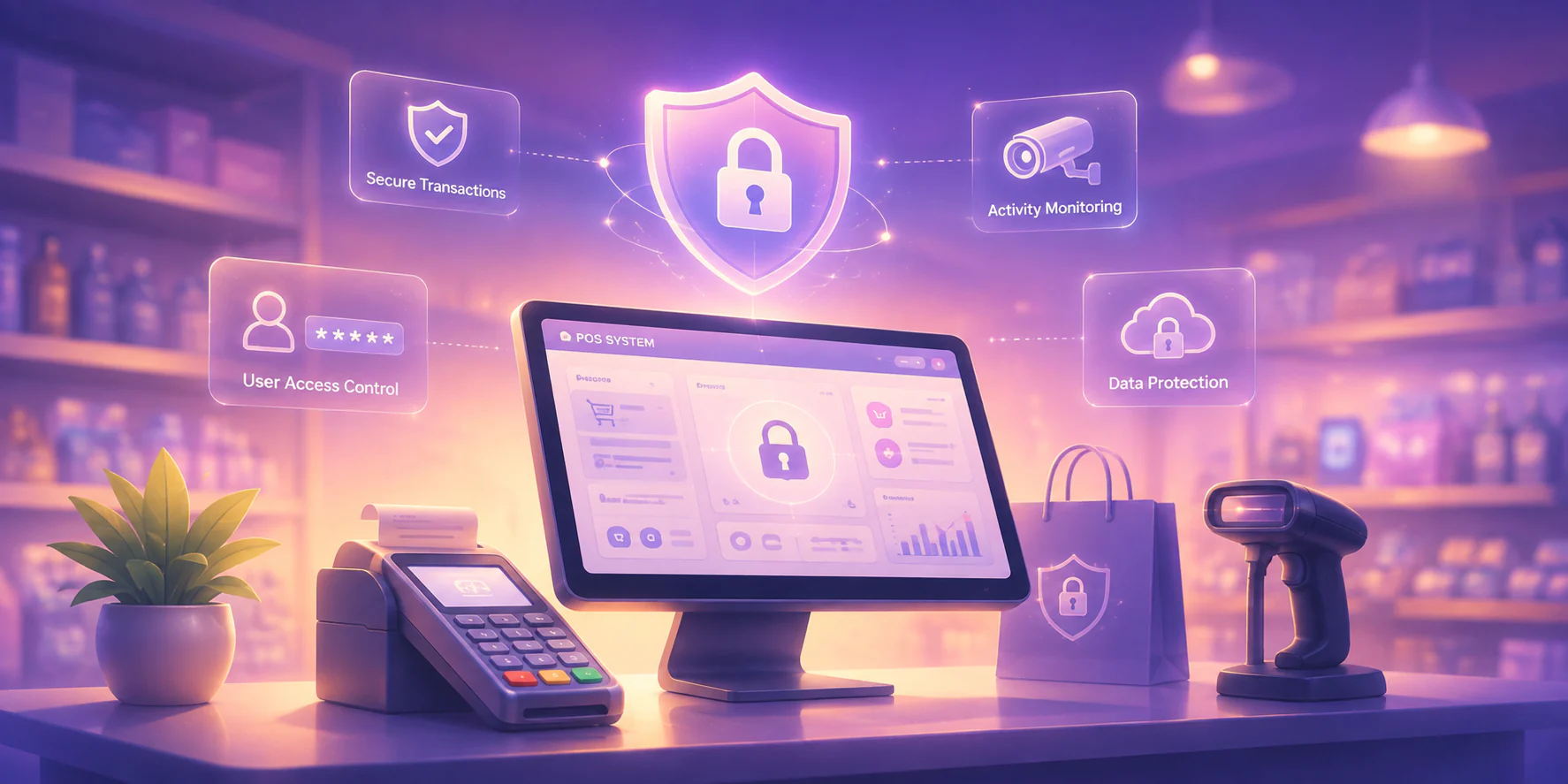
MDR keeps the entire digital payment ecosystem running. The fee compensates card-issuing banks, acquiring banks, and payment processors for delivering secure, fast transactions. It also funds the upgrades that keep terminals, networks, and fraud controls working as volume grows each year.
Remove that fee and providers lose the incentive to invest. Security features would stagnate, processing would slow, and system availability would shrink. Merchants and customers would then face more downtime, higher fraud exposure, and failed payments at the counter.
Merchants who understand MDR price their products with the fee already built in. Comparing those fees against your inventory tracking records reveals the true margin on every item you sell. Large chains and small sari-sari stores both protect profit this way.
What Factors Determine Your Merchant Discount Rate?
Your MDR reflects your own risk and payment profile, so no single rate covers every merchant. Acquiring banks and providers price each account on how much you sell, what you sell, and how customers pay. Six factors carry the most weight.
1. Transaction Volume
Merchants processing high volumes usually negotiate lower rates. Each transaction costs the bank and processor less to handle at scale, so they pass part of that saving back to you. Steady monthly volume strengthens your position.
2. Industry Type
Providers sort merchants into risk bands. A grocery or bookstore looks safer than a travel agency or a subscription service that bills customers repeatedly. Sectors with a history of chargebacks and disputes usually pay higher rates.
3. Payment Method
Each card carries its own cost. Debit cards sit at the low end, while credit cards cost more. Rewards, premium, and corporate cards cost the most because the interchange fee helps fund the perks cardholders collect. E-wallet payments sit on their own schedule.
4. How You Accept the Payment
Card-present sales carry less fraud risk, so they cost less. When a customer taps or inserts a card at your counter, the terminal verifies it directly. Online and manually keyed payments raise the rate because networks price that extra risk in.
5. Card Network Pricing
Visa, Mastercard, American Express, and JCB each publish their own fee schedules. The gap between networks can be wide enough that some Philippine merchants accept only selected brands. Ask your provider for the rate behind every logo on your terminal.
6. Regulation and Special Programs
Regulators cap interchange fees in some markets, and the BSP monitors pricing so digital payments stay affordable for small merchants. Providers also run reduced-rate programs for small-ticket sales or nonprofit accounts. Ask whether your business qualifies before you sign.
These factors shape your rate together, so no contract reduces to one number. Two stores can ring up the same PHP 1,000 sale and keep different amounts. Compare offers from several banks and the best POS providers, especially if you run a small store like a sari-sari shop.
Types of Merchant Discount Rate
Providers apply MDR in three common formats, and your agreement with the acquiring bank decides which one you get. Each structure prices the same sale differently, so the one you sign shapes your monthly fees. Compare them against how your business actually sells and gets paid.
1. Flat Rate MDR
One fixed percentage applies to every transaction, whatever the card. The structure stays simple and predictable. It suits small businesses such as sari-sari stores that use a POS system and want consistent fees. You trade the lowest possible rate for easy bookkeeping.
2. Tiered MDR
The rate shifts with the card type and the sales channel. A credit card costs more than a debit card, and online payments cost more than counter sales. The flexibility helps, but your effective cost moves every month, so the fees are harder to track.
3. Interchange Plus
This model itemizes the interchange fee that card networks set, then adds your provider's fixed markup on top. You see exactly what each party charges, so you can challenge a rate that drifts. Larger businesses with steady volume usually prefer this level of detail.
Merchants running a POS for self-service store setups should weigh simplicity against transparency and cost. The right MDR structure lowers your fees and protects your margin. It also keeps checkout convenient for the customers who prefer to pay by card.
Streamline Transaction Cost Tracking with HashMicro POS Software
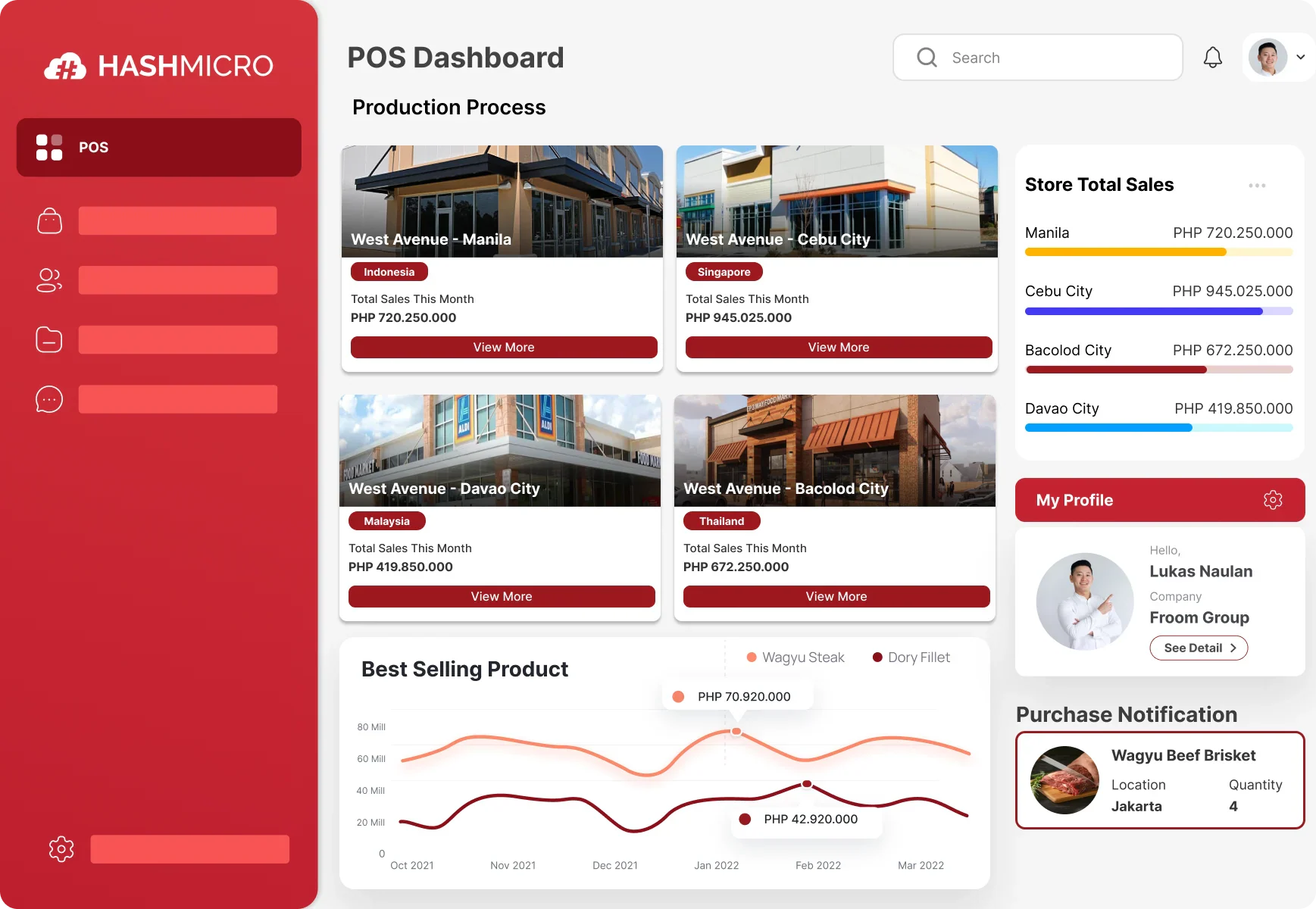
HashMicro POS Software gives Philippine merchants one place to see what MDR actually costs them. Real-time sales data, integrated payment tracking, and automated reporting expose the fee behind every channel. Retailers and F&B operators can then negotiate with banks from evidence instead of guesswork. Six features carry that visibility:
- Multi-Payment Methods: Customers pay by card, e-wallet, or bank transfer without slowing the queue. You see the MDR on each method side by side, so you know which channel protects your margin.
- Inventory Tracking: Real-time stock data shows which products customers buy through which payment method. You can then spot the high-volume items carrying the heaviest fee load and adjust how you sell them.
- Customer & Promotion Management: You can run promotions that reward the cheaper payment methods. Steering customers toward a lower-MDR option cuts your fees without touching the discounts or loyalty perks they already expect.
- Easy Billing & Reconciliation: The system matches payments to invoices automatically, so bookkeeping errors stop before they reach your ledger. Your total MDR cost stays accurate, which keeps every pricing decision grounded in real figures.
- Return, Refund & Credit Management: Integrated returns limit what you lose to MDR when a sale gets canceled. A clear return authorization process logs each reversal, so you serve the customer well and keep the credit visible,
- Comprehensive Reporting: MDR reports break your fees down by payment channel. You can compare the real cost of each channel each month and choose the payment mix that protects profit.
Conclusion
Understanding MDR gives you control over what digital payments actually cost. The rate moves with your volume, your industry, and the methods your customers choose. Picking the right model protects your margin and keeps your pricing decisions grounded in real numbers.
HashMicro POS Software gives Philippine merchants that control in one place. It handles multiple payment channels and automates reconciliation. Transparent fee reporting then shows you exactly what each transaction costs, channel by channel.
Hashy AI sits on top of that data, answering questions about your transaction fees and payment trends without manual reporting. Book a free consultation to see how HashMicro helps you track MDR, cut costs, and run leaner operations.
FAQ About Merchant Discount Rate
The Merchant Discount Rate (MDR) is the fee banks or payment providers charge merchants for processing each digital payment. It is usually a percentage of the transaction value, deducted before the money reaches your account. Your rate depends on your volume, industry, and the payment methods you accept.
The MDR is distributed among various parties involved in the transaction, including the acquiring bank, issuing bank, and payment network (such as Visa or Mastercard). These parties earn revenue for providing the infrastructure and services needed to process digital payments.
In some regions, merchants may pass on the MDR fee to customers as a surcharge, but this depends on local regulations. In many countries, it is prohibited to charge customers directly for MDR to encourage the use of digital payments.
MDR is best described as a transaction processing fee that keeps the digital payment ecosystem running. It pays for the infrastructure, fraud controls, and settlement services behind every cashless sale. For merchants, it is a variable cost of sales, not a one-time setup charge.
No. E-wallet and QR Ph payments follow their own pricing, separate from card interchange, so your effective rate differs by channel. Ask your provider for the rate on each method. Then compare those rates against your average ticket size before steering customers toward one option.