







An event management system helps organisers manage registration, attendee communication and event delivery. Malaysian event organisers, corporate teams and finance buyers should choose around demonstrated workflows. Use this guide to compare operational requirements, ownership costs, financial handoffs and rollout readiness before committing.
The sections below explain the workflow, evaluation criteria and practical next steps.
Choose Around the Event Workflow Your Team Needs to Control
Start with the work your team needs to control. Disconnected registration records, team tasks and finance documents make that work harder. A shortlist should reflect how your event actually runs.
Define the event format, expected attendee volume and registration complexity. Consider public conferences, invitation-only launches, exhibitions or internal training. Each creates different questions about access, communication and payment handling.
Then identify where responsibilities change between teams. Who approves registrations, resolves booking changes and follows up unpaid invoices? Write these handoffs down before comparing software demonstrations.
Keep attendee-facing software separate from supporting ERP processes. An ERP evaluation does not establish registration or check-in functionality. Ask for separate demonstrations whenever your proposed platform covers both areas.
Evaluate Essential Capabilities Using an Event Scenario
Give every vendor the same representative event scenario. Ask them to complete real tasks, including awkward exceptions. A polished presentation alone cannot establish whether your requirements fit.
Before the event, test registration fields, capacity rules and attendee communications. Include group bookings, cancellations and changes to registration details. Check task ownership and export formats alongside the attendee experience.
For delivery planning, consider project planning and task coordination within your wider requirements. Keep planning demonstrations distinct from ticketing and admission tests. Record which requirements are included, optional, externally supplied or unsupported.
| Requirement | Demonstration Task | Evidence Required | Responsible Buyer |
|---|---|---|---|
| Ticketing and registration | Create a booking, reach capacity and process a cancellation. | Booking records, capacity behaviour and communication samples. | Registration lead |
| Event planning | Assign preparation tasks and change a deadline. | Named owners, dependencies and an exportable schedule. | Event manager |
| Onsite admission | Attempt duplicate check-in and restricted session access. | Attendance records, exception handling and connectivity contingency. | Onsite lead |
| Business operations | Transfer an invoice-related record and resolve an error. | Field mapping, transfer log and reconciliation result. | Finance and IT |
During the event, test the proposed check-in arrangements under realistic conditions. Ask what happens when connectivity fails or devices become unavailable. Verify recovery steps rather than assuming offline operation.
Afterwards, request attendance exports, feedback capture and financial handoff evidence. Compare exported fields with your reporting requirements. Confirm who can access, correct and retain each record.
Calculate Ownership Cost Beyond the Subscription
Compare the full proposed scope, rather than subscription fees alone. Request quotations in MYR using consistent event volumes and contract assumptions. Include licensed users, usage allowances and exclusions.
Ask about attendee charges, transaction fees and payment processing. Add onsite equipment, training, migration, integration and ongoing support. Clarify whether renewals or additional environments change the quotation.
Separate configuration from customisation before approving the budget. Ask whether a proposed change addresses a genuine requirement. Copying an old workaround may create unnecessary development and upgrade work.
Keep vendor estimates separate from contractual commitments. Record assumptions, deliverables and acceptance evidence against each cost item. Ask how scope changes will affect charges and responsibilities.
HashMicro has no fit-gap register, so maintain the signed record outside the system. Classify requirements as fit, configuration, workaround or customisation. Use that record when comparing scope and approving changes.
Define the Handoff Between Event Software and Finance
Agree which system owns each record before discussing integration. Cover attendee records, customer details, invoices, payment status and refunds. Name the ledger of record at the outset.
An attendee and an invoice buyer may be different people. A corporate organiser might pay for several delegates together. Your proposed design should preserve those relationships without duplicate customer records.
Use mapping cross-team business processes to structure the discussion. Trace the journey from registration through billing and reconciliation. Identify the person responsible whenever information changes hands.
Ask vendors to demonstrate record identifiers and field mapping. Check transfer frequency, error reporting and retry behaviour. Test a changed buyer detail and an unsuccessful transfer.
A proposed connection should have a written scope and owner. Require evidence before accepting claims about a standard connector. Include payment gateways and accounting applications in that same assessment.
Agreed file imports may suit an initial rollout. Define file layouts, approval steps and reconciliation responsibilities. Describe these as controlled transfers, without implying seamless synchronisation.
A phased transition also needs clear cutover rules. Specify where new transactions belong and how corrections return. Prevent teams from maintaining competing financial records during the change.
Finally, test refunds separately from successful payments. Ask how rejected, repeated or partially completed transfers are resolved. Finance should approve the resulting balances before accepting the handoff.
Check Malaysian Invoicing Requirements Before Signing
Assess SST and MyInvois as separate purchasing checkpoints. Give finance responsibility for confirming the organisation’s applicable obligations. A software purchase alone cannot establish Malaysian tax compliance.
SST Treatment and Reporting
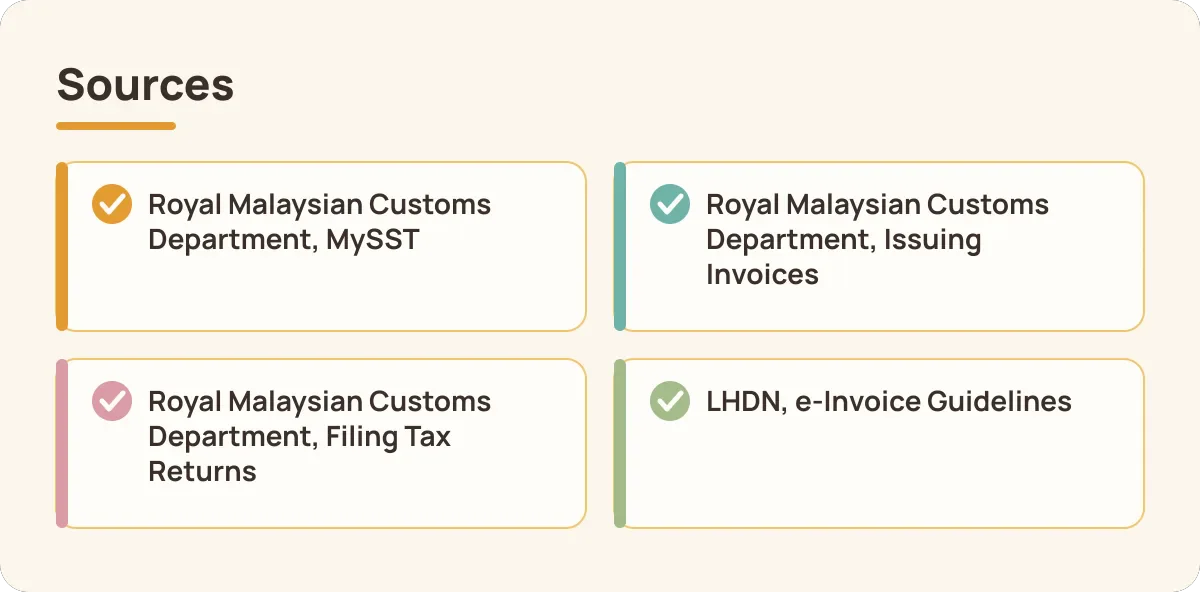
Use Royal Malaysian Customs guidance to check registration status and event-related supplies. Ask finance to determine applicable treatment for each charge. Avoid applying the same tax treatment across every event item.
For example, separate admission, sponsorship and equipment charges in your MYR scenario. Ask finance to document their treatment before configuring invoice rules. This is an evaluation exercise, without an assumed tax rate.
Review invoice particulars against Customs’ invoicing guidance. Assign responsibility for SST-02 reporting using Customs’ return guidance. Test whether the proposed reports support finance’s approved process.
MyInvois Responsibilities
Check LHDN’s current e-Invoice guidelines for applicability, timing and transaction treatment. Establish which system issues invoices and holds buyer identifiers. Identify who receives validation results and handles corrections.
Keep attendee registration confirmations distinct from financial documents. Do not assume a confirmation email fulfils e-Invoice requirements. Ask finance to approve sample documents and the proposed correction process.
For any proposed HashMicro submission arrangement, request its documented Malaysian scope. Ask whether middleware and company-specific taxpayer credentials are involved. Include access ownership and credential maintenance in the assessment.
Test an incorrect buyer detail alongside a successful submission. Ask who investigates failures and communicates with the buyer. Record these responsibilities in the contract and acceptance plan.
Use Measurable Acceptance Criteria for the Rollout
Agree acceptance evidence before implementation begins. The following rollout KPIs adapt ERP implementation guidance. They are neither native event analytics nor published industry benchmarks.
| KPI | Formula or Measure | Evidence Source | Owner | Acceptance Decision |
|---|---|---|---|---|
| On-time milestones | milestones met / planned | Approved schedule and completion records | Project manager | Accept completion evidence and resolve overdue dependencies. |
| UAT pass rate | scenarios passed / scenarios run | Signed test results | Business owners | Accept required scenarios and review outstanding failures. |
| Data migration accuracy | reconciled records or balances / migrated | Import counts and financial reconciliation | Data lead and finance | Approve record counts and balances separately. |
| User adoption | active users / licensed users | Usage records and process review | Department leads | Review participation and work outside the agreed system. |
| Post-go-live tickets | open critical tickets per week | Support tracker | Support owner | Review critical issues before ending enhanced support. |
Proposed UAT scenarios should cover registration, attendee exports and finance handoffs. Add failed transfers, duplicate attendance attempts and corrected buyer details. Agree the required outcomes before running those tests.
Measure migrated record counts separately from financial balances. Matching totals alone cannot prove that individual records are correct. Retain reconciliation evidence and named sign-offs for both measures.
Review adoption alongside actual working practices. Ask whether teams still depend on unapproved spreadsheets or manual re-entry. Set acceptance targets around your approved scope and operational risks.
Ask These Six Questions Before Approving a Vendor
Use these questions during procurement and contract discussions. Compare written answers against demonstrations and the proposed scope. Record unresolved points before selecting a vendor.
| Question | Good Answer | Red Flag |
|---|---|---|
| Which requirements need configuration or customisation? | Good answer A signed fit-gap record separates fit, configuration, workaround and customisation. Keep HashMicro’s record externally because it has no fit-gap register. | Red flag Every request is promised without scope boundaries or change control. |
| How will our event platform exchange financial data? | Good answer A demonstrated transfer method includes scope, ownership, reconciliation and failure handling. | Red flag A standard real-time connector is promised without documentation or testing. |
| How will existing data be loaded and reconciled? | Good answer Cleaned data undergoes trial imports, count checks, total checks and finance sign-off. | Red flag Migration preparation waits until the final week. |
| What proves readiness to launch? | Good answer Agreed UAT scenarios and reconciliation evidence support a recorded acceptance decision. | Red flag Training attendance alone is treated as acceptance. |
| Who owns business decisions and testing? | Good answer Named client owners and key users approve processes, data and test results. | Red flag Implementation is treated entirely as the vendor’s responsibility. |
| What happens after launch? | Good answer Named support owners track critical tickets and support the first month-end. | Red flag Responsibility ends at go-live without an agreed support handover. |
For HashMicro, opening balances are imported journal entries, without a dedicated opening-balance wizard. Ask finance to include that method in migration acceptance. Keep responsibility for preparing and approving those entries explicit.
Use the checklist when assessing operational and implementation risks. A good answer should identify an owner and supporting evidence. Resolve exceptions through agreed decisions rather than informal promises.
Attach the completed checklist to your procurement record. Carry unresolved requirements into scope discussions and acceptance planning. This gives business, finance and IT a shared decision trail.
How HashMicro Can Support the Finance Side of Event Operations
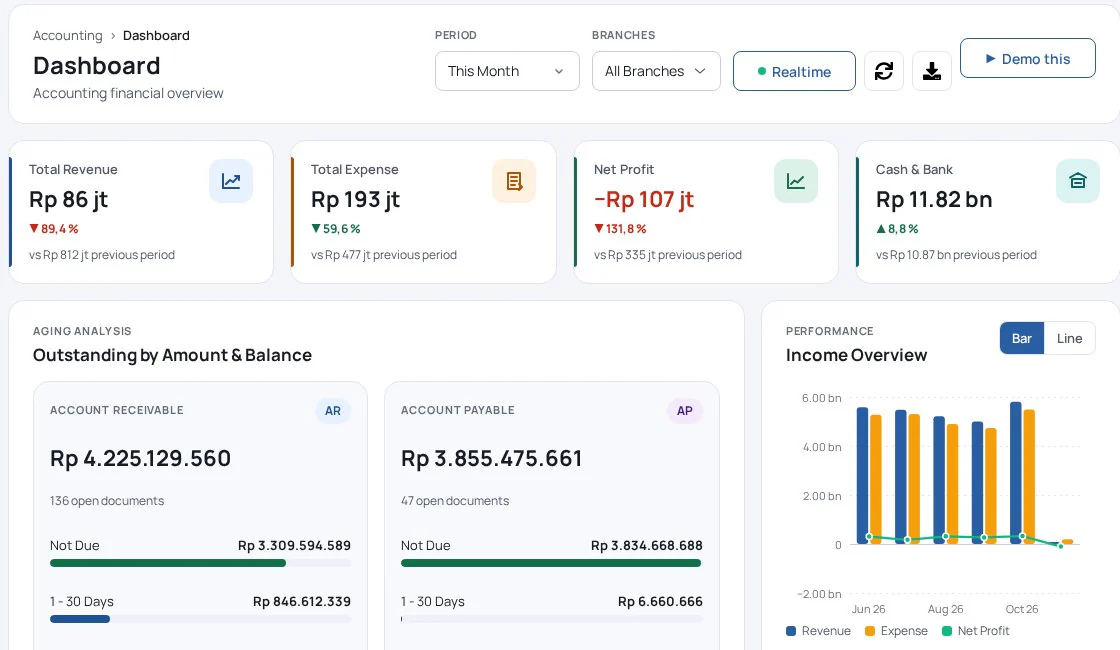
Assess HashMicro around the finance processes supporting your events. Keep this ERP scope separate from attendee-facing requirements. Evaluate ERP for connected business operations against your approved financial workflow.
HashMicro supports importing master data and open documents through templates, followed by reconciliation. Opening balances use imported journal entries. There is no dedicated opening-balance or legacy-system migration wizard.
Prepare clean customer details and the agreed open financial documents. Run trial imports before approving the final cutover. Finance should reconcile opening records and balances against the previous system.
HashMicro’s bank reconciliation workflow starts with importing a bank statement. Configured rules match ledger items by amount, date window and reference. Remaining items can be reviewed and matched manually.
Unmatched bank fees or interest can be recorded through entries before reconciliation. Assess this against sample statements and expected ledger postings. Do not treat bank-statement reconciliation as proof of a ticketing or payment-gateway connector.
For an event business, test settlement differences carefully. Ask how finance will investigate fees, refunds and unidentified receipts. Use sample records representing your own payment arrangements.
Agree which records belong in the event platform and ERP. Define who investigates differences between registration payments and bank receipts. Include those checks in the demonstration and rollout acceptance plan.
Prepare Your Team for a Useful Demonstration
Bring a representative event rather than a broad feature list. Include attendee-volume assumptions, registration fields and team responsibilities. Add sample financial documents and the exports you require.
Identify business, finance and IT decision-makers before the session. Include HR where employee records or internal staffing enter scope. Use understanding HR module scope to prepare that discussion.
Ask each owner to describe their acceptance evidence. Registration leads should explain attendee exceptions and required communications. Finance should bring billing, refund and reconciliation scenarios.
Record unanswered questions during the demonstration. Assign owners and agree how each answer will be demonstrated. Keep proposed integrations separate from confirmed deliverables.
Conclusion
Start with the workflow and control requirements that matter to your team. Test those requirements with representative records before deciding on the next step.
Frequently Asked Questions
Frequently Asked Questions
Evaluate registration, attendee communication, team coordination, onsite processes and reporting. Ask vendors to demonstrate those requirements using your event scenario. Confirm which elements are included, optional, externally supplied or unsupported. Start with required outcomes, such as an accurate attendance export. Avoid assuming every product covers the entire event lifecycle.
Ticketing focuses on admission or booking transactions. Broader event requirements may include planning, communication and delivery coordination. Product scopes vary, so compare demonstrated workflows rather than labels. For example, test a cancellation alongside its attendee message and financial handoff. Check who owns each step when separate tools are involved.
Request a MYR quotation covering the entire proposed scope. Include subscription, usage charges, payment processing, equipment, implementation, integration and support. Give vendors matching event volumes, user assumptions and contract terms. Ask them to identify exclusions and renewal conditions. Set the budget after comparing those costs against demonstrated requirements.
Require a demonstrated transfer method before accepting an integration proposal. Check record identifiers, field mapping, reconciliation and error handling. Ask whether the method uses agreed files or another documented connection. Include ownership and failure recovery in the scope. Test a refund or corrected buyer record alongside a successful payment.
Use Royal Malaysian Customs guidance to assess SST treatment and reporting responsibilities. Check LHDN’s current e-Invoice guidance for your organisation and transactions. Establish which system issues invoices and manages validation results or corrections. Keep registration confirmations separate from financial documents. Test sample MYR transactions using finance’s approved treatment.
Start with cleaned records, trial imports and agreed UAT scenarios. HashMicro supports template imports for master data and open documents, followed by reconciliation. Opening balances use imported journal entries, without a dedicated migration wizard. Confirm supported data types for your proposed scope. Assess readiness using reconciliation results, test outcomes and unresolved critical issues.