







In manufacturing, inventory problems rarely show up as “inventory problems.” They appear as delayed production runs, emergency purchases, or finished goods that exist in reports but not on the loading bay.
This risk is growing as Malaysian manufacturers scale output and complexity. According to Malaysia’s New Industrial Master Plan 2030, manufacturing contributes around 24% to GDP, while digitalisation becomes more important for managing production, inventory, and supply chain gaps.
Manufacturing inventory software is designed to close that gap. Instead of treating inventory as static stock counts, it tracks materials as they move through production, work in progress, and finished goods, so decisions are based on what is actually usable, not what was last recorded.
Key Takeaways
The right system helps teams see what stock is usable, what is still in process, and what is blocking output, so decisions are based on reality, not reports.
The benefits of manufacturing inventory management software are revolutionizing operations by streamlining inventory and enabling informed decisions.
Raw material issues disrupt WIP and finished goods when demand shifts, suppliers fail, data is inaccurate, or traceability breaks down.
As manufacturing operations grow, inventory mistakes become harder to control and more expensive to ignore. The right inventory system helps your team track usable stock accurately, prevent costly disruptions, and keep production moving with better visibility.

Quick Shortlist of the Best Manufacturing Inventory Software in Malaysia
After reviewing various options, here are the manufacturing inventory management software worth considering in 2026. These tools help manufacturers track materials, manage production resources, and cut down on waste, making it easier to run a leaner and more efficient operation.



Best Because
Affordable ERP-style system with QuickBooks integration, real-time tracking, and lightweight MRP functions.

Best Because
Cloud-based with multi-warehouse support, batch/serial tracking, and mobile access on iOS/Android.

Best Because
Strong batch control for food, cosmetics, and pharma; real-time tracking and transparent pricing plans.

Best Because
Cloud MRP tailored for SMEs with BOM creation, production tracking, and smooth Xero/Shopify integrations.

Best Because
Combines accounting strength with raw material tracking, PO automation, and available-to-promise delivery dates.
What is Manufacturing Inventory Software?

Manufacturing inventory software is designed to track inventory as it moves through production, not just when it enters or leaves a warehouse. It records raw materials, work in progress (WIP), and finished goods as part of one continuous flow tied to production orders and the bill of materials (BOM). The BOM shows which materials are needed for each product, while the production order uses that data to track planned material consumption during production.
This helps teams see how stock moves step by step: raw materials are issued to production, become work in progress (WIP) while the item is being made, and are then converted into finished goods once production is completed. As a result, manufacturers can monitor stock that is still in production, not only raw materials in storage or finished goods ready for delivery.
For manufacturers in Malaysia, this type of system is especially useful when dealing with batch production, subcontracting, or frequent production changes. This software also helps improve inventory turnover ratio performance, which shows how quickly stock is used and replaced. A higher turnover ratio means better inventory management, reducing the risk of overstocking or running out of materials.
Quick Comparison of Best Manufacturing Inventory Software
| Software | Best For | Strength | Key Features | Pricing |
|---|---|---|---|---|
| HashMicro | Manufacturers needing inventory tied closely to production planning, multi-level BOM, and material tracking. | End-to-end production visibility with integrated inventory, purchasing, and manufacturing workflows. | Barcode tracking, stock requests, ERP integration, automated inventory recording, multi-warehouse support. | Available upon request |
| Fishbowl | Manufacturers wanting work orders and fulfillment control integrated with QuickBooks. | Affordable ERP with inventory tracking and lightweight MRP functionality. | Inventory tracking, QuickBooks integration, work orders, fulfillment management. | From RM 1,382/month |
| QuickBooks Enterprise | Manufacturing finance teams needing strong accounting and inventory controls. | Combines advanced inventory management with accounting and cost tracking. | PO automation, raw material tracking, available-to-promise, multi-location inventory. | From RM 9,282/year |
| Cin7 Core | Multi-site businesses requiring centralized inventory and fulfillment. | Strong warehouse visibility with manufacturing and order management support. | Real-time inventory, BOM support, multi-warehouse tracking, accounting integrations. | From RM 1,466/month |
| inFlow Inventory | SMBs needing barcode-driven stock control and order processing. | Easy-to-use inventory management with forecasting capabilities. | Barcode management, forecasting, inventory synchronization, order tracking. | From RM 626/month |
| Odoo | Organizations seeking a modular ERP approach. | Highly customizable manufacturing and inventory platform. | MRP, inventory management, workflow automation, multi-warehouse support. | RM 27/user/month |
| Zoho Inventory | Growing operations managing stock and orders across channels. | Simple inventory and purchasing automation with barcode support. | Multi-warehouse tracking, barcode scanning, purchasing, order management. | RM 111/month |
| Katana MRP | Small to mid-sized manufacturers requiring real-time production visibility. | Real-time inventory and production scheduling. | Batch tracking, production planning, inventory visibility, order management. | From RM 1,508/month |
| SOS Inventory | Businesses requiring lot, serial, and assembly tracking. | Strong QuickBooks ecosystem integration and traceability. | Lot tracking, serial tracking, assemblies, multi-location inventory. | From RM 294/month |
| MISys Manufacturing | Manufacturers needing deeper shop-floor control and MRP workflows. | Scalable manufacturing inventory and barcode management. | MRP, resource tracking, barcode support, QuickBooks integration. | From RM 23,268 one-time |
| MRPEasy | Small manufacturers wanting simple production planning and scheduling. | Affordable MRP platform with purchasing and stock control. | BOM management, production tracking, purchasing, inventory planning. | From RM 416/user/month |
| Unleashed | Manufacturers and wholesalers focused on stock accuracy and costing. | Strong inventory costing and multi-warehouse visibility. | Batch tracking, BOM, supply chain costing, multi-warehouse management. | From RM 630/month |
What are the Main Benefits of Using Manufacturing Inventory Software?
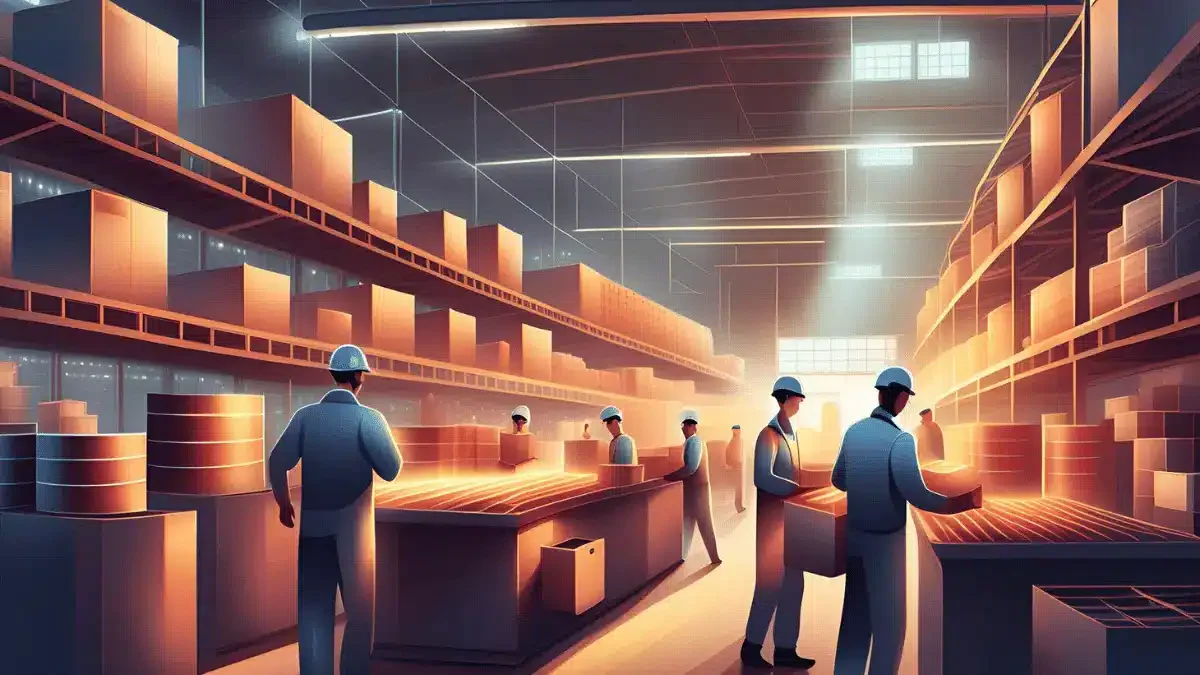
For manufacturers aiming to optimize productivity and minimize errors, inventory software for manufacturing serves as a powerful tool. The following are its most impactful benefits.
- Maintain production continuity with real-time inventory tracking: Automated tracking enables constant stock level monitoring, mitigating stockouts and overstocking. It also supports just-in-time (JIT) planning by helping teams keep the right materials ready for production the right materials ready for production when needed without holding excessive stock.
- Plan smarter with enhanced forecasting and demand planning: The software analyzes historical trends to accurately predict future demand, allowing you to optimize production schedules and prevent shortages. It can also help set a reorder point, so raw material purchases are triggered before stock falls too low.
- Reduce bottlenecks through optimized operation: By automating repetitive tasks, the software minimizes errors and liberates your team to focus on strategic initiatives, significantly boosting productivity.
- Protect margins with cost efficiency: Cost efficiency improves when efficient material usage and waste reduction lower expenses tied to excess inventory, obsolete items, rush orders, and missed sales opportunities due to stockouts. This also supports better cash allocation by reducing unnecessary carrying costs and improving inventory turnover.
- Strengthen control with advanced reporting and analytics: Comprehensive insights and detailed reports empower data-driven decisions, enabling optimal inventory management, stronger supplier relations, and improved cash flow.
- Improve accuracy with barcode-enabled processes: Barcode scanning automates data entry and reduces manual errors, improving inventory record accuracy across warehouses and production lines. This is crucial for high-SKU, multi-location manufacturers.
- Stabilize supply with better supplier collaboration: Sharing real-time inventory insights helps suppliers plan replenishment more accurately. This reduces emergency orders and production delays.
In addition, research on inventory optimization practices shows that systematic inventory control can reduce costs, save time, improve resource use, minimize waste, and speed up operational flows.
12 Best Manufacturing Inventory Software for Malaysian Manufacturers
Choosing the right inventory system for the manufacturing industry is vital for boosting efficiency, lowering costs, and simplifying operations. Below is a shortlist of manufacturing inventory software you can consider as a starting point before reviewing the detailed breakdown.
For medium to large manufacturers (enterprise scale)
- HashMicro Manufacturing Inventory Software: Delivers end-to-end production control and real-time material tracking for multi-factory and scaling manufacturers.
- Cin7 Core: Offers centralized inventory and MRP planning, along with seamless multi-warehouse order fulfillment.
- Unleashed: Specializes in real-time costing and stock accuracy for manufacturers expanding into wholesale.
- MISys Manufacturing: Supports complex production workflows and shop-floor control for larger manufacturing environments.
- Odoo Manufacturing & Inventory: Offers modular MRP and workflow automation with strong customization for enterprise needs.
For small to medium-sized manufacturers (SMBs)
- Fishbowl Manufacturing: Integrates inventory and work orders with QuickBooks to streamline production tracking.
- Zoho Inventory: Automates stock, purchasing, and barcode workflows for growing e-commerce and manufacturing operations.
- Katana MRP: Focuses on real-time visibility and efficient order fulfillment for smaller manufacturers.
- SOS Inventory: Provides BOM and serial/lot tracking to simplify production for SMBs using QuickBooks or Shopify.
- MRPEasy: Offers simplified MRP, production scheduling, and purchase planning for light manufacturing.
- inFlow Inventory: Supports barcode-driven stock control and accurate order processing for material-intensive SMBs.
- QuickBooks Enterprise: Combines advanced inventory control with accounting and cost tracking for manufacturing finance teams.
In manufacturing, inventory doesn’t operate in isolation, it sits at the intersection of production planning, procurement, and delivery. A system that connects these moving parts in real time tends to prevent the stockouts and production delays that standalone tools simply can’t anticipate.
1. HashMicro Manufacturing Inventory Software
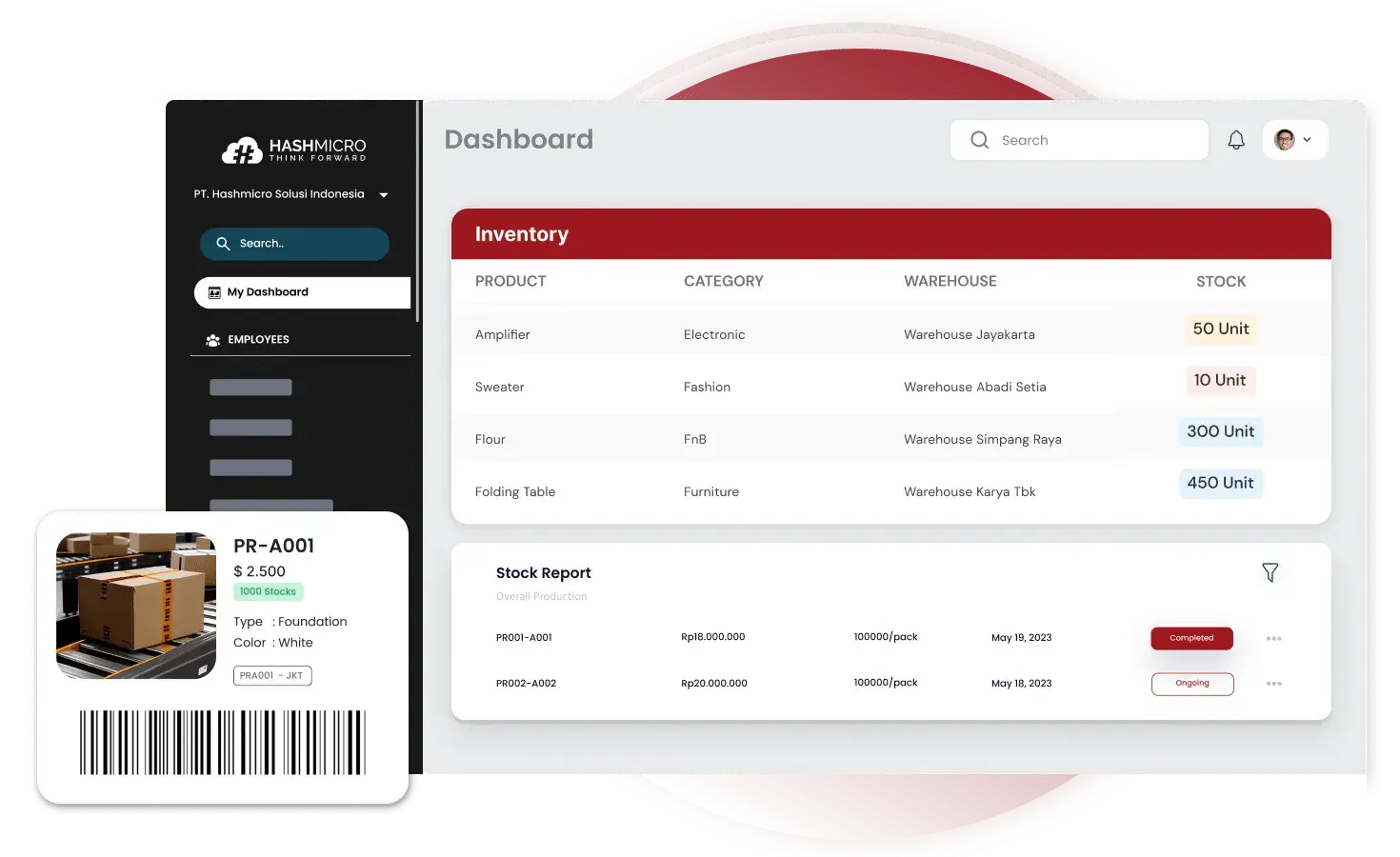
HashMicro’s manufacturing inventory system is built for manufacturers that need tighter coordination between production, warehouse, and purchasing teams. The focus is on visibility and control during daily operations, especially where stock accuracy depends on production progress, not just warehouse counts.
The system tracks raw materials, work in progress (WIP), and finished goods in one flow, linking inventory movements directly to production orders and the bill of materials (BOM). This connection helps teams monitor material consumption more accurately during each production order. This helps reduce common issues such as material shortages mid-production, delayed stock updates, or discrepancies between planned and actual output.
For Malaysian manufacturers managing multiple warehouses or production lines, HashMicro fits best where inventory decisions need to reflect real shop floor activity rather than end-of-day manual updates.
Features:
- Live goods tracking: Barcode management ensures accurate and fast tracking of goods.
- Efficient stock requests: Automated stock request management facilitates requests across branches or warehouses.
- Tailored integration: Customization aligns with your company’s specific needs and supports growth.
- ERP module integration: Seamless connectivity with ERP modules like accounting, manufacturing, purchasing, and POS.
- Automated operations: Automatic stock recording optimizes warehouse and inventory processes.
Price: available upon request
| Pros | Cons |
|---|---|
|
|
manufacturers that need inventory tied closely to production planning, multi level BoM, and material tracking across production and warehouse teams.
Click the banner below for tailored pricing schemes
2. Fishbowl Inventory Software for Manufacturing
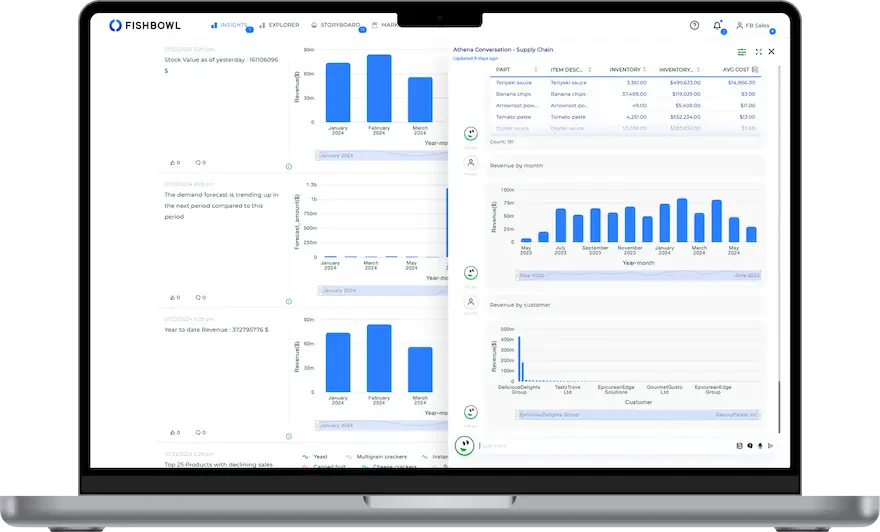
Fishbowl Inventory offers scalable, cost-effective ERP with robust inventory tracking. This ERP system is ideal for growing manufacturers needing a basic MRP system and comprehensive management tools.
Integrating cloud inventory software enhances flexibility with real-time tracking, remote access, and improved accuracy, empowering businesses to adapt quickly to market demands.
Features:
- QuickBooks sync: Keeps inventory and accounting records aligned automatically.
- Work order management: Tracks production jobs from material issuance to finished goods.
- Bill of materials support: Builds and manages multi-level BOMs for production planning.
- Barcode scanning: Reduces manual entry errors across receiving, picking, and stock movement.
- Multi-location inventory: Tracks stock across multiple warehouses from one view.
Price: from RM 1,382/month (based on the Basic plan at $329/month).
| Pros | Cons |
|---|---|
|
|
Manufacturers that want work orders and fulfilment control while syncing transactions back to QuickBooks for accounting.
3. QuickBooks Enterprise
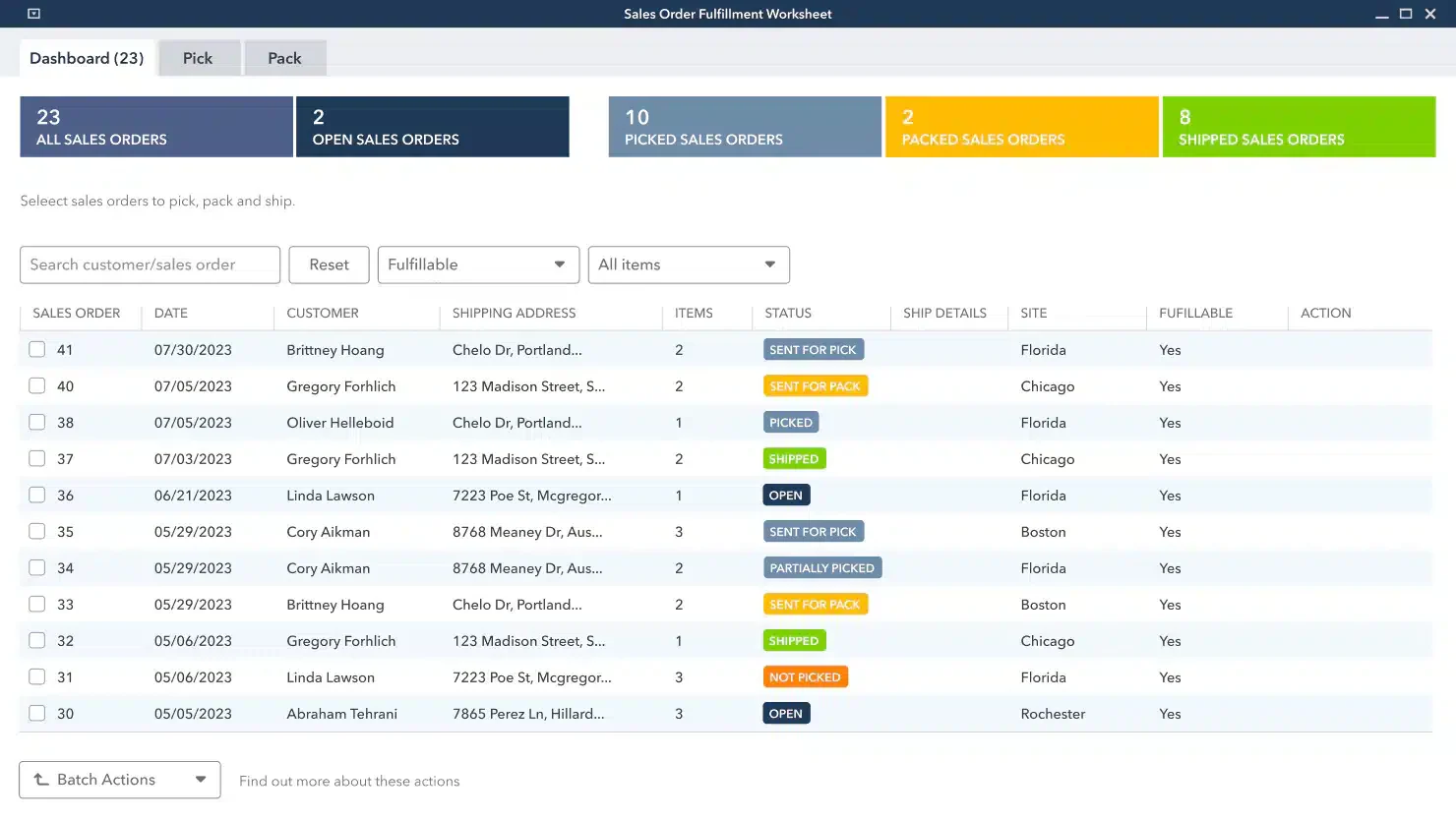
QuickBooks Enterprise is an accounting system with inventory features for manufacturers and distributors. It covers stock, raw materials, orders, and financial records in one platform.
Stock movements and production costs are recorded within the accounting environment, so finance teams can view landed costs, inventory value, and profitability from the same system.
Features:
- Inventory tracking: Tracks stock, raw materials, and finished goods in one system.
- Purchase order management: Automates PO creation to support faster material purchasing.
- Available-to-promise: Helps estimate realistic delivery dates based on stock availability.
- Bill of materials support: Supports inventory assemblies for managing production components.
- Accounting integration: Connects inventory movement with financial records and cost tracking.
Price: from RM 9,282/year (based on $2,210/year).
| Pros | Cons |
|---|---|
|
|
Manufacturing finance teams that want inventory controls such as multi location, lot or serial tracking, and pick workflows inside a strong accounting environment
4. Cin7 Core
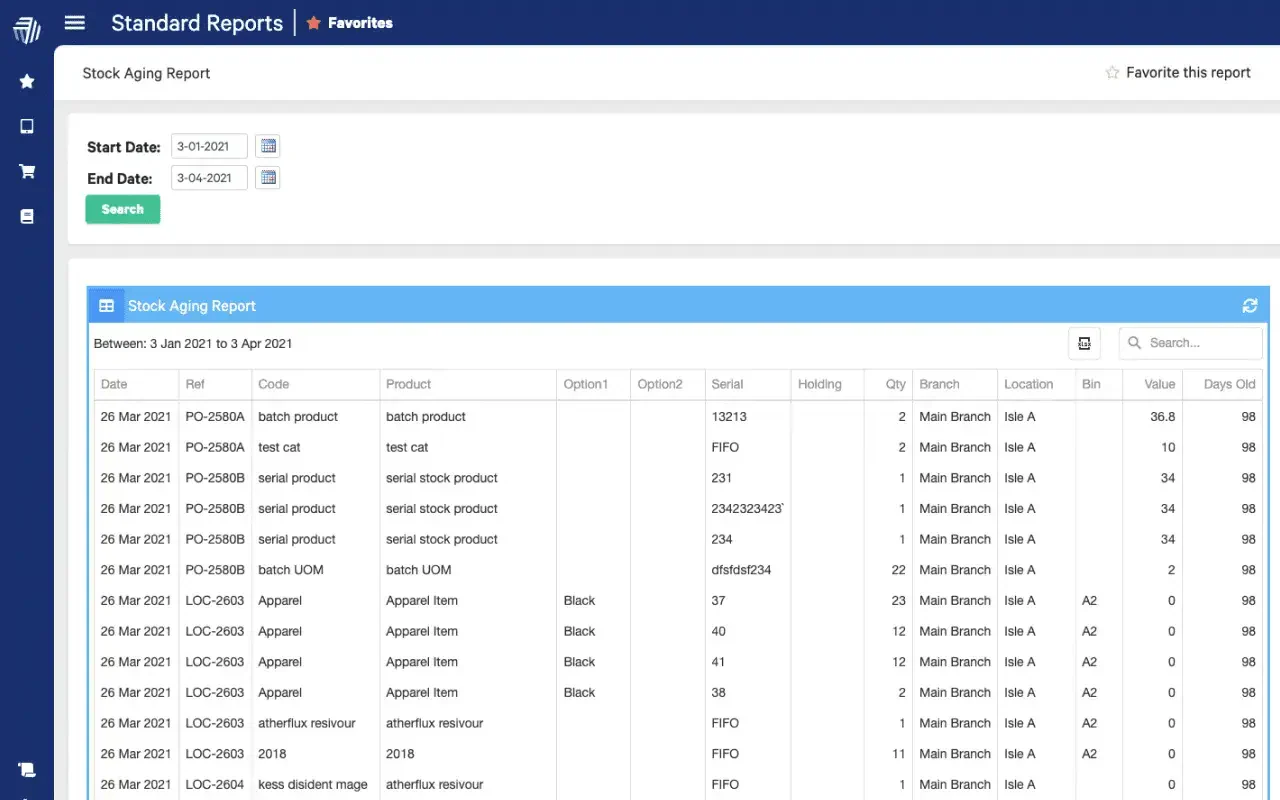
Cin7 Core is a cloud-based inventory system for manufacturers and distributors managing stock across multiple warehouses and sales channels. It connects sales orders, purchase orders, and fulfillment records in one platform.
The system handles multi-channel and multi-location inventory operations, with stock availability, order status, and accounting data accessible within the same environment.
Features:
- Real-time stock visibility: Tracks inventory across warehouses and sales channels.
- Order automation: Helps automate sales orders, purchase orders, and fulfillment workflows.
- BOM management: Supports bill of materials for managing production components.
- Multi-warehouse control: Monitors stock movement across multiple storage locations.
- Accounting integration: Connects inventory data with accounting platforms for cleaner financial records.
Price: from RM 1,466/month (based on $349/month).
| Pros | Cons |
|
|
Multi site businesses that want centralised inventory with BOM and manufacturing support, plus strong order and multi warehouse fulfilment.
5. inFlow
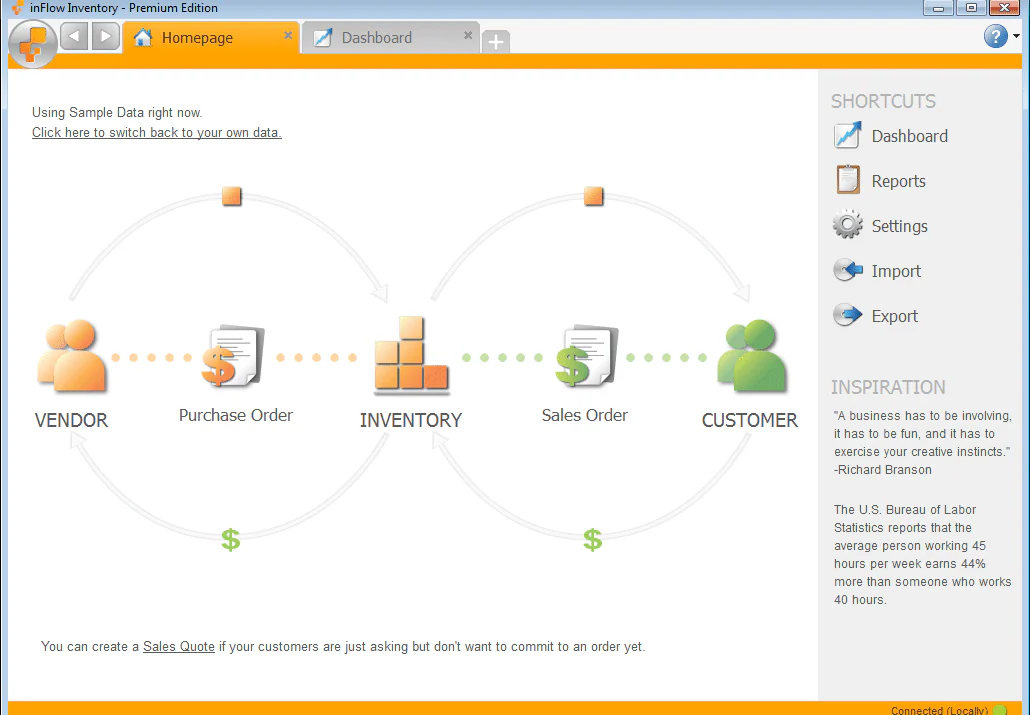
inFlow is an inventory management system for small to mid-sized manufacturers and distributors. It covers stock control across sales, purchasing, and warehouse operations without requiring extensive technical configuration.
The system uses barcode scanning as the primary input method for warehouse activities such as receiving, picking, packing, and stock adjustments. Stock movement records are updated through scanning rather than through manual data entry.
Features:
- Inventory synchronization: Keeps stock data updated across sales, purchasing, and warehouse workflows.
- Barcode scanning: Supports faster receiving, picking, packing, and stock adjustments.
- Stock forecasting: Helps estimate demand and plan replenishment more accurately.
- Order management: Manages sales orders, purchase orders, and fulfillment from one system.
- Multi-location tracking: Tracks inventory across warehouses, stores, or production storage areas.
Price: from RM 626/month (based on $149/month).
| Pros | Cons |
|
|
SMBs that want barcode driven stock control and order processing with a low learning curve for daily warehouse work.
6. Odoo
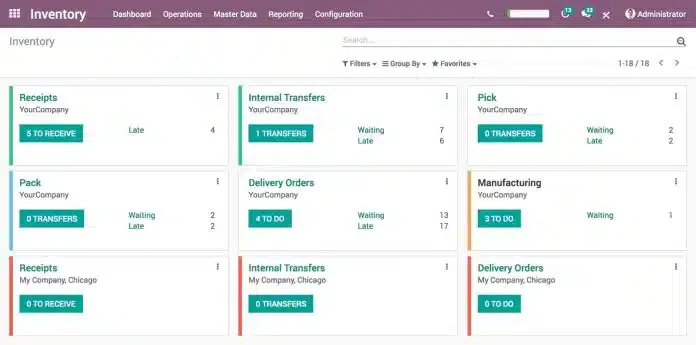 Odoo is a cloud-based platform that covers inventory and manufacturing operations within one system. It tracks stock across warehouses, manages production orders, and connects purchasing and sales in one environment.
The platform is built around a modular structure, where inventory, manufacturing, purchasing, accounting, and sales run as separate modules within the same system. Teams can activate additional modules as needed without moving to a different platform.
Features:
- Inventory management: Tracks stock movement across warehouses and storage locations.
- Manufacturing orders: Manages production orders, work centers, and material consumption.
- Bill of materials: Supports BOM setup for product assembly and manufacturing planning.
- Barcode operations: Helps speed up receiving, picking, packing, and stock transfers.
- Modular integration: Connects inventory with Odoo apps such as manufacturing, purchasing, sales, and accounting.
Price: RM 27/user/month (based on the provided Rp 110,000/user/month).
| Pros | Cons |
|
|
Teams that want a modular ERP approach, combining manufacturing with inventory and other modules, with room for custom workflows.
7. Zoho Inventory
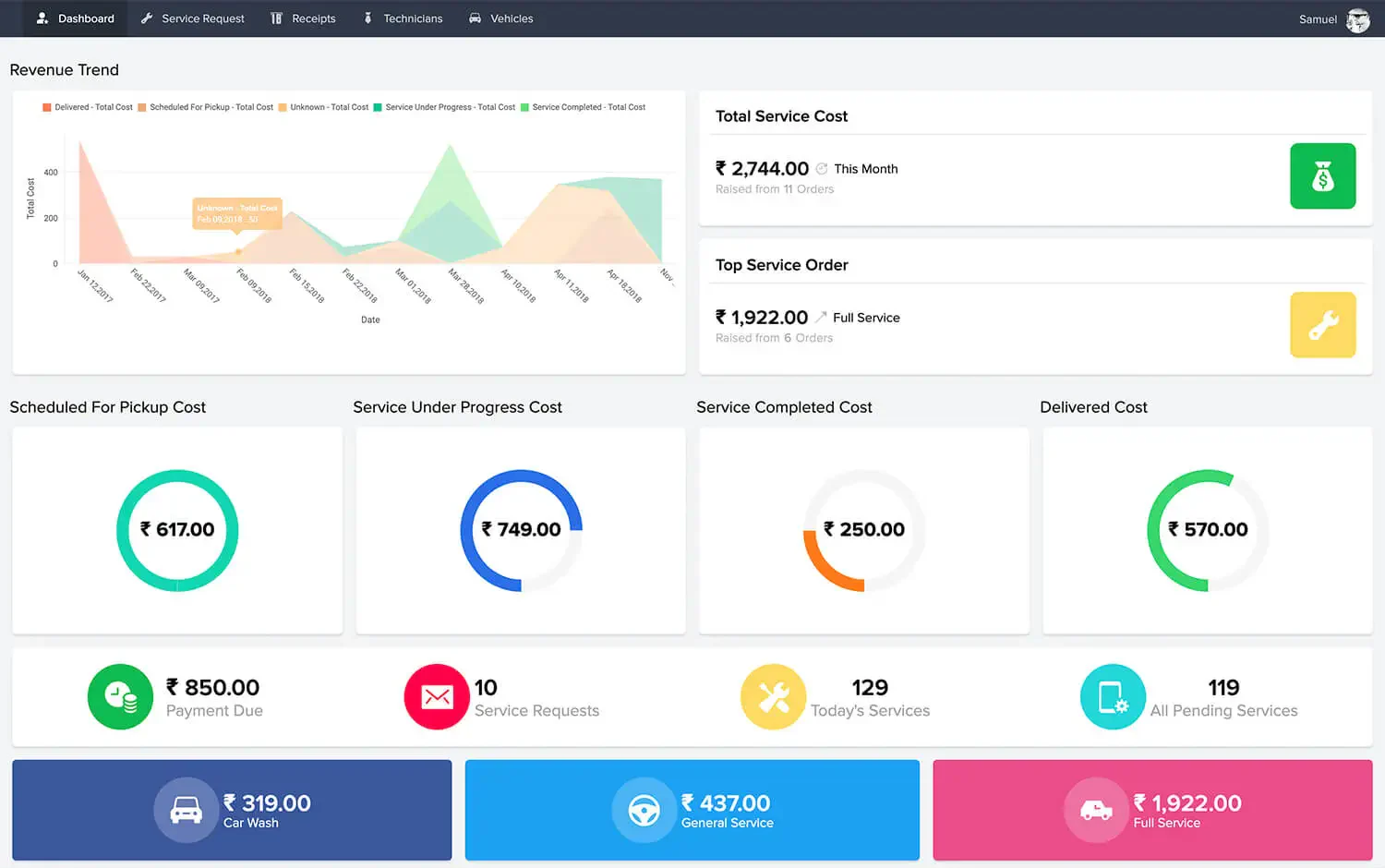
Zoho Inventory is a cloud-based stock management tool for small to mid-sized businesses handling orders across multiple warehouses and online sales channels. It supports item tracking by batch, serial number, or expiry date.
It is part of the Zoho suite, so teams already using Zoho CRM, Zoho Books, or other Zoho apps can connect them to inventory without additional third-party connectors.
Features:
- Multi-warehouse tracking: Monitors stock across different warehouses or storage locations.
- Batch and serial tracking: Tracks items by batch, serial number, or expiry date.
- Order management: Manages sales orders, purchase orders, and invoices in one system.
- Mobile access: Lets teams check stock and process inventory tasks from mobile devices.
- Add-on integration: Connects with other Zoho apps and selected third-party tools.
Price: RM 111/organization/month (based on the provided Rp 448,500/month).
| Pros | Cons |
|---|---|
|
|
Growing operations that need straightforward stock, purchasing, and barcode tracking, especially when managing orders across sales channels.
8. Katana MRP
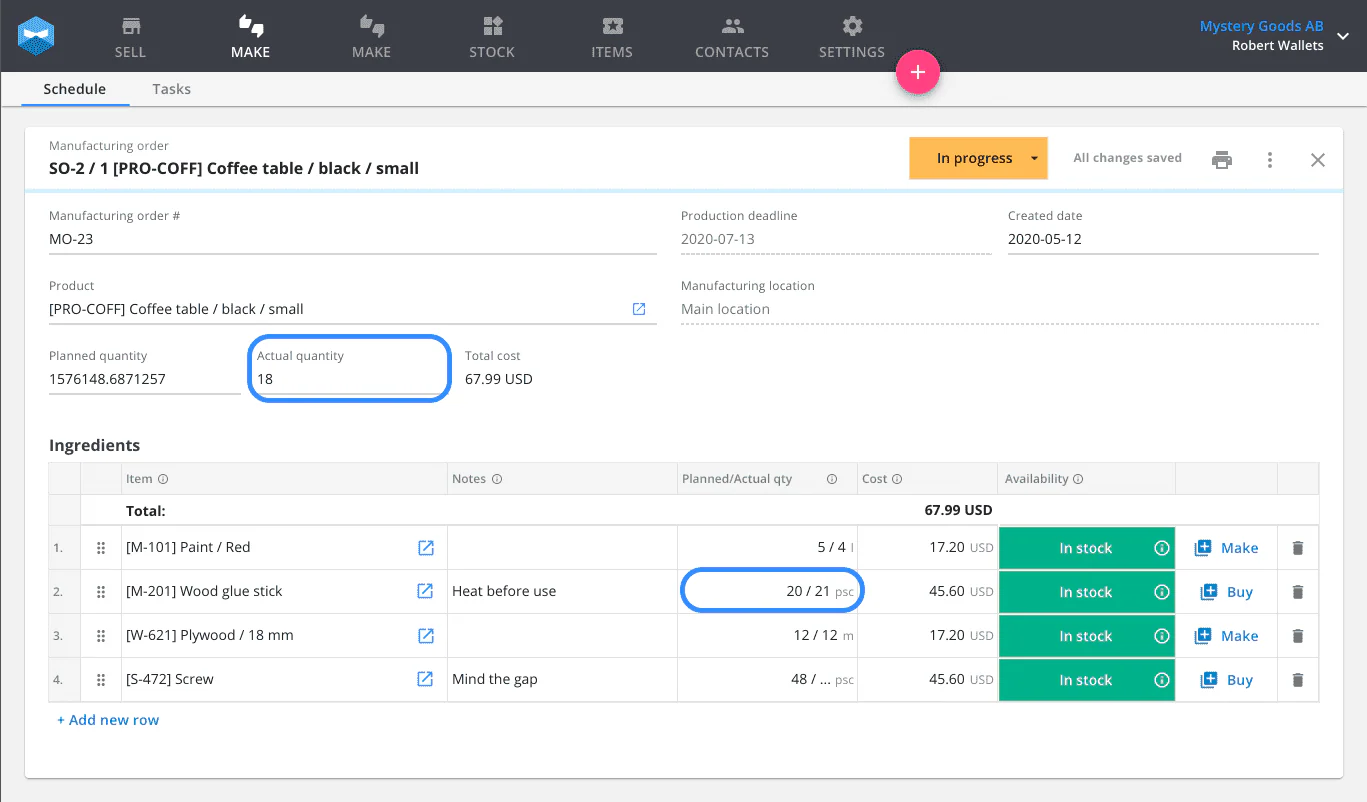
Katana MRP is a cloud-based tool for small to mid-sized manufacturers in food, cosmetics, and pharmaceuticals. It tracks raw materials and finished goods by batch across production orders and warehouse stock.
Its shop floor module gives production teams direct access to order status and material consumption in real time, so floor staff and managers work from the same data without relying on separate reports.
Features:
- Batch tracking: Tracks raw materials and finished goods by batch for better traceability.
- Real-time inventory: Monitors stock levels across production and warehouse locations.
- Production planning: Helps schedule manufacturing orders based on stock and demand.
- Shop floor control: Gives visibility into production progress and material usage.
- Sales order management: Connects sales orders with production and inventory availability.
Price: from RM 1,508/month (based on $359/month).
| Pros | Cons |
|---|---|
|
|
Small to mid sized manufacturers that need real time visibility across inventory, orders, and production schedules without heavy ERP complexity.
9. SOS Inventory
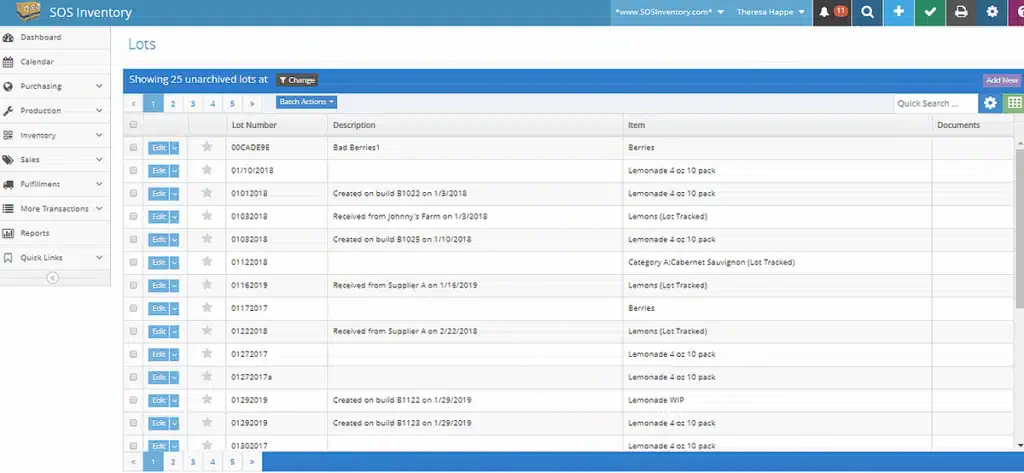
SOS Inventory is a cloud-based inventory system for businesses that need lot, serial, and stock movement tracking across multiple locations.
Its use is mainly centered on inventory records, stock counts, and traceability documentation. Businesses that need wider control over procurement, accounting, reporting, and warehouse operations may need to compare its scope with broader ERP requirements.
Features:
- Lot and serial tracking: Tracks materials and finished goods for better traceability.
- QuickBooks integration: Connects inventory records with QuickBooks Online accounting.
- Order management: Manages purchasing, sales, and fulfillment workflows.
- Mobile inventory control: Supports warehouse tasks through mobile access.
- Multi-location tracking: Monitors stock across different warehouses or storage areas.
Price: from RM 294/month (based on $69.95/month).
| Pros | Cons |
|---|---|
|
|
Online users that need stronger inventory and light manufacturing controls such as assemblies, serial or lot tracking, and multi location workflows.
10. MISys Manufacturing
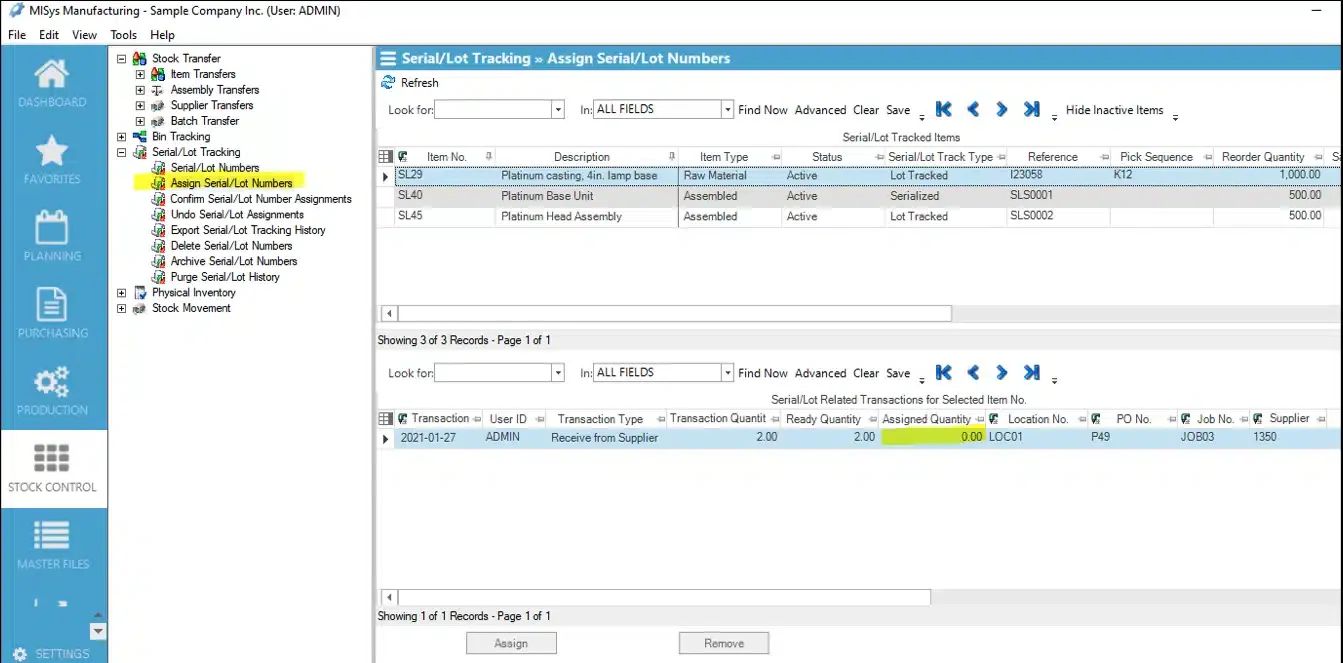
MISys Manufacturing is an inventory and production control system for manufacturers that track raw materials, job costs, and orders. It also includes barcode software for manufacturing support for stock tracking in production workflows.
Its scope covers inventory, costing, QuickBooks integration, and deployment options, but wider ERP needs may require further review.
Features:
- Raw material tracking: Tracks materials from purchasing through production usage.
- Production costing: Monitors material, labor, and overhead costs for manufacturing jobs.
- QuickBooks integration: Connects manufacturing data with QuickBooks accounting.
- Barcode support: Helps improve inventory accuracy through barcode-based tracking.
- Flexible deployment: Supports deployment options that fit different business environments.
Price: from RM 23,268 one-time (based on $5,540).
| Pros | Cons |
|---|---|
|
|
Manufacturers that need deeper shop floor control and MRP style workflows, often paired with accounting tools like QuickBooks.
11. MRPEasy
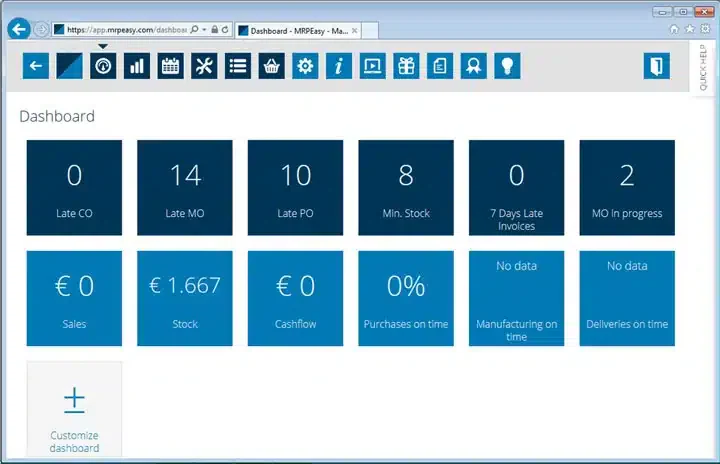
MRPEasy is a cloud-based MRP system for small manufacturers that need BOM management, production tracking, and inventory control. It tracks raw materials, WIP, finished goods, and material usage across manufacturing orders.
It supports purchase planning and integrations with Xero or Shopify, while its scope remains focused on MRP and inventory workflows.
Features:
- BOM management: Creates and manages bills of materials for production planning.
- Production tracking: Monitors manufacturing orders, progress, and material usage.
- Inventory control: Tracks raw materials, WIP, and finished goods in one system.
- Purchase planning: Helps plan material purchases based on production demand.
- System integration: Connects with tools like Xero, Shopify, and other business apps.
Price: from RM 416/user/month (based on $99/user/month).
| Pros | Cons |
|---|---|
|
|
Small manufacturers that want simpler production planning and scheduling with purchasing and stock control, without a long setup cycle.
12. Unleashed
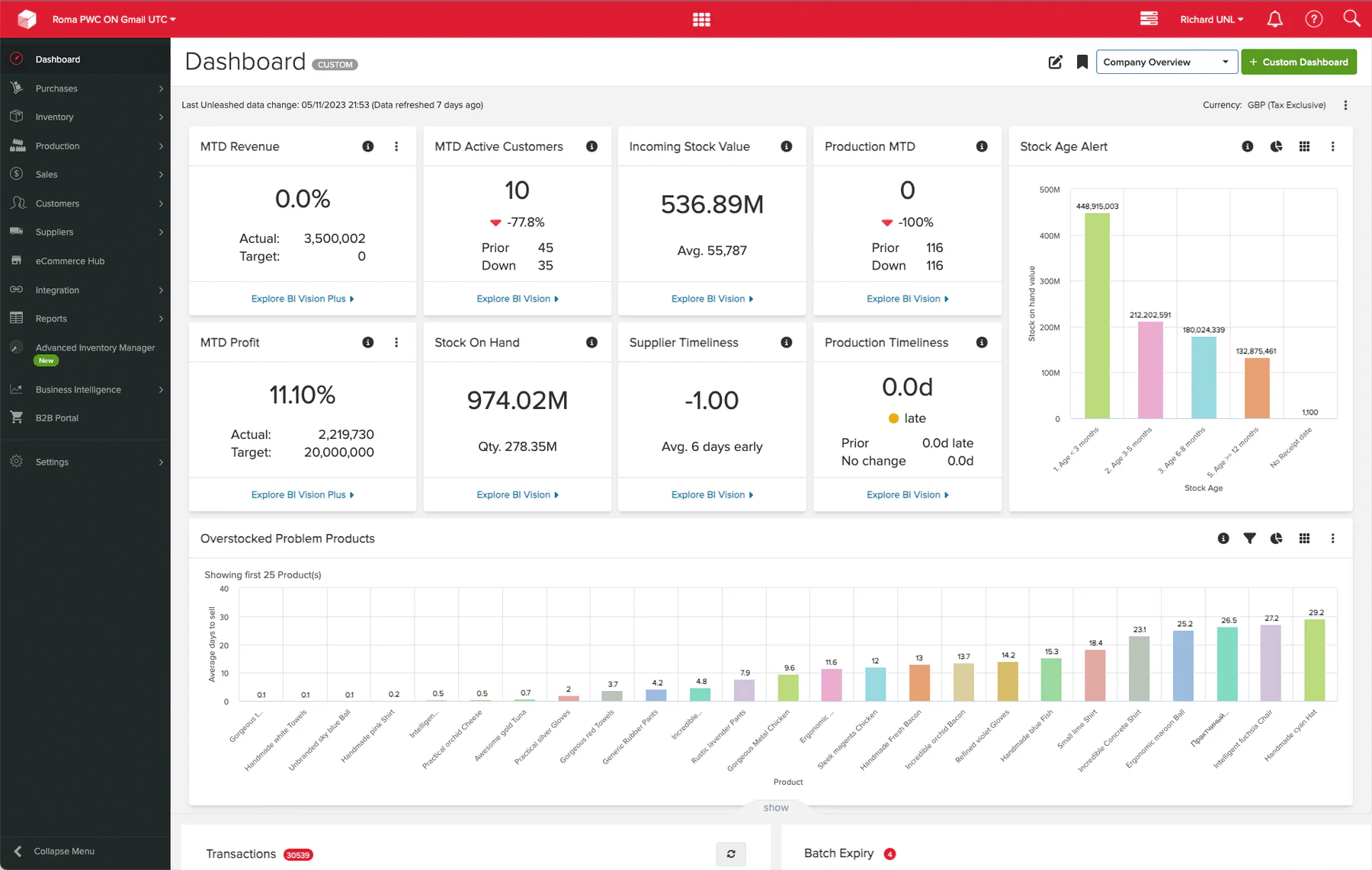
For manufacturers handling batch-controlled goods, Unleashed organizes stock by batch, warehouse location, and BOM structure. It also records purchasing, assembly, component usage, and product cost data within inventory workflows.
Its disassembly function supports cases where finished goods need to be broken back into components. The system is mainly focused on inventory and costing, so broader ERP needs may require further review.
Features:
- Batch tracking: Tracks inventory by batch for better traceability and stock control.
- Multi-warehouse management: Monitors stock across different warehouse locations.
- BOM management: Supports bill of materials for production and assembly needs.
- Disassembly function: Breaks finished goods back into component inventory when needed.
- Costing tools: Helps track product costs across purchasing, production, and supply chain workflows.
Price: from RM 630/month (based on $150/month).
| Pros | Cons |
|---|---|
|
|
Product based manufacturers and wholesalers that care about stock accuracy and costing, and want visibility across suppliers, inventory, and sales.
Comprehensive Comparison of Manufacturing Inventory Software in Malaysia
| Provider | Connection Quality | Bank Coverage | Ease of Integration | Data Enrichment |
|---|---|---|---|---|
| Hashmicro | ||||
| Fishbowl | ||||
| Zoho Inventory | ||||
| Katana | ||||
| MRPEasy | ||||
| QuickBooks |
Common Challenges of Raw Materials Inventory Management
Raw materials are the starting point of production, so any issue here quickly spreads to WIP and finished goods. In practice, manufacturers don’t only struggle with “having stock,” but also with keeping the right materials in the right condition at the right time. Below are the challenges that most often disrupt raw materials control:
Demand forecasting that shifts too fast
When demand suddenly rises or falls, planning becomes unstable, and stock can swing between overstock and shortages. This creates rushed buying, higher carrying costs, and changes to production schedules.
Unpredictable supplier performance
Late deliveries, inconsistent quality, or changing lead times can break the production rhythm. Even one unreliable supplier can trigger downtime, rework, or last-minute substitutions.
Storage, space, and handling constraints
Materials come in different sizes and require varying packaging and storage, making layout and movement difficult to manage. Without clear flow rules, materials get stuck in the wrong area, damaged, or slow to reach the line.
Waste, expiry, and dead stock
Losses don’t always come from significant incidents; minor damages, expiry, and slow-moving items can quietly drain budget. Preventing this needs FIFO stock rotation, condition monitoring, and smarter replenishment timing. FIFO helps use older materials first to reduce obsolete stock, while FEFO is better for materials with expiry dates, such as food ingredients, chemicals, cosmetics, or pharma materials.
Inaccurate inventory data
Manual updates and disconnected tools often lead to stock-level mismatches between teams. When the numbers can’t be trusted, purchasing and production decisions become guesswork.
Weak traceability
If a quality issue happens, you need to trace materials across their lifecycle for audits, recalls, and compliance. Limited traceability means slower investigations and bigger operational and reputational risk.
How to Choose the Best Manufacturing Inventory Software
Choosing the right manufacturing inventory management software is a critical step toward optimizing operations and ensuring your business stays competitive. The right solution not only addresses current challenges but also supports long-term growth.
1. Assess your specific needs
Identify your manufacturing inventory management challenges, such as real-time tracking or multi-location management. Buyers should also check whether the system supports inventory control for raw materials, work in progress (WIP), finished goods, multi-location stock, and production workflows, so stock data stays connected from material usage to final output.
2. Prioritize user-friendly interfaces
Complex systems can cause confusion and errors. Choose inventory management software for manufacturing with an intuitive interface that your team can easily adopt, minimizing training time and ensuring smoother operations.
3. Consider scalability
Choose inventory management software for the manufacturing industry
that grows with your business, seamlessly accommodating higher order volumes, new product lines, or additional locations.
4. Ensure system integration
Choose software that integrates smoothly with the best software for manufacturing and ERP best software for manufacturing and ERP systems to ensure consistent data flow, prevent silos, and reduce manual tasks. A well-integrated manufacturing inventory management software streamlines processes and boosts overall efficiency.
5. Check customer support quality
Strong support is crucial for setup and troubleshooting. Select providers that offer reliable service, training resources, and responsive assistance to ensure your inventory management software works effectively.
Selecting the right manufacturing inventory software is an investment in your business’s future success. By focusing on these key factors, you can ensure smoother operations, greater efficiency, and a solution that evolves alongside your business needs.
"In manufacturing, disconnected systems create delays and waste. Inventory software that integrates with production, procurement, and finance helps teams make faster, more accurate decisions that keep operations running smoothly"
Which Manufacturing Inventory Software Suits Your Business?
| Software | Key Features | Advantages | Best Suited For |
|---|---|---|---|
| HashMicro | Barcode inventory tracking, automated stock requests, ERP integration, multi-warehouse management, inventory automation | Deep manufacturing integration, customizable workflows, strong ERP connectivity, real-time inventory visibility | Manufacturers needing inventory linked directly to production planning, BoM management, and warehouse operations |
| Fishbowl Manufacturing | QuickBooks integration, work order management, barcode scanning, multi-location inventory, bill of materials support | Affordable MRP functionality, scalable inventory control, strong accounting integration | Manufacturers seeking work order control while synchronizing inventory with QuickBooks |
| QuickBooks Enterprise | Inventory tracking, purchase order automation, available-to-promise, inventory assemblies, accounting integration | Strong financial management combined with inventory visibility and delivery forecasting | Manufacturing finance teams needing inventory controls inside a powerful accounting environment |
| Cin7 Core | Real-time inventory visibility, order automation, BOM management, multi-warehouse control, accounting integration | Centralized inventory management with strong fulfillment and warehouse capabilities | Multi-site manufacturers managing inventory and fulfillment across several warehouses |
| inFlow Inventory | Inventory synchronization, barcode scanning, stock forecasting, order management, multi-location tracking | Easy-to-use interface with forecasting capabilities and warehouse efficiency tools | SMBs looking for barcode-based inventory control and simplified order processing |
| Odoo Manufacturing & Inventory | Inventory management, manufacturing orders, BOM support, barcode operations, modular ERP integration | Highly customizable and scalable through Odoo’s modular ecosystem | Businesses wanting manufacturing, inventory, purchasing, and accounting in one flexible ERP platform |
| Zoho Inventory | Multi-warehouse tracking, batch and serial tracking, order management, mobile inventory access, integrations | Simple deployment, mobile-friendly operation, and affordable scalability | Growing manufacturers managing inventory across multiple sales and distribution channels |
| Katana MRP | Batch tracking, real-time inventory visibility, production planning, shop floor monitoring, sales order management | Strong traceability and production visibility with straightforward implementation | Small and medium manufacturers needing real-time inventory and production synchronization |
| SOS Inventory | Lot and serial tracking, QuickBooks integration, order management, mobile inventory access, multi-location inventory | Strong traceability features and affordable inventory control for growing businesses | Businesses requiring lot tracking, assemblies, and multi-location inventory management |
| MISys Manufacturing | Raw material tracking, production costing, barcode inventory management, QuickBooks integration, flexible deployment | Comprehensive manufacturing controls with detailed costing and shop floor visibility | Manufacturers requiring deeper MRP and production control capabilities |
| MRPEasy | BOM management, production tracking, inventory control, purchase planning, third-party integrations | Affordable cloud MRP with simple deployment and strong production planning features | Small manufacturers needing lightweight MRP and inventory management tools |
| Unleashed | Batch tracking, multi-warehouse management, BOM support, disassembly function, product costing tools | Excellent stock accuracy, traceability, and supply chain costing visibility | Manufacturers and wholesalers prioritizing inventory accuracy and cost control |
Conclusion
Choosing manufacturing inventory software should start from how materials move through production. Prioritize barcode tracking and multi-location control for stock accuracy, or BOM, batch, and WIP visibility when production changes often.
Each system fits a different operating model. Accounting-led teams may need finance integration, smaller manufacturers may prefer simple MRP, while multi-site factories need stronger links between inventory, purchasing, production, and reporting.
A free demo can help manufacturers review how daily workflows would run, from raw material tracking to finished goods movement, before deciding which system fits their operations.

FAQ about Manufacturing Inventory Software
Track it across three stages: raw materials, work-in-progress, and finished goods. Each stage is linked to a BOM and production order, so when materials are issued to production, the system updates all three levels in real time. Barcode or lot scanning keeps the count accurate on the shop floor, so teams see actual usable stock instead of last-recorded numbers.
There are seven challenges in raw materials inventory management, such as ensuring accurate demand forecasting, supplier reliability, storage and handling, waste and obsolescence, data accuracy, and lack of traceability.
Yes, but mainly from the documentation side. Manufacturing inventory software can help record imported material details, supplier documents, landed costs, and material usage history, which supports SST review, exemption tracking, and audit preparation.
Inventory software focuses on stock movement, while manufacturing inventory software connects stock to production activity. It shows whether materials are still available, already issued to production, or tied up in WIP before becoming finished goods.
Manufacturing inventory software reduces production delays by providing real-time visibility into material availability and stock levels. It automates reordering, tracks usage accurately, and ensures every component is ready when needed, keeping production on schedule.
The best option depends on how complex the production flow is. SMEs with simple stock and order needs may start with lightweight inventory tools, while those managing BOMs, batches, WIP, or frequent material changes should choose software with production-linked inventory controls.
Manufacturing inventory software works by linking purchasing, warehouse, and production so stock updates automatically as items move from raw materials → WIP → finished goods. It uses BOM/work orders to reserve and consume materials, then records output, scrap, and transfers in real time.
It records when raw materials are issued, partially consumed, or converted during production. This helps teams see which stock is already committed to production, which items are still unfinished, and where material value is sitting before goods are completed.