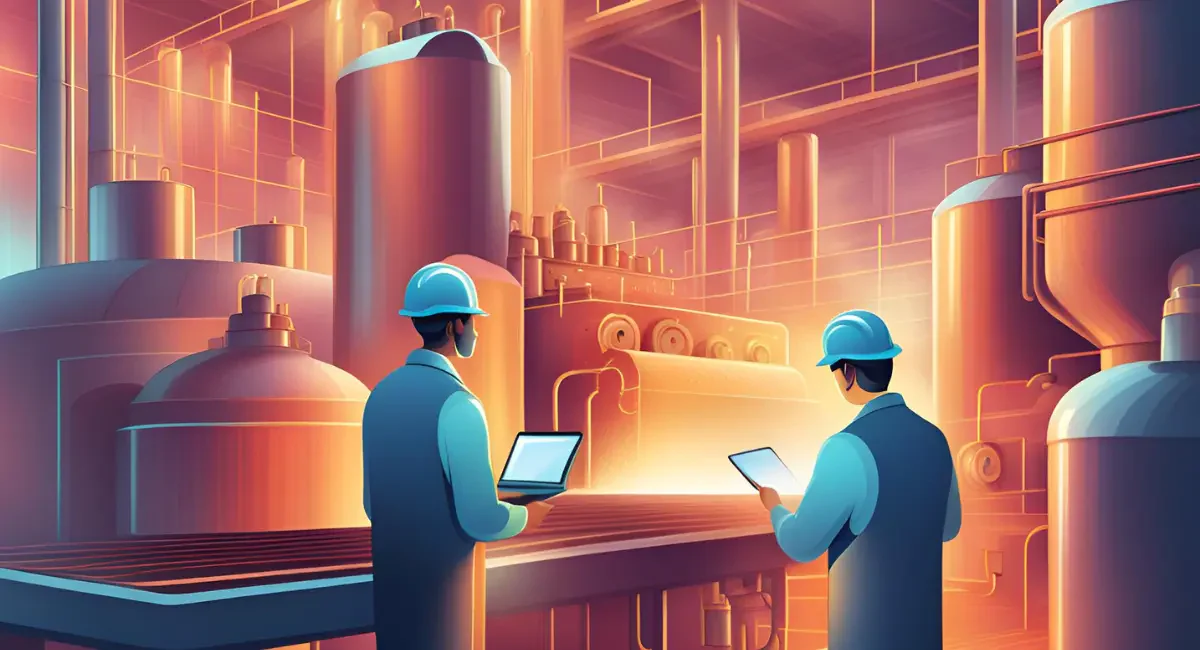







Malaysia’s slowing industrial production highlights a deeper challenge for manufacturers: managing work in progress (WIP) efficiently. Without clear WIP tracking, rising costs, slow-moving inventory, and delayed production updates can disrupt operations and weaken decision-making.
For example, a study by the Malaysia Investment Development Authority (MIDA) highlighted that slow production times and inefficient work in process management can cost local manufacturers up to 8% in lost revenue annually.
Understanding how to manage WIP efficiently is crucial to overcoming these challenges. Keep reading to discover how mastering WIP can transform your operations and how ERP manufacturing software can streamline your processes for greater success.
Key Takeaways
WIP refers to unfinished goods whose material, labor, and overhead costs must be tracked to monitor production and support accurate financial reporting.
Work in process and work in progress differ by scope, timeline, and accounting treatment, helping businesses classify inventory and report costs accurately.
Tracking WIP helps businesses control costs, reduce waste, and adjust production to match demand.
Manufacturing software helps connect WIP, material usage, labor costs, and inventory movement for clearer production control.
What is a Work in Progress?
Work in progress (WIP) refers to partially completed goods being transformed from raw materials into finished products. While this term is most common in manufacturing, it also applies to companies managing products that may be in transit or awaiting supplier fulfillment, reflecting the broader work-in-progress meaning across industries.
Key Differences of Work in Progress vs. Work in Process
Although work in process and work in progress both refer to unfinished work, they are not always used in the same way. The table below highlights their key differences across operations, industries, financial reporting, and accounting treatment.
| Aspect | Work in Process | Work in Progress | Accounting Treatment |
|---|---|---|---|
| Scope of work | Refers to standardized production using machinery and bulk raw materials to create uniform products. | Refers to large, unique projects that require more time, resources, and varied materials. | Work in process is usually recorded as inventory, while work in progress may be treated as a project or capital asset. |
| Industries | Common in manufacturing industries with repetitive production workflows. | Common in construction, infrastructure, and large-scale project-based industries. | Manufacturing costs are tracked through inventory accounts, while project costs may be tracked through capital accounts. |
| Financial statements | Usually classified as a short-term asset because it is completed and sold faster. | Often classified as a long-term asset when tied to projects that take months or years to complete. | The classification depends on completion time, resale potential, and how the asset contributes to future revenue. |
| Accounting treatment | Costs are moved into finished goods inventory and later recorded as cost of goods sold. | Costs may be capitalized until the project is completed or ready for use. | Manufacturing accounting software helps businesses track production costs, allocate expenses, and maintain accurate WIP reporting. |
| Asset liquidity | Easier to liquidate because items are standardized and closer to completion. | Harder to sell because items are often customized for specific projects or company needs. | Work in process supports faster inventory turnover, while work in progress may stay on the balance sheet longer. |
| Typical time period | Usually completed within short and predictable production cycles. | May take medium- to long-term timelines, especially for complex projects. | Longer timelines require closer cost tracking and regular progress updates. |
| Management focus | Focuses on reducing cycle time, bottlenecks, and unfinished inventory costs. | Focuses on project milestones, budget control, and completion progress. | Accurate tracking helps businesses monitor costs, prevent reporting errors, and improve operational visibility. |
Work in Progress in Supply Chain and Accounting

Effectively managing work in progress (WIP) is crucial for smooth manufacturing operations and accurate financial accounting. With manufacturing software that supports real-time production tracking, cost allocation, batch movement tracking, and WIP valuation, businesses can avoid costly mistakes, monitor each production stage clearly, and keep WIP data actionable.
Work in Progress in Supply Chain Management
Manufacturing managers use WIP metrics to track raw materials, in-progress goods, and finished products over time. This balance ensures raw materials are available when needed without tying up excessive resources in unfinished goods, reducing unnecessary production and storage costs.
A reliable production tracking system updates ongoing project status and material levels. For example, if WIP levels exceed raw material stock, procurement may need to be accelerated. In contrast, high raw material inventory with low WIP may suggest slowing production to prevent overproduction.
Work in Progress in Accounting
In accounting, WIP reflects the total costs of unfinished goods at the end of an accounting period, including raw materials, labor, and manufacturing overhead. These costs are recorded in the WIP account and classified as current assets on the balance sheet.
Once production is completed, these costs are moved from WIP to finished goods inventory and eventually recorded as the cost of goods sold (COGS) when the products are sold, highlighting the importance of precise work-in-progress accounting.
Work in Progress Manufacturing Formula
The standard formula for calculating WIP in manufacturing is:
WIP Manufacturing = Beginning WIP + Manufacturing Costs – Cost of Finished Goods
- Beginning WIP refers to the value of partially completed products carried over from the previous period.
- Manufacturing Costs include raw materials, direct labor, and overhead, all allocated according to the company’s accounting policies.
- Cost of Finished Goods accounts for the total value of completed products, including those started in previous periods and those completed in the current period.
Example:
Let’s consider a fictional Malaysian manufacturer, Selangor Furniture Works, which begins with RM2,500,000 in WIP at the start of the period. The company incurs RM10,000,000 in manufacturing costs during the period and completes RM9,000,000 worth of products. Using the formula:
WIP Manufacturing = RM2,500,000 + RM10,000,000 – RM9,000,000 = RM3,500,000
This RM3,500,000 is recorded as a current asset on the balance sheet under work-in-progress manufacturing, accurately reflecting the costs of unfinished products.
Work in Progress Examples

Work in progress (WIP) is applicable across various industries and production environments. It refers to partially completed goods moving through different production stages. Simply put, WIP serves as the critical bridge between raw materials and finished products in the production cycle.
Example 1: Perishable Goods
Take Marianna’s Pastries, a commercial bakery that manufactures cakes, pastries, and other baked goods. Its production process includes multiple steps—mixing, baking, cooling, decorating, and packaging—and custom products like wedding cakes require several days to finish.
At the beginning of the month, Marianna’s had RM1,250,000 worth of WIP in production. Throughout the month, they incurred RM3,000,000 in ingredient costs, RM3,750,000 in wages, and RM2,250,000 in manufacturing overheads like utilities and equipment maintenance. By month-end, they had completed RM7,750,000 worth of finished goods.
Using the WIP manufacturing formula:
WIP = Beginning WIP + Manufacturing Costs – Cost of Finished Goods
WIP = RM1,250,000 + (RM3,000,000 + RM3,750,000 + RM2,250,000) – RM7,750,000 = RM2,500,000
After reviewing their updated WIP value, the bakery adjusted its production pace to avoid overproduction and minimise waste, especially for perishable items. They slowed operations slightly until customer demand stabilised.
Example 2: Clothing Manufacturer
Consider Kuala Lumpur Garment Works, a Malaysia-based garment manufacturer producing custom, high-end apparel. Its manufacturing process involves precise craftsmanship by skilled artisans across several stages.
They recorded RM1,600,000 of unfinished garments as WIP at the start of the period. During the same period, they spent RM4,750,000 on raw materials, RM4,000,000 on labour, and RM2,500,000 on manufacturing overheads. They completed RM12,000,000 worth of finished garments.
Using the same WIP calculation:
WIP = RM1,600,000 + (RM4,750,000 + RM4,000,000 + RM2,500,000) – RM12,000,000 = RM850,000
The reduction in WIP reflected smoother workflows and faster output, but the team flagged a potential risk: if demand continues to rise and production doesn’t keep up, stockouts may occur. To stay ahead, they increased production capacity while maintaining quality control.
These WIP manufacturing examples highlight the importance of precise WIP accounting, accurate cost tracking, and a real-time production tracking system. With proper oversight and work-in-progress signage, businesses can monitor progress, control costs, and improve manufacturing efficiency across all stages.
How Manufacturing Software Helps Monitor Work in Progress
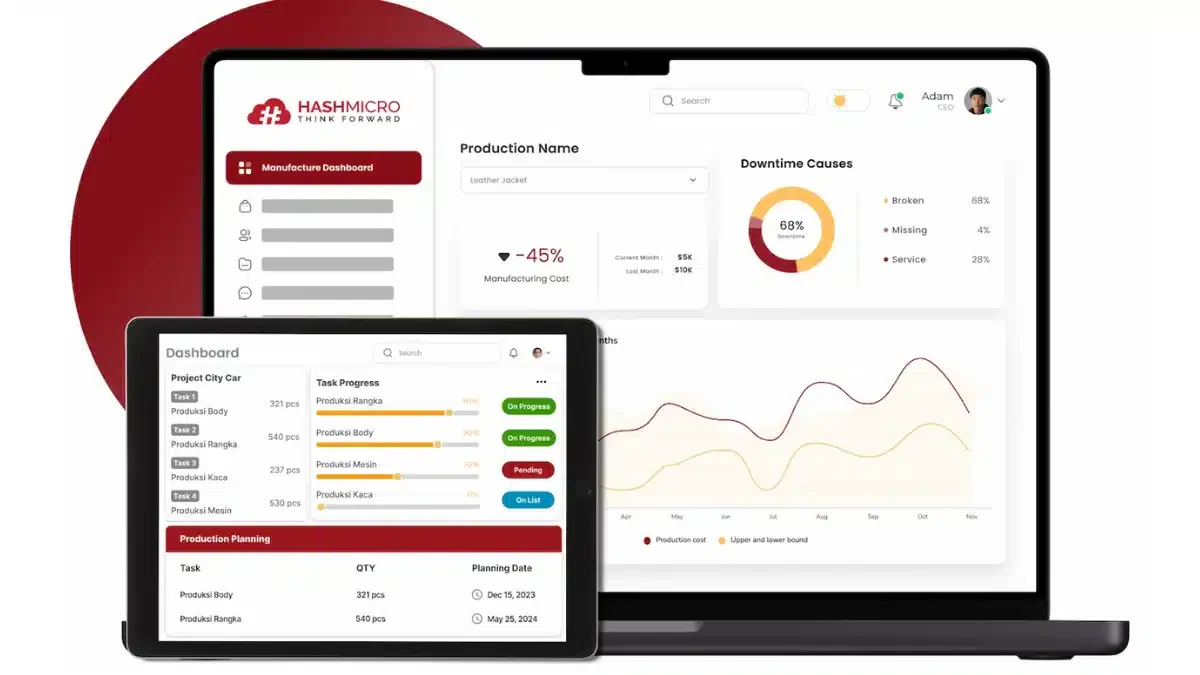
Monitoring and managing work in progress (WIP) is crucial to maximising storage efficiency, streamlining production, and controlling costs. However, many businesses still rely on manual methods or disconnected systems, making it challenging to accurately track raw materials, labour, and overhead costs at each production stage.
Manufacturing software helps connect production, inventory, and finance data in one place, giving teams clearer visibility into WIP status, stock usage, labour costs, and overhead allocation. This allows businesses to reduce delays, improve cost tracking, and keep production data more accurate across each stage.
As production grows, configurable workflows, centralised production data, and batch-level tracking help manufacturers monitor WIP more consistently. These capabilities make it easier to manage larger production volumes while maintaining visibility over materials, costs, and unfinished goods.
Here are some key features to help optimise your WIP management:
- Stock Forecasting with Automatic Reordering Recommendations: This method leverages historical consumption and current production demands to predict stock levels and automatically generate purchase orders or reorder alerts.
- Products and Variants Management with Lot and Serial Numbers: This system assigns unique identifiers to each product or variant, enabling precise tracking throughout every production phase.
- Stock Card Analysis for Detailed Stock Movement Reports: Provides comprehensive records of all stock transactions, including incoming, outgoing, and transfers, with accurate tracking of quantities, dates, and transaction types.
- Product Expiry Tracking, Notifications, and Dashboard: This feature monitors expiry dates for materials and WIP inventory, sending automatic alerts and highlighting items nearing expiry on the dashboard.
- Integration with Barcode, QR, and RFID: This system utilizes scanning technologies to instantly update stock movements when materials are used, moved, or converted into finished products.
Conclusion
Work in progress (WIP) covers goods that are still moving through production. Managing it well helps manufacturers control costs, monitor unfinished inventory, and keep production and accounting records aligned.
When WIP is too high, cash flow can remain tied up in unfinished goods, costing becomes harder to calculate, and fulfilment may slow down. Clear WIP tracking helps businesses identify bottlenecks before they affect delivery timelines.
For businesses reviewing their current process, a free demo can provide a practical view of how real-time production tracking, cost allocation, batch movement tracking, and WIP valuation support daily manufacturing workflows.

FAQ About Work in Progress (WIP)
Work in progress refers to partially completed goods that are still in production. These are items between raw materials and finished products, including costs like labor, materials, and overhead recorded on the balance sheet until the items are completed and ready for sale.
Although the terms are often used interchangeably, work in process usually refers to standard manufacturing items that move quickly through the production cycle, while work in progress is more common in long-term projects such as construction, where items may take months or years to complete.
Tracking WIP properly helps you monitor unfinished production costs, avoid costly delays, improve production efficiency, and make sure your financial statements reflect accurate inventory values. It also supports better decision-making when scheduling production or planning resources.
Manufacturers can identify WIP bottlenecks by checking whether unfinished goods are staying too long at specific production stages. Common signs include repeated delays between processes, rising storage usage, frequent rework, material shortages, and differences between system records and actual shop floor conditions.
WIP levels should be reviewed based on production speed and product type. High-volume or perishable production may need daily monitoring, while custom or longer-cycle manufacturing can be reviewed by batch, milestone, or accounting period to keep costs, materials, and fulfilment timelines under control.