









 Limited to 100 registrants

In Malaysia’s fast-evolving business landscape, companies are under pressure to maintain tighter control over physical and digital assets. From IT equipment to facility infrastructure, businesses need visibility, accuracy, and scalability in managing assets throughout their lifecycle.
To address these issues, many organizations are turning to smarter solutions. With the help of tools like asset management software, businesses can track asset conditions, plan maintenance, calculate depreciation, and monitor usage from a centralized system. This shift reduces human error, supports compliance, and improves long-term planning.
In this article, we review 22 of the top asset management software tools available in Malaysia for 2026. You’ll find options that suit various business sizes and industries, along with insights to help you choose a system that enhances visibility, control, and overall performance.
Key Takeaways
Asset management software is a digital tool designed to help businesses keep track of their assets throughout their lifecycle.
There is 4 Types of Asset Management Software, including EAM, Fixed Asset Management, ITAM, Facilities Asset Management
Selecting the right asset management software is essential for streamlining operations and maximizing efficiency.
Siloed asset data often creates discrepancies between physical inventory and financial balance sheets, leading to costly audit errors. A unified ERP solves this by integrating asset lifecycles directly into your core accounting, ensuring every piece of equipment is accurately tracked from procurement to disposal.
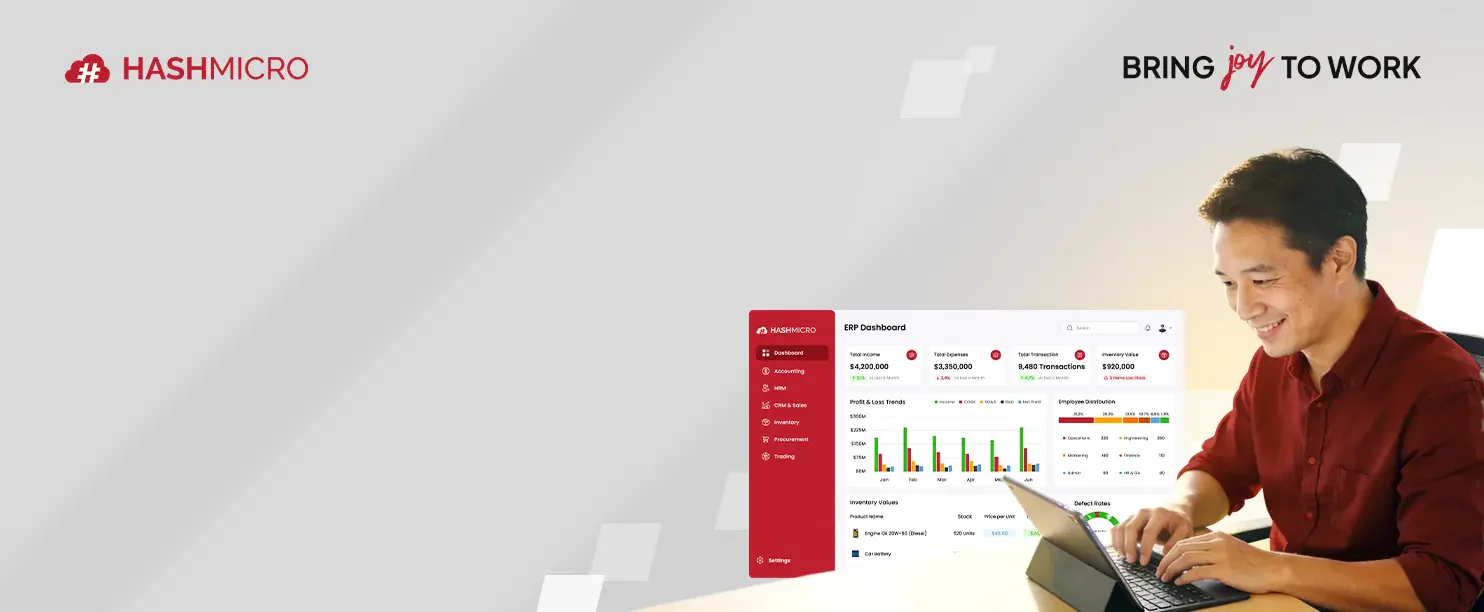
Shortlist of Best Asset Management Software
After evaluating numerous asset management tools available on the market, we’ve identified several standout options. These solutions offer various strengths tailored to different industries and are expected to lead the way for asset management in Malaysia in 2026.



Best Because
IT/non-IT asset tracking with ITSM integration.

Best Because
cloud-based tool for mobile asset tracking and maintenance.
Best Because
preventive maintenance with analytics and mobile sync.
Quick Comparison of the Best Asset Management Software
Evaluating different platforms requires a clear view of how each tool aligns with your operational scale and technical requirements. The comparison table below highlights key parameters including target business sizes core use cases local Malaysian support availability and estimated pricing structures to help guide your initial assessment.
| Software | Company Size | Best for | MY Compliance & Support | Pricing |
|---|---|---|---|---|
| HashMicro Asset Management Software | Mid–Large | Companies needing integrated ERP-based asset tracking | Native presence in Malaysia with direct local KL support team & full compliance with Malaysian business workflows | Contact us for details |
| SAP Asset Management | Large | Enterprises with complex physical assets | Certified local Malaysian enterprise partners & regional data center governance | Est. RM 18,000 – RM 54,000+ / month |
| Infor EAM (HxGN EAM) | Mid–Large | Capital-intensive industries and plant operations | Established regional support network and integration with local industrial frameworks | Est. RM 11,200 – RM 36,000 / month |
| EZOfficeInventory | Small–Mid | Firms needing barcode or RFID-based tracking | Cloud-based platform accessible for Malaysian time zones & multi-site teams | From RM 280 – RM 450 / month |
| Microsoft Asset Management Software | Mid–Large | Businesses using the Microsoft ecosystem | Extensive local MS partner network in Malaysia & MYR billing support | Est. RM 800 – RM 950 / user / month |
| AssetCloud (by Wasp) | Small–Mid | SMEs needing RFID or barcode asset verification | Cloud access with regional hardware distributor network for physical tag deployment | Est. RM 480 – RM 1,100 / user / month |
| Freshservice Enterprise Asset Management | Mid–Large | IT-focused organizations needing ITSM integration | Regional SEA cloud data centers with MYR pricing & 24/7 online support | From RM 85 – RM 440 / agent / month |
| AutoCount Fixed Assets | Small–Mid | Malaysian SMEs managing tax depreciation and accounting | 100% compliant with LHDN capital allowance rules & native local MY support | Est. RM 800 – RM 1,500 (one-time) or RM 120 – RM 250 / month |
| Asset Panda | Small–Mid | Organizations needing flexible mobile asset tracking | Cloud-based setup supporting regional mobile field teams and flexible asset tagging | Est. RM 6,800 – RM 13,500 / year |
| Aptean EAM | Mid–Large | Industrial and manufacturing plants | Regional plant maintenance framework support for SEA manufacturing operations | Est. RM 6,800 – RM 18,000 / month |
| InvGate Asset Management | Mid–Large | Organizations managing IT and non-IT assets | Cloud platform supporting regional IT governance and automated asset discovery | Est. RM 0.95 – RM 1.70 / node / month |
| GoCodes | Small–Mid | Field-based teams tracking assets via QR and GPS | Cloud accessibility supporting Malaysian time zones and field equipment lookup | From RM 2,200 – RM 11,000 / year |
| ManageEngine AssetExplorer | Mid–Large | IT departments tracking hardware and software | Local Malaysian distributors and active IT community support | From RM 4,300 – RM 13,500 / year |
| Commusoft | Small–Mid | Field service and maintenance businesses | Global cloud access with multi-currency setup suitable for MY contractors | From RM 340 / user / month |
| NetSuite Fixed Assets Management | Mid–Large | Organizations operating inside NetSuite ERP | Local Oracle NetSuite Malaysia partners supporting Malaysian tax reporting | Est. RM 6,800 – RM 15,800 / month |
| SQL Asset Management Software | Mid–Large | Companies wanting SQL-based financial control | Developed in Malaysia with 100% LHDN tax & audit compliance and direct local support | Est. RM 1,200 – RM 2,500 (one-time) or RM 150 / month |
| IBM Maximo Application Suite | Large | Industrial enterprises requiring equipment reliability | Certified local Malaysian implementation partners & enterprise support | Est. RM 15,800 – RM 45,000+ / month |
| CA IT Asset Manager | Large | Enterprises with complex IT estates | Enterprise compliance reporting supporting large IT governance frameworks | Est. RM 9,000 – RM 27,000 / month |
| Ramco Asset Management Software | Mid–Large | Industrial and multi-site enterprises | Regional SEA presence with enterprise support for Malaysian industrial hubs | Est. RM 11,200 – RM 33,800 / month |
| Ivanti Neurons for ITAM | Large | Enterprises needing unified ITAM platform | Regional enterprise support and IT compliance framework alignment | Est. RM 9,000 – RM 24,800 / month |
| Nuvolo Asset Management Software | Mid–Large | Regulated industries and facility management | Cloud platform built on ServiceNow with local MY ServiceNow ecosystem support | Est. RM 11,200 – RM 29,200 / month |
| VemaFATS | Small–Mid | Organizations managing fixed assets for financial reviews | Designed for Malaysian fixed asset accounting standards & local audit readiness | Est. RM 200 – RM 500 / month |
What is Asset Management Software and Why Does It Matter?
Asset management software is a digital tool designed to help businesses keep track of their assets throughout their lifecycle. These assets include equipment, machinery, vehicles, buildings, and intangible assets like software licenses.
Using asset management software helps businesses streamline how they record, monitor, and manage both physical and digital assets across departments. By implementing a centralized system, companies can better allocate resources, reduce inefficiencies, and maintain asset reliability.
Asset Management vs Asset Tracking
While often used together, asset management and asset tracking address different levels of operational oversight. Asset management takes a high-level view, covering the full lifecycle of an organization’s resources—from initial capital planning and procurement to long-term financial depreciation. On the other hand, specialized asset tracking software zooms in on real-time location visibility, physical movement logs, and custodian accountability through barcode, RFID, and GPS monitoring.
| Aspect | Asset Management | Asset Tracking |
|---|---|---|
| Core Focus | Full lifecycle value, procurement, and financial depreciation | Physical location, active custodian, and movement history |
| Primary Function | Long-term capital planning and strategic resource allocation | Real-time barcode, RFID, and GPS scanning for site transfers |
| Key Goal | Maximize financial ROI and overall asset performance | Eliminate lost tools and enforce transfer accountability |
Key Benefits of Asset Management Software for Businesses
Before deciding on the right solution, it’s important to understand the key business advantages that an asset management system can deliver. Some of the most impactful benefits include:
- Minimized repair and replacement costs through timely maintenance and usage tracking.
- Better asset visibility and tracking, which improves resource allocation and reduces waste.
- Scheduled maintenance automation that lowers the risk of sudden breakdowns or service interruptions.
- Improved operational continuity by ensuring assets remain in good working condition.
- Stronger compliance support, especially when preparing for internal audits or government inspections.
- More accurate financial reporting, thanks to real-time asset data integration with accounting tools.
If you’re searching for a solution tailored to your business environment, many companies choose an asset management system in Malaysia that aligns with local operational standards and regulatory requirements.
Hashy AI Fact

Hashy AI goes beyond just retrieving asset information; you can now manage tasks directly within the system through WhatsApp.
Request a free demo today!
22 Best Asset Management Software in Malaysia
Selecting the right asset management software is key to improving operations and efficiency. Here are 22 best asset management solutions in Malaysia, each offering features to meet different business needs. This guide will help you choose the ideal software for your business processes.
1. HashMicro Asset Management Software
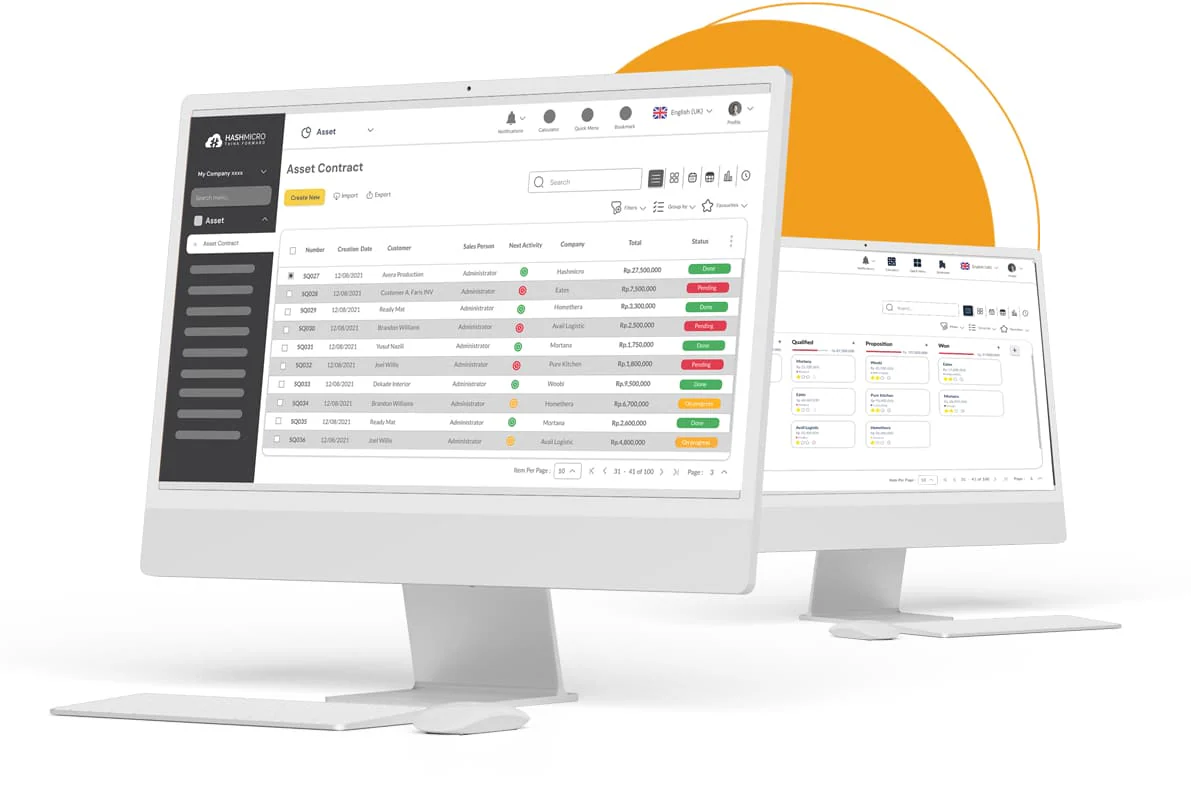
HashMicro Asset Management Software is an ERP system designed to help businesses efficiently manage and optimize their assets. This software offers a centralized platform for tracking, monitoring, and maintaining assets, ensuring they are utilized effectively and remain in optimal condition throughout their lifecycle.
Trusted by prominent companies in Southeast Asia, including Hino, Danone, Changi Airport Group, and Abbott, HashMicro has a strong reputation for delivering high-quality software solutions.
One of the key features of this software is its ability to measure and improve Overall Equipment Effectiveness (OEE), offering insights into performance, availability, and quality. These metrics help identify inefficiencies, schedule maintenance, and extend asset lifespan.
Pricing: HashMicro operates on a customized pricing structure based on enterprise scope. The total investment varies depending on factors such as total asset volume under management, required ERP module integrations (such as accounting, inventory, and HRM), custom workflow configurations, and hardware integrations like GPS trackers or barcode scanners.
Let’s take a closer look at the comprehensive suite of features that HashMicro offers:
- Preventive Maintenance Scheduling
- Asset Stocktake with Barcode
- Asset Maintenance Budget
- Asset GPS Tracking
- QR Code Scanning for Facility Requests
- Fuel Log & Odometer Tracking
- Parent & Child Asset Management
- Asset Comprehensive Cost Reporting
| Pros | Cons |
|
|
By offering an end-to-end asset management solution, HashMicro covers all aspects of asset lifecycle management, from acquisition to disposal. This comprehensive approach ensures businesses can manage their assets effectively at every stage
HashMicro is built for companies that want asset data to connect with the rest of operations, not sit in a separate tracking file. Maintenance schedules, depreciation, fuel logs, asset costs, OEE, GPS tracking, barcode stocktake, and parent-child asset records can be linked with accounting, inventory, purchasing, and other ERP workflows.
"Effective asset management is no longer about keeping spreadsheets updated. It’s about gaining total visibility into asset health, performance, and costs in real time. Smart software solutions empower companies to make decisions with precision and speed."
2. SAP
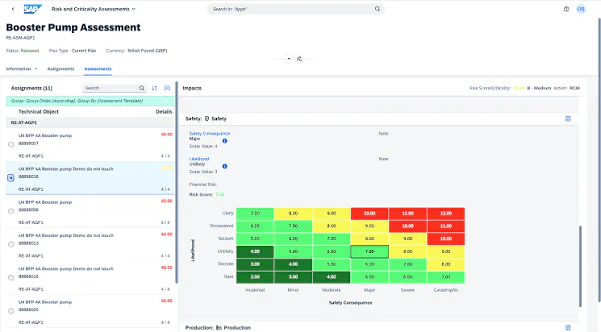
SAP Asset Software Malaysia is a comprehensive solution for managing physical assets across their lifecycle. It covers everything from capital planning and procurement to performance, maintenance, compliance, and disposal.
The software provides asset tracking, mobile EAM, predictive maintenance, collaborative EAM, asset performance management, centralized asset data repository, asset information management, and risk and criticality assessment.
Pricing: SAP Asset Management follows an enterprise custom pricing model, with typical implementations estimated between RM 12,000 and RM 45,000+ per month depending on deployment scale. Final expenditure is determined by factors such as cloud versus on-premises hosting, active user licensing tiers, database infrastructure, and custom integration across multi-site operations.
Key features of SAP Asset Management include:
- Predictive Maintenance
- Mobile Enterprise Asset Management
- Asset Performance Management
- Risk and Criticality Assessment
| Pros | Cons |
|
|
SAP fits enterprise teams that need to judge asset risk before problems reach operations. Its predictive maintenance, mobile EAM, performance monitoring, and risk assessment help companies prioritise critical machinery, facilities, or infrastructure assets based on condition, usage, and operational impact.
3. Infor EAM (HxGN EAM)
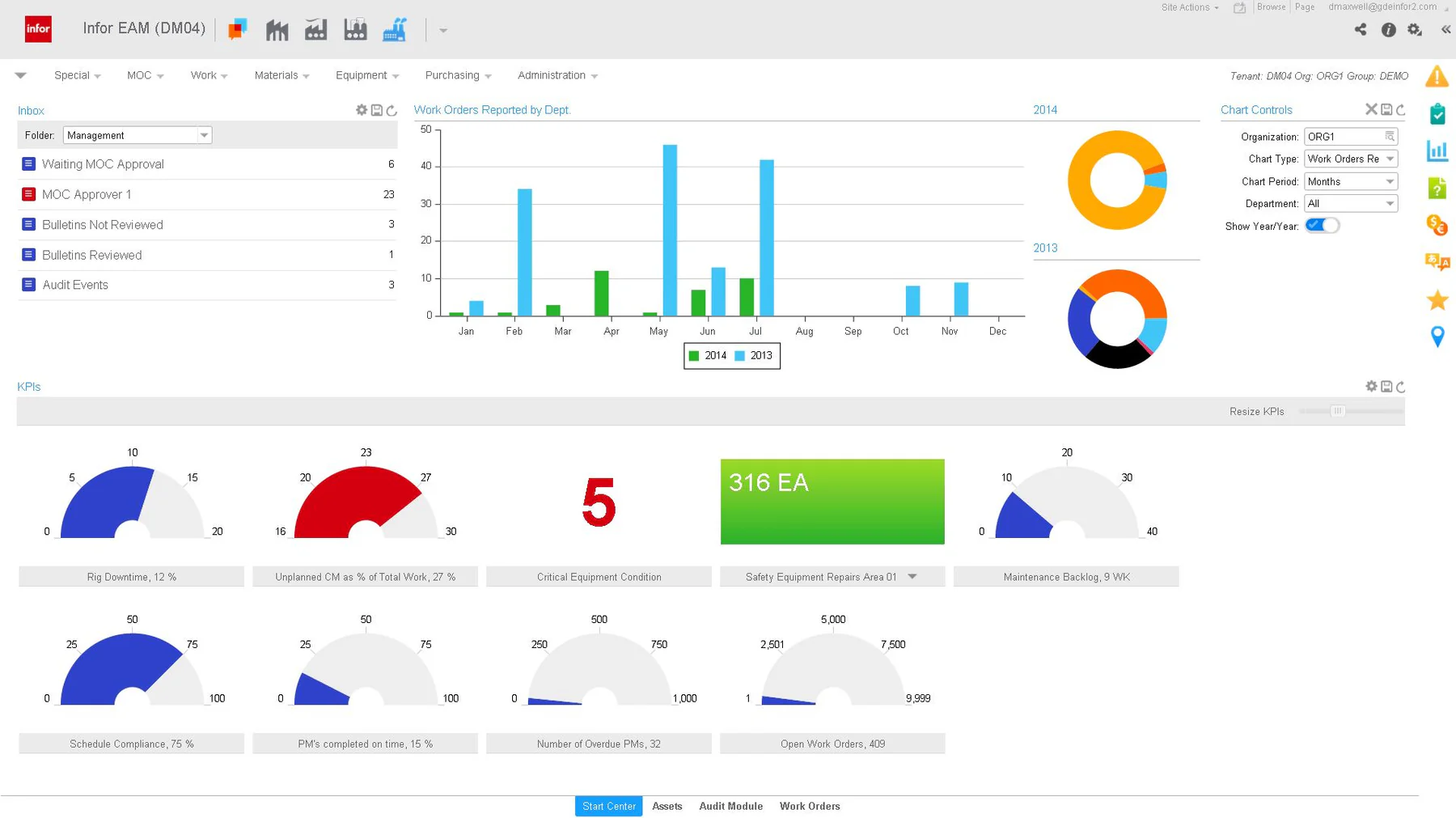
Infor EAM (recently known as HxGN EAM) is an enterprise asset management platform designed for capital-intensive industries to monitor physical equipment, track lifecycle costs, and manage preventive maintenance routines across complex operational sites.
The software provides asset management features, including asset tracking, depreciation, retirement, and disposal. It also enables users to optimally plan and schedule maintenance activities with minimal disruption to business operations or production.
Pricing: HxGN EAM utilizes customized enterprise pricing, with estimates generally falling between RM 11,200 and RM 36,000 per month for mid-to-large operations. Key cost factors include the selection of specialized operational modules, total asset volume under management, system integration needs, and user access levels.
Key features of Infor EAM include:
- Asset Tracking
- Depreciation Management
- Maintenance Planning and Scheduling
- Asset Retirement and Disposal
| Pros | Cons |
|
|
HxGN EAM (formerly Infor EAM) fits mid-sized to large enterprise organizations that require deep visibility into machinery health, complex spare parts logistics, and long-term asset lifecycle tracking.
4. EZOfficeInventory
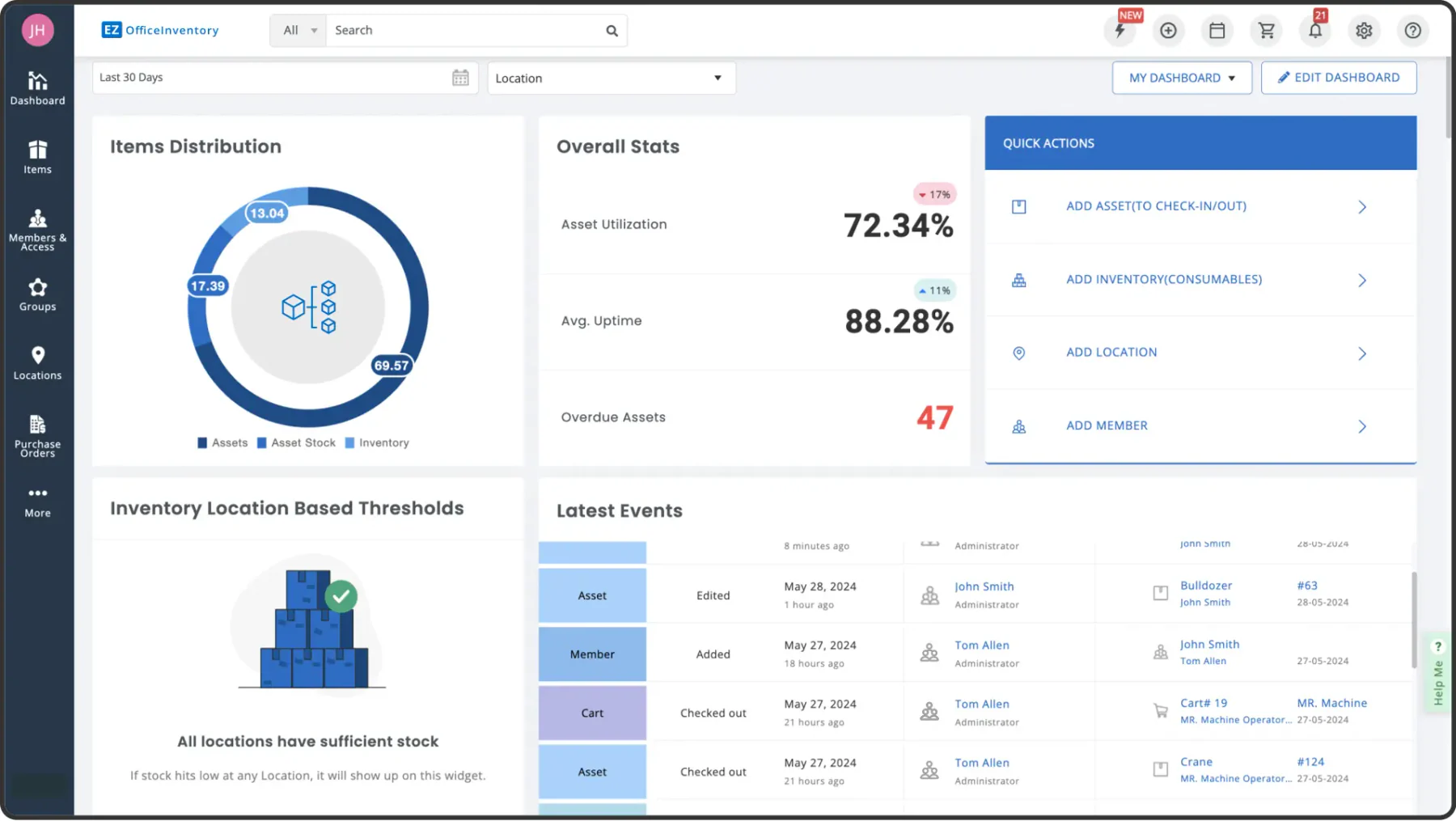
EZOfficeInventory is a web-based asset tracking software that provides management and maintenance tracking features. It enables businesses to manage assets and control inventory easily. The software supports barcodes and QR codes and leverages mobile apps and handheld scanners for efficient asset management.
This software offers asset tracking, check-in and check-out of assets, RFID asset tracking, Excel import/export, asset lifecycle management, reservations, GPS location, history tracking, and more.
Pricing: EZOfficeInventory offers transparent subscription pricing starting at RM 280 per month for up to 300 assets on its Essential plan. Higher-tier plans, such as Advanced (RM 380/month) and Premium (RM 450/month), scale based on additional asset volume, advanced RFID tracking requirements, and expanded admin user seats.
Key features of EZOfficeInventory include:
- Barcode and QR Code Tracking
- Check-in and Check-out Management
- RFID Asset Tracking
- Asset Reservations and History Tracking
| Pros | Cons |
|
|
EZOfficeInventory works best when assets are often borrowed, reserved, or moved between users. Barcode, QR, RFID, and mobile scanner support help teams record check-outs, returns, GPS location, and asset history without relying on manual handover notes.
5. Microsoft Asset Management Software
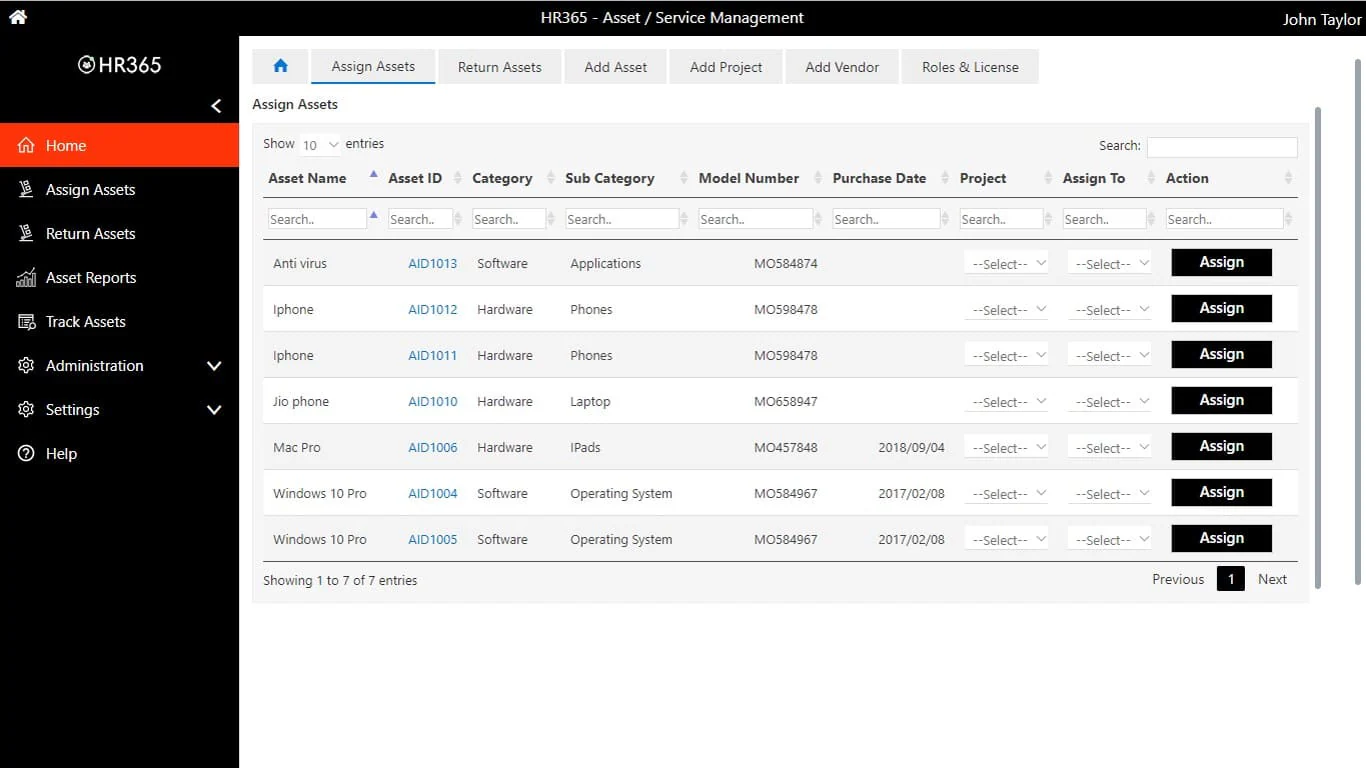
Microsoft Asset Management Software Malaysia is an advanced module for managing assets and maintenance jobs. The software provides robust features that streamline asset management processes, improve productivity, and enhance decision-making capabilities.
The software also provides a range of features including asset tracking, check-in/check-out of assets, asset reservations, asset audit log, custom asset types, customizable asset fields, and reporting and analytics.
Pricing: Microsoft Asset Management is licensed as part of the Dynamics 365 Supply Chain Management suite, with base plans starting around RM 800 to RM 950 per user per month. Total costs depend on required user license tiers, Power Platform usage, cloud database capacity, and enterprise volume licensing agreements.
Key features of Microsoft Asset Management Software include:
- Asset Tracking
- Check-in and Check-out Management
- Asset Audit Log
- Custom Asset Fields and Reporting
| Pros | Cons |
|
|
The strongest reason to consider Microsoft Asset Management Software is its fit for businesses already working within the Microsoft ecosystem. It supports asset tracking, check-in and check-out records, audit logs, custom asset fields, and reporting, making it useful for teams that need asset data connected with Microsoft-based workflows and financial reporting.
6. AssetCloud
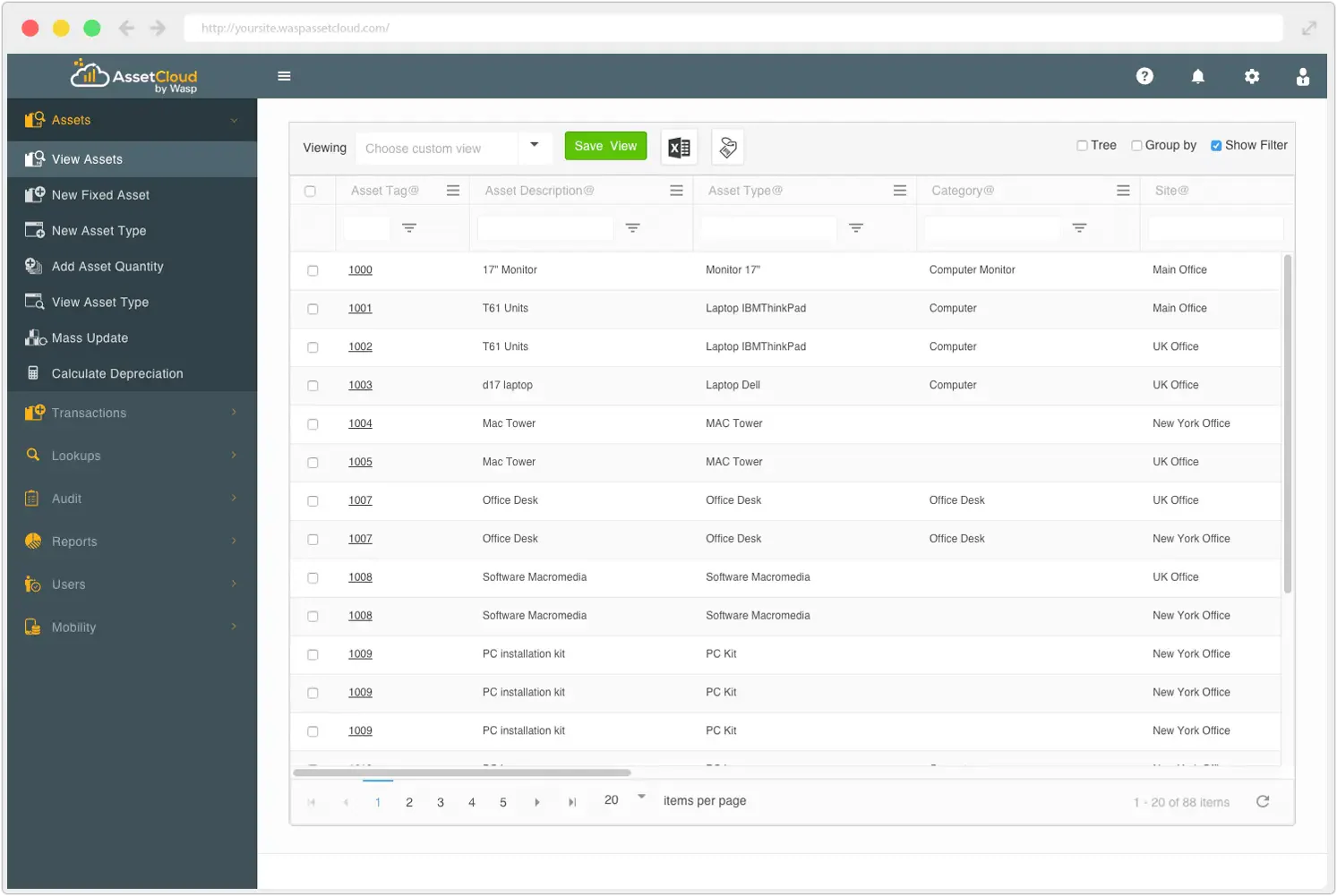
AssetCloud Asset Management Software is a robust solution to track and manage their assets efficiently. Developed by Wasp, it offers a comprehensive set of features for tracking assets, including standard and custom reports, and easy audits to verify and eliminate inconsistencies.
AssetCloud offers various features designed to simplify asset management. One is real-time asset tracking, which allows businesses to know the exact location and status of their assets at any time.
Pricing: Wasp AssetCloud features structured pricing starting at RM 480 per user per month for the Basic tier and RM 1,100 per user per month for the Complete tier. Overall expenditure is influenced by whether cloud hosting or on-premises deployment is selected, total asset volume, and hardware purchases such as handheld barcode scanners.
Key features of AssetCloud include:
- Asset Tracking
- Custom Reports
- Asset Audits
- Barcode and RFID Tracking
| Pros | Cons |
|
|
AssetCloud helps teams verify asset records during audits instead of only storing them. Barcode and RFID tracking make asset checks faster, while custom reports help spot missing, moved, or mismatched assets before the records become unreliable.
7. Freshservice
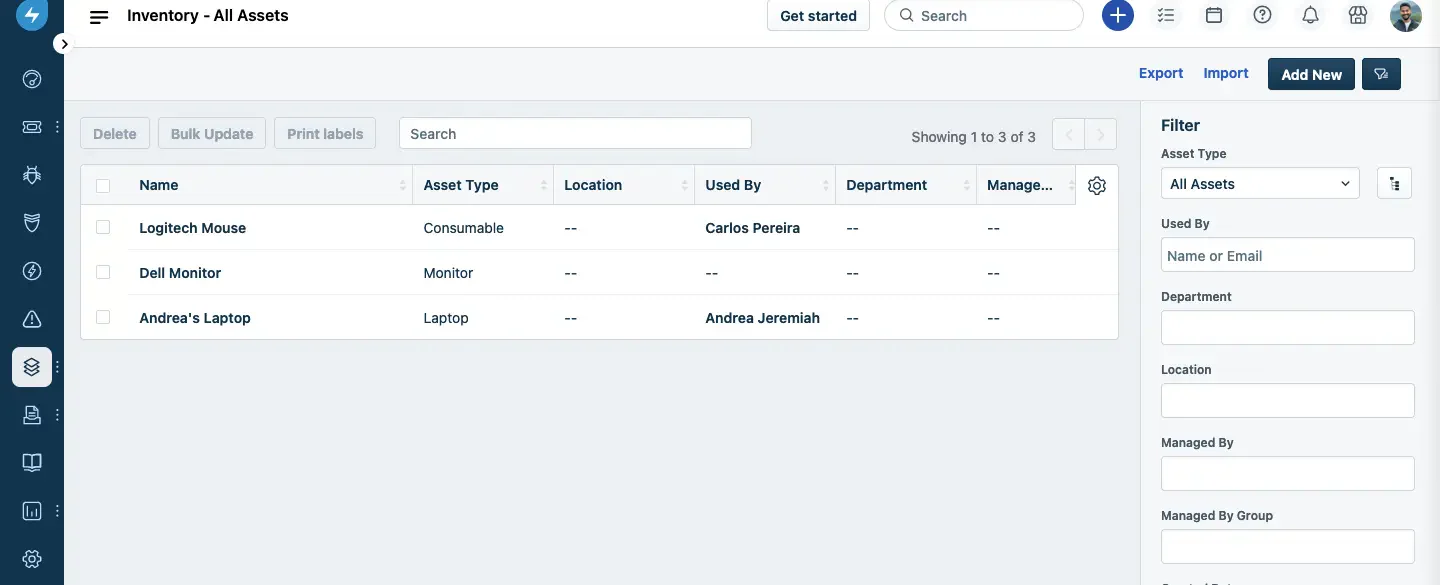
Freshservice Enterprise Asset Management Software is a cloud-based solution that serves enterprise customers worldwide. It is designed to maintain an IT and non-IT assets inventory and track details throughout their lifecycle.
Freshservice provides tools for inventory management, asset lifecycle management, and real-time asset tracking. It also seamlessly integrates with other IT service management (ITSM) processes, making it a versatile solution for businesses of all sizes.
Pricing: Freshservice uses a per-agent subscription model with plans starting at RM 85 per agent per month for Starter, RM 220 per agent per month for Growth, and RM 440 per agent per month for Pro (billed annually). Final costs scale according to the total number of IT service desk agents, asset discovery add-ons, and advanced ITSM modules.
Key features of Freshservice include:
- IT and Non-IT Asset Inventory
- Asset Lifecycle Management
- ITSM Integration
- Inventory and Asset Tracking
| Pros | Cons |
|
|
Freshservice fits IT teams that want asset records to be part of support work, not a separate inventory list. Hardware, software, and non-IT assets can be tied to tickets, incidents, and service requests, so teams can see asset context before handling an issue.
8. AutoCount Fixed Assets
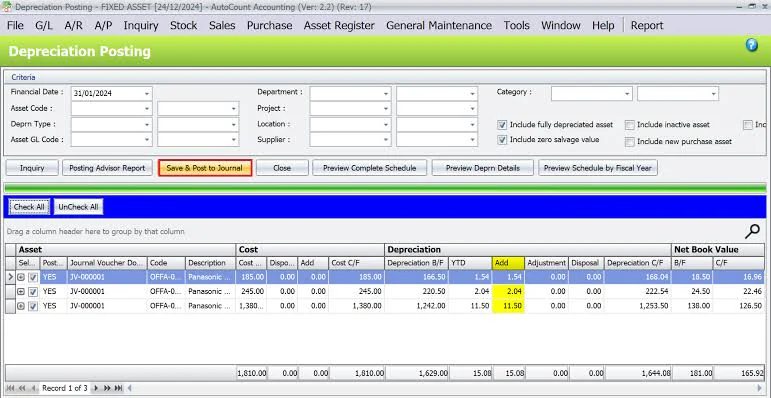
AutoCount Fixed Assets is a module designed for Malaysian SMEs to track fixed asset lifecycles, calculate depreciation, and maintain financial alignment with general ledger accounting.
This software includes features such as real-time asset tracking, automated maintenance reminders, and detailed financial reporting. It allows businesses to monitor the location, status, and condition of their assets, ensuring they are used and maintained efficiently.
Pricing: AutoCount Fixed Assets offers modular pricing starting from approximately RM 800 to RM 1,500 for a standard base module license, or an estimated RM 120 to RM 250 per month for cloud subscriptions. The final price depends on whether it is integrated into an existing AutoCount system, the number of active user seats, and company database limits.
Key features of Autocount Fixed Asset include:
- Asset Tracking
- Automated Maintenance Reminders
- Financial Reporting
- ERP Module Integration
| Pros | Cons |
|
|
AutoCount Fixed Assets is ideal for Malaysian businesses seeking straightforward asset depreciation tracking that connects directly to their core accounting software without complex enterprise overhead.
9. Asset Panda
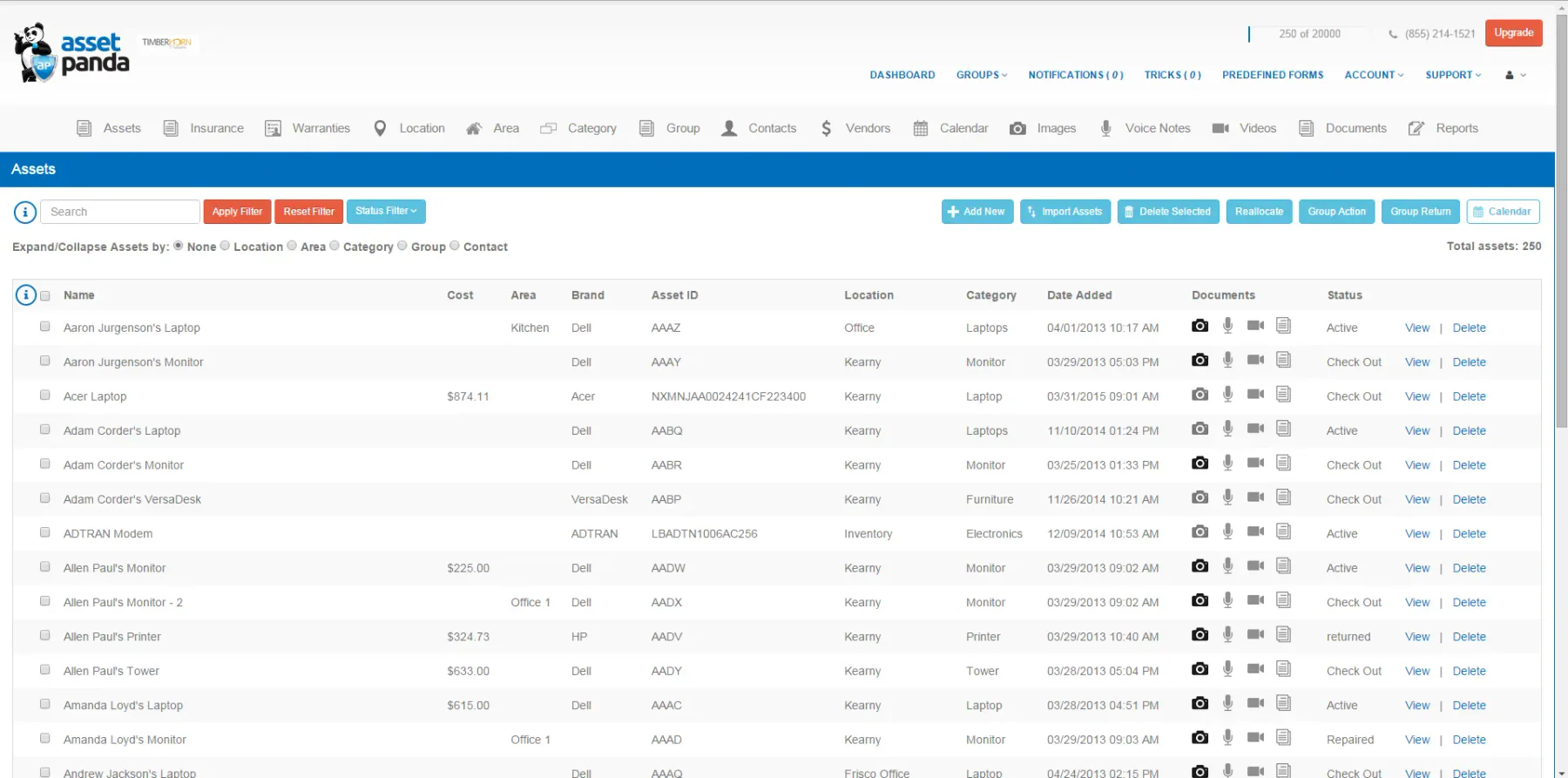
Asset Panda Enterprise Asset Management is a cloud-based platform that helps businesses keep track of assets and create interdependencies between them. It is designed to adapt to the way they work, offering a suite of features that allow users to track, manage, and optimize their assets in real-time.
This platform offers a configurable system that lets you track assets and critical information about them, such as maintenance dates, physical location, when the assets were purchased or leased and which associates have permission to access the assets.
Pricing: Asset Panda utilizes a customized pricing model based on asset volume rather than user seats, with plans generally starting around RM 6,800 to RM 13,500 per year for up to 500 assets. Overall costs scale depending on total asset count, custom workflow configurations, and required third-party software integrations.
Key features of Asset Panda include:
- Configurable Asset Tracking
- Mobile Asset Access
- Maintenance Date Tracking
- Asset Relationship Mapping
| Pros | Cons |
|
|
Asset Panda works well for teams whose asset records need extra detail beyond location. Maintenance dates, lease or purchase information, assigned users, and related assets can be recorded in one place, so field teams can update asset data without waiting for office-side admin.
10. Aptean EAM
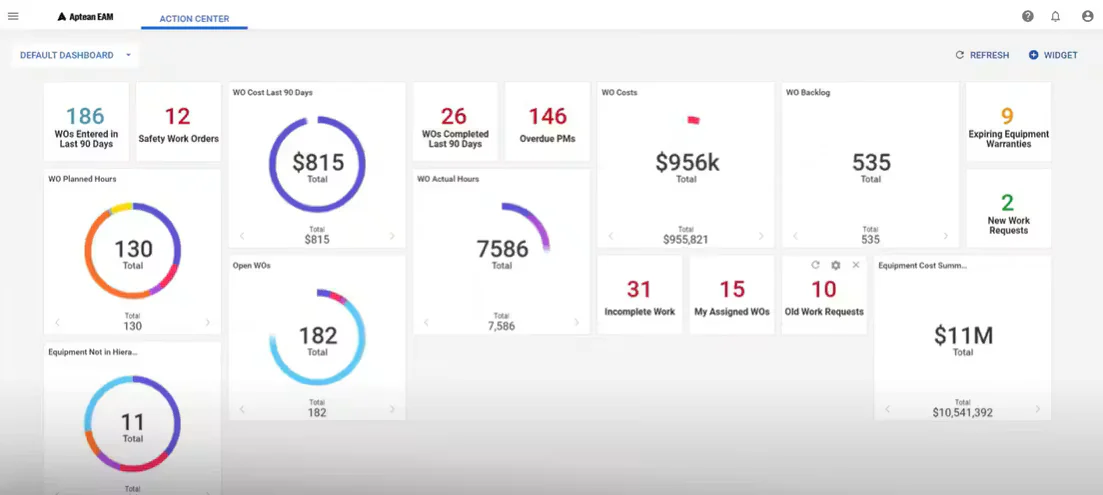
Aptean Asset Management Software is a comprehensive solution designed to streamline and optimize asset performance and maintenance processes. Developed by Aptean, a global leader in industry-specific software solutions, this software caters to a wide range of industries.
The software offers features such as asset management, preventive maintenance planning, spare parts inventory management, advanced analytics and reporting, and mobile app synchronization. These features collectively enhance the efficiency and effectiveness of asset management and maintenance operations.
Pricing: Aptean EAM provides custom pricing based on operational scope, with typical estimates ranging between RM 6,800 and RM 18,000 per month. Pricing factors include manufacturing plant scale, required preventive maintenance and spare parts modules, total mobile user licenses, and implementation support.
Key features of Aptean Asset Management Software include:
- Preventive Maintenance Planning
- Spare Parts Inventory Management
- Advanced Analytics and Reporting
- Mobile App Synchronization
| Pros | Cons |
|
|
Aptean is a better fit when maintenance work depends on spare parts readiness. Teams can plan preventive maintenance, check parts availability, review asset performance reports, and sync updates from mobile devices before equipment issues disrupt production.
11. InvGate Asset Management
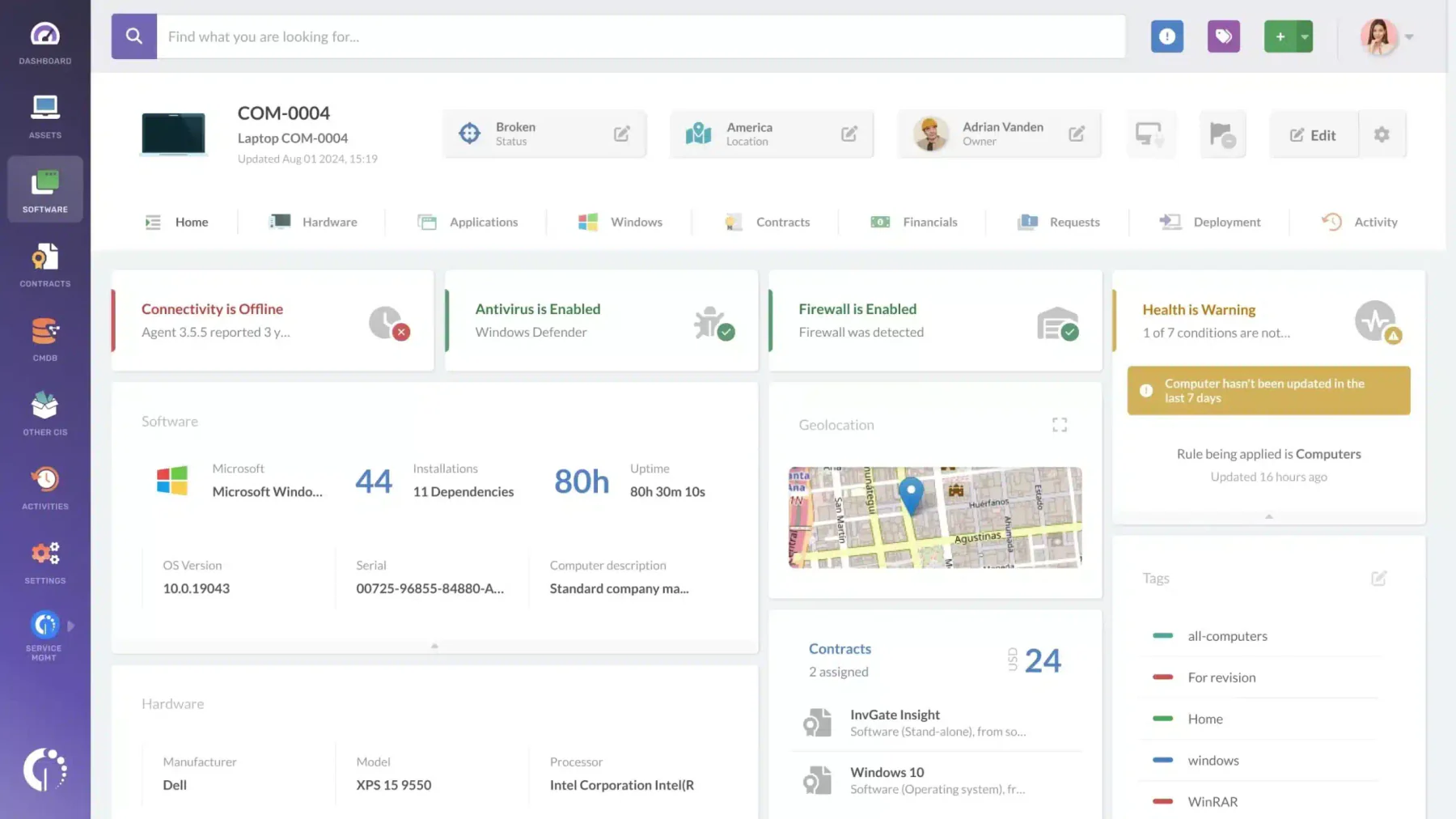
InvGate Asset Management is an asset software Malaysia built to simplify how organizations monitor, control, and maintain their IT and non-IT assets. Developed by InvGate, this platform centralizes asset information and provides visibility across multiple locations, helping businesses manage resources more efficiently.
InvGate offers a wide range of capabilities that support accurate asset tracking and lifecycle management. Key features include automated asset discovery, real-time inventory updates, and configuration management tools to keep asset data consistent. The platform also supports customizable workflows, detailed reporting, and integration with ITSM tools.
Pricing: InvGate Asset Management offers node-based pricing starting at RM 0.95 per node per month (approximately RM 5,600 per year for up to 500 nodes) on the Starter tier, and RM 1.70 per node per month for the Pro tier. Final costs scale based on total monitored network nodes, deployment model (cloud vs. on-premises), and ITSM integration needs.
Key features of InvGate Asset Management include:
- Automated Asset Discovery
- Centralized Asset Visibility
- Configuration Management
- Customizable Workflows and Reporting
| Pros | Cons |
|
|
InvGate is useful when IT teams need to clean up scattered asset records. Automated discovery helps detect assets across locations, while configuration management, ITSM integration, and reporting keep hardware, software, and non-IT asset data easier to verify throughout their lifecycle.
12. GoCodes
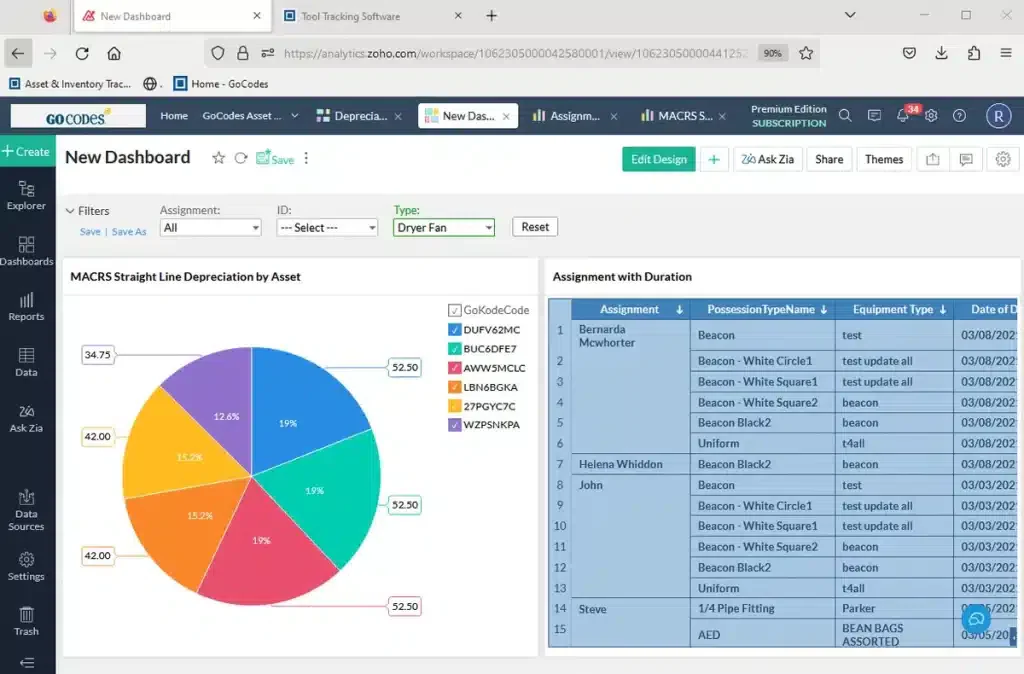
GoCodes is a comprehensive asset software Malaysia designed to streamline the management and tracking of assets across various locations. Developed by GoCodes, this software leverages patented QR codes and metal tags to facilitate easy tracking and management of assets.
GoCodes offers a range of features that make asset management straightforward and effective. These include real-time tracking to instantly view asset location and status.The software also supports custom fields and reports, enabling users to tailor the system to their specific needs.
Pricing: GoCodes provides fixed annual plans starting at RM 2,200 per year for up to 200 assets and 3 users. Higher tiers include the Premium plan at RM 4,500 per year (500 assets) and the Professional plan at RM 11,000 per year (2,000 assets), with overall costs determined by total asset limits, custom metal tag orders, and API access add-ons.
Key features of GoCodes include:
- QR Code Asset Tracking
- GPS Location Tracking
- Custom Fields and Reports
- Cloud-Based Asset Access
| Pros | Cons |
|
|
GoCodes is useful for businesses that track tools, equipment, or field assets that often move between locations. Its QR codes, metal tags, GPS details, and cloud access help teams update asset records on-site without relying on manual follow-up from the office.
13. ManageEngine AssetExplorer
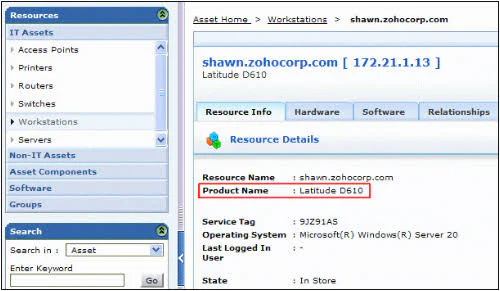
ManageEngine AssetExplorer is an asset tracking system designed to help businesses manage their IT assets efficiently. Developed by ManageEngine, this software is designed to monitor and manage assets in your network from the planning phase to the disposal phase.
The software offers features including asset discovery, configuration mapping and management, contract management, service and maintenance management, asset cost tracking, usage tracking, asset inventory management, and asset disposal history tracking.
Pricing: ManageEngine AssetExplorer offers transparent asset-tier pricing starting at RM 4,300 per year (or RM 520 per month) for up to 250 IT assets. Plans scale to RM 8,000 per year for 500 assets and RM 13,500 per year for 1,000 assets, with final costs influenced by additional remote control add-ons and technician seats.
Key features of ManageEngine AssetExplorer include:
- Asset Discovery
- Configuration Mapping
- Contract and Maintenance Management
- Asset Cost and Disposal Tracking
| Pros | Cons |
|
|
ManageEngine AssetExplorer is best suited for IT departments that need end-to-end visibility over software licenses, hardware inventory, network discovery, and asset lifecycle costs within a single ITAM system.
14. Commusoft
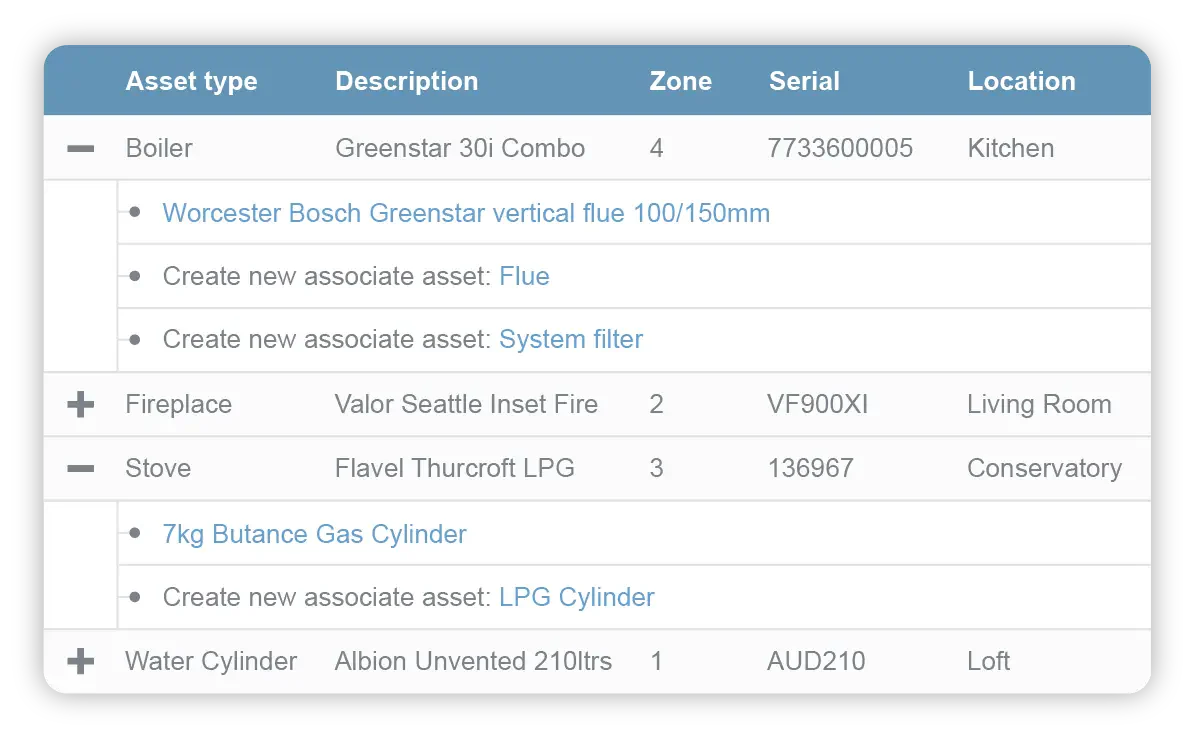
Commusoft Asset Management Solutions is a comprehensive tool designed to streamline the management of assets for field service businesses. The software allows businesses to accurately track every asset and sub-asset at a property, providing a detailed service history.
Beyond just tracking asset history, Commusoft integrates assets into the entire management workflow. The software also software provides detailed records, automated maintenance schedules, and real-time tracking to ensure assets are used effectively and remain in good condition.
Pricing: Commusoft pricing starts at RM 340 per user per month for its entry-level field service management plan. Total costs scale depending on the tier chosen (All-in-One, Customer Journey, or Automation), total active technician seats, and advanced multi-location inventory tracking add-ons.
Key features of Commusoft include:
- Asset and Sub-Asset Tracking
- Service History Records
- Automated Maintenance Scheduling
- Workflow-Based Asset Management
| Pros | Cons |
|
|
Commusoft suits field service teams that manage assets at customer properties. It keeps asset and sub-asset records tied to service history, so technicians can see past repairs, maintenance schedules, and job context before visiting a site.
15. NetSuite Fixed Assets Management
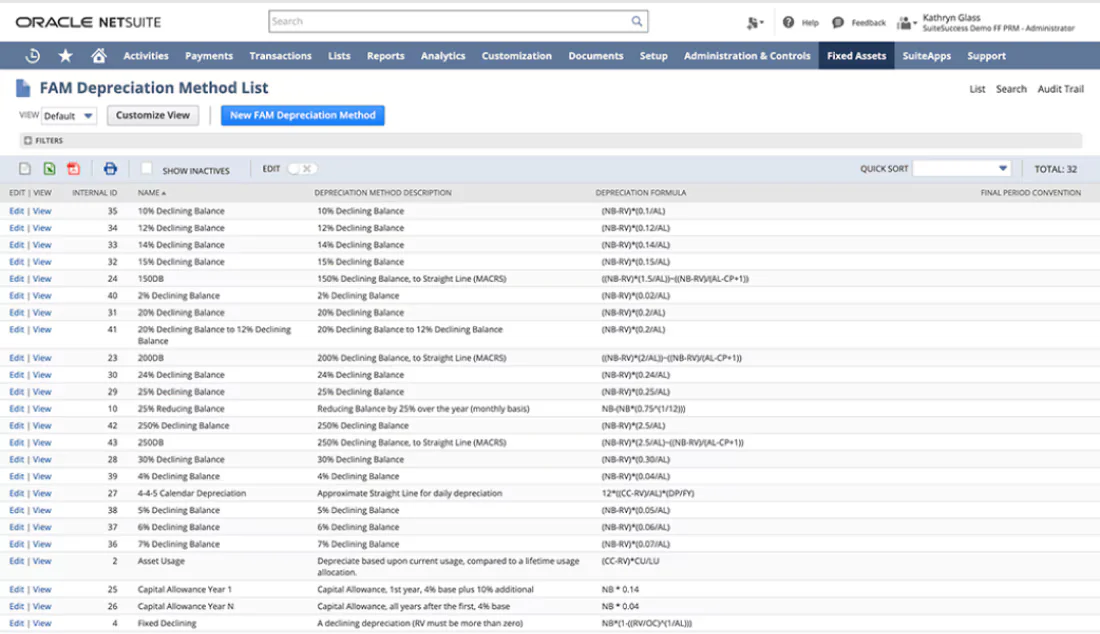
NetSuite Fixed Assets Management provides asset tracking built within the NetSuite ERP ecosystem, giving businesses control over asset acquisition, depreciation, and retirement.
The software enables teams to automate depreciation schedules, track physical asset transfers, handle lease accounting, and maintain complete asset records connected directly with enterprise financials.
Pricing: NetSuite Fixed Assets Management is licensed as an add-on module to the NetSuite ERP platform, with estimated costs ranging from RM 6,800 to RM 15,800 per month. Pricing depends on your base NetSuite licensing tier, transaction volume, multi-currency reporting needs, and initial ERP implementation scope.
Key features of NetSuite include:
- Automated Depreciation Schedules
- Lease Accounting and Asset Tracking
- Asset Transfer and Casualty Logging
- Unified ERP Financial Integration
| Pros | Cons |
|
|
NetSuite Fixed Assets Management is the best option for organizations already running NetSuite ERP that want a fully integrated asset lifecycle module without relying on third-party connectors.
16. SQL Asset Management Software
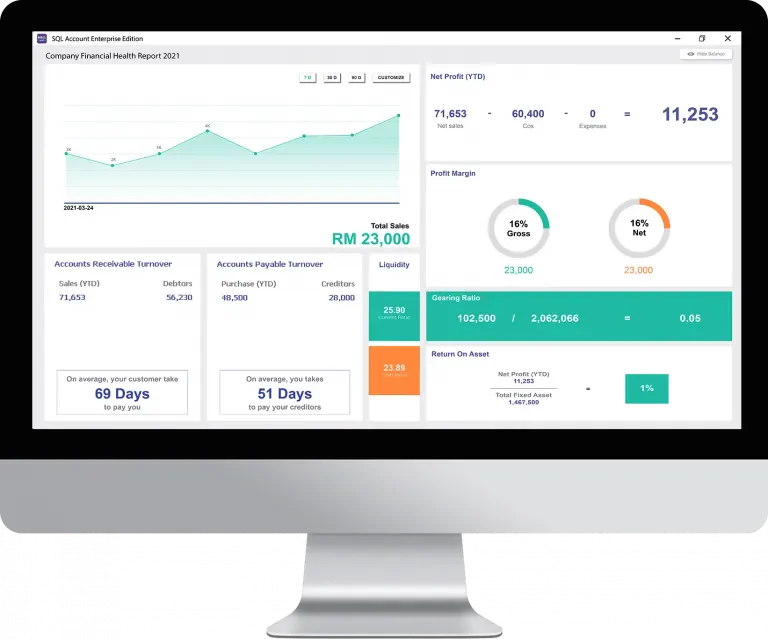
SQL Asset Management Software is a comprehensive tool designed to help businesses manage their assets effectively. It leverages SQL databases to store and retrieve asset information, providing a robust and scalable solution for businesses.
This software is equipped with audit trail, depreciation management, inventory tracking, disposal management, and asset lifecycle management. These features allow businesses to track their assets closely, ensuring they are always aware of their status and location.
Pricing: SQL Asset Management Software is available through local licensing starting from approximately RM 1,200 to RM 2,500 one-time, or an estimated RM 150 per month for subscription options. Total investment varies based on user concurrency, database size, custom financial report templates, and local maintenance support packages.
Key features of SQL Asset Management Software include:
- Audit Trail
- Depreciation Management
- Inventory Tracking
- Disposal and Lifecycle Management
| Pros | Cons |
|
|
SQL Asset Management Software suits businesses that need stricter control over fixed asset records. Its SQL-based structure helps teams track depreciation, inventory movement, audit history, and disposal data more consistently for finance reviews or audits.
17. IBM Maximo
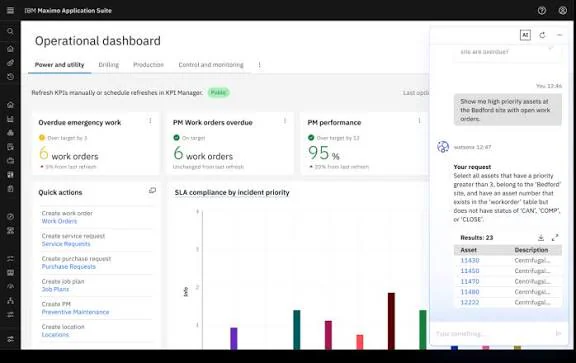
IBM Maximo Application Suite provides enterprise asset management capabilities for capital-intensive industries, combining operational monitoring, maintenance management, and asset lifecycle analytics.
This software offers a range of features, including real-time asset tracking, maintenance scheduling, and detailed financial reporting. It supports various asset types, from equipment and vehicles to IT assets and software licenses, making it a versatile solution for businesses.
Pricing: IBM Maximo Application Suite uses an enterprise licensing model based on AppPoints and concurrent usage, with typical deployments estimated between RM 15,800 and RM 45,000+ per month. Key cost factors include active user roles, deployment architecture (SaaS, cloud, or on-premises), and required predictive monitoring modules.
Key features of IBM Maximo include:
- Multi-Asset Tracking
- Maintenance Scheduling
- Financial Reporting
- Lifecycle Asset Management
| Pros | Cons |
|
|
IBM Maximo Application Suite is best suited for large-scale industrial enterprises needing continuous monitoring, structured work order execution, and predictive maintenance across critical machinery and infrastructure.
18. CA IT Asset Manager
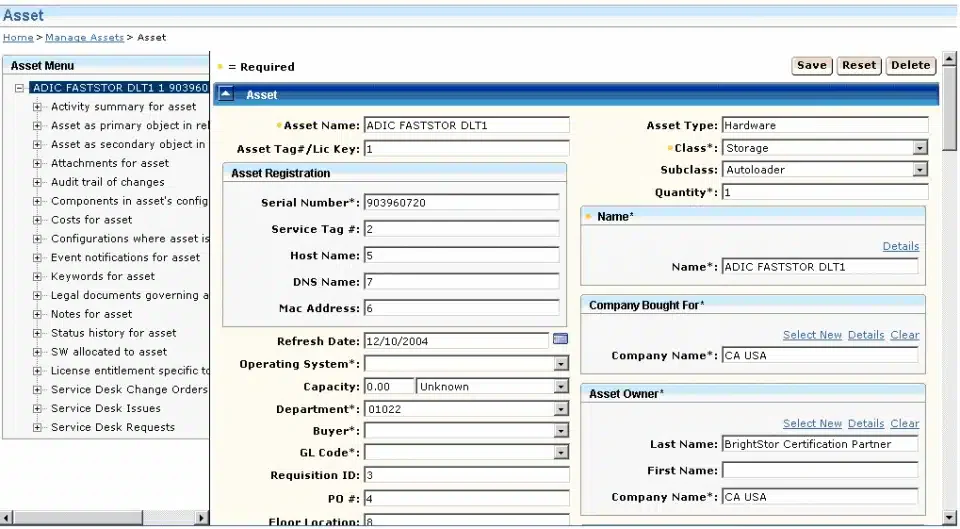
CA IT Asset Manager offers comprehensive asset management solutions designed to help businesses manage their IT assets efficiently. This software offers a range of features that streamline the process of tracking, managing, and optimizing IT assets throughout their lifecycle.
The general features of CA IT Asset Manager include automated asset discovery, which helps businesses keep an up-to-date inventory of their IT assets. It also offers configuration management, enabling companies to monitor and manage changes to their IT environment.
Pricing: CA IT Asset Manager operates under enterprise custom quote licensing, with typical implementations estimated between RM 9,000 and RM 27,000 per month. Total costs are influenced by the number of managed IT endpoints, automated network discovery scope, and enterprise governance support agreements.
Key features of CA IT Asset Manager include:
- Automated Asset Discovery
- Configuration Management
- Compliance Reporting
- Centralized IT Asset Platform
| Pros | Cons |
|
|
CA IT Asset Manager is more relevant for enterprises that manage large IT environments with strict documentation needs. Its automated asset discovery helps teams keep hardware and software records updated, while configuration management tracks changes across the IT setup. The platform is also useful when compliance reports and centralized asset records are needed for audits, governance, or internal IT control.
19. Ramco
Ramco Asset Management Software is a robust solution designed to streamline and optimize asset management processes. This software is developed by Ramco Systems, a leading global enterprise software company. It caters to businesses of all sizes across diverse industries such as manufacturing, utilities, transportation, and more.
Key features of Ramco include real-time asset tracking, which allows businesses to monitor the location and status of their assets at any time. This software also provides predictive maintenance capabilities, helping to anticipate and address maintenance needs before they become critical issues.
Pricing: Ramco Asset Management Software relies on custom enterprise pricing, with estimates generally ranging from RM 11,200 to RM 33,800 per month. Factors determining final cost include the number of operational sites, total asset volume, predictive maintenance integration, and broader ERP workflow connectivity.
Key features of Ramco Asset Management Software include:
- Asset Tracking
- Predictive Maintenance
- System Integration
- Maintenance Management
| Pros | Cons |
|
|
Ramco fits businesses where asset downtime directly affects production, fleet movement, or utility operations. Its tracking function helps teams monitor asset location and status, while predictive maintenance supports earlier action before equipment issues become service disruptions. For companies already running connected operational systems, Ramco can also link asset and maintenance data with wider business workflows, although setup may require proper planning and user training.
20. Ivanti
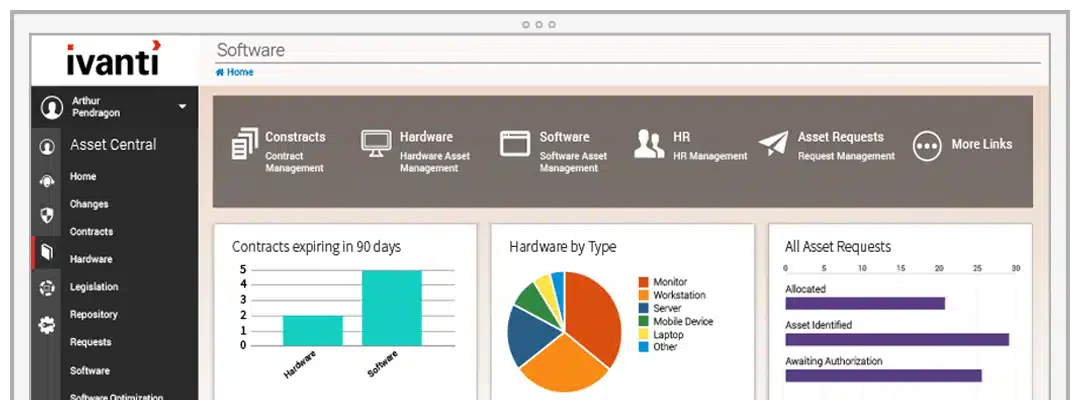
Ivanti, also known as Ivanti Neurons for ITAM, offers comprehensive asset management solutions designed to consolidate IT asset data and strategically manage assets throughout their full lifecycle.
The software offers a wide range of features aimed at improving efficiency, reducing costs, and enhancing the overall management of IT assets. It provides real-time visibility of all your hardware, server, client, virtual, cloud, and software assets from purchase to disposal.
Pricing: Ivanti Neurons for ITAM uses custom quote-based pricing tailored to enterprise IT estates, with estimated costs ranging from RM 9,000 to RM 24,800 per month. Pricing is driven by total monitored hardware and software endpoints, cloud vs. on-premises hosting, and ITAM automation module selections.
Key features of Ivanti Neurons for ITAM include:
- IT Asset Lifecycle Management
- Centralized IT Asset Data
- Compliance Management
- Customizable ITAM Workflows
| Pros | Cons |
|
|
Ivanti is better suited for IT teams that need to make sense of assets spread across devices, servers, virtual environments, cloud tools, and software licenses. Its value is not just in listing assets, but in showing where each item sits in the IT lifecycle, whether it supports compliance, and where unused or unmanaged assets may create cost or security risks. The customizable ITAM workflows can help larger teams standardize asset reviews, although too much customization may make the system harder to maintain.
21. Nuvolo Asset Management Software
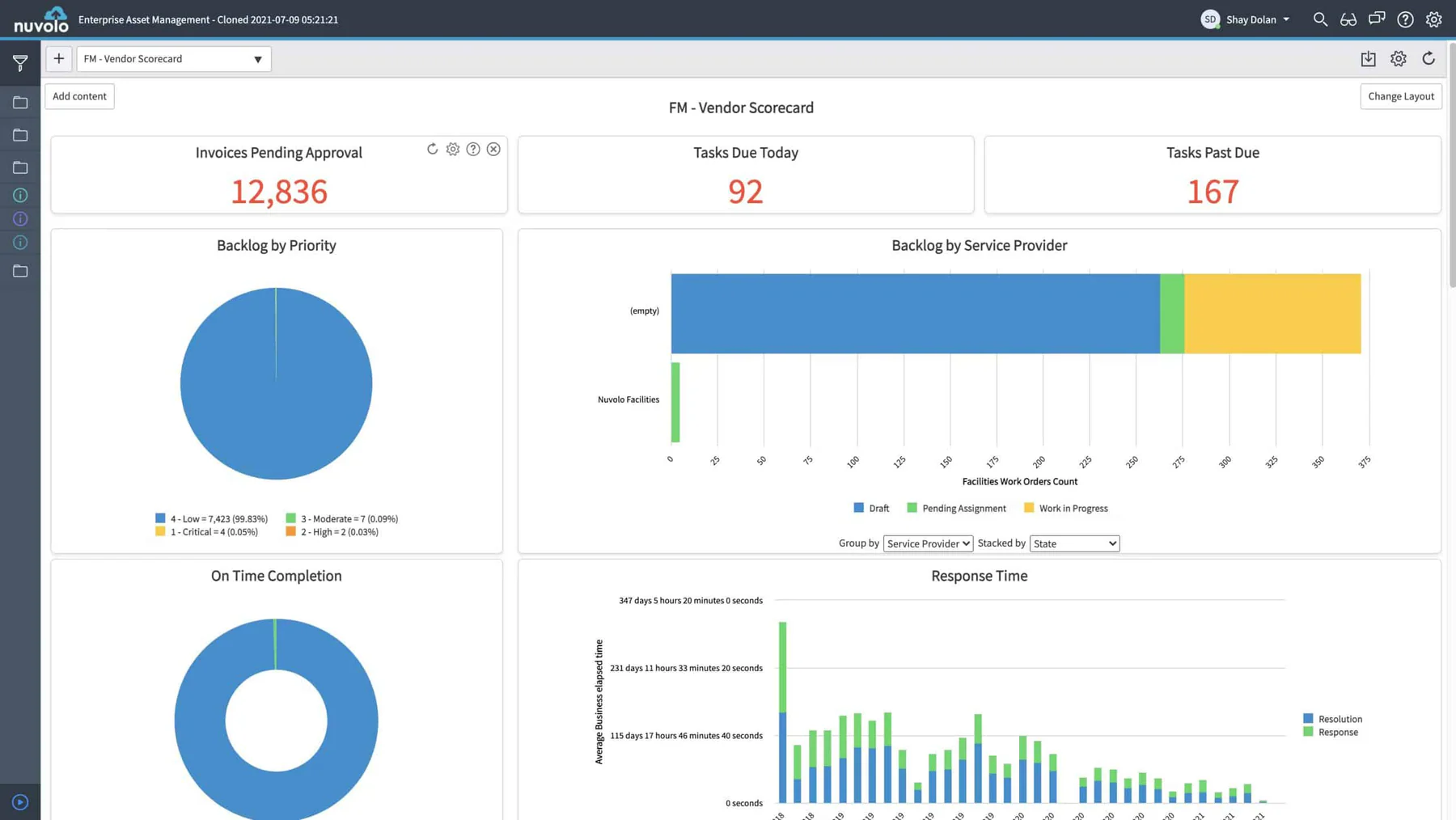 Nuvolo Asset Management Software is a comprehensive platform designed to streamline the management of physical assets. Developed by Nuvolo, this software is designed to cater to businesses of all sizes across various sectors.
Key features of Nuvolo include real-time asset tracking, which allows users to monitor the location and status of assets accurately. The software also offers maintenance management, enabling scheduled and preventive maintenance tasks to keep assets in optimal condition.
Pricing: Nuvolo Asset Management Software operates on custom quote pricing tied to the ServiceNow platform ecosystem, with estimated monthly costs between RM 11,200 and RM 29,200. Total investment depends on total managed facility square footage, active user roles, and integrated space management modules.
Key features of Nuvolo Asset Management Software include:
- Physical Asset Tracking
- Maintenance Management
- Workspace and Facility Asset Management
- Cloud-Based Asset Visibility
| Pros | Cons |
|
|
Nuvolo works best in environments where asset management overlaps with facilities, workspaces, and maintenance teams. Instead of only tracking where an asset is, the platform helps teams connect physical asset records with scheduled maintenance, facility operations, and cloud-based visibility across sites. This makes it more relevant for regulated or facility-heavy businesses that need building assets, equipment, and maintenance activity reviewed in the same workflow.
22. VemaFATS
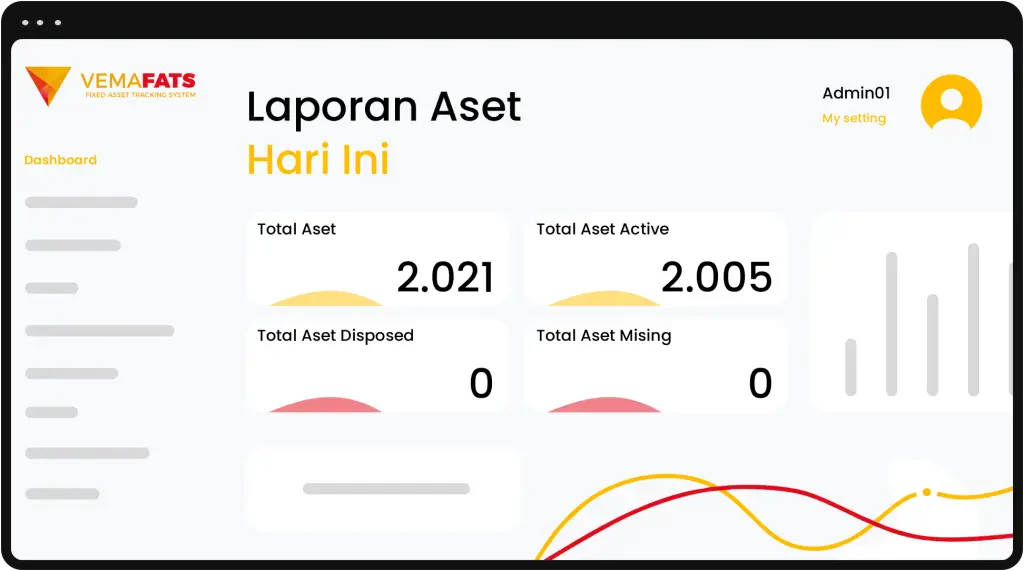
VemaFATS, also known as VemaFATS Fixed Asset Management Software, is a comprehensive IT asset management solution designed to manage fixed assets and inventory with tracking features.
This software provides real-time visibility of all your hardware, server, client, virtual, cloud, and software assets from purchase to disposal. It also offers detailed financial reporting capabilities, enabling businesses to track asset costs, depreciation, and overall value.
Pricing: VemaFATS is offered through customized quotes, with estimated pricing starting around RM 200 to RM 500 per month depending on setup scale. Total cost factors include registered fixed asset volume, multi-branch database configurations, required financial depreciation schedules, and user training services.
Key features of VemaFATS include:
- Fixed Asset Tracking
- Depreciation Tracking
- Hardware and Software Asset Visibility
- Financial Reporting
| Pros | Cons |
|
|
Overall Comparison of Asset Management Software in Malaysia
| Provider | Feature Strength | Ease of Use | Integration Capability | Value for Money |
|---|---|---|---|---|
| HashMicro | ||||
| SAP Asset Management | ||||
| Oracle E-Business Suite | ||||
| Freshservice | ||||
| Asset Panda | ||||
| Aptean Asset Management | ||||
| InvGate Asset Management | ||||
| GoCodes |
How Asset Management Software Works
Asset management software enables companies to manage and monitor the lifecycle, performance, and costs of physical and digital assets through automated tools. It works by centralizing asset data and automating tasks to support efficiency across departments.
-
Lifecycle tracking
Records each asset from acquisition to disposal, including usage, maintenance history, and performance, ensuring long-term asset health. -
Centralized visibility
Offers real-time updates on asset location, condition, and users—improving coordination and reducing the risk of misplacement. -
Maintenance automation
Enables scheduled maintenance and repair tasks to prevent breakdowns, reduce downtime, and extend asset lifespan, which is especially crucial for construction assets that operate under heavy workloads and harsh site conditions. -
Financial and operational control
Helps manage budgets by tracking asset-related expenses, preventing over-purchasing, and identifying savings opportunities. It also keeps records organized for smoother audits and financial reporting. -
Compliance assurance
Ensures your company meets regulatory requirements by tracking certifications, usage, and safety data. Ideal for industries with strict standards around asset documentation.
Types of Asset Management Software
Asset management software comes in specialized categories depending on an organization’s operational scope, asset portfolio, and industry requirements. Understanding these distinct types helps businesses choose a system tailored to their primary operational bottlenecks.
1. Enterprise Asset Management (EAM)
EAM platforms are comprehensive, enterprise-grade systems built for asset-intensive industries such as manufacturing, construction, and logistics. They centralize operational asset tracking, multi-site work order management, procurement, and heavy machinery utilization across multiple locations within a single platform.
2. Fixed Asset Management
Primarily focused on the financial and accounting aspects of capital assets, fixed asset software tracks equipment valuation, tax compliance, and automated depreciation schedules (e.g., straight-line or declining balance). It ensures accurate balance sheet reporting throughout an asset's financial lifecycle.
3. IT Asset Management (ITAM)
Tailored specifically for technology infrastructure, ITAM software oversees both physical hardware (servers, workstations, laptops) and digital IT assets (software licenses, cloud subscriptions). It helps IT departments manage device mapping, software compliance, and lifecycle renewals.
4. Facilities Asset Management
Facilities management systems focus on building infrastructure, HVAC equipment, utilities, and property assets. They streamline routine facility maintenance, space planning, and energy monitoring for commercial real estate, educational institutions, and healthcare facilities.
5. Maintenance-Focused Asset Management (CMMS)
Centering directly on machinery reliability, maintenance-focused asset management automates preventive service schedules, work order distribution, and spare parts inventory. It is engineered for field technicians and plant managers aiming to eliminate unexpected downtime and extend equipment lifespan.
Tips to Choose the Right Asset Management Software for Your Business

Choosing the right asset management software is crucial for optimizing your business operations and ensuring efficient asset utilization. Here are some tips to help you make an informed decision:
- Identify your business needs: Consider the types of assets you manage and the functionalities you need. This will help narrow down the best software options. For businesses that manage buildings or facilities, asset tracking often aligns with workflows found in property management software.
- Evaluate software features: Look for essential features like real-time tracking and automated maintenance scheduling. Consider industry-specific needs, such as regulatory compliance tools.
- Consider user-friendliness: Ensure the software has an intuitive, user-friendly interface. This makes it easier for your team to use effectively. A complicated system can lead to frustration and reduced productivity.
- Check scalability: Choose software that can grow with your business. Scalability accommodates an increasing number of assets and users as your business expands. This prevents costly and time-consuming software switches later.
- Assess integration capabilities: The software should integrate seamlessly with your existing systems. This ensures a smooth flow of data and reduces errors. Look for compatibility with accounting software, ERP systems, and inventory tools.
- Review customer support: Reliable customer support is crucial for resolving issues. Look for providers offering comprehensive support services, including training and technical assistance. Regular updates are also important.
By following these tips, you can select the right asset management software that enhances your business operations, improves efficiency, and supports your long-term growth.
| Business Profile | Recommended Software | Why It Fits |
|---|---|---|
| Malaysian SME prioritizing LHDN tax depreciation & local accounting | AutoCount Fixed Assets / SQL Asset Management | Direct LHDN capital allowance compliance, affordable local licensing, and native GL accounting integration. |
| Mid-to-large company seeking end-to-end ERP & asset operations | HashMicro Asset Management Software | Full ERP integration (inventory/accounting), 100% unlimited user model, OEE tracking, and localized KL support. |
| Capital-intensive plant needing predictive maintenance & spare parts control | Infor EAM (HxGN EAM) / IBM Maximo | Specialized EAM capabilities built for heavy machinery health, maintenance scheduling, and parts inventory. |
| Field service team tracking equipment across moving jobsites | GoCodes / EZOfficeInventory | Patented QR metal tags, GPS tracking, and mobile check-in/check-out without heavy software setup. |
| IT department looking to link hardware discovery with service desk | Freshservice / ManageEngine AssetExplorer | Native ITSM integration connecting hardware, software licenses, and IT tickets in one place. |
| Company needing database-level financial control and audit trails | SQL Asset Management Software | SQL-based data structure ensuring audit trails, depreciation accuracy, and fixed asset history. |
| Large-scale enterprise needing complex infrastructure risk assessment | SAP Asset Management | Enterprise-grade predictive analytics, mobile EAM, and strict governance frameworks. |
| Organization operating strictly within NetSuite ERP | NetSuite Fixed Assets Management | Built directly inside NetSuite ERP to manage asset transfers, lease accounting, and depreciation natively. |
Conclusion
Managing assets manually often leads to tracking errors and costly downtime. The right asset management software solves this by delivering real-time visibility, automated maintenance, and precise financial reporting.
The best choice depends entirely on your business scale and needs. For companies seeking an integrated ERP solution with unlimited users, HashMicro is a strong option. Large industrial enterprises can rely on SAP, IBM Maximo, or Infor EAM, while Malaysian SMEs prioritizing local tax compliance can look to AutoCount and SQL Asset Management. For specialized needs, GoCodes suits field tracking and Freshservice handles IT environments.
If you are still unsure which platform fits your workflow and budget, testing the system firsthand can provide clarity. Feel free to explore a free demo to see how the right tool can streamline your operations.
"As a hospitality equipment manufacturer, our workflow focuses on inventory management and client management. HashMicro simplifies our business processes from procurement to item delivery to clients."
FAQ about Asset Management Software
Businesses should consider asset types, maintenance needs, ERP or accounting integration, scalability, reporting features, and local compliance requirements. The right software should fit daily workflows and support long-term business growth.
Companies with many physical assets should choose software with real-time tracking, preventive maintenance, depreciation management, barcode or QR scanning, and cost reporting. ERP-based solutions are useful when asset data needs to connect with finance, inventory, and operations.
Compare providers based on features, ease of use, customization, integration capability, pricing, implementation support, and after-sales service. Requesting a demo can also help determine whether the system fits your asset management process.
An asset management system in Malaysia enables businesses to log every maintenance activity, from routine servicing to emergency repairs. This digital history helps track asset performance, identify recurring issues, and schedule timely maintenance to prevent costly breakdowns.
Enterprise asset management software provides a centralized view of asset data, including usage, lifecycle stage, and financial performance. This helps decision-makers prioritize investments, plan replacements, and reduce unnecessary expenditures based on real-time insights.