















Managers often face issues such as managing cash flow, tracking perishable inventory, and ensuring tax compliance. These challenges can lead to operational inefficiencies, financial discrepancies, and even regulatory penalties if not appropriately addressed.
The global restaurant management software market was valued at approximately USD 5.79 billion in 2024 and is expected to expand at a compound annual growth rate (CAGR) of 17.4% from 2025 to 2030. This growth reflects the increasing demand for software for restaurant accounting that streamlines operations and improves financial accuracy.
Join us as we explore the top 12 restaurant accounting software in Malaysia for 2026, designed to address these challenges and enhance your business’s financial health.
Key Takeaways
Restaurant accounting software improves financial accuracy, streamlines operations, and ensures tax compliance for business growth in Malaysia’s dynamic F&B industry.
Choosing the right software helps manage cash flow, track inventory costs, and provide real-time financial insights, supporting better decision-making.
Successful restaurant accounting involves maintaining accurate records through real-time reporting and ensuring tax compliance with accounting software.
Overcoming cash flow issues and perishable inventory loss is essential for your restaurant’s stability. Click the banner below to see how our software handles your financial accuracy and compliance.
Top Restaurant Accounting Software
In my experience, finding the right accounting software can make a huge difference in how smoothly a restaurant operates. Here are some recommended restaurant accounting software programs you might want to explore.



Best Because
Simple expense tracking for service-focused eateries

Best Because
Popular choice with strong payroll and reporting features

By using the right restaurant accounting software, you can not only save time but also gain better control over your business finances. Selecting the right solution will enable your restaurant to run more efficiently and support long-term growth.
| Accounting Software | Best For | Strength | Malaysia Support | Key Features | Pricing |
|---|---|---|---|---|---|
| HashMicro | Growing restaurants, cafés, and multi-branch F&B businesses | ERP-integrated accounting with customizable workflows, POS integration, and unlimited users | SST compliance, MIDA SAG aligned, Bahasa Melayu support, local office in Kuala Lumpur | Cashflow reports, auto reconciliation, budgeting, POS integration, financial reporting | Custom quote. Contact HashMicro for pricing |
| NetSuite | Restaurant businesses operating across multiple regions or currencies | Scalable cloud accounting with strong compliance and real-time financial visibility | SST supported via local implementation partners in Malaysia | Multi-currency accounting, dashboards, billing automation, compliance management | From RM410/user/month + RM4,120 base licence |
| Sage 50 | Restaurants needing reliable accounting and inventory management | Strong inventory control and flexible financial reporting | Available through local partners in Malaysia | Inventory management, invoicing, cashflow monitoring, reporting tools | From RM515/month |
| Wave | Startups and small restaurants with limited budgets | Affordable cloud accounting with easy setup and invoicing tools | Limited local Malaysia support | Expense tracking, invoicing, bank reconciliation, cloud accessibility | From RM66/month |
| FreshBooks | Restaurant owners prioritizing mobile accessibility and simple invoicing | User-friendly accounting with strong mobile functionality | Limited local Malaysia support | Automated invoicing, expense tracking, financial reporting, mobile access | From RM35/month |
| Xero | SMEs needing cloud accounting with strong integrations | Real-time accounting and automated reconciliation with third-party integrations | Supported through Malaysian accounting partners | Payroll, invoicing, reconciliation, financial tracking | From RM120/month |
| QuickBooks | Restaurants needing trusted accounting and payroll management | Comprehensive financial management with strong reporting tools | Supported through regional and local accounting partners | Payroll, tax support, expense tracking, financial reports | From RM157/month |
| Lightspeed | Restaurants wanting integrated POS and accounting operations | Strong POS integration with real-time inventory and sales tracking | Limited local support in Malaysia | POS integration, inventory management, reporting dashboards | From RM285/month |
| SQL | Local Malaysian restaurants and SMEs requiring SST/GST compliance | Malaysia-focused accounting with strong local compliance support | Local support and SST/GST compliance built for Malaysia | Payroll, inventory tracking, accounting modules, multi-currency support | From RM39.50/month |
| Bukku | Small Malaysian restaurants needing affordable cloud accounting | Simple cloud-based accounting with easy financial management | Malaysia-based support and local business focus | Expense tracking, invoicing, reconciliation, financial reports | From RM35/month + SST |
| Restaurant365 | Large restaurant chains and multi-outlet operations | All-in-one restaurant management with accounting and workforce integration | Limited direct Malaysia support | Inventory tracking, workforce management, analytics, AP automation | From RM2,060/month |
| MarginEdge | Restaurants focused on food cost control and profitability analysis | Advanced restaurant cost tracking and operational analytics | Limited Malaysia support | Invoice automation, recipe costing, P&L tracking, POS integration | From RM1,360/month |
What is Restaurant Accounting Software?
Restaurant accounting software is a tool designed to automate and simplify financial tasks for restaurants. It helps track sales, manage expenses, monitor inventory, and handle payroll, ensuring financial health and compliance with tax regulations.
As restaurants grow, this software becomes crucial for reducing errors, automating data entry, and providing real-time financial reports. This allows restaurant owners to optimize costs, improve performance, and focus on delivering great dining experiences while managing finances efficiently.
Hashy AI Fact

Hashy AI from HashMicro enables you to manage restaurant accounting operations through analytical reporting, automate accrual calculations, track financial states, and integrate with the purchasing system.
Request a free demo today!
Must-Have Features in Restaurant Accounting Solutions
To ensure long-term profitability and regulatory compliance, restaurant businesses need to adopt accounting software tailored to their specific needs.
Below are the must-have features in restaurant accounting solutions that empower owners to make data-driven decisions, streamline operations, and maximize revenue potential:
| Features | Why You Need it |
|---|---|
| Real-Time Inventory Tracking | Allows restaurants to automatically monitor stock levels, food usage, and ingredient costs, helping prevent overstocking and food waste while optimizing purchasing decisions. |
| POS Integration | Seamlessly connects accounting with point-of-sale systems to automatically record daily transactions, categorize sales by menu item, and provide accurate revenue insights without manual entry. |
| Cost of Goods Sold (COGS) Calculation | Automatically calculates COGS based on real-time inventory movement and purchase history, giving restaurant owners a clear understanding of profit margins. |
| Recipe and Menu Costing | Enables users to assign costs to each ingredient in a dish, allowing accurate pricing strategies and profitability analysis for every menu item. |
| Multi-Location Management | Provides centralized control over multiple branches or franchises, with consolidated financial reporting and comparative performance insights. |
Top 12 Restaurant Accounting Software in Malaysia
Choosing the right accounting software can significantly enhance a restaurant’s operational efficiency and financial accuracy. To guide your decision, we’ve compiled a clear shortlist of the leading restaurant accounting software available in the market.
- HashMicro Restaurant Accounting Software: Enterprise-ready automation for bookkeeping, inventory costing, multi-outlet reporting, and tax compliance.
- NetSuite: Cloud ERP accounting for large restaurant groups needing real-time financial visibility.
- Sage 50: Desktop accounting with strong financial controls, budgeting, and reliable reporting.
- Wave: Free and beginner-friendly invoicing and basic bookkeeping for small F&B operators.
- FreshBooks: Simple cloud invoicing and expense tracking for small hospitality teams.
- Xero: Automated bookkeeping, bank reconciliation, and cash flow insights with solid integrations.
- QuickBooks: Popular accounting for payroll, bill payments, and detailed financial reporting.
- Lightspeed: POS-driven accounting with real-time sales and financial syncing.
- SQL: Local solution with strong inventory costing and billing features.
- Bukku: Malaysian cloud accounting for small eateries needing simple billing and bookkeeping.
- Restaurant365: All-in-one restaurant suite combining accounting, inventory, and operations.
- MarginEdge: Cost control, recipe costing, and invoice automation with real-time performance dashboards.
Below, you’ll find an in-depth look at the top 12 restaurant accounting software options available in Malaysia to help you assess which solution aligns best with your restaurant’s operations:
1. HashMicro Restaurant Accounting Software
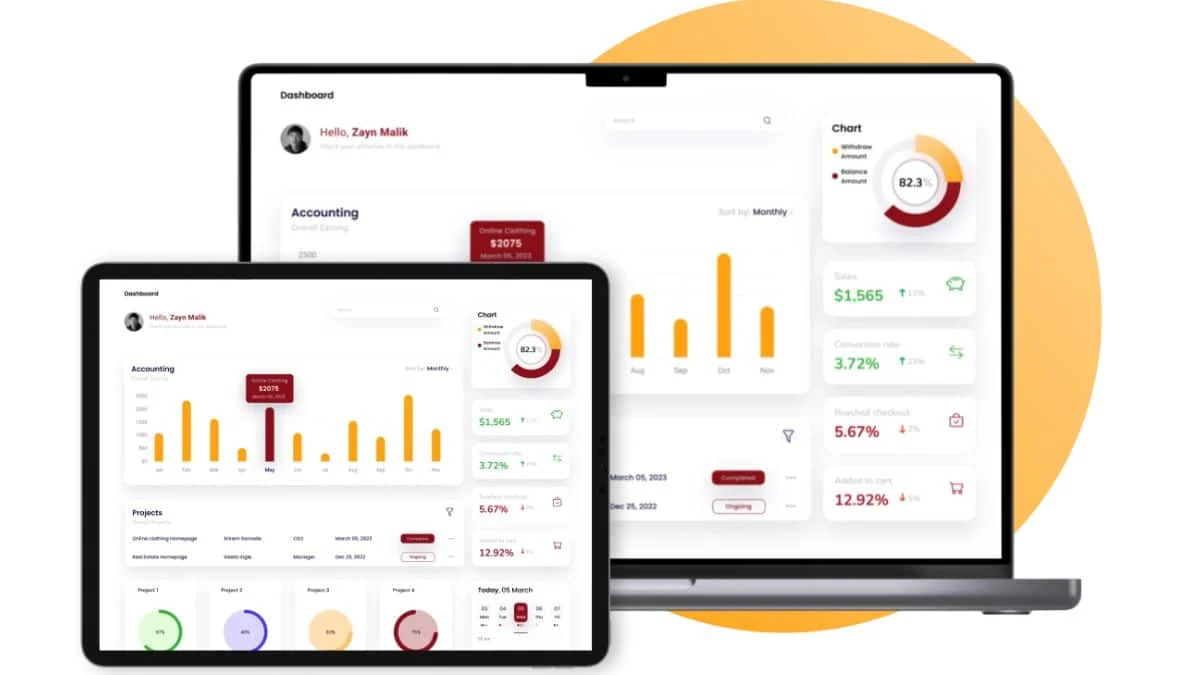
HashMicro’s Restaurant Accounting Software is a premier solution designed for Malaysian businesses looking to streamline their financial management processes. The system offers advanced tools to optimize expense tracking, revenue management, and financial reporting effectively.
A key highlight of HashMicro’s solution is its adherence to ISO standards, ensuring top-tier security and service quality. Furthermore, the system offers a comprehensive approach to financial management, encompassing budgeting, cash flow monitoring, and real-time financial insights.
Here are some of the features offered by the HashMicro Accounting Solution:
- Bank Integrations – Auto Reconciliation
- Profit & Loss vs. Budget & Forecast
- Cashflow Reports
- Financial Statement with Budget Comparison
- Budget & Realization
- Auto Follow-Up Customer Statement
- Treasury & Forecast Cash Management
- Chart of Accounts Hierarchy
- Complete FS with Period Comparison
Besides these features, HashMicro offers seamless integration capabilities with third-party systems and other modules, such as a restaurant POS system. You can easily customize the software to meet your specific business requirements, ensuring maximum operational efficiency.
| Pros | Cons |
|---|---|
|
|
"HashMicro’s restaurant accounting software doesn’t just crunch numbers—it empowers restaurateurs with precise cost control, live financial insights, and seamless integration from kitchen inventory to cash register, making profitability predictable rather than a hope."
Why this suits Malaysian businesses: HashMicro is designed for the Southeast Asian market, making it supports local SST regulations, aligns with the MIDA Smart Automation Grant (SAG), and offers unlimited user pricing ideal for SMEs and growing manufacturers. Bahasa Melayu support also helps simplify implementation and onboarding.
Pricing: Contact the HashMicro team to get a tailored pricing scheme for your restaurant.
2. NetSuite
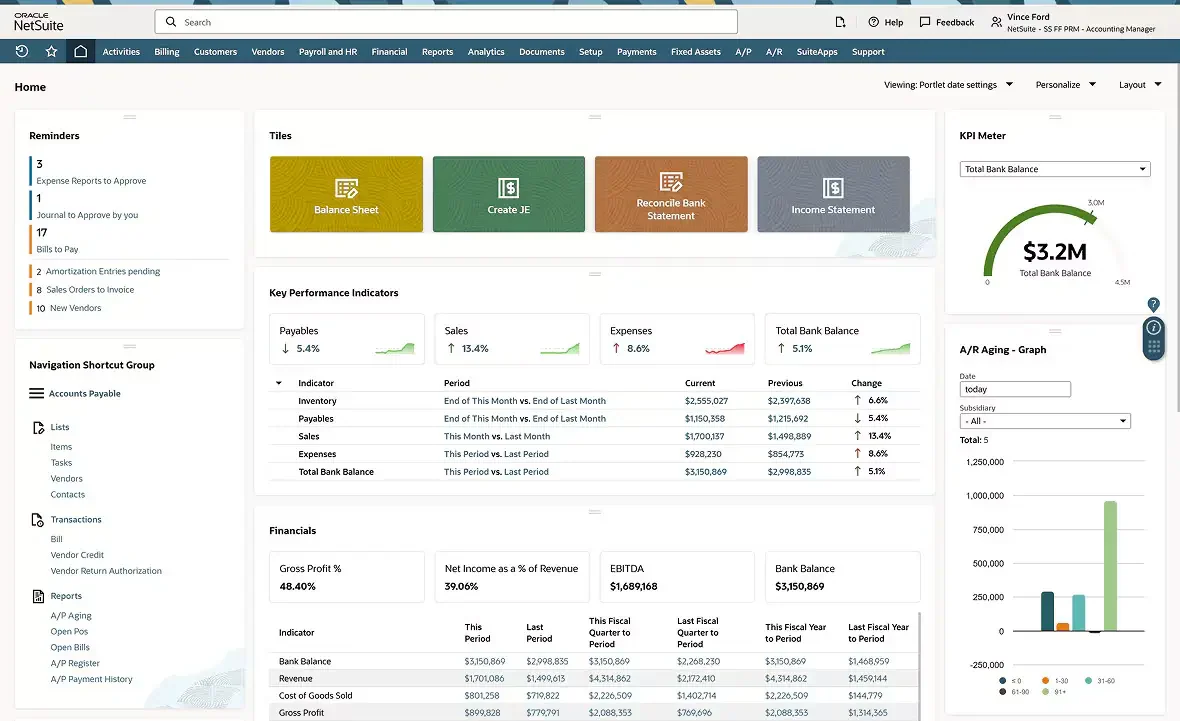
NetSuite, a global leader in cloud-based business management software, offers robust accounting solutions for restaurants. Its flexible and scalable restaurant platform is designed to meet complex financial management needs.
Key Features:
- Comprehensive financial management
- Multi-currency support
- Real-time dashboards
- Automated billing and invoicing
- Strong compliance management
Why this suits Malaysian businesses: NetSuite is ideal for Malaysian businesses that are scaling rapidly or operating across multiple regions because of its strong cloud infrastructure and multi-currency capabilities. Its real-time financial reporting and compliance tools that support expansion into international markets.
| Pros | Cons |
|---|---|
|
|
Pricing: Starts from around RM410 per user/month plus about RM4,120 per month base licence (from $99 + $999).
3. Sage 50
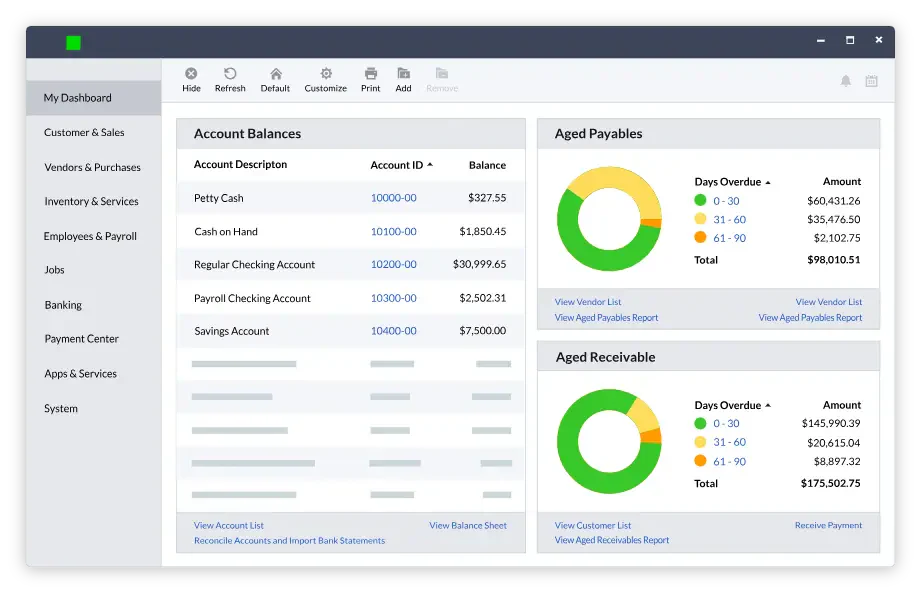
Sage 50 is a trusted name in software for restaurant accounting, providing reliable software tailored to retail and restaurant businesses. This restaurant accounting software offers a strong set of features that support financial management and operational efficiency.
Key Features:
- Inventory and stock management
- Invoicing and billing automation
- Cash flow monitoring
- Financial reporting tools
- Multi-user access
Why this suits Malaysian businesses: Sage 50 suits Malaysian restaurants that require dependable accounting and inventory management without overly complex implementation. Its integration with POS systems and flexible reporting features aiming to improve financial accuracy and day-to-day operational efficiency.
| Pros | Cons |
|---|---|
|
|
Pricing: Pro from about RM515/month, Premium from about RM700/month for one user (from $124.42 and $169.33).
4. Wave
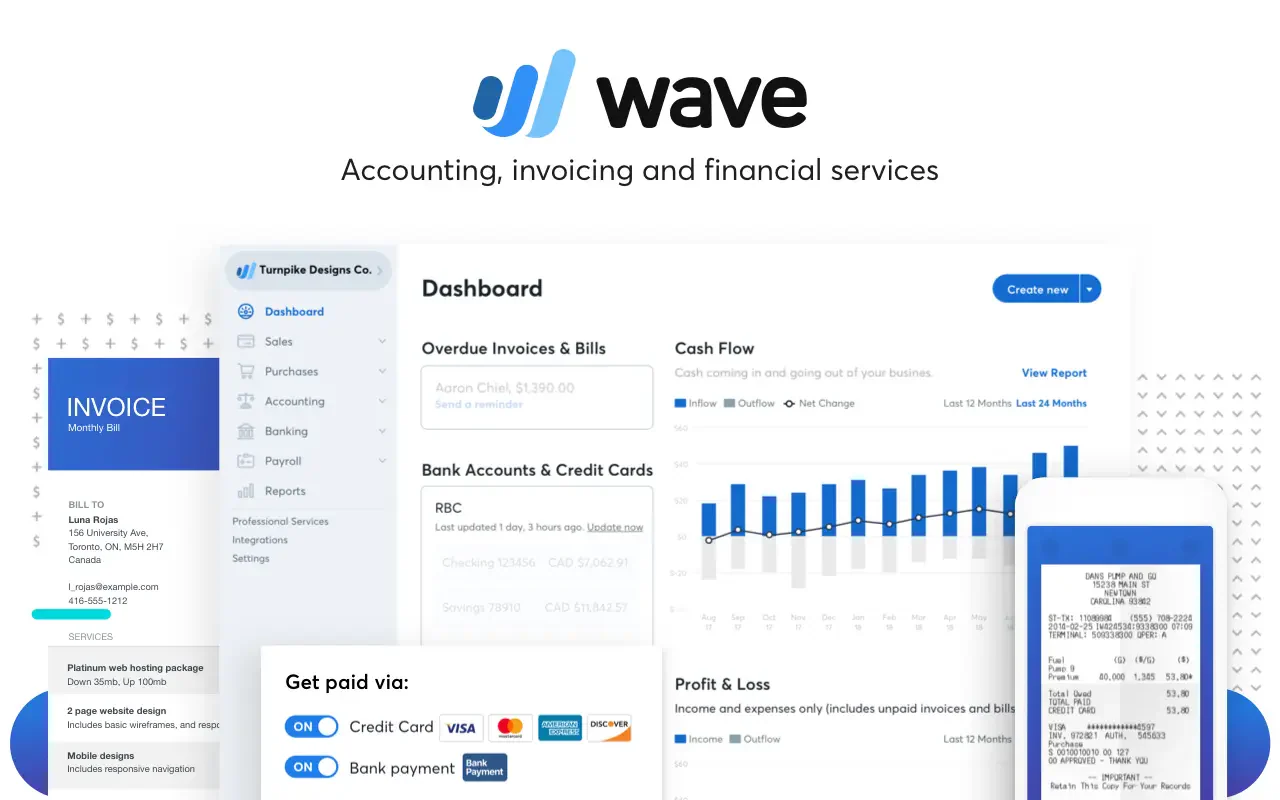
Wave is a popular choice for small to medium-sized retail businesses due to its intuitive interface and robust accounting features. It offers cloud-based solutions ideal for restaurant accounting needs.
Key Features:
- Income and expense tracking
- Invoicing and payment management
- Bank reconciliation
- Financial reporting dashboards
- Cloud-based accessibility
Why this suits Malaysian businesses: Wave is a great fit for Malaysian startups and small restaurants looking for affordable and easy-to-use accounting software. Its cloud-based accessibility, intuitive dashboard, and free core features to manage invoicing, expenses, and financial tracking efficiently without requiring a large IT budget.
| Pros | Cons |
|---|---|
|
|
Pricing: Starts at roughly RM66/month (from $16/month).
5. FreshBooks
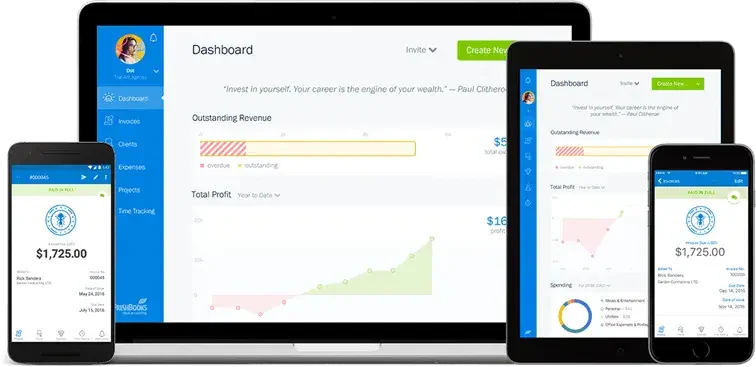
FreshBooks is well-known for its simple, easy-to-use accounting software designed for service-based businesses, including restaurants. It streamlines invoicing, expense tracking, and financial reporting.
Key Features:
- Automated invoicing
- Expense tracking
- Time tracking for staff
- Financial reporting tools
- Mobile accessibility
Why this suits Malaysian businesses: FreshBooks is suitable for Malaysian restaurant owners who prioritize simplicity and mobility in financial management. With automated invoicing, expense tracking, and a strong mobile app experience, it helps businesses monitor their finances conveniently while supporting more flexible day-to-day operations.
| Pros | Cons |
|---|---|
|
|
Pricing: Lite from about RM35/month, Plus from about RM63/month based on promo pricing.
6. Xero
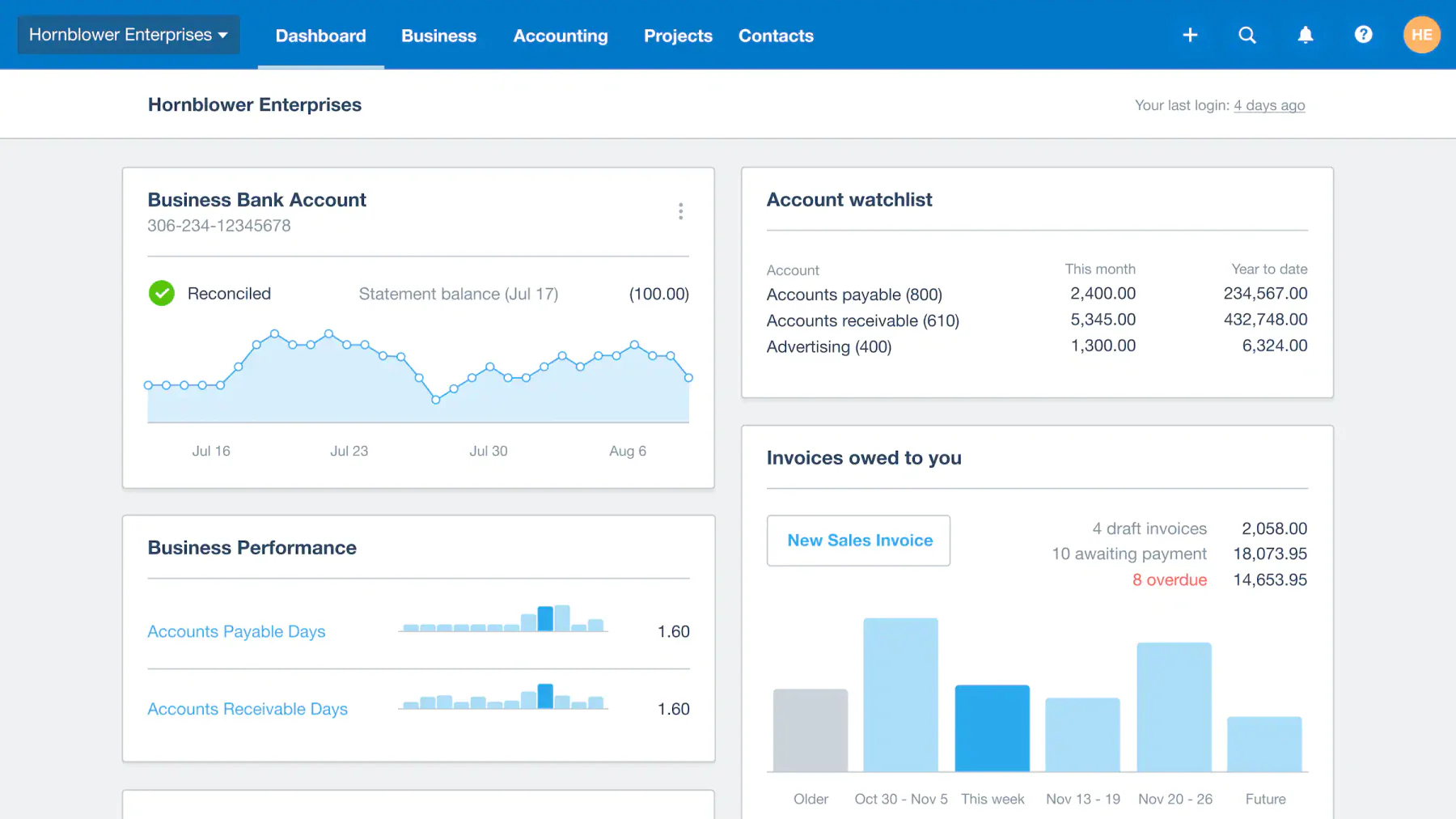
Xero is a cloud-based accounting software designed for businesses of all sizes, offering powerful tools for managing restaurant finances. It provides real-time financial data with strong integration capabilities.
Key Features:
- Real-time financial tracking
- Invoicing and billing automation
- Bank reconciliation
- Payroll management
- Strong third-party integrations
Why this suits Malaysian businesses: Xero is highly suitable for Malaysian businesses that need cloud-based accounting with strong third-party integrations. Its real-time financial tracking and automated reconciliation features help restaurant owners maintain accurate financial records while improving collaboration between teams and accountants.
| Pros | Cons |
|---|---|
|
|
Pricing: Starter from around RM120/month, Standard from about RM205/month (from $29 and $50).
7. QuickBooks
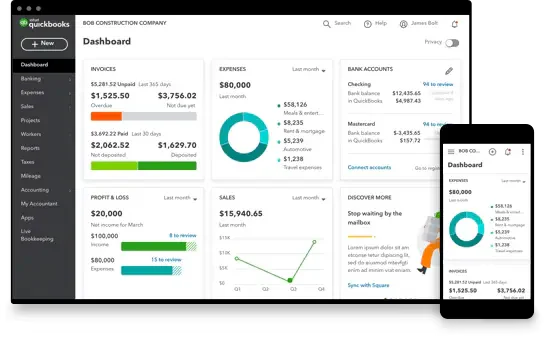
QuickBooks is one of the most recognized accounting software globally, offering robust solutions for restaurant accounting. It helps manage finances, track sales, and generate comprehensive reports.
Key Features:
- Income and expense tracking
- Payroll processing
- Tax filing assistance
- Financial reporting tools
- Multi-device access
Why this suits Malaysian businesses: QuickBooks works well for Malaysian restaurants seeking a widely trusted accounting solution with strong payroll and reporting capabilities. Its comprehensive financial tools and multi-device accessibility help businesses streamline bookkeeping processes and gain clearer insights into business performance.
| Pros | Cons |
|---|---|
|
|
Pricing: Simple Start from about RM157/month, Essentials from about RM309/month (from $38 and $75).
8. Lightspeed
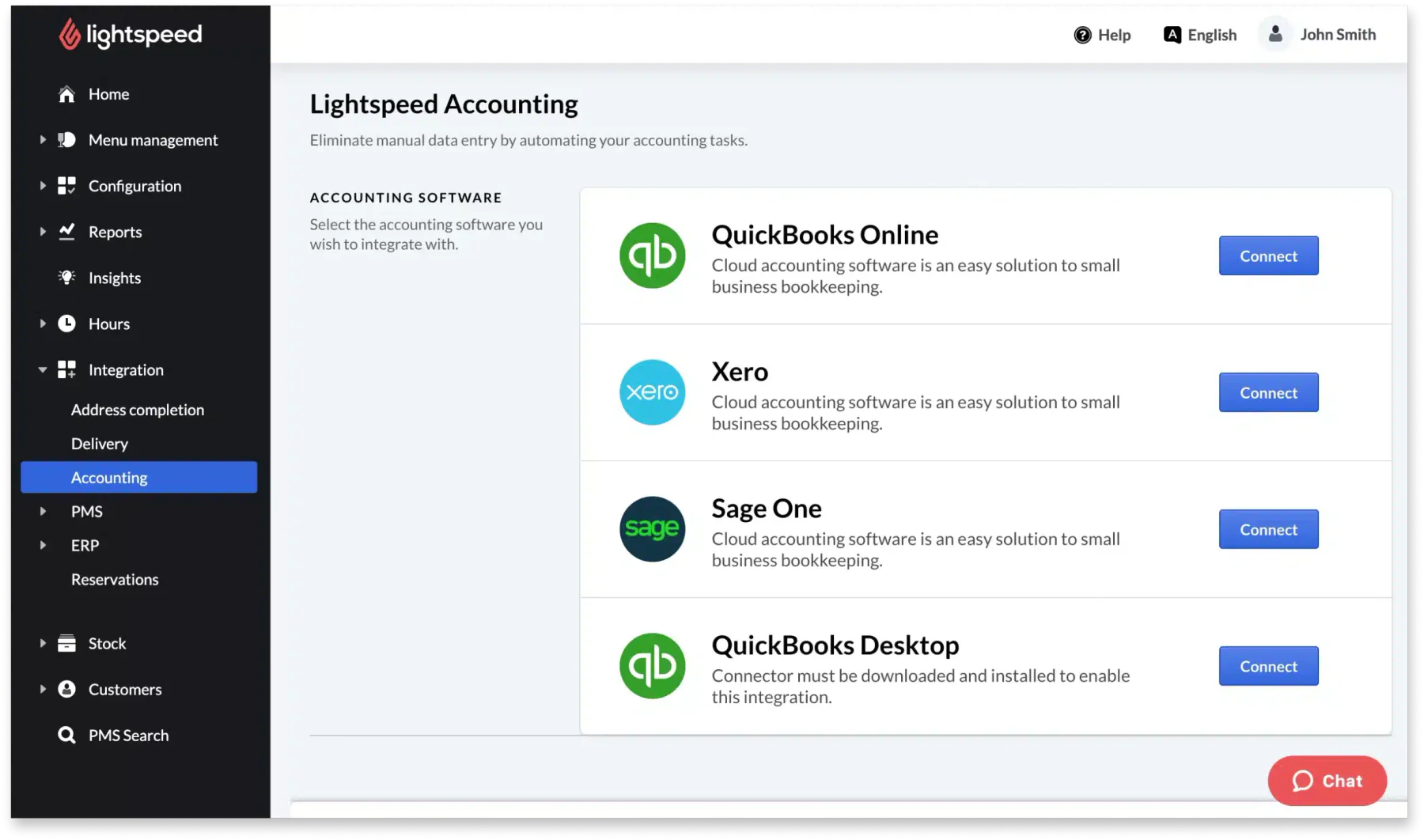
Lightspeed is a cloud-based POS and accounting solution designed for restaurants and retail businesses. It integrates POS data with accounting functions for streamlined financial management.
Key Features:
- POS and accounting integration
- Real-time sales tracking
- Inventory management
- Advanced reporting tools
- Cloud-based platform
Why this suits Malaysian businesses: Lightspeed is particularly beneficial for Malaysian restaurants that want to combine POS operations with accounting in one integrated ecosystem. Its real-time sales tracking and inventory management features allow businesses to improve operational efficiency while making faster, data-driven decisions.
| Pros | Cons |
|---|---|
|
|
Pricing: Starting at roughly RM285/month (from $69/month).
9. SQL
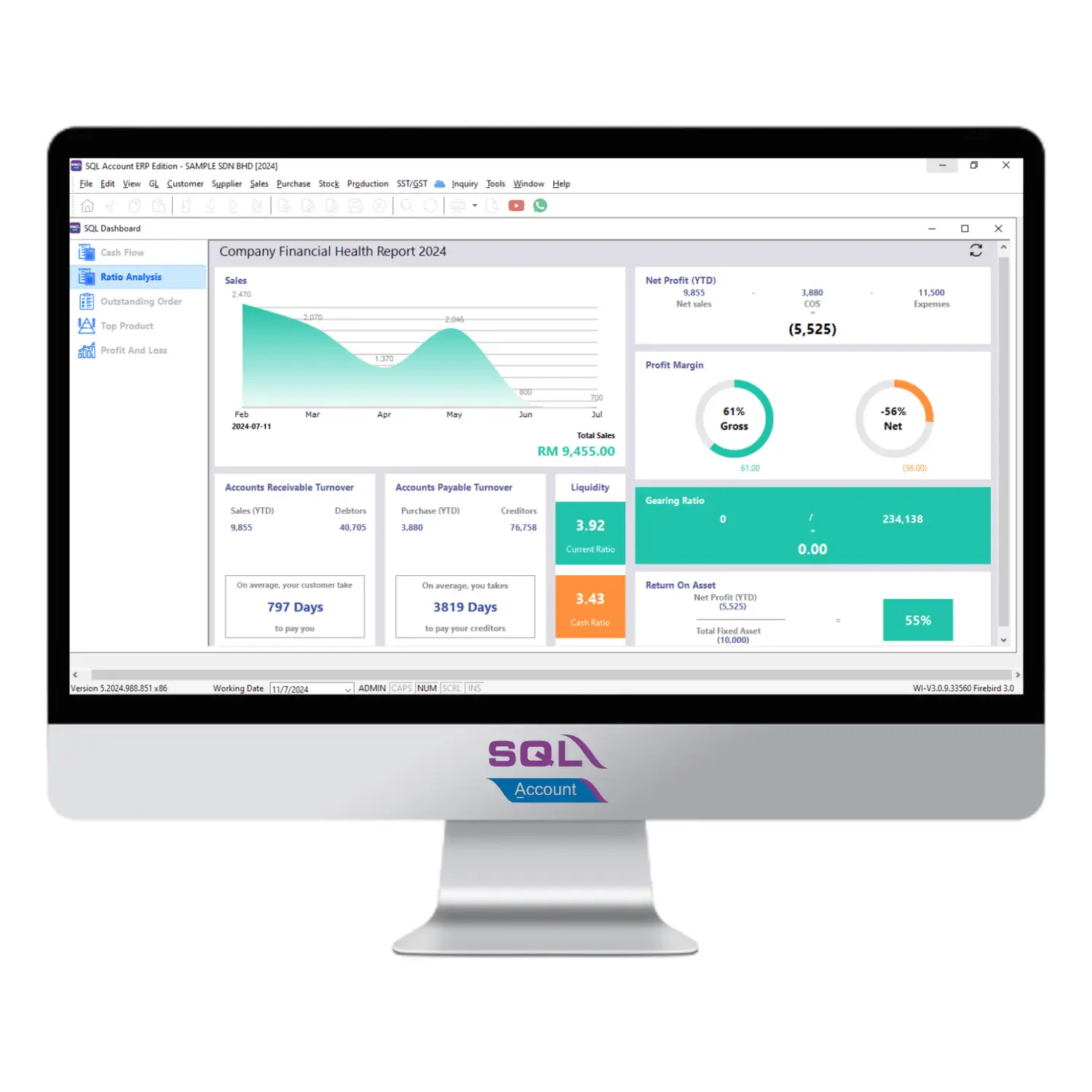
SQL Accounting Software is a Malaysia-based solution that offers robust financial management features for retail and restaurant businesses. It’s known for strong local support and compliance features.
Key Features:
- Financial accounting modules
- GST/VAT compliance
- Inventory tracking
- Payroll management
- Multi-currency support
Why this suits Malaysian businesses: SQL Accounting Software highly relevant for local restaurants and SMEs. Its strong SST and GST compliance support, combined with local customer service and grant-friendly pricing, helps businesses adapt more easily to Malaysia’s regulatory and operational environment.
| Pros | Cons |
|---|---|
|
|
Pricing: From RM39.50/month with available grant-based package.
10. Bukku
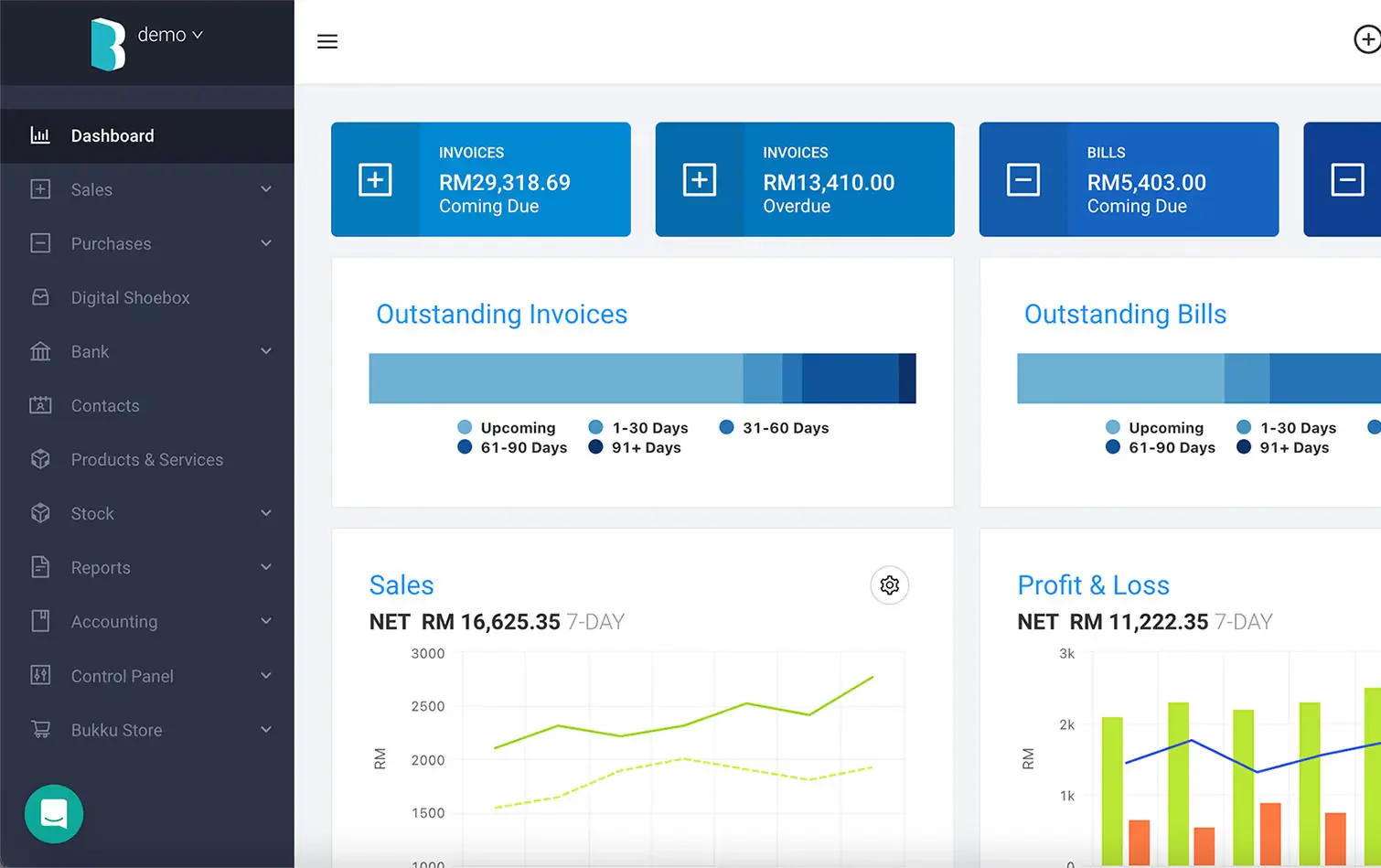
Bukku is a Malaysian accounting software tailored for small to medium-sized retail and restaurant businesses. It focuses on simplicity, ease of use, and strong financial management tools.
Key Features:
- Invoicing and expense tracking
- Financial reporting tools
- Cloud-based access
- Bank reconciliation
- Multi-user support
Why this suits Malaysian businesses: Bukku is an excellent choice for Malaysian SMEs and small restaurants due to its affordable pricing and user-friendly cloud platform. The software simplifies invoicing, expense tracking, and bank reconciliation, making it easier for growing businesses to manage finances without complicated setup processes.
| Pros | Cons |
|---|---|
|
|
Pricing: Seed plan from RM35/month + 8% SST, Grow plan from RM65/month.
11. Restaurant365
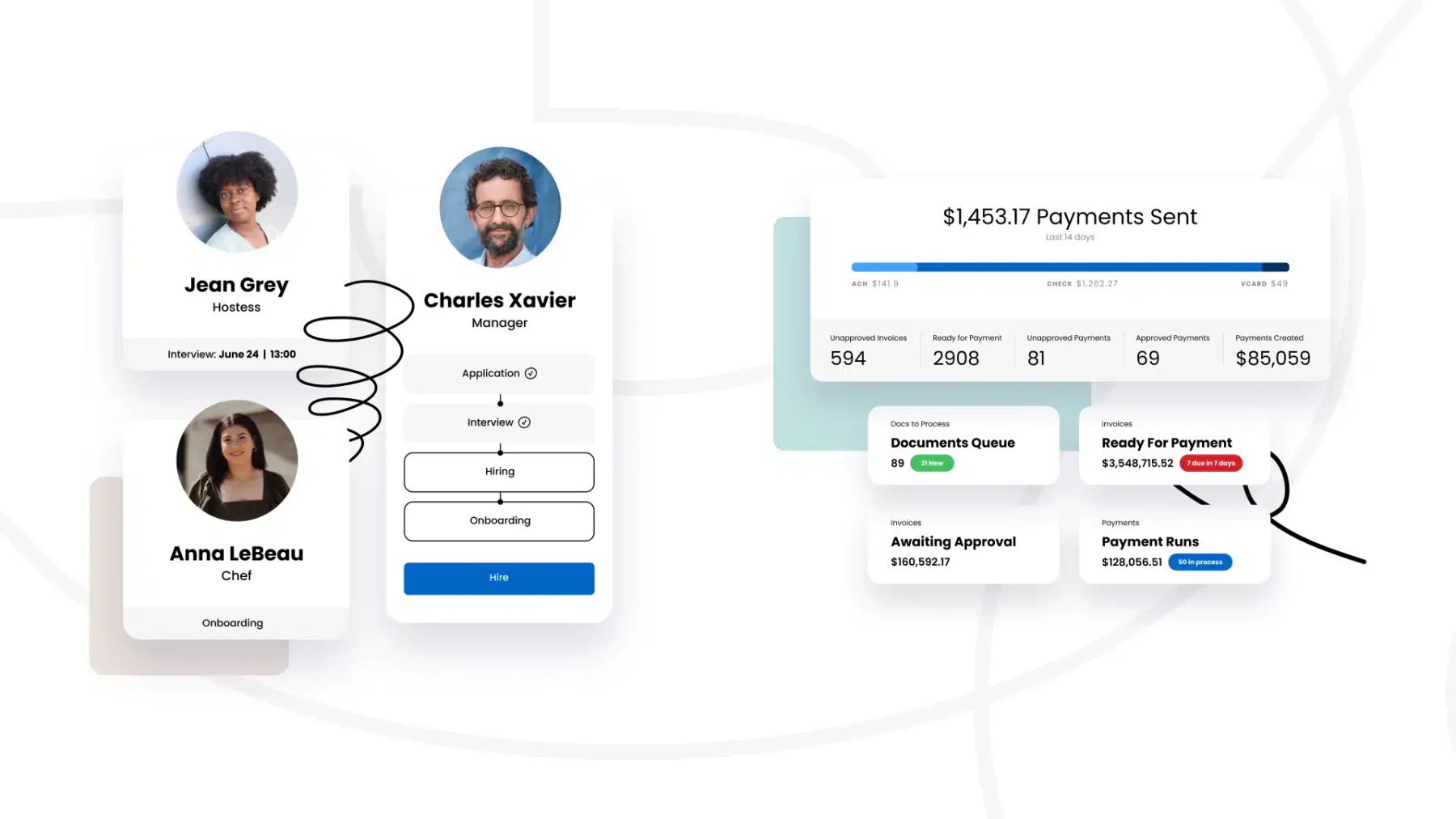 Restaurant365 is a cloud-based all-in-one platform designed specifically for restaurant operations, combining accounting, inventory & purchasing, workforce management, payroll/HR, and integration with POS systems.
Key Features:
- Restaurant-Specific Accounting & GL Integration
- Inventory, Recipe & Food Cost Tracking
- Workforce Scheduling & Labor Analytics
- Vendor & Accounts Payable Automation
- Real-Time Reporting & Analytics
Why this suits Malaysian businesses: Restaurant365 is ideal for larger Malaysian restaurant chains and multi-branch operations that require an all-in-one management platform. By combining accounting, workforce management, payroll, and inventory tracking into a single system, it helps businesses gain better visibility and control over complex restaurant operations.
| Pros | Cons |
|---|---|
|
|
Pricing: Starts at about RM2,060/month (from $499/month, depending on plan).
12. MarginEdge
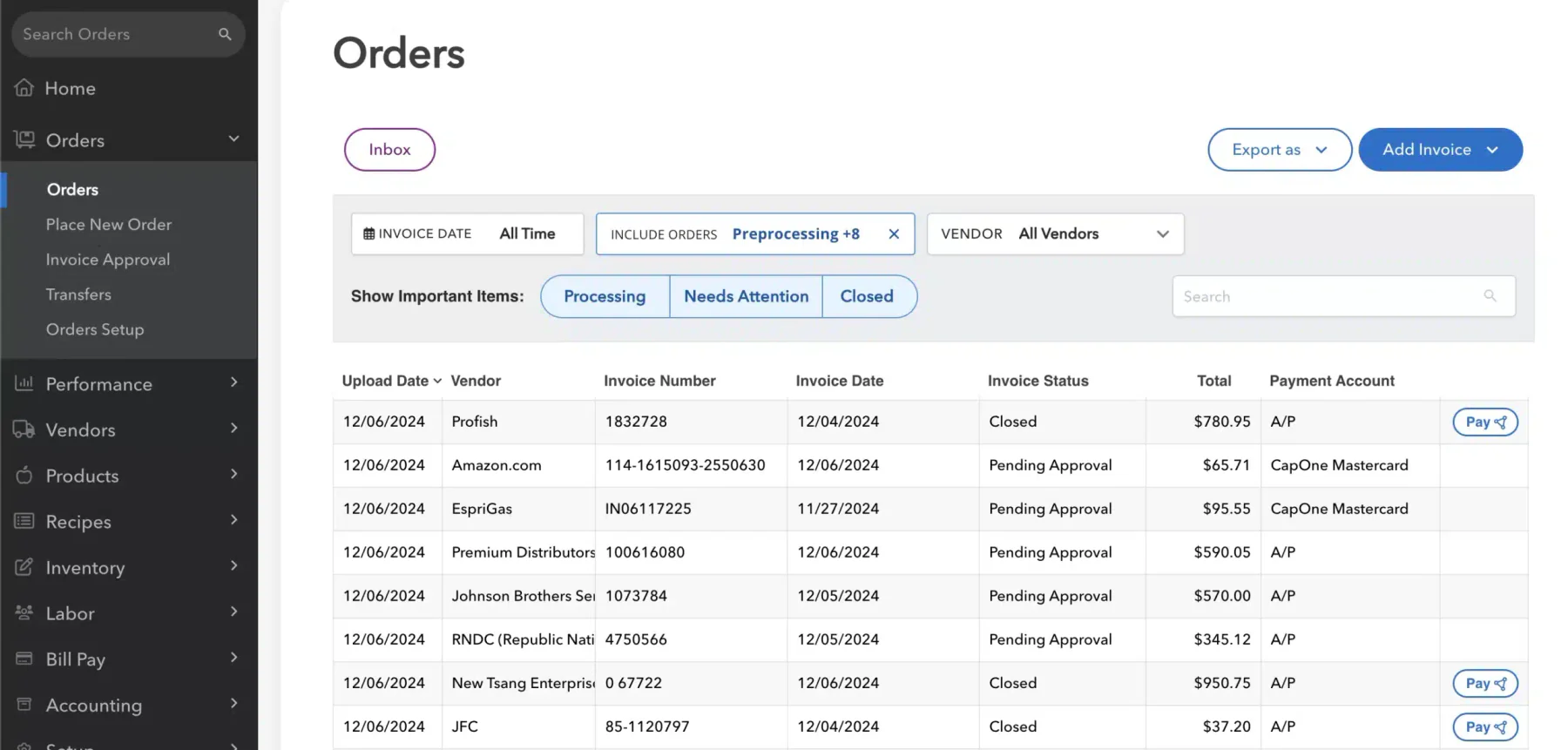 MarginEdge is a cloud-based software platform designed specifically for restaurants and food-service operators. It integrates with a variety of POS systems and accounting systems, captures invoice data and sales/labour data, tracks food/ingredient usage, and provides real-time insights into costs, profitability, and operational performance.
Key Features:
- Invoice & Bill Pay Automation
- Inventory, Recipe & Menu Costing
- Daily Controllable P&L & Cost-Tracking
- POS & Accounting Integrations
- Multi-Location Support & Central Control
Why this suits Malaysian businesses: MarginEdge is suitable for Malaysian restaurants looking to gain deeper control over food costs and operational profitability. Its automation features for invoices, inventory tracking, and daily profit analysis help businesses reduce manual work while improving financial accuracy and cost efficiency.
| Pros | Cons |
|---|---|
|
|
Pricing: Around RM1,360/month (from $330/month).
Overall Comparison of Restaurant Accounting Software in Malaysia
In this overall comparison of restaurant accounting software in Malaysia, I examine the leading solutions across features, automation capabilities, pricing, and ease of use to help restaurant operators identify the platform that best aligns with their business needs.
| Provider | CRM & Lead Management | Sales Automation | Pipeline Management | Reporting & Analytics | Ease of Use |
|---|---|---|---|---|---|
| HashMicro | |||||
| Wave | |||||
| FreshBooks | |||||
| Xero | |||||
| QuickBooks |
Restaurant accounting software plays a crucial role in streamlining all restaurant business operations. Below are some of the benefits of using restaurant accounting software:
- Enhances financial accuracy in sales and expenses: Restaurant accounting software minimizes errors by automating sales tracking, expense logging, and financial calculations. This ensures accurate profit margins and reliable tax audit and financial report data.
- Improves cost management through menu engineering: The software helps identify profitable menu items and reduce wastage by analyzing food costs and sales data. This enables restaurant owners to optimize pricing strategies and control ingredient expenses effectively.
- Simplifies food and beverage sales tax compliance: The software automates VAT/GST calculations, tracks taxable transactions, and generates detailed tax reports. This ensures compliance with local tax regulations and reduces the risk of penalties for late or inaccurate filings.
- Boosts operational efficiency in daily cash reconciliation: Automating cash flow tracking and reconciliation processes saves restaurant managers time. This improves accuracy in daily sales reports and minimizes discrepancies in cash handling.
- Provides real-time financial insights for profit analysis: The software offers up-to-date dashboards displaying revenue, expenses, and net profit per outlet. This allows restaurant owners to make informed decisions, adjust operations, and boost profitability.
- Supports multi-location financial consolidation: The software integrates financial data from different branches into a single platform for restaurant chains. This simplifies consolidated reporting and enables centralized control over financial performance.
- Enhances cash flow management with supplier payment tracking: The software monitors accounts payable and receivable, ensuring timely supplier payments and efficient cash flow. This helps maintain healthy vendor relationships and operational stability.
- Promotes better inventory cost control: By linking with inventory systems, the software tracks ingredient usage and cost fluctuations in real time. This reduces overstocking, prevents spoilage, and maximizes cost efficiency in inventory management.
- Facilitates payroll processing for hospitality staff: The software automates payroll calculations, tax deductions, and compliance with labor laws specific to the restaurant industry. This ensures accurate, timely salary disbursements, enhancing employee satisfaction.
- Strengthens financial planning for growth strategies: The software supports strategic expansion planning with detailed financial forecasting and budget analysis tools. This helps restaurant owners set realistic financial goals and allocate resources effectively for growth.
Which Accounting Software Suits My Business?
Since every restaurant has different operational needs, choosing the right accounting software requires more than just comparing features and pricing. The following decision matrix helps businesses identify the most suitable solution based on their specific business profile and requirements.
| Business Profile | Recommended Software | Why It Fits |
|---|---|---|
| Small restaurant or café needing affordable and beginner-friendly accounting software | Wave or Bukku | Both provide simple cloud-based accounting features with easy invoicing, expense tracking, and affordable pricing suitable for startups and SMEs. |
| Growing restaurant business needing full ERP integration and operational scalability | HashMicro | Offers integrated ERP modules, SST compliance, POS integration, and unlimited user access suitable for scaling restaurant operations in Malaysia. |
| Restaurant chain managing multiple branches, workforce, and inventory centrally | Restaurant365 or MarginEdge | Both provide centralized control for multi-location operations with inventory tracking, workforce management, and real-time financial insights. |
| Restaurant business expanding internationally or handling multi-currency transactions | NetSuite or Xero | Strong cloud infrastructure, multi-currency support, and advanced financial reporting make them ideal for businesses operating across multiple regions. |
| Restaurant requiring strong POS and accounting integration for daily operations | Lightspeed | Combines POS functionality with accounting and inventory tracking to improve operational efficiency and real-time decision-making. |
| Restaurant owner prioritizing simple mobile accounting and invoicing management | FreshBooks | Provides easy-to-use invoicing, expense tracking, and mobile accessibility for flexible financial management. |
| Restaurant needing trusted accounting software with payroll and reporting tools | QuickBooks | Offers comprehensive financial reporting, payroll management, and multi-device access suitable for growing restaurant businesses. |
| Local Malaysian restaurant seeking SST/GST compliance and local support | SQL or HashMicro | Both support Malaysian tax regulations and provide local implementation support tailored to Malaysian operational requirements. |
| Restaurant with complex inventory and stock management requirements | Sage 50 | Strong inventory control and financial reporting capabilities help restaurants maintain accurate stock and operational management. |
| SME restaurant looking for cloud-based accounting with strong third-party integrations | Xero | Real-time financial tracking and integration capabilities make collaboration with accountants and external systems more efficient. |
How to Choose the Best Accounting Software for Your Restaurant Business
Selecting the best accounting software for your restaurant involves evaluating key factors to match your business needs. To enhance overall efficiency, consider integrating it with restaurant management software for seamless operations.
Here are essential criteria to consider:
- Identify your business needs: Understand your restaurant’s specific accounting requirements, such as payroll, inventory, or multi-location management. Knowing what you need ensures the software aligns with your operational goals.
- Consider ease of use: Choose software with an intuitive interface that your team can quickly learn and navigate. A user-friendly restaurant platform reduces training time and minimizes errors.
- Look for integration capabilities: Ensure the software integrates seamlessly with your POS, payroll, and inventory management systems. This will promote data consistency and enhance operational efficiency.
- Evaluate reporting features: Opt for software that offers robust reporting tools to provide real-time financial insights. Comprehensive reports help you make informed business decisions.
- Check for scalability: Select software that can grow with your restaurant as you expand to new locations or add services. Scalable solutions save costs on future upgrades.
- Review security features: Ensure the software has strong security measures to protect sensitive financial data. Look for features like data encryption, two-factor authentication, and regular backups.
- Assess customer support: Choose a reliable vendor to assist with technical issues or software updates. 24/7 support ensures minimal downtime during critical operations.
- Analyze cost-effectiveness: While avoiding budget discussions, consider the value the software provides in terms of features and efficiency. High-value software can improve profitability through better financial management.
Strategy for Successful Restaurant Accounting

Implementing effective accounting strategies is vital for maintaining financial health and driving growth in the restaurant industry. Here are key strategies to ensure successful restaurant accounting:
- Maintain accurate financial records: Consistently update and review financial records to ensure accuracy in reporting. This helps identify discrepancies early and supports informed decision-making.
- Automate accounting processes: Leverage restaurant accounting software to automate tasks like invoicing, payroll, and tax calculations. Automation reduces errors and saves time for strategic planning.
- Implement strong cash flow management: Monitor cash flow regularly to ensure the business has sufficient liquidity. This strategy helps in managing expenses, supplier payments, and unexpected costs.
- Track inventory costs effectively: Integrate accounting software with inventory management to monitor stock levels and control food costs. This prevents overstocking, reduces waste, and maximizes profitability.
- Conduct regular financial audits: Schedule periodic audits to review financial data and ensure compliance with regulations. Audits help detect fraud, identify inefficiencies, and maintain financial integrity.
- Use real-time financial reporting: Access real-time financial reports to track performance metrics such as revenue, expenses, and profit margins. This allows quick adjustments to improve operational efficiency.
- Budget and forecast accurately: Develop detailed budgets and financial forecasts based on historical data and current trends. Accurate forecasting aids in resource allocation and long-term planning.
- Ensure tax compliance: Stay updated with local tax laws and file your taxes in a timely manner to avoid penalties. Accounting software simplifies tax management through automated calculations and reporting.
Conclusion
In Malaysia’s dynamic food and beverage industry, restaurants face increasing demands to manage their finances efficiently while maintaining profitability. With the complexities of daily transactions, fluctuating costs, and strict tax regulations, having the right accounting software is essential for streamlining financial management and ensuring long-term success.
This is where HashMicro Accounting Software makes a significant impact. Designed to enhance operational efficiency, it offers automated features for managing expenses, tracking sales, and generating real-time financial reports. Its seamless integration with other business modules allows restaurant owners to focus on growth while ensuring accurate financial oversight.
Ready to take your restaurant’s financial management to the next level? Sign up for a free demo of HashMicro Accounting Software today and discover how it can simplify your accounting processes, boost efficiency, and help your business thrive in Malaysia’s competitive restaurant scene.

FAQ About Restaurant Accounting Software
The best accounting software for a restaurant is HashMicro Accounting Software. It offers advanced automation features for managing expenses, tracking sales, and generating real-time financial reports. HashMicro seamlessly integrates with POS systems and inventory management, ensuring accurate financial data, improved cash flow, and efficient tax compliance—making it the ideal solution for restaurant businesses.
The best restaurant accounting method often depends on the business size and operational needs. The cash-based accounting method is ideal for small, independent restaurants because it simplifies bookkeeping, improves cash flow tracking, and makes tax reporting easier. However, larger restaurants or those with complex operations may benefit from the accrual basis accounting method, which provides a more accurate picture of financial health by recording income and expenses when they are earned or incurred, not when cash changes hands.
Restaurants typically use the cash accounting method, also known as the cash basis method, for managing their finances. This method records income when payments are received and expenses when paid, offering a clear and straightforward view of cash flow. Given the high volume of daily cash transactions in restaurants, this approach is highly effective for maintaining accurate financial records and ensuring efficient cash management.
The three golden rules are:
1. Personal Account: Debit the receiver, credit the giver.
2. Real Account: Debit what comes in, credit what goes out.
3. Nominal Account: Debit all expenses and losses, credit all incomes and gains.
Many Malaysian restaurants use HashMicro Accounting Software together with HashMicro’s Restaurant POS / F&B suite to handle sales, inventory costing, and profit & loss per outlet in one integrated system, making it easier to track daily takings, food costs, and tax compliance across branches.
The 30-30-30 rule in restaurants is a simple budgeting guideline:
1. 30% for food cost
2. 30% for labour cost
3. 30% for overheads (rent, utilities, marketing, etc.)
The remaining 10% is targeted as profit.
It’s not a strict law, but a benchmark to check whether your restaurant cost structure is still healthy.