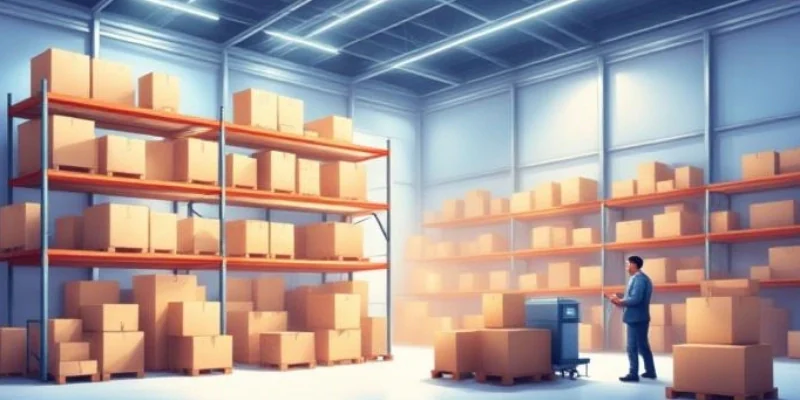







Managing stock without predictive intelligence leads to costly blind spots: unexpected stockouts, capital trapped in idle inventory, and manual ledger mismatches. Relying on static spreadsheets forces warehouse teams to scramble after shortages occur rather than preventing supply disruptions in advance.
In competitive markets like Malaysia, operational growth depends on removing supply chain friction. According to PwC Malaysia, 72% of Digital Champions have implemented technologies to improve supply chain transparency, highlighting the growing importance of real-time visibility and connected operations. Advanced analytics, artificial intelligence, and IoT can help businesses integrate planning, logistics, and warehousing while enabling more automated and data-driven decisions.
Modern businesses address these challenges by connecting machine learning directly with daily warehousing workflows. Adopting an integrated inventory management platform to track stock activity in real time allows teams to anticipate demand shifts accurately and trigger automated reorders before critical items run out.
Key Takeaways
AI inventory management uses real-time data and predictive analytics to optimize stock levels, reduce errors, and automate replenishment.
It benefits industries like retail, manufacturing, F&B, and healthcare by improving forecasting, reducing waste, and streamlining warehouse operations.
Despite its advantages, businesses may face challenges like high upfront costs, data security concerns, and resistance to change.
HashMicro’s Hashy AI offers smart automation features that simplify inventory tracking and help businesses make better stock decisions.

What is AI Inventory Management Software
AI inventory management uses artificial intelligence to automate and improve how businesses handle their stock. By combining machine learning, data analytics, and predictive insights, AI takes traditional inventory processes to the next level, which helps it move faster, smarter, and with fewer errors.
Instead of just tracking what’s in stock, AI inventory management applications can forecast demand, recommend reorder points, and even manage supplier relationships all in real time.
At the heart of this approach is inventory optimization: making sure you always have the right amount of stock; no more, no less. With AI, businesses can balance customer demand with storage costs, reduce waste, and make better decisions that lead to higher profits.
Use Cases of AI Inventory Management Software
AI doesn’t replace your team; it enhances your existing inventory management strategies with data-backed decisions and real-time insights.
Whether you’re forecasting future demand or managing multiple warehouse locations, here’s how AI makes inventory management more strategic and less reactive:
1. Demand Forecasting
AI uses historical sales data, market trends, seasonal patterns, and even external factors like weather or holidays to predict future demand. This allows businesses to stock the right items at the right time.
Example: A supermarket can use AI to forecast higher demand for bottled drinks during summer or holiday weekends and adjust inventory forecasting levels accordingly.
2. Real-Time Inventory Visibility
With AI integrated into POS, ERP software, or IoT systems, businesses can monitor stock levels across all locations in real time. AI flags low inventory instantly and predicts when restocking will be needed.
Example: A retail chain can view inventory across multiple branches and automatically balance stock between stores to prevent under- or overstocking.
3. Anomaly Detection
AI can detect unusual inventory movements, like sudden shrinkage, miscounts, or discrepancies between recorded and actual stock. This helps prevent loss, theft, or data input errors.
Example: A warehouse notices a spike in missing items for a specific SKU; AI flags the issue for investigation before it affects order fulfillment.
4. Supplier Management
AI analyzes supplier performance data such as delivery times, cost, lead time variability, and order accuracy. It helps businesses choose the most reliable suppliers or renegotiate terms.
Example: A restaurant supply manager uses AI insights to replace a vendor that frequently delivers late or inconsistent quantities.
4. Scenario Simulation
AI can simulate “what-if” inventory scenarios, such as demand surges, supplier delays, or pricing changes to help businesses plan better. As a result, some risks can be anticipated and mitigated before they occur.
Example: A logistics manager tests what would happen to stock levels if a shipment is delayed by a week and adjusts the reorder strategy in advance.
5. Automated Replenishment
Working as an AI agent that triggers restock orders automatically, the system evaluates sales velocity, lead times, and demand forecasts to eliminate guesswork and reduce manual ordering.
Example: A POS system in a pharmacy auto-generates a reorder for high-turnover medications once they hit the minimum stock threshold.
6. Warehouse Operations Optimization
AI improves warehouse layout, picking paths, and labor allocation. It can recommend optimal storage zones or batch items for faster order picking.
Example: A fulfillment center uses AI to determine the most efficient picking route for multiple items in a single customer order, reducing fulfillment time.
Benefits of Using AI in Inventory Management

Using AI in inventory management brings several practical advantages across different industries:
- Improved accuracy: AI can analyze large volumes of data and predict demand more precisely, helping businesses keep the right products in stock while avoiding over-ordering.
- Real-time insights: With continuous tracking of stock levels and sales patterns, businesses can make faster, more informed decisions based on current data.
- Automation of routine tasks: Reordering and stock updates can be handled automatically, reducing manual work and freeing up staff for more important tasks.
- Lower operational costs: With better stock control and fewer errors, businesses can cut down on waste and reduce unnecessary spending.
- Better customer experience: When the right items are available at the right time, customers are more likely to leave satisfied and come back again.
Clearly, AI isn’t just a trend. It’s a practical tool that helps businesses manage inventory more efficiently, save time, and improve overall performance. When combined with tools like robotic process automation, AI can streamline everything from reordering to reporting.
Challenges of AI Inventory Management

Although AI brings a lot of value to inventory management, it also comes with a few challenges. Common concerns include data quality, employee pushback, high upfront costs, and data security.
- Data quality: AI systems depend on reliable and up-to-date data. If the information is inaccurate or scattered across different platforms, it can lead to poor predictions and decisions. Many businesses store data in separate systems, and connecting them all can take time and effort.
- Resistance to change: Some employees may be hesitant to adopt new systems or change the way they work. To overcome this, companies need to invest in proper training and communicate clearly about how the changes will help.
- Cost of implementation: Setting up AI tools can be expensive. Software, integration, and training all come with a price tag that might be too high for smaller businesses.
- Privacy and security risks: Relying on digital systems means handling more sensitive data. Businesses need to make sure their systems are secure, protect customer information, and meet data protection rules.
Read more: What is Physical Inventory and Why is it Important?
AI Inventory Management Across Industries
Inventory management has come a long way. Businesses today are moving beyond spreadsheets and manual tracking. With the help of modern inventory software, companies are improving how they manage stock, reduce waste, and keep operations running smoothly.
- Retail: Retailers now use inventory systems to monitor stock levels in real-time, understand customer buying patterns, and plan better for high-demand seasons. E-commerce businesses benefit from features that help speed up order processing and prevent overstocking.
- Manufacturing: Manufacturers need to align production with actual demand. Inventory software helps them plan smarter by tracking raw materials, reducing excess inventory, and keeping costs under control—especially useful for just-in-time production strategies.
- Wholesale and Distribution: Managing bulk stock across regional hubs requires specialized control. Investing in the best software to handle wholesale inventory workflows prevents delivery delays and guides smarter purchasing through clear supply analytics.
- Food and Beverage: Restaurants and suppliers rely on inventory tools to handle fast-moving and perishable items. These systems help reduce food waste, ensure ingredients are always available, and make menu planning easier based on past sales trends.
- Healthcare and Pharmaceuticals: Hospitals and pharmacies need to know exactly what’s in stock—and what’s about to expire. Inventory software makes it easier to manage essential supplies, avoid shortages, and stay compliant with health regulations.
- Construction: Construction companies use inventory systems to track materials across projects. It helps prevent delays, avoid over-ordering, and ensure that every stage of the build has what it needs, when it needs it.
Inventory Automation Made Simple with Hashy AI
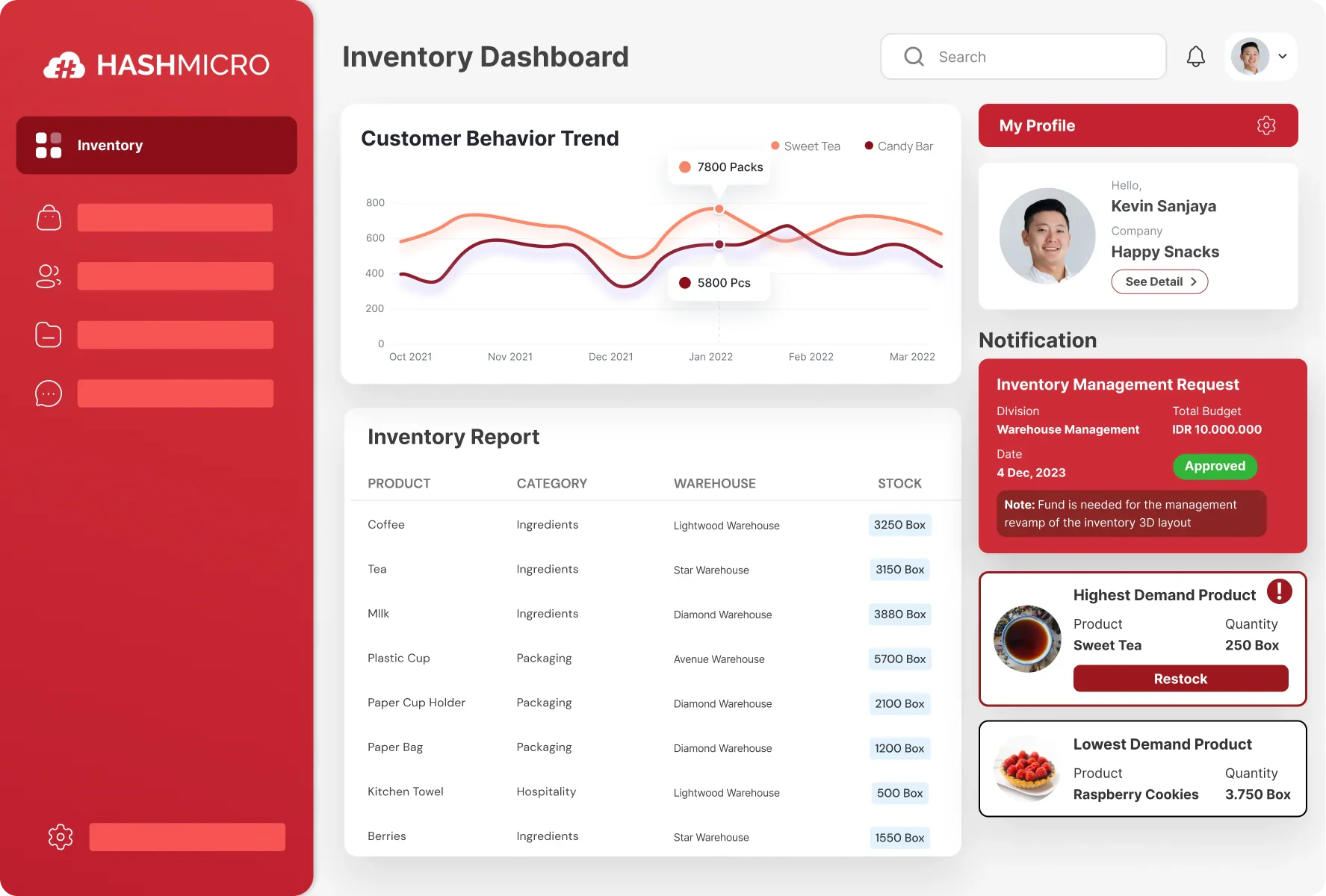
Managing inventory doesn’t have to be complicated. With Hashy AI by HashMicro, you get a powerful yet easy-to-use system that automates stock tracking, streamlines restocking, and reduces manual errors.
Hashy AI automates routine inventory processes, from real-time stock tracking to fast, accurate replenishment. You’ll always know what’s in stock, what needs restocking, and what’s close to expiring. To see it for yourself, HashMicro offers a free demo that you can join anytime you wish.
Thus, you can strategize more effectively when adjusting your stock level, which leads to less money and space wasted. Are there any other features that can benefit your team and warehouse? Of course. Let’s see what else this system can do for you:
- Automatic Reordering Based on Usage: Once items hit a low threshold, the system kicks in. It creates purchase requests based on actual usage, so you always have what you need without delays or overstock.
- Track Fast- and Slow-Moving Items: See which products fly off the shelves and which ones just take up space. Use this insight to plan promotions or reallocate space more efficiently.
- Real-Time Stock Alerts: Stay updated on what’s running low. You’ll get instant alerts when items are close to running out, plus suggestions on what to restock and when.
- Expiry Tracking: Avoid wasted stock and regulatory issues. The system alerts you when products are nearing expiry so you can take action early.
- Balance Stock Across Warehouses: Need more stock in one branch and too much in another? Hashy AI recommends internal transfers to balance inventory between locations—quickly and accurately.
- Barcode & QR Code Ready: Scan, track, and update inventory in real time. It’s faster, reduces manual errors, and keeps everything in sync.
- Track Purchase Requests Without the Headache: View, approve, and manage PRs all in one place. Know exactly where each request stands and keep procurement moving.
- Clear Inventory Reports: Get reports you’ll actually use: like what’s expiring soon, what’s not selling, and what needs reordering. It’s all built in.
Conclusion
AI inventory software isn’t just a nice-to-have; it’s a game-changer for managing stock with less stress. It helps you plan better, act faster, and keep your shelves stocked without breaking a sweat.
HashMicro makes it easy to ditch spreadsheets and start working with smart, reliable inventory automation that actually delivers. With Hashy AI, you don’t just track stock, but you make sharper decisions every single day.
Stop wasting time on stock problems that could be solved in seconds. Let Hashy AI do the heavy lifting; book your free demo and see how smooth it can be!
FAQ on AI Inventory Management
AI systems can integrate data from various warehouses, retail outlets, and online platforms to provide a unified, real-time view of inventory levels. This centralized visibility helps businesses balance stock across locations, prevent overstocking or stockouts, and make informed decisions about transfers and replenishments.
Yes, AI can analyze factors like traffic patterns, weather conditions, and delivery schedules to determine the most efficient routes for inventory distribution. By optimizing these routes, businesses can reduce delivery times, lower transportation costs, and improve overall supply chain efficiency.
AI can evaluate supplier performance by analyzing metrics such as delivery punctuality, order accuracy, and lead times. This analysis enables businesses to identify reliable suppliers, negotiate better terms, and make strategic decisions about supplier partnerships.
AI helps in cost optimization by accurately forecasting demand, which reduces excess inventory and associated holding costs. It also minimizes waste by predicting product shelf-life and automating reorder processes, ensuring that stock levels align closely with actual demand.