





Managing inventory goes beyond what’s visible in the warehouse. There’s also stock that has been purchased and is already owned by the business, but is still moving through the supply chain on its way to the final destination.
This inventory may be on trucks, ships, or in the middle of customs clearance. Although it hasn’t arrived yet, it still plays a role in planning stock availability, budgeting, and day-to-day operations.
How often do you account for inventory that hasn’t physically arrived but already belongs to your business? This article explores what pipeline inventory is, why it matters, and how to manage it as part of a complete inventory picture.
Key Takeaways
|
What Is Pipeline Inventory?
Pipeline inventory refers to goods ordered and paid for but not yet received at your warehouse. It represents a critical asset on the balance sheet even though it is not physically on shelves.
This stock includes items on trucks, cargo ships, or awaiting customs clearance during transit. Ownership has typically transferred to the buyer at shipment, making them tangible financial assets.
Why Is Pipeline Inventory Important for Your Business?
Managing this stock supports operational stability and financial health. With clear vendor lead-time updates, you avoid duplicate orders and spot delays early.
- Improving the accuracy of demand forecasting: Accurate transit data gives teams a complete view of all available stock for better planning. This precision prevents overstocking or stockouts that damage customer relationships.
- Optimizing company cash flow: Since in-transit goods are tied-up capital, monitoring them helps optimize liquidity. Reducing transit times frees up funds for other strategic business investments.
- Strengthening strategic decision-making: Reliable data supports decisions on promotions and product launches by ensuring availability. Leaders can act confidently knowing the supply chain supports their strategic timelines.
- Increasing customer satisfaction: Controlling in-transit stock allows for accurate arrival estimates for your customers. Predictable delivery builds trust and fosters long-term loyalty in a competitive market.
How to Calculate Pipeline Inventory?
Calculating this inventory is theoretically simple using a standard formula with two main variables. However, obtaining accurate figures for these components requires robust historical data.
Pipeline Inventory = Lead Time × Demand Rate
- Lead time: The total duration from when an order is placed until the goods are received at the warehouse.
- Demand rate: The average quantity of product units sold or consumed within the same time unit used for the lead time.
If a company orders chairs with a 30-day lead time and sells 15 chairs daily, the calculation is straightforward. They have 450 chairs in the pipeline, representing a significant portion of assets.
Challenges in Managing Pipeline Inventory and How to Overcome Them

Real-world management faces complexities like lead time variability and lack of visibility. A proactive approach is necessary to mitigate risks and maintain smooth operations.
- Lead time uncertainty: Lead times can change when shipments are delayed, so supplier vendor lead time updates plus buffer stock help you keep inventory plans accurate.
- Market demand fluctuations: Sudden market fluctuations can render existing pipeline stock insufficient or excessive. Agile forecasting strategies help balance in-transit inventory with volatile consumer needs.
- Lack of real-time visibility: Many businesses lack real-time tracking for goods in transit, creating a supply chain blind spot. Implementing integrated tracking systems eliminates this uncertainty and enables proactive problem-solving.
- Hidden costs: Hidden expenses like insurance and potential damage during transit often erode profit margins. A comprehensive cost analysis helps businesses understand the true financial impact of shipping.
Effective Strategies to Manage Pipeline Inventory with Technology
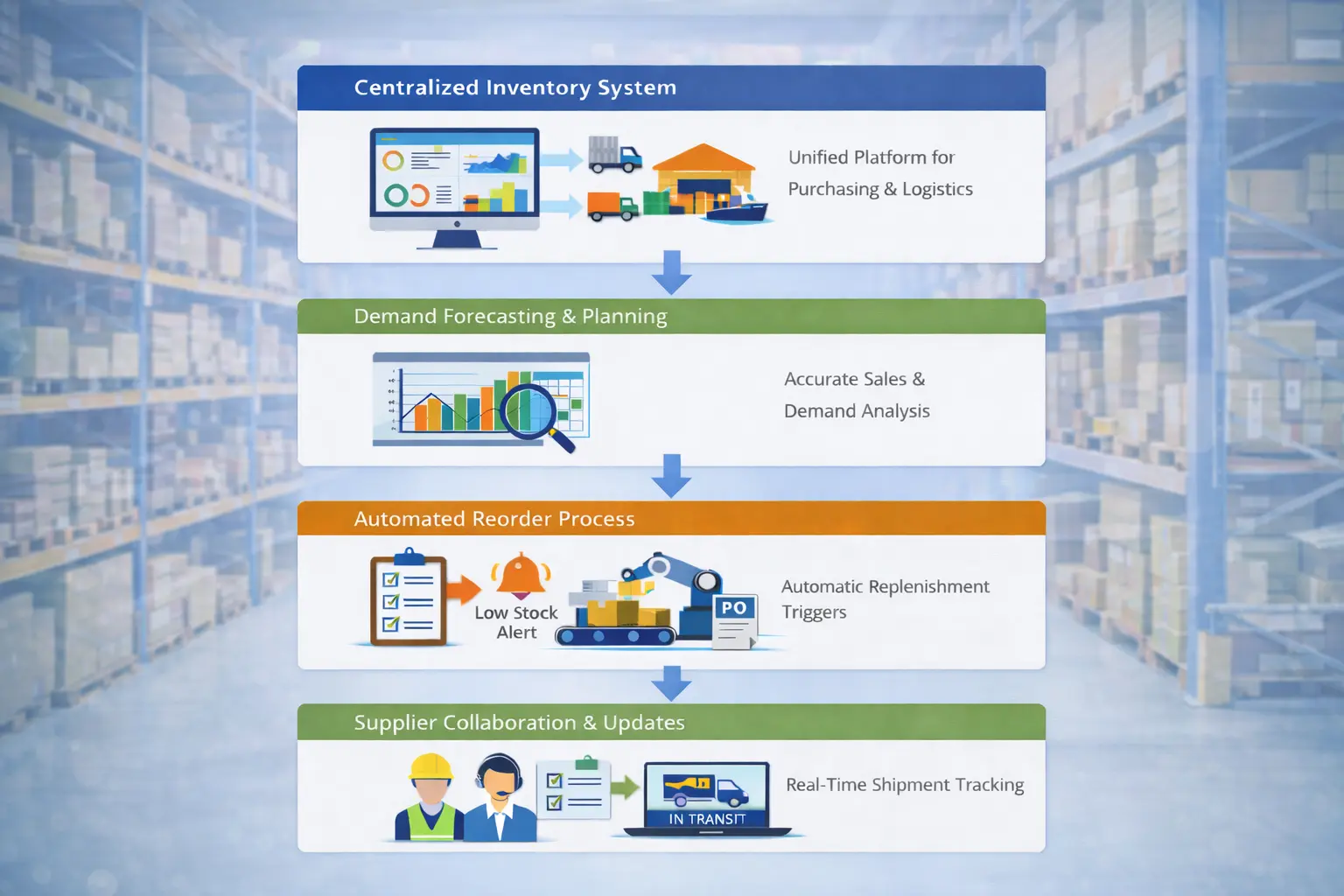
Leveraging technology is essential to gain full control over your in-transit inventory. Modern solutions provide the automation needed to turn uncertainty into a strategic advantage.
- Implement a centralized inventory management system: Moving to a unified platform unifies data from purchasing and logistics for a single source of truth. This ensures all stakeholders have access to accurate, real-time information to reduce miscommunication.
- Utilize stock forecasting features: Advanced tools use historical data to predict future demand rates more accurately. This helps determine realistic inputs for the pipeline formula to optimize order levels.
- Automate the reordering process: Systems can automatically trigger purchase orders when the total stock reaches a specific threshold. This reduces manual workload and ensures timely replenishment, preventing disruptions.
- Enhance collaboration with suppliers: Supplier portals allow vendors to update order status and shipping details directly. This transparency improves lead time tracking and fosters a more resilient partnership.
Pipeline Inventory vs. Safety Stock vs. Anticipation Stock
Distinct stock categories serve specific strategic functions within a balanced inventory strategy. Understanding these differences helps managers optimize levels and allocate capital efficiently.
| Feature | Pipeline Inventory | Safety Stock | Anticipation Stock |
|---|---|---|---|
| Definition | Stock is currently in transit between locations. | Extra stock is held to prevent stockouts. | Stock built up for expected demand spikes. |
| Primary Purpose | Fills the gap during lead time. | Mitigates risk of uncertainty. | Meets predictable future events. |
| Key Driver | Lead time and demand rate. | Variability in demand/supply. | Seasonal trends or promotions. |
Optimize Your Pipeline Inventory Management Strategy
In many supply chains, in-transit stock is where accuracy often slips. A solid inventory system keeps one clear view of what’s on hand, what’s moving, and what’s expected to arrive.
Strong setups focus on real-time tracking, forecasting that sharpens reorder timing, and low-stock alerts before fulfillment is affected. Supplier updates and links to accounting or sales data also keep decisions consistent.
This matters for companies like Abbott, whose health technologies support people managing diabetes, monitoring hearts, and easing chronic pain. To maintain steady availability, an inventory tracking system from HashMicro can help keep stock movement and inventory visibility aligned.
Conclusion
Pipeline inventory is stock you already own but hasn’t reached the warehouse yet. Even in transit, it still affects planning, budgeting, and product availability.
Knowing how to calculate and track it helps you align lead times with demand, improve forecasting, and keep inventory decisions consistent.
If you want to sanity-check your current tracking and calculation method, you can request a short consultation to spot gaps and refine the process.

FAQ About Pipeline Inventory
-
What is the ideal level of pipeline inventory?
The ideal level varies by industry and business model; the goal is to minimize it by reducing lead times and improving forecasting without risking stockouts.
-
How does pipeline inventory affect the balance sheet?
Pipeline inventory is recorded under ‘Inventory’ as a ‘Current Asset.’ It increases total assets but also represents cash that has been spent or liabilities owed.
-
What is the biggest risk of mismanaging pipeline inventory?
The biggest risk is a domino effect from inaccurate data, leading to stockouts (lost sales, damaged reputation) or overstocking (tied-up capital, high storage costs), and an inability to respond to supply chain disruptions.
-
Is it possible for a company to have zero pipeline inventory?
In practice, it’s nearly impossible for businesses dealing with physical goods, as there will always be a transit time. It’s only feasible for instantly accessible digital products.