











 Limited to 100 registrants

An inventory list is a vital tool that helps me maintain accurate stock data and prevent costly discrepancies. Without it, issues like missing or miscounted inventory can easily disrupt operations and reduce profitability. Keeping a detailed and updated inventory report greatly minimizes these risks and ensures smoother processes.
With HashMicro’s Inventory Management Software, I can effortlessly manage my inventory, eliminate data discrepancies, and integrate operations across departments. Discover how this solution can transform your business efficiency, too. Get a free demo today.
Key Takeaways
An inventory list is a detailed recording report that includes information about a company’s inventory, such as product codes, names, and quantities.
Inventory lists offer several benefits, including easier control of goods movement, cost savings by avoiding unnecessary purchases, serving as a reference for calculating company wealth, and avoiding inventory data discrepancies.
HashMicro Inventory Management Software streamlines inventory data recording through digital inventory lists, enhancing control, accuracy, and overall operational efficiency.
What is an Inventory List?

An inventory list is a form of recording report that involves information about a company’s inventory. Through this list, a company can find out accurately how many goods or items they have, such as office stationery, furniture, and other supporting equipment.
Furthermore, a business company can also use this inventory report to record all their inventory stock. Several essential aspects should be considered in making this list, such as product codes, product names, and the number of products available.
Also read: Why Business Should Switch to Cloud Inventory Management
The Importance on Compiling an Inventory List
An inventory list can be a source of information for a company to know the number of items or stocks they have. Compiling this list aims to make a company able to take action on the goods they have.
These actions could be a form of repairing or purchasing goods for the company’s inventory. In addition, compiling this list can increase the effectiveness of using the company goods. All these purposes reflect the importance of a stock list for companies.
The Benefits of an Inventory List
There are various benefits that a company will obtain in making an inventory list. Here are the explanations for each benefit:
1. Easier to control goods
This list will make it easier for a company to control its goods movement. So, a company does not have to worry about its goods. In today’s digital era, a company can manage their goods easily and computerized, also avoid inventory aging.
2. Saving the company expenses
By knowing the number of items available, a company can save on its expenses. In this case, a company does not need to buy some new items that can still be used. So that a company can avoid the expenses on the purchasing of unimportant goods.
3. A reference in company wealth calculation
A company should be able to calculate the wealth it has. In this case, wealth can be either a movable or immovable asset. An inventory list can be a reference for a company in calculating its wealth.
4. Avoid inventory data discrepancies.
The discrepancies in inventory data often are an obstacle for a company. Therefore, a company can use inventory lists as the medium for goods recording. So, a company can avoid discrepancies in inventory data.
Adding an Accounting System to your Inventory Management System will help you analyze inventory costs and estimate the profits and losses generated from each product.
Also read: A Complete Guide to Inventory Management System

Tips for Compiling Inventory List
To make it easier for a company to compile this list, here are some tips that be a reference for your company to compile it. Ensure that you have been involved in the essential aspects of compiling an inventory list, such as product code, product name, product type, and product quantity.
Involving well and detailed the important aspects of this list can give convenience for a company when looking for information about product availability. As a prevention method, a company can make an inventory list backup.
So you will have a backup if sometimes this report is damaged or lost. It would be better if you use a digital inventory recording system. Your company will be worry-free with this digital inventory recording system.
Furthermore, a company should update the inventory data periodically. This is because the company goods or property will have a change, either in addition or reductions of goods. This update will make it easy for your company to find out the real-time inventory data every time. A cloud-based inventory system can streamline this process by automatically syncing data across all devices and users.
Examples of Inventory List
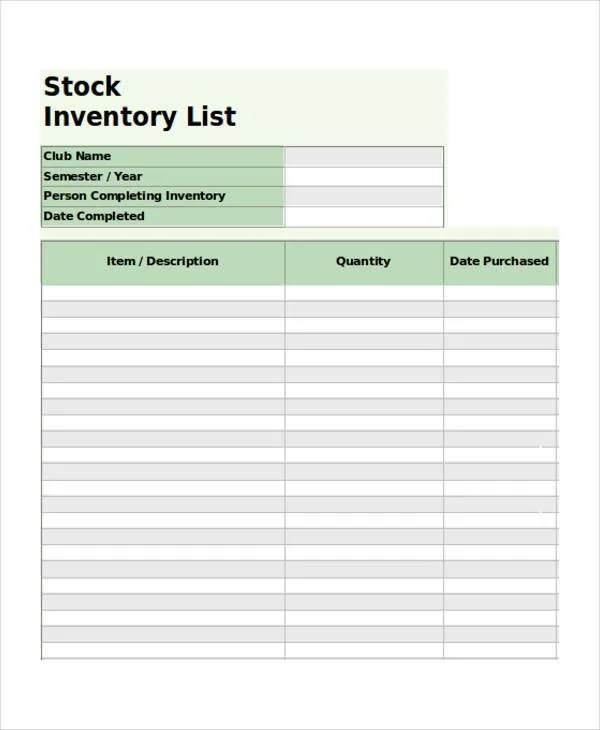
Here is an example of an inventory list that companies in recording their inventory often use:
“An accurate and up-to-date inventory list is the backbone of efficient operations. It ensures full visibility over stock levels, minimizes costly errors, and enables data-driven decisions that improve order fulfillment and profitability.”
— Angela Tan, Regional Manager
Conclusion
Inventory data recording using an inventory list is an important thing for a company. In addition, this data recording can give a company several benefits. One of them is providing convenience for a company in controlling their goods or property. In today’s digital era, a company can do a digitalization in inventory data recording with system inventory.
As a leading ERP provider company in Indonesia and Singapore, HashMicro provides convenience for companies in compiling a digital inventory list using Inventory Management Software.
Integrating the Inventory System with the Purchasing system to help you plan inventory costs, control the procurement of goods, and manage orders better. Many companies are choosing HashMicro to increase their operational efficiency, especially in inventory data recording. Contact us to get the best offer and a free demo.
Related article: Inventory App Singapore – EQUIP from HashMicro

Question About Inventory List
A skills inventory list is a detailed record of the skills, competencies, and qualifications possessed by employees within an organization. It helps businesses identify available expertise, plan training programs, and allocate resources effectively.
A portfolio inventory list is a comprehensive catalog of projects, assets, or products managed by an individual or organization. It provides an overview of current and past initiatives, helping track progress, performance, and resource allocation.
What are the five stages of the inventory management process? To create an inventory sheet, follow these steps: • Identify the items to be tracked (e.g., products, assets, or skills). • Organize them into categories for easier management. • Record details such as quantity, location, value, or description. • Use tools like spreadsheets or inventory management software to maintain and update the list regularly.