







Are you struggling to keep track of your products as they move from raw materials to fully sellable items? Unsure how to categorize and manage stock to maximize profit and efficiency? These are common concerns for businesses navigating inventory.
Products that have completed the production process and are ready for sale are essential to manage. Unlike raw or semi-completed products, which still require work, these items are market-ready and their management is vital to operations, sales, and customer satisfaction.
This article will cover the meaning of these products, explain key steps in managing them, and show how tools like HashMicro’s inventory software provide effective solutions for businesses.
Key Takeaways
Finished goods are products ready for sale after production, crucial for efficient stock management. Proper inventory management prevents stockouts, reduces costs, and boosts profitability.
Finished goods vary by purpose, user, and lifespan, impacting production and distribution strategies. These include consumer, industrial, perishable, and durable goods.
Turning raw materials into finished goods involves five steps: categorizing inventory, ensuring quality, tracking stock, organizing storage, and planning distribution to meet demand.
HashMicro streamlines finished goods management with real-time tracking, reducing stockouts and excess inventory while improving efficiency and minimizing manual work.
What are Finished Goods?
These items are those that have completed the entire production process and are now fully prepared for customers. They have moved from raw materials to semi-completed products, which are now ready for sale and represent a critical business asset.
The finished goods meaning is crucial in inventory management, distinguishing items ready for sale from those still under production. This classification helps businesses manage stock efficiently and optimize sales and storage.
Properly managing this inventory is essential for companies to meet customer demand and effectively manage resources. Without clear practices, businesses risk losing sales and facing excess costs.
Why is Finished Goods Important?
Effective management ensures products are available to customers when needed, preventing stockouts that can lead to missed sales and disappointed customers. Reliable inventory management also helps optimize storage costs.
Managing these items is also vital for accurate financial tracking. By knowing the cost of goods sold and holding the right inventory levels, businesses can maximize profitability and align production with customer demand.
For companies in Singapore, efficient management is key to maintaining competitiveness, reducing costs, and enhancing customer satisfaction, directly impacting the business’s bottom line.
Finished Goods Types and Examples
Finished goods vary by purpose, user, and lifespan, affecting production, marketing, and supply chain management. Understanding these types helps businesses optimize production and distribution strategies.
1. Consumer goods
Ready-to-use items for consumers, like electronics and clothing. These goods fulfill immediate needs, generate quick revenue, and are influenced by trends and market demand.
2. Industrial goods
Products purchased by businesses to support operations, such as machinery and equipment. Industrial goods are long-term investments that enhance productivity and typically have a longer purchasing cycle.
3. Perishable goods
Time-sensitive products like food and pharmaceuticals. Effective stock management and rapid distribution are essential to maintain quality and avoid losses from expired products.
4. Durable goods
Long-lasting items, such as furniture and vehicles, are intended for years of use. These goods involve a longer sales process and provide ongoing revenue through after-sales services.
5 Steps to Finished Goods
Turning raw materials into finished goods involves key steps to ensure quality, accuracy, and readiness for sale. By following these steps, businesses can manage inventory efficiently and meet customer demand.
1. Categorize inventory
Separate finished goods from raw and semi-finished goods to streamline tracking and management and ensure accurate inventory counts and availability.
2. Implement quality control
Before classifying items as finished goods, verify they meet quality standards to maintain high customer satisfaction and reduce returns.
3. Track stock levels
Use reliable manufacturing software to monitor raw material stock levels in real time. This enables businesses to respond swiftly to changes in demand, ensuring that production can adjust accordingly without delays or shortages.
4. Organize storage
Ensure finished goods are stored well-organized, easily accessible for faster order fulfillment and optimized space usage.
5. Plan for sales & distribution
Develop efficient plans to distribute finished goods, helping to meet customer demand quickly and prevent stock buildup.
Finished Goods Inventory Formula
The finished goods inventory formula helps businesses calculate their available stock, essential for managing sales and production.
Formula Finished Goods Inventory:
Starting Inventory + Cost of Goods Manufactured – Cost of Goods Sold
This formula gives an accurate inventory picture, enabling businesses to assess if they need to ramp up production or adjust purchasing. This insight is crucial for planning and resource allocation.
Using this formula with manufacturing software provides real-time insights for Singaporean businesses, allowing for precise stock management, faster response to demand changes, and improved financial control.
Example Format for Finished Goods Inventory Tracking
Tracking finished goods inventory helps businesses keep track of products that are ready to sell but haven’t been sold yet. Here’s an simple of how this tracking can be structured:
| Month | Starting Inventory ($) | Made This Month ($) | Sold This Month ($) | Ending Inventory ($) |
|---|---|---|---|---|
| January | 15,000 | 50,000 | 40,000 | 25,000 |
| February | 25,000 | 40,000 | 30,000 | 35,000 |
| March | 35,000 | 60,000 | 50,000 | 45,000 |
| April | 45,000 | 30,000 | 20,000 | 55,000 |
Columns Explained:
- Month: The month you are tracking the inventory for.
- Starting Inventory: The value of the finished goods at the start of the month (from the previous month).
- Made This Month: The total cost of the goods produced during the month.
- Sold This Month: The total cost of the goods sold during the month.
- Ending Inventory: The remaining value of finished goods at the end of the month. You calculate it using the ending inventory formula like this:
Ending Inventory = Starting Inventory + Made This Month − Sold This Month
Let’s say we’re looking at January:
- Starting Inventory (Jan 1) = $15,000
- Made This Month (January) = $50,000
- Sold This Month (January) = $40,000
To find the Ending Inventory for January = $15,000 + $50,000 − $40,000 = $25,000
So, by the end of January, you will still have $25,000 worth of finished goods.
Common Problems in Finished Goods Inventory Management
Inventory management of finished goods is critical for manufacturing or selling products. However, businesses often face challenges that can disrupt operations and impact profitability. Below are some common issues in finished goods inventory management and how they affect businesses.
1. Overstocking
Overstocking
Overstocking occurs when businesses order or produce more goods than they can sell. This leads to excess inventory, which ties up cash and increases storage costs. Additionally, products may become obsolete or spoiled. Impact: Higher storage costs, wasted products, and reduced cash flow.
2. Inaccurate inventory records
Manual errors or outdated tracking systems can cause discrepancies between actual stock and recorded inventory. This makes it difficult to track inventory movements and can lead to ordering mistakes. Impact: Inefficient purchasing decisions, overstocking or understocking, and delays in fulfilling orders.
3. Poor demand forecasting
When demand is misjudged, businesses may either overstock or understock their inventory, leading to inefficiencies in both production and sales. Impact: Excess inventory or shortages, disrupted production schedules, and decreased customer satisfaction.
4. Inefficient warehouse management
Poorly organized warehouses can result in misplaced stock, delays in order fulfilment, and increased labour costs. Disorganization slows down the entire inventory process. Impact: Increased operational costs, delayed shipments, and customer dissatisfaction.
5. Lack of real-time tracking
Without real-time tracking, businesses struggle to maintain accurate stock counts and make timely decisions. Manual or outdated systems lead to mistakes in ordering and inventory management. Impact: Poor decision-making, difficulty responding to market changes, and inaccurate financial reporting.
Finished Goods in Accounting
These products are considered current assets in accounting, as they are ready for sale. Accurately tracking their value is essential for maintaining profitability and managing cash flow.
These items’ costs include direct materials, labor, and manufacturing overhead. Proper accounting of these costs helps businesses determine profit margins and set appropriate prices.
For businesses in Singapore, understanding how to manage these items in accounting is crucial for ensuring accurate financial records and making informed business decisions.
Are you looking for inventory management in Singapore? We have the solution! Our advanced inventory management tools help optimize finished goods tracking, ensuring accurate financial reporting and efficient operations.
Finished Goods Management with HashMicro Inventory Software
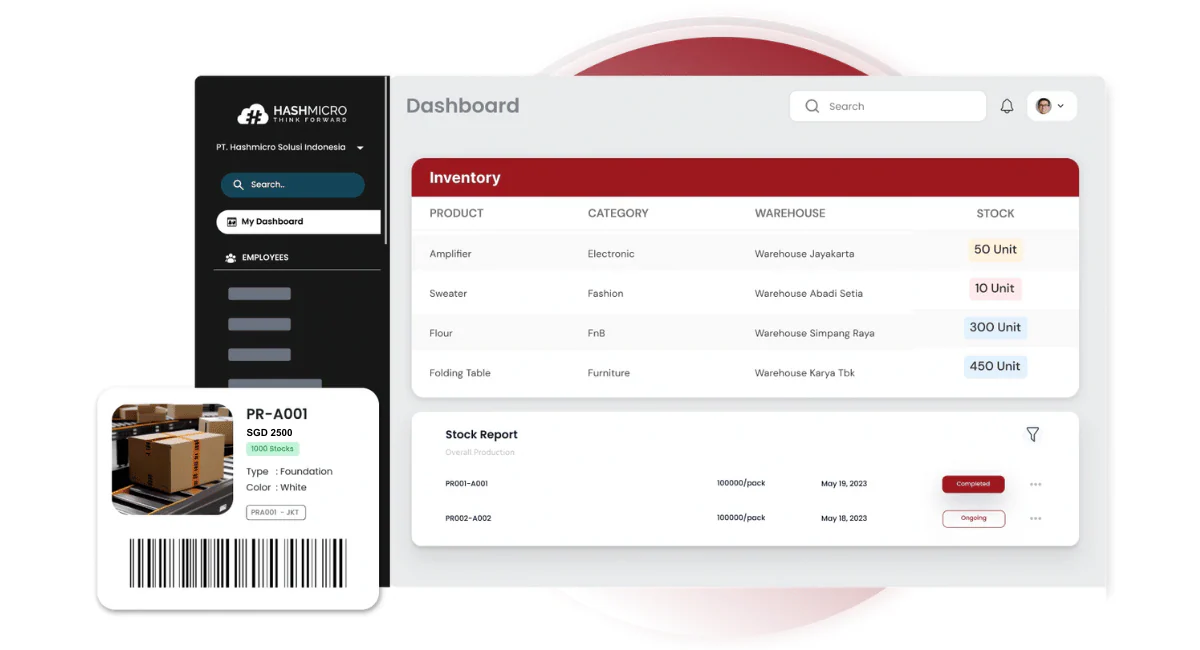
HashMicro is suitable for businesses looking to improve inventory management. The software offers real-time tracking, helping companies maintain accurate data on stock levels and reduce the risk of stockouts and excess inventory.
For Singaporean businesses, HashMicro’s inventory management software helps track finished and semi-finished goods, enhancing operational efficiency. Automated inventory tracking minimizes manual work, allowing teams to focus on growth strategies.
Features:
- Barcode Management: Efficiently manage inventory and track stock movement across multiple locations quickly and accurately.
- Lot and Serial Number Tracking: Automatically generate lot and serial numbers for easier product tracking in every warehouse.
- Stock Request Management: Streamline stock requests across all outlets or warehouses with automated approval workflows.
- Inventory Forecasting: Predict the amount needed during specific future periods to meet demand.
- Inventory Valuation: Quickly evaluate inventory across all warehouses at the end of each reporting period.
- Stock Aging Analysis: Analyze stock age and assess slow- and fast-moving items to optimize future stock levels.

Conclusion
Managing inventory efficiently is crucial for businesses looking to maximize profits and meet customer demand. With accurate categorization and streamlined tracking, effective inventory management can significantly improve business performance.
HashMicro offers an effective solution for companies in Singapore. It automates inventory tracking, ensuring optimal stock levels and reduced costs.
Try a free demo of HashMicro’s inventory software today and discover how it can transform your finished goods management, supporting smarter business decisions and sustained growth.

FAQ
Some examples are cars, furniture, clothes, and smartphones.
This refers to items that have been produced and are ready to be sold.
A good that is only partially completed during manufacturing is called “work in process”. Once fully manufactured but not yet sold or distributed, it is considered a “finished good”. This term is relative.
These materials have received the final increments of value through manufacturing or processing operations, and are held in inventory for delivery, sale, or use.