








A barcode inventory system helps businesses track stock movements, update inventory records, and identify products more efficiently. By scanning barcode labels instead of entering data manually, employees can reduce recording errors and maintain more accurate stock information. However, the system’s effectiveness depends on how well barcode tracking is implemented and integrated into daily inventory processes.
For businesses looking to improve inventory management, understanding how barcode tracking works is an important first step. From choosing the right barcode types to applying them across warehouse operations, the right approach can improve stock visibility, speed up inventory tasks, and help prevent discrepancies that disrupt business activities.
Also read: Advantages of Integrating Inventory Management Software with Your Construction Business

Key Takeaways
Barcode inventory systems use labels, scanners, and software to track products, locations, stock counts, and supply-chain movements with less manual entry.
Inventory systems with barcode scanners connect identifiers, software, and hardware to update stock, sales, and movement data in real time.
Benefits of barcode inventory systems include better stock control, forecasting, fewer errors, higher accuracy, and clearer warehouse visibility.
Barcode inventory best practices include regular maintenance, continuous staff training, secure backups, and routine support for reliable scanning.
What Is a Barcode Inventory System?
A barcode inventory system uses barcodes, scanners, and software to track products as they move through a warehouse, store, or supply chain. Each scan records an item without anyone typing in a single digit.
A scan reveals far more than a price. It can bring up the item name, specifications, exact location, and current stock count, and it can even show whether other sites hold the same product or a shipment is on its way.
Barcodes come in two main kinds. One-dimensional codes such as UPC and EAN carry a small amount of data, while two-dimensional codes hold more, stay readable when damaged, and need a camera to scan.
Many local teams pair scanning with inventory management software in Singapore so that every location reports into one stock record.
How Does an Inventory System with a Barcode Scanner Work?
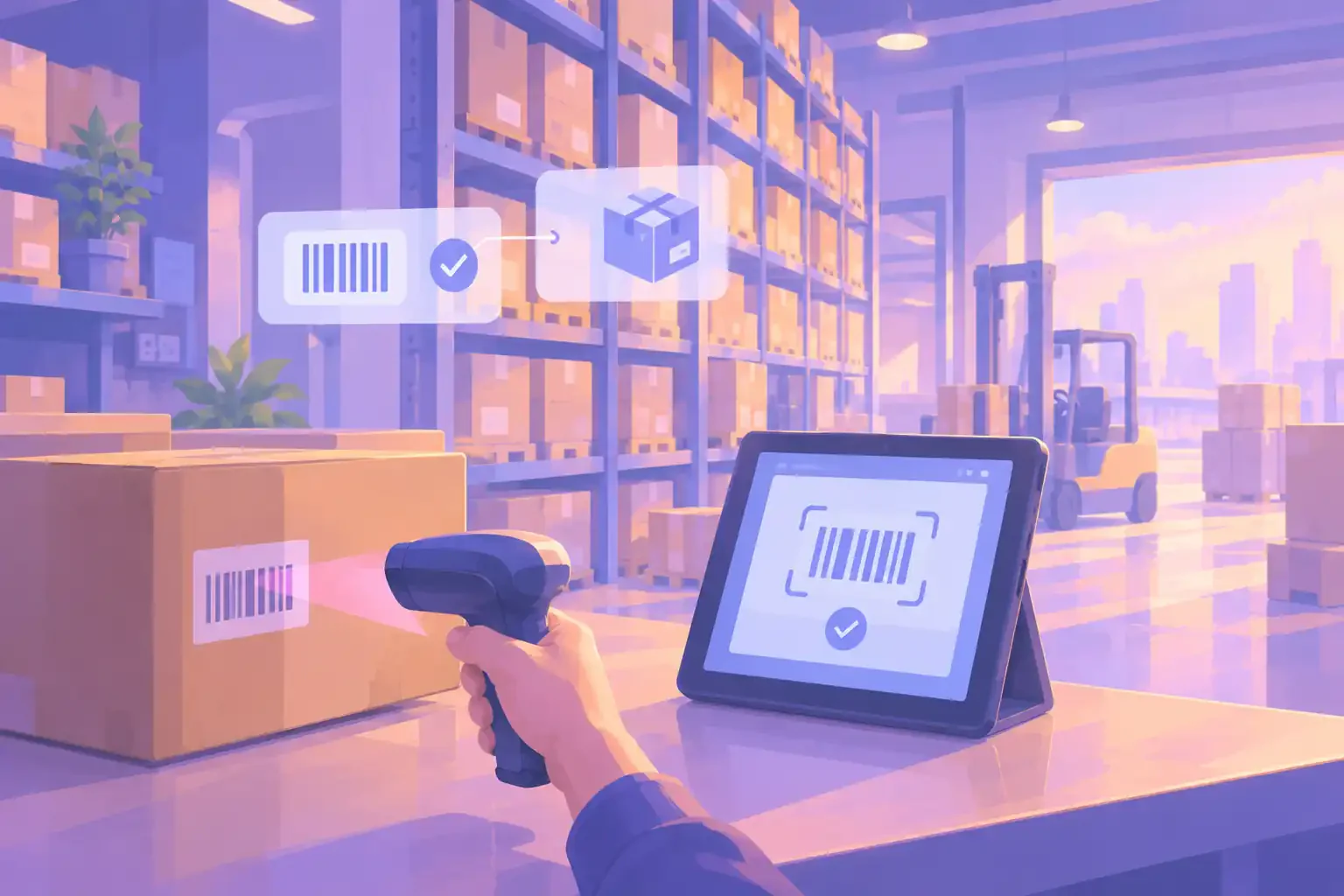
An inventory system with a barcode scanner relies on three parts working together: the barcodes, the software, and the scanning hardware. Each scan updates the stock record as it happens.
- The barcode is a unique identifier printed on each product, linking it to its stored details.
- The software stores and decodes that information, then reports on stock levels, sales, and movement. It should also sync with an ERP or warehouse management system to keep counts consistent.
- Dedicated scanners work well, and smartphones or tablets with cameras can do the job too, giving staff more mobility and real-time access to data.
Options such as inventory software for Singapore businesses differ in how they handle scanning, so confirm that the barcodes, scanners, and software all work with one another before committing.
Benefits of Barcode Inventory Systems
Improving Inventory Stock Control
To keep up with the process, if your inventory is expanding quickly, you must understand how to build a barcode system for the list. A barcode system is essential if you struggle to accurately keep track of the quantity and placement of your inventory.
By avoiding needless restocking and product loss, a barcode inventory system will also reduce waste. Implementing a barcode system will make managing expansion much easier for you if keeping up with your business’s growth feels like an insurmountable task—whether owing to too many locations or items.
Also read: Important Points for How to Choose an Inventory Tracking System
Stock Forecasting

Having a stock count that is as accurate as feasible is the basic objective of a barcode inventory system. Automation is used in this process to guarantee that information is logged in real-time as goods move through the whole supply chain.
Barcode inventory systems employ barcode software to create distinctive labels that are affixed to inventory items and scanned to provide precise stock data. Businesses utilize a variety of barcodes and barcode scanners to achieve a variety of goals, whether they want to update their barcodes as rarely as possible or scan them up to two feet away.
A barcode inventory system can be helpful for companies of all sizes. A barcode inventory system can be especially useful as a firm expands because stock may need to be transported throughout a warehouse or between several sites.
All of the tasks are carried out by all inventory systems to track assets, alert users when supply levels are low, and improve inventory security are automated by a barcode system. Companies may worry less about inventories and concentrate more on production and delivery thanks to this laissez-faire attitude.

Reducing Error
People become weary and preoccupied. Mainly if they are busy. The same applies to your selection team. Your pickers will make mistakes if you depend on them to choose the right thing each time. Errors result in incorrect picks and delivered goods to customers. Barcoding your products can have a huge impact on high-volume days like Black Friday, as you can see in the video below, which is an excerpt from our most recent Black Friday webinar.
For instance, a typical circumstance that organizations encounter is:
- Pickers make mistakes (which wastes time)
- A client receives the wrong thing (which frustrates them)
- After that, a customer support representative must interact with the client and fix the error (so more lost time and either a refund or replacement)
Using a barcode inventory system, the scanner verifies that the item being selected is the right one. Making it simpler to choose the appropriate item regardless of how exhausted or busy they are. Therefore, the scenario described above is not necessary.
Also read: Best Practices for ERP Management System
Stock Accuracy
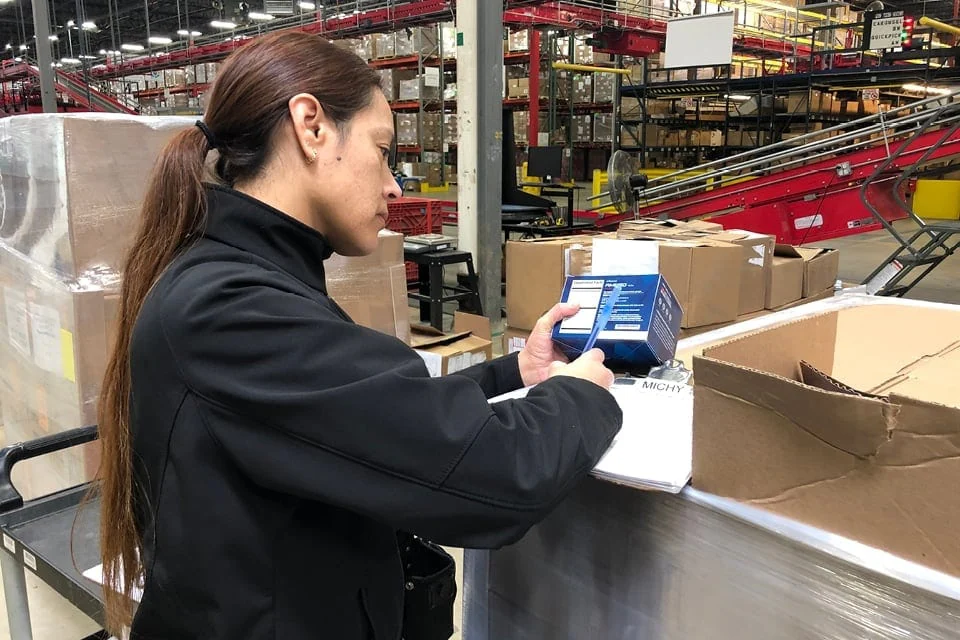
Any eCommerce business has to be able to track its inventory at all times. Along with lowering overselling and understocking, it also assists in creating a thorough audit trail for all of your inventory.
To keep a closer check on how things move inside the barcode system, some businesses utilize warehouse management software (WMS). Additionally, WMS enables businesses to manage their warehouse staff, retrieve data from many locations, plan shipment procedures, and more.
Best Practice of Barcode Inventory System
A barcode setup still needs people and routines behind it. A few steady habits keep the system accurate long after launch.
Regular System Maintenance and Updates
Whether you run a scanner app or a full inventory management system for Singapore companies, schedule monitoring and updates monthly or quarterly, and no less than twice a year. Routine checks catch small faults before they grow.
Continuous Employee Training and Support
Training belongs in onboarding and should continue as features or equipment change. Modern scanning tools are easier to pick up, with intuitive screens and the ability to read damaged codes, so staff spend less time in the classroom and more time on the floor.
Data Security and Backup Strategies
Protecting stock data is a priority for most businesses. Back up the system on a regular basis so that an unexpected fault does not wipe out your records.
Conclusion
In conclusion, accurate information is crucial for your company’s asset management and inventory management processes. Systems with barcodes are dependable and economical. Barcode systems can adjust to company regulations which ensures the accurate availability data.
After calculating the ERP software pricing scheme, you can choose the right ERP vendor. Tell us about your type of business and industry and we will offer you the best business solutions. If you want to get a free demo of our tour product, click here!

FAQ
Each item carries a unique barcode. A scanner reads it and the software updates the stock record, so quantity, location, and movement stay current without manual entry.
Common choices include UPC and EAN for retail items, plus Code 128, Code 39, and QR codes. The right one depends on how much data you need to store and where scanning happens.
A 1D barcode holds a small amount of data and can be read by a laser scanner or a camera. A 2D barcode holds more data, can still be read when damaged, and needs a camera to scan.
Barcodes cut manual data entry, show stock levels and locations in real time, and make every item traceable. That helps reduce errors, excess stock, and losses.
It improves stock accuracy, reduces picking mistakes, supports audits and reconciliations, and scales as the business adds items or locations.
Choose a compatible scanner and inventory software, decide on a barcode type, generate and print the labels, attach them to your stock, and train your team before going live.