




Metal manufacturing in Malaysia covers a wide range of operations, from structural steel fabrication to precision component machining. Yet most businesses still manage production costs, cutting schedules, and material tracking through disconnected spreadsheets. For fabrication-heavy shops, the operational stakes are higher: every job requires nesting optimization, accurate scrap accounting, and job-level costing from raw sheet through finished part.
According to MIDA’s overview of Malaysia’s fabricated metal products industry, the sector plays an important role in supporting manufacturing and services. This makes operational control critical, especially when inventory, production planning, costing, and quality checks are still handled through disconnected systems.
For companies running plasma cutters, laser cutting machines, or CNC press brakes, a standard manufacturing ERP often covers inventory and procurement but falls short on fabrication-specific requirements — CAD file integration, per-cut-job costing, and real-time material nesting. The 15 best software for metal manufacturing in Malaysia for 2026, reviewed here, are assessed on both their core manufacturing capabilities and their fit for metal fabrication operations in Malaysia.
, reviewed here, are assessed on both their core manufacturing capabilities and their fit for metal fabrication operations in Malaysia.
For companies running plasma cutters, laser cutting machines, or CNC press brakes, a standard manufacturing ERP often covers inventory and procurement but falls short on fabrication-specific requirements — CAD file integration, per-cut-job costing, and real-time material nesting. The 15 platforms reviewed here are assessed on both their core manufacturing capabilities and their fit for metal fabrication operations in Malaysia.

Key Takeaways
Metal manufacturing software is a specialized ERP system that manages metal fabrication production, inventory, resources, and quality processes.
ERP helps metal manufacturers improve production control, resource use, inventory accuracy, planning, and overall operational visibility in one system.
Choose the right ERP by evaluating cost, usability, industry-specific features, integration options, and vendor support.
Top Picks Metal Manufacturing ERP Software

Best Because
Best for discrete, make-to-order, and mixed-mode manufacturers that need advanced planning, real-time process monitoring, and IoT-enabled equipment visibility.


Best Because
Best for manufacturers already using Microsoft tools that need connected finance, inventory, production, sales, and reporting in one ERP system.
Best Because
Best for large-scale metal manufacturers that need enterprise finance, risk management, global supply chain, manufacturing modules, AI capabilities, and OCI integration.

Best Because
Best for small to midsize manufacturers that need a flexible cloud ERP with real-time dashboards, industry-specific editions, customization, and no per-user fees.
What is Metal Manufacturing ERP?
ERP for metal manufacturing integrates core business processes such as production planning, inventory control, procurement, and quality management. This ERP software streamlines operations, reduces inefficiencies, and ensures consistent product output.
Metal fabricators, manufacturers, and suppliers rely on this software to manage complex operations across departments. In regulated environments, the same capabilities extend to nutraceutical manufacturing software for compliance, enabling teams to work seamlessly with real-time data.
What Metal Fabricators Need Beyond Standard ERP Features?
Manufacturers need industrial metal production processes software with essential features that directly support daily operations and production requirements. Here are the essentials every system must include for smooth integration.
- Machine Brands and Post Processors: Without native integration to machines already on the shop floor, cutting parameters must be re-entered manually — a direct source of production errors and job delays.
- Budget Focus vs. Long-Term Investment: Sticker price rarely reflects total cost of ownership. Implementation fees, per-user licensing, training, and fabrication-specific customisation all add up, and shops that choose based on upfront cost alone frequently encounter cost escalation between months 12 and 18.
- Local Support and Training: For fabrication shops in Malaysia, vendors with remote-only offshore support create real operational risk. Shop floor staff interact with the system daily, so training must cover their working language — ask vendors directly: how large is their Malaysia team, and what is their average support response time?
- Team Technical Know-How: Assess internal IT capability before committing to a platform. Fabrication shops with limited IT capacity need an ERP that is intuitive for production planners and floor supervisors, and vendors should be evaluated on the depth of training included in the contract.
- Quality control & compliance management: Fabrication operations rarely stay static — adding product lines or scaling order volume requires a system that can grow with the business. Key indicators include modular pricing, workflows configurable without developer involvement, and an active vendor product roadmap.
CAD File Format Support: Direct DXF/DWG/STEP import into job planning eliminates re-entry of dimensions from technical drawings, which is one of the biggest sources of error and wasted time in fabrication workflows.
- Accuracy, Reliability, and Updates: A BoM variance of even 2–3% is enough to trigger material shortages or cost overruns on large jobs; vendors with slow or opaque update cycles turn accuracy into an ongoing operational risk.
Quick Comparison of Best ERP Software for Metal Manufacturing
| ERP Software | Best For | Strength | Key Features | Pros | Cons |
|---|---|---|---|---|---|
| HashMicro | Large manufacturers seeking an all-in-one ERP with advanced production management | AI-powered platform with comprehensive manufacturing, inventory, and cost control capabilities | Multi-level BoM, production cost tracking, quality checks, subcontractor management, master production scheduling, OEE reporting | Unlimited users, seamless integration, customizable modules, transparent pricing, ongoing support | Comprehensive functionality may be more suitable for larger operations |
| ECI Ridder iQ | Make-to-order, engineer-to-order, and configure-to-order manufacturers | Manufacturing-focused ERP with strong planning and traceability tools | Graphical production planning, multi-level BOM, deep traceability, document management | Modular, scalable, cloud-based, comprehensive BI dashboards | Complex implementation, higher customization costs, steep learning curve |
| Epicor Kinetic | Discrete and mixed-mode manufacturing companies | Strong production planning, supply chain visibility, and IoT integration | Advanced planning & scheduling, equipment monitoring, process monitoring, IoT connectivity | Highly customizable, hybrid deployment, advanced analytics | Complex implementation, steep learning curve, significant investment |
| Fulcrum Manufacturing Cloud | SMEs wanting ERP, MRP, and MES in one SaaS platform | Easy-to-use cloud solution with AI-powered scheduling | Autoschedule, live job tracking, visual BOM & routing, paperless workflow | Rapid implementation, intuitive UI, responsive support, no per-user pricing | Limited invoicing features, occasional slow loading times |
| Genius ERP | Custom manufacturers needing engineering-to-production visibility | Combines estimating, engineering, planning, and analytics | CAD2BOM, smart scheduling, inventory management, analytics dashboards | Easy interface, strong visibility, industry recognition | Manual overhead setup, limited support for complex sales workflows |
| Cetec ERP | Small to midsize manufacturers seeking affordability | Browser-based ERP with integrated quality and inventory management | Mobile warehousing, document management, alternate parts tracking, dashboards | Transparent pricing, intuitive platform, responsive support | Limited customization, training resources, and integrations |
| Microsoft Business Central | SMBs already using Microsoft ecosystem | Strong financial management with seamless Microsoft integration | Inventory costing, consolidation, custom reporting, workflow automation | Copilot AI, scalable cloud deployment, advanced reporting | Complex customization, weaker non-Microsoft integrations |
| EOXS ERP | Steel mills, service centers, and metal distributors | Purpose-built ERP for steel and metal industries | Inventory, production, CRM, finance, HR, AI-powered BI dashboards | Industry-specific, browser-based, competitive pricing | Limited API options, scalability less documented |
| Odoo | Businesses wanting a modular ERP ecosystem | Highly flexible and cost-effective business suite | Manufacturing, MRP, inventory, CRM, e-commerce, custom reports | Large ecosystem, modular deployment, free Community edition | Customization complexity, costs increase with add-ons |
| Oracle Cloud ERP | Large global enterprises | Enterprise-grade ERP with AI and risk management capabilities | AI/ML, financial management, supply chain, manufacturing modules | Comprehensive enterprise functionality, regular updates | Complex implementation, expensive for smaller firms |
Top 15 ERP Software for Metal Manufacturing
Choosing the right ERP depends on your industry needs, scale, and flexibility. Below are standout options and why each is a strong choice:
- HashMicro – AI-driven manufacturing ERP with real-time planning and integrated inventory, procurement, and quality control.
- ECI Ridder iQ – Built for manufacturing with CAD/PDM integration.
- Epicor Kinetic – Advanced planning with IoT-enabled connectivity.
- Fulcrum Manufacturing Cloud – Modern, AI-driven scheduling and job tracking.
- Genius ERP – CAD2BOM integration for custom manufacturers.
- Cetec ERP – Cloud-native, affordable, and fully browser-based.
- Microsoft Business Central – Deep Microsoft ecosystem integration.
- EOXS ERP – Cloud ERP for steel centers with inventory, production, finance, and quality control.
- Odoo – Modular ERP with MRP, inventory, quality, maintenance, and shop floor tools.
- Oracle Cloud ERP – Enterprise ERP for finance, procurement, supply chain, and manufacturing.
- Infor M3 – Industry-specific ERP with multi-site support and real-time analytics.
- MRPeasy – Browser-based ERP/MRP with BOM, production, inventory, MES, and reporting.
- RealSTEEL – Dynamics 365-based ERP with costing, dispatch, inventory, and shop floor integrations.
- Proalpha MKG5 – Custom fabrication ERP with CAD integration and shop floor data capture.
- Acumatica Cloud ERP – Cloud ERP with dashboards, customization, integrations, and no per-user fees.
Choosing the right ERP software for metal manufacturing can be the difference between struggling with inefficiencies and achieving seamless operations. To help you decide, here are the top 15 ERP software for metal manufacturing businesses.
1. HashMicro ERP for Manufacturing
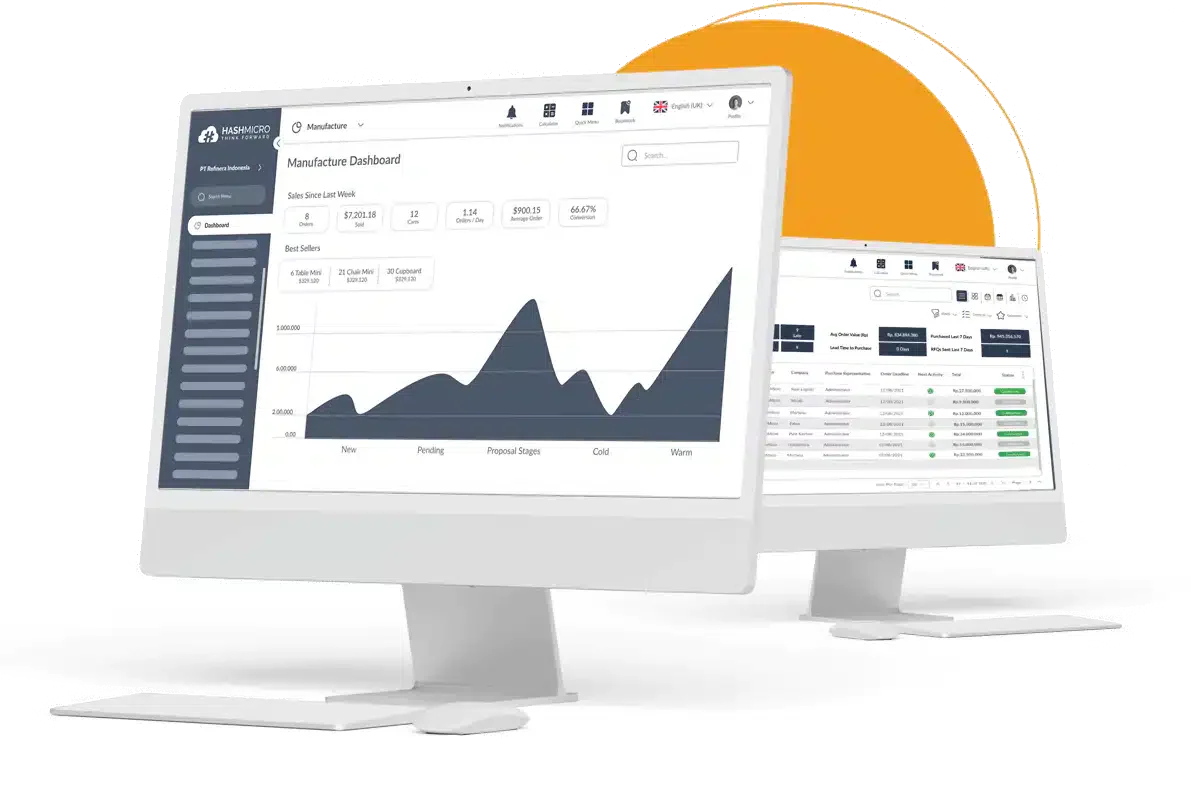
HashMicro Manufacturing Software is an all-in-one, AI-powered solution designed to optimize metal fabrication processes in Malaysia. Trusted by over 2,000 enterprises across the region, it helps overcome challenges such as resource mismanagement, production delays, and costly operational errors.
HashMicro’s key features include:
- Multi-level Bill of Material (BoM)
- Production cost tracking
- Comprehensive quality checks
- Manufacturing subcontractor management
- Master production schedule
- OEE reporting
| Pros | Cons |
|
|
HashMicro suits Malaysian metal manufacturers that need integrated production, inventory, costing, quality control, and reporting in one system.
Are you considering implementing HashMicro Manufacturing Software in your metal fabrication business? Click the banner below to discover the available pricing options.
2. ECI Ridder iQ
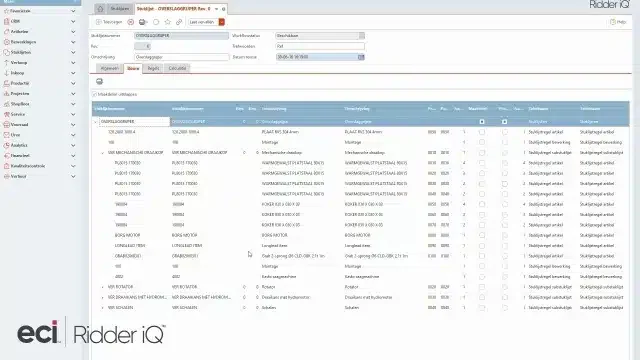
ECI Ridder iQ is a metal stamping manufacturing platform tailored for manufacturing, especially in make-to-order, engineer-to-order, and configure-to-order environments. It integrates key operations and real-time analytics into one unified system.
ECI Ridder iQ’s prominent features include:
- Graphical production planning & scheduling
- Multi-level BOM management
- Deep traceability
- Smart document management
| Pros | Cons |
|
|
ECI Ridder iQ suits Malaysian manufacturers that need make-to-order planning, BOM control, traceability, and real-time visibility.
3. Epicor Kinetic
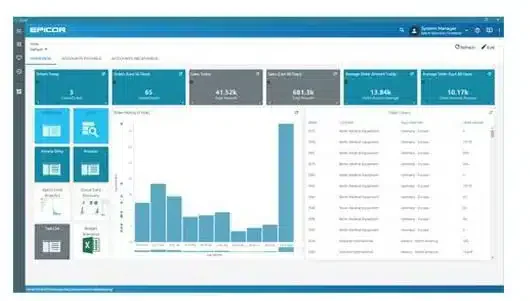
Epicor Kinetic is a metal stamping manufacturing ERP solution for manufacturers operating in discrete, make-to-order, and mixed-mode environments. It unifies production planning, supply chain, financials, and analytics into a single platform.
Epicor Kinetic’s prominent features include:
- Advanced planning & scheduling
- Real-time equipment
- Real-time process monitoring
- IoT-enabled connectivity
| Pros | Cons |
|
|
Epicor Kinetic suits Malaysian manufacturers that need advanced planning, real-time monitoring, supply chain visibility, and flexible deployment for discrete or mixed-mode production.
4. Fulcrum Manufacturing Cloud
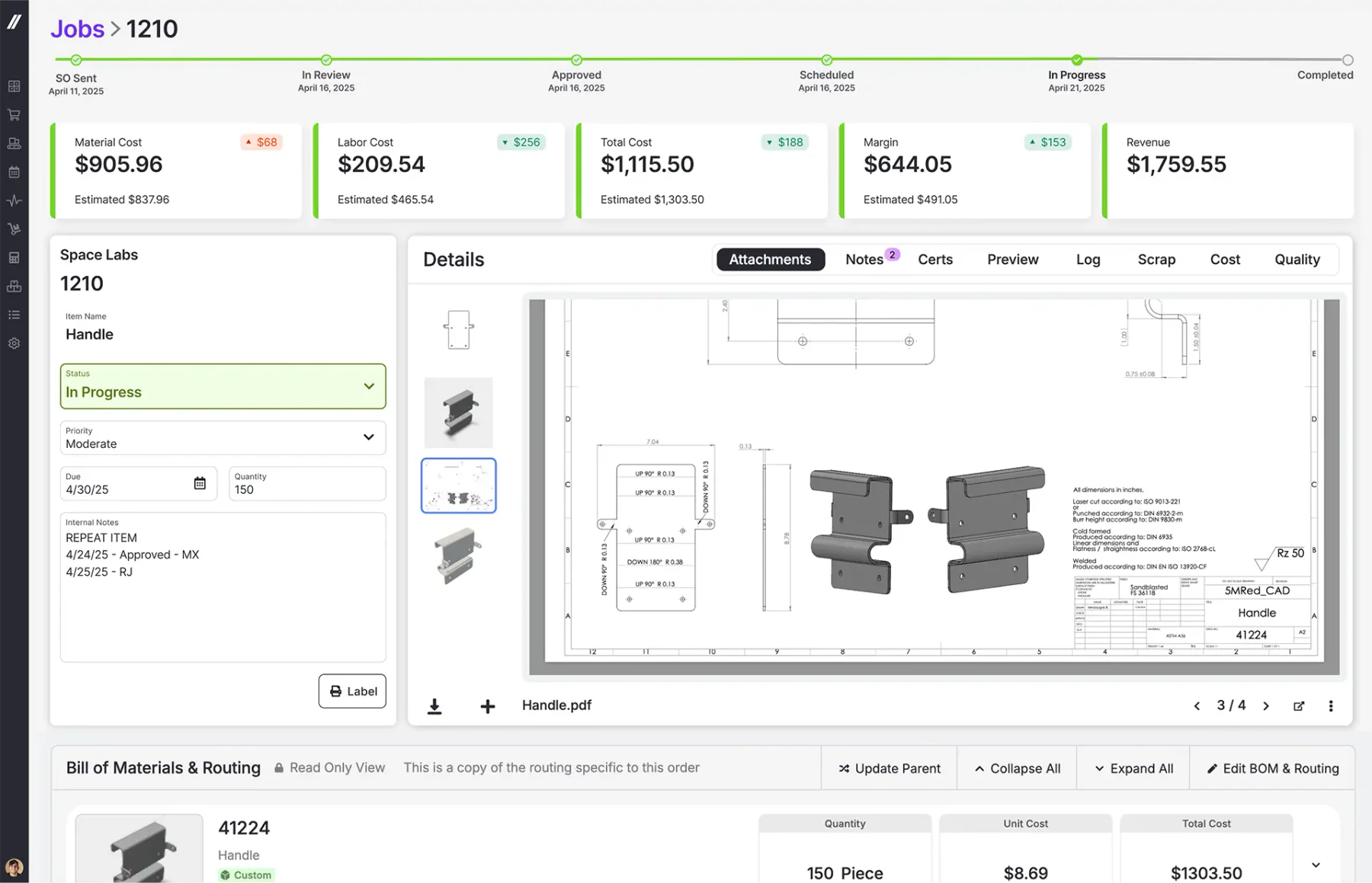
Fulcrum Manufacturing Cloud is a metal stamping manufacturing platform that unifies ERP, MRP, and MES functionalities into a single, intuitive SaaS solution. It replaces manual workflows with real-time dashboards and AI-powered scheduling to drive operational efficiency and simplicity.
Fulcrum Manufacturing Cloud’s prominent features include:
- Autoschedule
- Live job tracking
- Visual BOM & routing
- Paperless workflow
Pricing: Starts at $105.00.
| Pros | Cons |
|
|
Fulcrum suits Malaysian manufacturers that need simple cloud-based scheduling, live job tracking, visual BOM, and paperless shop floor workflows.
5. Genius ERP
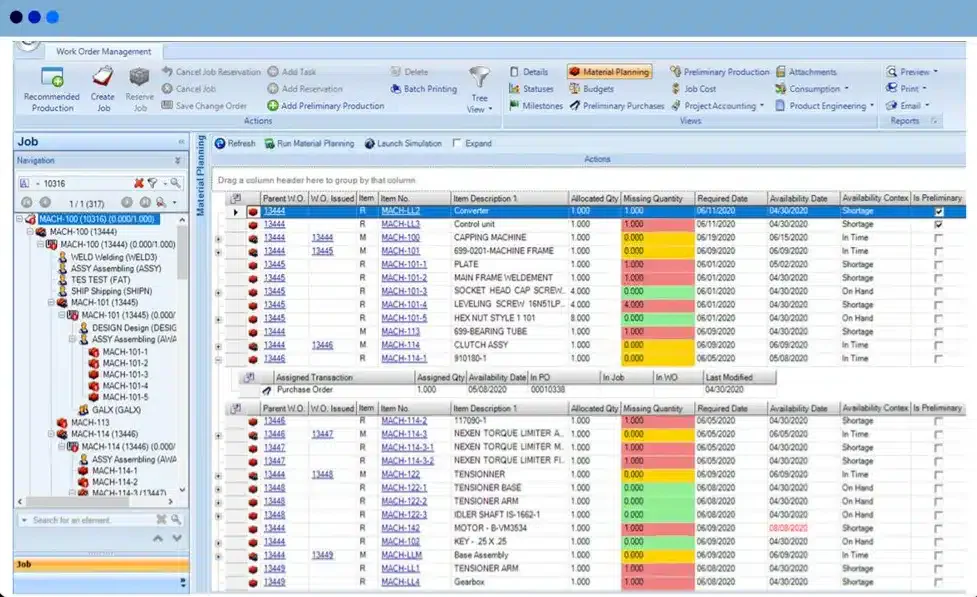
Genius ERP is a metal stamping manufacturing ERP solution for small to mid-sized custom manufacturers. It unifies functions like estimating, engineering, inventory, production planning, scheduling, financials, and CRM into one intuitive, all-in-one system.
Genius ERP’s prominent features include:
- CAD2BOM engineering
- Smart scheduling
- Inventory & purchase order management
- Genius analytics
Pricing: Starts at $3,000.
| Pros | Cons |
|
|
Genius ERP suits custom manufacturers needing CAD-to-BOM, scheduling, and inventory control.
6. Cetec ERP
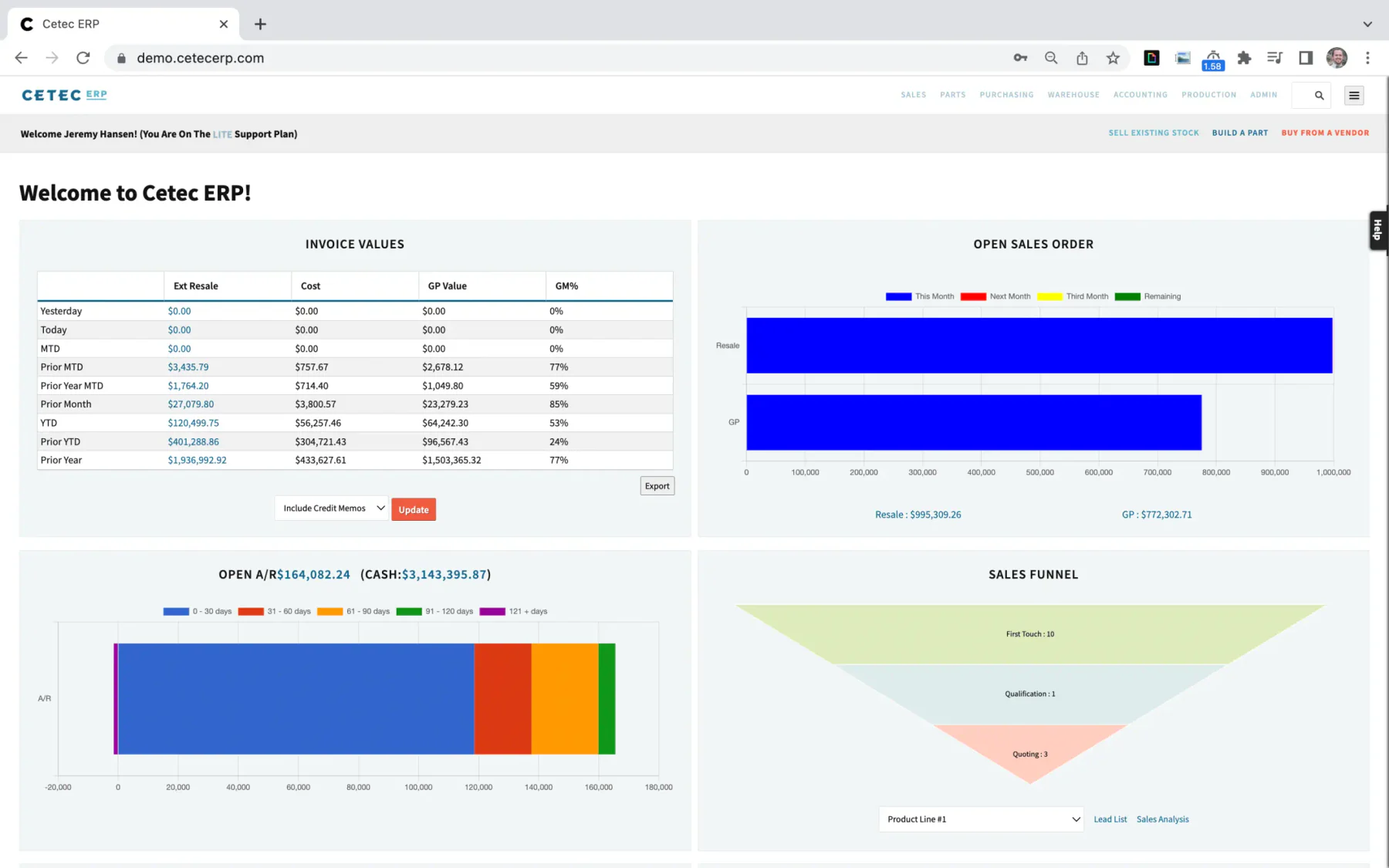
Cetec ERP is a sheet metal manufacturing ERP platform for small to mid-sized manufacturing businesses. It consolidates modules such as MRP, CRM, QMS, shop floor control, quality management, accounting, and document management.
Cetec ERP’s prominent features include:
- Mobile warehousing
- Integrated document management
- Alternate parts & part substitutions
- Custom reporting & dashboards
Pricing: Starts at $50.00.
| Pros | Cons |
|
|
Cetec ERP suits small to mid-sized Malaysian manufacturers that need browser-based MRP, shop floor control, quality management, accounting, and document tracking.
7. Microsoft Business Central
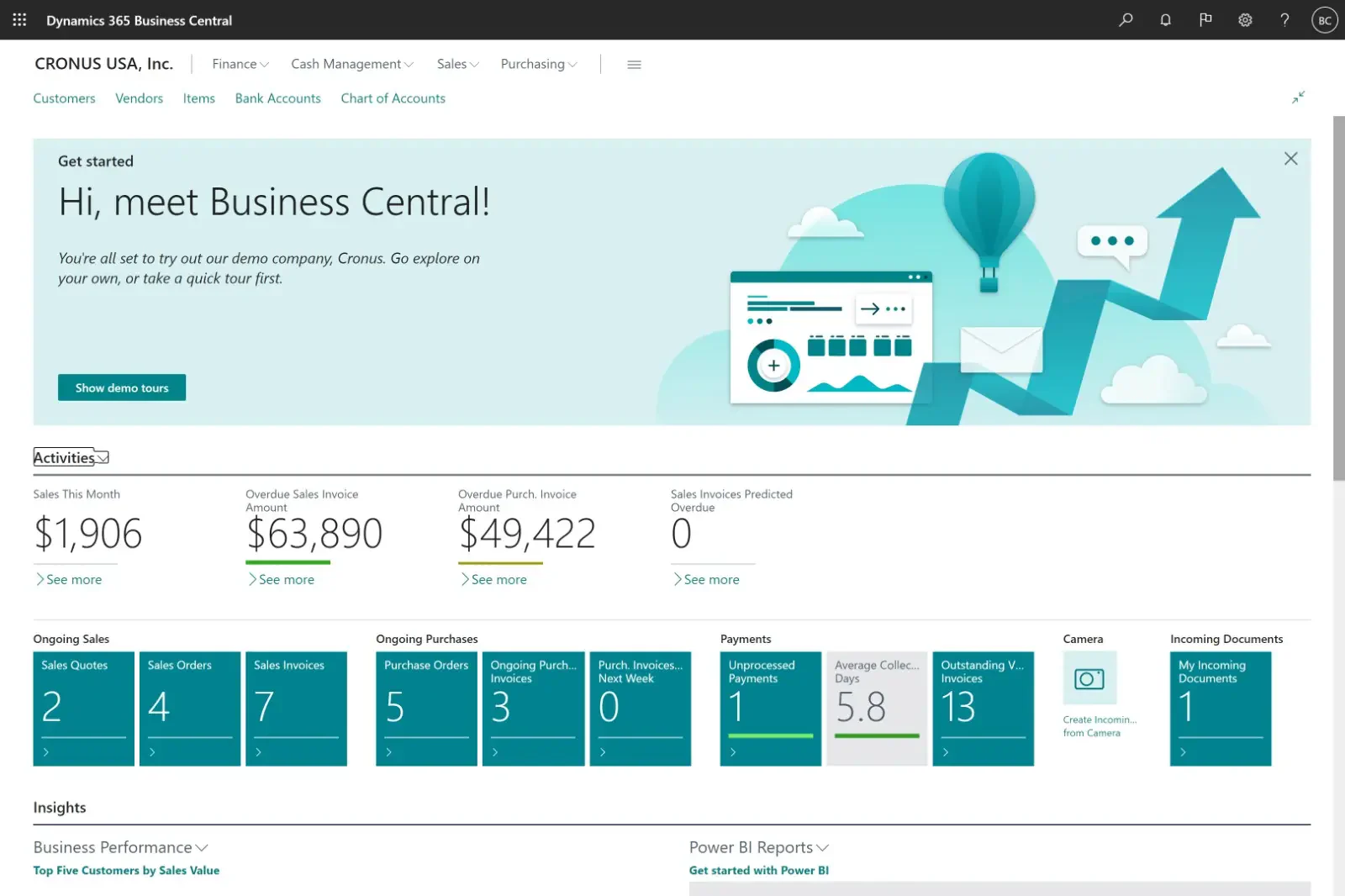
Microsoft Dynamics 365 Business Central is a sheet metal manufacturing ERP solution for small and medium-sized businesses. It integrates finance, sales, operations, and services in one unified platform that’s easy to configure and backed by AI capabilities like Copilot.
Business Central’s prominent features include:
- Inventory tracking & costing
- Multi-entity/consolidation
- Custom reporting & dashboards
- Workflow automation & access control
Pricing: Pricing starts at $8 per user/month, with Essentials at $70 and Premium at $100 per user/month for manufacturing features.
| Pros | Cons |
|
|
Microsoft Business Central suits manufacturers needing Microsoft-based finance, inventory, reporting, and cloud ERP.
8. EOXS Metal Manufacturing Software
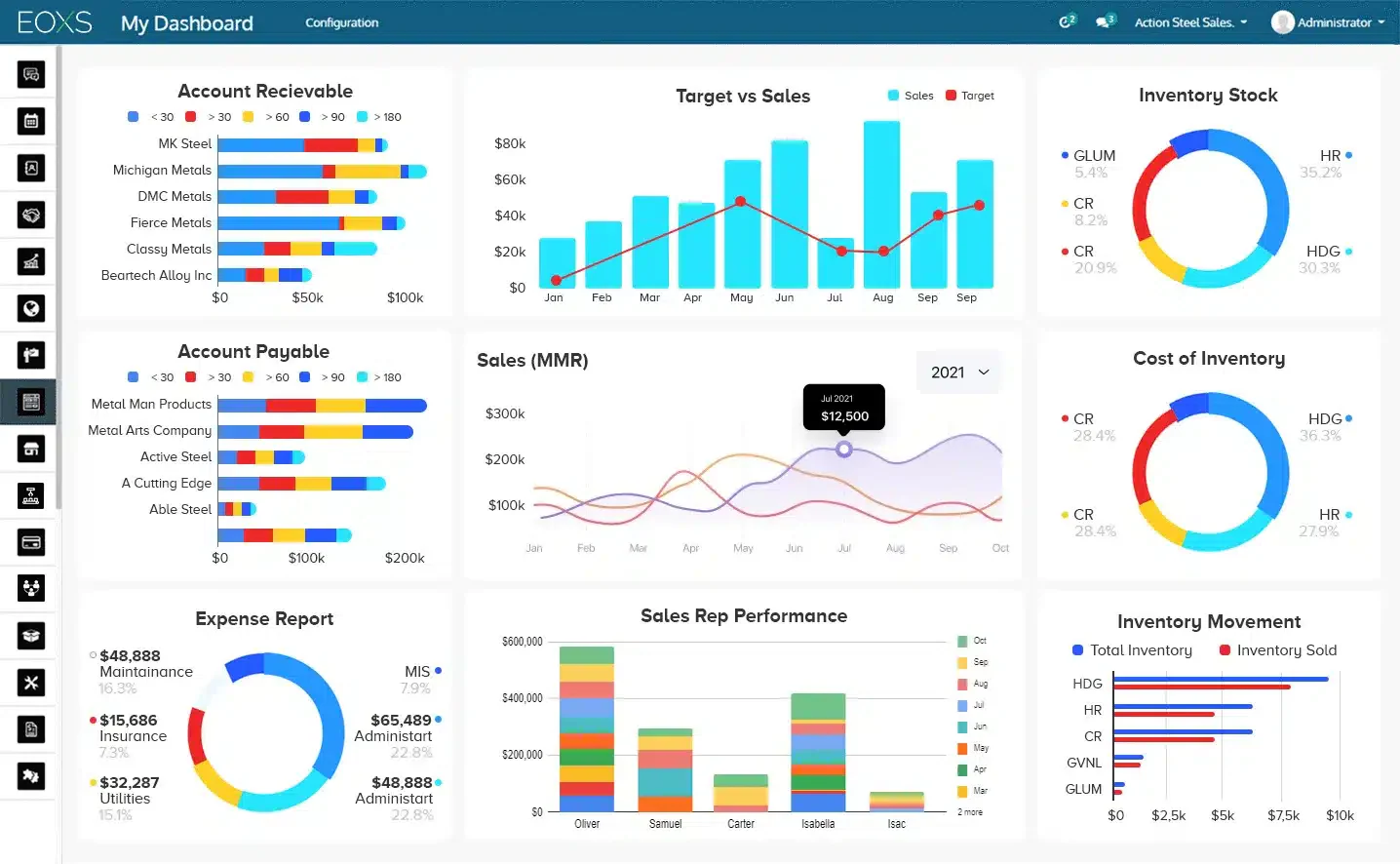
EOXS ERP is a metal fabrication manufacturing ERP solution for steel and metal businesses like service centers, tube mills, and metal distributors. It integrates key functions, such as inventory, orders, production, finance, and CRM, into a unified platform.
EOXS’s prominent features include:
- Inventory & production management
- CRM & sales pipeline
- Financial & HR modules
- AI-powered dashboards & BI
| Pros | Cons |
|
|
EOXS suits Malaysian steel and metal businesses that need browser-based inventory, production, sales, finance, and BI in one industry-focused system.
9. Odoo
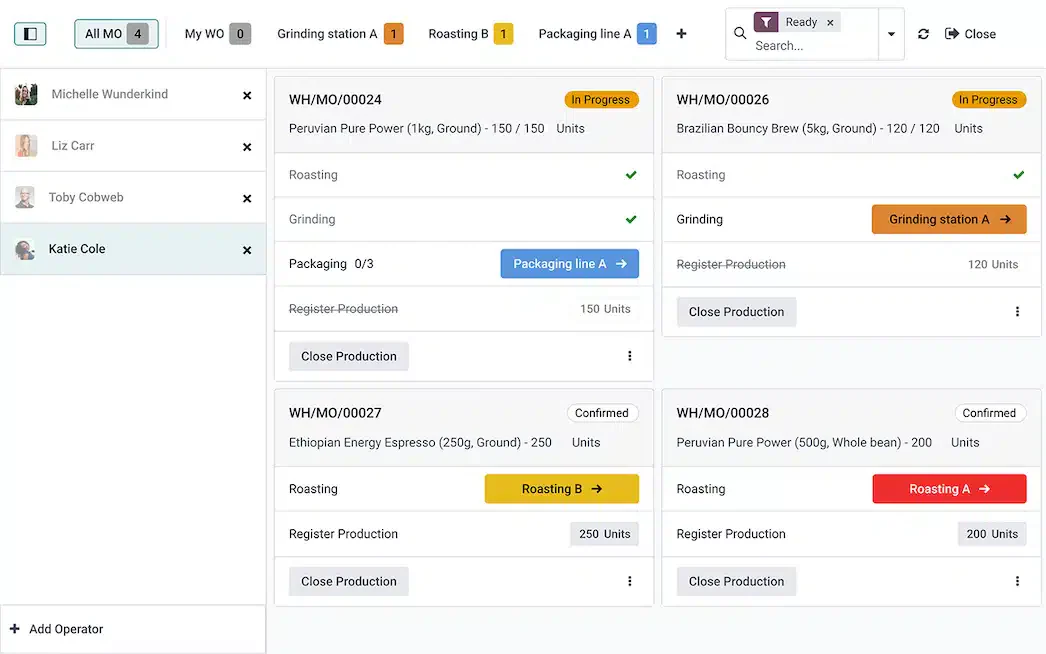
Odoo is a metal fabrication manufacturing ERP platform that provides various business applications, including CRM, e-commerce, accounting, and project management. It is available in Community and Enterprise editions and offers seamless app integration and flexible deployment options.
Odoo’s prominent features include:
- Modular app platform
- Inventory & WMS
- Manufacturing & MRP
- Custom reporting & dashboards
Pricing: Starts at $31.10 per user/month, with Custom at $61.00 per user/month.
| Pros | Cons |
|
|
Odoo suits Malaysian manufacturers that need a modular ERP with CRM, accounting, inventory, MRP, WMS, and reporting in one flexible platform.
10. Oracle Cloud ERP
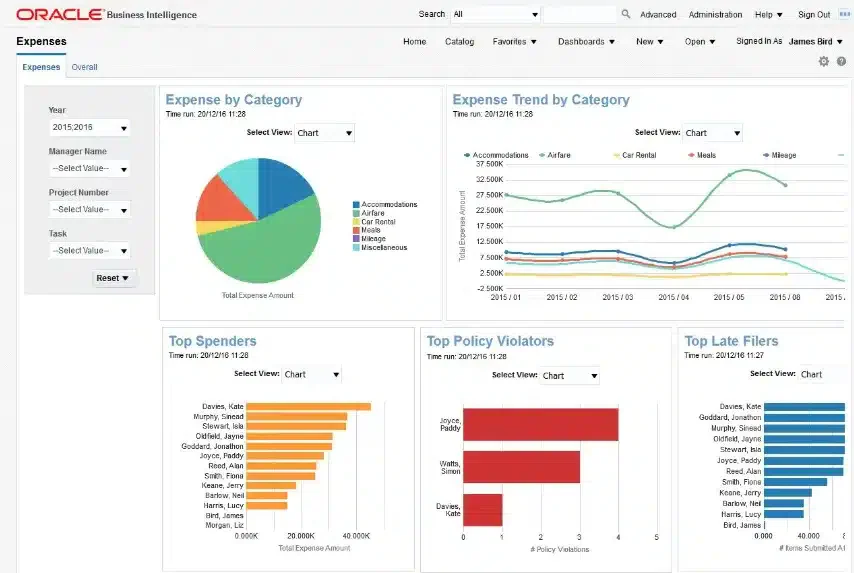
Oracle Cloud ERP is a robust enterprise resource planning suite for metal fabrication manufacturing for large-scale, global organizations. It manages critical functions, including finance, procurement, project management, supply chain management, and manufacturing.
Oracle Cloud ERP’s prominent features include:
- Embedded AI and machine learning
- Enterprise-grade financial & risk management
- Global supply chain & manufacturing modules
- Quarterly updates & OCI integration
Pricing: Basic pricing starts at $50,000.
| Pros | Cons |
|
|
Oracle Cloud ERP suits large Malaysian manufacturers needing enterprise finance, risk, supply chain, AI, and manufacturing control.
11. Infor M3
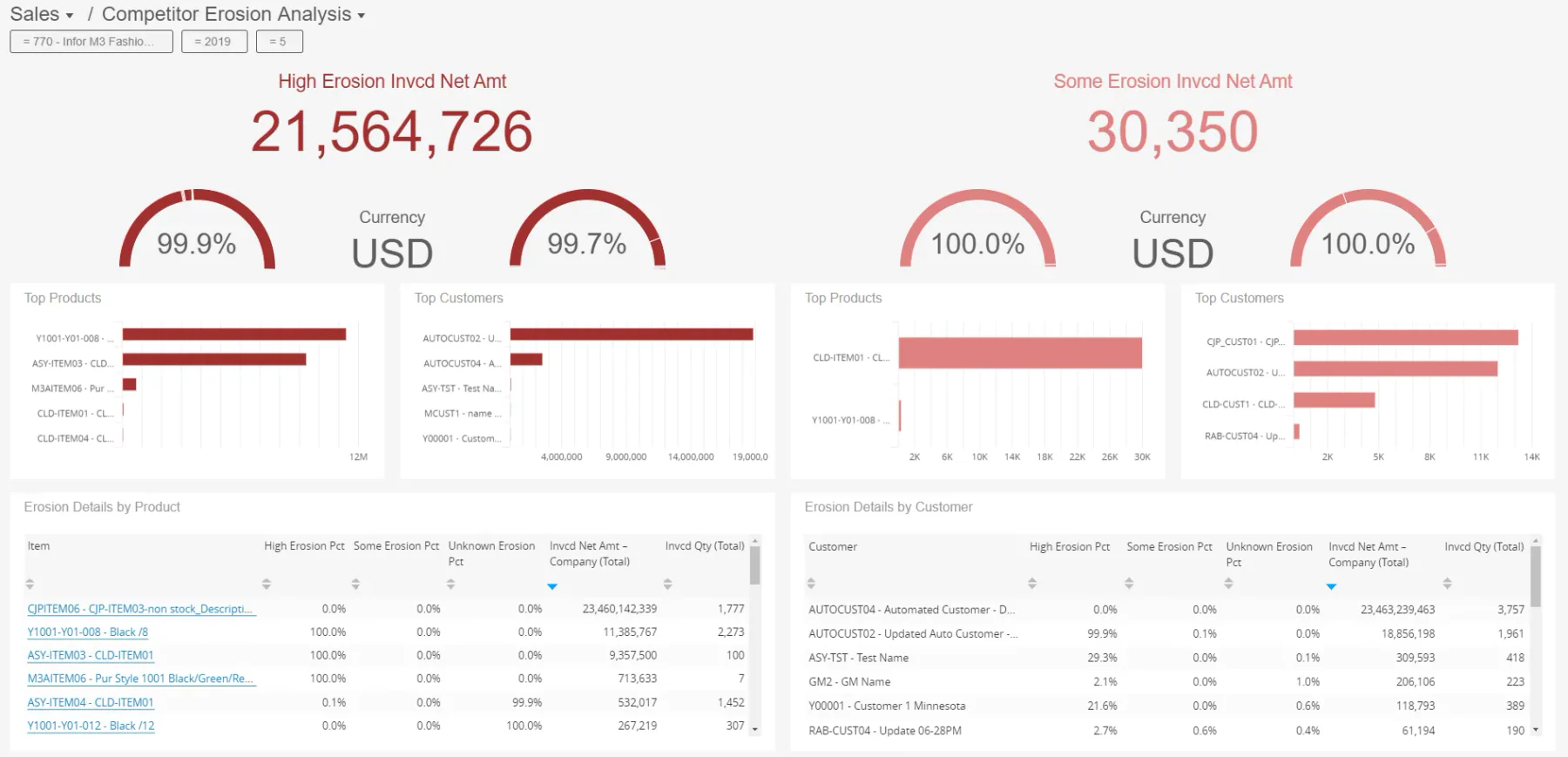
Infor M3 is a metal fabrication manufacturing ERP platform designed for medium to large manufacturing, distribution, fashion, chemicals, and food and beverage enterprises. It provides industry-specific capabilities, powerful analytics, and flexible deployment.
Infor M3’s prominent features include:
- Industry-specific CloudSuites
- Multi-site, multi-country support
- Flexible deployment & implementation accelerators
- Real-time analytics & no forced upgrades
| Pros | Cons |
|
|
Infor M3 suits medium to large Malaysian manufacturers needing industry-specific ERP, multi-site support, real-time analytics, and flexible deployment.
12. MRPeasy
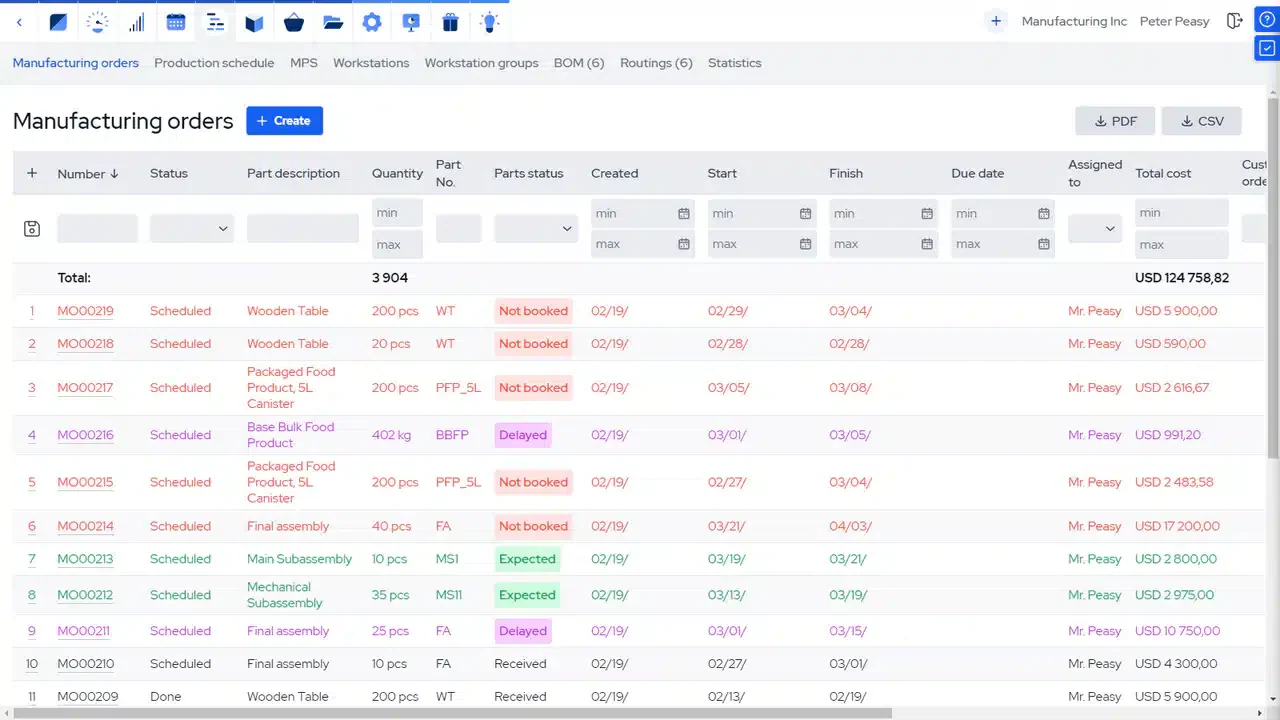
MRPeasy is a custom metal fabrication solutions ERP/MRP system for small to mid-sized manufacturers. It combines production planning, inventory, procurement, sales, CRM, MES, and financials into one affordable, browser-accessible platform.
MRPeasy’s prominent features include:
- Multi-level BOM & production planning
- Real-time inventory & traceability
- Integrated procurement & sales management
- Power BI & reporting integration
Pricing: Starts at $49 per user/month, with Professional at $69 and Enterprise at $99 per user/month.
| Pros | Cons |
|
|
MRPeasy suits small to mid-sized Malaysian manufacturers needing affordable production planning, BOM, inventory traceability, procurement, sales, and reporting.
13. RealSTEEL Metal Manufacturing Software
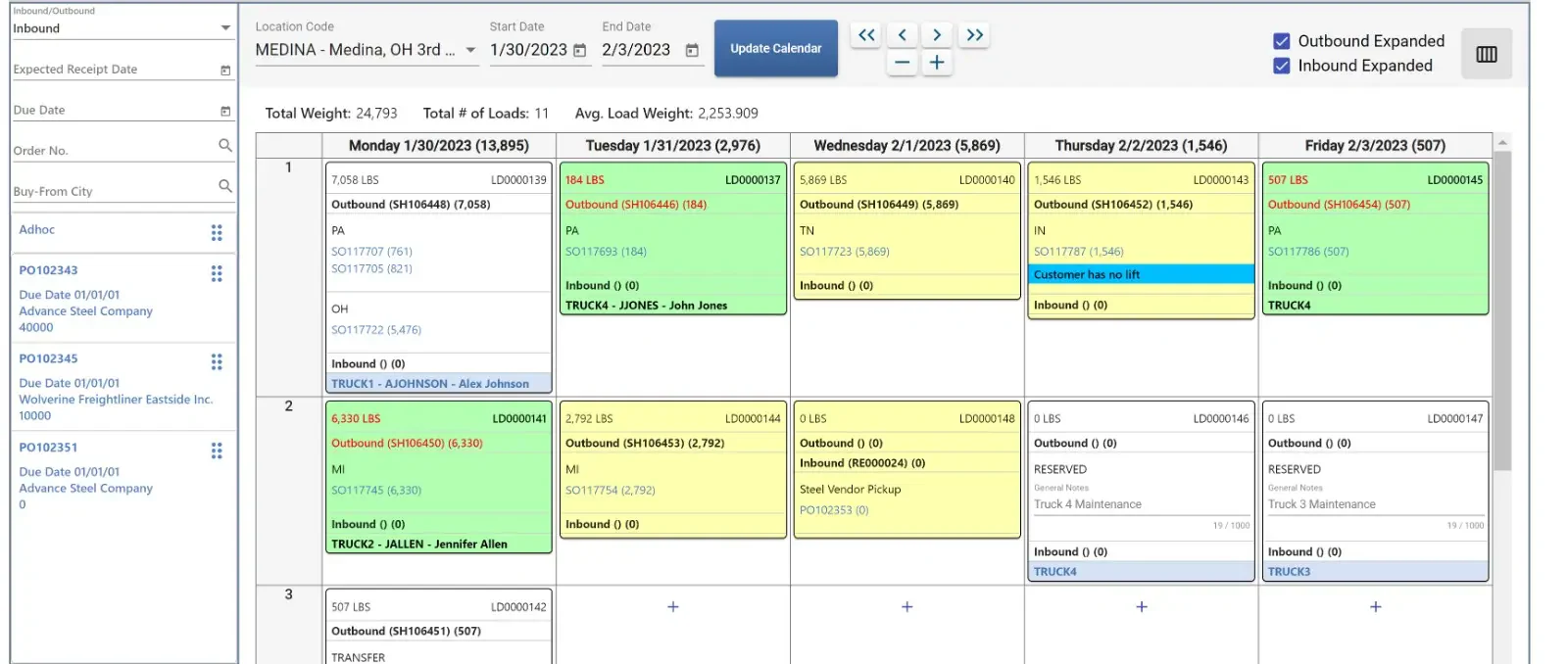
RealSTEEL is a custom metal fabrication solutions ERP built on Microsoft Dynamics 365, designed for the steel and metals industry. It streamlines sales, purchasing, production, inventory, and costing with real-time visibility and multi-attribute tracking.
RealSTEEL’s prominent features include:
- Multi-attribute inventory tracking
- Shipping dispatch board
- Real-time accurate costing
- Nested shop floor workstations & integrations
| Pros | Cons |
|
|
RealSTEEL suits Malaysian steel manufacturers needing multi-attribute inventory, dispatch control, real-time costing, and shop floor integrations.
14. MKG 5
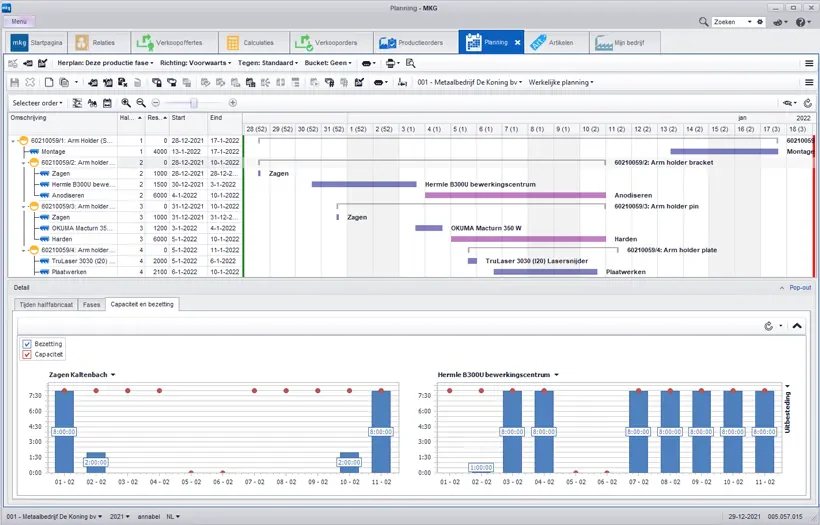
Proalpha MKG5 is an ERP system built for custom metal fabrication solutions companies, combining logistics, finance, production planning, and CAD integration in one platform with on-premise or cloud deployment options.
MKG 5’s prominent features include:
- ERP-wide integration
- Product configurator & CAD integration
- Shop floor data capture (time tracking, dashboards)
- Flexible deployment options (on-premise or cloud)
| Pros | Cons |
|
|
Proalpha MKG5 suits Malaysian custom metal fabricators needing ERP-wide integration, CAD configuration, shop floor data capture, and flexible deployment.
15. Acumatica Cloud ERP
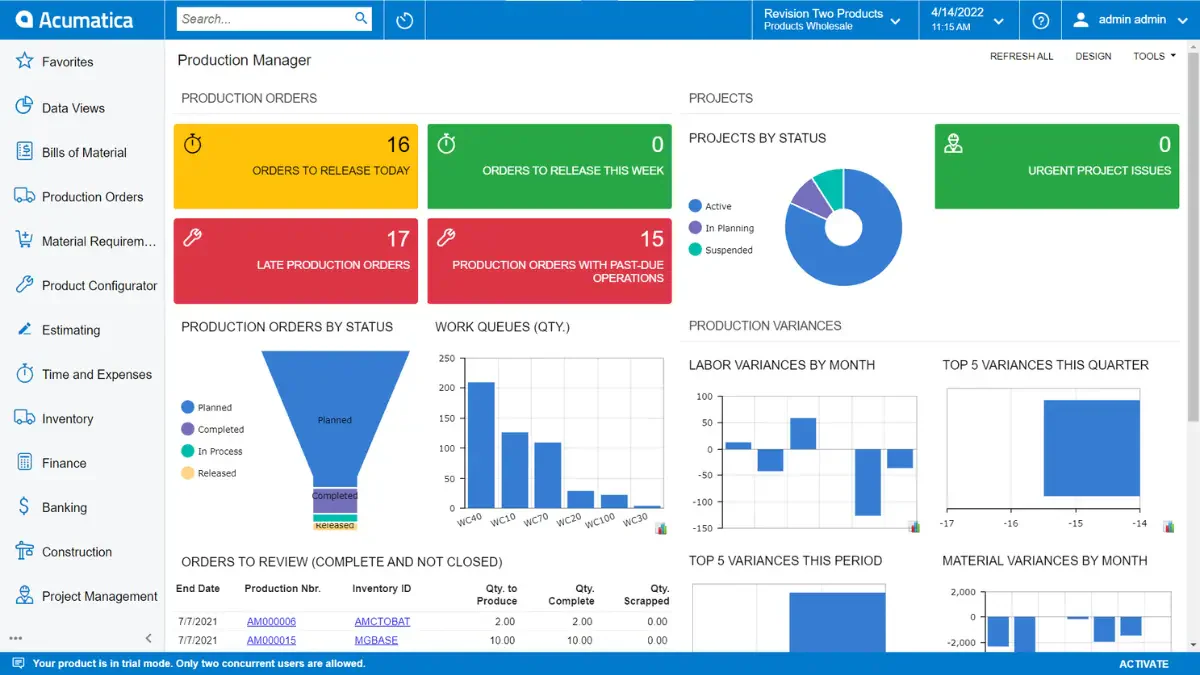
Acumatica Cloud ERP is a flexible, cloud-native business management suite for small to midsize businesses. It offers industry-specific editions, like manufacturing, distribution, and retail, and delivers real-time data and seamless integrations.
Acumatica Cloud ERP’s prominent features include:
- No per-user fees
- Industry-specific editions
- Real-time reporting & dashboards
- Flexible deployment & customization
| Pros | Cons |
|
|
Acumatica suits Malaysian SMB manufacturers needing cloud ERP, industry modules, unlimited-user pricing, real-time dashboards, and flexible customization.
For businesses running dedicated fabrication software alongside an ERP, solutions such as Tekla PowerFab and Strumis exist as specialized add-ons, though they lack the end-to-end operational coverage of a full ERP suite.
Benefits of Implementing ERP for Metal Manufacturing
Implementing ERP in metal manufacturing brings advantages that go beyond basic process automation. Below are the key benefits that help businesses improve efficiency, control, and growth.
- Improved production management: Increases output without requiring additional staff.
- Better resource utilization: Ensures efficient use of materials, labour, and equipment.
- Enhanced inventory control: Provides accurate forecasting for finished products.
- Streamlined production planning: Simplifies scheduling and coordination of operations.
- Greater operational oversight: Custom metal fabrication solutions offer a comprehensive view and control of business processes.
How to Choose the Right Metal Manufacturing Software for Your Business
Selecting the right industrial metal production processes system for your business requires careful consideration of cost, usability, and industry fit. Below are the key factors that will guide you in making the best choice for your metal manufacturing needs.
- Pricing and flexibility: Ensure costs align with your budget, and the system can adapt to evolving business needs.
- Ease of use: Choose intuitive manufacturing software that minimizes learning curves to avoid operational bottlenecks.
- Data flow & collaboration: Select an ERP with seamless data integration across departments to prevent silos.
- Deployment options: Evaluate On-premise, Hybrid, or Native Cloud based on your factory size, performance, and integration needs.
- Integrations: Check for CAD, CAM, and MES compatibility, API support, and app exchanges for easier connectivity.
- Local & regional support: Confirm compliance with standards like ISO 9001 and data protection regulations like GDPR.
- Vendor support services: Ensure 24/7 availability of vendor assistance or partner networks for smooth operations.
- Industry-specific design: Look for industrial metal production processes and systems built for or tested in metal fabrication to reduce costly customization.
"One of the biggest mistakes metal fabricators make is choosing a generic ERP. A system built for batch processing or job shops not only handles multi-stage routing and CNC integration better, but also provides traceability—crucial for quality control and regulatory audits."
Which ERP Software Suits Your Metal Manufacturing Business?
| ERP Software | Key Capabilities | Strengths | Best Fit For |
|---|---|---|---|
| HashMicro | Multi-level BoM, production cost tracking, quality checks, subcontractor management, master production scheduling, OEE reporting | AI-powered ERP, unlimited users, transparent pricing, customizable modules, developed in-house for stability | Malaysian metal manufacturers needing integrated production, inventory, costing, quality control, and reporting in one platform |
| ECI Ridder iQ | Graphical production planning & scheduling, multi-level BOM management, deep traceability, smart document management | Modular architecture, scalable manufacturing workflows, cloud deployment, dashboards and BI tools | Manufacturers operating in make-to-order, engineer-to-order, and configure-to-order environments |
| Epicor Kinetic | Advanced planning & scheduling, real-time equipment monitoring, process monitoring, IoT-enabled connectivity | Highly customizable, strong supply chain visibility, advanced analytics, hybrid/cloud deployment | Discrete, make-to-order, and mixed-mode manufacturers requiring real-time operational visibility |
| Fulcrum Manufacturing Cloud | Autoschedule, live job tracking, visual BOM & routing, paperless workflow | Rapid implementation, intuitive SaaS platform, AI-powered scheduling, responsive customer support | Manufacturers seeking cloud-based ERP, MRP, and MES capabilities with simplified workflows |
| Genius ERP | CAD2BOM engineering, smart scheduling, inventory management, purchase order management, analytics | Real-time dashboards, engineering-focused workflows, recognized manufacturing solution | Custom manufacturers requiring CAD integration, scheduling, and inventory visibility |
| Cetec ERP | Mobile warehousing, document management, alternate parts tracking, custom reporting, shop floor control | Transparent pricing, browser-based access, integrated quality and accounting modules | Small to midsize manufacturers needing affordable MRP, QMS, accounting, and inventory management |
| Microsoft Business Central | Inventory costing, multi-entity consolidation, custom reporting, workflow automation, access control | Microsoft ecosystem integration, AI Copilot support, strong financial management, scalable deployment | Manufacturers already using Microsoft technologies and seeking integrated finance and operations management |
| EOXS ERP | Inventory & production management, CRM & sales pipeline, financial management, HR modules, AI-powered dashboards | Built specifically for steel and metals businesses, browser-based deployment, competitive pricing | Steel service centers, tube mills, metal distributors, and fabrication businesses |
| Odoo | Manufacturing & MRP, inventory & WMS, CRM, accounting, modular applications, custom dashboards | Flexible architecture, large ecosystem, free Community edition, extensive customization | Manufacturers requiring modular ERP functionality across operations, finance, and customer management |
| Oracle Cloud ERP | AI & machine learning, financial management, risk management, supply chain management, manufacturing operations | Enterprise-grade functionality, global deployment support, advanced analytics and automation | Large-scale manufacturers requiring global finance, procurement, supply chain, and manufacturing control |
| Infor M3 | Industry-specific CloudSuites, multi-site support, deployment accelerators, real-time analytics | Industry-focused functionality, global operations support, flexible updates and deployment | Medium to large manufacturers operating across multiple sites or countries |
| MRPeasy | Multi-level BOM, production planning, inventory traceability, procurement management, Power BI integration | Affordable pricing, simple usability, strong traceability, all-in-one production management | Small to midsize manufacturers seeking cost-effective production planning and inventory control |
| RealSTEEL | Multi-attribute inventory tracking, shipping dispatch board, real-time costing, shop floor integrations | Built specifically for metals industry, centralized dispatch management, accurate costing visibility | Steel manufacturers requiring advanced inventory attributes, costing, and dispatch management |
| MKG 5 | ERP-wide integration, CAD integration, product configurator, shop floor data capture, flexible deployment | Purpose-built for metal manufacturing, strong engineering integration, cloud and on-premise options | Custom metal fabricators needing CAD connectivity, production planning, and engineering workflows |
| Acumatica Cloud ERP | Industry-specific editions, real-time dashboards, unlimited-user licensing, flexible customization | Cloud-native platform, strong analytics, scalable deployment, no per-user fees | Small and midsize manufacturers seeking flexible cloud ERP with industry-focused functionality |
Conclusion
Selecting a metal manufacturing ERP is ultimately a decision about operational control, not software features. The right system closes the gap between what your machines produce and what your books reflect with accurate job costing, traceable material usage, and SST-compliant reporting handled automatically rather than patched together manually.
Before approaching vendors, lock down three things first: which machine brands need native integration, your realistic IT capacity post-go-live, and your total budget over 24 months, not just the license fee.
Explore these solutions firsthand to see their real impact on your business. Try a free demo today and experience how HashMicro can simplify your metal manufacturing operations.
Frequently Asked Questions About Metal Manufacturing
The best ERP for manufacturing combines production planning, inventory, procurement, quality, and financials in one platform. HashMicro stands out by automating workflows, offering real-time data, and helping manufacturers boost efficiency and cut costs.
ERP in manufacturing is a centralized software that links key processes like procurement, production, inventory, sales, and finance. It helps manufacturers streamline operations, cut manual work, and improve insights for planning and decision-making.
An ERP system in material management optimizes the flow of raw materials, components, and finished goods throughout the supply chain. It automates purchasing, inventory, demand forecasting, and warehouse management, ensuring manufacturers have the right materials at the right time for smooth production.
ERP systems address material waste through three interconnected capabilities: nesting optimization, real-time scrap tracking, and BoM variance alerts. Nesting modules calculate the most efficient cut layout across available sheet sizes before the job goes to the floor, reducing offcut waste by an estimated 8–15% per production run. Real-time scrap tracking records what material remains after each cutting job and flags it for reuse in future orders. BoM variance alerts notify planners when actual material consumption deviates from the planned quantity — so overuse is caught at the job level, not after the fact at month-end stocktake.
Yes, ERP systems with OEE (Overall Equipment Effectiveness) modules can track machine utilization, record downtime events by cause, and schedule preventive maintenance based on run hours or cycle counts. For fabrication shops, this means a plasma cutter or press brake's idle time, maintenance windows, and availability rate are logged against the production schedule rather than tracked manually. When integrated with machine data feeds, the system can generate maintenance alerts automatically, reducing unplanned downtime by identifying wear patterns before they result in breakdowns.
For most metal manufacturing businesses in Malaysia, a full ERP implementation takes between 3 and 6 months depending on scope, data readiness, and the number of modules being deployed. A phased rollout is the most practical approach: start with core modules (inventory, procurement, basic production) in months one and two, then layer in job costing, shop floor control, and reporting in the second phase. Businesses that attempt a full simultaneous rollout across all departments typically experience longer delays and higher disruption to ongoing production.
Cloud ERP is a viable and increasingly common choice for metal manufacturing businesses, including those running fabrication operations across multiple sites. The primary advantages are real-time data access from any location, automatic software updates, and lower upfront infrastructure costs compared to on-premise deployment. Common concerns around data security are addressed by reputable vendors through SSL encryption, role-based access controls, and compliance with local data residency requirements.