






In today’s fast-paced business environment in the Philippines, relying on outdated hiring methods can hinder your ability to attract top talent.
One of the significant challenges with traditional recruitment is the time-consuming and error-prone manual processes, such as screening resumes and scheduling interviews. These inefficiencies can delay hiring decisions and lead to missed opportunities.
A study by the Philippine Daily Inquirer reveals that more than 65% of companies in the Philippines are turning to recruitment technology to enhance their hiring processes. This shift highlights the growing recognition that technology enhances recruitment speed and better meets candidate’s expectations.
This article will guide you through how recruitment software can address these challenges, enhance your hiring process, and enable you to secure top talent more efficiently.
Key Takeaways
Recruitment software transforms hiring from a manual administrative function into a strategic, data-driven process.
Automating repetitive recruitment tasks significantly reduces errors and accelerates time-to-hire.
A centralized candidate database improves collaboration, compliance, and decision accuracy across HR teams.
Recruitment software enhances candidate engagement through consistent communication and streamlined application workflows.
What is Recruiting Software?
Recruiting software is a digital platform designed to assist HR professionals and hiring managers in managing the entire recruitment process. It streamlines each stage, ensuring a seamless transition from applicant to employee.
Often referred to as applicant tracking systems (ATS), recruiting software has evolved beyond simple tracking capabilities. Modern HR recruitment software encompasses many tools beyond managing resumes, offering features like automated job postings, interview scheduling, and advanced candidate evaluation, making it much more comprehensive than traditional ATS recruitment software.
With the rise of online recruitment software, businesses can now access more innovative and flexible solutions. The best recruitment software, like Smart Recruiter, integrates with other business tools, offering a seamless experience for both recruiters and candidates, ensuring that companies can easily attract, assess, and hire top talent.
What is the Difference Between Recruiting Software and Applicant Tracking Systems (ATS)?

Applicant Tracking Systems (ATS) initially started as a database to store scanned resumes and track candidate status throughout the hiring process. While ATS helps streamline sorting, posting, and managing candidates, it only addresses a limited part of the recruitment cycle.
On the other hand, recruiting software offers a broader solution, including all ATS features and additional tools like email marketing, job board integrations, and mobile capabilities. This makes recruiting software more versatile, enabling businesses to engage candidates and manage the hiring process efficiently.
The critical difference is that ATS focuses solely on candidate management while recruiting software covers every aspect of the recruitment journey. Integrating candidate engagement and talent management, the best recruitment software provides a comprehensive approach to attracting and hiring top talent.
Benefits of Recruiting Software

Recruiting software offers a wide array of benefits that can substantially improve the efficiency and effectiveness of the hiring process. From automating repetitive tasks to providing valuable insights, these tools help recruiters and candidates experience a smoother, more streamlined process.
Here are the key advantages:
- Increased productivity and efficiency: With recruiting software, HR teams can automate time-consuming tasks such as resume parsing, candidate screening, and interview scheduling. AI-driven tools in recruitment software ensure faster processing, helping recruiters get more done in less time while improving overall efficiency.
- Centralized and accurate candidate data: HR recruitment software creates a single source of truth by centralizing all candidate information. This ensures that hiring managers and team members can access accurate, up-to-date data in real-time, which reduces errors and ensures compliance throughout the hiring process.
- Improved candidate experience: Recruiting software helps enhance the candidate experience by streamlining job postings, automating communications, and making the application process smoother. This leads to a more positive interaction with your company, helping attract top talent and reducing the likelihood of losing candidates due to a poor experience.
- Seamless onboarding integration: Many of the best HRIS software solutions offer integrated onboarding features, enabling a smooth transition from candidate to employee. With online recruitment software, HR teams can leverage pre-hire data to make onboarding faster, ensuring new employees are productive from day one.
- Time and cost savings: By automating repetitive tasks, recruitment tools like ATS recruitment software can save HR departments valuable time and resources. This allows teams to focus on building stronger candidate relationships and filling positions more quickly, ultimately saving money and reducing hiring costs.
- Data-driven insights: Smart recruiter systems provide valuable analytics to help HR professionals optimize recruitment strategies. By using the data generated within the software, organizations can track their hiring processes, identify areas for improvement, and make data-driven decisions to enhance future recruitment efforts.
Investing in recruitment software streamlines the hiring process and improves the experience for both recruiters and candidates. Whether using HR recruitment software for efficiency or innovative recruiter tools to enhance your team’s productivity, these systems are necessary for modern organizations looking to stay competitive and attract the best talent.
The Importance of Recruitment Software in Modern Business
Recruitment software has become an essential tool for businesses in the Philippines, helping streamline and automate critical elements of the hiring process. This technology offers a comprehensive solution for managing job postings, tracking applicants, and evaluating candidates, all within a single platform.
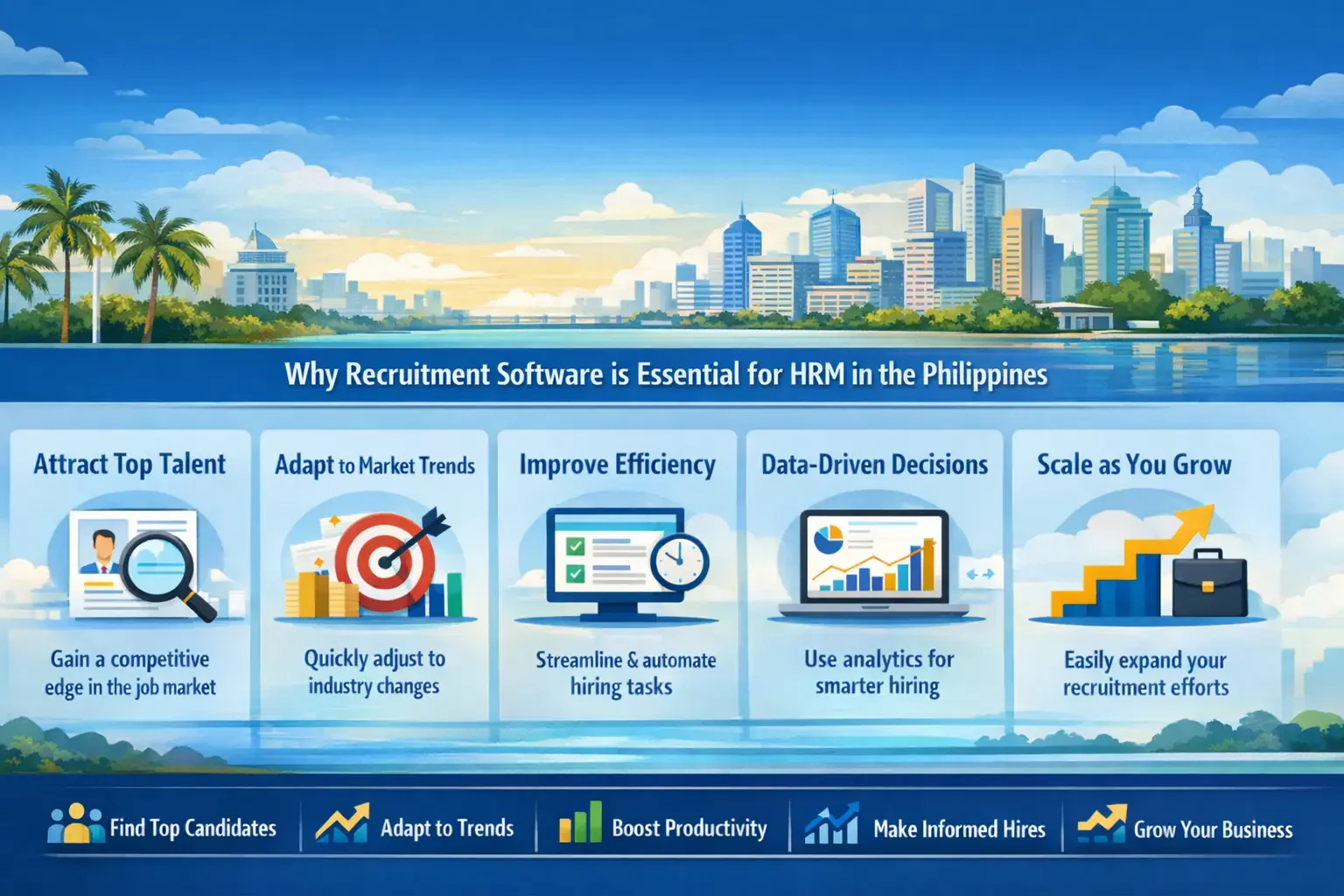
As the business landscape in the Philippines rapidly evolves, adopting recruitment software has become more than a convenience; it’s a necessity for staying competitive. Here’s why recruitment software is crucial for modern HRM in the Philippines and why it’s an essential tool for top HRM practices in today’s competitive market:
1. Gain a competitive advantage in attracting top talent
Recruitment software gives businesses in the Philippines a decisive edge in the competitive job market by enabling them to quickly identify and engage with top candidates. Automating candidate sourcing and tracking helps HR teams stay ahead of the competition and ensure they don’t miss out on high-quality talent.
The software also makes it easier to manage recruitment for full-time employees and freelancers, widening the pool of potential hires. With the ability to reach candidates faster and more efficiently, businesses can secure the best talent before competitors.
2. Agility to adapt to evolving market trends
The job market in the Philippines is dynamic, with shifting industry needs and changing talent pools. Recruitment software offers the agility to adapt to these changes by allowing businesses to adjust their recruitment strategies on the fly.
This can involve modifying job descriptions, targeting new talent pools, or adjusting the hiring process to meet specific market demands. By keeping up with these shifts in real-time, companies are better equipped to respond to industry trends and ensure they always have the right talent in place.
3. Boost your internal efficiency for streamlined operations
Recruitment software streamlines time-consuming tasks such as resume screening, candidate outreach, and interview scheduling. By automating these processes, HR teams can free up valuable time to focus on more strategic activities like employee engagement and long-term workforce planning.
The software helps eliminate manual errors and ensures all candidate data is centralized in one easy-to-access platform. As a result, businesses in the Philippines can improve efficiency, reduce administrative overhead, and accelerate the hiring process, ultimately leading to higher productivity.
4. Make more intelligent hiring decisions with data insights
Data-driven hiring is one of the most potent advantages of recruitment software, as it allows businesses to leverage analytics to make informed decisions. HR teams can track key performance indicators (KPIs) like time-to-hire, cost-per-hire, and candidate quality through detailed reports and candidate analytics.
This data helps refine recruitment strategies, enabling companies to target suitable candidates more effectively and allocate resources more efficiently. Businesses can use data insights to align their hiring efforts with their long-term goals and optimize their recruitment process.
5. Seamlessly scale your recruitment efforts as you grow
As businesses in the Philippines expand, recruitment software ensures they can scale their hiring efforts without losing efficiency or quality. The software can easily handle increasing recruitment volumes by automating various parts of the hiring process, allowing HR teams to focus on higher-level tasks.
It also helps maintain consistency in the recruitment process as the business grows, ensuring that the company continues to attract top talent regardless of the hiring volume. With the right tools in place, businesses can manage their scaling recruitment needs without compromising the quality of their hires.
What are the Main Features of Recruitment Software?

Understanding the core features of recruitment software is crucial for optimizing HR processes and enhancing recruitment efficiency in the Philippines. These tools can significantly streamline the hiring process, from attracting candidates to making final selections.
Here’s a look at some essential features:
- Customizable job portal: A customizable job portal is more than just a platform for posting vacancies; it’s the first touchpoint between your company and potential candidates. By tailoring this portal, businesses can showcase their values, culture, and employer brand, ensuring a stronger connection with applicants who align with their vision.
- OCR screening: OCR (Optical Character Recognition) screening significantly enhances the resume review by quickly scanning and extracting critical data from resumes. This allows recruiters to sort through applications more accurately and efficiently, reducing manual effort and minimizing the risk of human error.
- Interview automation: Interview automation streamlines the scheduling and conducting of interviews. It automatically matches candidates’ availability with interviewers’ schedules, sends out invites, and even facilitates virtual interviews, making the process more efficient and saving valuable time for both recruiters and candidates.
- Automatic candidate follow-ups and notifications: Timely communication keeps candidates engaged. Automatic follow-ups and notifications ensure that applicants stay informed about their status, next steps, and any required actions, which improves the candidate experience and reinforces your company’s professionalism.
- In-depth recruitment reporting: In-depth recruitment reporting provides insights into the performance of your recruitment processes. This data helps HR teams identify bottlenecks, measure effectiveness, and fine-tune their strategies for better recruitment outcomes.
Beyond these features, it’s also essential to consider the pricing schemes of HRIS systems that best fit your company’s needs. To find the most suitable plan, click the image below!
What Challenges Does Recruiting Software Solve?

Recruitment software is pivotal in addressing HR professional’s and hiring managers’ challenges in today’s competitive job market. Below are some key challenges that recruitment software effectively solves:
- Talent shortages and difficulty filling positions: Recruitment software helps HR teams quickly identify and engage top talent, easing the pressure of filling roles. By automating candidate sourcing, tracking, and screening, HR can prioritize high-quality applicants and speed up hiring to stay ahead of competitors.
- Time-consuming manual recruitment tasks: Manual recruitment tasks like job posting and candidate tracking are time-consuming and prone to errors. Recruitment software automates these repetitive tasks, freeing up HR teams to focus on strategic activities such as interviewing and improving the candidate experience.
- Ineffective candidate engagement: Modern candidates expect seamless, personalized recruitment experiences, which can be hard to manage manually. Recruitment software ensures timely communication, automates follow-ups, and provides mobile-friendly platforms, fostering better engagement and retention.
- Lack of data-driven insights: Without analytics, it’s challenging to gauge the effectiveness of your recruitment efforts. Recruitment software offers valuable insights into key metrics, enabling HR teams to refine strategies and make data-driven decisions for improved hiring outcomes.
- Poor onboarding process: Onboarding ensures new hires integrate smoothly, but it can be cumbersome without the right tools. Recruitment software streamlines the onboarding process by automating document management and tracking progress, helping new employees become productive quickly.
By addressing these challenges, recruitment software empowers businesses to streamline their hiring processes, enhance candidate experiences, and make more data-driven, strategic decisions that ultimately lead to better recruitment outcomes.
Conclusion
Adopting recruitment software goes beyond just upgrading technology, it’s a strategic move that can significantly enhance your business in the Philippines. The advantages are far-reaching, from improving your employer brand to making informed, data-driven hiring decisions.
Ultimately, businesses that leverage recruitment technology position themselves to respond faster to talent demands, reduce hiring risks, and enhance the overall candidate journey. As workforce expectations and market conditions continue to evolve, adopting a structured and technology-driven recruitment approach becomes essential for sustaining long-term organizational growth and competitiveness.
FAQ About Recruitment Software
Recruiting software is a set of tools designed to streamline the recruitment process for employers, helping them attract, screen, and hire talent more efficiently. These software solutions typically offer features such as job posting automation, candidate sourcing, resume screening, interview scheduling, and collaboration tools for hiring teams. By automating repetitive tasks, recruiting software helps organizations save time, reduce human bias, and improve the overall quality of hires.
Recruitment software supports long-term workforce planning by providing data analytics and hiring trend insights that help organizations forecast talent needs and align recruitment strategies with business growth objectives.
An Applicant Tracking System (ATS) and a Customer Relationship Management (CRM) system help businesses manage relationships but serve different purposes. An ATS is designed specifically for recruitment and helps organizations track job candidates through the hiring process. It manages resumes, tracks interviews, and stores candidate information. On the other hand, a CRM focuses on building and maintaining long-term relationships with customers or clients. In recruitment, a CRM can help track interactions with potential candidates over time, whereas an ATS focuses more on managing active job applications.
An Applicant Tracking System (ATS) is a software application that automates the hiring process for employers. It helps organizations manage the entire recruitment workflow, from posting job openings to screening resumes, scheduling interviews, and making offers. An ATS allows recruiters to centralize candidate information, streamline communication, and maintain compliance with hiring regulations, ensuring a more efficient and organized hiring process. Many ATS solutions also integrate with other HR tools and provide analytics to help improve recruitment strategies.