









 Limited to 100 registrants

Managing purchases manually may work for small businesses, but tracking expenses, approvals, and orders becomes overwhelming as your company grows. Delays, errors, and hidden costs can disrupt operations and slow productivity.
Automating your purchasing system simplifies procurement by speeding up approvals, reducing errors, and improving transparency. Studies show that automation can cut processing time by 60%, leading to better cash flow management and higher employee satisfaction.
A purchasing system offers a seamless, automated way to manage purchase orders, approvals, and supplier coordination in one platform. This guide walks through the types, benefits, and setup steps so you can take full control of your procurement.Key Takeaways
A purchasing system automates requests, approvals, and supplier payments in one platform instead of scattered emails and spreadsheets.
The right fit depends on how you buy, whether that means blanket orders, e-purchasing, or capital equipment purchases.
Each order moves through six steps, from requisition and approval to supplier selection, receiving, and invoice matching.
That structure delivers tighter budget control, live order tracking, and far fewer manual errors as your business grows.
What is a Purchasing System?
A purchasing system is software that automates how a business buys goods and services, from purchase orders to approvals and vendor records. The wider discipline it supports is what CIPS defines as procurement, the work of acquiring goods and services that keep supply chains running profitably and ethically.
A purchase system also keeps spending under control. It helps companies buy only what they need at the right price, so budgets stay intact. Most systems run in the cloud, letting employees submit, approve, and track purchase orders from any location.
Beyond automation, a purchasing system serves three core purposes:
1. Centralize and Automate the Procurement Process
The system pulls purchase order creation, approvals, and vendor management into a single workflow. Teams no longer chase emails or paper forms. This removes the delays and duplicate entries that manual purchasing methods create.
2. Strengthen Financial Control Over Spending
Finance teams monitor every order as it happens. They can block unnecessary purchases, hold spending to budget, and use accurate volume data to negotiate better supplier terms. Costly errors surface before payment, not after.
3. Improve Decisions With Real-Time Procurement Data
A purchasing system reveals spending patterns across departments and suppliers. Managers see which categories drain the budget and which vendors deliver on time. These insights guide inventory planning and keep cash flow predictable.
How these purposes play out depends on how your company buys. Order volume, contract terms, and inventory model all shape the right setup, which is why businesses choose from several types of purchasing systems.
Types of Purchasing System

Choosing the best purchasing system for your business depends on your specific needs and how you manage inventory. To help you decide, here are some common types of purchase system to consider:
1. Stockless purchase system
In this system, the supplier holds items until the customer needs them. This approach not only reduces storage costs but also streamlines inventory management, making it easier for businesses to handle their stock.
2. Blanket order
This system allows companies to place smaller orders daily based on pre-established contracting terms. This blanket purchase order useful for businesses that need consistent supply but want to avoid the complexity of large upfront commitments.
3. E-purchasing
This online purchasing system facilitates the buying and selling of supplies, goods, and services over the internet.
It offers businesses the convenience and speed needed to streamline procurement processes, making it an excellent option for modern companies aiming to improve efficiency.
In the Philippines, e-commerce is booming, and Filipinos increasingly prefer to make purchases through mobile devices.
In fact, by 2022, e-commerce transactions accounted for nearly 64% of all purchases made in the country, reflecting a strong shift toward digital platforms. This trend highlights the importance of adopting e-purchasing systems to stay competitive in a fast-evolving market.
4. Rate contract method
This system helps establish pricing and purchasing parameters for goods and services. By doing this, it provides consistency and better cost control for companies, helping them manage expenses more effectively.
5. Capital equipment purchase
This purchasing system is designed for acquiring high-cost items that require significant capital investment. It is crucial for businesses that need specialized equipment, ensuring they have the tools necessary for their operations.
When selecting a purchasing system, consider how your business operates and the volume of transactions you handle. For medium and large companies that process numerous purchase orders each month, an automated purchase system may be the best choice.
This system can streamline the entire process, allowing for quicker approvals and better tracking of purchase requests. Implementing tools like purchase order software can make it easy for employees to submit requests and for managers to monitor approvals, ensuring clarity in the purchasing process.
Benefits of a Purchasing System
A purchasing system helps your business scale without adding headcount to the buying process. It standardizes procurement across branches and departments, so growth does not turn into chaos. These are the five benefits that matter most:
1. Streamlined Procurement and Approvals
The system routes every request through the correct approval hierarchy automatically. Buyers stop chasing signatures, and managers approve from any device. Each approval leaves an audit trail, so faster cycles never come at the cost of accountability.
2. Centralized Purchase Order Management
Purchase orders act as formal agreements between buyers and suppliers. A purchasing system keeps them in one record, which prevents duplicate orders and manual entry errors. Teams check incoming goods against the original quantities and specifications before payment.
3. Tighter Cash Flow and Budget Control
Budget limits sit inside the system, so overspending gets blocked before it happens. Finance monitors committed spend against actual cash outflow in real time. This oversight keeps working capital available for the purchases that drive revenue.
4. Real-Time Order Tracking
Every order carries a live status, from request to delivery. Procurement spots late shipments early and warns operations before stock runs out. Fewer supply surprises mean fewer missed commitments to your customers.
5. Stronger Supplier Relationships
Accurate order records give both sides one version of the truth. Disputes over quantities and delivery dates drop sharply. Buyers who track supplier performance also negotiate better pricing and payment terms at renewal.
Together, these benefits give medium and large Philippine businesses a stable base for opening new branches and adding product lines. Once your requirements are clear, the next step is comparing available options. This list of the best purchasing software in the Philippines breaks down features, pricing, and industry fit for each vendor.
How to Set Up a Purchasing System?

Setting up a purchasing system in your business involves several important steps that can make your procurement management system more efficient. By following this guide, you can create a system that enhances operations and improves overall performance.
Assess your company’s needs
First, evaluate your company’s specific needs and identify any challenges in your current purchasing process. Consider issues such as reducing manual errors, improving workflows, and enhancing financial control. This assessment helps you determine what features your purchasing system should have, ensuring it fits your business requirements.
Research available options
Next, explore the various purchasing systems available in the market. Look for systems that are scalable, easy to use, and able to integrate with your existing tools. Additionally, compare features, pricing, and customer reviews. This research will help you find a solution that aligns with your company’s needs and budget.
Choose the right system
After gathering information, select the purchasing system that best suits your organization. Make sure it complements your current structure and offers the functions necessary for efficient procurement. This choice will set a solid foundation for your purchasing process.
Train your team
Once you have selected a system, provide thorough training for your employees on how to use it effectively. Training should cover essential tasks, such as creating purchase requisitions, processing purchase orders, and managing invoice approvals. By equipping your team with these skills, you empower them to use the system confidently, which can reduce errors and improve efficiency.
Monitor system performance
After implementing the purchasing system, continuously monitor its performance. Collect feedback from users to assess how well the system is working. Regularly check key metrics, like order processing times and error rates, to identify areas for improvement. This ongoing evaluation ensures the system continues to meet your business needs.
Ensure compliance and control
Incorporate policies and financial controls within the purchasing system to maintain compliance and reduce risks. Regularly review spending against budget lines to identify areas for potential savings while ensuring adherence to financial guidelines. This practice helps protect your company’s financial health.
Leverage real-time data
Finally, ensure your purchasing system provides real-time data and generates accurate reports. This information is crucial for making informed decisions, spotting spending trends, and optimizing purchasing strategies. By having access to up-to-date information, you can respond quickly to changing business needs.
By following these steps, you can successfully set up a purchase system that addresses your company’s unique requirements, enhances efficiency, and strengthens financial management. As your business grows, be sure to refine and adapt the system continuously to maximize its benefits.
How Does Purchasing System Work?
A purchasing system simplifies the process of acquiring goods and services for an organization. It ensures that all steps, from request to payment, are tracked and managed efficiently. Below is an overview of how it typically functions:
- Requisition: The process starts when employees submit requests for items or services, which are reviewed and approved by managers or department heads.
- Order Creation: Once approved, the purchasing team creates a purchase order (PO) specifying what’s needed, quantity, and supplier.
- Supplier Selection: The system helps compare suppliers based on price, quality, delivery time, and existing contracting terms. The feature enables the selection of the most suitable options for long-term agreements.
- Order Processing: The purchase order is sent to the selected supplier, who then ships the goods or provides the service.
- Invoice and Payment: Once the goods are received, the purchasing system matches the invoice with the original purchase order for approval. Payments are processed, and the transaction is recorded for financial tracking.
- Record Keeping: The system stores all data related to the purchase, including invoices, contracts, and correspondence, making it easy to track spending and supplier performance.
Purchasing System vs. Purchase Order System
If you’re familiar with the purchase order system, you might wonder how it differs from a purchasing system.
A purchase order is a document used by buyers to request goods or services from a supplier. It is just one component of a purchasing system, which facilitates the creation and tracking of purchase orders.
A purchasing system covers broader inventory management functions, while a purchase order system focuses specifically on purchase orders. With a purchase order system, businesses can track key details such as order dates, purchase amounts, order fulfillment, and invoice processing.
Key Factors to Consider in a Purchasing System
Before choosing a purchasing system for inventory management, it’s important to research and compare different options to find the best fit for your business.
When evaluating purchasing systems, consider the following:
- System Type (e.g., blanket order)
- Features and functionalities
- Cost and associated fees
- Contract terms
- Flexibility (e.g., mobile accessibility)
- Ease of use
- Security and data protection
What Challenges Do Businesses Face with Their Purchasing Systems?

Medium and large businesses in the Philippines face several challenges with their purchasing systems, often leading to inefficiencies in operations. These challenges are presented in several key challenges being mentioned below:
-
Bureaucracy
One key issue is added bureaucracy, which slows down the acquisition process for goods and services. Accounting references count it among the documented drawbacks of a formal purchasing process, alongside weak supplier management and limited scalability.
To address this, many companies use procurement cards at the department level to quickly purchase lower-cost items without needing to go through the purchasing department. This helps purchasing staff focus on higher-value goods and services.
-
Managing purchase orders
However, as companies grow, managing large volumes of purchase orders becomes difficult, especially when using outdated or manual systems. This leads to delays, errors, and trouble tracking orders, which negatively impacts the supply chain.
Additionally, businesses often struggle to integrate their purchasing systems with other important functions, such as inventory management, accounting, and financial tracking. Without proper integration, it becomes harder to monitor expenses, stock levels, and cash flow, resulting in poor decision-making.
-
Complex approval processes
Another common challenge is the delay caused by complex approval processes. Larger businesses usually have multiple stakeholders involved in approvals, and when the purchasing system isn’t automated, it can cause significant delays.
These delays can lead to missed opportunities or even stock shortages. The problem becomes worse if there’s no clear visibility of who is responsible for approvals, or if purchase requests are stuck in the system.
-
Cost control
Cost control also poses a challenge. Without accurate, real-time data from a well-functioning purchasing system, businesses often struggle to keep spending within budget. This can lead to overspending or poor financial management.
-
Managing suppliers
Lastly, managing suppliers is another difficulty. With many suppliers to work with, it becomes challenging to keep track of contracts, pricing, and delivery schedules. An inefficient purchasing system can result in inconsistent pricing, strained supplier relationships, and disruptions in the supply chain.
By choosing the right purchase system, businesses can overcome challenges like bureaucracy, order volume management, and integration issues.
Leverage Your Purchasing Game with HashMicro Purchasing System
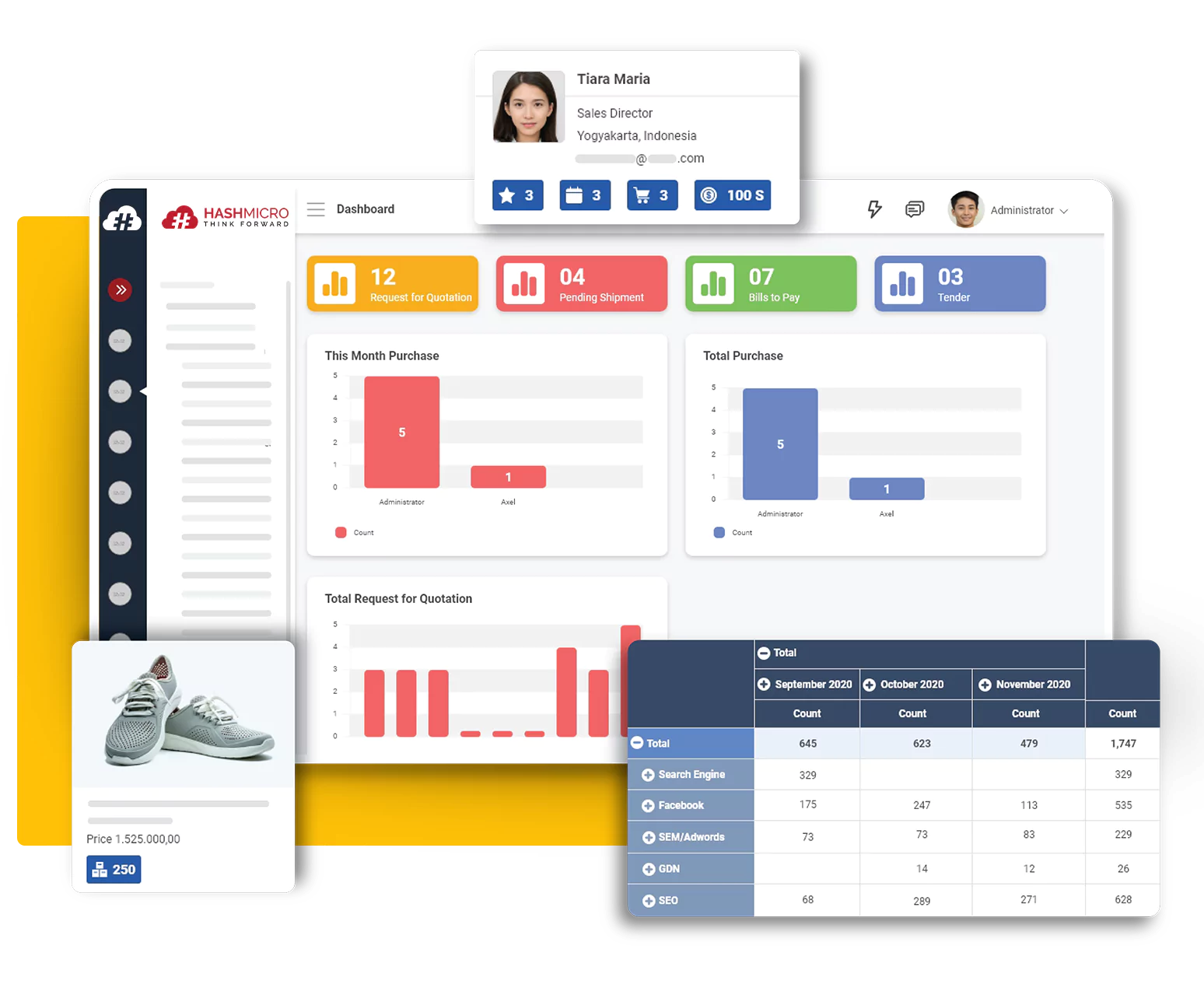
HashMicro’s purchasing system is designed to be user-friendly, making it easy for your team to manage procurement tasks with minimal training. It seamlessly integrates with other critical systems such as accounting, inventory, warehouse, and sales, ensuring smooth data flow and eliminating manual processes.
Trusted by over 2,000 companies, HashMicro offers a scalable solution that supports unlimited users, allowing your organization to grow without limits. Our system simplifies procurement, enhances cross-department collaboration, and provides real-time insights for smarter decision-making across all levels of your business.
- Remaining Budget Information in Each PR/PO: This feature displays the remaining budget for each Purchase Request (PR) or Purchase Order (PO) in real-time.
- Pop-up Alert for Overbudget PR/PO Submissions: Automatically triggers an alert when a PR or PO exceeds the allocated budget.
- Vendor Management with Vendor Categories: Organizes vendors into categories (e.g., preferred, regular, or new) to make vendor selection easier and more efficient.
- Purchase Tender Management with Multi RFQ Comparison: Manages the tender process by allowing buyers to request and compare multiple quotations (RFQs) from different vendors.
- Cost Savings Tracking and Reporting: Tracks and reports on savings generated through purchasing decisions, such as negotiated discounts, volume-based savings, or process efficiencies.
- In-Depth Purchase Analysis: Provides detailed insights into purchasing trends, such as frequently bought products, vendor performance, fulfillment rates, and average prices.
Conclusion
A robust purchasing system can transform the way medium and large companies in the Philippines operate. By streamlining the procurement process, businesses not only save time but also improve their bottom line. With an effective system in place, you can easily track purchases, manage suppliers, and control spending.
This enhanced efficiency leads to faster approvals, fewer errors, and better financial oversight. Teams ready to take procurement further usually look at an e-procurement system, which adds three capabilities on top of a standard purchasing workflow:
- Vendor portal: Suppliers submit their own documents and invoices, which simplifies the buying process and keeps payments secure.
- Open tenders and negotiation: Buyers publish tenders, compare offers, and negotiate terms with several suppliers in one place.
- Centralized purchase management: Every order, approval, and contract sits in one record, so private companies and public organizations can track spending the same way.
Now is the perfect time to see how this system can benefit your business. Try HashMicro’s e-procurement system by using the free consultation! Don’t miss out on this opportunity to revolutionize your procurement strategy and elevate your operations!
FAQ About Purchasing System
A purchase system is a tool or process used by businesses to handle the acquisition of goods and services. It can be a manual process or a software solution that tracks every stage of purchasing, from identifying needs and selecting suppliers to placing orders and managing payments.
The main function of a purchasing system is to automate and manage the buying process. It helps businesses control spending, track orders, maintain supplier relationships, and ensure timely delivery of goods and services.
An example of a purchasing system is HashMicro’s Purchasing System, which automates the procurement process, integrates with accounting and inventory systems, and provides real-time budget tracking for smarter decision-making.
The four types of purchase systems are:
1. Manual Purchasing System: Involves paper-based processes where orders and payments are manually recorded.
2. Computerized Purchasing System: Uses software to manage orders, inventory, and suppliers.
3. E-Procurement System: An online system for managing purchasing processes, often used for larger-scale operations.
4. Just-in-Time (JIT) Purchasing System: Focuses on ordering goods only when needed, reducing inventory costs.
A purchase order system handles one document: the purchase order a buyer sends to a supplier. It tracks order dates, amounts, fulfillment, and invoice processing. A purchasing system is broader. It creates and tracks those purchase orders while also managing supplier selection, approvals, budgets, and inventory. The purchase order system is one component inside it.