









 Limited to 100 registrants

Running a business has its ups and downs, right? One thing that often gets overlooked is understanding inventory costs. Your business may be thriving, but the hidden costs tied to inventory may already be slowly eating into your profits.
Whether you’re running a small shop or managing a big manufacturing setup, it’s a common issue many business owners in the Philippines face. If not properly managed, it will lead to many financial issues. By understanding inventory costs and learning to manage them, you can keep your business on track and thriving.
Key Takeaways
Effective inventory management is crucial for maintaining profitability and operational efficiency, especially in the competitive Philippine market.
Calculating inventory costs helps businesses understand the total expenses involved in acquiring, storing, and managing stock.
Understanding and managing inventory costs, including ordering, carrying, stockout, spoilage, and capital costs, is essential to avoid hidden expenses that can erode profit margins.
What is Inventory Cost?
Inventory costs are the expenses associated with storing, managing, and maintaining your stock of goods. These costs are a critical component of business management, especially for companies that deal with physical products. From the moment you place an inventory order to the time it is sold or used, various costs accumulate that can significantly affect your business’s financial performance.
Understanding this is crucial because it directly impacts your profitability. If not managed properly, high inventory costs can lead to reduced profit margins, cash flow issues, and even financial instability.
By keeping a close eye on these costs and implementing other related software, you can make informed decisions that help you optimize your inventory levels, reduce unnecessary expenses, and improve your overall financial health.
Types of Inventory Cost

Before we dive into managing inventory costs effectively, it’s important to first understand the different types of costs that can impact your bottom line. Each type of inventory cost plays a unique role in your overall expenses, and being aware of them can help you make more informed decisions.
Let’s examine these different types more closely so you can better understand where your money is going.
- Ordering: Include expenses like administrative fees, shipping, and time spent managing orders. In the Philippines, where logistics can be challenging, optimizing order quantity and frequency is essential to manage escalating costs.
- Carrying: Also known as holding costs, including warehousing, insurance, taxes, and inventory depreciation. In space-limited areas of the Philippines, keeping inventory lean through optimized turnover rates and just-in-time practices can significantly reduce these costs.
- Stockout: Occurs when you run out of inventory to meet demand, leading to lost sales and dissatisfied customers. In the competitive Philippine market, using inventory management techniques and accurate demand forecasting is vital to avoid stockouts and maintain steady product availability.
- Spoilage: Arises when inventory becomes obsolete, damaged, or expired, especially with perishable goods. In the Philippines, where product quality can be affected by humidity and temperature, proper inventory rotation and regular inspections are crucial to minimize spoilage costs.
- Capital: Reflect the financial impact of tying up funds in inventory, including interest on loans and opportunity costs. Balancing inventory levels with cash flow is essential to optimize turnover rates and free up capital for strategic investments.
How to Calculate Inventory Costs
Calculating inventory costs involves adding up all the expenses associated with acquiring, storing, and managing your inventory. A simple formula to calculate the total value is:
Suppose you’re managing a business that deals with retail goods, and you want to calculate your total inventory costs for a specific period. Here’s how you could break it down:- Ordering Costs: Administrative costs associated with processing purchase orders, including staff time and resources, amount to ₱5,000 per period. Additionally, shipping fees for transporting goods from your supplier to your warehouse total ₱10,000. Therefore, the total ordering costs come to ₱15,000 (₱5,000 for administrative costs + ₱10,000 for shipping fees).
- Carrying Costs: Warehousing costs, which include rent, utilities, and security, are ₱20,000. Insurance and taxes related to the inventory amount to ₱3,000, and depreciation, representing the loss of inventory value over time, is calculated at ₱2,000. The total carrying costs, therefore, add up to ₱25,000 (₱20,000 for warehousing + ₱3,000 for insurance and taxes + ₱2,000 for depreciation).
- Stockout Costs: Costs incurred from not having enough inventory to meet customer demand, leading to missed sales opportunities, are estimated at ₱8,000. Hence, the total stockout costs amount to ₱8,000.
- Spoilage Costs: Obsolete goods, which become outdated or unsellable, result in a cost of ₱4,000, while damaged goods during storage or handling cost an additional ₱2,000. The total spoilage costs, therefore, amount to ₱6,000 (₱4,000 for obsolete goods + ₱2,000 for damaged goods).
- Capital Costs: Interest on loans borrowed to purchase inventory amounts to ₱1,500. Additionally, the opportunity cost, representing potential profit lost from not investing that capital elsewhere, is estimated at ₱3,500.
Total Capital Costs = ₱1,500 (Interest) + ₱3,500 (Opportunity Cost) = ₱5,000
Final calculation
Now, you can plug these values into the Total Inventory Costs formula:
Managing inventory costs manually can be time-consuming and prone to errors. Fortunately, several tools and software solutions are available to help you track and manage this more accurately. These tools allow you to automate the calculation of inventory costs, monitor stock levels in real time, and generate detailed reports that provide insights into your inventory management practices.
What Causes Inventory Costs to Rise in the Philippines?

Inventory costs rarely spike from a single source. They often increase when external pressures and internal management gaps build on each other, making it important to understand where these costs come from.
Supply chain disruptions and transit delays
Inter-island shipping, port congestion, and seasonal weather disruptions can delay deliveries across the Philippines. Businesses may respond with emergency orders, express shipping fees, or additional safety stock, increasing the risk of overstock when demand does not match the extra supply.
Unpredictable shifts in customer demand
A sudden demand spike can lead to rush orders at premium prices, while an unexpected drop can leave products sitting in storage. Monitoring demand and applying the right inventory management technique can help businesses adjust purchasing decisions before these shifts create unnecessary costs.
Limited and expensive warehouse space
Limited warehouse availability in major commercial areas can make storage increasingly expensive as businesses grow. Poor space utilization can further increase carrying costs, especially when slow-moving products occupy valuable storage capacity.
Excluding inventory costs from financial forecasts
When inventory expenses are left out of cash flow planning, businesses can underestimate their working capital needs. Costs related to purchasing, storage, handling, and inventory valuation should be considered when forecasting the financial impact of maintaining stock.
Overstocking to capture bulk discounts
Buying in volume can lower the unit price but increase total holding costs. In the Philippines, where warehouse space can be limited and some products are perishable, storage costs and spoilage can outweigh the savings from bulk purchases.
Relying on manual processes instead of inventory software
Manual tracking can make it harder to identify stock imbalances, slow-moving items, or understock situations before they affect operations. Inventory software can provide more consistent visibility into stock levels and movements, helping businesses identify discrepancies earlier.
Tips to Reduce Inventory Costs
Before diving into specific strategies for reducing inventory costs, it’s important to recognize that even small adjustments can make a significant impact on your bottom line. With the right approach, you can streamline your operations, improve efficiency, and ultimately save money. Let’s explore some practical tips:
- Optimizing reorder levels is essential for reducing inventory costs by ensuring you have enough stock to meet demand without overstocking. By setting the right reorder points based on lead time and demand variability, avoiding inventory aging, you can balance stock availability with cost efficiency, avoiding stockouts, and minimizing carrying costs.
- Deadstock, which includes outdated, damaged, or unsellable inventory, ties up valuable storage space and capital, especially in the space-limited Philippines. Regularly reviewing inventory reports to remove dead stock through discounts or donations can reduce carrying expenses and improve cash flow.
- Leveraging inventory management tools reduces expenses by providing real-time visibility into inventory levels, helping businesses make data-driven decisions and optimize stock. Investing in tools like barcode inventory software can automate tasks such as stock counting, order tracking, and cost calculation, reducing manual errors and improving stock reconciliation.
Inventory Software to Automate Cost Calculation
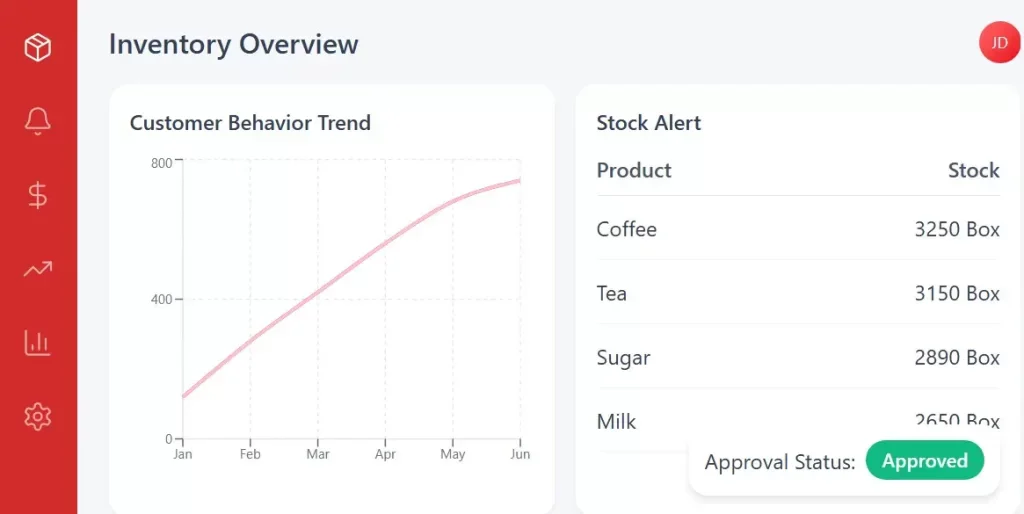
Managing inventory costs can be a complex task, but with the right tools, you can automate much of the process and gain better inventory control over your expenses. Many inventory software is designed to simplify and optimize the cost calculation process, making it easier for businesses to maintain profitability.
A good inventory system can reduce manual work, improve accuracy, and support better decision-making. Instead of relying on spreadsheets or disconnected tools, businesses can use inventory software to monitor stock, control expenses, and respond faster to changes in demand.
Here are some key features to look for in inventory software:
- Real-Time Inventory Tracking: Monitor your stock levels in real-time to avoid overstocking and stockouts, ensuring you only reorder what’s needed.
- Automated Cost Calculation: Automatically calculate carrying costs, ordering costs, and other expenses, reducing the likelihood of errors and saving time.
- Demand Forecasting: Leverage advanced analytics to predict customer demand and adjust your inventory levels accordingly, minimizing excess inventory.
- Comprehensive Reporting: Generate detailed reports that provide insights into your inventory costs, helping you make data-driven decisions to improve cost efficiency.
- Integrated Financial Management: Seamlessly connect inventory management with your accounting system to ensure that your financial statements accurately reflect all inventory costs.
With countless inventory software options available, the best option should be able to automate tedious cost calculations, allowing you to focus on more strategic business areas. This reduces unnecessary expenses and enhances overall efficiency, keeping your business competitive and profitable.
Explore inventory management software to improve inventory control and support more efficient business operations.

Conclusion
Inventory costs can become a significant financial burden for businesses in the Philippines. From purchasing and storage to stockouts and spoilage, these expenses can gradually reduce profit margins when they are not properly monitored. Understanding the sources of inventory costs is the first step toward managing them more effectively.
Local factors such as supply chain disruptions, limited warehouse space, and changing customer demand can make inventory planning more challenging. Accounting for these conditions in purchasing, forecasting, and stock management can help businesses control costs and maintain healthier cash flow.
As operations grow, managing inventory costs manually can become increasingly difficult. Try free demo to manage inventory costs with greater visibility and control.
FAQ about Inventory Cost
Common inventory costs include ordering costs related to placing and receiving orders, and carrying costs for storing and maintaining inventory. They also involve stockout costs from running out of stock, spoilage costs from expired or damaged goods, and capital costs representing the opportunity cost of funds tied up in inventory.
Inventory management software in the Philippines typically ranges from free (basic cloud tools) to ₱50,000 or more per year for mid-market systems, depending on the number of users, modules, and integrations required. SMEs often start with entry-level plans between ₱500 and ₱3,000 per month, while larger businesses with multi-warehouse or ERP needs should expect higher licensing and implementation costs.
Yes. The BIR requires businesses to maintain accurate inventory records as part of their books of accounts, which must be registered under Revenue Memorandum Order No. 29-2002. Inventory values directly affect the cost of goods sold reported in income tax filings, and businesses subject to VAT must also account for inventory in their taxable transactions.
Inventory costs generally fall into four categories: ordering costs (purchasing and processing), carrying costs (storage, insurance, and capital tied up in stock), stockout costs (lost sales and emergency restocking), and shrinkage costs (spoilage, theft, or damage). For Philippine businesses, carrying costs are often higher due to limited warehouse availability, while stockout costs can escalate quickly given inter-island supply chain constraints.
Inventory cost refers to the actual expenses a business incurs to acquire, store, and manage its stock — including purchase price, freight, and carrying charges. Inventory costing, on the other hand, is the accounting method used to assign those costs to goods sold versus goods remaining in stock. Common methods include FIFO, weighted average cost, and specific identification, each producing different COGS and ending inventory values.