









 Limited to 100 registrants

Stocking a wide product range costs money that most Philippine retailers lack. A 2025 study by the AJEBI found that 8 out of 10 sari-sari store owners in Bukidnon cited limited capital, inconsistent cash flow, and damaged goods. So how do retailers widen their shelves, and suppliers reach more stores, without buying stock first?
Consignment inventory answers both questions. The supplier keeps ownership of the goods and collects payment only after a sale. The retailer fills the shelf without spending capital upfront, so both sides share the risk. You will find this model across Philippine retail, from neighborhood stores to department chains.
This guide explains how consignment inventory works, which elements belong in the agreement, and where the model creates problems. It also covers the disadvantages each side absorbs and the practices that keep the arrangement profitable for retailers and suppliers.
Key Takeaways
Consignment inventory enables suppliers to retain ownership until goods are sold, reducing the financial risk for retailers. This model helps both parties manage stock without upfront payments from the retailer.
Effective consignment inventory management requires clear contracts outlining roles, strong communication between suppliers and retailers, and automated tools to track stock and sales in real time for accuracy.
Reviewing inventory performance on a regular basis helps businesses adjust stock levels before problems develop, so they can respond to shifts in demand without ending up with too much or too little on hand.
What is Consignment Inventory?
Consignment inventory is an arrangement where the supplier keeps ownership of goods until the retailer sells them. The retailer pays nothing upfront, so shelf space costs no capital. The supplier gains wider distribution and reaches customers it could not serve alone.
The difference from a traditional model comes down to who owns the stock and when money changes hands. Consignment stock also suits industries with seasonal or unpredictable demand. Here is how the two models compare:
- Traditional Inventory: The retailer buys the goods upfront and owns the stock from the moment the transaction closes.
- Consignment Inventory: The supplier keeps ownership, and the retailer pays only for the units that sell.
Retailers use consigned goods to test new or unproven products without risking a loss on unsold units. Consignment inventory accounting supports that choice, since the stock stays on the supplier's books until a customer buys it.
Both sides still need accurate counts, and integrating a periodic inventory system gives them scheduled checks on consigned stock. The model lowers risk for retailers and suppliers alike, which is where the real benefits start.
Key Elements of the Consignment Inventory Model

Successful consignment partnerships rely on precise inventory control management, which requires continuous tracking of stock levels, sales, and returns. Ownership stays with the supplier until a customer buys the item. The retailer holds the goods as a custodian, not as a buyer. A contract sits at the center of the partnership and should define these terms before stock ships:
- Ownership and title: Legal ownership stays with the supplier until the final sale closes.
- Commission structure: Sets the percentage of each sale the retailer keeps.
- Consignment period: Fixes how long the retailer may hold unsold stock.
- Payment conditions: Defines the remittance schedule and payment method for goods sold.
- Pricing authority: States who sets retail prices and approves discounts or promotions.
- Risk and insurance: Assigns who absorbs theft, damage, or spoilage losses in store.
- Returns handling: Covers return conditions, freight costs, and shipping deadlines for unsold stock.
- Reporting cadence: Sets how often the retailer submits sales and stock reports.
- Stock count rights: Lets the supplier join physical counts and verify shelf quantities.
- Termination terms: Defines notice periods and the procedure for recalling remaining stock.
Consigned goods share shelf space with the retailer's own stock, so a distinct SKU or location code keeps ownership clear. The supplier holds the inventory on its books, issues a delivery receipt first, and invoices only after the item sells. The retailer books only its commission as income.
Philippine rules tighten that timeline. Under BIR Revenue Regulations No. 16-2005, stock left unsold after 60 days counts as a deemed sale and triggers VAT. Specialized software tracks those deadlines, flags ownership per line, and settles commissions automatically.
Key Benefits of Consignment Inventory
The consignment inventory model provides significant advantages for both suppliers and retailers. The main appeal lies in how it distributes the risk, making it a mutually beneficial arrangement.
| Aspect | Benefits for Suppliers | Benefits for Retailers |
|---|---|---|
| Market Expansion | Expands product reach without requiring upfront payment from retailers | Offers a wider variety of products without tying up capital |
| Sales Opportunity | Increases likelihood of sales by placing products in multiple locations | Adapts to market demand by adjusting stock levels with minimal financial impact |
| Product Testing | Tests new products and gauges market demand before large-scale production | Introduces new products without significant financial risk |
| Financial Risk | Retains ownership, reducing losses from unsold goods | No upfront purchasing cost, reducing financial exposure |
| Cash Flow Impact | Maintains inventory control while expanding distribution | Frees up capital for other operational needs and business growth |
Common Challenges in Consignment Inventory
The consignment inventory model rewards both sides, but it also creates friction that neither party can ignore. Suppliers and retailers face different problems, so the risks rarely fall evenly. Naming those problems early helps both parties write a contract that prevents disputes later.
Challenges for Suppliers
Suppliers carry the financial weight of the arrangement because they still own every unit sitting on the retailer's shelf. They also give up daily control over how the goods get sold. That exposure shows up in four areas:
- Higher carrying costs: Suppliers absorb freight, warehousing, and any dedicated floor space the retailer charges for. Damaged units often land on their books too.
- No visibility into sales effort: The retailer risks little money, so suppliers cannot tell whether staff actively promote the consignment stock or leave it untouched.
- Unpredictable cash flow: Payment arrives only after the retailer sells. Revenue per period swings with someone else's sell-through rate.
- Coordination gaps: Without shared systems and real-time data, suppliers, logistics teams, and store staff work from different stock numbers.
Challenges for Retailers
Retailers avoid the purchase cost, but they still absorb operational burdens that owned stock would not create. Handling someone else's goods adds rules, paperwork, and liability. Four issues come up most often:
- No ownership of the goods: The supplier keeps title until checkout, so retailers cannot count consignment stock as an asset or borrow against it.
- Higher damage exposure: The longer goods sit on display, the more likely they get damaged, and overstocked shelves keep units waiting even longer. Many contracts make the retailer pay for those units regardless.
- Tracking complexity: Consigned units mixed with owned inventory produce count errors and disputes. Most retailers need an inventory management system to keep the two separate.
- Costs before any sale: Depending on the contract, retailers fund security, storage, and handling for goods they do not yet own.
Most of these problems trace back to unclear terms and separate record systems. A detailed contract, shared stock data, and honest demand forecasts keep consignment inventory workable for both sides.
Contracts settle who owes what, but only a system keeps both parties looking at the same numbers. Suppliers gain live sell-through visibility, and retailers keep consigned units cleanly separated from stock they own.

How to Manage Consignment Inventory Effectively
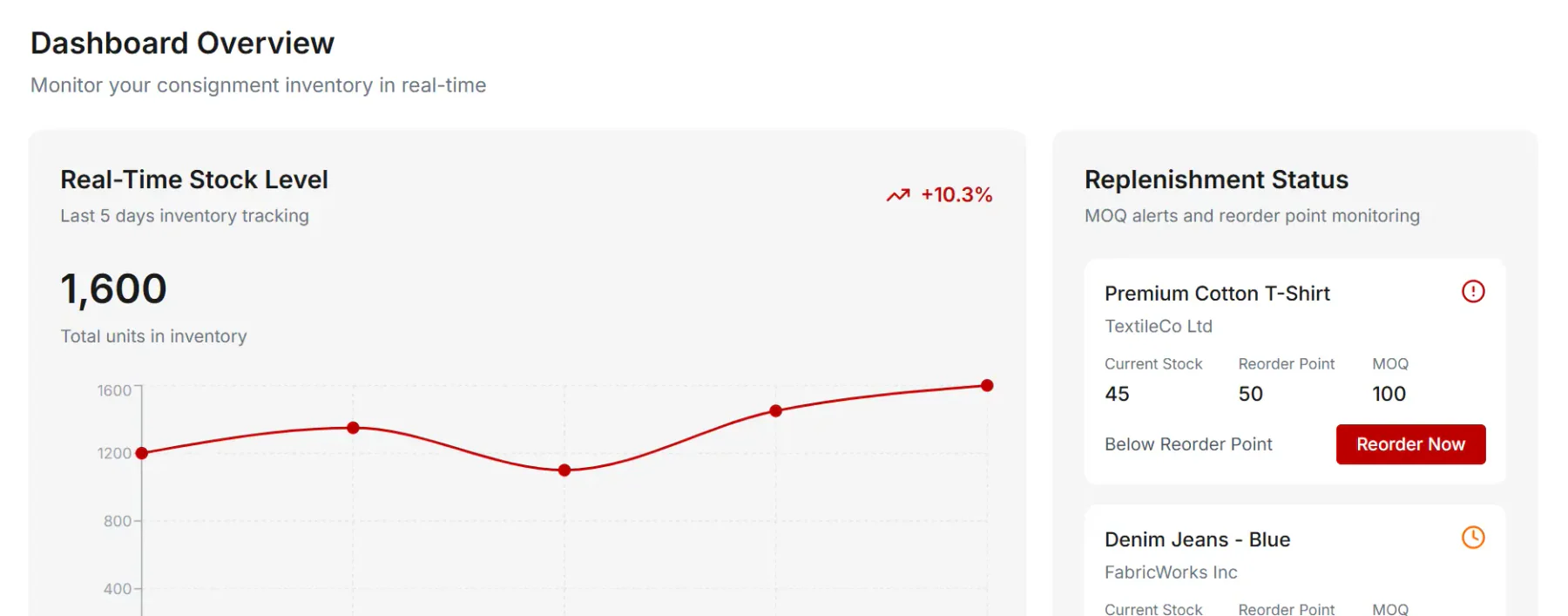
To manage consignment inventory effectively, businesses need the right tools and strategies in place. Here are the key steps:
- Automate replenishment: Invest in automated systems that replenish inventory such as MOQ to avoid stockouts and ensure products are always available.
- Build strong supplier-retailer relationships: Regular communication ensures that both parties are aware of stock levels, sales performance, and any potential issues.
- Use consignment inventory platforms: This allows businesses to track sales and stock levels in real-time, helping both suppliers and retailers stay updated. The best manufacturing inventory software can offer similar real-time tracking features for factory and production stock.
With the right tools and clear communication, businesses can efficiently manage their consignment inventory. Now that we’ve covered the essentials, let’s move on to best practices that will optimize your consignment strategy.
Best Practices for Consignment Inventory Management
Consignment inventory rewards partners who plan the details before the first delivery. The practices below cover the contract, the pricing, the records, and the technology that keep both sides aligned. Each one prevents a specific failure that costs suppliers or retailers money.
1. Build a Contract That Names Every Responsibility
Put shipping duties, damage liability, payment timing, and return procedures in writing before stock moves. Add how both parties will count units and who resolves discrepancies. A contract that skips these details turns every problem into an argument.
2. Agree on a Pricing Strategy Before Launch
Set retail prices that protect the supplier's margin and still attract shoppers. Weigh product cost, competitor pricing, and local demand rather than copying a standard markup. Revisit the price when demand shifts instead of waiting for the contract renewal.
3. Keep Consignment Inventory Accounting Consistent
Consignment inventory accounting only works when both ledgers follow the same rule. The supplier reports the goods as inventory, and the retailer records the commission as income. Agree on the cutoff date for each reporting period so the two statements reconcile.
4. Watch Stock Age, Not Just Stock Levels
Group consigned units by how long they have sat on the shelf, not just by how many remain. A monthly stock aging report shows which SKUs cross 60 or 90 days. Both parties can then discount or recall those units before their value drops.
5. Protect Cash Flow on Both Sides
Suppliers need payment on schedule, and retailers need working capital to keep operating. Move stock faster with promotions or bundles, and negotiate terms that suit both parties. Unsold units sitting on shelves lock up cash neither side can use.
6. Work With More Than One Partner
Not every consignment relationship lasts. Suppliers who place stock with several retailers spread their risk, and retailers who source from several suppliers protect their assortment. One failed partnership then costs a share of sales, not all of them.
7. Schedule Communication Instead of Reacting to Problems
Hold a standing review of sales figures, stock counts, and pending payments. Raise disputes there while they are small, and renegotiate terms when market conditions change. Partners who talk only during problems rarely agree on what the records show.
8. Replace Spreadsheets With Inventory Management Software
Manual tracking creates gaps that neither party can close. A dedicated platform shows stock movement to both sides, triggers reorder points automatically, and generates performance reports without spreadsheet work. It also timestamps every movement, which settles disputes with records instead of memory.
Conclusion
Consignment inventory offers a practical middle ground for businesses that want to grow their product range without overcommitting capital. When suppliers and retailers align on clear contracts, maintain steady communication, and use the right tools to track stock movement, the model becomes a reliable part of a broader inventory strategy.
For businesses looking to evaluate how consignment fits into their overall approach, exploring the top leading inventory management software in the Philippines is a useful next step.

FAQ About Consignment Inventory
A consignment stock contract is an agreement between a supplier and a retailer outlining terms such as ownership, payment, and duration. The supplier retains ownership of the goods until they are sold by the retailer.
Consignment goods are not included in a retailer’s inventory until sold. The supplier retains ownership, so the retailer doesn’t list them in their inventory records until the sale occurs.
Handling consignment inventory involves regular tracking of stock levels, sales, and returns. Using inventory management software simplifies this process, ensuring both parties have accurate, real-time data.
Industries use consignment inventory to reduce financial risk for retailers and test new products without committing to large purchases upfront. This allows flexibility and reduces excess stock issues.