










 Limited to 100 registrants

A warehouse management system (WMS) is increasingly important in the Philippines, where logistics inefficiencies continue to raise operating pressure. With logistics-related costs remaining high and structural barriers still affecting the sector, businesses need better inventory visibility, workflow control, and warehouse accuracy to operate more efficiently.
This article explains what a warehouse management system is, how it works, its main benefits, and the key features businesses should consider when evaluating warehouse operations.
Key Takeaways
WMS is integral to warehousing management, working seamlessly with systems such as ERP, CRM, and TMS to maintain operational accuracy across the entire supply chain.
The benefits of WMS system are enhancing inventory control, facilitating efficient goods reception, and improving storage and picking processes.
Key features of a WMS include 3D warehouse design, inventory tracking, picking and packing optimization, labor management, yard and dock management, and reporting and analytics.
What is a Warehouse Management System (WMS)?
A Warehouse Management System (WMS) is a software solution that supports and enhances warehouse or distribution center operations. Its core functions include inventory control, managing goods reception, optimizing storage, and ensuring efficient picking and packing. The main goal of a WMS is to provide real-time inventory visibility, enabling accurate forecasting and better decision-making.
In modern warehousing, WMS integrates with systems like ERP, CRM, and TMS to improve performance and synchronize data across departments. By leveraging a WMS, businesses can streamline operations, reduce errors, and maintain a consistent supply chain, helping sustain competitiveness and customer satisfaction in the Philippines.
Benefits of Warehouse Management System (WMS)
A WMS delivers measurable improvements across the key areas that affect warehouse performance, from cost control and inventory accuracy to fulfillment speed and supply chain adaptability.
| Feature | Benefits | How It Works |
| Cost Reduction | Decreases expenses through efficient resource use and waste reduction. | Minimizes overstocks, misplacements, and unnecessary warehouse movements. |
| Real-Time Inventory Visibility | Enables better decision-making and prevents supply chain surprises. | Tracks stock movements continuously so teams always have up-to-date inventory data. |
| Scalability and Flexibility | Supports dynamic change during peak periods or unexpected demand fluctuations. | Integrates with ERP, TMS, and CRM to synchronize data and adapt to market changes. |
| Fulfillment Speed | Speeds up order processing from receiving to shipping. | Automates picking routes and packing workflows to reduce turnaround time. |
| RFID and QR Code Integration | Improves tracking precision and speeds up inventory audits. | Tracks each item’s movement in real time through quick scanning capabilities. |
Together, these capabilities help businesses reduce operational gaps, respond faster to demand changes, and maintain more consistent inventory accuracy across all warehouse stages.
How Does a Warehouse Management System Work?
A Warehouse Management System (WMS) streamlines and optimizes warehouse operations, ensuring efficient inventory management and order fulfillment. Understanding how a WMS works can help businesses enhance productivity, reduce errors, and improve customer satisfaction. Here’s how it operates:
- Inventory tracking and management: A WMS provides real-time visibility into inventory levels, locations, and movements within the warehouse. It tracks products from receiving to shipping, minimizing stock discrepancies and preventing overstocking or stockouts.
- Order processing and fulfillment: The system automates ordering, from picking and packing to shipping. It optimizes picking routes, reduces processing time, and ensures accurate order fulfillment, enhancing overall efficiency and customer satisfaction.
- Receiving and putaway: When new inventory arrives, a WMS records the warehouse receipts, verifies product details, and assigns optimal storage locations. This organized putaway process maximizes warehouse space and simplifies future picking.
- Shipping and delivery management: A WMS coordinates shipping by generating shipping labels, scheduling deliveries, and integrating with carriers for real-time tracking. This streamlines logistics, reduces shipping errors, and improves delivery timelines.
- Reporting and analytics: Advanced reporting tools within a WMS provide insights into inventory turnover, order accuracy, and overall operational efficiency. These analytics help management make informed decisions to optimize warehouse performance.
By automating and coordinating these critical tasks, a Warehouse Management System enhances operational efficiency, accuracy, and productivity, ultimately supporting business growth and customer satisfaction. Warehouse optimization is a crucial aspect of business efficiency, and a WMS provides solutions like centralized warehouse solutions for better control and visibility. Discover more about centralized warehouse solutions here.
Type of Warehouse Management System
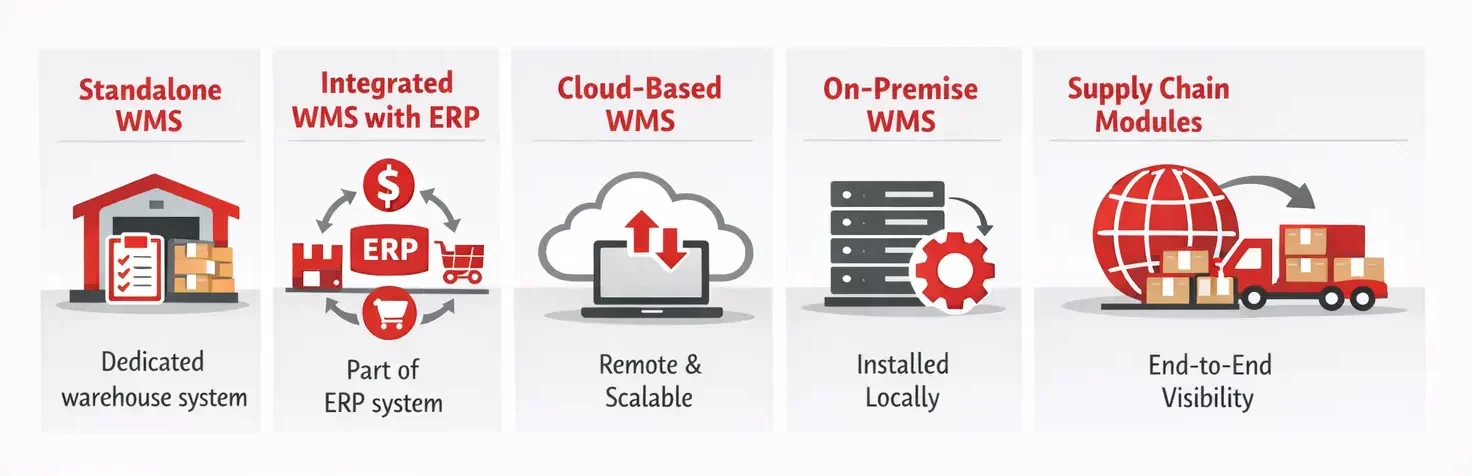
There are several types of Warehouse Management Systems (WMS) designed to meet different business needs. Understanding the various types can help companies choose the most suitable solution for their operations. Here are the main types of WMS:
1. Standalone WMS
This is a dedicated system focused solely on warehouse management functions, such as inventory tracking, picking, packing, and shipping. It is ideal for businesses that need specialized warehouse operations without integrating with other systems.
2. Integrated WMS with ERP
This type of WMS is part of an Enterprise Resource Planning (ERP) system. It integrates warehouse management with other business functions like finance, sales, and procurement, providing a unified view of operations and improving data accuracy.
3. Cloud-Based WMS
Cloud-based WMS solutions are hosted on remote servers and accessed via the internet. They offer flexibility, scalability, and lower upfront costs compared to on-premise systems. They are suitable for businesses looking for remote access and easy software updates.
4. On-Premise WMS
An on-premise WMS is installed locally on a company’s servers. It offers full control and customization but requires higher upfront costs and maintenance. This type is often chosen by large enterprises with complex and unique warehouse requirements.
5. Supply Chain Modules
These are WMS solutions integrated within broader supply chain management systems. They provide end-to-end visibility of inventory flow across the entire supply chain, ensuring efficient logistics and demand planning.
Choosing the right WMS depends on your business needs and operational complexity. Learn more about the types of warehouses in the Philippines to better understand which setup fits your storage and logistics needs.
Features of Warehouse Management System (WMS)

A Warehouse Management System (WMS) offers key features to optimize warehouse layout, improve inventory management, and streamline operations.
1. 3D Warehouse Design
Modern WMS warehouse products support intricate 3D warehouse layouts, helping maximize space utilization and efficiency in material handling. By visualizing and planning your physical space in three dimensions, you can significantly reduce the time spent on moving and managing inventory, which directly translates to cost savings and faster response times.
2. Inventory Tracking
With robust inventory management capabilities, a WMS warehouse offers various tools like RFID and barcode scanning that update inventory status in real-time. This level of precision is invaluable for maintaining optimal stock levels and addressing demand fluctuations without overstocking or understocking.
3. Receiving and Storage
Efficient strategies for receiving and storing goods are critical in a high-functioning warehouse. Your WMS software can automate processes to minimize errors and reduce dock scheduling conflicts, ensuring a smooth flow of goods into and out of storage.
4. Picking and Packing Goods
The WMS software enhances your picking operations through advanced picking solutions such as zone, batch, and wave picking. These methods optimize the picking process, thereby increasing accuracy and reducing turnaround time for fulfilling orders.
A WMS also generates the paperwork that accompanies each order, so it helps to know exactly what a packing slip is and how it differs from an invoice or a delivery note.
5. Labor Management
Labor optimization is another key feature of a comprehensive WMS software. By tracking individual worker performance and aligning it with warehouse goals, the system not only boosts productivity but also enhances worker satisfaction by identifying and rewarding efficiency.
6. Yard and Dock Management
Effective yard and dock management ensures that loading and unloading schedules are streamlined. A WMS with integrated dock scheduling features allows for smoother and quicker movement of goods, thereby reducing bottlenecks and speeding up the supply chain.
7. Reporting and Analytics
Lastly, the WMS provides detailed reports and analytics that offer insights into every aspect of warehouse operations. These analytics help in making data-driven decisions that can further refine your inventory management and overall workflow efficiencies.
Smart Warehousing Technology
To adapt to changing customer buying patterns, sales channels, and expectations and to stay competitive in evolving markets companies must adopt smart warehousing technologies such as artificial intelligence (AI), machine learning, and autonomous robots. Here are some key technologies transforming warehouse operations:
1. Voice Picking Technology
Voice picking, also known as voice-directed warehousing, enables operators to complete tasks hands-free and paperless. Using a voice-picking device, such as a headset or dedicated terminal, workers receive spoken instructions from the Warehouse Management System (WMS) on where and when to pick items.
They can also provide real-time updates to the system using natural language, enhancing communication and productivity.
2. Artificial Intelligence (AI) and Internet of Things (IoT)
AI and IoT transform warehouse management by enabling businesses to respond quickly to changing conditions. IoT sensors gather real-time data from conveyors, mobile devices, RFID tags, and other sources. AI then analyzes this data to provide insights and predictions that guide decision-making.
These technologies help optimize routing, manage labour, dynamically slot inventory, and batch orders more efficiently. By adopting AI and IoT, companies can enhance their warehouse management, increase agility, and stay competitive.
3. Warehouse Automation
Automation technologies, such as the automated guided vehicle, are significantly enhancing the efficiency of warehouses and distribution centres. Processes like data collection, barcoding, scanning, order picking, packing, shipping, and inventory tracking can be streamlined through automation.
This increases operational efficiency and scalability and minimizes human errors, such as incorrect shipping details or SKU entries. Implementing smart warehousing technology also plays a key role in reducing workplace risks. Learn more about warehouse safety best practices to ensure your operations stay compliant and your team stays protected.
Conclusion
A Warehouse Management System gives businesses the structure and visibility needed to manage inventory accurately, fulfill orders efficiently, and reduce the operational gaps that come with manual processes. From receiving and putaway through to picking, packing, and shipping, each stage benefits from the coordination and automation that a well-implemented like HashMicro’s Warehouse Management System provides.
For businesses in the Philippines looking to strengthen their warehouse operations, reviewing the top warehouse management systems available can help identify which platforms best support the scale, complexity, and compliance requirements of their operations.
FAQ Warehouse Management System (WMS)
A Warehouse Management System (WMS) is a software solution designed to optimize warehouse operations. It helps manage inventory, track stock levels, streamline order picking and packing, and improve overall warehouse efficiency. A WMS ensures accurate inventory control and efficient order fulfillment.
There are four main types of WMS:
1. Standalone WMS: Focuses solely on warehouse functions such as inventory tracking and order management.
2. Integrated WMS with ERP: Combines warehouse management with other business processes, including finance and procurement, through an Enterprise Resource Planning system.
3. Cloud-Based WMS: Hosted on remote servers and accessed online, offering flexibility and scalability.
4. Supply Chain Modules: Part of a larger supply chain management system, providing end-to-end visibility and logistics optimization.
An example of warehouse management is the use of barcode scanning for inventory tracking. When products arrive at the warehouse, they are scanned into the system, updating inventory levels in real-time. During order fulfillment, items are picked, packed, and shipped using the WMS, ensuring accurate stock management and timely delivery. This process streamlines operations and reduces errors.
You need a warehouse management system (WMS) when manual processes start causing inventory errors, delayed shipments, or fulfillment inaccuracies that affect customer satisfaction. A WMS gives you real-time stock visibility, automates picking and packing workflows, and reduces human error, making it essential for any business managing high order volumes or multiple warehouse locations.