






Running out of stock at the wrong moment or sitting on excess inventory that nobody needs are two sides of the same costly problem. According to a study by IHL Group, out-of-stocks and overstocks drain about 6.5% of global retail sales each year, roughly $1.73 trillion. Businesses that lack clear visibility into their supply chain face constant disruptions, from delayed orders to wasted resources, that quietly erode both profits and customer trust.
Effective inventory tracking is the key to helping companies balance supply and demand while keeping costs low. Finding the right balance is not always straightforward, which is why smart, data-driven approaches to inventory management have become essential for businesses of all sizes.
This article covers what inventory tracking is, its key components, the methods available, and the best practices businesses can adopt to manage stock more efficiently.
Key Takeaways
Inventory tracking involves documenting a product’s journey at each stage, from raw materials to finished goods. By monitoring items in real time, businesses can maintain proper stock levels and prevent issues in their supply chain.
Proper inventory tracking enhances stock visibility, reduces stockouts and overstocks, improves forecasting, and allows for better error detection and correction.
The three most common inventory tracking methods are barcode systems, RFID tracking, and inventory management software, each offering different levels of accuracy, speed, and scalability to suit different business needs.
What Is Inventory Tracking?
Inventory tracking means keeping records of a product at every stage, whether it is raw materials, work in progress, or finished goods ready for sale. By tracking items in real time, businesses can maintain the right amount of stock, respond quickly to changes in demand, and avoid costly disruptions across their supply chain.
For example, a small online store selling handmade candles can use an inventory tracker to monitor stock at every stage, from raw wax and wicks to finished products ready for dispatch. If tracking shows that wicks are running low, the business can reorder before running out, keeping production on track and customer orders fulfilled on time.
Key Components of Inventory Tracking
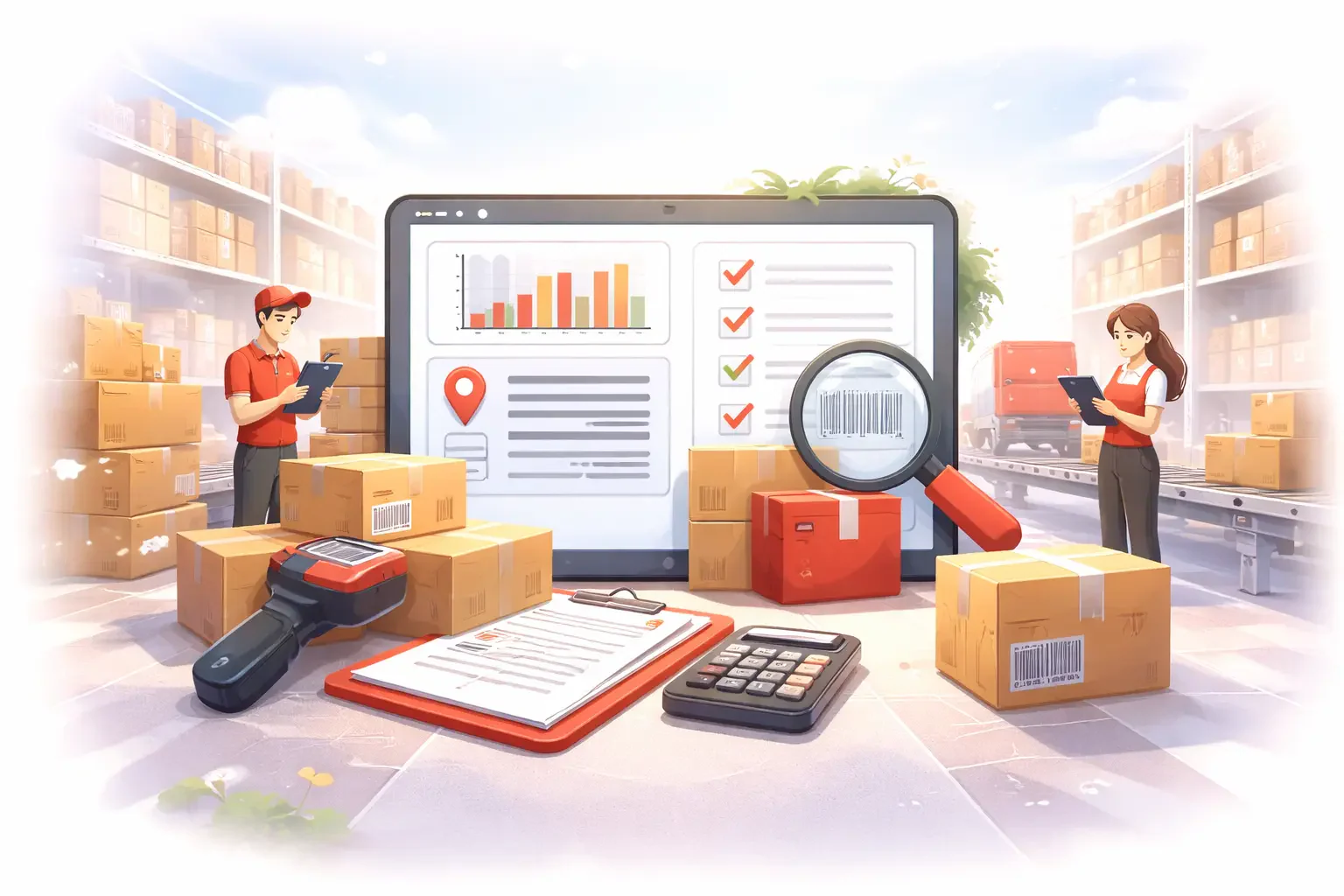
Inventory management tracking means monitoring stock levels, locations, record accuracy, and costs across every warehouse. The key components of inventory tracking are stock quantity, storage locations, inventory accuracy, valuation and carrying costs, turnover rates, and reorder points, which together give businesses a complete picture of their inventory.
1. Stock levels and quantity
The foundation of inventory tracking lies in knowing exactly how much stock you have at any given time. A real-time inventory tracker updates counts as goods move. This helps you avoid costly errors like running out of products or holding too much inventory.
2. Inventory locations
Tracking where your stock is located is crucial, especially for businesses with multiple warehouses or distribution centers. Barcode and RFID inventory tracking methods capture each movement at the shelf level, reducing time spent searching for items and streamlining order fulfillment.
3. Inventory accuracy
Your records only help if they match reality. Cycle counts and stock reconciliation keep recorded quantities aligned with physical counts. This creates consistent numbers for purchasing, sales, and fulfillment teams to work from.
But keeping track of stock levels, locations, and record accuracy is just the beginning. You also need to consider financial factors like valuation, carrying costs, turnover, and reorder points.
4. Inventory valuation and carrying costs
Inventory valuation methods like FIFO (First-In, First-Out) or LIFO (Last-In, First-Out) impact your financial reporting. Tracking inventory value, along with the carrying costs of storing unsold goods, ensures accurate financial statements and helps in setting profitable prices.
5. Inventory turnover rates
This metric tells you how often your inventory is sold and replaced over a period. High turnover rates indicate strong sales, while low turnover may signal slow-moving stock that ties up capital.
6. Reorder points and levels
Automated reorder points help you maintain optimal stock levels. Setting the right reorder levels minimizes the risk of running out of stock while avoiding overstocking.
Together, these components set the foundation for reliable inventory tracking. Managing them manually gets harder as SKUs and locations grow. Therefore, businesses move these checks into inventory software that schedules production, updates stock, costs, and reorder alerts in one place.
Manual vs. Automated Inventory Tracking: Which is Better?
As a business grows, the choice between manual and automated tracking becomes increasingly significant. Manual inventory tracking methods such as pen and paper or spreadsheets were once the standard, but modern automated solutions now offer clear advantages in speed, accuracy, and scalability.
| Tracking Method | Manual Tracking | Automated Tracking |
|---|---|---|
| Tools Used | Pen and paper, spreadsheets | Software and mobile apps |
| Accuracy | Prone to human error | Reduces errors with automated updates |
| Efficiency | Time-consuming and inefficient for growing businesses | Improves overall efficiency |
| Scalability | Difficult to manage as inventory scales | Allows businesses to scale operations seamlessly |
| Data Updates | Manual data recording | Real time updates |
Benefits of Effective Inventory Tracking

When done right, inventory management tracking delivers numerous benefits that enhance operational efficiency and profitability. These benefits are why businesses of all sizes invest in advanced tracking systems. The best inventory management software should have these sets of benefits:
1. Improved stock visibility
One major benefit of a good inventory tracker is better stock visibility. When you know exactly what’s in stock at all times, you can make quick and smart decisions. This helps you avoid running out of popular items, which could lead to lost sales and unhappy customers. With real-time data, you can respond quickly to changes in demand.
Better visibility also means you can manage your resources more efficiently. You can reorder items at the right time, avoid overstocking, and reduce waste. This keeps your operations lean and your customers satisfied. Using SKUs is one of the ways to easily increase your stock visibility.
2. Reduced stockouts and overstocks
Balancing your stock levels is crucial for smooth operations and healthy cash flow. Accurate inventory management tracking helps you avoid stockouts and overstocks. Stockouts happen when you run out of items and miss sales, while overstocks tie up space and money in excess inventory.
By keeping your stock levels in check, you can ensure that your resources are used efficiently. This balance helps improve your cash flow by reducing the money tied up in excess stock. It also ensures that you have enough inventory to meet customer demand, keeping your operations running smoothly.
3. Enhanced inventory forecasting
Accurate inventory tracking gives you the data you need for better forecasting. With reliable data, you can predict future demand more accurately, helping you plan. This means fewer surprises and last-minute rushes, making your supply chain activities more efficient.
Better forecasting also leads to stronger relationships with suppliers and customers. You can avoid delays and ensure that products are available when needed, leading to happier customers and smoother operations.
4. Better error detection and correction
Automated inventory tracking systems help catch and fix errors quickly. Unlike manual tracking, automated systems spot inconsistencies in real time before they become bigger problems, improving overall accuracy.
By reducing errors, businesses gain more accurate financial reports and inventory records, making it easier to make informed decisions, stay compliant with regulations, and build more reliable operations supported by better overall inventory control.
Challenges in Inventory Tracking
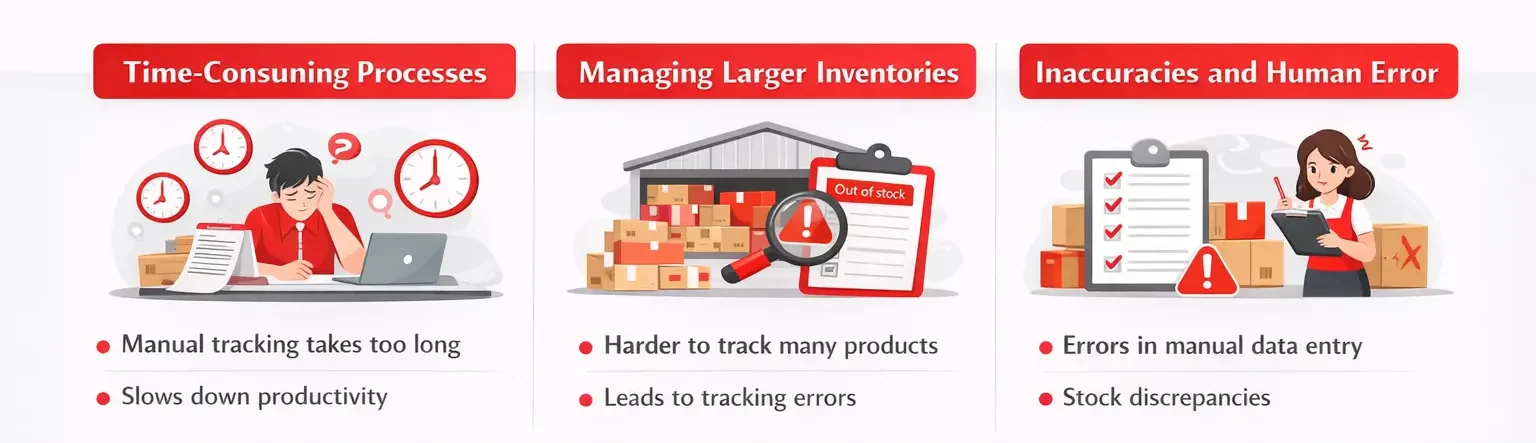
While the benefits are clear, inventory tracking comes with certain hurdles that businesses need to overcome. Recognizing these challenges is the first step toward mitigating them.
Time-Consuming Processes
Manually tracking inventory takes a lot of time, especially as your inventory grows. This process can take away valuable time that could be spent on other important tasks. Without automation, inventory management can quickly become overwhelming.
The more time you spend on manual tracking, the more likely you are to make mistakes. This can lead to delays, discrepancies, and lost sales. To avoid these issues, many businesses turn to automated systems that save time and reduce errors.
Difficulty in Managing Larger Inventories
As your business grows, managing a larger inventory becomes more difficult. Larger inventories often have many different products, making it harder to keep track of everything. Without a reliable system, managing this complexity can lead to errors and inefficiencies. Using the ABC inventory technique might be one of the ways to deal with this problem.
Advanced tools can help manage large inventories by providing real-time visibility and automating tasks. By investing in the right system, businesses can keep their operations efficient and profitable, even as they grow.
Inaccuracies and human error
Human error is a common challenge in manual stock counts. Simple mistakes such as entering wrong data or miscounting items can cause stock discrepancies, leading to lost sales and unhappy customers. An automated inventory tracker minimizes the need for manual data entry, reducing the chance of mistakes and improving overall accuracy.
Businesses operating in the Philippines should also ensure their records meet inventory list BIR submission requirements, as submitting an accurate inventory list to the Bureau of Internal Revenue is mandatory.
Inventory Tracking Methods: Finding the Right Fit
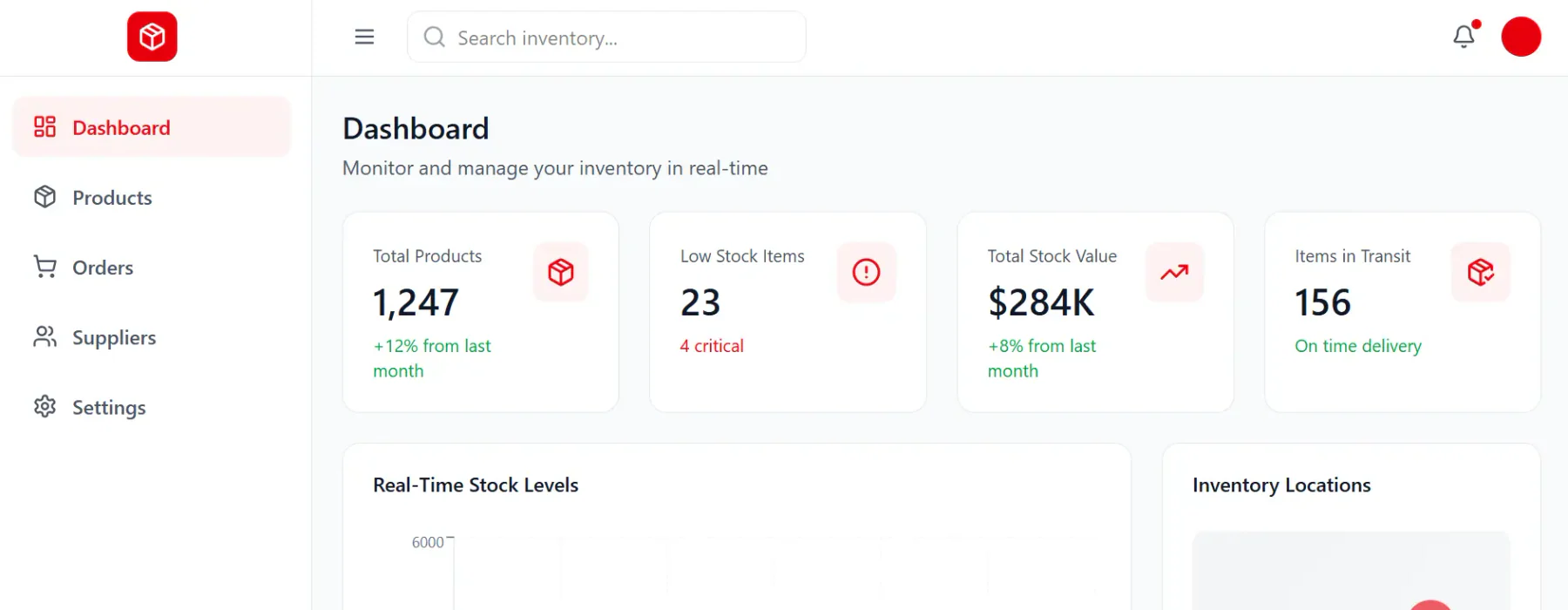
Choosing the right inventory tracking method is key to running a business smoothly. Different methods offer different benefits depending on business size, product volume, and operational complexity, so it is important to pick a method that fits current needs and can grow with the business.
1. Barcode systems
Barcode systems are popular because they are simple and affordable. Each product gets a unique barcode that can be scanned to track its movement, saving time and reducing manual counting errors. A barcode based inventory system can further enhance this process, ensuring greater accuracy and efficiency in managing stock.
Setting up a barcode system only requires a barcode printer and scanner, making it accessible for businesses of all sizes. While barcodes need to be scanned directly, which can be a limitation in some setups, they remain a reliable and cost-effective option for keeping inventory records accurate.
2. RFID tracking
RFID (Radio Frequency Identification) is one of the more advanced inventory tracking methods compared to barcodes. Unlike barcodes, RFID tags do not need to be scanned directly, allowing businesses to track items faster and more flexibly across large-scale operations.
RFID provides real-time tracking with up-to-the-minute inventory data, supporting faster and more informed decisions in fast-paced industries. Businesses that adopt RFID in inventory management can also automate cycle counts and location updates across entire warehouses. While the initial setup cost is higher, the efficiency and accuracy gains make it a worthwhile investment for complex operations.
3. Inventory management software
A cloud-based inventory management software offers a modern approach to tracking by integrating inventory with other business processes like sales and procurement. It automates tasks, reduces errors, and delivers real-time data for better decision-making across the entire operation.
One major benefit is the end-to-end visibility it provides across the supply chain, allowing businesses to track inventory from the moment it is ordered until it is sold. While it can be more expensive to implement, the long term benefits in accuracy, efficiency, and stock control make it a smart choice for growing businesses.
Vendors differ in how far that integration reaches. Systems such as HashMicro's inventory management software connect stock levels, warehouse locations, and reorder rules directly to purchasing and accounting, so teams read the same numbers instead of reconciling separate files. Before committing, you can schedule a free consultation to see how HashMicro can simplify your inventory management.

Best Practices for Efficient Inventory Tracking
Efficient inventory tracking isn’t just about having the right tools; it’s about combining those tools with proven strategies.
- Regular Cycle Counts and Audits: Regular cycle counts help ensure your recorded inventory matches what’s on hand, maintaining accuracy.
- Monitoring Inventory Movement and Lifecycle: Understanding your inventory’s lifecycle, from procurement to sales, enables better resource allocation and forecasting.
- Implementing Digital Tracking and Automation: Automating inventory tracking minimizes errors and boosts efficiency by providing real-time updates.
- Customizing Reports and Dashboards: Tailored reports and dashboards help you track the KPIs that matter most to your business, from stock levels to reorder points.
Conclusion
Effective inventory tracking is a critical element for business success, whether running a small store or managing a large-scale operation. Having the right tools and practices in place prevents stockouts, overstocking, and operational inefficiencies that hurt profitability. Manual methods and outdated systems often lead to inaccuracies, making it difficult to make confident, data-driven decisions.
Businesses looking to improve their tracking capabilities can start by exploring the top inventory management software options available in the Philippines to find a solution that fits their operational needs.

FAQ About Inventory Tracking
To better track inventory, use a modern inventory management system for real time updates. Employ barcode or RFID technology to streamline recording. Conduct regular audits to reconcile discrepancies, optimize reorder points based on data, and train your team in best practices.
Daily inventory tracking involves updating and monitoring inventory levels on a daily basis. This method provides real time visibility into stock levels, helping businesses quickly identify and address issues such as stockouts or overstock. It often uses automated systems to streamline the process and maintain accuracy.
The purpose of inventory tracking is to monitor and manage stock levels, ensuring that businesses have the right amount of inventory on hand. It helps prevent stockouts, reduce excess inventory, optimize order processes, and maintain accurate financial records. Effective tracking improves supply chain efficiency and supports overall business operations.
Yes. Inventory tracking strengthens supplier management by showing current stock, usage rates, reorder points, and delivery history. An inventory tracker helps purchasing teams compare supplier lead times, confirm quantities, and flag delays early. With accurate inventory management tracking, businesses can coordinate replenishment, reduce emergency orders, and maintain dependable supplier relationships.
Businesses should assess tracking accuracy, scalability, integrations, usability, and security before choosing an inventory tracking solution. Check whether the inventory tracker supports barcode or RFID updates, multi-location visibility, reporting, and forecasting. Compare inventory tracking methods against workflow needs, implementation resources, and total ownership costs to ensure long-term operational value.