












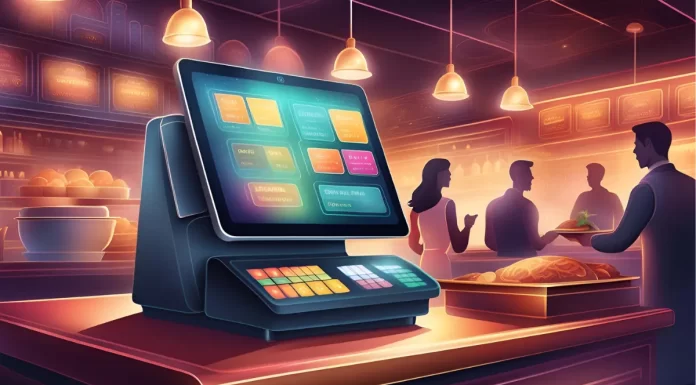
The competitive restaurant industry is notoriously challenging, even for brands with great food and loyal customers. With thin margins, rising ingredient and labor costs, and delivery platforms reshaping demand, restaurants are pushed to make faster, smarter decisions every day.
Many outlets don’t fail because the concept is weak, but because operations can’t keep up: stock isn’t tracked tightly, promos hurt margin, and multi-branch reporting comes too late to prevent losses.
Customer expectations also keep shifting. Guests want consistent quality, shorter wait times, flexible payments, and smooth ordering across dine-in, takeaway, and delivery. When teams still rely on manual tracking or disconnected tools, issues like stockouts, waste, and cashier errors quickly become revenue leaks.
Key Takeaways
|
Why Restaurants Struggle in Competitive Times?
In highly competitive times, restaurants face challenges because competition has expanded far beyond nearby outlets. Delivery platforms allow customers to compare dozens of options instantly, while ghost kitchens can enter the market quickly with lower overhead.
At the same time, operating costs continue to rise, from labor and rent to ingredient prices, putting constant pressure on already thin margins. Consumer behavior is also changing rapidly, with guests expecting faster service, flexible payment options, and consistent experiences across dine-in, takeaway, and delivery.
Staffing issues further intensify these challenges, as labor shortages and high turnover make maintaining service quality harder. When operational systems remain manual or fragmented, decisions rely on incomplete data, leading to waste, stockouts, delayed responses, and missed growth opportunities.
The Importance of Thriving VS. Just Surviving
In the restaurant business, there is a clear difference between surviving and thriving. Surviving often means breaking even, constantly reacting to daily problems, and operating under ongoing financial stress. Cash flow is tight, decisions are short-term, and the business feels more like a money trap than a growth opportunity.
Thriving, on the other hand, is about building a profitable, scalable, and sustainable operation. Restaurants that thrive have healthier margins, clearer visibility into performance, and the ability to reinvest in people, systems, and customer experience. This stability directly impacts employee satisfaction, as teams work in a more organized environment with clearer processes and growth paths.
When a restaurant moves beyond survival mode, customer experience improves naturally. Consistency, service quality, and long-term planning become possible, creating a business that is not only resilient today but also viable for years to come.
9 Essential Strategies for Thriving in the Competitive Restaurant Industry
Strategy 1: Focus on exceptional quality
Quality is the foundation of everything, pricing power, reviews, repeat visits, and long-term loyalty. In a competitive restaurant market, customers forgive a busy night, but they rarely forgive inconsistency.
Start by defining what “quality” means in measurable terms: taste consistency, portion control, plating standards, food temperature, and service readiness. Then reinforce it with simple routines: prep checklists, station audits, and short refresher training for peak periods.
Implementation tips:
- Standardize recipes and portioning tools to reduce variance.
- Use weekly “top complaint” reviews to fix recurring issues fast.
- Track returns, remakes, and comps to identify quality leaks.
Strategy 2: Build a memorable dining experience
Restaurants don’t compete on food alone. Guests remember how the place made them feel, speed, warmth, ambience, cleanliness, and small details like how problems are handled.
Make the experience consistent across dine-in, takeaway, and delivery. The goal is not to be perfect, but to be reliable: the same service standard, the same order accuracy, and the same sense of care every time.
Common mistakes to avoid:
- Over-decorating while neglecting service flow.
- Inconsistent greeting and table handover practices.
- Ignoring wait-time communication during peak hours.
Strategy 3: Implement effective loyalty programs
Repeat customers are usually cheaper to retain than new customers are to acquire, especially when competition is intense. A loyalty program turns “occasionally satisfied” guests into regulars by giving them a reason to return sooner.
Keep the program simple and valuable. Points, tiers, birthday offers, and members-only bundles tend to work best when redemption is easy and benefits feel meaningful.
What to track:
- Repeat rate and visit frequency
- Redemption rate (too low = irrelevant, too high = margin risk)
- Average order value among members vs. non-members
Strategy 4: Master online presence and digital marketing
Your online presence is the new storefront. For many customers, the first impression comes from Google results, reviews, menus, photos, and delivery listings, not your physical signage.
Win the basics first: accurate store details, updated menu, strong photos, and consistent review responses. Then scale what performs—short-form content, local SEO, and paid campaigns that target high-intent searches rather than broad awareness.
Practical moves:
- Keep Google Business Profile updated weekly.
- Build content around best-sellers and seasonal drops.
- Track promotions by channel so discounts don’t become blind margin loss.
Strategy 5: Leverage email marketing effectively
Email is an owned channel, unlike social platforms, you control the reach. It works best for bringing customers back through targeted offers, event announcements, and seasonal reminders.
Segment the list early: frequent diners, lapsed customers, delivery-first buyers, and high spenders. Simple segmentation usually beats “one promo for everyone.”
Strategy 6: Engage your community actively
Local relationships still matter. Community engagement builds trust, increases word-of-mouth, and creates brand recall beyond paid ads.
Think partnerships (gyms, offices, schools), small events, and support for local causes. The goal is to show up consistently, not to run expensive campaigns.
Strategy 7: Stay agile and embrace trends
Trends change quickly, diet preferences, ordering behavior, and content formats evolve every quarter. Restaurants that stay relevant usually test small, learn fast, and keep what works.
Treat innovation like controlled experimentation. Run limited-time menu items, test bundles for delivery, and gather feedback before rolling changes across all locations.
Risk control:
- Pilot in one outlet first
- Set success metrics (sales volume, margin, repeat orders)
- Avoid permanent menu expansion without performance proof
Strategy 8: Invest in your staff
In restaurants, staff performance directly impacts guest experience, speed, and cost control. High turnover creates hidden costs: recruiting time, training gaps, service inconsistency, and operational mistakes.
Make retention practical. Clear SOPs, predictable scheduling, structured training, and recognition systems often outperform “motivational slogans.” When staff know what good looks like and feel supported, service becomes more consistent.
What to measure:
- Turnover rate and training completion
- Labor cost % vs. sales
- Service speed and complaint trends by shift/team
Strategy 9: Leverage data and business systems
Data turns guesswork into control. Without reliable numbers, restaurants often over-order, under-staff, run unprofitable promos, or miss early warning signs like rising food costs or increasing voids.
A modern POS restaurant system helps unify sales, payments, discounts, and reporting across outlets. When inventory and purchasing are connected, restaurants can reduce stockouts, control waste, and track ingredient usage more accurately.
For kitchen speed and accuracy, a kitchen display integration system improves coordination by sending orders directly to the kitchen in real time. Combined dashboards make it easier to spot issues early, such as rising refund rates, shifting bestsellers, or unusual variance, so teams can fix problems before they become costly.
Why Integrated ERP Is Key to Multi-Branch Restaurant Growth
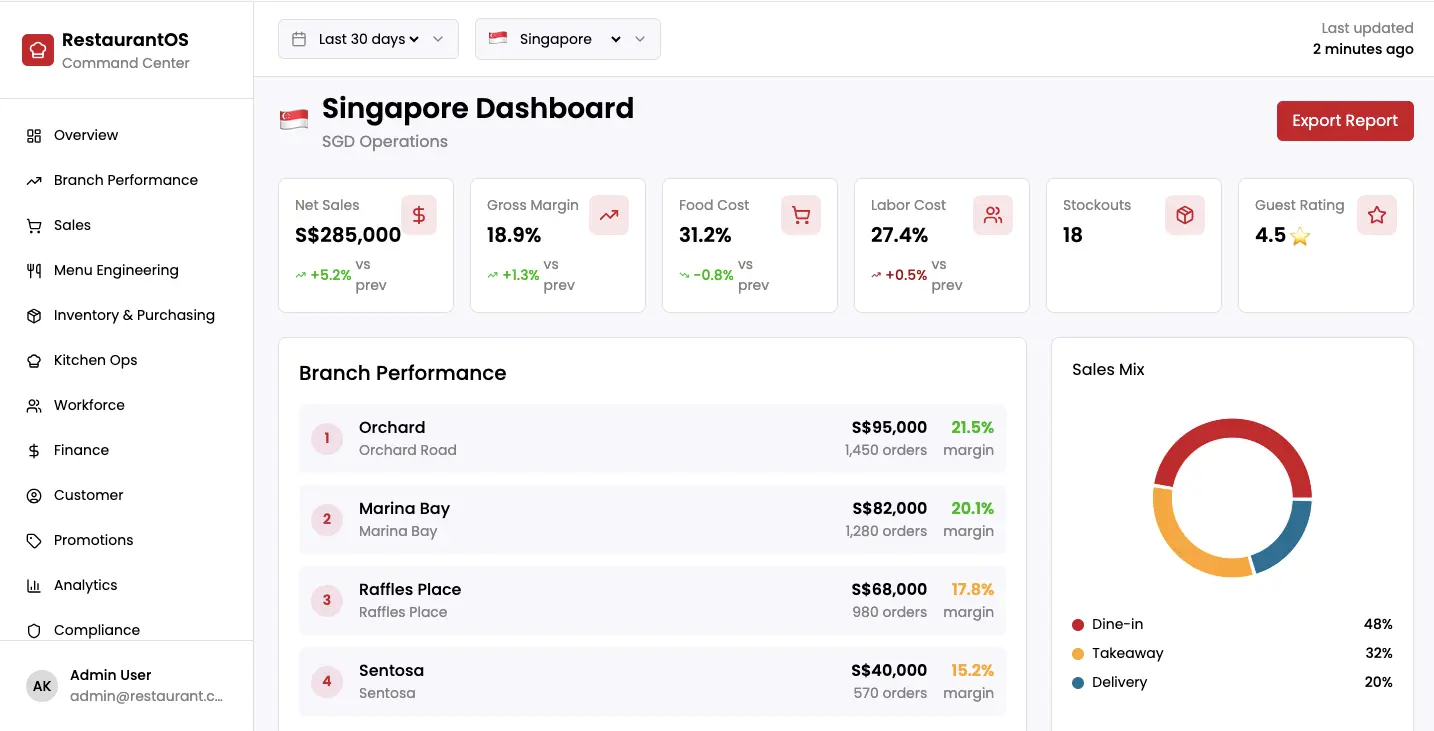
Multi-branch restaurant growth isn’t limited by demand, it’s usually limited by control. When each outlet runs on different spreadsheets, manual stock logs, or disconnected apps, leaders lose real-time visibility into inventory usage, labor costs, table turnover, and customer behavior, making it harder to scale performance consistently.
This matters because small leaks multiply across branches. Waste can quietly erode margins, stockouts can disrupt service and damage repeat visits, and delayed reporting often means problems are spotted after the losses have already happened. An integrated ERP helps prevent this by centralizing data and standardizing workflows, so purchasing, inventory, finance, and operations can move in sync across all locations.
Operational improvements also become more measurable and repeatable. When reservations are made for a restaurant POS system, table availability and peak-hour seating flow can be managed more accurately across outlets, while order timing stays aligned with service capacity. Add a kitchen display integration system, and kitchen coordination improves further through real-time order tracking that reduces miscommunication and supports consistent execution.
That’s why integrated ERP is key to multi-branch restaurant growth: it turns scattered operations into a single, connected system, enabling faster decisions, tighter cost control, and a consistent guest experience, no matter how many outlets expand.
Conclusion
Thriving in a competitive restaurant market is not about one “magic tactic.” It comes from running an ecosystem: consistent quality, a better guest experience, stronger retention, smarter marketing, reliable staffing, and data-driven control.
The most sustainable results come from prioritizing what creates compounding impact. Start with quick wins (quality, experience, basic digital presence), then strengthen foundations (staff and operational discipline), and finally scale with systems that support consistent performance across outlets.
If you want a clearer starting point for your operation, schedule a free consultation to evaluate margin leaks, operational bottlenecks, and which improvements will create the fastest impact.