







 Limited to 100 registrants

ATO business compliance covers how a business registers, reports, and meets its tax obligations under Australian regulations. It involves managing requirements such as GST, PAYG, and regular lodgements while keeping financial records accurate and up to date.
Meeting these requirements consistently is not just about avoiding penalties. It shapes how a business manages cash flow, payroll, and financial reporting on an ongoing basis.
Using a localized accounting platform has become vital for business to comply with these changes. The guidance below reflects current ATO rules and practical expectations for compliance.
Key Takeaways
Adapts to evolving ATO requirements such as payday super and STP reporting, helping businesses stay compliant with minimal disruption.
Simplifies GST, PAYG, and income tax tracking to ensure accurate reporting and reduce compliance risks.
Keeps track of BAS, tax returns, and payroll reporting deadlines to prevent penalties and missed lodgements.
Provides ready-to-use templates to organise reporting, improve accuracy, and support audit readiness.

2026 ATO Updates That Impact Business Compliance
Several regulatory changes and enforcement shifts are shaping how businesses handle tax compliance. These updates require more frequent reporting, tighter data accuracy, and stronger internal processes.
Payday super
From July 2026, superannuation contributions must be paid at the same time as wages instead of quarterly. This change directly affects cash flow management and payroll processes.
Stronger ATO data matching and enforcement
The ATO continues to expand real-time data matching across banks, payroll systems, and third-party platforms. Any mismatch between reported income and actual transactions can trigger reviews.
Instant asset write-off rules
Eligible small businesses can still claim immediate deductions for certain asset purchases within the threshold. However, strict documentation and eligibility rules must be followed.
STP Phase 2 reporting requirements
Payroll reporting now requires more detailed income categories, including allowances and bonuses. This increases the need for a more accurate ATO-ready accounting software.
Why Tax Compliance Matters for Business Operations
Tax compliance directly affects financial stability and business credibility. Failing to meet ATO requirements can lead to penalties, operational disruption, and long-term financial risk.
Avoid penalties and interest charges
Late lodgements or unpaid tax can result in penalties and general interest charges, which accumulate over time and increase overall liabilities.
Maintain eligibility for financing
Lenders often review tax compliance records before approving loans. A clean record improves access to funding and business credibility.
Improve cash flow control
Managing PAYG, tax payments, and GST regulation compliance properly helps businesses understand their actual available cash and avoid shortfalls.
"Strong tax compliance is not just about meeting obligations, but about maintaining financial clarity and long-term business stability."
Start with the Right ATO Registrations
Setting up the correct registrations determines how a business reports and pays tax. Errors at this stage can lead to compliance issues later.
ABN as a core identifier
An Australian Business Number is required to operate and invoice as a business. Without it, payments may be subject to higher withholding rates.
GST registration requirements
Businesses must register for GST once annual turnover reaches $75,000 or more. You can review the full criteria under GST registration requirements to ensure your business meets the correct threshold and reporting obligations.
PAYG registration for employers
Businesses that employ staff must register for PAYG withholding to deduct and report tax from employee wages.
Key ATO Tax Obligations Every Business Must Meet

Every registered business must manage several tax obligations depending on its structure and activities. These obligations are primarily reported and reconciled through the Business Activity Statement.
Income tax
Businesses must report taxable income and lodge annual tax returns. The amount payable depends on the business structure and applicable tax rates.
Goods and services tax
GST is applied at 10% on most taxable goods and services. Registered businesses must collect GST from sales and claim credits on eligible purchases.
PAYG withholding
Employers are required to withhold tax from employee wages and remit it to the ATO. This ensures employee income tax is paid progressively.
PAYG instalments
Businesses may need to prepay their own income tax in instalments throughout the year. These payments reduce the final tax payable at year end.
Fringe benefits tax
FBT applies when businesses provide non-cash benefits to employees, such as company cars or allowances. It must be calculated and reported separately.
ATO Lodgements and Deadlines You Must Track
ATO compliance depends heavily on meeting lodgement and payment deadlines. Missing deadlines can result in penalties and increased scrutiny.
BAS lodgement
Businesses must lodge BAS monthly, quarterly, or annually depending on turnover to meet their BAS obligations. This includes reporting GST, PAYG withholding, and instalments.
Tax return deadlines
Income tax returns are typically lodged annually, with deadlines varying based on business structure and whether a tax agent is used.
STP reporting obligations
Payroll information must be reported to the ATO each pay cycle through Single Touch Payroll. This includes wages, tax withheld, and super data.
Superannuation payment timelines
Employers must pay superannuation contributions by set due dates, with more frequent payments required under updated regulations.
ATO Business Compliance Checklist
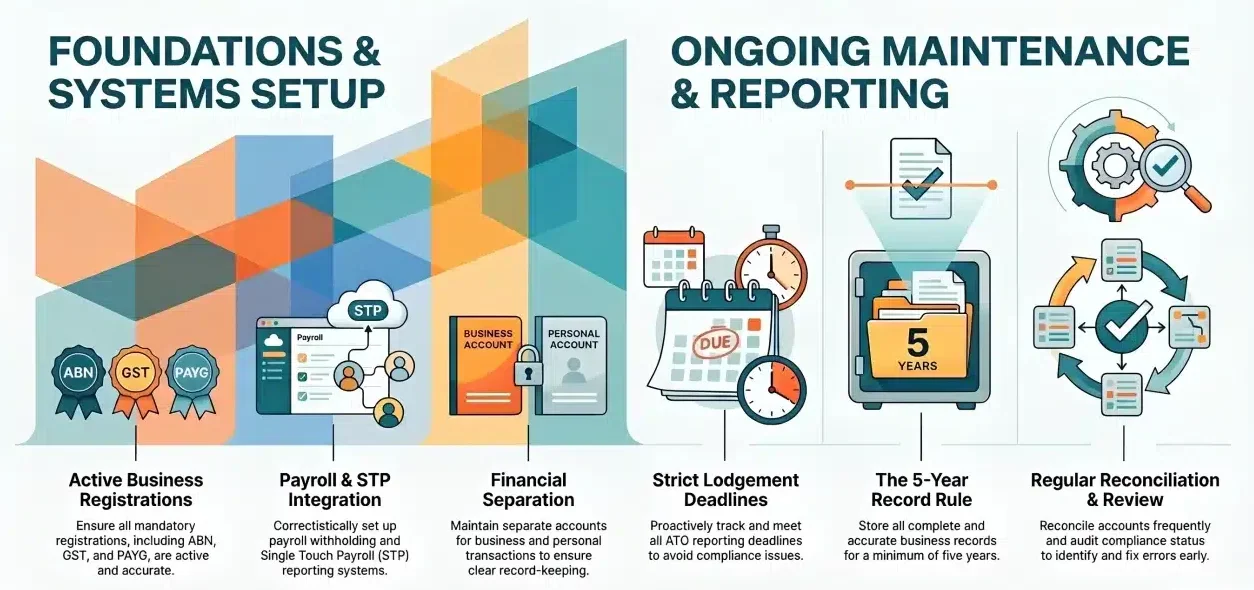
Use this checklist to ensure your business meets key ATO compliance requirements and avoids common reporting issues.
- Confirm all registrations are active, including ABN, GST, and PAYG
- Monitor GST obligations and ensure accurate collection and reporting
- Set up payroll correctly, including PAYG withholding and STP reporting
- Track all lodgement deadlines and submit reports on time
- Keep financial records complete, accurate, and up to date
- Store all business records for at least 5 years as required by the ATO
- Separate business and personal transactions to maintain clear records
- Reconcile accounts regularly to prevent discrepancies
- Review compliance status periodically to identify and fix issues early
Download Free ATO Compliance Templates
ATO compliance requires consistent documentation, reporting, and monitoring business expenditures across obligations such as GST, PAYG, and BAS lodgements. Using structured templates helps maintain accuracy and reduce the risk of non-compliance.
The templates below are designed to support practical implementation and align with current ATO regulatory requirements.
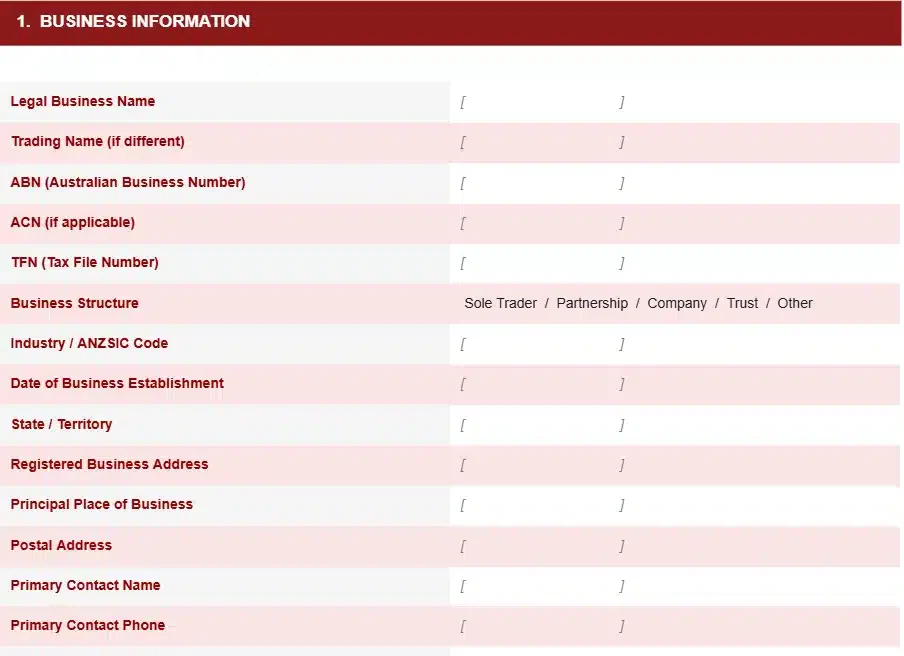
ATO registration and setup template
Tracks ABN, GST, and PAYG registrations to ensure all required business setups are completed correctly.
ATO REGISTRATION AND SETUP TEMPLATE
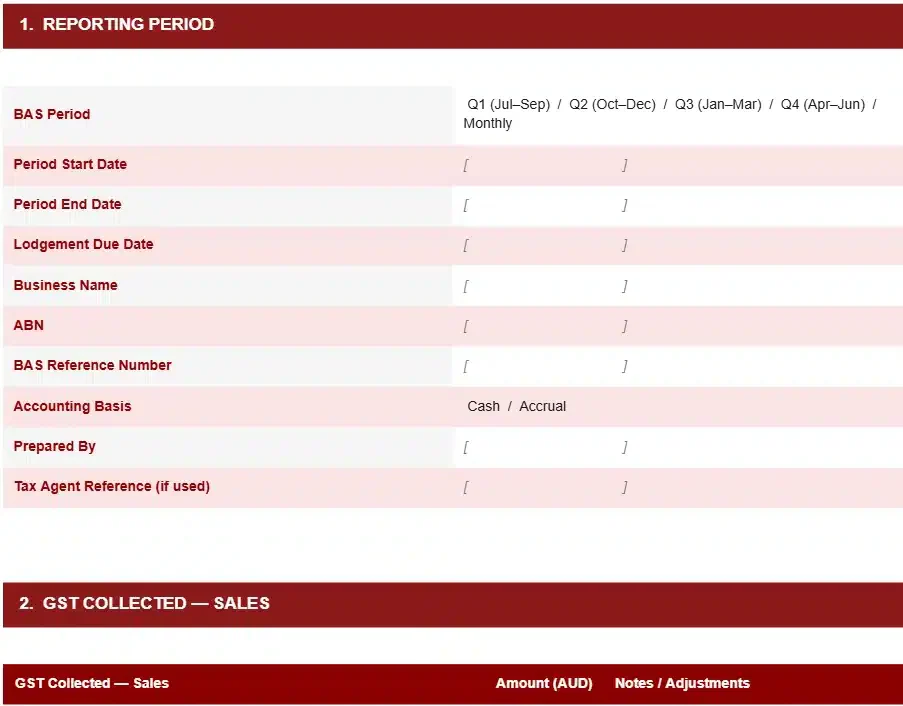
BAS reporting template
Captures GST, PAYG withholding, and instalments for accurate BAS preparation and timely lodgement.
BAS REPORTING TEMPLATE
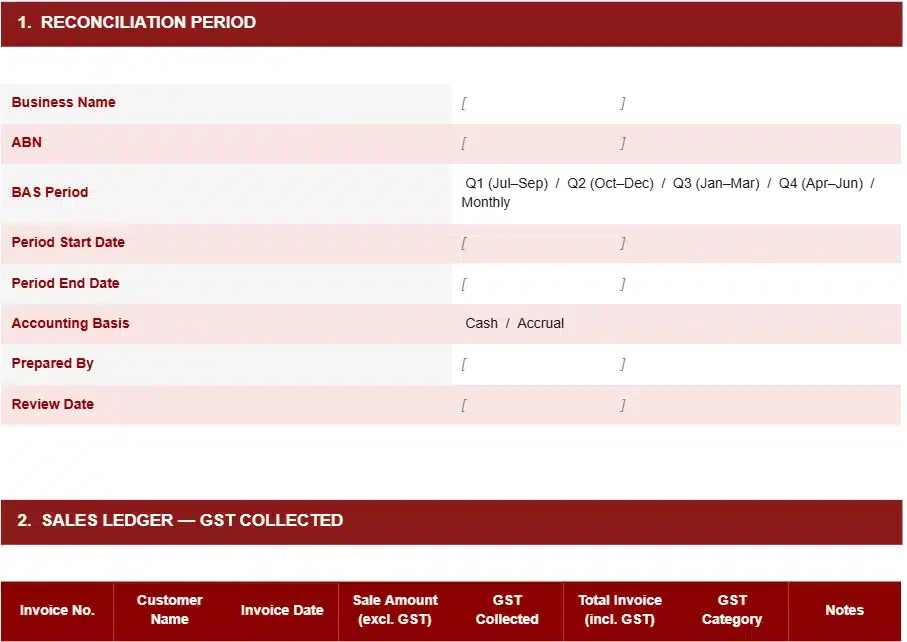
GST tracking and reconciliation template
Monitors GST collected and paid to ensure correct reporting and prevent discrepancies.
GST TRACKING AND RECONCILIATION TEMPLATE
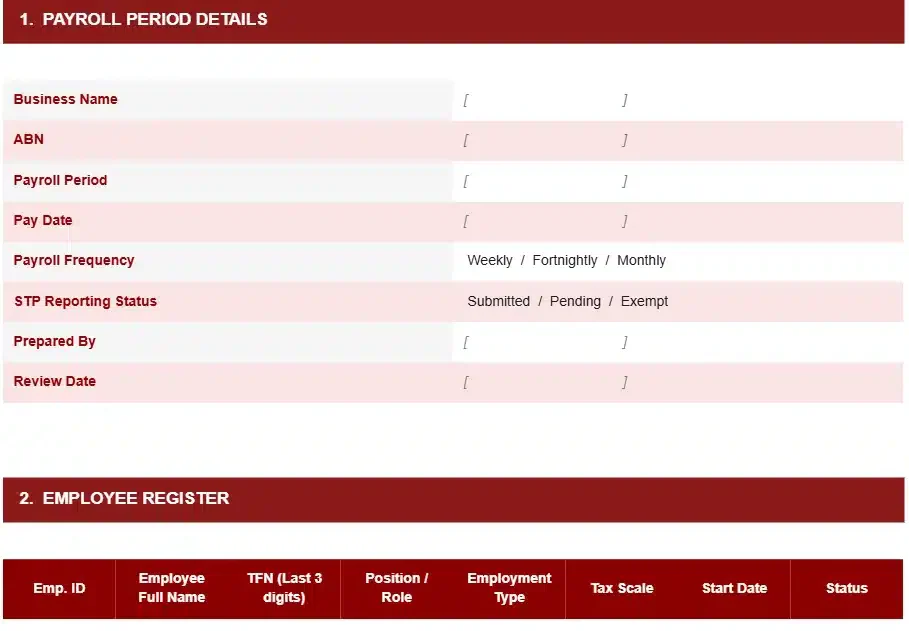
PAYG and payroll compliance template
Tracks tax withholding, STP reporting, and superannuation obligations to maintain payroll compliance.
PAYG AND PAYROLL COMPLIANCE TEMPLATE
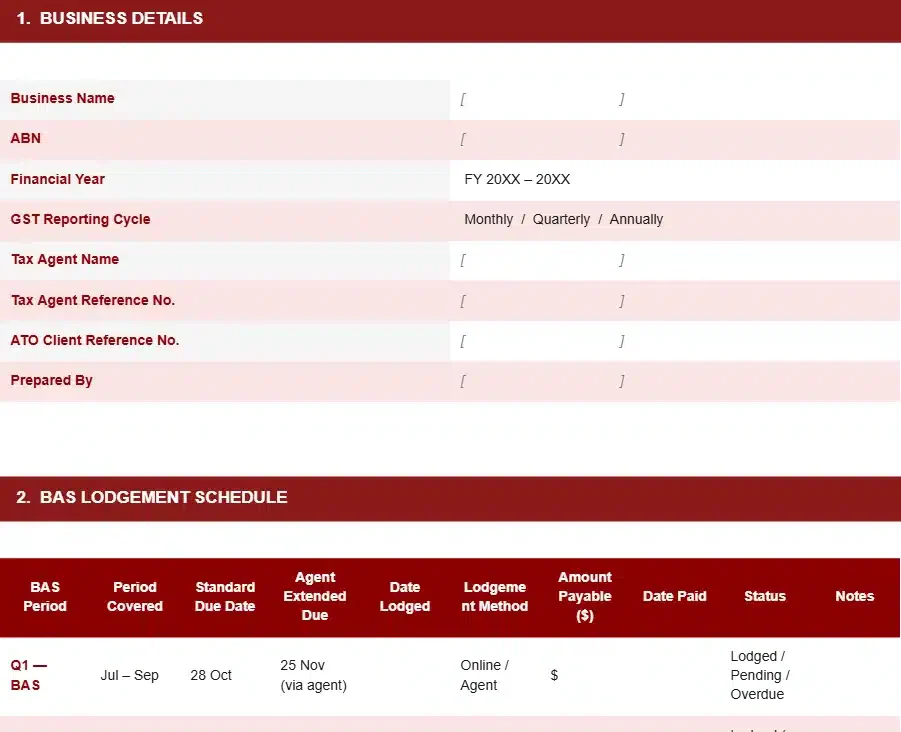
ATO deadline and lodgement tracker
Schedules BAS, tax returns, and payroll reporting deadlines to avoid late lodgement penalties.
ATO DEADLINE AND LODGEMENT TRACKER TEMPLATE
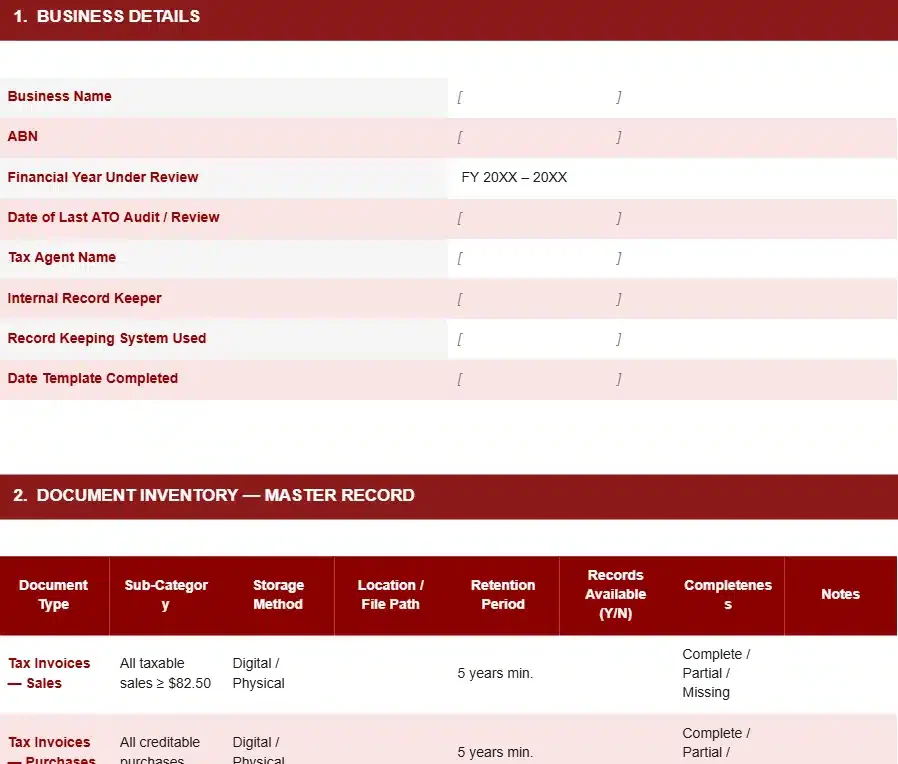
Record keeping and audit readiness template
Ensures financial records are stored and maintained in line with ATO requirements.
RECORD KEEPING AND AUDIT READINESS TEMPLATE
Best Practices for Managing ATO Business Compliance
Managing ATO compliance requires consistent processes and accurate financial oversight. A structured approach helps reduce risk and maintain reporting accuracy.
- Maintain accurate and consistent records
Ensure all transactions and supporting documents are recorded and updated regularly. - Separate tax funds
Set aside GST and PAYG amounts to avoid using tax funds for operational expenses. - Lodge on time even if unable to pay
Submitting reports on time helps avoid additional penalties, even when payments are delayed. - Use accounting systems for automation
Implement system for accountants to streamline reporting and reduce manual errors.
Conclusion
ATO business compliance ensures your business meets tax obligations while maintaining accurate financial records. It helps reduce risk, avoid penalties, and support better financial control.
To simplify your compliance process and improve reporting accuracy, you can consult the experts on our team to find the right solution for your business.

FAQ About ATO Business Compliance
Yes, the ATO can conduct reviews or data matching checks without initiating a full audit, especially if inconsistencies are detected.
Repeated late lodgements may result in penalties, increased scrutiny, and potential compliance action from the ATO.
Not always. GST registration depends on turnover thresholds, but many digital businesses may still be required to register depending on their revenue.
Yes, businesses can correct errors by revising lodgements or making voluntary disclosures, which may reduce penalties.
The ATO uses data matching with financial institutions and third parties to compare reported data with actual transactions.