




Managing facilities in Australia means staying across WHS obligations, asset maintenance schedules, and sustainability reporting, often across multiple sites with limited resources.
The regulatory context adds real complexity. WHS Act compliance, NABERS ratings, BCA documentation, and contractor management records all create audit obligations that spreadsheets and shared drives cannot reliably support over time.
This article reviews the 10 best facility management software platforms available to Australian businesses in 2026 including how a unified facility maintenance platform can support compliance maintenance visibility and operational control across different industries and business sizes.
Key Takeaways
Facility management software centralises work orders, asset tracking, preventive maintenance, and compliance into a single platform, replacing manual spreadsheet processes.
Australian facility teams must confirm WHS Act, NABERS, and BCA support before committing to any platform.
The ten best facility management platforms for 2026 range from ERP-integrated suites to mobile-first CMMS tools.




Best Because
Australian fleet safety and compliance inspection platform with pre-built HVNL templates.
Best Because
Australian-built FM platform designed for public sector asset and maintenance management.
Best Because
Enterprise CAFM solution for large businesses managing complex multi-site facilities.
Best Because
Cloud-based CMMS for SMEs with drag-and-drop maintenance scheduling and asset tracking.
What Is Facility Management Software?
Facility management software is a platform that helps businesses manage physical assets, maintenance schedules, compliance records, service requests, and space utilisation from one system. These systems also act as tools for asset tracking and maintenance by helping teams monitor equipment history service schedules and repair activity more consistently.
The category covers three main types: CMMS (Computerised Maintenance Management System), which focuses on maintenance; CAFM (Computer-Aided Facility Management), which adds space and building data; and IWMS (Integrated Workplace Management System), which covers the full workplace lifecycle.
For Australian facility teams, the right choice depends on whether the priority is maintenance tracking, compliance reporting, space planning, or a combination of all three.
What Australian Facility Managers Must Look for Before Choosing
Australian facilities operate under a compliance framework that most offshore platforms were not built to address natively. The four requirements below are non-negotiable for any serious FM software procurement decision.
1. Work Health & Safety (WHS) Act Compliance
The model WHS laws require businesses to eliminate or minimise health and safety risks so far as is reasonably practicable. FM software should support incident logging, contractor inductions, hazard registers, and inspection audit trails.
Safe Work Australia maintains the framework adopted across all states and territories, with significant penalties for non-compliance. A WHS-ready FM platform keeps inspection records and corrective actions accessible and audit-ready at any time.
2. NABERS rating support & Sustainability reporting
NABERS measures the environmental performance of Australian buildings across energy, water, waste, and indoor environment. Facility managers in commercial, government, and healthcare sectors increasingly need to report against it.
FM software with NABERS support should collect utility consumption data automatically, map it to NABERS categories, and generate the documentation needed for a verified rating submission.
3. Building Code of Australia (BCA) requirements
The Building Code of Australia, part of the National Construction Code, sets minimum standards for structural integrity, fire safety, accessibility, and energy efficiency across all building classes. Compliance is an ongoing operational obligation, not a one-off requirement at build-out.
FM software should support BCA compliance through scheduled inspection records, equipment service histories, and documentation of remediation work tied to specific building elements.
4. Preventive Maintenance & Asset Lifecycle Management
Reactive maintenance consistently costs more than planned maintenance over an asset’s operational lifecycle. FM software should let teams schedule tasks based on time intervals, usage thresholds, or condition monitoring data.
FM software should let teams schedule tasks based on time intervals usage thresholds or condition monitoring data. Digital solutions for asset control also help facility teams connect preventive maintenance tasks with asset condition service history and replacement planning.
Asset lifecycle tracking also supports capital expenditure planning. When teams can view maintenance histories failure patterns replacement costs and tracking asset value reduction together budget forecasts become more accurate and defensible to boards and lenders.
Looking for the right facility management software for your business? Contact the team for a tailored recommendation based on your facility needs, workflows, and operational goals. With AI Hashy, you can automate processes, improve asset management, and gain smarter insights to optimise facility performance.






Do You Actually Need Dedicated FM Software?
A spreadsheet can log work orders, but it cannot enforce approval workflows, flag overdue inspections, or produce audit-ready compliance documentation. At some point, the cost of working around a spreadsheet exceeds the cost of implementing a proper system.
Dedicated FM software becomes essential when your team manages multiple sites, works with external contractors, or needs to evidence WHS compliance and asset maintenance records. For a single small facility with minimal compliance obligations, a basic CMMS or ERP maintenance module may be sufficient.
The comparison below helps clarify which platform fits your operation before you commit to a full evaluation.
"A spreadsheet can record maintenance tasks, but it cannot enforce accountability, manage compliance risk, or stand up to audit scrutiny. Once facilities scale beyond a single site, dedicated FM software stops being optional and becomes operational insurance."
Quick Comparison Table
The table below compares all ten platforms across five key criteria to help you shortlist the right fit for your facilities team.
| Features | HashMicro | MRI Evolution | FMI Works | Planon | SafetyCulture | UpKeep | Fiix | Limble CMMS | Coast App | IBM Tririga |
|---|---|---|---|---|---|---|---|---|---|---|
| User-Friendly Interface | ||||||||||
| Pricing | ||||||||||
| Learning Curve | ||||||||||
| Australian Compliance | ||||||||||
| Ease of Integration |
10 Best Facility Management Software in Australia for 2026
The 10 platforms below are evaluated against Australian compliance requirements, deployment flexibility, and the operational needs of mid to large facility teams. Each review covers core strengths, honest limitations, and indicative pricing.
1. HashMicro
HashMicro’s facility management module connects maintenance scheduling, asset tracking, and work orders directly to its ERP platform. Procurement requests, cost allocations, and compliance records all sit in one unified system.
For businesses managing multiple sites, this integration removes the need to reconcile data across separate tools. HashMicro also supports preventive maintenance scheduling and contractor management natively within the same environment.
Key features:
- Integrated work order and preventive maintenance scheduling
- Real-time asset tracking with depreciation and lifecycle management
- Customisable dashboards with role-based reporting
- Multi-site facility management from a single platform
- Procurement and vendor management built into the same system
- Compliance and audit trail logging for Australian regulatory requirements
| Pros |
Cons |
| ✓ Native ERP integration across finance, procurement, and maintenance | × May be feature-heavy for single-site or very small teams |
| ✓ Preventive maintenance and asset lifecycle tracking included | × Implementation requires a structured onboarding engagement |
| ✓ Supports multi-site Australian operations with centralised reporting | × Pricing is available on request only |
Pricing: Quote-based; contact HashMicro for a tailored proposal.
Best for: Mid-sized Australian businesses that want facility management connected to ERP, finance, and procurement without managing separate systems.

2. MRI Evolution
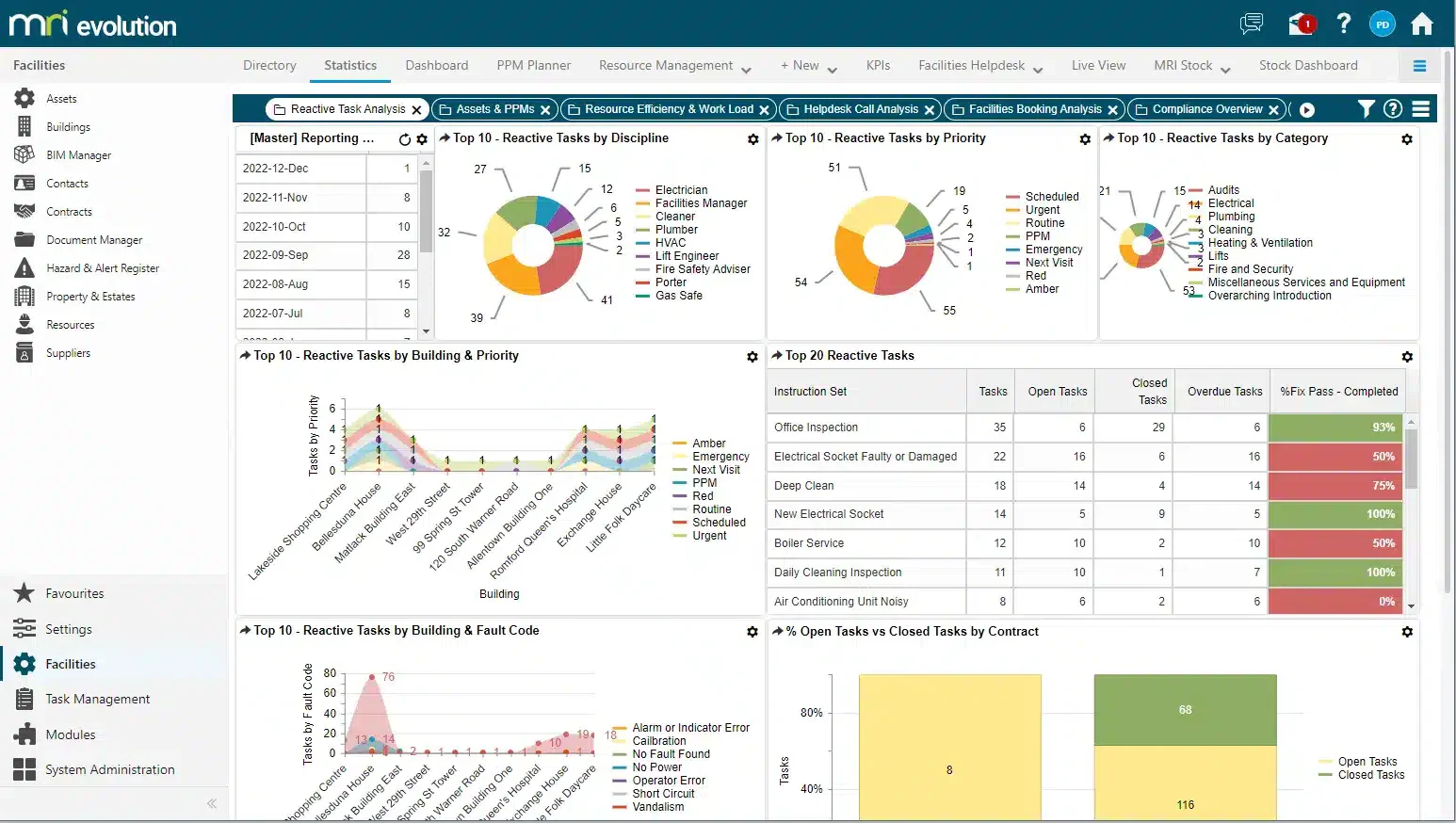
MRI Evolution combines lease management, preventive maintenance, and compliance tracking in a single environment. It is widely used across Australian commercial real estate, retail centres, and mixed-use developments.
The platform integrates with financial systems and supports contractor management workflows. Australian data hosting options are available, which supports compliance with local data privacy requirements.
Key features:
- Lease and tenancy management with automated rent escalation
- Planned and reactive maintenance workflow management
- Contractor portal for work order assignment and sign-off
- Capital expenditure planning and budget tracking
- Compliance certificate tracking and renewal alerts
- Integration with financial and accounting modules
| Pros |
Cons |
| ✓ Strong lease and property management integration | × Better suited to commercial property than general facilities |
| ✓ Preventive maintenance and contractor compliance workflows | × Enterprise pricing may not suit smaller property teams |
| ✓ Australian data hosting available for local compliance | × Configuration complexity for non-property use cases |
Pricing: Quote-based; enterprise-tier pricing.
Best for: Commercial property managers and real estate portfolios that need lease management, compliance documentation, and facility operations in one platform.
3. FMI Works
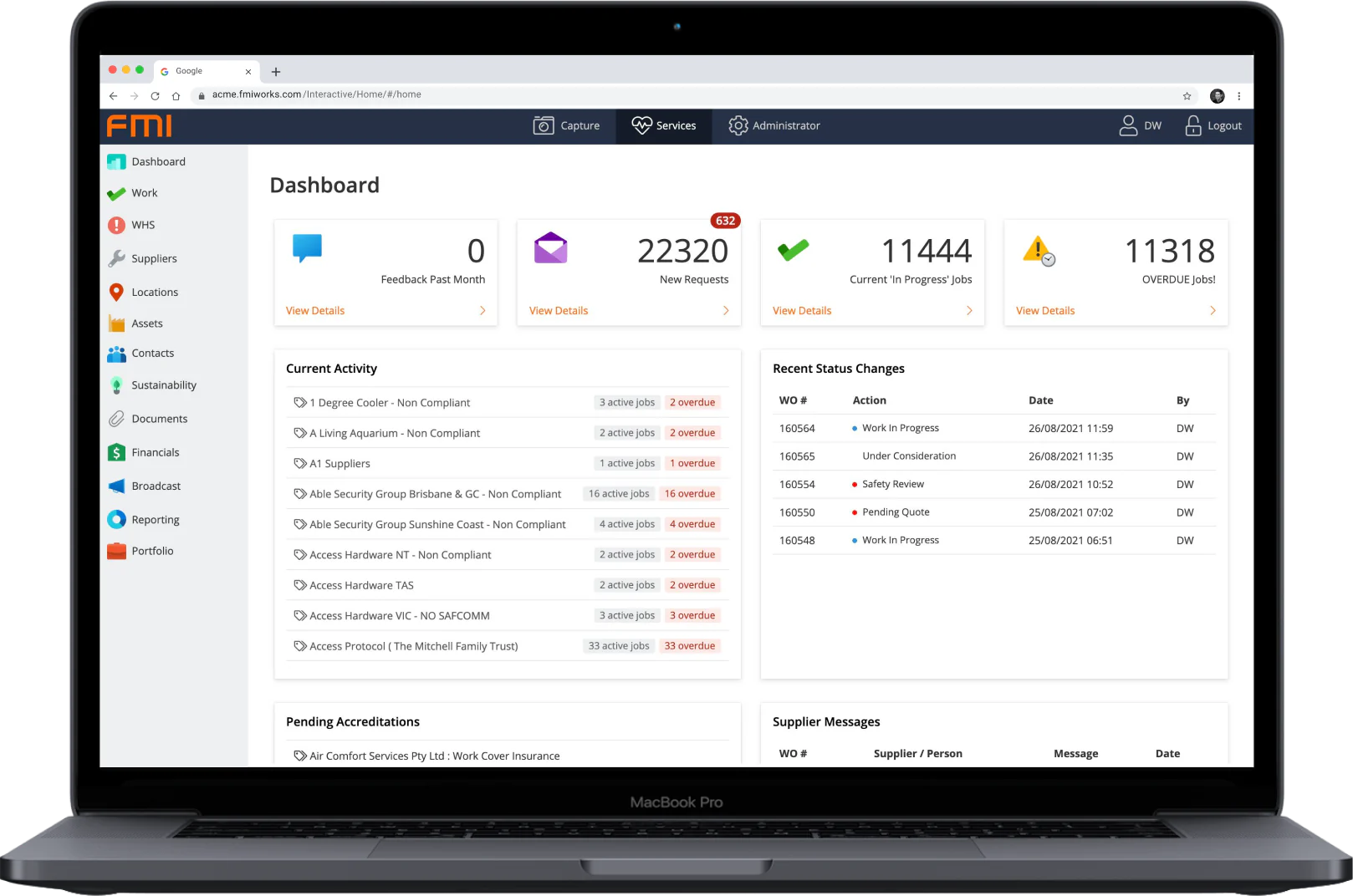
FMI Works is an Australian-built CMMS used across schools, hospitals, councils, and infrastructure businesses. It covers work order management, preventive maintenance, asset registers, and contractor compliance in one system.
As a locally built product, FMI Works aligns closely with Australian WHS requirements and public sector reporting needs. Local support is available, which benefits teams that need responsive assistance rather than offshore help desk queues.
| Pros |
Cons |
| ✓ Built in Australia with a local support team | × Interface can feel dated compared to newer SaaS platforms |
| ✓ Strong fit for education, healthcare, and local councils | × Less suited to commercial property or retail environments |
| ✓ WHS-aligned workflows and documentation built in | × Limited enterprise-level integration ecosystem |
Pricing: Quote-based; contact FMI Works for a proposal.
Best for: Australian facility teams in education, healthcare, and local government that want a locally built and supported CMMS.
4. Planon
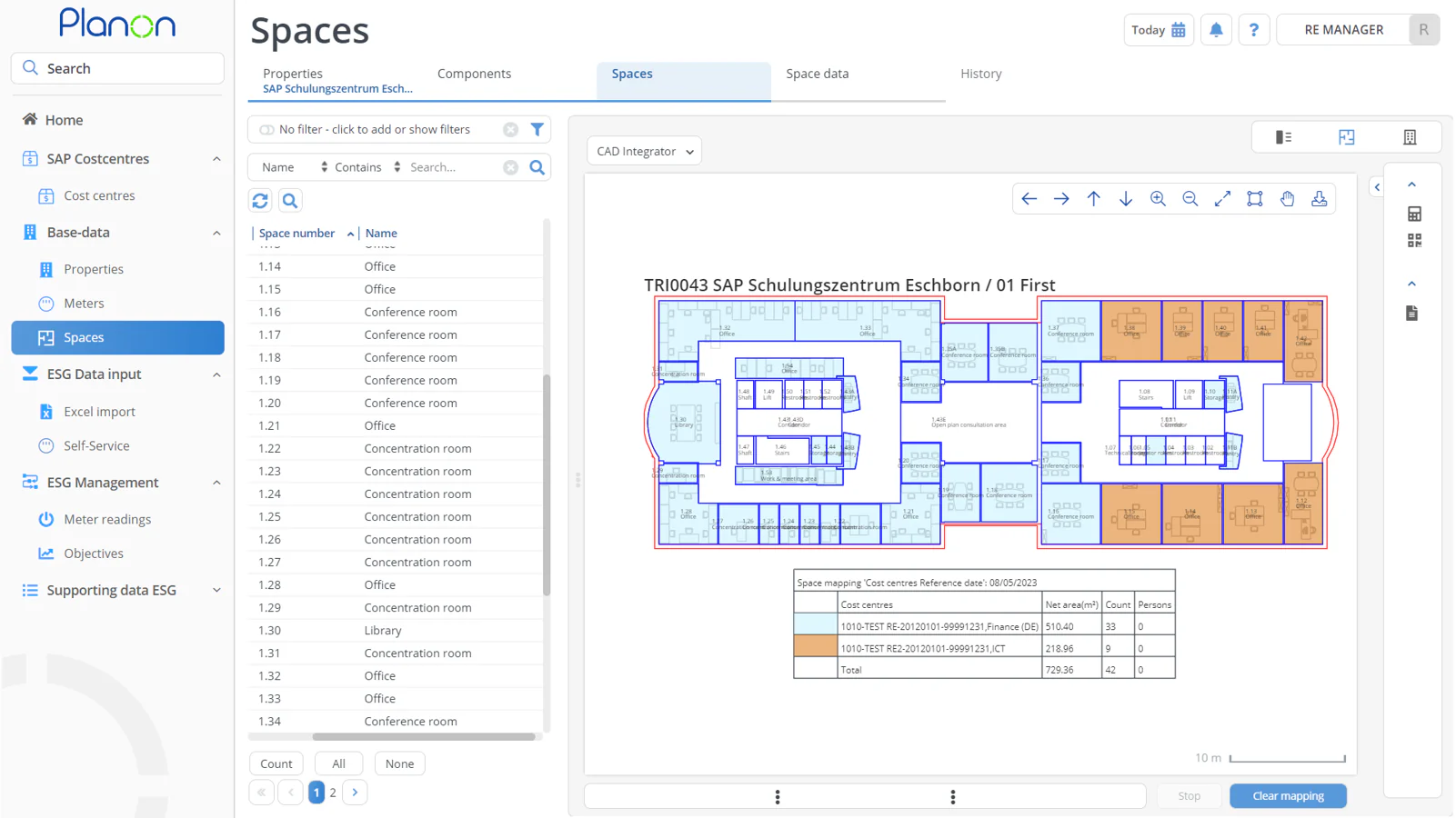
Planon is a global CAFM and IWMS platform used by Australian universities, large corporates, and government agencies. It covers space management, asset maintenance, energy monitoring, and lease administration.
The platform suits large, complex facility portfolios but requires significant implementation effort and technical resources. For enterprises with the scale to justify it, Planon delivers strong long-term operational value and flexibility.
Key features:
- Integrated workplace management across space, assets, and maintenance
- Space planning and utilisation analytics with floor plan integration
- Contract and supplier performance management
- Energy and sustainability reporting dashboards
- Service level agreement monitoring and breach alerting
- IoT sensor integration for real-time environmental data
| Pros |
Cons |
| ✓ Comprehensive CAFM and IWMS capabilities in one platform | × High implementation complexity and cost |
| ✓ Strong space management, NABERS, and lease administration | × Not suitable for SMBs or mid-market teams |
| ✓ Used across Australian enterprise and government environments | × Requires dedicated technical resources to configure and maintain |
Pricing: Quote-based; enterprise pricing requires a scoping engagement.
Best for: Large enterprises and corporate real estate teams that need space management, lease administration, and maintenance in one comprehensive CAFM platform.
5. SafetyCulture
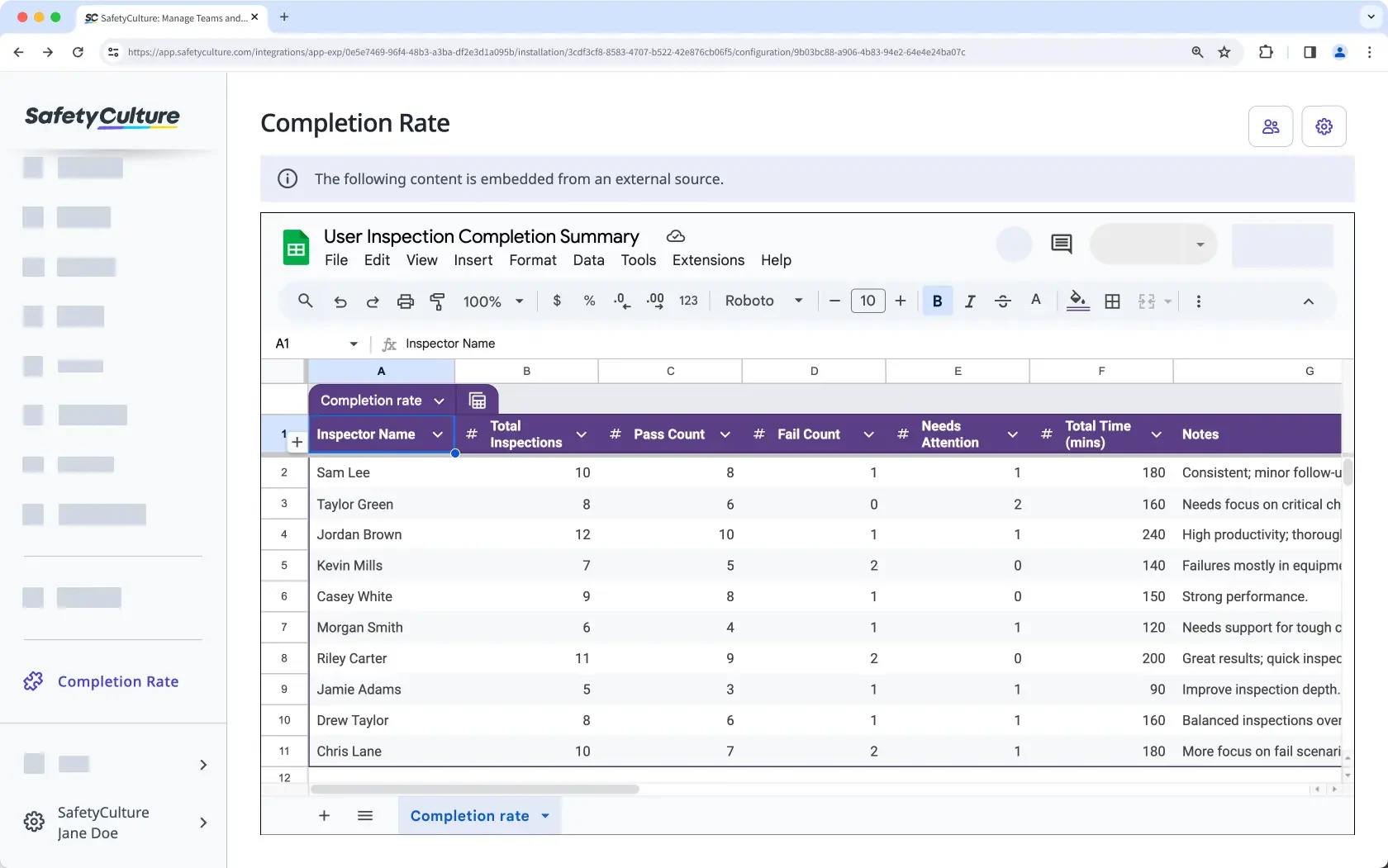
SafetyCulture is an inspection and safety platform used across Australian mining, construction, healthcare, and facility sectors. Its core strength is creating structured, auditable safety and compliance records at scale.
The platform supports WHS compliance through digital checklists, incident reporting, and corrective action workflows. It is particularly effective for multi-site businesses that need consistent safety processes across all their teams.
Key features:
- Customisable digital inspection and pre-start checklists
- Photo evidence capture with automatic issue escalation
- Pre-built Australian compliance templates for WHS, food safety, and fire safety
- Corrective action tracking and close-out workflows
- Safety trend analytics and incident reporting dashboard
- Integration with maintenance and HR systems
| Pros |
Cons |
| ✓ Purpose-built for WHS compliance and safety auditing | × Limited asset management and preventive maintenance depth |
| ✓ Strong mobile experience for on-site inspections and incident reporting | × Not a full CMMS or CAFM replacement |
| ✓ Widely used across Australian industries with strong local presence | × Advanced features require higher-tier paid plans |
Pricing: Free tier available; paid plans from approximately A$24/seat/month.
Best for: Australian businesses that prioritise WHS compliance, safety inspections, and incident management as core facility activities.
6. UpKeep
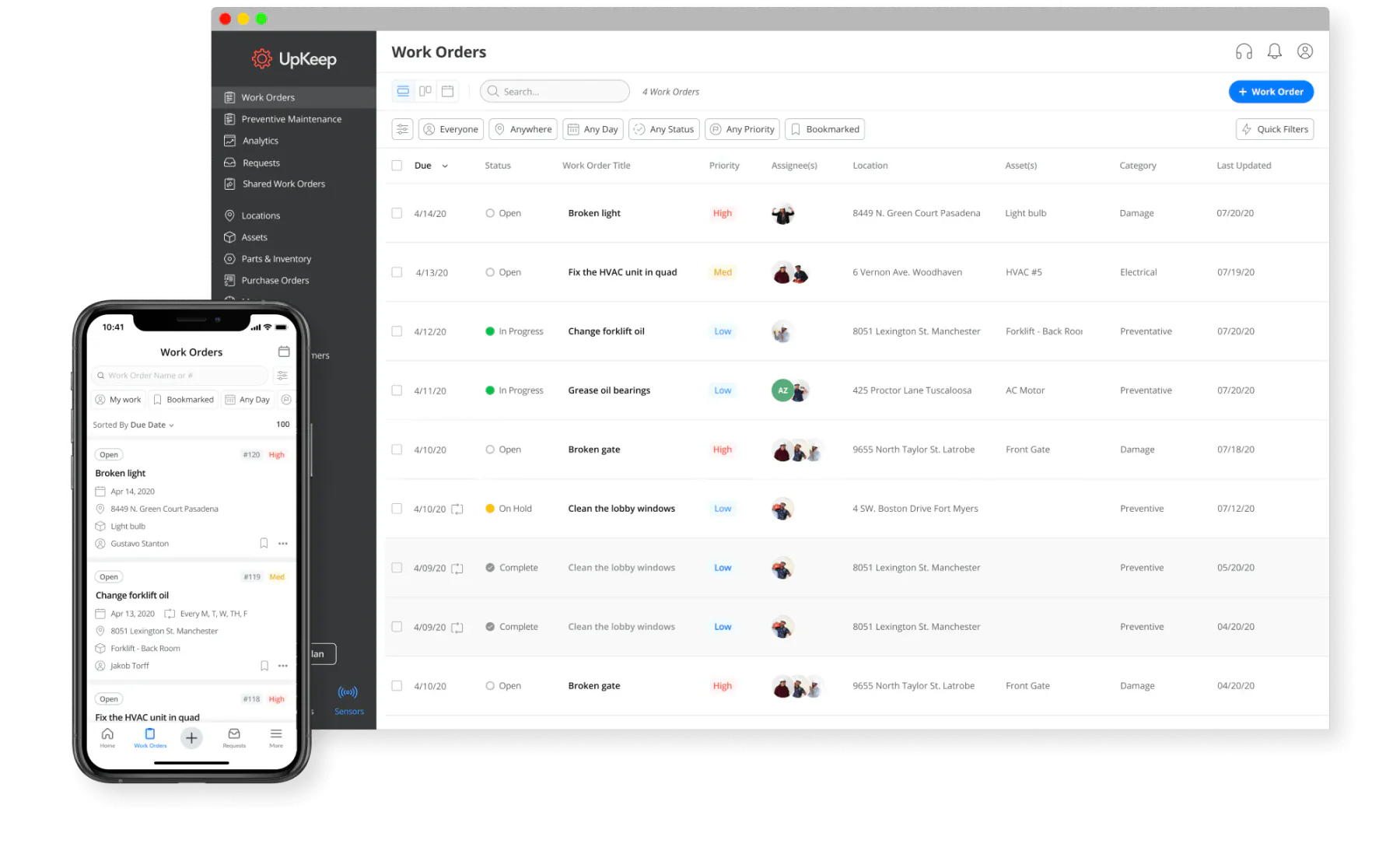
UpKeep is a cloud-based CMMS used by maintenance teams in Australian manufacturing, hospitality, and commercial property. Technicians can receive, action, and close work orders entirely from a mobile device without returning to a desktop.
The platform covers preventive maintenance scheduling, asset tracking, parts inventory, and basic reporting. It suits teams that want fast adoption without the configuration complexity of enterprise platforms.
Key features:
- Mobile work order creation, assignment, and completion from the field
- Preventive maintenance scheduling with calendar and trigger-based rules
- Asset history and downtime tracking
- Parts inventory management with low-stock alerts
- QR code and barcode scanning for instant asset lookup
- Real-time technician status and job progress visibility
| Pros |
Cons |
| ✓ Excellent mobile experience for field-based technicians | × Limited compliance and regulatory reporting features |
| ✓ Fast to set up and adopt across maintenance teams | × Not suited to complex enterprise or multi-country operations |
| ✓ Preventive maintenance and parts inventory included | × Advanced analytics require higher-tier plans |
Pricing: From approximately A$50/user/month; free lite version available.
Best for: Maintenance teams that need a mobile-first work order and preventive maintenance platform across one or more facility sites.
7. Fiix
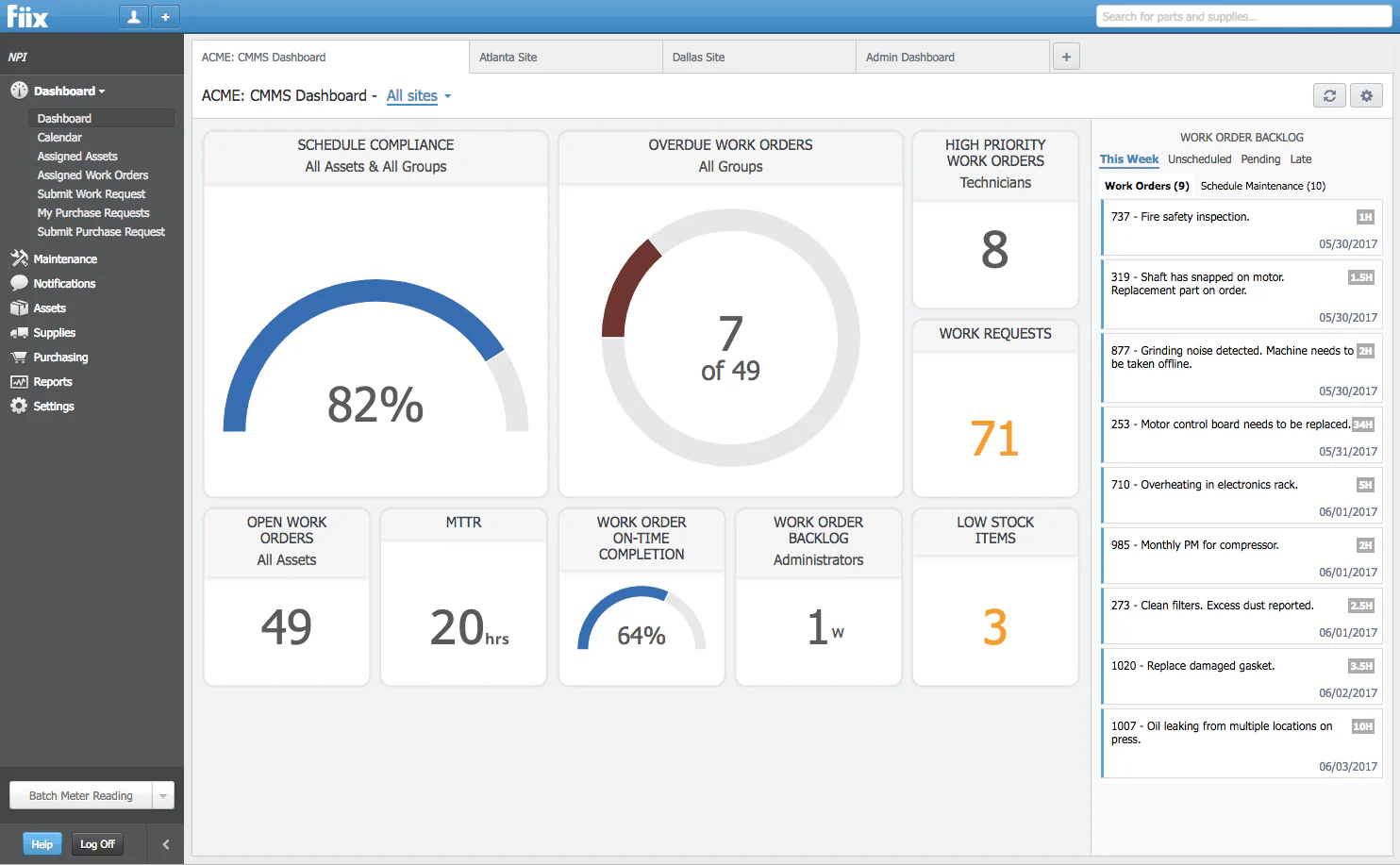
Fiix is a cloud CMMS owned by Rockwell Automation that uses AI to help teams prioritise work orders, optimise preventive maintenance schedules, and reduce unplanned equipment failures.
The platform connects with sensors and IoT devices to feed condition data into maintenance decisions. For Australian businesses with high asset density, this approach reduces reactive maintenance costs significantly over the asset lifecycle.
Key features:
- AI-assisted work order prioritisation and scheduling
- Preventive and predictive maintenance automation
- Parts and inventory management with purchase order generation
- Asset performance reporting and failure analysis
- Custom dashboards with drag-and-drop report widgets
- Open API for integration with ERP and IoT platforms
| Pros |
Cons |
| ✓ AI-assisted maintenance scheduling and work order prioritisation | × Primarily a CMMS, not a full facility or space management platform |
| ✓ IoT and sensor integration for condition-based maintenance | × Best value for asset-heavy operations, less so for soft FM |
| ✓ Strong reporting and maintenance analytics dashboard | × Some integrations require technical configuration |
Pricing: From approximately A$75/user/month; enterprise pricing available on request.
Best for: Maintenance teams that want AI-assisted scheduling and analytics to reduce unplanned downtime and optimise asset performance over time.
8. Limble CMMS

Limble CMMS is a modern cloud platform known for its clean interface and fast implementation. It covers preventive maintenance, work orders, asset registers, and parts inventory with strong mobile support.
For Australian teams that find enterprise platforms overcomplicated, Limble delivers strong maintenance functionality at a competitive price. The vendor’s support quality is frequently cited as a practical advantage over larger platforms.
Key features:
- Drag-and-drop preventive maintenance calendar
- QR code asset tagging for instant work order creation
- Vendor and parts cost tracking per asset
- Custom work request portal for non-maintenance staff
- Maintenance history log with photo and document attachments
- Automated maintenance reports delivered by email or schedule
| Pros |
Cons |
| ✓ Clean, intuitive interface with fast onboarding | × Limited compliance and sustainability reporting |
| ✓ Strong preventive maintenance and asset tracking | × Not a full CAFM or IWMS platform |
| ✓ Highly rated vendor support and implementation assistance | × Less suited to property management or space planning |
Pricing: From approximately A$55/user/month; free plan available.
Best for: Facility operations teams with high maintenance volumes that need a powerful CMMS without enterprise complexity or pricing.
9. Coast App
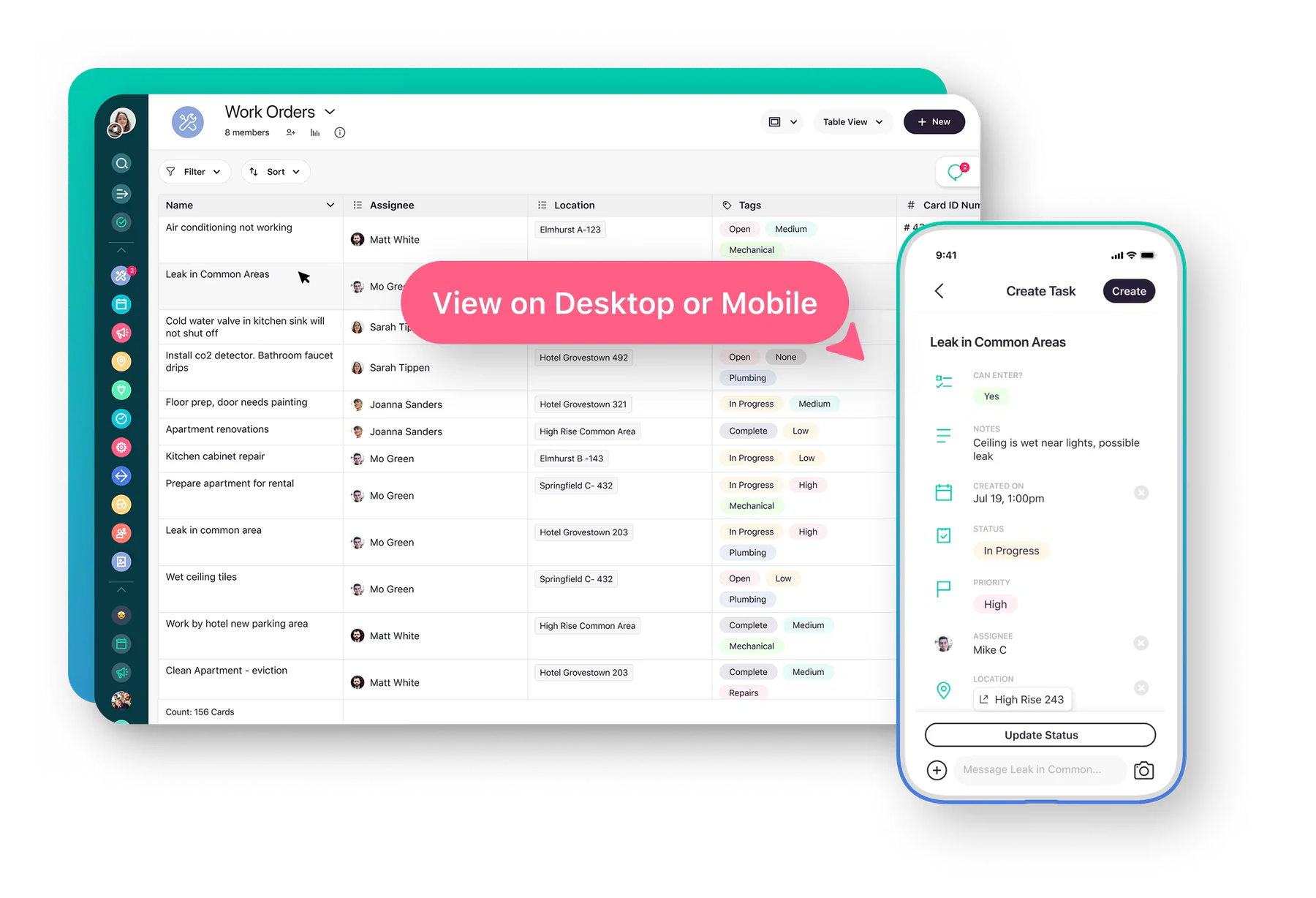
Coast is a mobile-first maintenance and communication platform for small teams managing facilities, equipment, or properties. It combines work orders, maintenance schedules, and team messaging in one accessible interface.
The free tier covers most core features for very small operations. Affordable paid plans add maintenance scheduling, reporting, and guest access for contractors as the team grows.
Key features:
- Team messaging and work order management in a single interface
- Task assignment with due dates, priorities, and checklists
- Asset register with service history and document storage
- Recurring maintenance scheduling with automatic reminders
- Guest access for external contractors and suppliers
- Mobile-first design built for frontline and field teams
| Pros |
Cons |
| ✓ Free plan available with solid core functionality | × Limited compliance, asset lifecycle, and reporting depth |
| ✓ Simple and fast to adopt for small teams | × Not suitable for enterprise or complex multi-site operations |
| ✓ Combines maintenance tracking and team communication | × Limited integration options for larger technology stacks |
Pricing: Free plan available; Pro from approximately A$25/user/month.
Best for: Small businesses and independent facility teams that need a simple, affordable work order and maintenance platform with minimal setup.
10. IBM Tririga
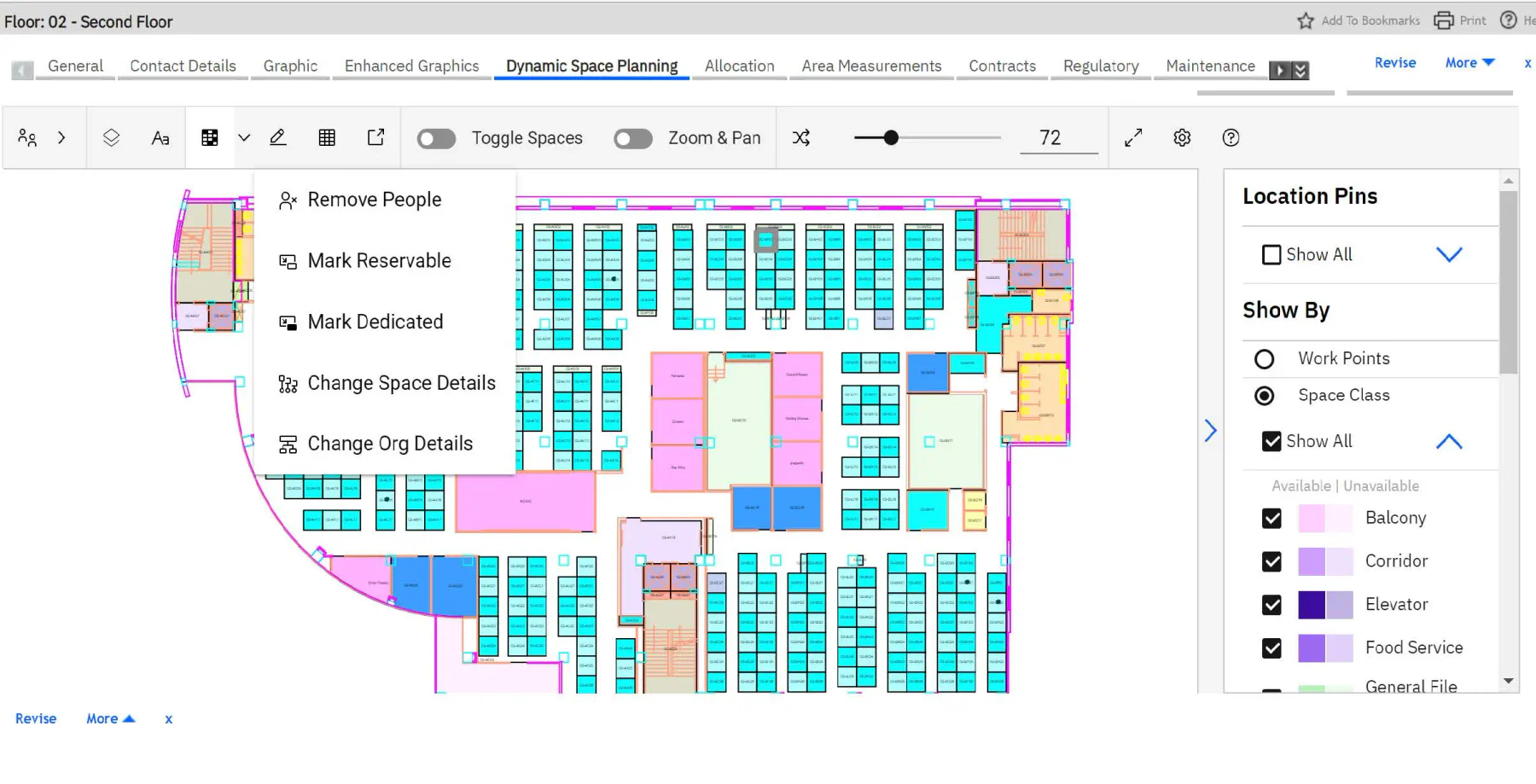
IBM Tririga is an enterprise IWMS covering AASB 16 lease accounting, space management, and facility maintenance. Large Australian corporates and government agencies use it for complex, multi-site portfolio management.
Implementation requires significant investment and dedicated technical resources. For enterprises managing large real estate portfolios, the consolidated view of leasing, maintenance, and sustainability data in one platform creates clear long-term value.
Key features:
- Integrated real estate, space, and facilities management across the full portfolio
- AI-powered space utilisation analysis and occupancy optimisation
- Capital project management with milestone and budget tracking
- Energy and carbon footprint reporting for sustainability compliance
- Lease accounting module aligned with IFRS 16 and ASC 842
- Enterprise-grade integration with SAP, Oracle, and existing IWMS platforms
| Pros |
Cons |
| ✓ AASB 16 lease accounting and real estate portfolio management | × Very high implementation cost and complexity |
| ✓ Integrated space optimisation, move management, and sustainability reporting | × Not suitable for mid-market or SMB operations |
| ✓ Strong track record in Australian enterprise and government environments | × Requires IBM ecosystem support or significant integration resources |
Pricing: Quote-based; enterprise deployments typically exceed A$150,000 per year.
Best for: Large corporates and government bodies managing complex real estate portfolios, space utilisation, and lease accounting at enterprise scale.
Facility Management Software by Sector
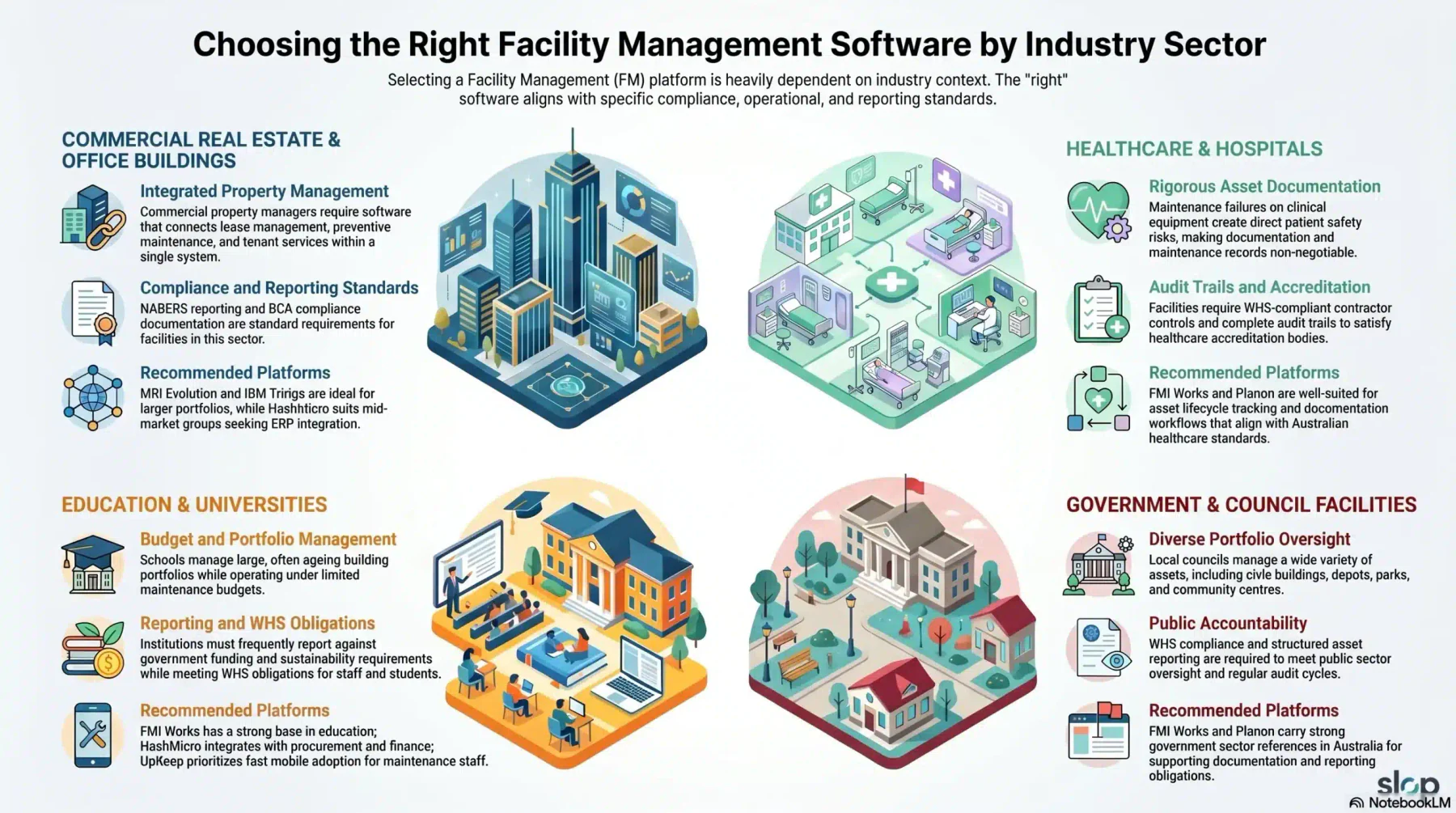
The right platform depends heavily on industry context. Each sector below carries distinct compliance, operational, and reporting requirements that influence which system fits best.
1. Commercial real estate & office buildings
Commercial property managers need FM software that connects lease management, preventive maintenance, and tenant services in one system. NABERS reporting and BCA compliance documentation are standard requirements in this sector.
MRI Evolution and IBM Tririga are the strongest choices for larger commercial portfolios. HashMicro suits mid-market property groups that want ERP integration without enterprise-level implementation complexity.
2. Healthcare & hospitals
Hospitals and healthcare facilities require stringent maintenance records, WHS-compliant contractor controls, and complete audit trails for accreditation bodies. Maintenance failures on clinical equipment create direct patient safety risk, which makes documentation non-negotiable.
FMI Works and Planon are well suited to this sector. Both offer asset lifecycle tracking and documentation workflows that align with Australian healthcare accreditation standards.
3. Education & universities
Schools and universities manage large, often ageing building portfolios under limited maintenance budgets. They also carry WHS obligations for staff and students, and frequently report against government funding and sustainability requirements.
FMI Works has a strong installed base in Australian education. HashMicro suits universities that want FM integrated with procurement and finance, while UpKeep works well for campuses that prioritise fast mobile adoption across maintenance staff.
4. Government & council facilities
Local councils manage diverse portfolios across civic buildings, depots, parks, and community centres. WHS compliance, public accountability, and structured asset reporting are standard operational requirements for this sector.
FMI Works and Planon carry strong government sector references in Australia. Both platforms support the documentation and reporting obligations that come with public sector oversight and regular audit cycles.
How to Choose the Right Facility Management Software for Your Australian Business

Choosing the right platform comes down to five practical factors. Work through these before shortlisting vendors to avoid evaluating platforms that cannot meet your baseline requirements.
- Start with compliance obligations. If WHS documentation, NABERS reporting, or BCA evidence is required, confirm the platform supports these natively before anything else.
- Match the platform to your portfolio. A CMMS suits single-function maintenance teams, while a CAFM or IWMS fits complex multi-site operations with space and lease needs.
- Check your existing technology stack. Software that connects to your ERP, accounting, or HR system removes duplicate data entry and gives finance accurate cost reporting.
- Consider how your team works on-site. For field-based technicians across multiple sites, a strong mobile experience is not optional.
- Weigh total cost of ownership over three years. Implementation, training, integration, and support often exceed the licence fee, especially for CAFM and IWMS deployments.
Conclusion
Facility management software gives Australian businesses the visibility and control needed to manage assets, meet compliance obligations, and reduce maintenance costs over time.
The right platform depends on your compliance load, portfolio size, and technology environment. For most mid-market businesses, a WHS-capable CMMS or ERP-integrated FM module delivers the best return on investment. Larger enterprises with complex real estate portfolios benefit from a full CAFM or IWMS deployment.
If you are ready to evaluate options for your team, schedule a free consultation with our experts to find the platform that fits your facilities and budget.

FAQ
A CMMS (Computerised Maintenance Management System) focuses on maintenance, work orders, and asset tracking. A CAFM (Computer-Aided Facility Management) adds space management and building data to those capabilities. An IWMS (Integrated Workplace Management System) is the broadest category, covering real estate, leasing, space, sustainability, and maintenance in a single platform. For most Australian businesses, a CMMS covers day-to-day needs, while larger enterprises benefit from a full CAFM or IWMS.
Yes. Most FM platforms include features that directly support WHS Act compliance, including incident logging, contractor induction records, hazard registers, corrective action tracking, and inspection audit trails. SafetyCulture is purpose-built for this, while FMI Works and HashMicro also provide strong WHS documentation support. Always confirm that the platform covers the specific documentation requirements of your state or territory.
NABERS is the National Australian Built Environment Rating System, which measures the energy, water, waste, and indoor environment performance of Australian buildings. FM software with NABERS support should collect utility consumption data automatically, map it to NABERS categories, and generate documentation for a verified rating submission. Planon and IBM Tririga provide the strongest NABERS-adjacent reporting capabilities for commercial and corporate real estate.
For small businesses with limited budgets and straightforward maintenance needs, Coast App and Limble CMMS are the most accessible options. Coast offers a free tier with solid core functionality, while Limble provides stronger asset tracking and preventive maintenance at an affordable price. SafetyCulture is also worth considering for small businesses with a high compliance focus, as its free tier covers inspections and basic safety workflows.
Pricing varies significantly by platform type and scale. Entry-level CMMS tools such as Coast and SafetyCulture offer free tiers, with paid plans starting from around A$24 to A$55 per user per month. Mid-tier platforms such as UpKeep and Fiix range from approximately A$50 to A$75 per user per month. Enterprise platforms such as Planon, MRI Evolution, and IBM Tririga are quote-based and typically run from tens of thousands to over A$150,000 per year. Implementation and integration costs are additional and often significant.
For hospitals and healthcare facilities, FMI Works is the most commonly used Australian-built option, with strong WHS compliance, asset lifecycle tracking, and established healthcare sector references. Planon suits larger health networks that need enterprise CAFM capabilities and integration with building management systems. HashMicro is also a practical choice for hospitals that want FM connected to procurement, finance, and HR through a single ERP platform.