










 Limited to 100 registrants

Payroll management in the Philippines relies on the BIR tax table Philippines, which determines how employee compensation is taxed and reported. This BIR tax table supports accurate salary calculations and compliance with Bureau of Internal Revenue regulations. Businesses should always follow current official BIR guidance.
For HR teams, accountants, and business owners, understanding the BIR tax table is essential for applying the correct withholding rates under the TRAIN Law. Businesses should monitor updated BIR issuances and verify their effective dates before changing payroll calculations. It also requires awareness of tax frameworks such as the TRAIN Law, which continues to shape payroll taxation. For example, BIR Revenue Regulation No. 5 updates withholding tax rates under the National Internal Revenue Code.
Key Takeaways
The current rates (effective January 2023 onwards) apply unchanged in 2026. No new rate schedule for this year.
The BIR tax table is the official guide for calculating withholding tax on employee compensation in the Philippines.
Use the BIR tax table Philippines to match taxable income, then calculate base tax plus the excess rate.
Automated payroll solutions apply the correct bracket automatically, saving time and minimising compliance errors.
What Is the BIR Withholding Tax Table 2026 in the Philippines?
The BIR withholding tax table 2026 is the payroll guide employers use to determine how much income tax should be deducted from an employee’s taxable compensation and remitted to the Bureau of Internal Revenue (BIR). It applies to:
- Employees whose taxable income falls within the graduated income tax brackets.
- Exempt for lower-income earners and may have zero withholding if their taxable pay remains within the exempt threshold.
For compensation income, employers compute withholding tax after considering taxable salary and allowable deductions such as SSS, PhilHealth, and Pag-IBIG contributions. The amount withheld is not a separate payroll fee, but an advance collection of the employee’s income tax and is credited against their annual tax liability.
Types of Withholding Tax in the Philippines
The BIR applies three main types of withholding tax, and knowing which one applies helps businesses withhold and remit the correct amount. For payroll, the withholding tax table 2026 is used specifically for the first type below, while the other two cover different kinds of payments and income.
- Withholding Tax on Compensation (WTC): The type most relevant to employers. Tax is deducted from employees’ salaries and wages using the BIR graduated rates, and the amount withheld is credited against each employee’s annual income tax due.
- Expanded Withholding Tax (EWT): Applies to specific payments to individuals or businesses, such as professional fees, rentals, and commissions. The payor withholds tax at the prescribed rate and remits it to the BIR on the payee’s behalf.
- Final Withholding Tax (FWT): Covers mostly passive income like interest, dividends, and certain royalties. The rate is generally fixed and treated as final, so the tax withheld already settles the full tax due on that income.
BIR Withholding Tax Table (effective 2023 - Onwards)
U
The 2026 withholding tax table still follows the TRAIN Law’s graduated rates effective from 2023 onward. Use the BIR withholding tax table below to find the prescribed withholding amount for the employee’s payroll frequency by matching the employee’s taxable compensation to the applicable daily, weekly, semi-monthly, or monthly range.
These schedules help employers withhold the correct amount on time, support financial compliance, and ensure the government receives regular tax revenue throughout the year.
1. Daily
The daily withholding tax table applies to employees paid per day or whose taxable compensation is computed on a daily payroll basis. Use the employee’s taxable daily compensation after mandatory deductions, then match it to the correct bracket and apply the prescribed tax formula.
| # | Daily Compensation Range | Prescribed Withholding Tax |
| 1 | ₱685 and below | ₱0.00 (Tax-exempt) |
| 2 | ₱685 – ₱1,095 | ₱0.00 + 15% over ₱685 |
| 3 | ₱1,096 – ₱2,191 | ₱61.65 + 20% over ₱1,096 |
| 4 | ₱2,192 – ₱5,478 | ₱280.85 + 25% over ₱2,192 |
| 5 | ₱5,479 – ₱21,917 | ₱1,102.60 + 30% over ₱5,479 |
| 6 | ₱21,918 and above | ₱6,034.30 + 35% over ₱21,918 |
2. Weekly
The weekly withholding tax table applies to employees whose taxable compensation is computed on a weekly payroll cycle. After subtracting mandatory deductions, match the taxable weekly compensation to the applicable bracket and compute the withholding tax accordingly.
| # | Weekly Compensation Range | Prescribed Withholding Tax |
| 1 | ₱4,808 and below | ₱0.00 (Tax-exempt) |
| 2 | ₱4,808 – ₱7,691 | ₱0.00 + 15% over ₱4,808 |
| 3 | ₱7,692 – ₱15,384 | ₱432.60 + 20% over ₱7,692 |
| 4 | ₱15,385 – ₱38,461 | ₱1,971.20 + 25% over ₱15,385 |
| 5 | ₱38,462 – ₱153,845 | ₱7,740.45 + 30% over ₱38,462 |
| 6 | ₱153,846 and above | ₱42,355.65 + 35% over ₱153,846 |
3. Semi-Monthly
The semi-monthly withholding tax table is used for employees paid twice a month, usually every 15th and 30th payroll cycle. Employers should use the employee’s taxable compensation for that specific semi-monthly period, not the full monthly salary.
| # | Semi-monthly Compensation Range | Prescribed Withholding Tax |
| 1 | ₱10,417 and below | ₱0.00 (Tax-exempt) |
| 2 | ₱10,417 – ₱16,666 | ₱0.00 + 15% over ₱10,417 |
| 3 | ₱16,667 – ₱33,332 | ₱937.50 + 20% over ₱16,667 |
| 4 | ₱33,333 – ₱83,332 | ₱4,270.0 + 25% over ₱33,333 |
| 5 | ₱83,333 – ₱333,332 | ₱16,770.70 + 30% over ₱83,333 |
| 6 | ₱333,333 and above | ₱91,770.70 + 35% over ₱333,333 |
4. Monthly
The monthly withholding tax table applies to employees paid once per month. Before applying the bracket, employers should subtract mandatory contributions such as SSS, PhilHealth, and Pag-IBIG from gross compensation to determine taxable monthly income.
| # | Monthly Compensation Range | Prescribed Withholding Tax |
| 1 | ₱20,833 and below | ₱0.00 (Tax-exempt) |
| 2 | ₱20,833 – ₱33,332 | ₱0.00 + 15% over ₱20,833 |
| 3 | ₱33,333 – ₱66,666 | ₱1,875.00 + 20% over ₱33,333 |
| 4 | ₱66,667 – ₱166,666 | ₱8,541.80 + 25% over ₱66,667 |
| 5 | ₱166,667 – ₱666,666 | ₱33,541.80 + 30% over ₱166,667 |
| 6 | ₱666,667 and above | ₱183,541.80 + 35% over ₱666,667 |
Annual BIR Income Tax Table
For annual filing via BIR Form 1700 or 1701, use the annual graduated brackets below. These correspond directly to the monthly table above (monthly bracket × 12 = annual bracket).
| Annual Taxable Income | Base Tax | Rate on Excess |
| Up to ₱250,000 | ₱0.00 | 0% (Tax-exempt) |
| Over ₱250,000 to ₱400,000 | ₱0.00 | 15% over ₱250,000 |
| Over ₱400,000 to ₱800,000 | ₱22,500.00 | 20% over ₱400,000 |
| Over ₱800,000 to ₱2,000,000 | ₱102,500.00 | 25% over ₱800,000 |
| Over ₱2,000,000 to ₱8,000,000 | ₱402,500.00 | 30% over ₱2,000,000 |
| Over ₱8,000,000 | ₱2,202,500.00 | 35% over ₱8,000,000 |
It reflects the TRAIN Law graduated rates, the annual exemption threshold, and the treatment of non-taxable compensation items.
- Mandatory deductions: SSS, PhilHealth, and Pag-IBIG are deducted first before tax is computed.
- Minimum wage earners: Minimum wage compensation remains exempt from withholding tax.
- Non-taxable benefits: 13th month pay and other benefits are exempt only up to the allowed annual limit, therefore any excess becomes taxable.
Self-Employed Individuals and Professionals
The withholding tax tables above apply to employees receiving compensation income. Self-employed individuals and professionals are generally taxed based on their net taxable income and may choose between the graduated income tax rates or, if eligible, the 8% income tax option.
The graduated rates use the Annual Income Tax Table above. Meanwhile, eligible non-VAT taxpayers with annual gross sales or receipts of not more than ₱3 million may opt for the 8% rate, subject to BIR registration and eligibility requirements.
| Taxpayer | Rate, Limit, or Basis |
|---|---|
| Graduated Income Tax Rates | ₱0 – ₱250,000: 0%; over ₱250,000: 15% and 35% based on net taxable income |
| 8% Income Tax Option | 8% on gross sales or receipts over ₱250,000; available up to ₱3,000,000 annual gross sales or receipts |
| Mixed Income Earners | Compensation income: regular tax table; business income: elected tax method; ₱250,000 threshold is generally not applied again |
How to Read the BIR tax table Philippines and Compute Withholding Tax

To use the BIR withholding tax table correctly, determine the employee’s taxable income, identify the applicable compensation range, and add the fixed base tax to the prescribed rate on the excess. The following steps demonstrate this calculation using monthly payroll examples.
1. Calculate taxable income
Taxable income is not the same as gross salary. Before finding the bracket, subtract the employee’s mandatory government contributions:
Taxable income = Gross monthly salary − (SSS employee share + PhilHealth employee share + Pag-IBIG employee share)
| Calculation Component | calculation | Amount |
|---|---|---|
| Gross monthly salary | Starting amount | ₱200,000.00 |
| SSS employee share | 5% × ₱35,000 maximum monthly salary credit | − ₱1,750.00 |
| PhilHealth employee share | 2.5% × ₱100,000 income ceiling | − ₱2,500.00 |
| Pag-IBIG employee share | 2% × ₱10,000 maximum fund salary | − ₱200.00 |
| Total mandatory contributions | ₱1,750 + ₱2,500 + ₱200 | − ₱4,450.00 |
| Taxable monthly income | ₱200,000 − ₱4,450 | ₱195,550.00 |
Contribution amounts are based on the applicable employee shares and maximum contribution bases. Actual payroll deductions may vary according to the employee’s compensation classification and current agency rules.
2. Find the compensation range
Match the taxable income to the appropriate row in the monthly BIR withholding tax table. Locate the compensation range containing the employee’s taxable income, then note its fixed base amount, lower limit, and applicable percentage rate.
3. Apply the formula
Each bracket row has two components: a fixed base tax and a percentage applied to the excess over the lower bracket limit.
Withholding tax = Base amount + (Rate × (taxable income − compensation level))
| Calculation Component | Calculation | Amount |
|---|---|---|
| Taxable monthly income | Result from Step 1 | ₱195,550.00 |
| Applicable monthly bracket | ₱166,667 – ₱666,666 | 30% rate |
| Base amount | Fixed tax for the applicable bracket | ₱33,541.80 |
| Compensation level | Lower limit of the applicable bracket | ₱166,667.00 |
| Excess over compensation level | ₱195,550 − ₱166,667 | ₱28,883.00 |
| Tax on excess | 30% × ₱28,883 | ₱8,664.90 |
| Monthly withholding tax due | ₱33,541.80 + ₱8,664.90 | ₱42,206.70 |
Withholding tax is calculated using the monthly BIR tax table effective January 1, 2023 onward and the sample taxable income shown above. Actual deductions may vary based on the payroll period, taxable supplementary compensation, payroll adjustments, and the employee’s applicable tax bracket.
Example 1: employee earning ₱25,000/month
- Gross monthly salary: ₱25,000. Estimated contributions: SSS ₱1,250 + PhilHealth ₱625 + Pag-IBIG ₱100 = ₱1,975
- Taxable income: ₱25,000 − ₱2,075 = ₱23,025
- Bracket: ₱23,025 falls in the lower bracket (₱20,833 – ₱33,332). Base amount: ₱0
- Excess over ₱20,833: ₱23,025 − ₱20,833 = ₱2,192. Apply 15%: ₱3,675 × 0.15 = ₱328.8
Monthly withholding tax due: ₱0 + ₱328.8 = ₱328.8
Example 2: employee earning ₱45,000/month
- Gross monthly salary: ₱45,000. Estimated contributions: SSS ₱1,750 + PhilHealth ₱1,125 + Pag-IBIG ₱100 = ₱2,975
- Taxable income: ₱45,000 − ₱2,975 = ₱42,025
- ₱42,025 falls in bracket 3 (₱33,333 – ₱66,666). Base amount: ₱1,875.00
- Excess over ₱33,333: ₱42,025 − ₱33,333 = ₱8,692. Apply 20%: ₱8,692 × 0.20 = ₱1,738.40
Example 3: employee earning ₱200,000/month
- Gross monthly salary: ₱200,000. Estimated contributions: SSS ₱1,750 + PhilHealth ₱2,500 + Pag-IBIG ₱100 = ₱4,350
- Taxable compensation: ₱200,000 − ₱4,350 = ₱195,650
- Applicable Bracket: ₱166,667 to ₱666,666. Base withholding tax: ₱33,541.80
- Excess over ₱166,667: ₱195,650 − ₱166,667 = ₱28,983. Tax on excess: ₱28,883 x 30% = ₱8,694.90
Monthly withholding tax due: ₱33,541.80 + ₱8,694.90 = ₱42,236.70
For a broader annual view, refer to the Annual Income Tax Table above. Using a payslip system helps employers present gross pay, mandatory deductions, taxable income, and withholding tax in one clear salary record.
As these examples show, applying the correct BIR bracket, contribution rates, and excess computations by hand gets slower and riskier as your workforce grows. An automated payroll system applies the correct BIR tax table 2026 automatically, keeps computations consistent, and reduces payroll errors before they reach your employees.

Mandatory Contributions Before Calculating Withholding Tax
While the BIR tax table determines withholding tax, a complete payroll calculation also requires accurate deduction and remittance of mandatory contributions to SSS, PhilHealth, and Pag-IBIG. These contributions matter for the BIR tax table specifically because they reduce the employee’s taxable income before you apply the bracket.
Estimated 2026 employee contribution rates:
| Agency | Employee Share | Employer Share | Basis |
| SSS | 5% of MSC | 10% of MSC | Monthly Salary Credit (₱5,000–₱35,000 range) |
| PhilHealth | 2.5% of basic salary | 2.5% of basic salary | Subject to income floor and ceiling |
| Pag-IBIG | 2% of monthly compensation | 2% | Employee max contribution: ₱200/month |
Always verify current rates directly: SSS · PhilHealth · Pag-IBIG Fund. Rates are subject to change.
MSC Bracket Examples:
- ₱5,000 MSC: Employee share = ₱250, Employer share = ₱500
- ₱10,000 MSC: Employee share = ₱500, Employer share = ₱1,000
- ₱15,000 MSC: Employee share = ₱750, Employer share = ₱1,500
- ₱20,000 MSC: Employee share = ₱1,000, Employer share = ₱2,000
- ₱35,000 MSC: Employee share = ₱1,750, Employer share = ₱3,500
This example illustrates how MSC affects both employee and employer contributions.
Timely remittance of these contributions is legally required. Penalties apply to both late and incorrect remittances. Integrating contribution computation into your payroll system ensures correct net pay and full statutory compliance.
How Payroll Software Helps with BIR Compliance
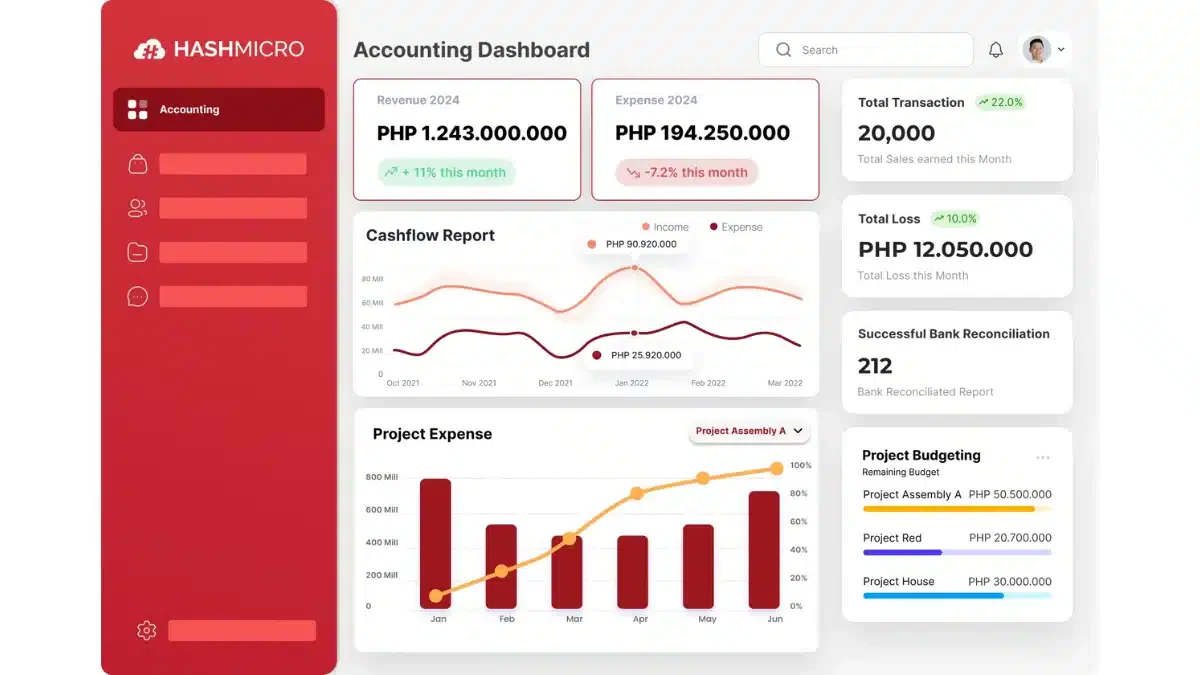
Manually calculating payroll becomes slower and more error-prone as your workforce grows, especially when the BIR tax table Philippines, contribution rates, and employee details change. An integrated HR and accounting system applies the correct BIR tax table 2026 brackets, computes mandatory contributions, produces accurate payslips, and supports reliable alphalist preparation for annual reporting.
1. Keep Payroll Data in One Place
A modern system stores all employee data such as personal information, salaries, attendance, and leave into a single database. Payroll is processed automatically using the most up-to-date information, eliminating manual data entry and the inconsistencies that come with it.
2. Calculate Tax and Contributions Automatically
Payroll software automatically updates BIR tax tables and contribution schedules, adjusts for bonuses, overtime, and other variable pay, and generates the necessary compliance documents including BIR Form 2307 (Certificate of Creditable Tax Withheld at Source) and BIR Form 2316. Calculation errors that trigger under- or over-withholding are eliminated.
3. Prepare Payroll and Compliance Reports
Automated systems produce payroll summaries, remittance reports, and annual tax forms ready for audits and management decisions. Integration with accounting ensures accurate general ledger entries, simplifying financial tracking and statutory reporting.
"Using an integrated payroll system automates tax calculations, applies the correct BIR tax table, and manages mandatory contributions, ensuring compliance, reducing errors, and improving efficiency as your workforce grows."
Conclusion
Understanding the BIR tax table Philippines and mandatory employee contributions is essential for businesses operating in the Philippines. Staying current with the BIR tax table, TRAIN Law rates, and agency contribution schedules supports accurate payroll, regulatory compliance, and employee trust.
Manual payroll is error-prone and time-consuming, especially as a workforce grows. Automating tax calculations through an integrated payroll system centralises employee data, applies the correct BIR bracket automatically, computes mandatory contributions, and generates the reports your compliance team needs all in one place. If you are evaluating your options, see our guide to payroll software in the Philippines to understand what features matter most for BIR compliance and scalability.

FAQ for BIR Tax Table
No. The official compensation tax table 2026 in the Philippines still uses the TRAIN Law rates effective January 1, 2023 onward. Employers should apply the daily, weekly, semi-monthly, or monthly BIR withholding schedule based on payroll frequency, unless BIR releases a newer regulation.
The TRAIN Law, or RA 10963, updated the Philippine personal income tax system and set the graduated rates now used for compensation withholding. For 2026 payroll, annual taxable income up to ₱250,000 remains exempt, while higher income levels are taxed using the 15% to 35% graduated brackets.
In 2026, 13th month pay and other benefits remain non-taxable up to a combined annual ceiling of ₱90,000. Any amount above that limit becomes taxable compensation and should be included when employers compute withholding tax using the applicable BIR payroll table.
Using the wrong BIR withholding tax table can lead to under-withholding, over-withholding, payroll corrections, and possible BIR penalties. Employers should verify taxable compensation, mandatory contributions, payroll frequency, and the current 2023-onward schedule before finalizing 2026 payroll computations.
Employers must file BIR Form 1601-C (Monthly Remittance Return of Income Taxes Withheld on Compensation) and remit the tax on or before the 10th day of the following month (15th day for eFPS filers in certain groups). Non-compliance results in penalties and interest charges from the BIR.