









 Limited to 100 registrants

Struggling to manage customer interactions and sales without the right CRM software? Lost leads, missed follow-ups, and inefficient processes can slow business growth.
According to a report from Statista, CRM Philippines is expected to reach USD 134.7 million by 2025, with a CAGR of 13.19% from 2025 to 2029, reflecting the rising demand for smarter customer management solutions. However, not all CRMs offer the automation and efficiency businesses need to stay competitive.
That demand makes selection a practical growth decision, not a simple feature comparison. This article reviews 19 of the best CRM software options in the Philippines, including platforms suited for enterprise teams and lighter CRM for small business setups. It covers features, automation, pricing signals, usability, integrations, and business fit so you can weigh each platform against your sales process.
Key Takeaways
Each CRM offers unique strengths (from automation, analytics, and customer marketing to pipeline management) making it essential for companies to compare options carefully.
Implementing CRM tools in your business in the Philippines has many benefits such as monitoring and supervising all interactions and communications with potential customers and helping to identify other business opportunities.
Businesses should assess ease of use, customization, reporting, team productivity tools, and system compatibility to ensure long-term value.
Which CRM Software Is Best for Your Business?

Best Because
Best for businesses seeking an all-in-one solution that integrates seamlessly with other modules.




Full Comparison of Best CRM System
Choosing the right CRM software is essential for managing customer relationships, improving sales performance, and supporting long-term business growth. The table below compares the best CRM software, helping businesses evaluate each solution based on suitability, core strengths, limitations, ratings, and pricing before selecting the most effective platform for their needs.
| Brand | Best for | Pros | Cons | Price |
|---|---|---|---|---|
| 1) HashMicro | Best for businesses needing an all-in-one CRM deeply integrated with ERP, finance, inventory, and operations | Fixed pricing with no hidden costs, unlimited users, seamless ERP and module integration, highly customizable, scalable for business growth | Complex features for small businesses, implementation time varies | Pricing available on request based on modules, users, and deployment |
| 2) Zoho | Best for SMEs needing flexible CRM with sales and marketing automation | Free plan available, automation included on all plans, wide integration ecosystem | Extra cost for advanced features, limited custom fields | From ₱810 per user monthly |
| 3) HubSpot | Best for growing teams prioritizing ease of use and marketing-led CRM adoption | Easy to use interface, strong marketing and sales tools, free entry-level plan | Limited CRM depth, scalability constraints | From ₱1,160 per user monthly |
| 4) Hooman Design | Best for startups and small teams needing a simple, affordable, design-oriented CRM | Customizable dashboards, streamlined pipelines, simple client management | Limited advanced features, fewer global integrations | From ₱3,000 monthly |
| 5) Salesmate | Best for sales-driven teams tracking deals with built-in calling and email | Built-in calling and email tools, intuitive dashboard, strong sales productivity features | Add-on costs increase pricing, limited marketing features | From ₱870 per user monthly |
| 6) NOAH Business | Best for startups and small teams needing an affordable CRM with local support | Easy to use, local customer support, customizable workflows | Not scalable for large teams, limited integrations | Quoted locally in pesos, contact vendor |
| 7) Apptivo | Best for SMEs needing modular CRM with strong workflow automation | Advanced workflow automation, modular features, intuitive UI | Limited integrations, restricted storage and reporting | From ₱870 per user monthly |
| 8) Agile | Best for growing teams wanting affordable, marketing-led CRM adoption | Free plan available, sales and marketing and service features, cost-effective | Limited integrations, weak support on lower tiers, no real-time updates | From ₱520 per user monthly |
| 9) Nimble | Best for teams emphasizing collaboration through email and social relationship management | Strong email integration, efficient task management, useful reporting | Limited mobile functionality, confusing interface, weak customer support | From ₱1,735 per user monthly |
| 10) Insightly | Best for sales-driven teams tracking deals alongside project delivery | Customizable dashboards, strong third-party integrations, project management features | No lead scoring, extra cost for calling features | From ₱1,680 per user monthly |
| 11) EngageBay | Best for SMEs needing affordable all-in-one sales and marketing automation | Free plan available, integrated marketing and sales tools, affordable pricing | Outdated templates, shallow reporting depth, steep learning curve | From ₱870 per user monthly |
| 12) Bitrix24 | Best for startups and small teams needing affordable, modular CRM with task management | Collaboration and task management tools, built-in project features, free entry plan | Complex interface, difficult mobile usage, paid plan user minimum | From ₱3,540 monthly for the plan |
| 13) Salesforce | Best for enterprises requiring high customization, scalability, and advanced analytics | Highly customizable platform, enterprise-grade features, powerful analytics | High cost for small businesses, internet dependency | From ₱1,450 per user monthly |
| 14) Creatio | Best for enterprises needing scalable no-code CRM with strong process automation | No-code customization, strong automation tools, flexible workflows | High cost for full modules, requires technical setup | Growth: ₱1,540 per user per month; Enterprise: ₱3,390 per user per month; Unlimited: ₱5,240 per user per month |
| 15) Monday | Best for teams emphasizing collaboration and visual, task-based sales workflows | Visual pipelines, easy-to-use automations, strong team collaboration | Automation limits on lower plans, minimum seat requirement | Starts at ₱620 per user/month (billed annually) |
| 16) Pipedrive | Best for sales-driven teams focused on pipeline visibility and deal tracking | Simple and intuitive pipeline management, workflow automation, easy adoption | No free plan, limited reporting on lower tiers | Essential: ₱860 per user/month; Enterprise: ₱7,960 per user/month |
| 17) Oracle NetSuite | Best for enterprises requiring scalable CRM tightly integrated with ERP | Deep ERP integration, advanced financial and sales capabilities, enterprise scalability | Complex for SMBs, high implementation cost | User licenses: ₱6,170 to ₱18,500 per user per month; Implementation costs: starting at ₱1,542,000 |
| 18) Keap | Best for small businesses wanting marketing-led CRM with automation-heavy follow-up | Strong automation workflows, built-in email and SMS tools, sales-focused design | High pricing on advanced tiers, limited customization on entry plans | Starts at ₱9,810 per month |
| 19) Zendesk | Best for teams combining collaborative sales workflows with customer support | Clean pipeline interface, strong Zendesk integration, useful sales automation | Add-ons raise total cost, limited marketing capabilities | Starts at ₱1,170 per user per month |
19 Best CRM Software Examples
Choosing the right CRM for your business can be tough, but we’ve got you covered! In this guide, we're sharing the 19 best CRM software Philippines platforms for 2026, handpicked for their features and ease of use across enterprise, mid-market, and CRM for small business needs.
1. HashMicro
HashMicro CRM software is a cloud ERP solution serving businesses across the Philippines, Singapore, and Indonesia. Its cloud-based platform covers customer data management, sales pipeline tracking, and reporting for industries such as retail, consulting, and real estate.
The system is built to keep customer records centralized and accessible across sales teams. Businesses can request a free demo to review how the platform fits their existing sales and customer management processes.
HashMicro best features:
- Lead age analysis
- Lead scoring
- Sales pipeline management
- Revenue forecasting
- Multi-pricelist management
- Upselling products
- Advance AI assistance
- Sales team management
- GPS tracking
| Pros | Cons |
|
|
HashMicro CRM Software: Suitable for businesses seeking an all-in-one solution that integrates seamlessly with other modules like accounting, procurement, and inventory for optimized operations.
HashMicro Pricing: Custom pricing that can be adjusted with the price calculation of HashMicro CRM Platforms. Click the banner below to find out your personalized price calculation.

2. Zoho
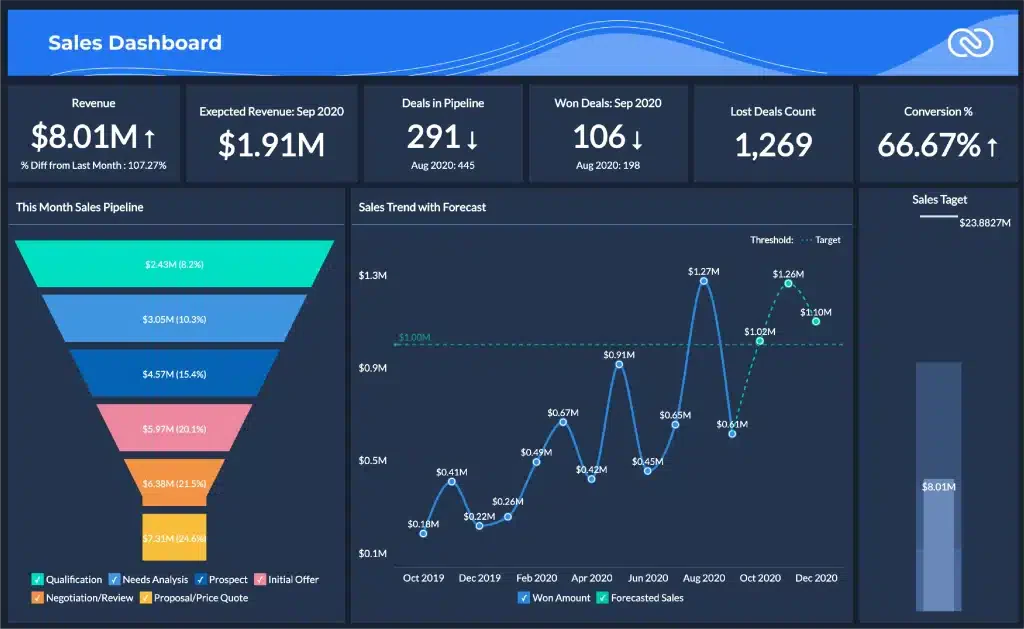
Zoho CRM software, developed by Zoho, is a cloud-based CRM platform designed to oversee sales, marketing, and customer support in business-to-business (B2B) and business-to-customer (B2C) engagement strategies.
This software is delivered as a service (SaaS), accessible through popular web browsers compatible with any operating system. Additionally, Zoho CRM Platforms offers mobile applications for mobile devices. It equips users with fundamental CRM functionalities like email marketing, social CRM, marketing automation, and sales functions.
Zoho best features:
- Lead management
- Mobile access
- Deal management
- Contact management
- Workflow automation
- Omnichannel sales
- Reporting and analytics
| Pros | Cons |
|
|
Zoho CRM Software: Best for small to medium-sized businesses looking for a flexible CRM for small business, customizable CRM that integrates sales, marketing, and customer support in one platform.
Zoho Pricing: Zoho CRM offers pricing plans ranging from a Free Edition for up to three users to premium options, starting at ₱810 per user per month. Higher-tier plans provide advanced features like automation, AI tools, and increased storage, with a 15-day free trial available.
3. HubSpot
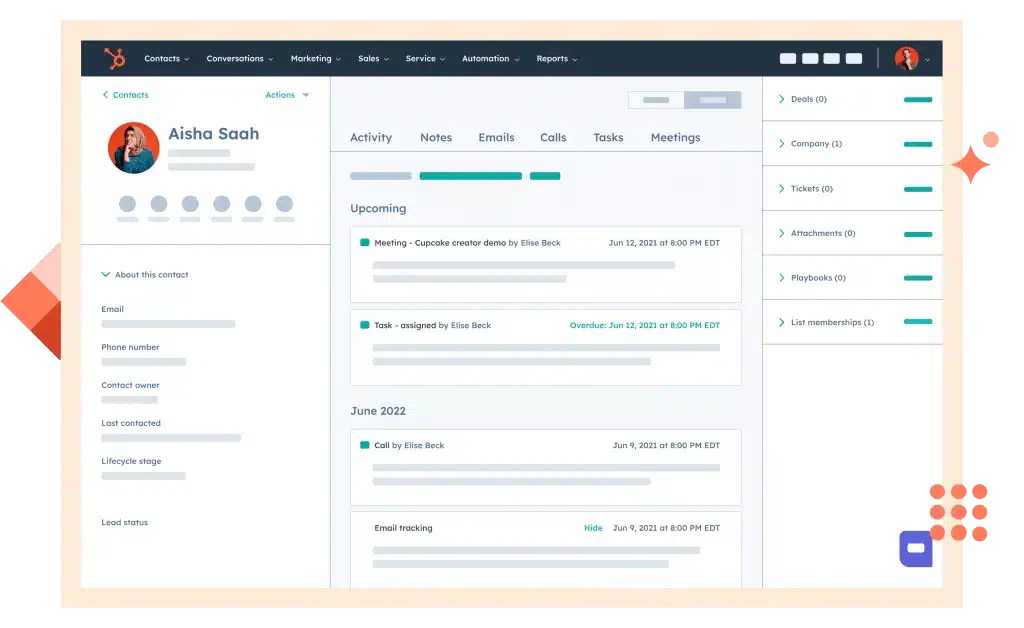
HubSpot is a CRM software provider in the Philippines, offering tailored solutions for businesses in diverse sectors. It partners with GetCre8ive to provide customer relation management solutions to Philippines businesses. Its platform is designed to streamline customer relationship management processes effectively.
HubSpot ensures smooth integration and optimal performance for clients. With a dedicated team, they aim to enhance customer satisfaction and support business growth through innovative CRM solutions.
HubSpot best features:
- CRM Implementation
- CRM Migration
- Customer Marketing
- Email Marketing
- Knowledge Base Development
- Sales and Marketing Alignment
| Pros | Cons |
|
|
HubSpot CRM Software: Best for growing businesses that need an easy-to-use, free CRM with powerful marketing, sales, and customer relationship tools.
HubSpot Pricing: HubSpot offers a range of pricing plans tailored to different business needs, including free tools and premium options. Paid plans start at ₱1,200 per month for basic features, while advanced plans for marketing, sales, and customer service can cost up to ₱308,000+ per month, depending on the selected package and features.
4. Hooman Design
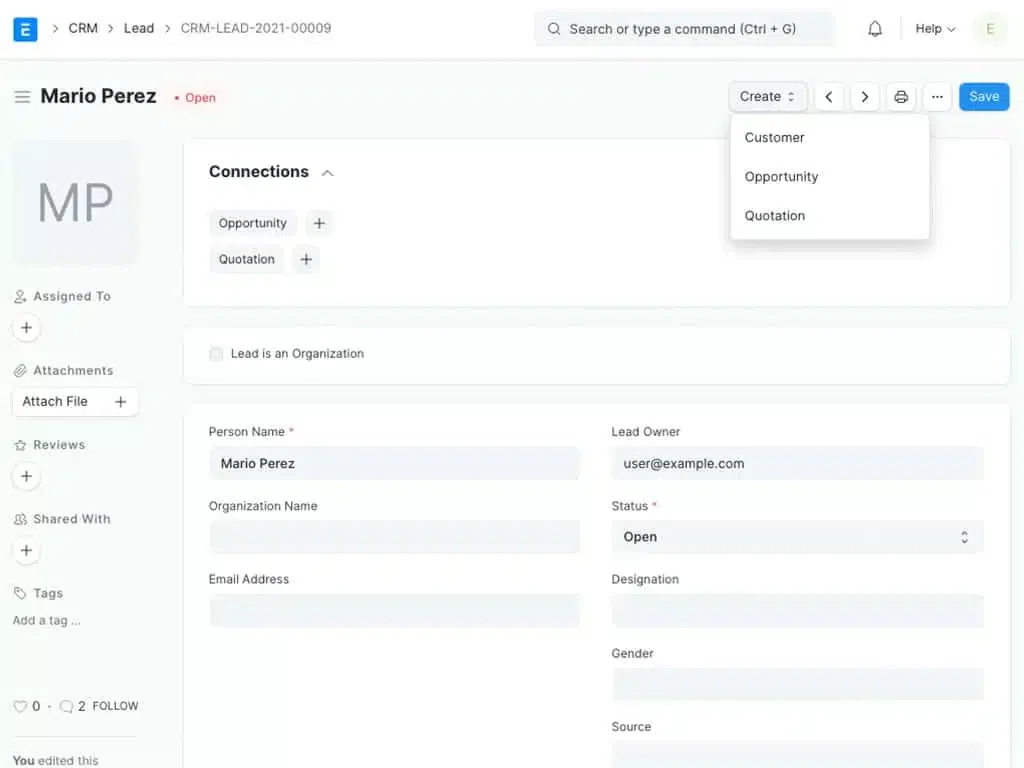
Hooman Design Corporation is a digital experience provider in the Philippines. It is an agency aiming to provide accessible and affordable solutions for digital transformation, such as Web Design and Development, Learning Management Systems (LMS), and Enterprise Resource Planning (ERP). In addition to those solutions, it also provides CRM Platforms for businesses that need it.
Hooman Design best features:
- API integration
- Customer 360 view
- Knowledge management
- Workflow automation
- Sales management
| Pros | Cons |
|
|
Hooman Design CRM Solution: Suitable for businesses wanting a locally built CRM software Philippines option with design-focused workflows to better engage and manage customer interactions.
Hooman Design Pricing: Hooman Design offers a cost-effective CRM solution with unlimited user accounts, starting at ₱3,000 per month.
5. Salesmate
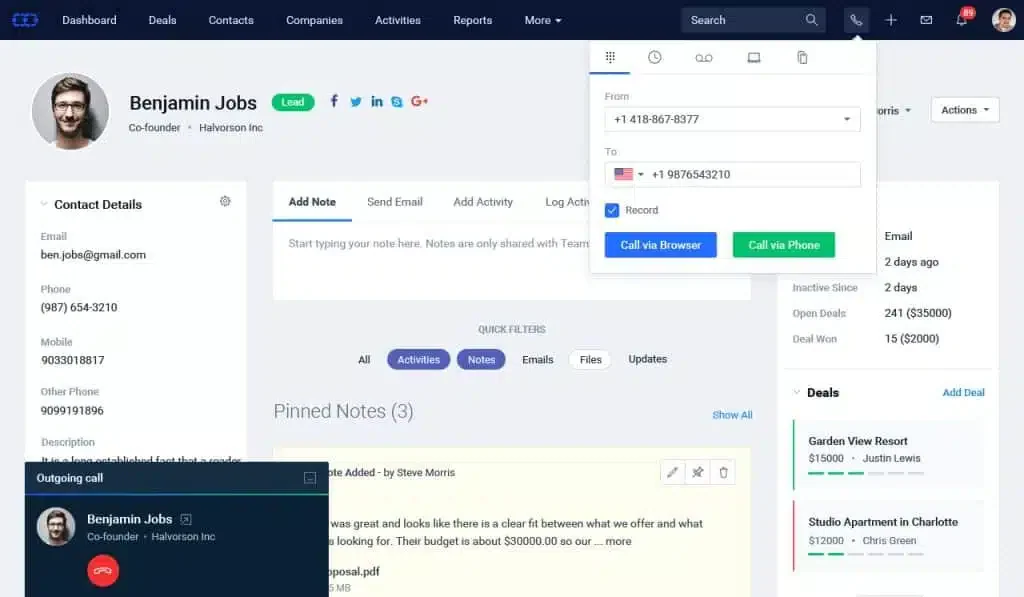
Salesmate is a cloud-based CRM software. It aids sales teams in managing customers, deals, and tasks within a unified platform. Additionally, it encompasses functionalities such as contact management, deal tracking, task management, and integrated phone and email services. Salesmate is another crm tools list focused on sales team productivity.
Salesmate CRM software aims to enhance the productivity and efficiency of sales teams by providing tools to monitor customer interactions, track deals, and manage tasks effectively. Furthermore, its built-in phone and email system enables seamless customer communication directly from the CRM platform.
Salesmate best features:
- Appointment management
- Auto-dialer and auto-responders
- Campaign management
- Client management
- Email management
- Mobile access
- Lead management
- Reporting and analytics
| Pros | Cons |
|
|
Salesmate CRM Tools: Best for small to medium-sized businesses needing an efficient CRM solution that helps manage leads, sales, and customer relationships with ease.
Salesmate Pricing: Salesmate CRM Philippines pricing starts at ₱900 per user/month (billed annually) for basic features, while the Growth plan costs ₱1,900 per user/month with advanced tools for business expansion.
6. NOAH Business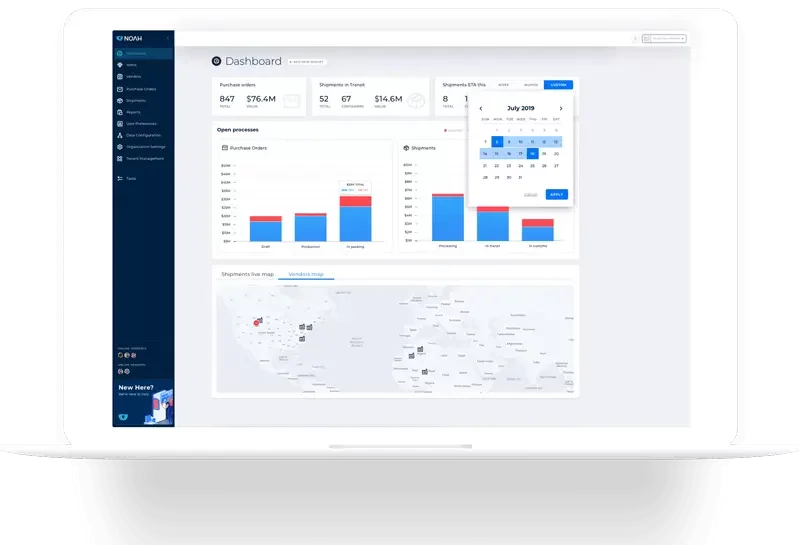
Founded in 2006, NOAH Business Applications is a CRM software Philippines provider that aims to deliver local business applications, including Customer Relationship Management (CRM).
NOAH Business Application offers a suite of CRM software solutions designed to assist businesses in managing customer relationships effectively. With customizable features and user-friendly interfaces, NOAH aims to streamline sales, marketing, and customer service processes. The features help companies to make informed decisions and optimize their sales.
Noah best features:
- Planning and budgeting
- Lead management
- Sales management
- Workflow automation
- Social media integration
- Notifications and alerts for schedule
| Pros | Cons |
|
|
NOAH Business CRM: Suitable for businesses seeking a CRM that integrates sales automation with a strong emphasis on improving customer relationships.
NOAH Business Pricing: NOAH CRM offers various pricing options based on business needs.
7. Apptivo
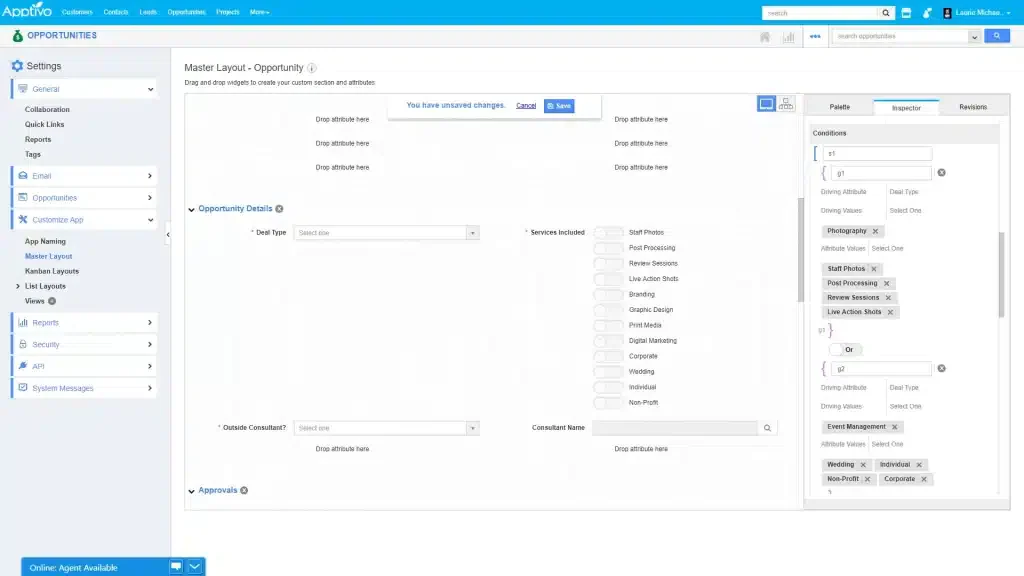
Founded in 2009, Apptivo is a cloud-based CRM software for customer service. It was launched to provide affordable and easy-to-use solutions for businesses of all sizes.
Apptivo’s cloud-based CRM Platforms enables companies to attract, engage, and retain customers. It offers tools such as lead management, opportunity pipeline with intuitive dashboards, campaign management, and flexible workflow tools, including marketing automation.
Apptivo best features:
- Email marketing
- Lead management
- Multi-channel communication
- Pipeline management
- Reporting and analytics
- Sales report
- Mobile access
- Workflow management
| Pros | Cons |
|
|
Apptivo CRM Software: Best for small businesses and startups looking for a customizable CRM for small business operations, with a range of modules and easy integrations to suit various business needs.
Apptivo Pricing: Apptivo CRM offers flexible pricing plans to suit different business needs. Plans start at ₱900 per user per month, with advanced options going up to ₱2,500 per user per month for more features and customization.
8. Agile
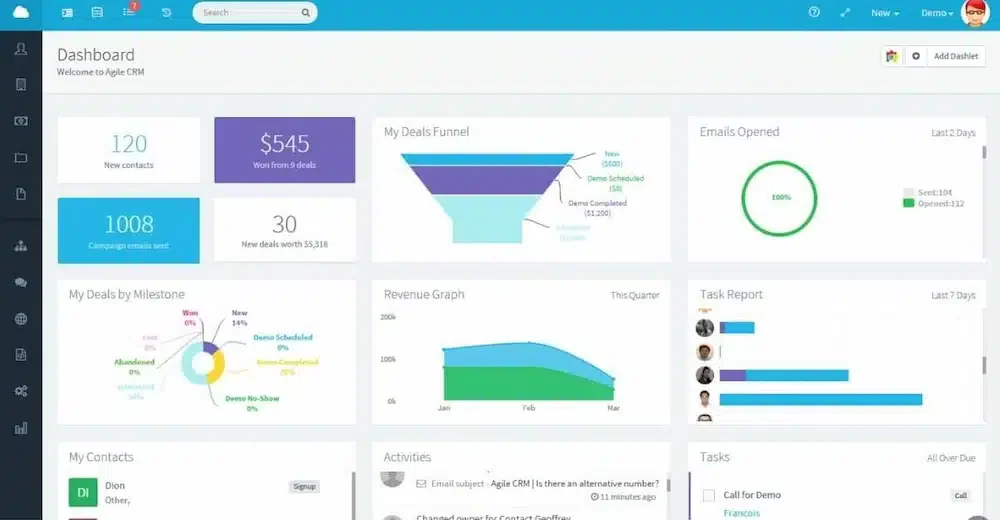 Agile CRM Philippines is recognized as a customer relationship management software for businesses. This platform prioritizes integrating sales, marketing, customer service, social media marketing, and other online channels into a centralized interface.
This approach aims to enhance customer engagement, optimize the customer lifetime cycle, and improve profitability. With Agile, users access a wide range of features, categorized into three main functions: Sales, Marketing, and Customer Service.
Agile best features:
- Account management
- Behavior tracking
- Call center management
- Campaign management
- Lead management
- Mobile access
- Project planning/scheduling
| Pros | Cons |
|
|
Agile CRM Solution: Suitable for businesses of all sizes that want a flexible, cost-effective CRM with robust sales automation and marketing tools to drive growth.
Agile Pricing: Agile CRM offers a free plan for up to 10 users, including 1,000 contacts and companies. Paid plans start at ₱550 per user per month for the Starter plan, with advanced features available in higher-tier plans.
9. Nimble
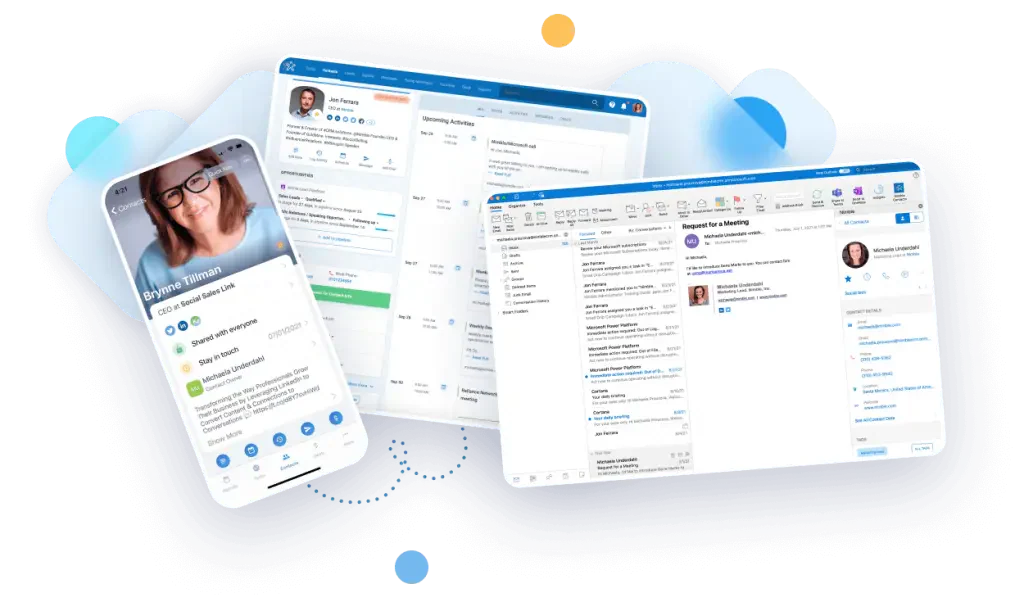
Nimble is a CRM Philippines company headquartered in Santa Monica, California, established by Jon Ferrara, who also founded the CRM company Goldmine. In 2010, Nimble introduced its private beta version globally. Initially, it is a CRM solution integrating social media and collaboration features. However, now Nimble excels in integrating with Office 360 and Google Workspace.
Nimble best features:
- Email campaign management
- Lead management
- Marketing automation
- Pipeline management
- Mobile access
- Reporting and analytics
- Sales activity management
| Pros | Cons |
|
|
Nimble CRM Software: Best for small businesses and entrepreneurs seeking a simple, social CRM for small business contact management that efficiently manages contacts and integrates social media interactions.
Nimble Pricing: Nimble CRM offers a single Business Plan at ₱1,850 per user per month or ₱1,550 per user per month when billed annually.
10. Insightly
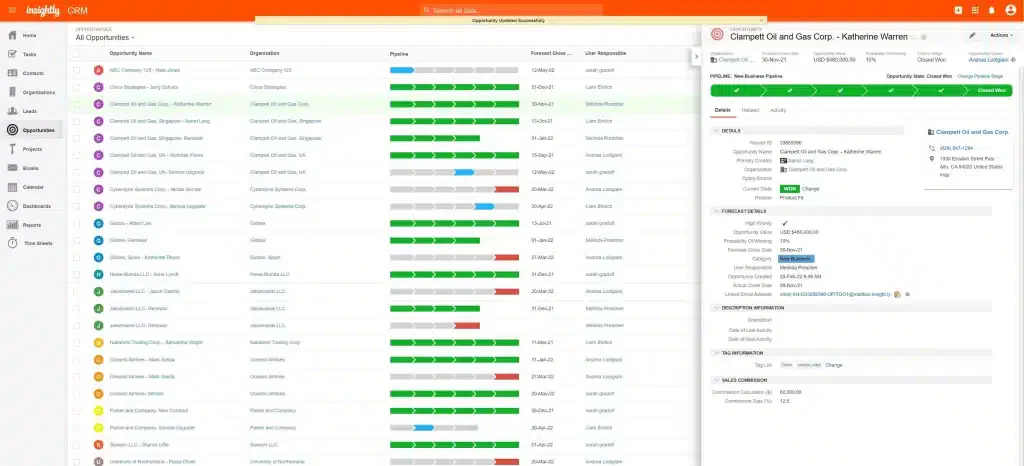
Insightly is a cloud-based CRM and pipeline management tool facilitating seamless collaboration and remote work for teams. Users can streamline various pipelines, tasks, and workflows with different plan options available, catering to sales and marketing teams or general project management needs.
Insightly provides visually appealing charts on customizable dashboards, which enhance accessibility to necessary data and ensure quick comprehension.
Insightly best features:
- Workflow automation
- Sales lead tracking
- Sales pipeline and lead management
- Project and task management
- Product, price books, and quotes
- Mobile access
| Pros | Cons |
|
|
Insightly CRM Tools: Suitable for businesses looking for a powerful, user-friendly CRM that combines project management, sales, and customer relationship management in one platform.
Insightly Pricing: The Plus plan is priced at ₱1,800 per user per month, while the Professional plan costs ₱3,000 per user per month. For advanced features, the Enterprise plan is available at ₱6,100 per user per month.
11. EngageBay
 EngageBay is an all-in-one tool for marketing, sales, support, and CRM, designed to help attract, engage, and convert website visitors into customers. This cloud-based platform lets businesses use marketing tools to build relationships with customers.
With its built-in CRM, companies can easily manage and track all activities across customers, leads, and deals as they move through pipelines. Moreover, EngageBay provides marketing features like automated email templates, customizable forms/popups, and social media engagement to generate leads.
EngageBay best features:
- Contact management
- Task management
- Sales reporting
- Mobile access
- Email Broadcast
- Social media marketing
- Reporting and analytics
| Pros | Cons |
|
|
EngageBay CRM Software: Best for small to medium-sized businesses that want an affordable, all-in-one CRM for marketing, sales, and customer support to boost productivity.
EngageBay Pricing: The Basic Plan starts at ₱900 per user per month, while the Growth Plan is priced at ₱3,100 per user per month. For more advanced features, the Pro Plan is available at ₱6,200 per user per month.
12. Bitrix24
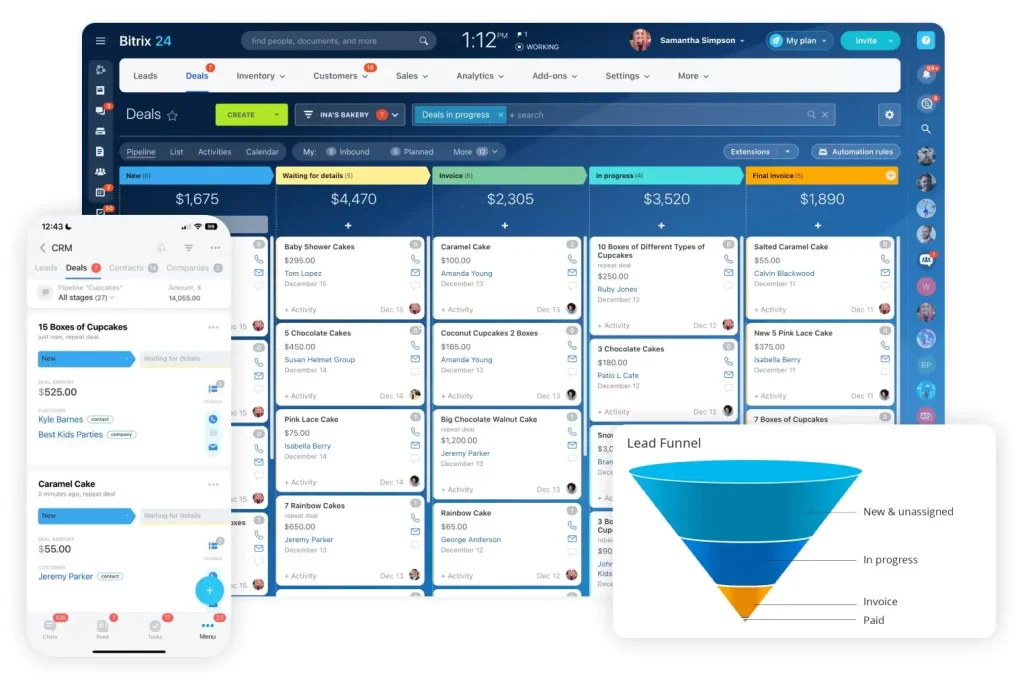
Bitrix24 functions as a collaborative CRM tool, offering users a range of features, including CRM, document management, task, and project management. These are all within a social-style environment, including user profiles, liking, commenting, instant messaging, and content sharing.
Bitrix24 seeks to offer a practical solution for managing a company online, providing flexible and precise tools for tasks. The tasks mentioned include clocking in at the start of the day, processing sales, and generating reports.
Bitrix24 best features:
-
-
- Marketing automation
- Leads management
- Quotes and invoices
- Custom forms
- Task management
- Mobile access
- Project management
-
| Pros | Cons |
|
|
Bitrix24 CRM Software: Suitable for teams seeking a collaborative, free CRM that integrates communication tools, project management, and automation in a single platform.
Bitrix24 Pricing: Paid plans start at ₱3,800 per month for the Basic plan, with advanced options like the Professional plan at ₱15,400 per month, catering to varying business needs.
13. Salesforce
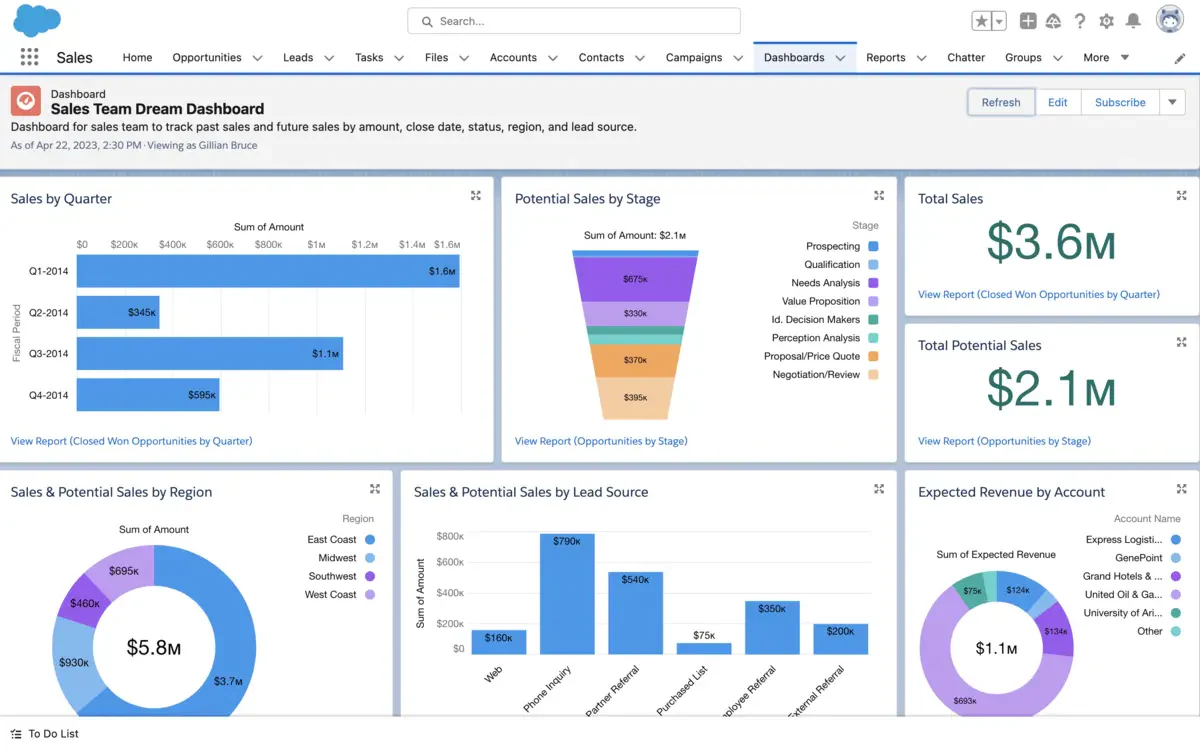 Salesforce offers some of the best CRM software features available in the global business arena.
Its platform includes robust Sales, Cloud, and Marketing systems, enhanced with comprehensive Analytics and Marketing services.
Additionally, Salesforce CRM is not only straightforward to implement and operate, but its user-friendly metrics, as highlighted by Salesforce Customer Success, demonstrate its remarkable effectiveness.
Salesforce best features:
- Contact and Account Management
- Opportunity Management
- Report and Dashboard
- Lead Management
| Pros | Cons |
|
|
Salesforce: Best for large businesses and enterprises needing a highly customizable, cloud-based CRM with advanced features and powerful integrations.
Salesforce Pricing: Salesforce CRM offers various pricing plans to suit different business needs, starting at ₱1,500 per user per month for the Essentials plan. Advanced options like the Unlimited plan cost up to ₱18,500 per user per month, providing full features and premium support.
14. Creatio
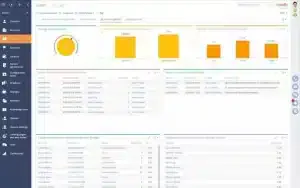 Creatio CRM is an all-in-one sales and marketing platform equipped with numerous tools for campaign management and deal progression. It excels at organizing leads to simplify the sales process. However, its complexity can pose a challenge, and unlocking all features can be quite costly.
Creatio best features:
- Sales creatio
- Marketing creatio
- Service creatio
| Pros | Cons |
|
|
Creatio CRM: Suitable for businesses that need a no-code CRM solution with powerful business process management and automation tools to drive efficiency.
Creatio Pricing: Creatio CRM offers three pricing plans to accommodate various business needs. The Growth plan starts at ₱1,540 per user per month, the Enterprise plan at ₱3,390 per user per month, and the Unlimited plan at ₱5,240 per user per month.
15. Monday Sales
 Monday sales CRM enables business owners, sales teams, and RevOps to automate and oversee the entire sales cycle, from pre-sales to post-sales, by centralizing all customer data in one place.
Monday sales best features:
-
- Sequences
- Email composition
- Activity tracking
- Mass emails
| Pros | Cons |
|
|
Monday Sales CRM: Best for teams that need a simple, customizable CRM that integrates with various work tools and enhances sales workflow management.
Monday Sales Pricing: Monday Sales CRM pricing starts at ₱620 per user/month (billed annually) with a minimum of three users. Higher-tier plans offer advanced features at increased rates.
16. Pipedrive
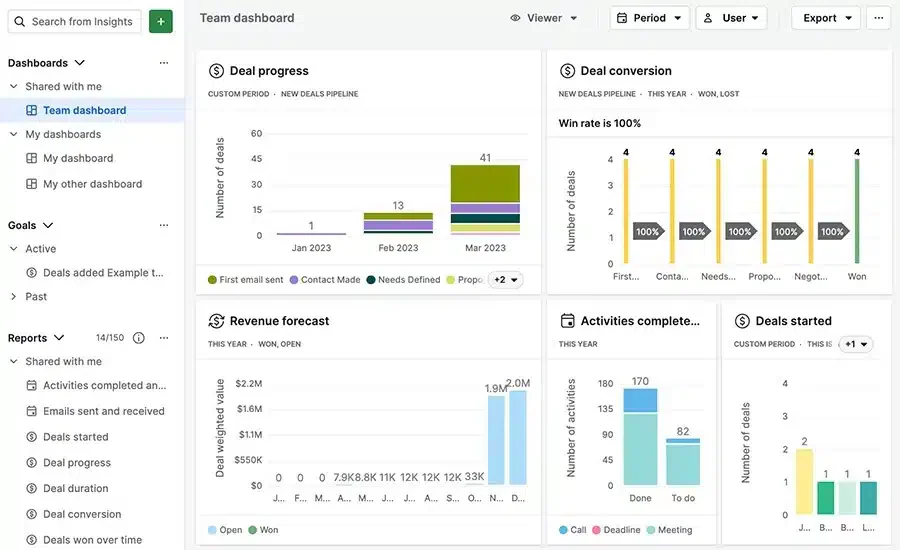 Pipedrive is a cloud-based CRM tool specifically built for sales teams, emphasizing sales pipelines as its core feature. However, its learning curve may make it less ideal for some businesses. Explore whether it fits your needs in our in-depth Pipedrive review.
Pipedrive best features:
- Customization
- Ease of Use
- Chatbots
- Customization
| Pros | Cons |
|
|
Pipedrive: Best for sales teams looking for a user-friendly CRM with robust pipeline management and automation features to close deals faster.
Pipedrive Pricing: Pipedrive CRM offers pricing plans starting at ₱860 per user/month for the Essential plan, up to ₱7,960 per user/month for the Enterprise plan. Each plan includes different features to suit various business needs.
17. Oracle NetSuite
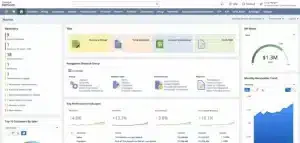 Oracle NetSuite CRM, part of Oracle’s business software suite, is an excellent option for midsize and expanding businesses seeking a comprehensive CRM solution with integrated ERP functionality.
Oracle NetSuite best features:
- Automated project planning to execution
- Invoice generation
- Making payments
- Report generation
- Expense tracking
| Pros | Cons |
|
|
Oracle NetSuite: Suitable for large enterprises needing an advanced CRM system integrated with ERP and financial management for seamless operations across all departments.
Oracle NetSuite Pricing: Oracle NetSuite pricing varies based on business needs, with user licenses typically ranging from ₱6,170 to ₱18,500 per user per month. Implementation costs can start at ₱1,542,000 and go much higher depending on customization and modules required.
18. Keap

Keap CRM is a sales and marketing automation platform designed for small to medium-sized businesses that need an organized system for managing contacts, communications, and sales activities. It helps teams automate repetitive tasks and streamline client follow-ups for faster conversions.
Keap best features:
- Automated follow-up reminders and workflows
- Built-in email and SMS marketing
- Lead and sales pipeline management
| Pros | Cons |
|
|
Keap CRM Software:
Best for small businesses seeking an automation-heavy CRM for small business follow-ups, lead nurturing, and overall sales productivity.
Keap Pricing:
Plans start at ₱9,810 per month, with higher tiers offering expanded automation, advanced analytics, and multi-user features.
19. Zendesk Sell
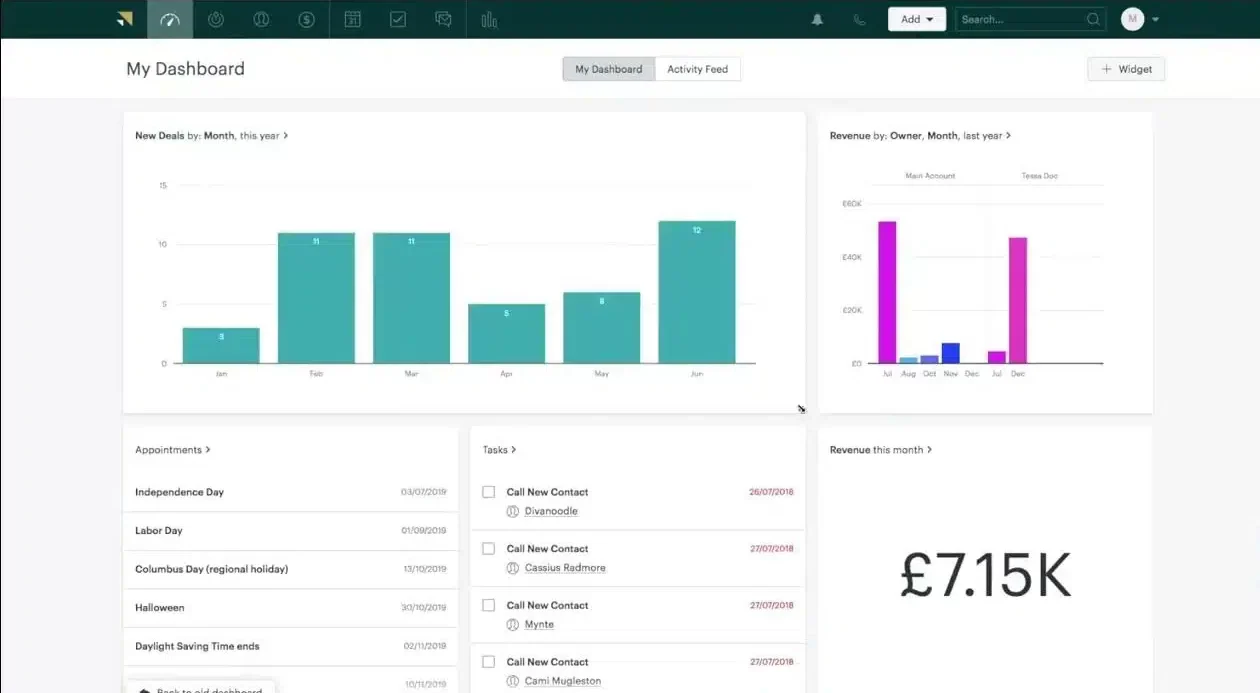
Zendesk Sell is a modern CRM built to help sales teams improve productivity with clear pipelines, real-time visibility, and automated workflows. It is part of the Zendesk suite, making it ideal for businesses that want seamless customer service and CRM integration.
Zendesk best features:
- Sales pipeline and forecasting tools
- Automated task reminders and follow-ups
- Mobile app with real-time performance dashboards
| Pros | Cons |
|
|
Zendesk CRM Software:
Best for businesses already using Zendesk or those wanting a CRM tightly integrated with customer support operations.
Zendesk Pricing:
Plans start at ₱1,170 per user per month, with higher tiers offering advanced lead scoring, task automation, and team performance insights.
Key Functions of CRM Software
Before exploring the detailed features, it’s useful to understand the core functions that CRM software typically delivers. These functions help businesses manage customers more efficiently and support smoother sales activities.
- Improves accessibility: Gives teams on-the-go access to customer and sales information through web or mobile platforms, ensuring everyone can work efficiently from any location.
- Centralizes customer information: Stores essential customer details, interaction history, and preferences in one organized place, helping teams maintain consistent and well-informed communication.
- Streamlines routine tasks: Handles repetitive activities such as assigning leads, sending reminders, and organizing follow-ups so teams can focus on closing deals.
- Enhances sales and marketing coordination: Offers tools to manage pipelines, evaluate lead quality, run campaigns, and prepare sales documents, supporting better workflow alignment.
Provides actionable insights: Generates dashboards and reports that reveal customer trends, sales performance, and opportunities for improvement, helping leaders make quick, data-driven decisions.
Benefits of Using CRM Software in the Philippines
Implementing CRM software Philippines solutions in your business offers many advantages. It tracks and manages all communications between your team and customers while identifying opportunities that need further attention or follow-up.
The other benefits of using the best CRM software Philippines include, but are not limited to:
1. Centralized customer information: CRM consolidates customer information into a single database, readily available to relevant personnel within your company. For instance, the sales team can access customer preferences and interaction history across multiple companies, aiding in product interest assessment.
2. Better sales performance: Implementing CRM software boosts sales by organizing customer data, automating tasks, and offering insights for personalized interactions. This leads to stronger relationships, higher conversions, and improved sales performance.
3. Higher productivity and efficiency: A CRM system employs marketing automation technology to streamline tasks like drip campaigns. This frees up employees’ time for tasks that demand human attention, such as content creation. Furthermore, it ensures no tasks are overlooked. It guarantees that important emails reach the right recipients.
4. Improved customer retention: Using a CRM system improves customer retention by allowing businesses to track and analyze customer interactions, preferences, and feedback effectively. This enables personalized communication and timely support, fostering stronger relationships and enhancing customer loyalty.
5. Accurate sales forecast: By leveraging the automated sales reports within CRM software, you can identify key trends and gain insights into future sales cycle performance. This allows you to adjust your goals and metrics to align with these projections.
6. Loyalty program integration: Many CRM systems come equipped with loyalty program software that allows businesses to reward repeat customers and boost retention. This feature enhances engagement by tracking points, incentives, and referral rewards efficiently.
How To Choose the Best CRM Software

Choosing the right CRM system for your business requires a careful consideration. With many options available, picking the wrong one can waste time and money. To avoid this, here are key factors to consider before making your decision:
1. Time-to-value
Investing time and resources into adopting and learning a new, complicated system isn’t beneficial for your business. You need a CRM solution that delivers fast time-to-value. With such a product, you’ll experience reduced ownership expenses and be able to quickly get started. A good CRM system should have the following:
- User-friendly interface: With an intuitive platform, you can start using the CRM system immediately and easily navigate all the features. This results in less time spent on learning how the software works.
- Customization: An extensive range of pre-built integrations and robust APIs enable you to personalize the software according to your requirements. As a result, you don’t need to rely on costly external consultants. Therefore, this saves you both time and money.
- Easy administration: Minimal administration reduces the cost of expensive support and resources, allowing you to dedicate more time to customer-focused activities.
2. Robust reporting features
Choose CRM tools with comprehensive reporting and analytics to gain invaluable insights into your customers and business. This will aid you in improving your strategy, resulting in optimal customer relationship management.
- Accurate forecasting: This feature lets you predict your business’s revenue and growth.
- Pipeline analysis: With pipeline analysis, you can accurately see your prospects in the pipeline and spot any bottlenecks.
- Advanced analytics: It offers historical data, ready-made dashboards, and collaboration tools, enabling you to gather actionable insights.
3. Team productivity features
Good CRM software offers features to maximize team productivity. In addition to ensuring the team achieves its targets, it also helps streamline repetitive tasks. As a result, the team can focus more on improving customer relations instead of wasting time on repetitive tasks.
- Email integration: It improves efficiency with helpful tools like automatic tracking, alerts, and templates.
- Sales engagement tools: This feature helps build automated email sequences, complete with the recipient target lists.
- Smart contact lists: It aids the company in managing its contacts and ensuring that every contact is well taken care of.
4. Customer experience features
Your team can use specific features to enhance the customer experience, thereby strengthening customer relationships. Look for CRMs that provide features designed to streamline customer interactions and personalize engagements, ultimately fostering loyalty and long-term customer satisfaction.
- A centralized platform: This platform is useful for managing leads, contacts, and account information. All of the information can be accessed in one location.
- An app marketplace: A CRM tool must have this feature because it lets you connect with marketplace apps that you need to manage your business.
- A complete customer view: With a rounded, complete view of your customer data, you can provide better, personalized service to them.
5. Integration with other systems
Selecting a CRM with an open and adaptable platform is crucial as it considers your current investments and integrates seamlessly with your existing technology stack. By managing all your systems and customer data, you’ll achieve a comprehensive customer view and a more thorough understanding of your audience.
With highly customizable CRM software like HashMicro, your team members have access to all the necessary tools to perform their tasks efficiently in a single location. Additionally, it’s developer-friendly, simplifying the process of creating custom CRM applications or integrations quickly and effortlessly.
Conclusion
A CRM application now supports more than contact management. In 2026, businesses use it to centralize customer data, improve response speed, strengthen follow-ups, and support more consistent customer experiences across sales, marketing, and service.
Managing your customers is vital to your business.But with the best CRM software for your workflow, consolidating customer relationships and tracking sales becomes easier. Not only do you streamline tasks, but you can also significantly improve sales performance and revenue. Therefore, you should consider carefully when it comes to selecting suitable CRM tools for your business.
The right CRM should reflect how your business actually handles leads, customer communication, and reporting. Before choosing one, review your workflows, integration needs, and growth priorities so the system can support both current operations and future demand. If you want a clearer view of how a CRM would fit your current process, you can schedule a free consultation to review your requirements before committing to a system.
FAQ About CRM Software
The four basic types of CRM systems are:
1. Operational CRM: Focuses on automating and streamlining customer-facing processes like sales, marketing, and customer service.
2. Analytical CRM: Analyzes customer data to enhance decision-making and improve customer relationship strategies.
3. Collaborative CRM: Enables the sharing of customer information between various departments (sales, marketing, service) to improve communication and collaboration.
4. Campaign Management CRM: Specializes in managing marketing campaigns and customer interactions to improve targeting and results.
To use CRM for customer service, businesses can track customer inquiries, complaints, and service history in real time. By centralizing customer data, support teams can provide more personalized, efficient service and resolve issues faster. CRM systems also help automate follow-ups, monitor service quality, and ensure consistent communication.
The three main functions of CRM are:
1. Sales Management: Manages and tracks sales opportunities, helping to close deals and manage customer relationships.
2. Marketing Automation: Automates marketing tasks such as sending emails, tracking customer responses, and segmenting contacts for targeted campaigns.
3. Customer Support: Facilitates managing customer interactions, from support tickets to case resolution, ensuring a seamless customer experience.
To protect CRM data, businesses should implement robust security measures such as encryption, two-factor authentication, and strong password policies. Regular data backups, role-based access controls, and secure networks are essential to preventing unauthorized access and data breaches.
An SMB can benefit from CRM by improving customer relationship management, enhancing sales processes, and providing better customer insights. CRM systems help small businesses track customer interactions, automate marketing tasks, improve customer service, and increase efficiency, ultimately leading to more streamlined operations and increased revenue.
The purpose of CRM is to build and maintain strong, lasting relationships with customers. It helps businesses manage customer information, track interactions, improve customer satisfaction, and drive sales by centralizing data, automating processes, and enabling personalized communication.