





On large construction projects, trust is built on clear commitments and proven delivery. A performance bond construction agreement is one way to strengthen that trust by confirming the project has a financial guarantee behind it.
It helps set expectations between the owner, contractor, and surety, so responsibilities stay clear from the start. When structured well, it supports smoother procurement, better contractor credibility, and steadier project execution.
Have you checked what your performance bond actually covers and when it applies? This article breaks down the essentials of performance bonds, how they work, and how to use them as a practical tool for long-term business growth.
Key Takeaways
|

What Is a Performance Bond in a Construction Project?
A performance bond construction is a surety bond issued by an insurance company to guarantee a contractor completes a project satisfactorily. It acts as a financial safety net for the project owner if the contractor fails to meet the contract terms.
You typically need this bond for public sector jobs or large private developments where failure carries major financial stakes. It supports construction risk management for contractor default by ensuring funds are available to hire a replacement or cover damages.
The Three Key Parties in a Performance Bond
Understanding the specific roles within this agreement is essential for navigating the complex relationships in construction projects. These three distinct parties work together to ensure accountability and successful project delivery.
1. Principal (The Contractor)
The Principal is the contractor who purchases the bond to guarantee their work quality and completion. They are responsible for fulfilling all contractual duties to avoid any default that triggers a claim.
2. Obligee (The Project Owner)
The Obligee is the project owner or government entity protected by the bond against financial loss. They receive compensation from the surety if the contractor fails to deliver the project as agreed.
3. Surety (The Guaranteeing Company)
The Surety is the insurance company or bank that issues the bond and guarantees the Principal’s obligations. They vet the contractor’s financial health before issuance and pay valid claims to the Obligee if necessary.
Why Is a Performance Bond Crucial in the Construction Industry?
 This financial instrument serves as a critical safeguard in an industry known for inherent risks and financial uncertainties. For financial planners in construction projects, it adds stability and trust for all stakeholders in complex builds.
1. Risk Mitigation for Owners
Performance bond construction protects the project owner from the financial burden of contractor default or bankruptcy. It ensures the project can proceed to completion even if the original contractor cannot finish the work.
2. Enhanced Contractor Credibility
Obtaining a bond proves that a surety company has rigorously vetted the contractor’s financial and operational stability. This pre-qualification boosts your reputation and increases your chances of winning lucrative public tenders.
How Does a Performance Bond Work?
The lifecycle of a bond involves a structured process from the initial application to the final release upon project completion. Understanding this workflow helps contractors prepare the necessary documentation and financial records.
1. Application and Underwriting
The contractor applies for a bond, and the surety evaluates their credit history, experience, and financial capacity. This underwriting phase determines if the contractor is a safe risk for the bonding company to back.
2. Issuance and Execution
Once approved, the surety issues the bond document to the project owner before the contract is officially signed. This legal instrument remains active throughout the construction phase to guarantee performance.
3. Claim or Release
If the contractor defaults, the owner files a claim for compensation to cover the costs of completion. Conversely, if the project is finished successfully, the bond obligation is discharged and becomes void.
Factors That Influence the Cost of a Performance Bond
The premium for a bond is not a fixed price but varies based on the perceived risk associated with the contractor. Surety companies analyze several specific metrics to calculate the final cost you must pay.
1. Financial Strength and Credit
Sureties examine your working capital and credit score to assess your ability to manage cash flow. A contractor with strong liquidity will generally secure a lower rate than one with unstable finances.
2. Project Complexity and Size
The nature and size of the specific job play a significant role in determining the premium rate. High-risk projects with complex engineering requirements often result in higher bond costs due to the increased likelihood of issues.
Performance Bond vs. Other Types of Construction Bonds
While various bonds are used in construction, each serves a distinct purpose in protecting different aspects of the project. It is vital to distinguish between these instruments to ensure full coverage against potential risks.
| Bond Type | Primary Purpose | Beneficiary |
| Performance Bond | Guarantees project completion per contract. | Project Owner (Obligee) |
| Bid Bond | Guarantees the bidder will sign the contract. | Project Owner (Obligee) |
| Payment Bond | Guarantees payment to workers and suppliers. | Subcontractors & Suppliers |
| Maintenance Bond | Guarantees repairs for defects after completion. | Project Owner (Obligee) |
What Happens If a Claim Is Made on a Performance Bond?
When a project owner files a claim on a performance bond construction, the surety company initiates an immediate investigation to verify the default. This process determines if the contractor truly breached the contract terms before any financial action is taken.
If the claim is valid, the surety may finance the original contractor or hire a replacement to finish the work. The surety then seeks reimbursement from the original contractor for all costs incurred during this resolution process.
Project Management Strategies for Optimal Performance
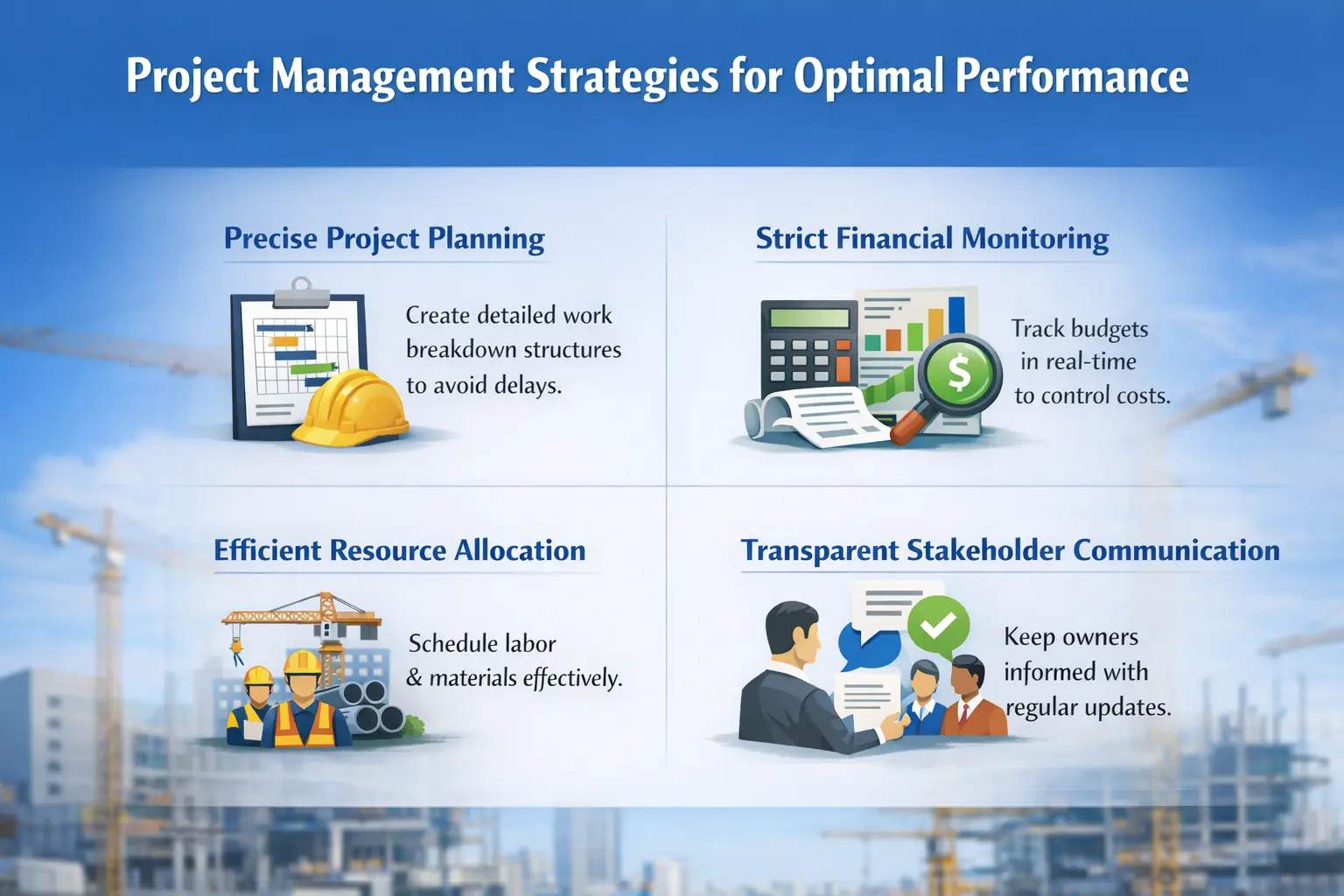
Preventing claims is far more cost-effective than handling a bond call later. For a Construction Project Manager overseeing bond compliance, strong management helps meet contractual obligations across the project lifecycle.
1. Precise Project Planning
Develop a comprehensive work breakdown structure that details every phase and milestone of the construction project. This roadmap helps identify potential bottlenecks early so teams can adjust schedules before delays occur.
2. Strict Financial Monitoring
Implement strict budget controls to track actual expenses against the initial estimates in real-time. Keeping a close watch on cash flow prevents the financial instability that often leads to project abandonment.
3. Efficient Resource Allocation
Ensure that labor, materials, and equipment are scheduled and available exactly when needed on site. Efficient logistics prevent work stoppages that could otherwise result in missed deadlines and contractual penalties.
4. Transparent Stakeholder Communication
Maintain transparent and regular reporting with the project owner regarding progress and potential challenges. Open dialogue fosters trust and allows for collaborative problem-solving before issues escalate into formal disputes.
Optimize Your Project Management with a Construction Suite
Managing complex projects across multiple sites gets messy fast when updates sit in spreadsheets. A construction management platform keeps budgets, progress, schedules, and documents in one place so teams work from the same data.
Most systems focus on essentials like budget S-curve tracking, detailed job estimates, automated progress claims, real-time project tracking, and tighter accounting and procurement links to reduce manual work.
In practice, a contractor running multi-phase builds can use a construction project management system suite to keep spending, progress, and billing aligned. HashMicro supports this by connecting project tracking with finance and procurement workflows.
Conclusion
A performance bond is a surety guarantee that the contractor will complete the project as agreed, protecting the owner if a default happens.
This article explained the key parties, how the bond works, what affects cost, how it differs from other bonds, and practical ways to reduce claim risk.
If you want to confirm requirements or review coverage terms for your project, you can request a short consultation.
FAQ About Performance Bond Construction
-
What is the average cost of a performance bond?
The cost, or premium, for a performance bond typically ranges from 1% to 3% of the total contract value. The exact rate depends on the contractor’s financial stability, experience, and the project’s risk profile.
-
How long is a performance bond valid for?
A performance bond is typically valid for the entire duration of the construction project, from the signing of the contract until the work is completed and accepted by the project owner. Its coverage ends upon project completion.
-
Can a performance bond claim be disputed by the contractor?
Yes, a contractor (Principal) can dispute a claim. The surety company will conduct a thorough investigation to determine the validity of the claim, considering evidence from both the project owner and the contractor before making a decision.
-
Are performance bonds required for all construction projects?
Performance bonds are not universally required, but they are mandatory for most public sector projects (e.g., government contracts) and are a common requirement for large-scale private projects to mitigate risk for investors and lenders.
-
What is the main difference between a performance bond and a bank guarantee?
A performance bond is a three-party agreement that guarantees performance, and the surety may intervene to complete the project. A bank guarantee is a two-party instrument where a bank promises to pay a specified amount upon a claim, without necessarily getting involved in project completion.