






Purchase order management is the process of creating, approving, tracking, and managing purchase orders throughout the procurement cycle. It helps businesses control spending, monitor supplier transactions, and ensure purchases are properly documented and fulfilled.
Effective procurement is essential for maintaining operational efficiency and financial control in any business. For Australian companies dealing with multiple suppliers, approvals, and budgets, managing purchase orders manually can quickly become complex and error-prone.
Purchase order management acts as a PO management solution, providing a structured approach to handling procurement activities from request to payment while ensuring accuracy, transparency, and compliance.
Key Takeaways
What Is Purchase Order Management?

Purchase order management refers to the process of creating, tracking, approving, and managing purchase orders (POs) within a business. A purchase order is a formal document issued by a buyer to a supplier, detailing the products or services required, quantities, agreed prices, and delivery terms.
This process helps businesses control spending, maintain accurate records, and ensure that all purchases align with company policies and budgets. In Australia, where compliance and financial accountability are critical, an efficient system for managing PO is key to maintaining audit readiness and operational transparency.
"A structured purchase order management system helps businesses streamline procurement, reduce errors, and maintain full visibility over spending and approvals."
How the Purchase Order Management Process Works
A well-defined purchase order process ensures that every procurement activity is structured, traceable, and aligned with company policies. Understanding this workflow helps businesses identify inefficiencies and improve overall procurement performance.
1. Purchase order creation
The process begins when a department identifies a need for goods or services. A purchase requisition is created and converted into a purchase order, including details such as item descriptions, quantities, pricing, and supplier information.
2. Approval workflows
Before being sent to the supplier, the purchase order goes through an approval process. This ensures that the request is valid, within budget, and aligned with company policies. Approval levels may vary depending on the PO value.
3. Supplier dispatch
Once approved, the buying order is sent to the supplier. The supplier reviews the order and confirms their ability to fulfill the request based on the agreed terms.
4. Order tracking and monitoring
After dispatch, the business tracks the order status to ensure timely delivery. This step helps identify delays, monitor supplier performance, and keep stakeholders informed.
5. Goods receipt and inspection
When goods are delivered, they are inspected to verify that the quantity and quality match the purchase order. Any discrepancies are recorded and communicated to the supplier.
6. Invoice matching (three-way matching)
The invoice is compared against the purchase order and goods receipt. This three-way matching process ensures that the business only pays for what was ordered and received.
7. Payment processing
Once the invoice is verified, payment is processed according to the agreed payment terms. This step is typically handled by the finance team.
8. Record keeping and audit trail
All documents and transactions are stored for future reference. A clear audit trail ensures compliance with financial regulations and supports internal or external audits.
Key Challenges in Purchase Order Management
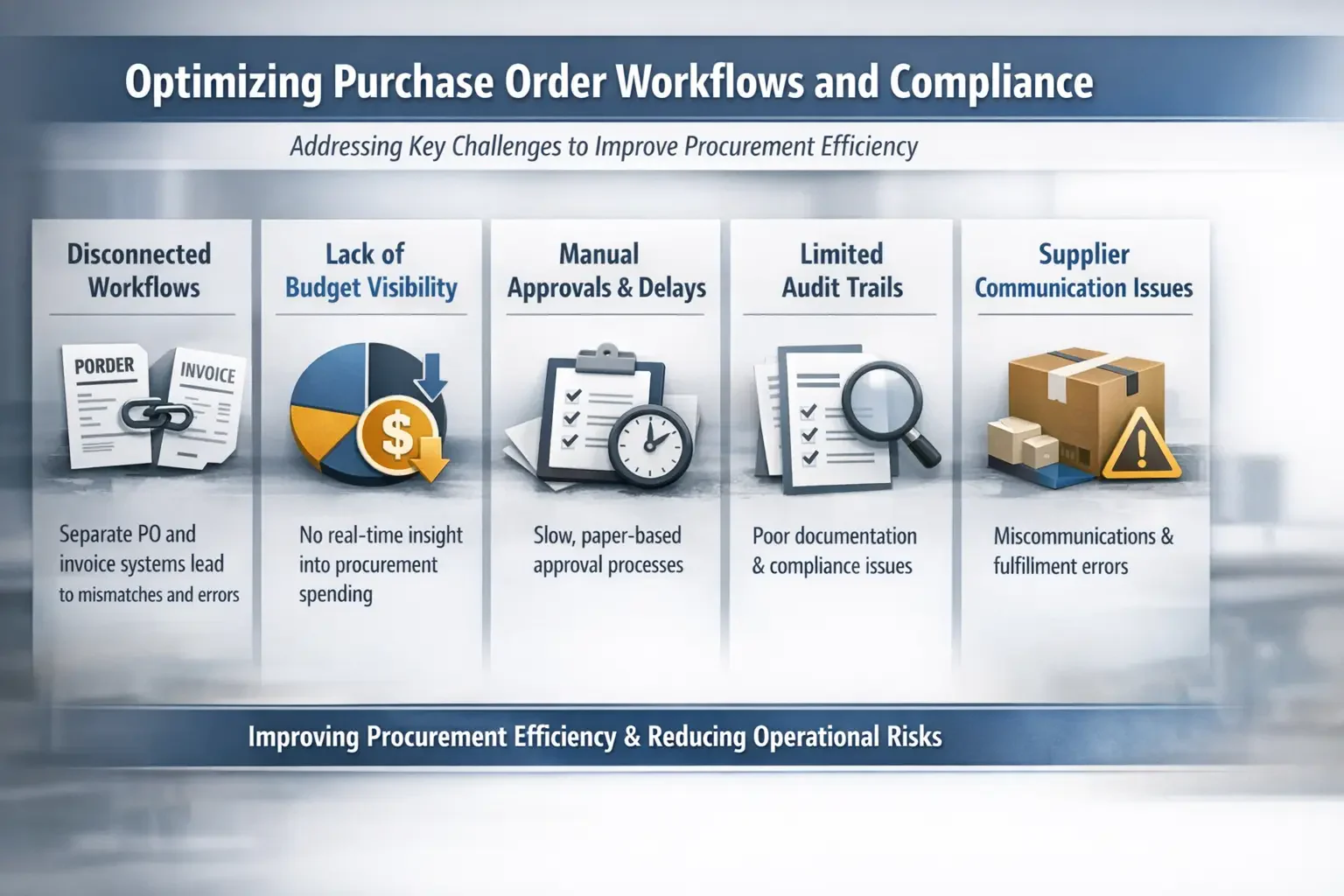
Despite its importance, many businesses still struggle with inefficiencies in managing purchase orders. Identifying these issues is the first step toward improving procurement efficiency and reducing operational risks.
1. Disconnected workflows between PO and invoices
When purchase orders and invoices are managed in separate systems, it increases the risk of mismatches, duplication, and errors. This disconnect makes it harder to verify transactions accurately and often requires manual reconciliation.
2. Lack of real-time budget visibility
Without up-to-date financial data, businesses may overspend or struggle to track procurement costs accurately. Limited visibility makes it difficult for managers to approve purchases confidently or enforce spending limits.
3. Manual approvals and delays
Paper-based or email-based approvals can slow down procurement processes and create unnecessary bottlenecks. These manual workflows often depend on multiple stakeholders, increasing the risk of missed or delayed approvals.
4. Limited audit trail and compliance issues
Poor documentation and lack of transparency make it difficult to meet compliance requirements and pass audits. Without a centralized system, tracking approvals and transaction history becomes inefficient and error-prone.
5. Supplier miscommunication and fulfillment errors
Manual communication with suppliers can lead to misunderstandings, incorrect deliveries, or missed deadlines. Inconsistent or unclear purchase order details often result in errors in quantity or product specifications.
Benefits of Purchase Order Management
Implementing a structured purchase order management process helps businesses streamline procurement and maintain better financial control. By standardising workflows and improving visibility, companies can reduce errors and operate more efficiently.
- Improved financial control and budget management
A structured PO process allows businesses to monitor spending more effectively and stay within budget. It ensures all purchases are authorised and aligned with financial plans. - Enhanced accuracy in procurement and invoicing
Standardised processes reduce the risk of errors in purchase orders and invoices. This improves data consistency and minimises the need for manual corrections. - Faster approval and procurement cycles
Streamlined workflows and automation help speed up approval processes. This enables businesses to fulfil orders more quickly and avoid operational delays. - Better supplier communication and performance tracking
Clear and consistent purchase order documentation improves communication with suppliers. It also allows businesses to track supplier performance and delivery reliability. - Increased transparency and audit readiness
Centralised records provide full visibility into procurement activities. This makes it easier to track transactions and prepare for audits. - Reduced risk of fraud and unauthorised spending
Approval controls and audit trails help prevent unauthorised purchases. This reduces the risk of fraud and strengthens overall financial governance.
Core Features of a Purchase Order Management System
A modern purchase order management system is designed to streamline procurement processes and eliminate manual inefficiencies. Understanding these core features helps companies choose solutions that align with their operational needs.
1. Automated PO creation and approval workflows
Automation reduces manual work by generating purchase orders and routing them through predefined approval workflows. This minimises human error and ensures consistency across procurement processes.
2. Real-time tracking and spend visibility
Businesses gain instant access to procurement data, helping them monitor spending and make informed decisions. Real-time visibility allows teams to track order status and identify potential issues early. This improves financial control and supports better budgeting.
3. Three-way matching (PO, invoice, receipt)
This feature ensures accurate invoice validation by matching purchase orders, receipts, and invoices before payment. It helps prevent overpayments, duplicate payments, and discrepancies. As a result, businesses can maintain accuracy and reduce financial risks.
4. Budget control and approval thresholds
Set spending limits and approval rules to prevent overspending and enforce financial discipline. This ensures that all purchases are reviewed and authorised based on company policies. It also helps maintain accountability across departments.
5. Integration with ERP and financial systems
Seamless integration connects procurement, finance, and inventory in a unified purchasing platform. For example, when a PO is approved, the ERP system can automatically update inventory records, reserve the allocated budget in the finance module, and notify the supplier.
6. Centralized audit trail and reporting
All procurement activities are recorded in one system, making it easier to track transactions and generate reports for audits. A centralized audit trail improves transparency and accountability.
Best Practices for Optimizing Purchase Order Management
Optimising purchase order management requires more than just having a system in place, it involves adopting the right strategies and processes. The following approaches can help streamline your PO management process and support long-term operational success.
- Standardise purchase order formats and procedures
Establishing consistent formats and procedures ensures that all purchase orders follow the same structure and requirements. This reduces confusion, improves accuracy, and makes it easier to track and manage procurement activities. - Implement automated approval workflows to reduce delays
Automating approval processes helps eliminate bottlenecks caused by manual reviews. This includes setting rule-based routing by PO value, department, or supplier category, so approvals move forward automatically without relying on manual follow-ups. - Maintain a centralised system for all procurement data
A centralised system allows businesses to store and access all procurement-related information in one place. This improves data visibility, reduces duplication, and supports better decision-making. - Regularly review supplier performance and contracts
Monitoring supplier performance helps ensure that vendors meet quality, cost, and delivery expectations. Regular reviews also provide opportunities to renegotiate contracts and improve supplier relationships. - Ensure proper documentation for audit and compliance purposes
Keeping accurate and complete records is essential for meeting regulatory requirements and passing audits. Proper documentation also improves transparency and accountability across procurement processes. - Train employees on procurement policies and system usage
Providing training ensures that employees understand procurement procedures and how to use the system effectively. This reduces errors, improves compliance, and increases overall efficiency. - Centralise multi-site procurement under a single system
Businesses with multiple locations need consistent purchasing practices across all sites. A single centralised system gives full visibility into spending, enforces uniform procurement policies, and eliminates the inefficiencies of managing separate tools or processes per location.
How to Choose the Right Purchase Order Management System
Selecting the right purchase order management system is crucial for long-term success. Australian businesses should prioritise solutions that are easy to use and offer customisation to fit their unique workflows.
Integration capabilities and real-time reporting are also essential factors to consider. A system that connects seamlessly with ERP and financial tools helps eliminate manual data entry and ensures data consistency.
Finally, businesses should look for systems that are scalable and compliant with Australian financial regulations. As operations grow, the system should be able to handle increased complexity without compromising performance.
Conclusion
Purchase order management plays a vital role in ensuring efficient procurement, financial control, and operational transparency. By implementing structured processes and addressing common challenges, businesses can minimise errors, improve supplier relationships, and maintain better oversight of spending.
As procurement grows more complex, adopting the right tools becomes essential. With a well-implemented system, businesses can streamline workflows, strengthen compliance, and consult the experts for the best approach.
Frequently Asked Question
Purchase order management is the process of creating, tracking, and managing purchase orders from suppliers to ensure timely and accurate delivery of goods.
It helps businesses control spending, improve supplier relationships, and ensure operational efficiency by tracking orders and payments accurately.
Purchase order management focuses on handling orders and ensuring fulfillment, while procurement covers the broader strategy of sourcing, negotiating, and acquiring goods and services.