







 Limited to 100 registrants

Performance improvement plan (PIP) is a formal document used to address employee performance issues through clear goals, timelines, and measurable expectations. It helps businesses manage underperformance consistently while giving employees structured support to improve.
A performance improvement plan is a structured way to address performance gaps with clear expectations and measurable outcomes. It replaces informal feedback with a documented process both managers and employees can follow.
A PIP, supported by HRM systems in Australia, outlines issues, sets targets, and defines support needed for improvement. It helps managers act consistently while giving employees a fair chance to improve before further action is taken.
Key Takeaways
Understand how a performance improvement plan helps turn performance gaps into structured and measurable actions.
Identify when performance issues require a structured improvement plan instead of informal feedback.
Follow practical steps to implement and manage a performance improvement plan effectively.
Access ready-to-use templates to support consistent and structured performance management.

What a Performance Improvement Plan Actually Does
A performance improvement plan provides a PIP methodology overview, turning vague concerns into clear actions, measurable actions. It defines expectations, sets targets, and establishes a timeline, making performance management more structured and transparent.
It also creates alignment between managers and employees by documenting issues, agreed actions, and progress checkpoints. This reduces miscommunication and ensures that any outcome, whether improvement or escalation, is based on clear and consistent criteria.
"A performance improvement plan works best when it focuses on clarity, consistency, and support, not just correction. When expectations are measurable and communication is structured, improvement becomes a shared responsibility."
When a PIP Becomes Necessary
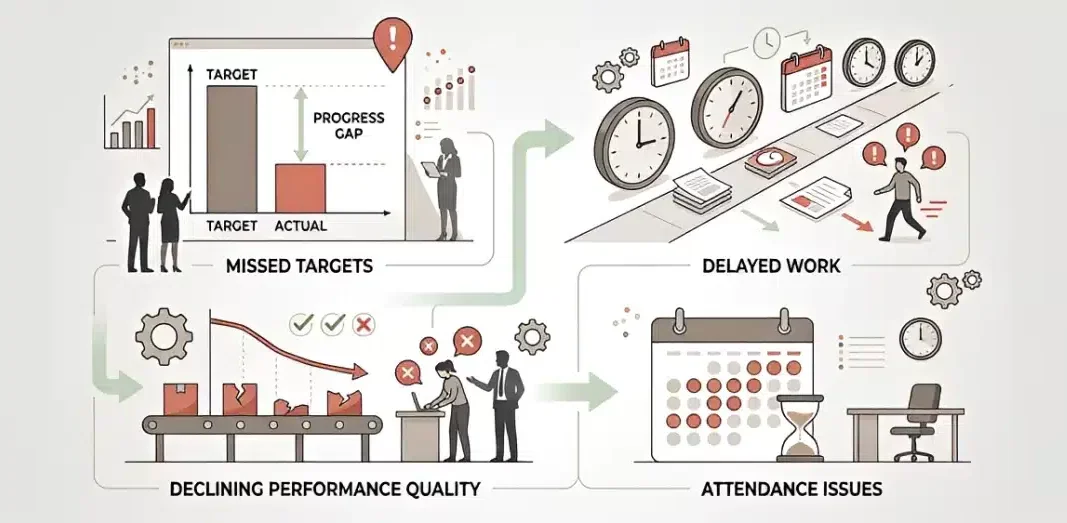
A PIP is typically introduced when performance issues are no longer isolated and begin to affect team output or business outcomes.
- Consistent failure to meet targets: Performance repeatedly falls below agreed KPIs despite prior feedback or coaching.
- Repeated missed deadlines: Deliverables are delayed over time, impacting project timelines and team coordination.
- Quality below standard: Work output does not meet expected accuracy, completeness, or professional standards.
- Attendance or punctuality issues: Ongoing lateness or absence begins to disrupt workflow and team productivity.
What Fair Work Requires Before Starting a PIP
Before initiating a formal PIP, employers must ensure that the process is fair, documented, and compliant with workplace expectations.
- Document prior feedback and discussions
Keep records of earlier conversations, warnings, or coaching efforts related to performance. - Provide an opportunity to respond
Employees must be given a chance to explain their situation and respond to concerns. - Offer reasonable support and resources
Employers should provide tools, training, or guidance needed to help the employee improve. - Avoid actions that may lead to constructive dismissal
The process must not be unfair, unreasonable, or create pressure that forces resignation.
When to Use HR Software Instead of a Performance Improvement Plan Template
A performance improvement plan (PIP) template helps document expectations and action plans, but managing check-ins, progress, and supporting evidence manually can become difficult as your workforce grows.
HR software centralises performance improvement plans, reminders, manager notes, and supporting documentation in one system. This helps organisations maintain consistent processes, track employee progress, and create a clear audit trail for performance management and compliance.
If your business only manages occasional PIPs, a template may be enough. However, if multiple managers oversee employee performance or you need consistent documentation across teams and locations, HR software can help streamline the process and reduce administrative effort.
Download Free Performance Improvement Plan Templates
Using structured templates helps standardise how performance issues are documented and managed. It ensures consistency across teams while making it easier to track progress, provide feedback, and maintain proper records.
The templates below support different stages of the performance improvement process, from initial documentation to final evaluation.
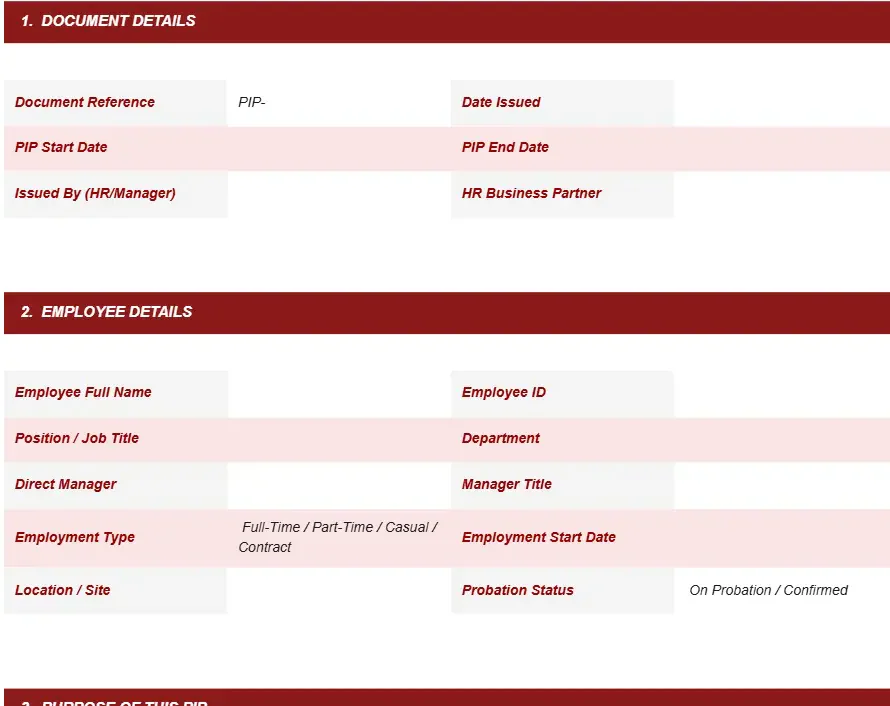
1. Standard PIP template
Covers core elements such as performance issues, improvement goals, timelines, and support actions, making it suitable for general performance management across roles.
STANDARD PERFORMANCE IMPROVEMENT PLAN TEMPLATE
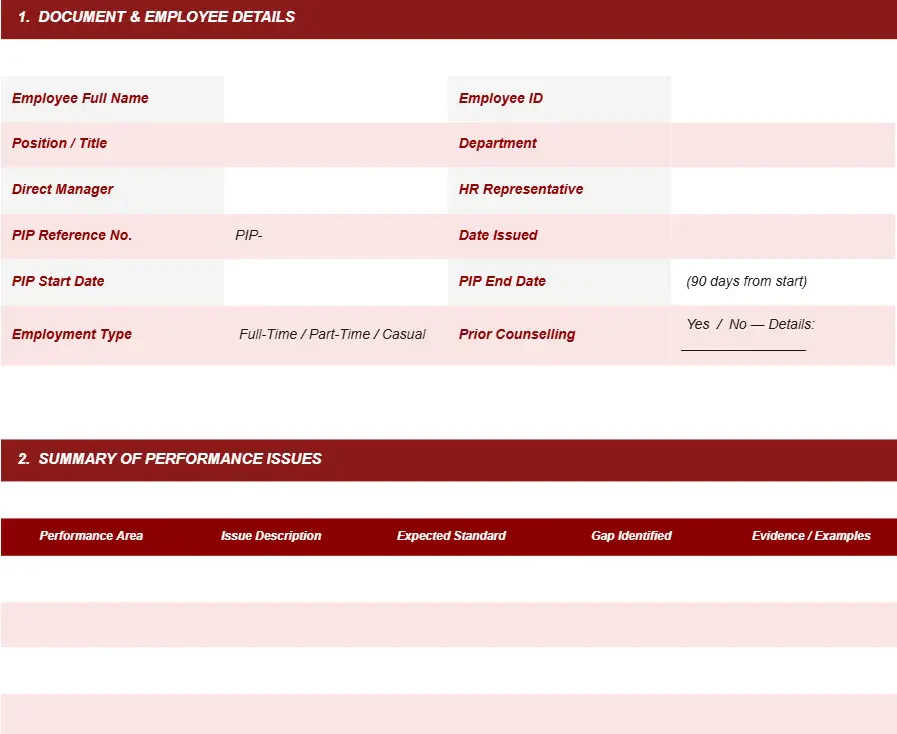
2. 30-60-90 day PIP template
Breaks improvement plans into phased timelines, allowing managers to track progress over short, medium, and extended review periods.
30-60-90 DAY PIP TEMPLATE
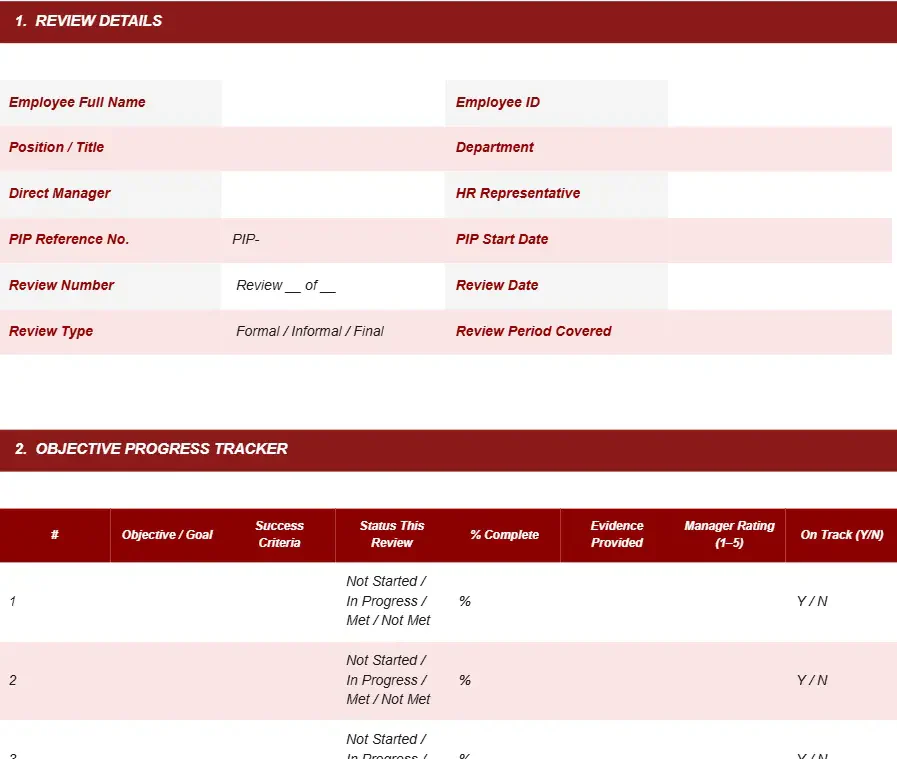
3. PIP progress review template
Focuses on ongoing check-ins, helping managers record updates, feedback, and progress against defined goals throughout the PIP period.
PIP PROGRESS REVIEW TEMPLATE
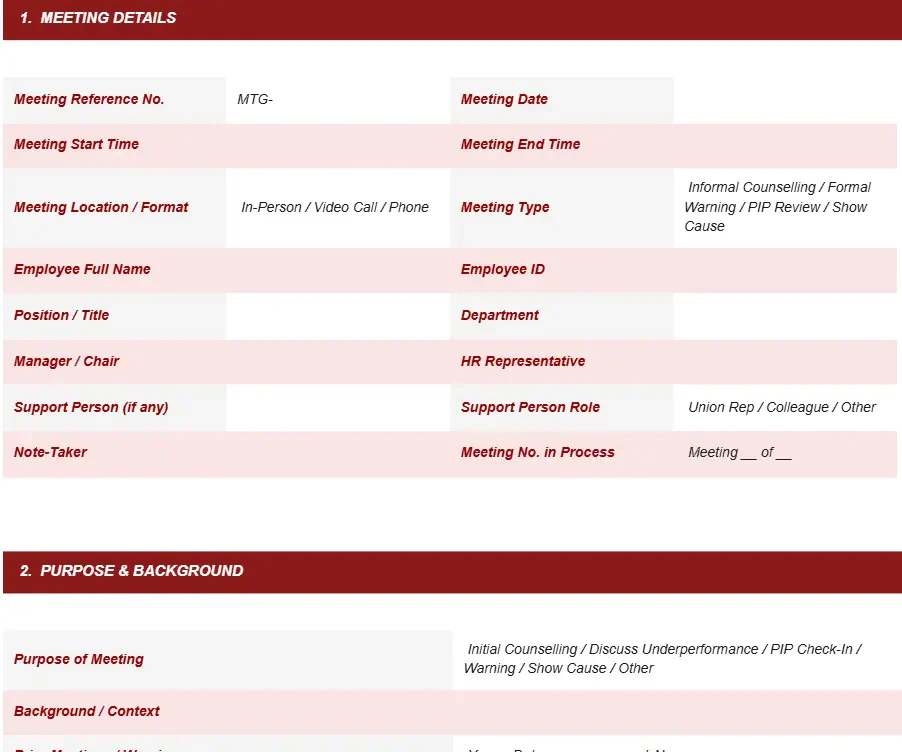
4. Underperformance meeting record template
Documents key discussion points, expectations, and agreed actions during performance-related meetings to ensure clarity and accountability.
UNDERPERFORMANCE MEETING RECORD TEMPLATE
5. PIP outcome summary template
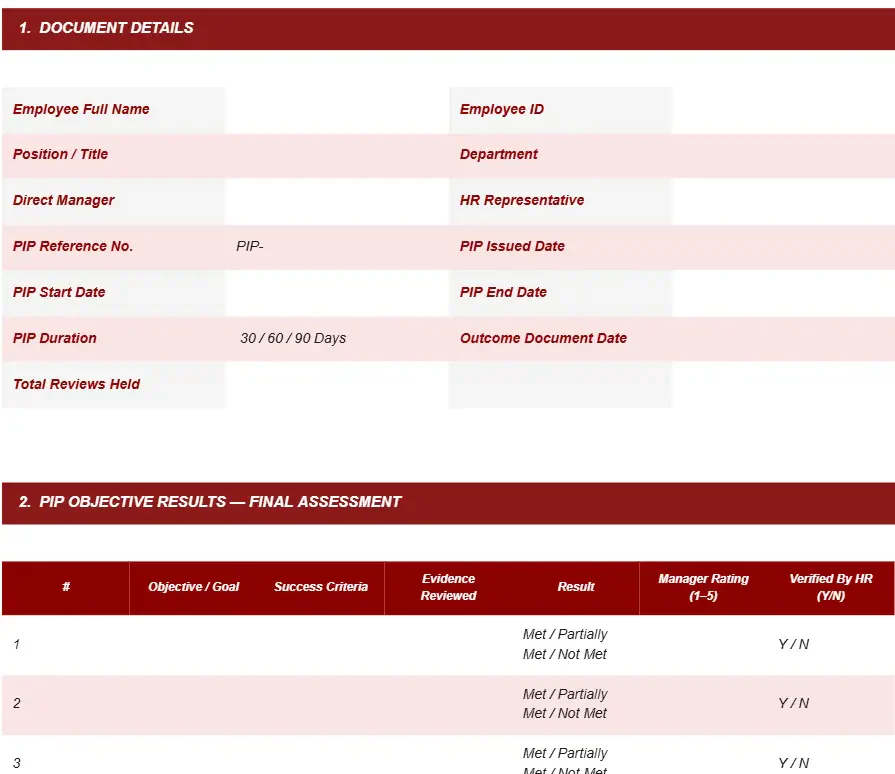
Summarises final results, including whether targets were met, actions taken, and next steps, supporting consistent decision-making and record-keeping.
PIP OUTCOME SUMMARY TEMPLATE
How to Write and Execute a PIP
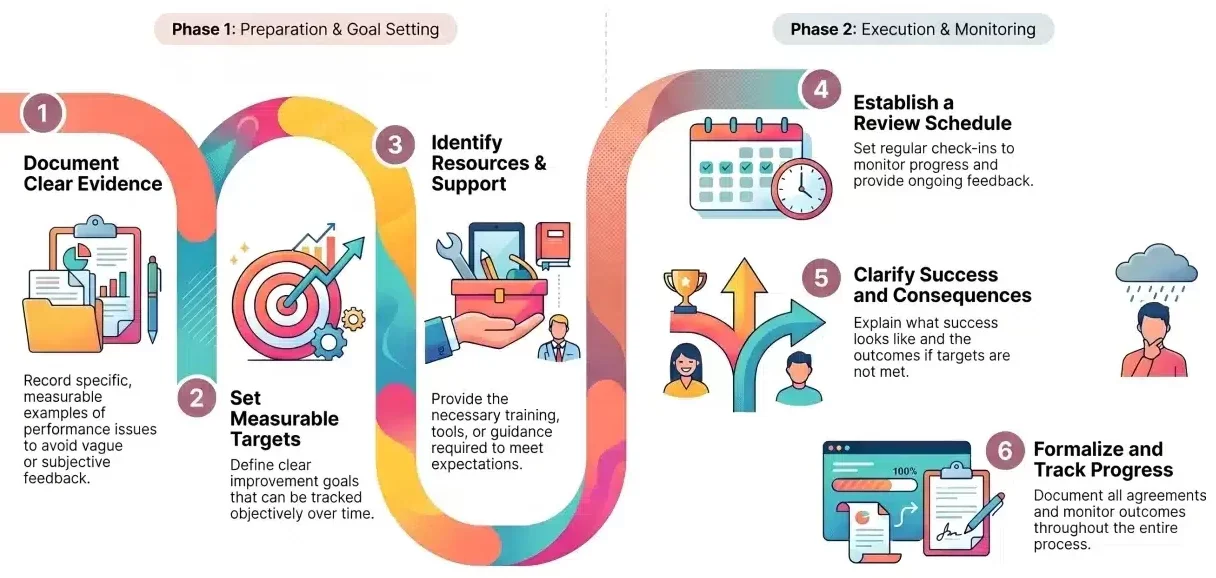
A structured approach supports managing employee performance effectively by addressing issues fairly and consistently and consistently while giving employees a clear path to improve.
- Document the performance issue clearly: Record specific examples and measurable evidence to avoid vague or subjective feedback.
- Set measurable improvement goals: Define clear targets that can be tracked over time to assess progress objectively.
- Identify support and resources: Provide training, tools, or guidance needed to help the employee meet expectations.
- Define the review schedule: Set regular check-ins to monitor progress and provide ongoing feedback.
- Communicate expectations and consequences: Clearly explain what success looks like and what happens if targets are not met.
- Formalise and track progress: Document agreements, collect feedback, and monitor outcomes throughout the process.
Common Workplace Issues That Trigger a PIP
Performance issues that lead to a PIP, even when using top HR software for managers, are typically ongoing and begin to impact team productivity or business outcomes. These situations usually require structured intervention rather than informal feedback alone.
Sales performance below target
Consistently failing to meet sales quotas or revenue targets over multiple periods indicates a gap between expectations and actual output. Without structured improvement, this can directly affect business growth and team performance.
Repeated missed deadlines
Delays in completing tasks or projects can disrupt workflows and create bottlenecks across teams. When this pattern continues, it signals a need for clearer expectations and accountability.
Quality of work below standard
Frequent errors, incomplete deliverables, or work that does not meet expected standards can reduce overall efficiency. Over time, this can impact customer satisfaction and internal productivity.
Attendance and punctuality issues
Ongoing lateness or absence can affect team coordination and workload distribution. If not addressed early, it can lead to broader performance and reliability concerns.
The table below shows how a Performance Improvement Plan compares with other approaches used to manage employee performance issues.
Common Mistakes Managers Make in PIPs
Even well-intentioned PIPs can fail if they are not structured or implemented properly. These common mistakes often lead to confusion, poor outcomes, or compliance risks.
- Setting vague or unclear goals
Without measurable targets, it becomes difficult to track progress or assess improvement objectively. - Skipping early feedback and documentation
Starting a PIP without prior discussions can make the process feel abrupt and unfair. - Treating the PIP as punishment
Positioning it negatively can reduce employee engagement and willingness to improve. - Inconsistent or missed check-ins
Lack of regular follow-up weakens accountability and reduces the effectiveness of the plan. - Failing to provide promised support
Without proper resources or guidance, employees may not have a fair chance to improve.
When to Move from Templates to HR Software
As teams grow, managing performance improvement plans manually can become inconsistent and difficult to track. Templates work well for small teams, but larger organisations often need more structured systems.
Signs manual processes are no longer effective
Multiple documents, missed follow-ups, and lack of visibility across teams can create compliance risks and inefficiencies.
What HR software improves
An HR automation system centralises documentation, automates reminders, and provides real-time tracking of employee performance and progress.
Who benefits the most
Businesses with larger teams, multiple managers, or frequent performance reviews benefit most from moving to a digital system.
Conclusion
A performance improvement plan helps turn unclear performance issues into structured, measurable actions. When applied consistently, it improves accountability while giving employees a fair opportunity to meet expectations.
If managing performance manually starts to feel inconsistent or time-consuming, consider consulting an expert. You can schedule a consultation with our experts to streamline your performance management process.
Frequently Asked Questions About Performance Improvement Plans
Yes, employees can refuse to sign a PIP, but the plan can still proceed as long as it has been properly communicated and documented by the employer.
No, a PIP is intended to help employees improve performance. Termination only occurs if expectations are not met after sufficient support and time are provided.
Progress should be reviewed regularly, typically weekly or bi-weekly, depending on the duration and complexity of the performance issues.
Yes, employers may extend a PIP if there is clear progress, allowing additional time for the employee to meet all performance expectations.