



Invoices and receipts play different roles in how a business records and manages transactions. While both relate to payments, they are used at different stages and serve different purposes in financial tracking.
Understanding how each document works helps ensure accurate records, proper GST handling, and smoother cash flow management. Using the right document at the right time reduces errors and supports compliance.
What an Invoice Actually Does in a Business Transaction
An invoice is a formal request for payment issued before money is received. It outlines what has been provided, how much is owed, and when payment is due, making it a key trigger for incoming cash flow. Once sent, it creates a legal obligation for the buyer to pay.
Beyond billing, invoices also act as a financial record that supports revenue tracking and accounts receivable. They help businesses monitor outstanding payments and manage when cash is expected to come in.
What a Receipt Represents After Payment
A receipt confirms that a payment has been completed. It is issued after money has been received and serves as proof that a transaction has been finalised. A receipt typically records the payment date, total amount paid, and the method of payment, making it a legal record of the completed transaction.
Receipts help both businesses and customers maintain accurate records of completed payments. They are commonly used for reconciliation, expense tracking, and verifying that no further payment is required.
What Makes a Tax Invoice Different
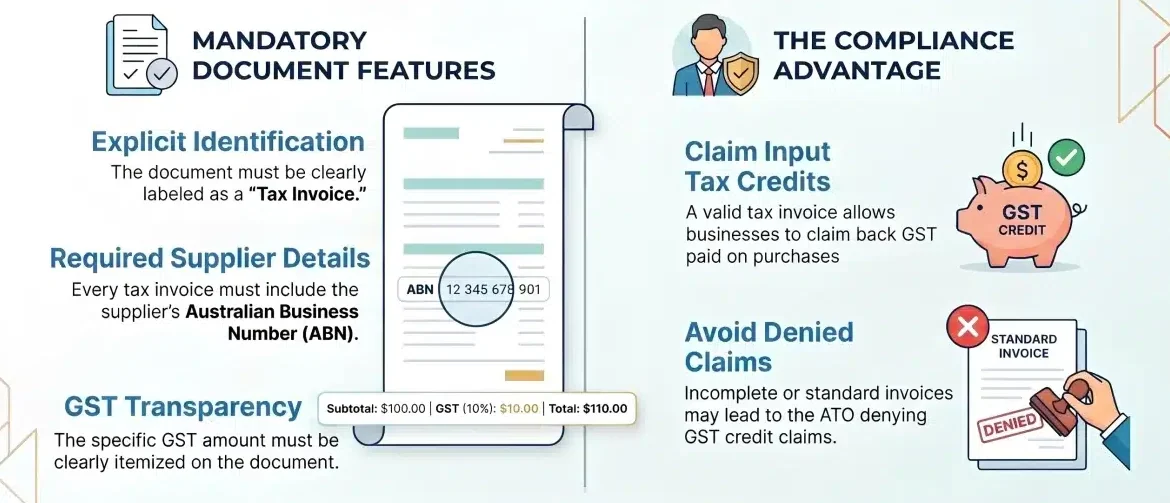
A tax invoice is a specific type of invoice required for GST-registered businesses. It includes additional details such as the supplier’s ABN, GST amount, and clear identification as a “tax invoice,” as required by the ATO.
Unlike a standard invoice, a tax invoice enables businesses to claim input tax credits. Without it, GST claims may be denied, making accuracy and completeness essential for compliance.
Invoice vs Receipt: Key Differences That Affect Your Cash Flow
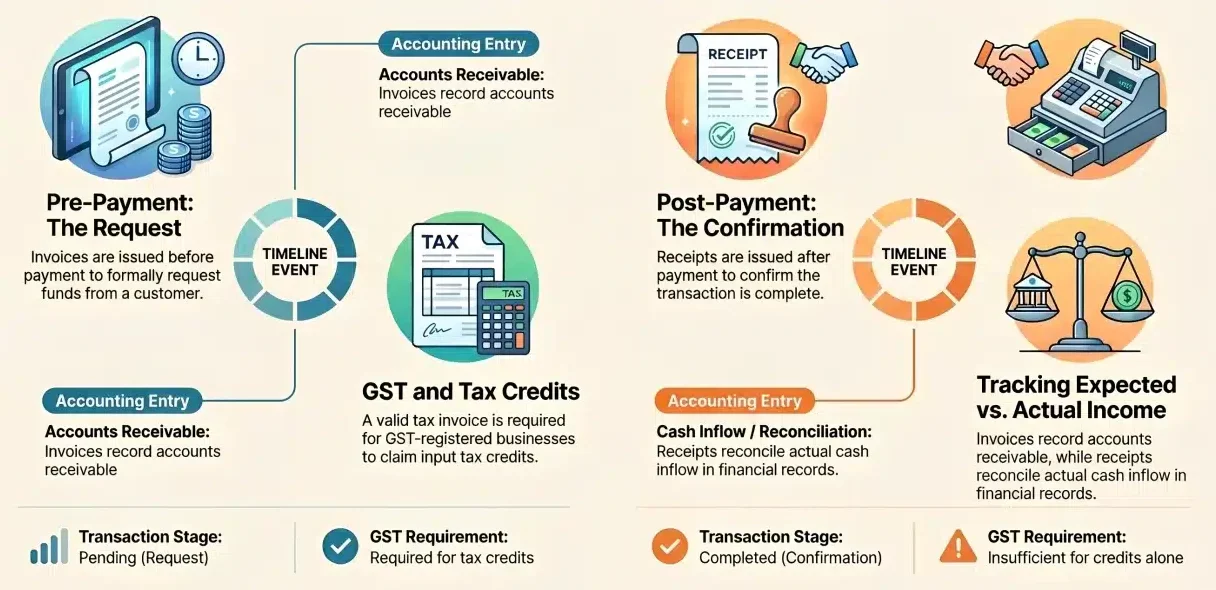
Invoices and receipts sit at different points in the transaction cycle, which directly impacts how cash flow is tracked and reported. Understanding this timing helps businesses manage receivables, confirm payments, and stay compliant with GST requirements.
1. Timing and purpose
An invoice is issued before payment to request funds, while a receipt is issued after payment as confirmation. This difference determines whether the transaction is still pending or already completed.
2. Accounting impact
Invoices are recorded as accounts receivable and represent expected income. Receipts, on the other hand, confirm cash inflow and are used to reconcile completed transactions in financial records.
3. GST and compliance role
For GST-registered businesses, a valid tax invoice is required to claim input tax credits. Receipts alone are not always sufficient for GST purposes unless they meet tax invoice requirements.
The table below highlights the key differences between invoices, receipts, and tax invoices in business transactions.
| Aspect | Invoice | Receipt | Tax Invoice |
| Timing | Before payment | After payment | Before payment |
| Purpose | Request payment | Confirm payment | Request payment with GST details |
| Accounting role | Accounts receivable | Cash confirmation | Accounts receivable + GST record |
| GST requirement | Not always required | Not sufficient alone | Required for GST claims |
| Key details | Amount due, due date | Amount paid, date received | ABN, GST amount, “tax invoice” label |
Can an Invoice Also Work as a Receipt?
In some cases, an invoice can function as a receipt, but only after payment has been clearly recorded. For example, a paid invoice marked as “paid” or updated within a system can serve as proof of transaction completion.
However, this depends on whether the document includes key details like payment confirmation and timestamps. In many GST scenarios, a proper receipt or tax invoice is still preferred for accurate records and compliance.
For example, for smaller point-of-sale transactions, such as retail purchases or immediate service payments, a single document often functions as both, since payment is made upfront. For larger projects, B2B contracts, or freelance arrangements, an invoice is always issued first, followed by a receipt once payment is confirmed.
Free Invoice and Receipt Templates for Business Use
Using structured templates helps standardise how invoices and receipts are created, making them easier to manage, track, and audit. An invoice template for companies also ensures that required fields, especially for GST purposes, are consistently included.
The templates below are designed to support different transaction needs, from basic invoicing to GST-compliant documentation.
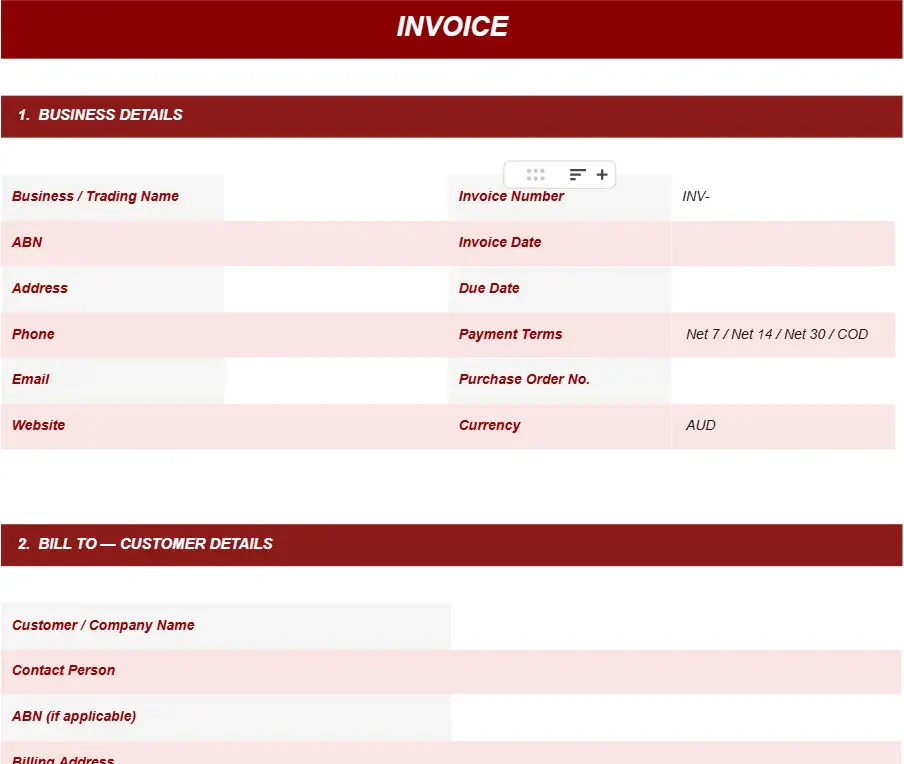
1. Invoice template
Covers essential billing details such as business information, itemised charges, payment terms, and due dates. Suitable for general transactions where payment is requested before completion.
INVOICE TEMPLATE
2. Tax invoice template
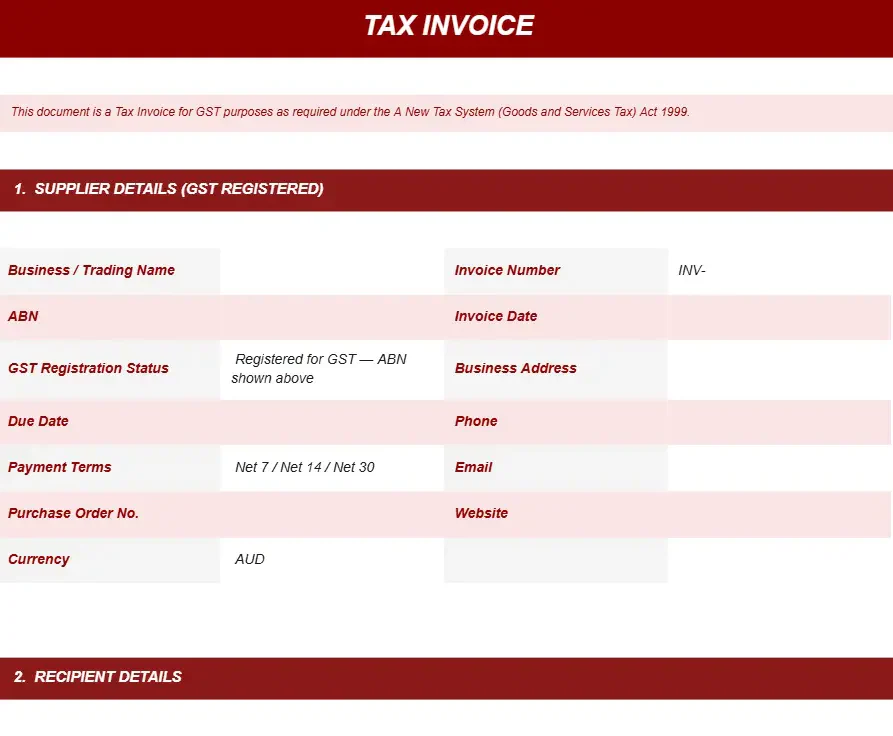
Includes all required GST elements such as ABN, GST breakdown, and proper tax invoice labelling. Designed for GST-registered businesses that need compliant documentation for tax reporting.
TAX INVOICE TEMPLATE
3. Receipt template
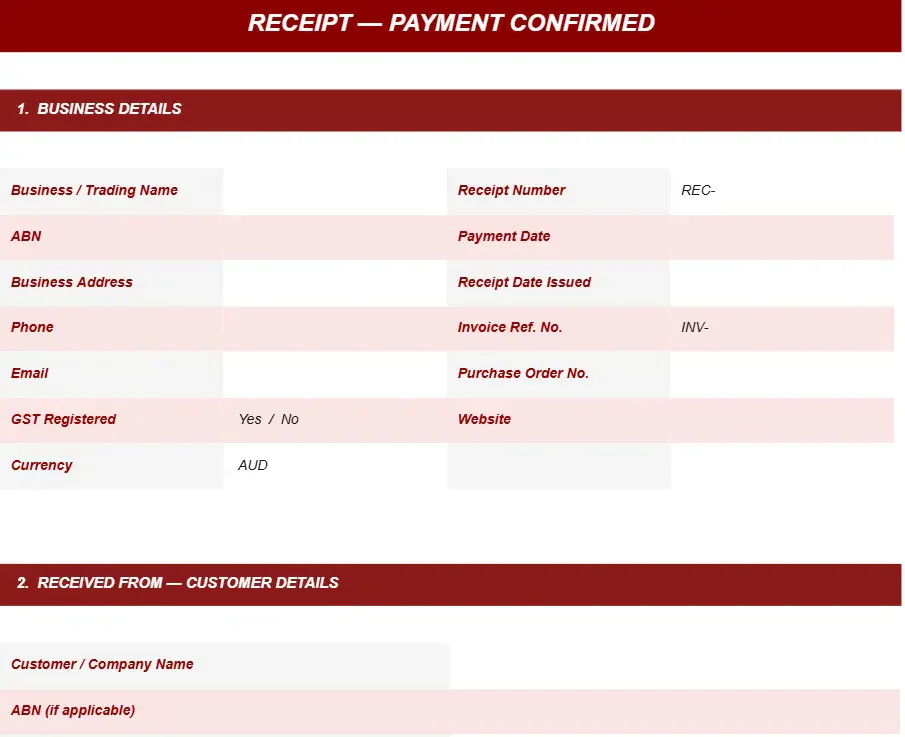
This printable receipt format focuses on confirming completed payments, including amount received, payment method, and transaction date. Useful for record-keeping and customer proof of payment.
RECEIPT TEMPLATE
Click the Hashy banner below to see how an AI coworker can support invoice and receipt workflows using connected financial data. Hashy helps teams find payment details, maintain accurate records, and complete routine financial tasks more efficiently.






How Invoices and Receipts Work Across Different Industries
While invoices and receipts follow the same core principles, how they are used can vary depending on the nature of the business. Each industry applies them differently based on transaction timing, compliance needs, and customer expectations.
1. Retail and e-commerce
In retail, receipts are issued immediately after payment, especially for in-store or online purchases. Invoices are less common unless dealing with bulk orders, B2B transactions, or delayed payment arrangements.
2. Freelancers and services
Service-based businesses typically issue invoices after work is completed or based on agreed milestones. Receipts are then provided once payment is received, helping both parties track completed transactions and outstanding balances.
3. Construction and trades
Invoices are often tied to project stages, progress claims, or completed work segments. Tax invoices are critical here, especially for GST reporting, while receipts confirm payment for each stage or milestone.
4. Healthcare and regulated sectors
In regulated industries, documentation must meet stricter compliance standards. Invoices and receipts often need to include specific details for insurance claims, audits, or government reporting requirements.
"Clear distinction between invoices and receipts is essential for maintaining accurate records, managing cash flow, and ensuring GST compliance in everyday business operations."
ATO Record-Keeping Rules for Invoices and Receipts
Accurate record-keeping is essential for GST reporting and audit readiness. The ATO requires businesses to maintain complete and reliable documentation to support claims, verify transactions, and ensure compliance. For more guidance, see the ATO's record-keeping requirements
1. Record retention requirements
Businesses must keep invoices and receipts for at least five years. These records should be accessible and stored in a way that allows easy retrieval during audits or reviews.
2. GST documentation requirements
To claim input tax credits, businesses must hold a valid tax invoice that includes required details such as ABN, GST amount, and supplier information. Receipts alone may not be sufficient unless they meet tax invoice criteria.
3. Digital record acceptance
The ATO accepts an electronic invoicing process and digital receipts, provided they are accurate, complete, and unaltered. Digital storage systems are commonly used to improve accessibility and reduce the risk of lost documents.
Common Invoice and Receipt Mistakes Businesses Make
Errors in invoicing and receipts often come from inconsistent processes rather than lack of knowledge. Small mistakes in documentation can lead to payment delays, reconciliation issues, or even GST compliance risks.
- Using a standard invoice instead of a tax invoice for GST transactions
Businesses sometimes issue basic invoices without including required GST details. This can prevent customers from claiming input tax credits. - Missing ABN or GST information on tax invoices
Incomplete tax invoices may be considered invalid for ATO purposes. Missing key details can create compliance issues during audits. - Relying on receipts instead of tax invoices for GST claims
Not all receipts meet tax invoice requirements. Using them as substitutes can result in rejected GST claims. - Poor record-keeping or missing documents
Failing to store invoices and receipts properly increases the risk of lost records and audit complications. - Inconsistent numbering and tracking of documents
Without a structured system, tracking transactions becomes difficult and may lead to duplication or gaps in records. - Issuing a receipt before an invoice in the AP/AR workflowLogging payment before a payable is recorded creates reconciliation gaps and incorrect outstanding balance reports. Businesses should record the invoice first, then issue the receipt after payment is completed.
When to Move from Manual Invoicing to Accounting Software
Manual invoicing works for simple operations, but as transaction volume grows, it becomes harder to maintain accuracy and consistency. Moving to a system helps streamline processes and reduce operational risk.
Signs your process is creating risk
Frequent errors, delayed payments, duplicate invoices, or difficulty tracking outstanding balances indicate that manual processes are no longer sufficient. Switching to business invoicing tools addresses these gaps before they become compliance risks.
What software improves
Accounting systems and e-invoicing platform options for business automate invoice creation, track payments in real time, and ensure GST compliance. They also centralise records, making reporting, reconciliation, and audits more efficient.
Conclusion
Invoices and receipts serve different roles, but both are essential for accurate financial tracking and GST compliance. Using them correctly helps businesses manage cash flow, avoid errors, and maintain reliable records.
If your current invoicing process still relies on manual work or inconsistent documentation, it may be time to improve your system. Schedule a consultation to explore how you can streamline invoicing, reduce errors, and ensure compliance with ease.

Frequently Asked Questions About Invoices and Receipts
Yes, an invoice is issued to request payment, and a receipt is issued after payment is completed. Both documents can exist for the same transaction at different stages.
Only GST-registered businesses are required to issue tax invoices for taxable supplies. Non-registered businesses may use standard invoices instead.
Incorrect invoices should be corrected by issuing a revised invoice or adjustment note to ensure accurate records and compliance with tax requirements.
Yes, digital receipts are generally accepted as long as they are complete, accurate, and meet documentation requirements for verification.
After payment is received, issue a receipt to your client. The invoice is sent before payment to request funds; the receipt confirms the transaction is complete. If you use accounting software, a paid invoice marked as “paid” can also serve this purpose.