















In the fast-moving logistics industry, staying competitive requires innovation and strategic technology. A reliable logistics ERP system integrates operations like inventory tracking and shipping, improving efficiency and enabling quick market responses.
As a global trading hub, Singapore relies on tailored logistics ERP solutions to meet local business needs. With HashMicro’s Warehouse Management System, you’ve found the ideal solution to streamline operations, optimize inventory, and boost warehouse efficiency.
This article explores the advantages of logistics ERP systems in Singapore and highlights top solutions, including HashMicro’s comprehensive offerings, to help you find the best fit for your business needs. Try HashMicro’s free demo today!
Key Takeaways
ERP systems enhance logistics efficiency by integrating inventory tracking and transportation management to reduce costs and improve delivery speed.
ERP solutions use real-time data and centralized control to improve inventory tracking, prevent losses, and ensure timely deliveries.
ERP systems reduce fraud risk by centralizing data and increasing transaction transparency across logistics operations.
Logistics Industry Overview
Initially, “logistics” was a military term referring to the movement of equipment and supplies by military personnel. The term is now broadly used in business, particularly by manufacturers. Strengthen your logistics industry by implementing integrated ERP software.
Logistics is commonly defined as the process of arranging and transferring resources such as equipment, food, liquids, inventories, materials, and people from one area to their intended destination for storage.
HashMicro is here to offer you help to automate your logistics operations, minimize lead times, and boost customer satisfaction with the most complete Logistics ERP System in Singapore. Automate your logistics operations, minimize lead times, and boost customer satisfaction with the most complete Logistics ERP System.
5 Best ERP for Logistics Solutions
To maximize the benefits of logistics ERP, implementing the right ERP solution that suits your business requirements is important. Below are the 5 ERP in logistics recommendations.
1. HashMicro
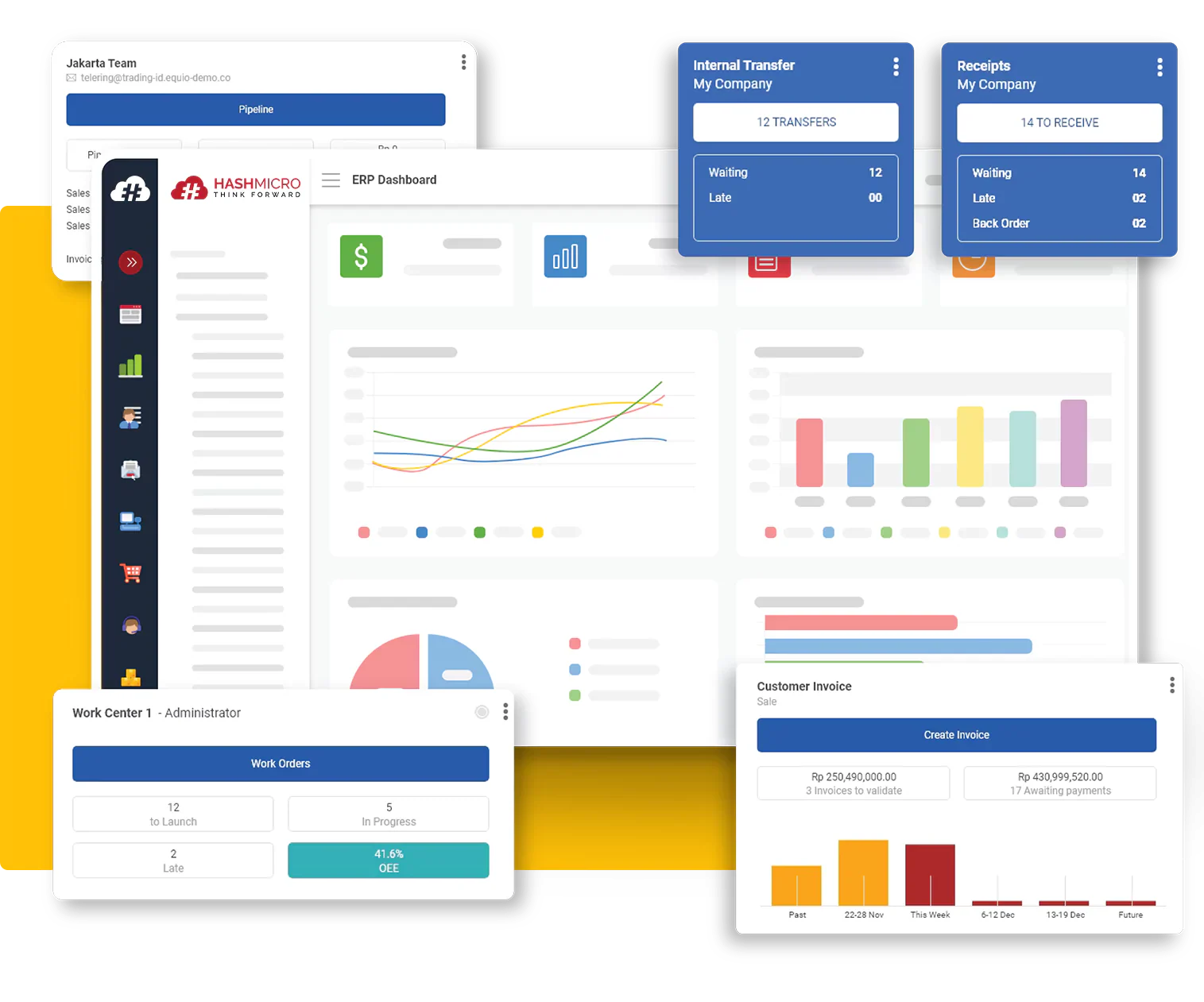
HashMicro offers an advanced ERP in logistics solution, providing complete visibility and advanced analytics to keep up with fast-paced logistics markets. With this solution, businesses can efficiently plan, source, deliver, and forecast products at the right time, ensuring on-time deliveries and improved customer satisfaction.
The software’s multi-warehouse support eliminates human errors, effectively tracking warehouses in multiple locations. Through automation, bottlenecks in the supply chain are eliminated, enabling businesses to meet customer orders swiftly. Sales forecasting also becomes seamless with automatic predictions, allowing companies to adapt to the ever-changing market landscape.
HashMicro’s ERP system logistics comes equipped with essential features such as inventory management, which enables tracking, locating, and adjusting inventory to avoid risks and errors. There is also procurement management which sends automated purchase orders to suppliers when stocks reach the minimum level.
Moreover, order management provides real-time order status updates, facilitating more effective order fulfillment. Then, it provides shipment tracking which ensures that customer orders are delivered on time by allowing businesses to locate courier whereabouts. Additionally, the software’s planning & forecasting feature helps businesses forecast future demand and inventory needs through advanced analytics.
With an affordable price and customizable system, you can achieve your goals and streamline any complex processes. Optimizing your logistics operations starts with the right solution. With HashMicro’s customizable ERP system and support from the CTC Grant covering up to 70% of implementation costs you can experience its capabilities firsthand through a free demo and explore how it fits your business needs.
Hashy AI Fact

AI automates logistic management, improving efficiency and reducing manual errors. AI for Logistic ERP optimize plan routes, track shipments, and streamline inventory for smoother operations and cost efficiency savings.
Request a free demo today!
2. Deskera
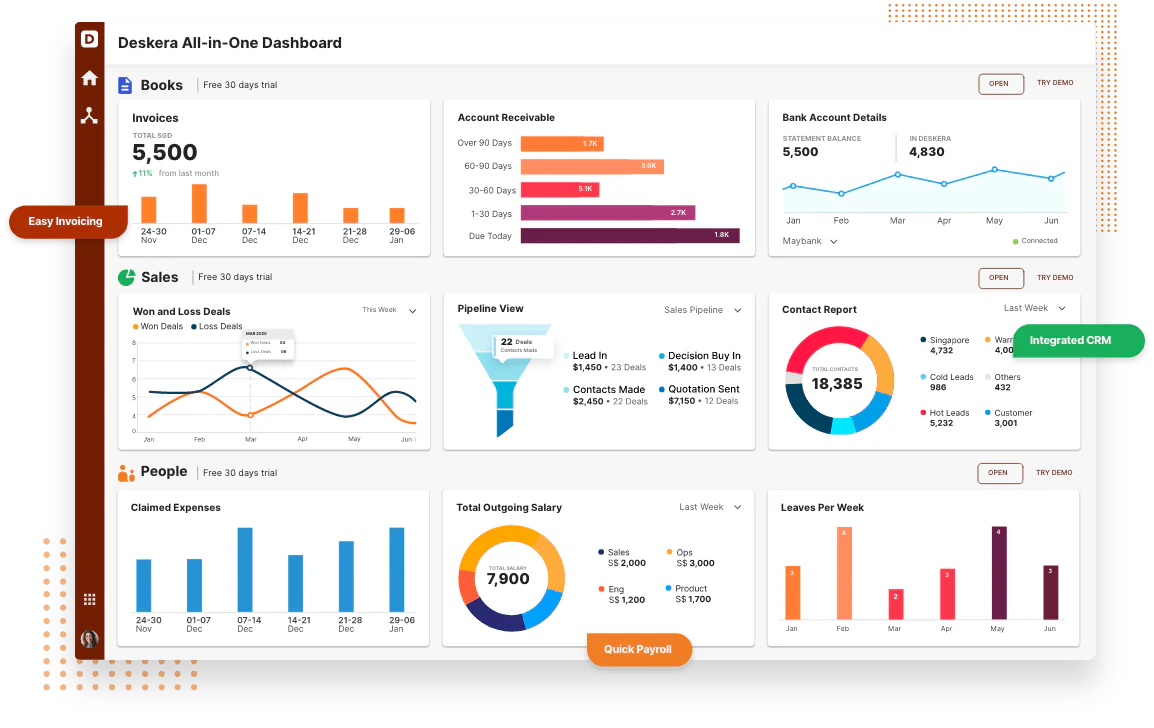
One of Deskera’s strengths lies in its ability to revolutionize inventory management. Through real-time data analysis, businesses can accurately forecast demand, optimizing stock levels and ensuring efficient material flow through warehouses. Advanced tracking of inventory levels enables cost control, reducing overstocks, and mitigating stockouts, resulting in better resource management and higher profitability.
3. eCount
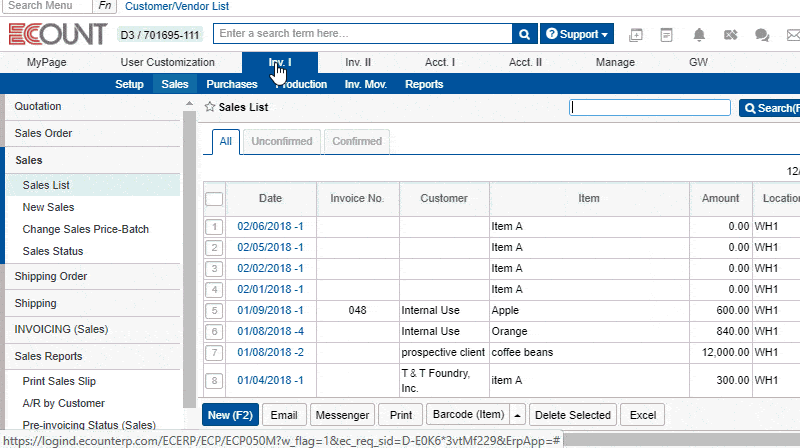
eCount prioritizes compliance and security, offering robust features to ensure adherence to industry regulations and standards. Sensitive information is safeguarded through stringent data protection measures, protecting against unauthorized access and cyber threats. With timely and accurate reporting for regulatory authorities, businesses can operate confidently in a secure environment.
4. Ramco
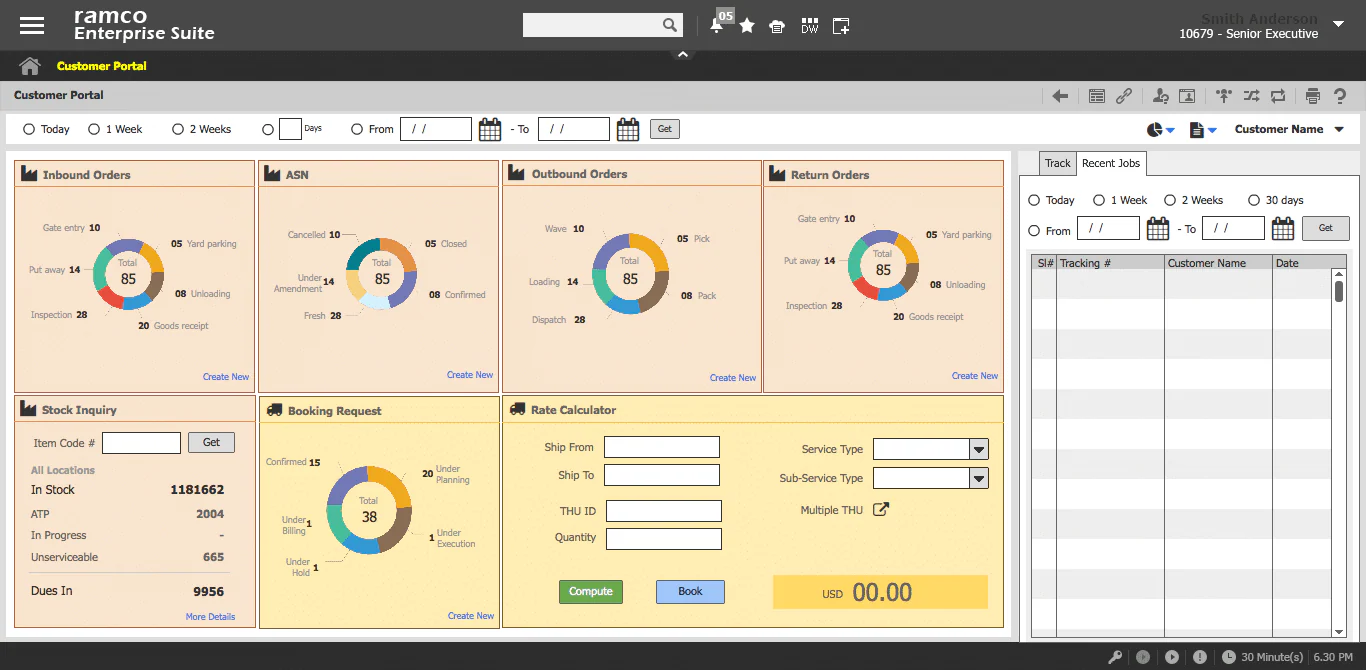
Ramco’s mobility feature empowers drivers with a dedicated app that enables trip management, approvals, invoices, alerts, and proof of delivery, promoting real-time communication and data exchange. Moreover, the pre-built tendering module helps businesses overcome capacity crunch by efficiently releasing tenders and accepting quotes, ensuring a smooth and reliable logistics network.
5. LogiNext
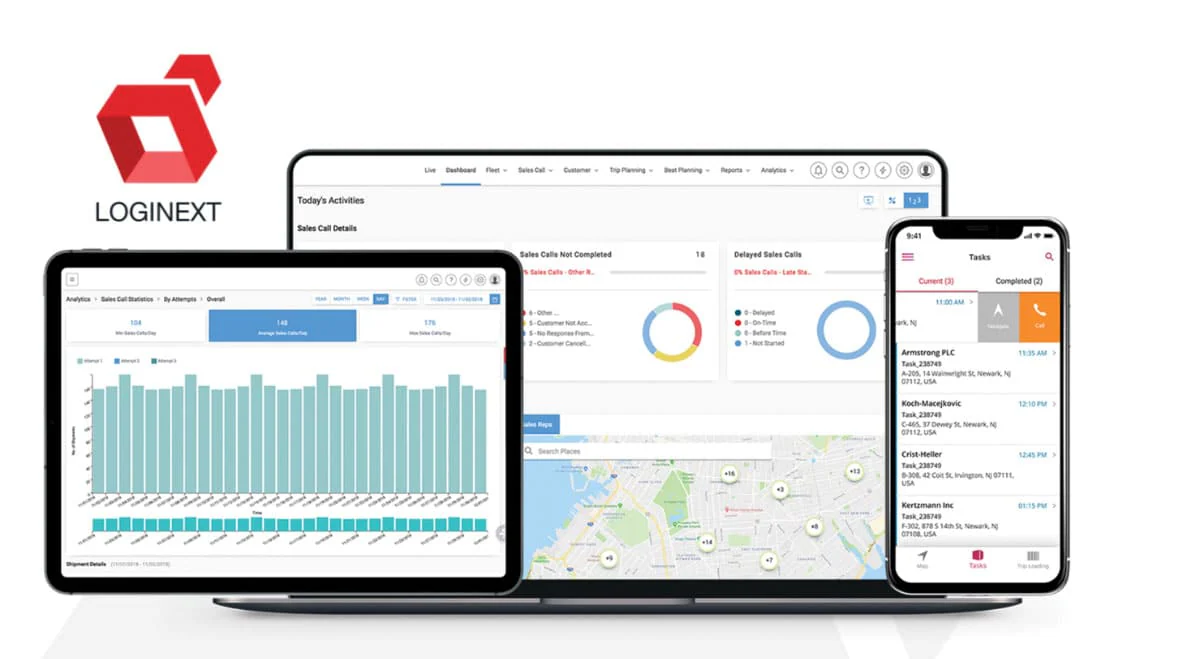
With its line haul software, LogiNext empowers businesses with real-time visibility over shipments, ensuring seamless delivery management in today’s fast-paced logistics industry. The carrier management marketplace, coupled with innovative features like 3D packing optimization, capacity utilization, trip planning, and scheduling, revolutionizes the supply chain, making each shipment more efficient.
Challenges of the Transport & Logistics Industry
Following the growth of the transport and logistics industry, there are several challenges faced by the industry. Those challenges may be solved by the implementation of ERP system logistics. Here are the list of the challenges.
1. Inefficient operations
Transport and logistics industry pose significant challenges, notably manifesting in inefficient operations. The lack of streamlined processes can result in higher operational costs, extended delivery timelines, and, inevitably, dissatisfied clientele.
2. Difficult inventory tracking
Another challenge for the industry without using ERP in logistics is ineffective inventory tracking. The lack of streamlined processes makes it difficult to monitor shipments, manage customer orders, and maintain oversight of inventory levels. Consequently, this issue can lead to delays in deliveries and even result in lost goods, ultimately exerting a detrimental effect on the company’s financial performance.
3. High risk of fraud
The transport & logistics industry faces an elevated risk of fraud when operating without safeguarding capabilities. The absence of a centralized database for tracking transactions leaves these companies exposed to potentially crippling fraud incidents. Also, fraudsters find it easy to carry out illicit activities, often escaping detection and causing significant financial harm to the business.
What is ERP for Logistics?
ERP in logistics helps companies manage inventory, packaging, warehousing, and transportation more efficiently, reducing costs and improving service. It streamlines daily operations and centralizes information for better workflow control.
The Singapore government’s Logistics Industry Digital Plan (IDP) encourages SMEs to adopt digital technologies and accelerate digital transformation. This initiative highlights how industry growth increasingly depends on technology-driven improvements.
Using a logistics ERP system enables better visibility, faster decision-making, and more accurate planning data. With solutions like HashMicro ERP, logistics businesses can optimize operations, respond quickly to issues, and manage growth with confidence.
Key Features of ERP for Logistics
ERP in logistics contains some beneficial features that can streamline the operations of the transport and logistics industry. Explore the important features here.
1. Vehicle tracking
Vehicle tracking is an essential feature of ERP logistics, and pairing it with transportation management software for route optimization makes dispatching more efficient. With real-time tracking, teams can optimize routes, improve vehicle utilization, monitor driver behavior, and provide accurate ETAs, thereby strengthening communication and customer satisfaction.
2. Load planning
Load planning functionality enables companies to optimize the loading of goods onto vehicles, ensuring maximum capacity utilization and minimizing transportation costs. With the ability to analyze various factors such as shipment size, weight, and destination, logistics professionals can create well-organized load plans that enhance overall efficiency and reduce the number of trips required for delivery.
3. Reporting and analytics
Through accurate reporting and analytics, the ERP system becomes an invaluable tool in assessing the overall performance of the transportation system, paving the way for continuous enhancement and heightened operational excellence. These capabilities empower logistics companies to harness data-driven insights, facilitating the identification of trends and areas for improvement within their transportation operations.
How Can ERP Help the Logistics Industry?
Every logistics company must have different ways of managing its business. The customization of ERP software allows companies to have a system that adjusts to how the company runs. ERP system encompasses such as:
1. ERP controls inventory
With centralized data, an ERP system gives logistics companies instant access to orders, inventory status, and delivery information, while enabling accurate sales forecasting and lead-time planning. Its analytics provide clear visibility into supply chain activities, supported further by inventory software that helps maintain optimal stock levels across all locations.
Click the banner below to view the pricing scheme for HashMicro inventory software and understand the costs associated with using this software.

2. ERP improves distribution
Distribution plays a crucial role in logistics, and ERP software supports this by centralizing delivery, transportation, and product information for smoother operations. With a supply chain management system that enables real-time communication among suppliers, distributors, retailers, and drivers, businesses can ensure timely deliveries and improve warehouse coordination.
3. Effective staff management
An ERP system streamlines employee management by automating time tracking, leave, attendance, and performance while ensuring strong cloud-based security. It also provides encrypted backups for payroll, contracts, and personal data, giving companies reliable protection and continuous access even during outages or system disruptions.
Also read: How to Optimize the Transport Management in Your Logistics Business
4. Increase customer experience
ERP helps logistics companies understand customer needs better, enabling more personalized service while streamlining operations like real-time shipment tracking and supply chain optimization. This improved efficiency and deeper insight lead to higher satisfaction, stronger loyalty, and more positive referrals.
5. Control staff efficiency
ERP enables logistics companies to monitor driver performance in real time, helping drivers make better decisions, optimize routes, and adapt quickly to changing conditions. With accurate, up-to-date data, businesses can boost driver productivity and maintain consistently high service levels.
Conclusion
The logistics industry can operate well if there’s an attempt to streamline the purchasing, transportation, and inventory in every related business. So, the easier information access, the higher the profit that the companies and their customers will achieve.
Therefore, the ERP system has a lot of advantages for every stakeholder in the logistics industry. For that reason, our ERP software can help you streamline your business processes & drive your company’s growth significantly.
You can also choose the right ERP vendor after calculating the ERP software pricing scheme. Tell us about your type of business and industry and we will offer you the best business solutions. Or you can go ahead and try the free demo.

FAQ About Logistics Industry
The logistics industry focuses on moving goods or materials between facilities and does not cover internal plant activities like production planning or machine scheduling. It represents a large portion of operating expenses for both businesses and nations.
The FMCG supply chain encompasses the entire journey of goods from manufacturing to retail shelves, ensuring timely delivery. It includes sourcing, production, storage, transportation, and distribution activities.
The main logistics functions include managing inventory, coordinating transportation, processing orders, and overseeing warehouse operations.