











 Limited to 100 registrants

Sales teams in Singapore are under more pressure than ever. Shorter buying cycles, higher quotas, and buyers who’ve already done their research before the first call. To keep up, more teams, even up to 80%, are turning to AI: not to replace the human side of sales, but to handle the repetitive work so reps can focus on conversations that actually close deals.
The impact is real and measurable. AI sales tools are helping teams qualify leads faster, personalize outreach at scale, forecast pipelines more accurately, and reduce time spent on admin. Whether you’re running a small sales team or managing a regional operation, the right tool can meaningfully shift your numbers.
In this guide, we break down 12 of the best AI sales tools available in Singapore in 2026. For each one, we cover what it does, who it’s built for, and how it fits into a modern sales workflow, so you can make a smarter choice for your team.
Key Takeaways
AI enhances sales processes by automating lead generation, optimizing customer interactions, and providing data-driven insights to improve decision-making.
Selecting the right AI-powered sales tool helps businesses maximize efficiency, boost conversions, and stay competitive in an evolving market.
With its comprehensive features, automation capabilities, and seamless integration, HashMicro Sales CRM stands out as the best AI solution for driving sales success.
AI for Sales Highlight
- HashMicro: Seamlessly integrates with business systems, enhancing collaboration.
- Salesforce: Uses Einstein Analytics to enhance sales efficiency with AI-powered
- Mentimeter: Facilitate real-time polling, surveys, Q&A sessions, and audience insights.
- Avoma: Uses AI for transcription, sentiment analysis, and automatic note-taking.
- Outreach: Automate email follow-ups, lead prioritization, and enhance communication.
- SalesLoft: Offering automated lead scoring, follow-ups, and AI-driven coaching.
- Seismic: Uses AI to personalize content, optimize sales, and integrate with CRM tools.
- Databox: Centralizes KPIs, provides predictive analytics for sales trend forecasting.
- Dialpad: AI-powered call transcription, sentiment analysis, and automated follow-ups.
- Chorus.ai: Records, transcribes, and analyzes calls, offering insights and coaching.
- Zapier: Connects sales and marketing platforms to streamline workflows.
- Clay: Automates lead generation and data enrichment, offering real-time updates.
What is AI for Sales?
AI for sales refers to the use of machine learning and data analytics to automate and improve how sales teams find, engage, and convert customers. Rather than replacing salespeople, it handles the groundwork, such as scoring leads, surfacing insights, and flagging the accounts most likely to close, so teams can focus on high-value conversations.
In practice, this means tools that can analyze customer behavior at scale, predict which deals are likely to move forward, and personalize outreach based on real signals rather than guesswork. Tasks that once took hours (like manual data entry, follow-up sequencing, or pipeline reviews) can be automated or significantly reduced.
For businesses in Singapore navigating increasingly competitive markets, AI-powered sales tools are becoming a core part of the stack. When integrated with a sales CRM, they actively help teams prioritize, forecast, and act faster on the right opportunities.
12 Best AI for Sales in Singapore 2026
Here are the best sales AI tools that can help businesses in Singapore enhance efficiency and productivity in their sales processes.
1. HashMicro AI for Sales
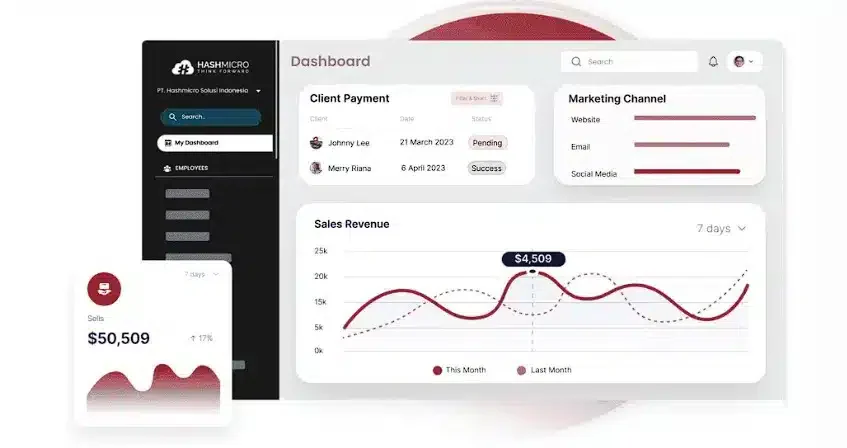
HashMicro’s AI for Sales is built into the HMX platform, meaning it works directly with your CRM, pipeline, and order data without additional integrations. Instead of sitting as a separate tool, the AI layer runs across your entire sales workflow. From the moment a lead enters the system to the point a deal is closed, to how commissions are calculated.
The result is a sales process where less time is spent on manual tracking and more time is spent on selling. Sales managers get a real-time view of team performance and pipeline health, while reps get clear signals on where to focus next.
For businesses in Singapore looking to scale without scaling headcount, that kind of visibility makes a measurable difference. Here’s what’s included:
Key Features:
- Hashy AI: HashMicro’s built-in AI assistant that reads your pipeline data and surfaces actionable recommendations, such as which leads to prioritize, which deals are at risk, and what next steps are most likely to move opportunities forward.
- Sales Target Management: Set individual or team-level targets and track progress in real time. Managers get a live view of attainment across the team, while sales reps see exactly where they stand against quota at any point in the cycle.
- Quotation & Sales Order Management: Build, send, and get approval on quotes without leaving the platform. Automated status tracking means nothing sits in a queue unnoticed.
- Sales Commission Management: Define commission rules once; the system calculates payouts automatically based on closed deals. No spreadsheets, no reconciliation delays.
- Payment Follow-Up Management: Automatically schedules and sends payment reminders based on due dates, reducing the manual chasing that typically falls on sales or finance teams.
- In-Depth Analytics & Reporting: Pre-built and custom dashboards that pull from live sales data (win rates, cycle length, rep performance, forecast accuracy), so sales leaders can spot patterns and adjust strategy without waiting for end-of-month reports.
| Pros | Cons |
|---|---|
|
|
Besides discovering the perfect plan for your business, you can also use the CTC Grant, which covers up to 70% of the implementation costs, to support adopting digital solutions like HashMicro.
Explore our pricing options and find the AI-powered sales solution that fits your needs. Click the banner below for more details!

2. Salesforce
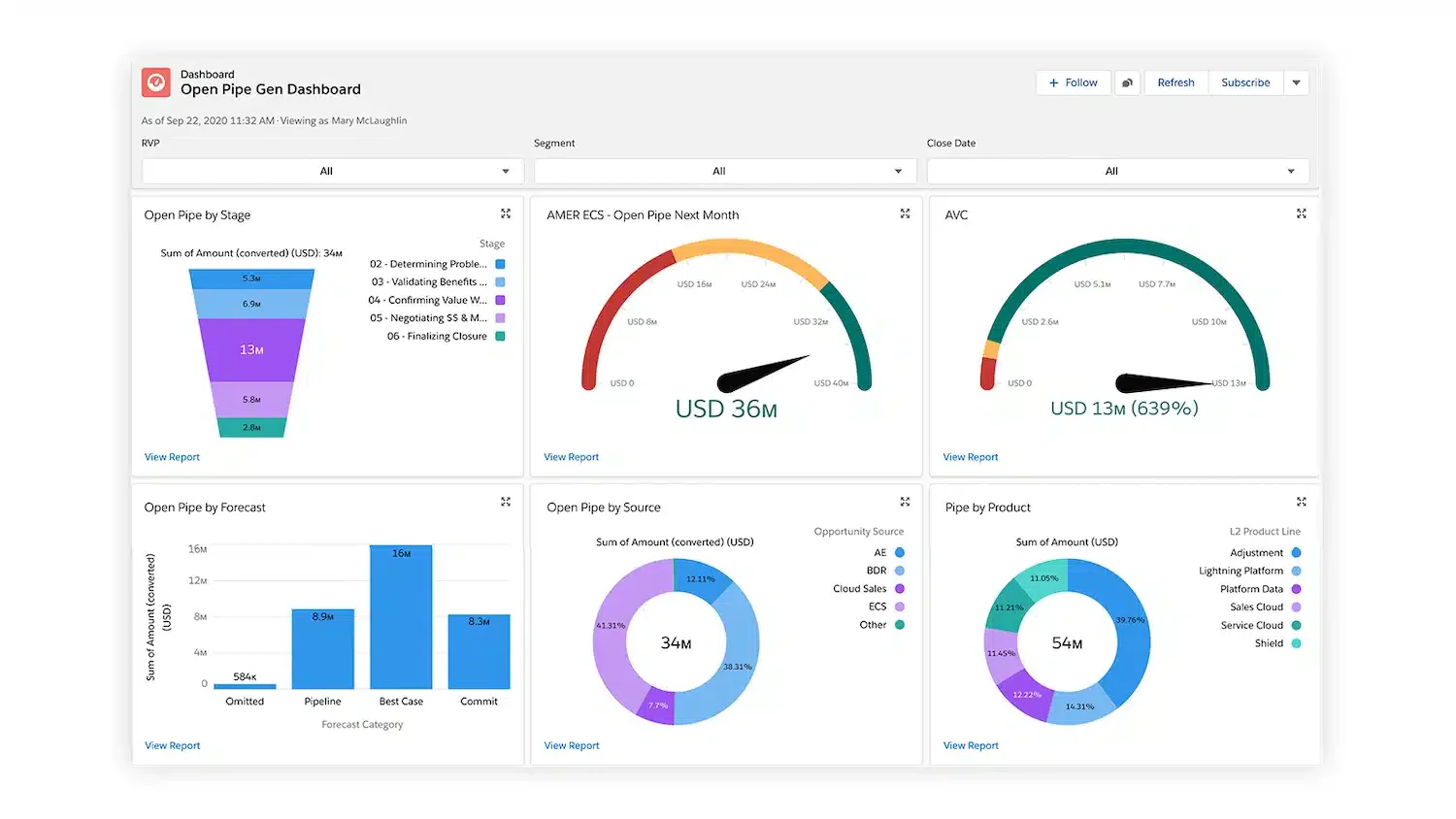
Salesforce is a CRM platform incorporating AI technology through Einstein Analytics to enhance sales efficiency.
It offers predictive analytics, automated task management, and AI-powered lead scoring to help businesses identify and convert high-value prospects. The platform integrates seamlessly with various business tools, making it a versatile choice for sales teams.
Features:
- Sales trend prediction and analytics
- Automated administrative tasks
- Multi-platform integration
| Pros | Cons |
|---|---|
|
|
3. Mentimeter
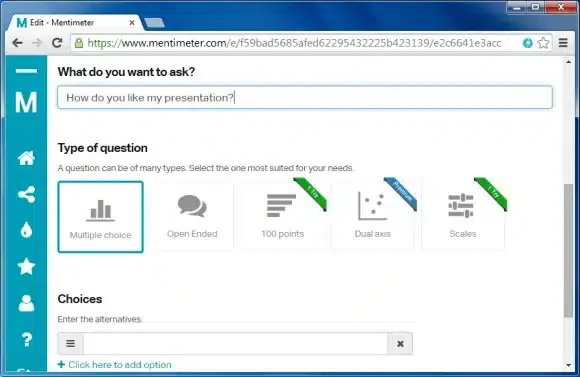
Mentimeter is an AI-powered interactive presentation tool that enhances communication and engagement in sales meetings.
It enables real-time polling, surveys, and Q&A sessions, helping sales teams gather instant feedback and understand customer preferences. The AI-driven analytics provide insights into audience responses, making presentations more data-driven and impactful.
Features:
- AI-driven audience analytics
- Interactive polling and Q&A sessions
- Integration with PowerPoint and Google Slides
| Pros | Cons |
|---|---|
|
|
4. Avoma
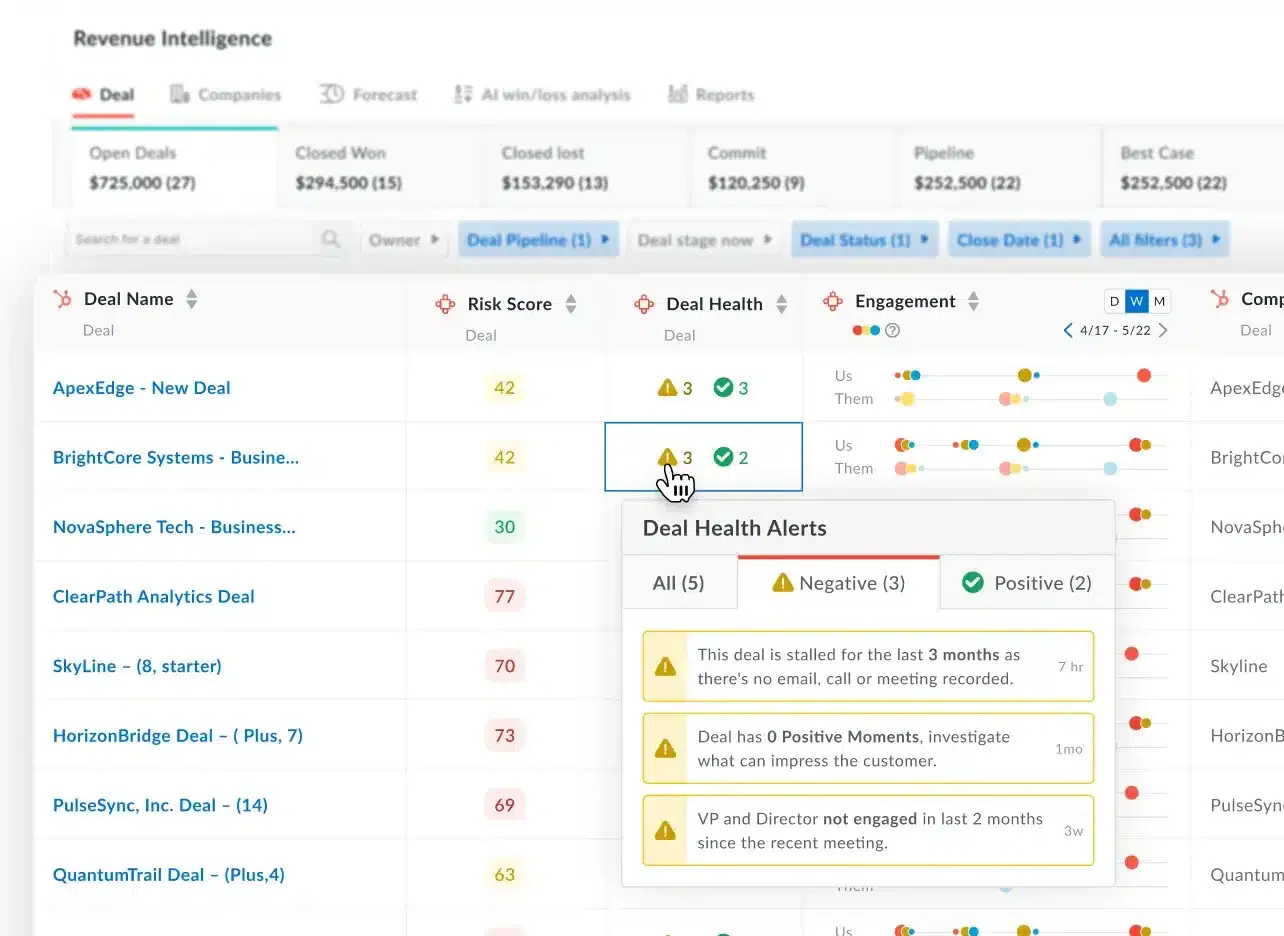
Avoma simplifies meeting management by automatically transcribing conversations, summarizing key points, and analyzing discussions.
Sales teams can use it to track customer interactions, extract actionable insights, and improve follow-up efficiency. Its advanced natural language processing (NLP) capabilities ensure that no critical information is missed.
Features:
- Conversation sentiment analysis
- Automatic note-taking and summaries
- CRM and calendar integration
| Pros | Cons |
|---|---|
|
|
5. Outreach
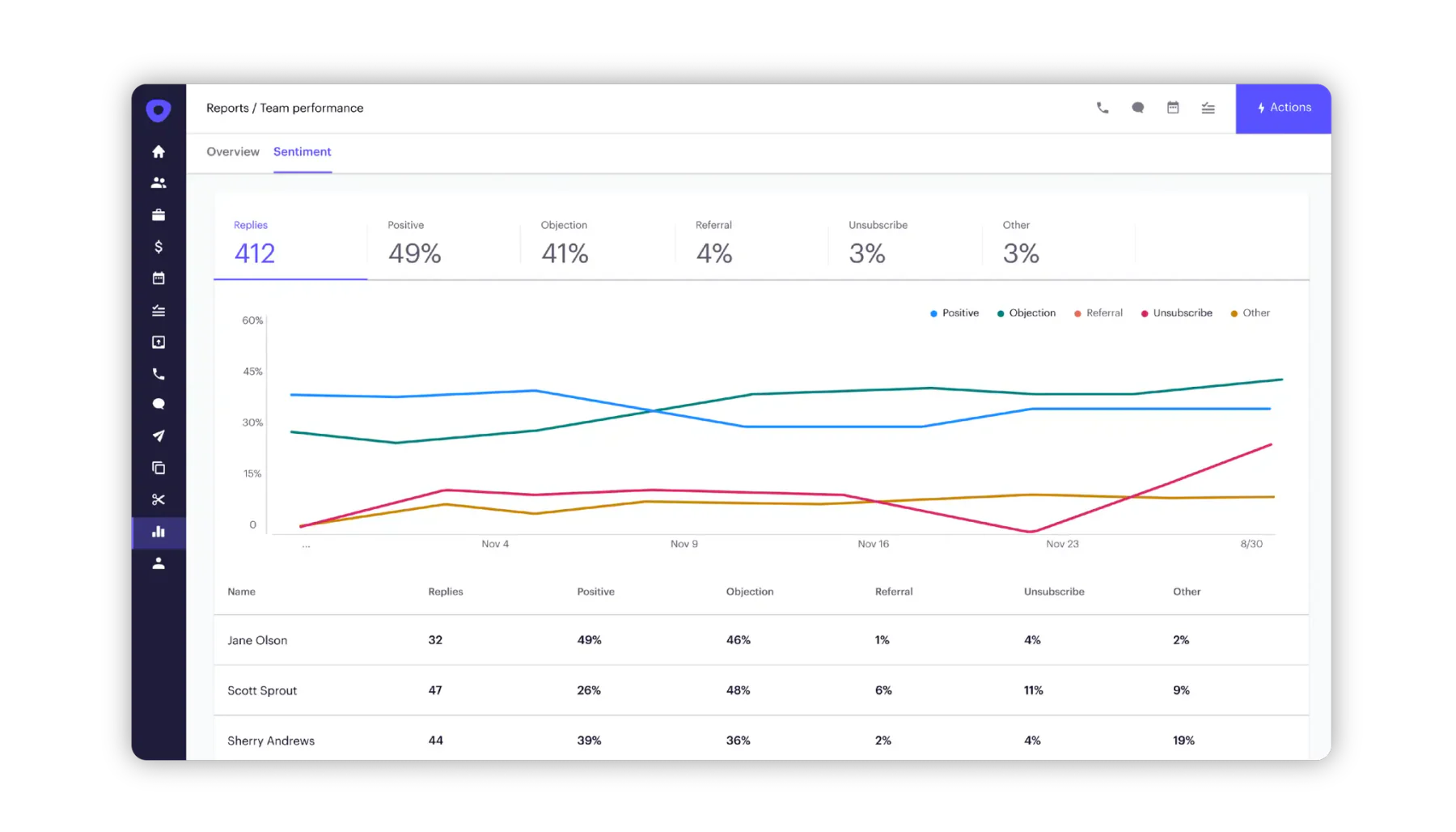
Outreach optimizes sales communication by automating follow-ups, email outreach, and lead prioritization. It helps sales teams stay organized and maintain consistent engagement with potential customers.
These AI tools for sales ensure that outreach efforts are data-driven, allowing teams to focus on high-value prospects.
Features:
- Email automation and tracking
- Data-driven lead prioritization
- CRM integration
| Pros | Cons |
|---|---|
|
|
6. SalesLoft
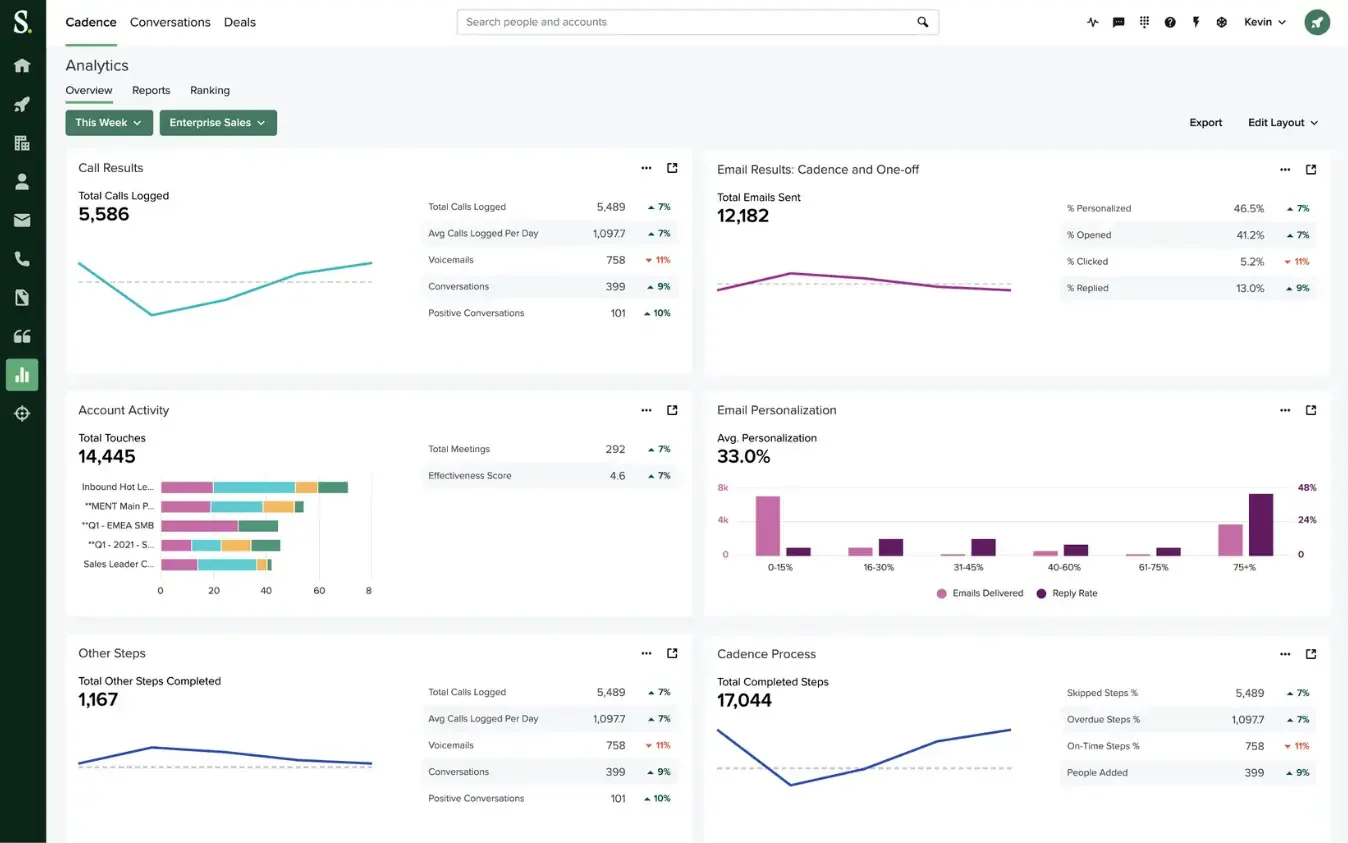
SalesLoft is a sales Artificial Intelligence acceleration platform that helps teams manage their workflows, engage with leads effectively, and optimize sales performance. It provides structured outreach processes, ensuring every step in the sales cycle is tracked and measured for efficiency.
With features like automated lead scoring and personalized messaging, Salesloft enables teams to convert prospects more effectively.
Features:
- AI-powered sales coaching
- Automated email and call follow-ups
- Automated lead scoring
| Pros | Cons |
|---|---|
|
|
7. Seismic
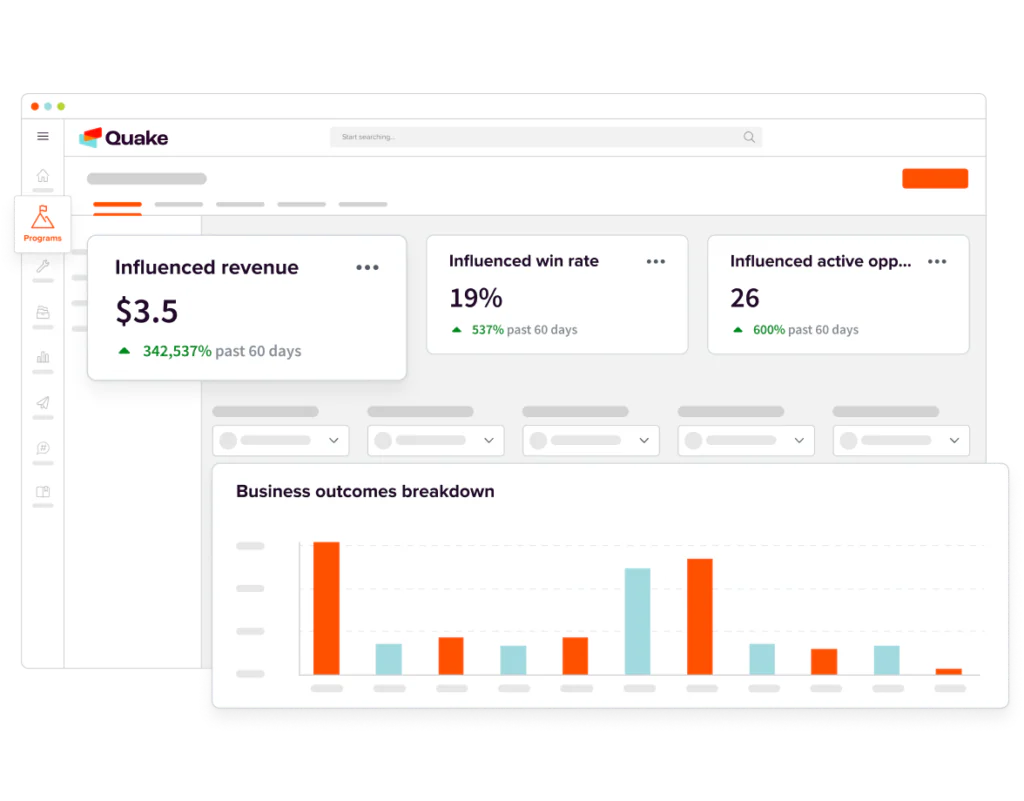
Seismic is a sales enablement platform that provides AI-powered content management and analytics to help sales teams deliver personalized and impactful customer interactions.
Leveraging predictive insights and automation ensures sales representatives have the right materials at the right time.
Key Features:
- Automated training and coaching tools
- CRM and marketing tool integrations
- Engagement tracking and reporting
| Pros | Cons |
|---|---|
|
|
8. Databox
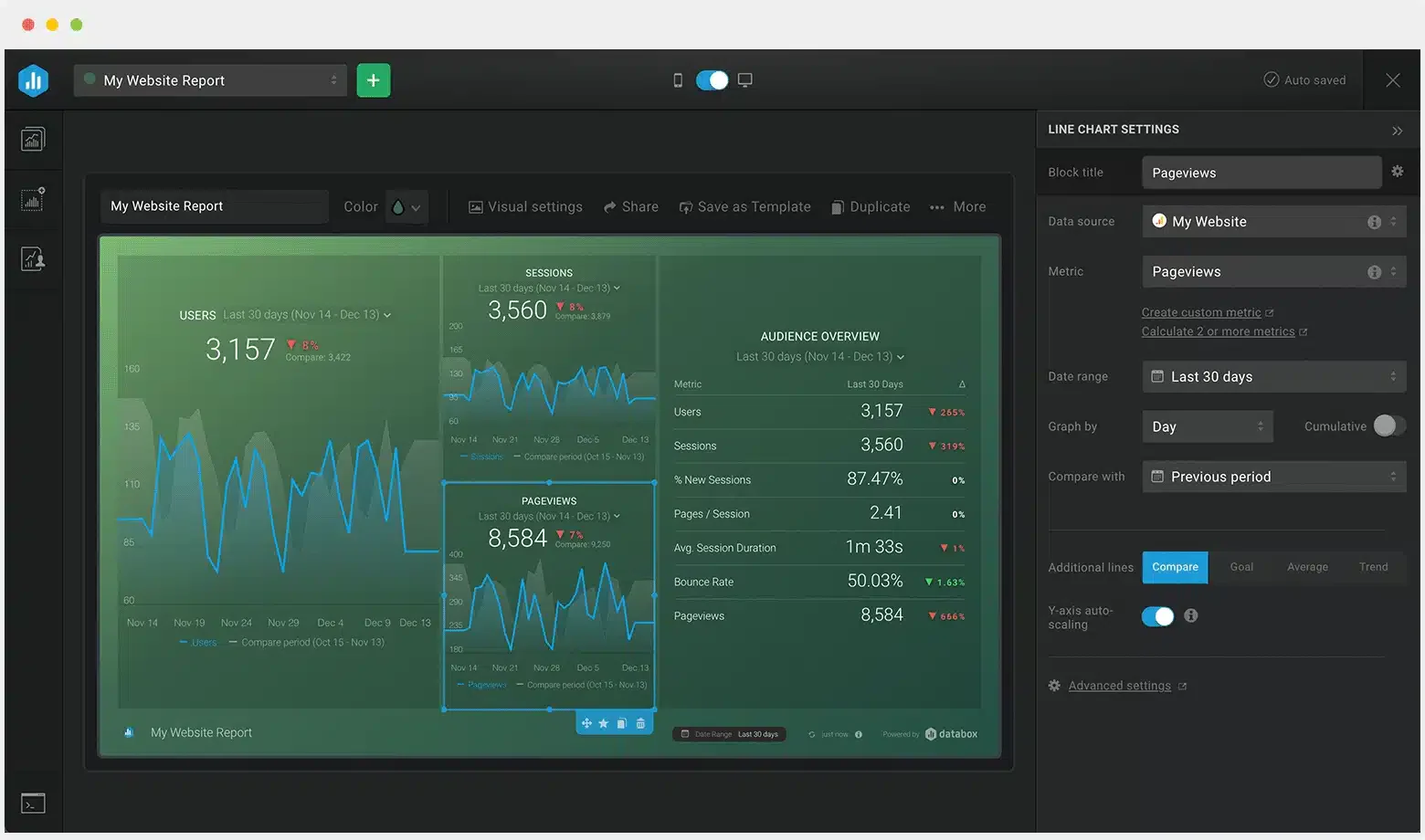
Databox centralizes sales data by integrating multiple sources into a single dashboard, allowing teams to track performance metrics in real-time. It enables businesses to monitor KPIs, forecast sales trends, and identify areas for improvement.
This Artificial Intelligence sales automation custom reporting feature helps sales managers visualize performance insights.
Key Features:
- Centralized sales dashboard
- Custom KPI tracking
- Predictive analytics for sales trends
| Pros | Cons |
|---|---|
|
|
9. Dialpad
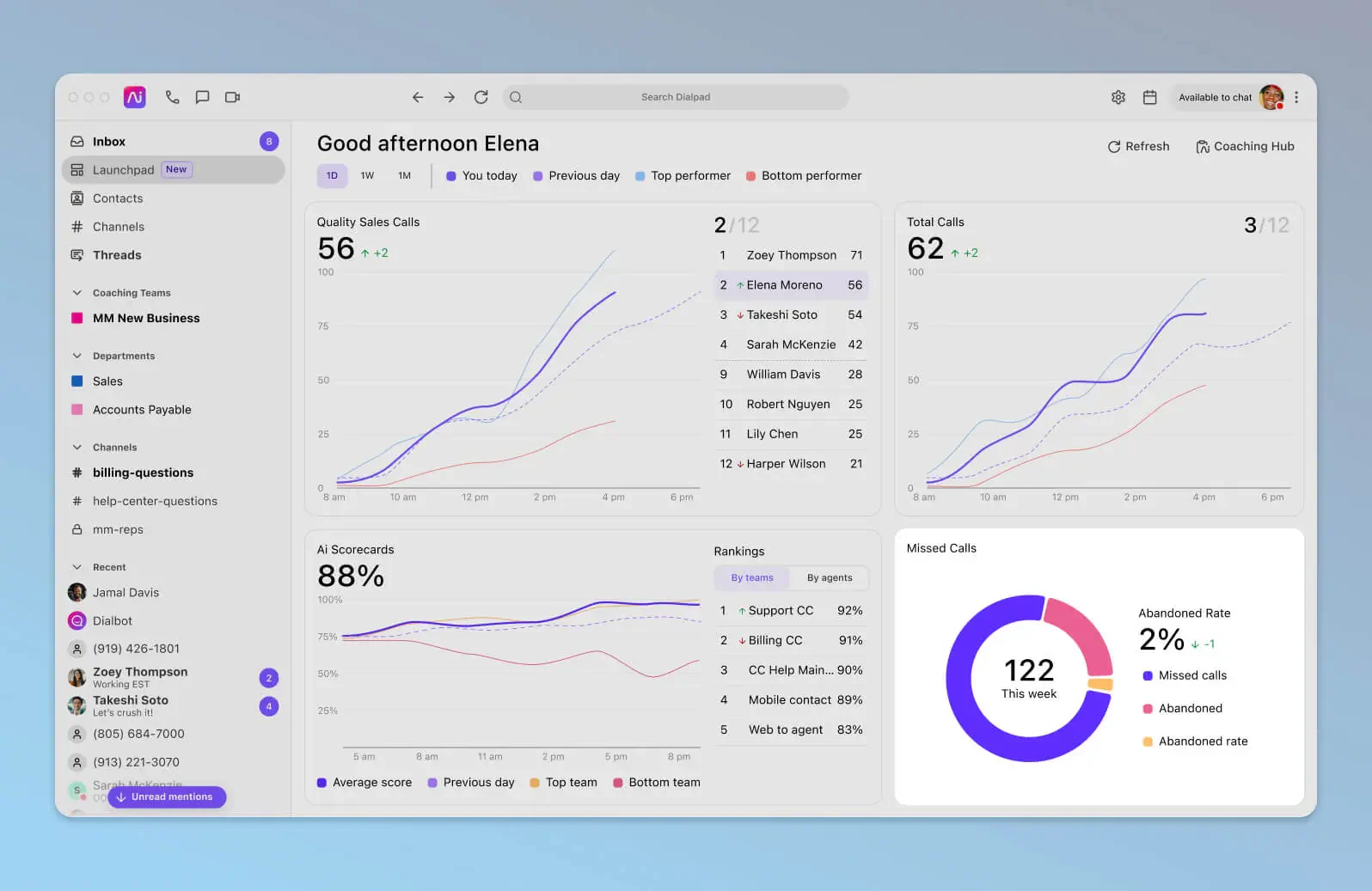
Dialpad is a cloud-based AI-powered communication platform that enhances sales calls and customer interactions. Its real-time call transcription and sentiment analysis help sales teams improve engagement and track conversations effectively.
With intelligent automation features, Dialpad streamlines follow-ups and provides valuable insights into sales discussions.
Key Features:
- AI-powered call transcription
- Automated follow-up recommendations
- CRM integration for data syncing
| Pros | Cons |
|---|---|
|
|
10. Chorus.ai
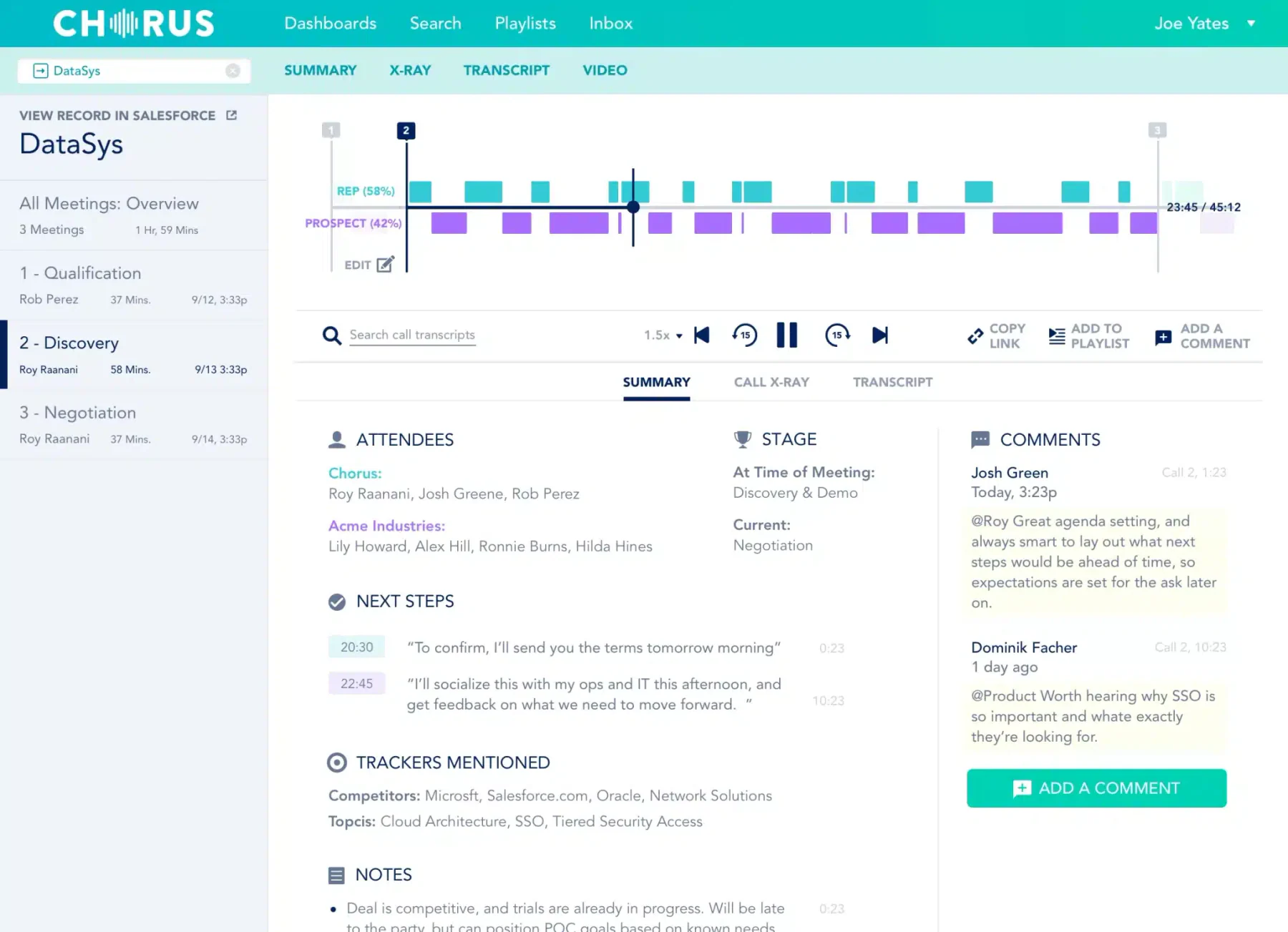
Chorus.ai is a conversation intelligence platform that records, transcribes, and analyzes sales calls to provide actionable insights. By identifying key moments in conversations, it helps sales teams refine their approach and improve closing rates.
This sales Artificial Intelligence software also provides coaching recommendations, making it valuable for training and performance enhancement.
Key Features:
- Call recording and transcription
- Sales conversation analytics
- Performance tracking for sales teams
| Pros | Cons |
|---|---|
|
|
11. Zapier
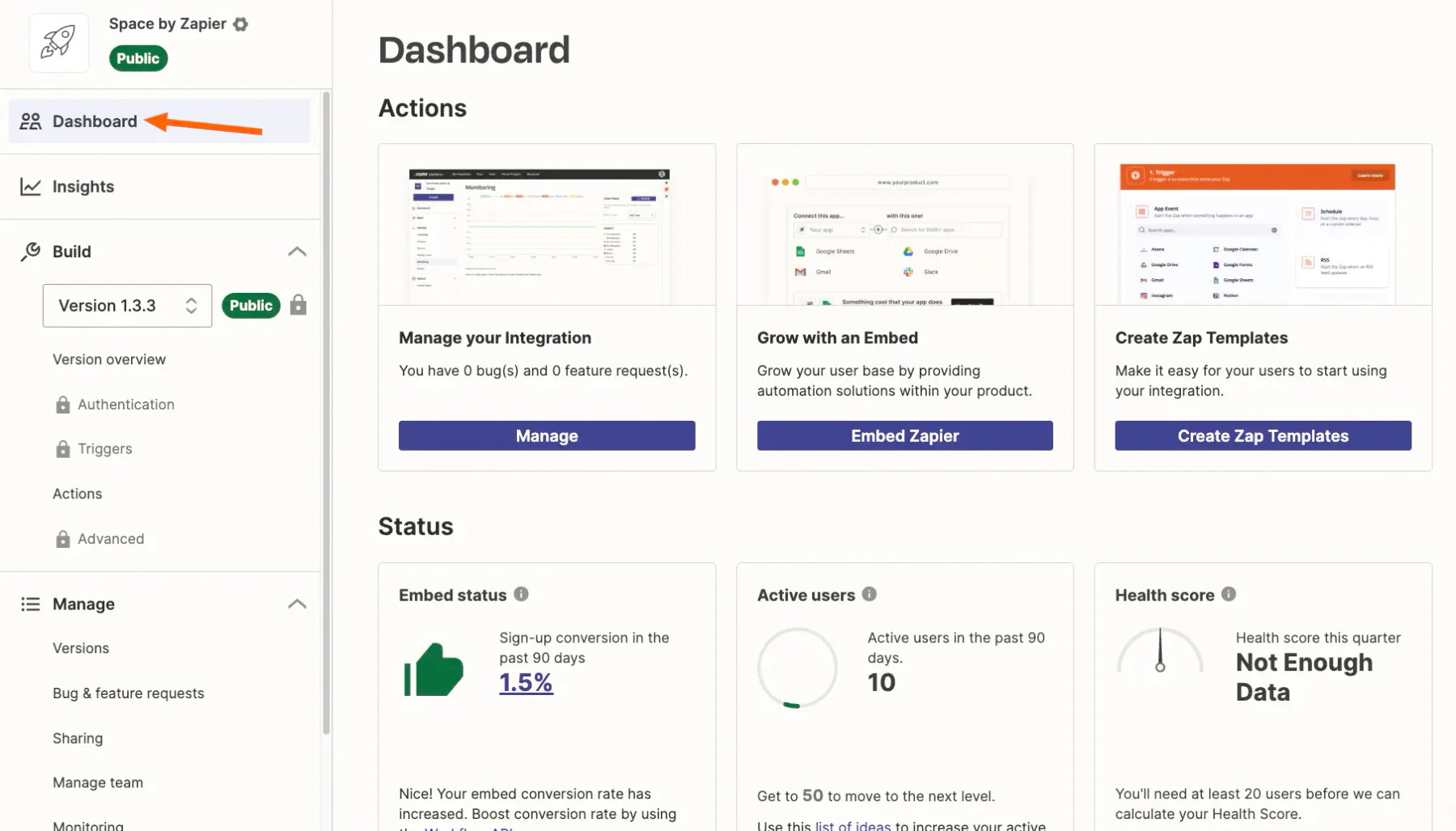
Zapier is an automation tool that connects different sales and marketing platforms, enabling businesses to streamline workflows without manual effort. It allows sales teams to automate lead management, email sequences, and CRM updates by linking various applications.
Key Features:
- Workflow automation for sales processes
- Integration with thousands of apps
- Lead management automation
| Pros | Cons |
|---|---|
|
|
12. Clay
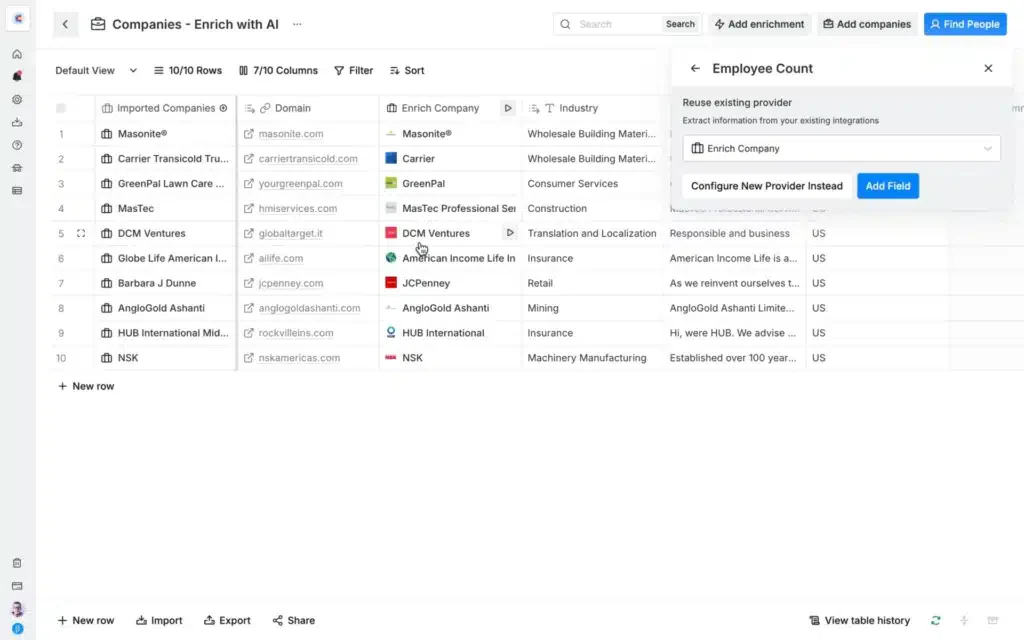
Clay is a sales prospecting tool that automates lead generation and data enrichment. It helps teams find and qualify leads more efficiently by aggregating data from multiple sources to provide a complete profile of potential customers, enhancing outreach strategies.
Key Features:
- AI-powered lead discovery
- Automated data enrichment
- Contact profiling and segmentation
| Pros | Cons |
|---|---|
|
|
You can also read our article on the best CRM software, which provides insights into top solutions that can enhance customer relationship management and streamline sales processes.
Hashy AI Fact

Hashy AI for Sales helps teams close deals faster with less effort. By offering lead prioritization, sales pipeline tracking, and AI-driven insights, it boosts productivity, shortens sales cycles, and drives revenue growth.
Request a free demo today!
What are the Benefits of AI for Sales?
AI for sales is transforming how sales teams operate by introducing smarter, faster, and more accurate processes. Here are five of its benefits:
1. Enhanced lead generation and qualification
Instead of manually sorting through hundreds of contacts, reps open their CRM and see leads already ranked by fit and intent. A prospect who visited your pricing page three times and downloaded a case study ranks higher than someone who opened one email. AI surfaces that context automatically, so reps know who to call first and why, without doing the research themselves.
2. Personalized customer interactions
When a prospect replies with a specific objection or question, AI tools can pull relevant content, suggest a response angle, or draft a follow-up that addresses what was actually said, not a generic template. Over time, the system learns which messages get responses and which go ignored, and adjusts recommendations accordingly.
3. Predictive sales analytics
A pipeline of 15 open deals might look healthy on the surface. AI looks at deeper issues and does things like flagging deals where response times have slowed, proposals have gone unanswered for two weeks, or stakeholder engagement has dropped.
Sales managers can spot which deals need attention before they quietly go cold, rather than finding out at the end of the quarter.
4. Efficient sales process automation
After a meeting is booked, the system auto-logs the call, schedules a pre-meeting reminder, and queues a follow-up email for 24 hours after without the rep touching any of it. Similarly, Transcriptingly can help sales teams turn meeting conversations into accurate transcripts, making it easier to review client needs, follow up faster, and keep deal records organized. The same applies to data entry, contract status updates, and handoff notes. Less time on admin means more time on calls that actually move deals.
5. Deeper customer insights
When a customer’s usage drops significantly over 30 days, or they stop engaging with your team altogether, AI flags it before the account becomes a churn risk. Sales or account teams get an early signal so the conversation happens proactively, not after a cancellation notice arrives.
How to Choose the Right AI for Sales for Your Business
Selecting the best AI sales tools depends on your business needs, team size, and sales processes. Below are essential aspects to consider when choosing the right AI-driven sales tool.
1. Define your sales goals and challenges
Before selecting an AI solution, determine your primary sales objectives. Are you looking to automate lead generation, improve customer engagement, or enhance sales forecasting? Identifying your pain points will help you focus on AI tools that directly address your needs.
2. Evaluate AI capabilities and features
Different Artificial Intelligence sales tools offer various capabilities, such as predictive analytics, automation, and conversation intelligence. Choose a platform that provides your sales team’s required features, such as real-time call transcription, automated email outreach, or AI-driven deal recommendations.
3. Ensure seamless integration with existing systems
Your Artificial Intelligence sales tool should integrate smoothly with your current CRM, email platforms, and marketing automation tools. Seamless integration prevents data silos, improves workflow efficiency, and ensures a unified sales process across your organization.
4. Consider scalability and customization
As your business grows, your sales needs will evolve. Opt for an Artificial Intelligence solution that scales with your team and allows customization to fit your unique sales processes. A flexible AI tool will provide long-term value without requiring frequent replacements.
5. Assess user-friendliness and training support
An AI sales tool should be easy to use and require minimal training for your sales team. Look for platforms that offer intuitive interfaces, comprehensive onboarding, and ongoing customer support to ensure smooth adoption.
By carefully considering these factors, businesses can select an AI-powered sales tool that aligns with their goals, enhances productivity, and improves sales outcomes.
Conclusion
AI for Sales transforms how businesses engage with prospects, manage pipelines, and close deals more efficiently. Sales teams can optimize performance and boost revenue by leveraging automation, predictive analytics, and AI-driven insights.
However, choosing the wrong Artificial Intelligence solution can lead to inefficiencies, wasted resources, and integration challenges. Businesses must carefully evaluate their needs and ensure the selected AI tool aligns with their goals and existing systems.
For companies looking for a robust and comprehensive Artificial Intelligence sales solution, HashMicro AI for Sales offers automation, real-time insights, and seamless CRM integration to enhance every stage of the sales process.
Experience the power of AI-driven sales today, request a free demo with HashMicro and take your sales strategy to the next level!
FAQ About AI for Sales
AI can compile and analyze a customer’s complete purchase history, enabling sales representatives to provide more personalized assistance. Machine learning also enhances sales forecasting by examining sales data to identify patterns and predict the most likely periods for increased sales.
Artificial intelligence (AI) enables procurement teams to tackle complex challenges more efficiently through intelligent algorithms. It can be integrated into various software solutions, including spend analysis, contract management, and strategic sourcing.
AI improves sales forecast accuracy by utilizing machine learning algorithms that continuously learn from data. These algorithms can identify hidden patterns and relationships that human analysts may miss, resulting in more reliable predictions.