




Quality control (QC) is the process of checking products, materials, or operations to ensure they meet quality standards before reaching customers. It helps businesses identify defects, maintain consistency, and improve overall product reliability.
Customers expect products to be reliable, consistent, and high quality every time. Quality control ensures that every item meets set standards before it reaches the customer.
Without proper quality control, businesses risk costly mistakes, damaged reputations, and compliance issues. This is especially important in manufacturing, where errors can occur at multiple stages of production.
Quality control ensures that every item meets set standards before it reaches the customer, especially when supported by quality control software.
Key Takeaways
Understand the core definition and its impact on modern manufacturing.
Explore statistical, process, and product quality control methods.
Discover the building blocks of a robust quality framework.
A step-by-step guide to setting up your quality control processes.

What Is Quality Control?

Quality control (QC) is the process of ensuring that products or services meet defined quality standards before they reach customers. It involves systematic inspection, testing, and monitoring to identify defects and maintain consistency.
For businesses, quality control is not just about catching errors, it’s about preventing them. A strong QC process helps reduce waste, improve efficiency, and protect brand reputation.
It’s also important to distinguish quality control from quality assurance (QA). While QC focuses on identifying defects in finished products, QA is concerned with improving processes to prevent those defects from occurring in the first place.
How Quality Control Works
Effective quality control processes typically result in one of three outcomes after a product is inspected:
1. Acceptance: The product meets quality requirements and is approved for delivery, sale, or further processing.
2. Rework: The product is corrected or modified to meet predefined quality standards before proceeding.
3. Process adjustment: Changes are made to production processes to prevent recurring defects and improve product consistency.
Types of Quality Control
Quality control can be applied in different ways depending on your processes and goals. Understanding these types helps you choose the right approach for your business.
1. Statistical quality control
Statistical Quality Control (SQC) uses data and statistical methods to maintain product quality during production. One common method is Statistical Process Control (SPC), which monitors production data in real time to identify issues before defects occur.
Businesses that want to reduce defects further can use Six Sigma, a data-driven approach that improves process efficiency and product consistency.
2. Process quality control
Process quality control focuses on monitoring production activities in real time, particularly in IoT-enabled manufacturing environments. By identifying issues during manufacturing, businesses can fix problems early and avoid costly rework.
3. Product quality control
Product quality control involves inspecting and testing finished goods to ensure they meet specifications before delivery. This is often the final checkpoint before products reach customers.
4. Internal vs external quality control
Internal quality control is conducted by in-house teams using company-defined standards. External quality control, on the other hand, involves third-party audits or certifications to ensure compliance with industry regulations and benchmarks.
"Strong quality control is the foundation of consistent products and long-term customer trust."
Key Components of a Quality Control System
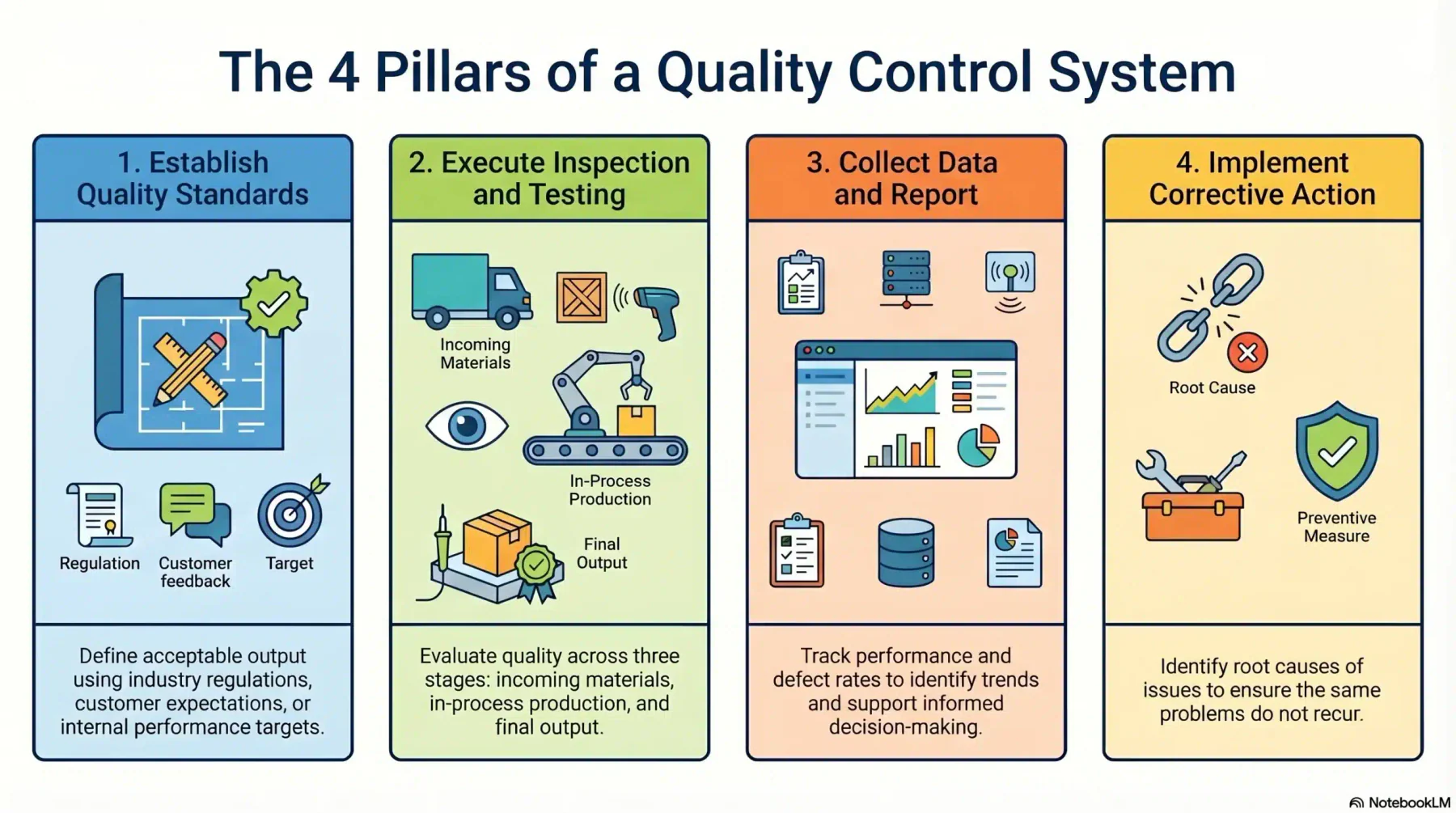
An effective quality control system is built on several essential components. Each element works together to maintain consistency and reduce errors.
1. Quality standards and benchmarks
Clear quality standards define what acceptable output looks like. These benchmarks can be based on industry regulations, customer expectations, or internal performance targets.
2. Inspection and testing procedures
A structured inspection process ensures that products are evaluated at different stages, including materials management, in-process production, and final output.
3. Data collection and reporting
Accurate data collection allows businesses to track quality performance over time. Reporting tools help identify trends, measure defect rates, and support better decision-making.
4. Corrective action processes
When issues arise, corrective action processes help identify root causes and implement solutions. This ensures that the same problem does not occur repeatedly.
How Quality Control Fits Into a Quality Management System
Quality control works best when it operates within a broader Quality Management System (QMS). A QMS provides the policies, procedures, and standards that guide quality activities across the business.
1. How a QMS supports quality control
Within a QMS, quality control becomes part of a coordinated process rather than a standalone activity. Inspection procedures, testing methods, and defect reporting follow documented standards that apply consistently across operations.
2. Corrective and preventive actions (CAPA)
When quality control identifies defects, CAPA processes help businesses investigate root causes and implement corrective actions. This reduces the likelihood of recurring quality issues and supports continuous improvement.
3. ISO 9001 and recognised quality standards
Many businesses align their QMS with recognised frameworks such as ISO 9001. These standards help ensure quality control processes remain consistent, measurable, and aligned with customer expectations.
How to Implement Quality Control in Your Business
Implementing quality control requires a structured approach. The following steps will help you build a system that is practical and scalable.
1. Define your quality standards
Start by setting clear, measurable quality criteria. These should align with customer expectations and industry requirements.
2. Choose your quality control methods
Select appropriate QC methods based on your operations. This may include inspections, statistical analysis, or automated monitoring systems.
3. Train your quality control team
Employees must understand quality standards and procedures. Proper training ensures consistency and accountability across teams.
4. Monitor and measure performance
Track key metrics such as defect rates, production errors, and customer complaints. Regular monitoring helps identify areas for improvement.
5. Review and improve continuously
Quality control is an ongoing process. Regular reviews and continuous improvement initiatives help businesses adapt to changes and maintain high standards.
Quality Control Across Industries
Quality control is important across different industries, though how it’s applied can vary. In manufacturing, it helps reduce defects and ensures products meet specifications.
In industries like healthcare and food production, quality control focuses on safety, hygiene, and meeting strict regulations, often aligned with recognised standards such as ISO 9001 quality management systems.
In manufacturing, it helps reduce defects and ensures products meet specifications within an Australian manufacturing system. Overall, effective quality control improves efficiency and builds customer trust.
Common Mistakes to Avoid
Even well-planned quality control systems can fail if common mistakes are overlooked. Being aware of these pitfalls can help you avoid costly issues.
1. Relying only on final stage inspection
Waiting until the end of production to check quality can lead to wasted time and resources. Issues should be identified earlier in the process.
2. Skipping staff training on QC procedures
Without proper training, employees may overlook quality standards, leading to inconsistent results.
3. Ignoring data and root cause analysis
Failing to analyse data prevents businesses from understanding why issues occur, making it harder to implement lasting solutions.
4. Treating quality control as a one-time activity
Quality control is not a one-off task. It requires continuous monitoring and improvement to remain effective.
Best Practices for Effective Quality Control
To get the most out of quality control, businesses should follow proven best practices. These help improve efficiency and ensure long-term success.
1. Set measurable quality standards from the start
Clear, quantifiable standards make it easier to evaluate performance and maintain consistency.
2. Conduct regular audits and cycle checks
Routine audits help ensure processes remain aligned with quality goals and identify potential risks early. You can use AI for manufacturing business to help you conduct regular audits automatically.
3. Build a quality-first culture across teams
Quality should be a shared responsibility across all departments, not just the QC team. This helps maintain consistency and accountability.
4. Use manufacturing software to centralize QC data
Digital tools such as production management software or ERP can streamline data collection, improve visibility, and support real-time decision-making. Centralised systems help businesses track quality metrics more efficiently and scale operations with confidence.






Conclusion
Quality control is essential for businesses aiming to deliver consistent, reliable products and services. By implementing structured processes, leveraging data, and fostering a culture of quality, businesses can reduce defects, improve efficiency, and enhance customer satisfaction.
As markets become more competitive, investing in a strong quality control system is no longer optional, it’s a key driver of long-term success.
Book a free consultation to see how you can improve your quality control processes and reduce defects.

Frequently Asked Question
Quality control is the process of checking products or services to ensure they meet defined standards before reaching customers.
The main types of quality control include statistical quality control, process quality control, and product quality control.
Quality control focuses on identifying defects in products, while quality assurance focuses on improving processes to prevent defects.
Quality control helps reduce errors, improve efficiency, ensure compliance, and maintain customer satisfaction.