














Still relying on outdated supply chain methods? Without supply chain optimization, your business may lose money and waste time. Whether it's from struggling to respond to shifting seasonal demands such as Christmas or Sinulog, supplier delays, transport bottlenecks, and weather-related disruptions in the Philippines. A focused supply chain optimization effort can improve how resources, information, and products move across your operations.
These challenges are visible among local businesses. A 2025 academic study of 46 food businesses in Daet, Camarines Norte found that many still relied on manual inventory tracking. It also identified communication breakdowns as the most frequent internal disruption and extreme weather as the leading external disruption.
Running a business is already demanding, especially when operations span multiple suppliers, islands, and distribution points. Improving your supply chain through initiatives such as SCM digital transformation turns supply chain optimization into a structured, data-driven initiative that can reduce unnecessary costs, make operations more efficient, and keep customers satisfied.
Want to see how you can make this work for you? Keep reading to learn the essential pillars, phases, and techniques involved.
Key Takeaways
Optimization Overview Optimizing your supply chain boosts efficiency, reduces costs, and improves customer satisfaction. It involves improving processes, using technology, and making smarter decisions to stay competitive.
Benefits of Optimization An optimized supply chain helps businesses save money, stay agile, and outperform competitors. Faster deliveries and reliable products lead to increased customer trust and loyalty.
HashMicro’s SCM Software HashMicro’s SCM software streamlines inventory management, demand forecasting, and order fulfillment for better efficiency. It helps businesses optimize every part of their supply chain, improving service and reducing costs.
Understanding Supply Chain Optimization
Supply chain optimization is the process of improving all stages of the supply chain, from procurement to delivery. It focuses on maximizing efficiency, reducing waste, and cutting costs through better resource allocation and smarter decision-making.
Effective optimization relies on advanced technologies like AI, predictive analytics, supply chain management software, and supply chain optimization management software. AI supply chain software enables businesses to adapt quickly to market changes, customer needs, and supply chain disruptions, improving efficiency and decision-making across the entire supply chain.
Why is Supply Chain Optimization Important?
Supply chain optimization delivers measurable benefits by creating operations that work better for employees, business partners, and customers. This is particularly valuable in the Philippines, where businesses must manage distribution in a nation of disparate islands, with traffic congestion and possible port delays. The most important benefits include:
- Save Money: Reducing excess inventory, product spoilage, inefficient delivery routes, and emergency inter-island shipments frees up resources that can be reinvested in other areas of your business.
- Stay Agile: An optimized supply chain helps you adjust procurement, inventory, and distribution plans when demand changes, or typhoons and port delays disrupt regular deliveries. This reflects the value of AI-enabled supply chain planning, where updated demand forecasts inform inventory, production, and procurement decisions.
- Work Smarter: Shared data helps suppliers, warehouses, and distributors across locations such as Metro Manila, Cebu, and Davao coordinate purchase orders, stock transfers, and delivery schedules more efficiently.
- Keep Customers Happy: Better inventory visibility and delivery planning help businesses prevent stockouts and provide more reliable service to customers, retailers, and provincial branches.
- Outperform Competitors: A responsive and efficient supply chain helps your business provide more predictable lead times and product availability despite the logistical challenges of serving an archipelagic market.
These benefits extend beyond internal efficiency. For example, a Cebu-based food distributor serving stores across the Visayas could use demand forecasts and real-time inventory data to transfer stock before an approaching typhoon disrupts ferry schedules, reducing emergency freight costs while keeping essential products available. This strengthens its broader supply chain strategy by helping the business deliver more value, respond to risk, and build a sustainable competitive advantage.
Key Pillars for Strengthening Each Supply Chain Process
A reliable supply chain process depends on several connected pillars that improve efficiency, collaboration, visibility, and decision-making. Businesses should develop these pillars together instead of treating them as separate operational initiatives.
- Data-Driven Decision Making: Real-time analytics and AI insights help businesses identify inefficiencies, predict demand, and make informed decisions.
- End-to-End Visibility: Integrated systems provide complete transparency at every stage, helping you stay accountable and make better adjustments when needed.
- Collaborative Ecosystems: Building strong partnerships with suppliers, manufacturers, and distributors ensures everyone is aligned and working toward shared goals.
- Sustainability Initiatives: Practices such as reducing waste and improving transportation efficiency support long-term performance while minimizing environmental impact.
This supply chain optimization framework helps businesses create a more responsive and sustainable operation while ensuring that every improvement supports long-term growth.

Building an Effective Supply Chain Strategy
A strong supply chain strategy combines several techniques for improving planning, procurement, transportation, and inventory. Because every supply chain process affects the next one, businesses should coordinate these improvements across departments rather than optimizing individual activities in isolation.
1. Demand forecasting
The first step is understanding what customers are likely to need before they place an order. By using historical data and predictive analytics, you can anticipate demand and adjust your inventory to meet it.
Accurate forecasting reduces the risk of stockouts and overstocking while ensuring the right products are available at the right time. It also helps businesses prepare for seasonal peaks, local events, promotions, and unexpected disruptions.
For example, a grocery distributor in Metro Manila can compare sales from previous Christmas seasons, Holy Week periods, payday promotions, and typhoon warnings to estimate demand for rice, canned goods, bottled water, and other essentials at each branch.
2. Procurement optimization
An efficient procurement function strengthens the overall supply chain process. Streamlining supplier selection, purchasing approvals, negotiations, and performance reviews helps businesses secure high-quality materials at competitive prices.
Long-term supplier relationships can improve delivery reliability and material quality. When procurement activities are properly coordinated, businesses can lower purchasing costs and maintain a steady supply of the goods required for daily operations.
For example, a Cebu-based food manufacturer can evaluate suppliers according to price, product quality, delivery lead time, and performance during bad weather. It can then maintain backup suppliers in Luzon or Mindanao for critical ingredients that may be delayed by port closures.
3. Transportation optimization
Once you have your products ready, they need to reach customers quickly and cost-effectively. Transportation optimization uses logistics data and planning tools to identify efficient delivery routes, reduce fuel expenses, and prevent avoidable delays.
Better transportation planning lowers delivery costs and improves customer satisfaction because orders arrive more consistently, even when businesses operate across several cities, provinces, or islands.
For example, a retailer supplying stores across Luzon and the Visayas can consolidate provincial orders, schedule Metro Manila deliveries outside peak traffic hours, and adjust inter-island shipments around ferry schedules and weather advisories.
4. Inventory management
Effective inventory management connects demand planning, procurement, warehousing, and order fulfillment. With real-time tracking and an inventory management system, businesses can maintain balanced stock levels and avoid excess inventory or shortages.
Better stock control reduces storage costs, protects cash flow, and enables teams to respond quickly to market changes. Improved inventory control also gives decision-makers more accurate information about product availability and replenishment needs.
The business case is supported by a 2020 study of Philippine manufacturing MSMEs involving 394 business owners and operations managers. The researchers found a statistically significant positive relationship between supply chain management adoption and profitability, with a reported p-value of 0.01.
Together, these supply chain optimisation techniques make supply chain management becomes more efficient and responsive. Businesses can lower costs, improve service, and build an operating model that adapts more easily to changing conditions.
Supply Chain Optimization Across Design, Planning, and Execution
Supply chain optimization generally covers three connected phases including design, planning, and execution. Each phase supports a different part of the supply chain process, from structuring the network to managing daily orders and deliveries.
| Designs | Definition |
|---|---|
| Supply Chain Design | Evaluate and structure supply chain networks, including supplier selection, warehouse locations, and logistics planning. |
| Supply Chain Planning | Create coordinated plan for procurement, production, inventory, and distribution based on demand forecasts and business objectives. |
| Supply Chain Execution | Manage day-to-day operations such as purchasing, production, shipping, order fulfillment, and returns with accuracy and agility. |
Supply Chain Optimization Software from HashMicro’s
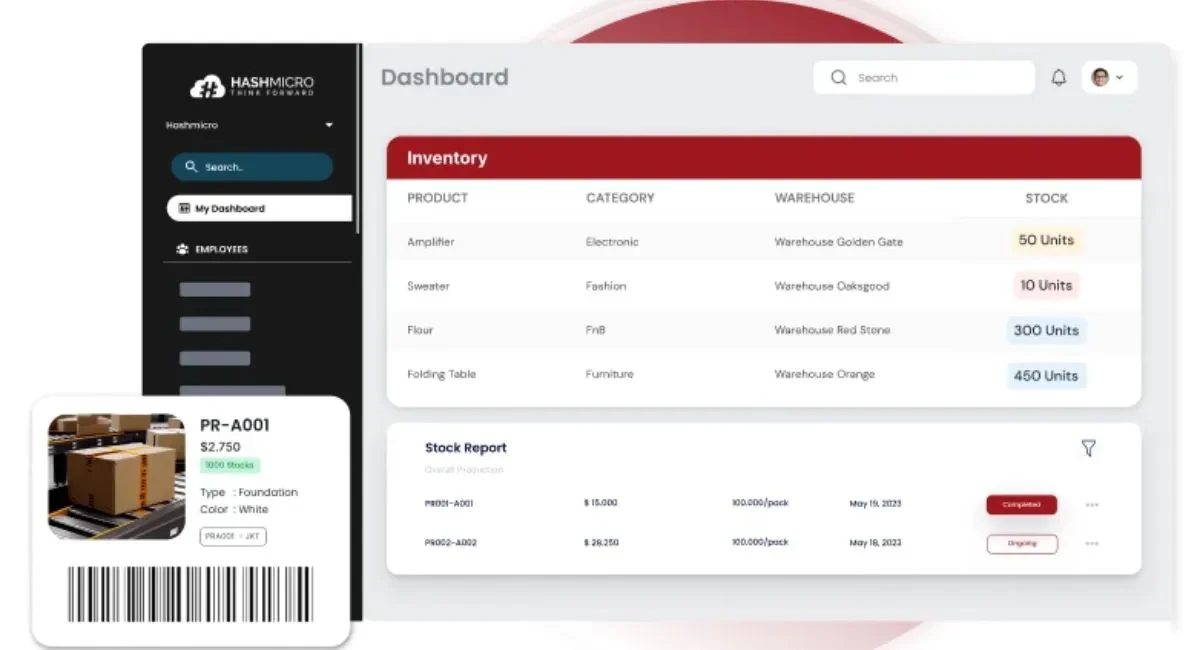
HashMicro’s SCM software is designed to help businesses coordinate inventory, procurement, demand planning, order fulfillment, and logistics through one integrated system. As comprehensive supply chain management software, it provides greater visibility into day-to-day activities and long-term performance.
Whether your business is managing inventory control, demand forecasting, supplier relationships, or order fulfillment, the supply chain optimization software helps departments collaborate using consistent and up-to-date operational data.
Some of the benefits available through the software include:
- Real-Time Tracking: Live inventory and shipment tracking provides visibility into what is happening at every stage of the supply chain. This helps teams identify delays, avoid surprises, and keep orders on schedule.
- Automated Inventory Management: Automatic stock updates reduce the risk of running out of popular products and carrying excessive inventory.
- Smart Demand Forecasting: The Supply Chain Management software analyzes historical data to forecast future demand. This supply chain optimization software capability helps businesses plan purchases, prevent stockouts, and avoid overstocking products with low demand.
- Supplier and Vendor Management: HashMicro helps businesses monitor supplier performance, purchasing agreements, and delivery reliability so teams can build stronger vendor relationships.
- Efficient Order Management: Automated order activities accelerate fulfillment, reduce manual work, and help businesses meet customer delivery expectations more consistently.
By using HashMicro's supply chain optimization software, businesses can make informed decisions, improve coordination, and manage their operations more efficiently. The result is a faster and more cost-effective supply chain that can maintain service quality as the business grows.
Conclusion
Supply chain optimization is key to keeping your business running smoothly, cutting costs, and staying competitive. Combining the right supply chain strategy with connected technology enables teams to improve planning, strengthen collaboration, and deliver better customer experiences.
Ready to improve your operations with integrated supply chain management software? see how HashMicro’s SCM software can support your business by calling your free consultation today and experience the benefits firsthand!
FAQ for Supply Chain Optimization
Supply chain optimization helps businesses lower operating costs, use inventory efficiently, and deliver orders reliably. It connects demand planning, procurement, production, warehousing, and transportation so teams can respond faster to disruptions. Philippine businesses also gain better control over inter-island deliveries, weather-related delays, and changing customer demand.
The role of supply chain optimization is to coordinate decisions across every stage, from sourcing materials to delivering finished products. Businesses use it to remove bottlenecks, reduce waste, improve forecasting, and align suppliers with internal teams. This coordination creates faster workflows, more reliable deliveries, and better use of working capital.
The primary objective of supply chain optimization is to achieve the best balance among cost, service, inventory, and operational risk. Businesses accomplish this by matching supply with demand, selecting efficient routes and suppliers, and maintaining appropriate stock levels. The result is reliable fulfillment, stronger customer satisfaction, and sustainable profitability.
Supply chain optimization works by collecting data from sales, inventory, suppliers, production, and logistics, then using that information to improve operational decisions. Teams forecast demand, set inventory targets, evaluate suppliers, plan capacity, and select delivery routes. They continuously track results and adjust plans when demand, costs, or disruptions change.
The key steps in supply chain optimization are mapping the existing network, identifying bottlenecks, defining performance metrics, improving demand forecasts, aligning procurement and inventory, optimizing transportation, and monitoring results. Businesses should begin with their highest-cost or least-reliable process, test targeted improvements, measure the outcome, and expand successful practices across operations.