











 Limited to 100 registrants

Warehouse picking becomes error-prone when staff rely on paper lists, memory, or manual scanning during peak hours. Without a visual guide like a pick-to-light system, mispicks and slow routes are hard to avoid.
The impact shows in delayed dispatch, higher labor costs, and wrong or incomplete orders. Guided picking directs operators to the right location and quantity and keeps each pick traceable via warehouse software.
This guide explains what a pick-to-light system is, how it works, when it fits, how it connects to a WMS or ERP, and where its limitations lie.
Key Takeaways
Pick-to-light technology significantly boosts warehouse operations by enhancing accuracy, productivity, and overall efficiency.
Understanding the differences between pick-to-light and put-to-light systems is crucial for selecting the most suitable solution based on specific use cases and business needs.
HashMicro Warehouse Management Software will automate your inventory management, simplify order processing, and improve overall operational efficiency.

What is Pick to Light System?

Pick-to-light systems is a method that uses illuminated indicators to guide operators to the correct item locations, enhancing picking speed and accuracy. Each light corresponds to a specific product or area, turning on to show the required quantity and minimizing human error.
In Singapore warehouses, pick-to-light systems support several stages of warehouse operations. During order fulfilment, the lights indicate the next SKU location and the quantity to pick.
For kitting and sequencing, they guide operators through the required kit order, while replenishment uses the lights to identify the bin and quantity that need restocking. During pick verification, operators confirm the quantity before the order moves to the next stage.
When I integrate a pick-to-light system with a Warehouse Management System (WMS), I can deliver real-time picking instructions that ensure precise order fulfillment. This technology helps me streamline warehouse operations and improve overall efficiency.
How Does Pick to Light Work?

I use the pick to light system in Singapore to optimize warehouse operations by guiding my team to the correct SKU locations through illuminated indicators connected to our Warehouse Management System (WMS). When an order comes in, the lights show exactly where the items are, allowing us to pick them quickly and accurately.
After confirmation via a button or sensor, the system updates the WMS in real-time, ensuring accurate inventory tracking. It then resets for the following order, maintaining a smooth and efficient workflow.
When Should You Use Pick-to-Light?
Use pick-to-light when SKUs stay in predictable locations, operators repeat the same pick routes, and the warehouse benefits from visual quantity confirmation. Review alternatives when locations change frequently, order volume is low, or the required integration is unavailable.
Pick-to-light is usually a good fit when:
- SKU locations are stable: fixed light modules match a warehouse where slotting rarely changes.
- Pick routes are repetitive: operators follow the lights instead of searching for locations, which suits zones with the same routes every day.
- Items are small and fast-moving: high-velocity SKUs benefit most from shorter walking time and many picks in one area.
- Order volume is high: many small orders, such as e-commerce orders, keep the lights in constant use.
- Quantity accuracy matters: the operator sees the exact quantity at the point of work and confirms it before moving on.
- Integration is available: the system can receive picking tasks from a WMS or ERP and send confirmations back.
Alternatives are worth reviewing when:
- Locations change frequently: fixed lights make re-slotting and layout changes costly and slow.
- Order volume is low: the upfront cost of modules, wiring, and installation is harder to justify.
- Integration is unavailable: without task release and confirmation, the lights cannot fit into the wider picking process.
- Items are oversized or slow-moving: these SKUs often suit other methods, such as cart-based batch picking with mobile scanners.
Many warehouses combine methods rather than choosing one. Pick-to-light can cover stable, high-velocity zones, while other picking methods handle the remaining areas.
How Pick-to-Light Can Connect to WMS or ERP
A pick-to-light system can operate with a warehouse control process and, where integrated, receive the picking task from a WMS or ERP. The usual sequence is:
- The task is released.
- The light identifies the location and quantity.
- The operator confirms the pick.
- The connected system records the transaction.
The exact workflow depends on the hardware, controller, and software integration.
Difference Between Pick to Light vs Put to Light Systems
When I work on enhancing order fulfillment in my warehouse, choosing between pick-to-light and put-to-light systems becomes a crucial decision. Both systems help streamline operations, but each serves different needs depending on my business requirements.
| Feature | Pick-to-Light Systems | Put-to-Light Systems |
| Primary Function | Guides workers to the correct items for picking | Guides workers to correct locations to place items |
| System Focus | Accuracy and minimizing errors during picking | Proper item placement and order consolidation |
| Ideal for | Businesses prioritizing picking accuracy and speed | Businesses focused on efficient item placement |
| Light Indicators | Illuminated modules direct workers to SKU locations | Illuminated modules indicate where to place items |
| Best Use Case | High-volume picking with a focus on speed and precision | Sorting and consolidating items for final order assembly |
Both systems are effective in optimizing warehouse workflows, but they cater to different stages of the order fulfillment process. The decision on which to implement depends on your warehouse operations and which areas you want to optimize—whether it’s the picking or placing stage.
The choice between pick-to-light and put-to-light depends on your warehouse’s priorities. Pick-to-light is ideal for accurate picking, while put-to-light excels at efficiently organizing and consolidating items.

What are the Benefits of Pick to Light Systems for Your Warehouse?
Implementing pick-to-light systems in my warehouse has brought significant benefits to my operations. These advanced systems not only streamline the order fulfillment process but also improve accuracy, boost worker productivity, and reduce overall costs.
- Enhanced order accuracy: Visual cues and real-time data enable workers to select the correct items in the proper quantities, thereby reducing human error and order mistakes.
- Faster order fulfillment: The system directs workers to the exact picking locations, speeding up order processing and delivery time.
- Increased worker productivity: Intuitive light indicators eliminate the need for manual cross-referencing, enabling pickers to work more efficiently and accurately.
- Reduced training time: Its user-friendly design enables new employees to learn quickly and start contributing productively from the very first day.
- Lower operational costs: By optimizing labor and minimizing picking errors, businesses can cut unnecessary expenses and improve efficiency.
- Improved customer satisfaction: Accurate, timely orders lead to happier customers, fewer returns, and a stronger brand reputation.
Potential Drawbacks and Challenges for Pick-to-Light
Even though a pick-to-light system can boost picking speed and accuracy, it is not a plug-and-play solution for every warehouse. Before you invest, it’s essential to understand the potential drawbacks and implementation challenges so you can plan the right rollout strategy and avoid disruptions.
- High initial investment
PTL requires significant upfront spending on modules, wiring, and installation. Start with a pilot in fast-mover zones, prove ROI, then scale gradually. - Integration complexity with WMS/ERP
PTL must sync cleanly with WMS/ERP, and limited APIs can slow integration. Solve it with API/middleware planning, early validation, and end-to-end testing. - Limited flexibility when layouts change
Fixed lights make re-slotting and layout changes costly and slow. Use PTL only in stable zones, and keep RF/voice picking for dynamic areas. - Count accuracy and weak verification
Button-only confirmation can lead to incorrect counts, especially with similar SKUs or pack sizes. Add scan-to-confirm or weight checks for high-risk items and clear SOPs. - Downtime and reliability risk
A power, network, or controller issue can pause picking in PTL zones. Prepare a fallback process, stock spare parts, and run preventive maintenance plus monitoring.
What You Can Do to Overcome Integration Challenges
Businesses that integrate pick-to-light systems with an existing Warehouse Management System (WMS) or other automation technologies often face challenges related to compatibility and data synchronization. The pick-to-light system must work seamlessly with the current setup to ensure accurate inventory management and smooth order fulfillment. The following steps help overcome these challenges:
- Plan thoroughly: Businesses start by understanding their requirements and identifying potential obstacles before deployment.
- Communicate clearly with providers: Businesses maintain clear communication with system providers throughout the project.
- Test extensively: Businesses conduct extensive testing before full deployment to ensure everything runs smoothly.
- Prioritize scalability, flexibility, and compatibility: When selecting a solution, businesses ensure the pick-to-light system can adapt to growing needs and integrate with future technologies to minimize disruptions and maximize efficiency.
"A pick-to-light system enhances warehouse efficiency by using illuminated indicators to guide workers and minimize errors. It streamlines order fulfillment processes, ensuring faster and more accurate operations."
— Angela Tan, Regional Manager
How Pick-to-Light Helps Prevent Picking Errors
Pick-to-light reduces picking errors by guiding operators directly at the point of work:
- Shows the target location: the light directs the operator to the intended SKU location.
- Displays the quantity: the operator can see how many units to pick at the point of work.
- Requires confirmation: the pick is confirmed before the task moves forward.
- Depends on execution: actual error reduction still depends on layout, training, integration, and process compliance.
Conclusion
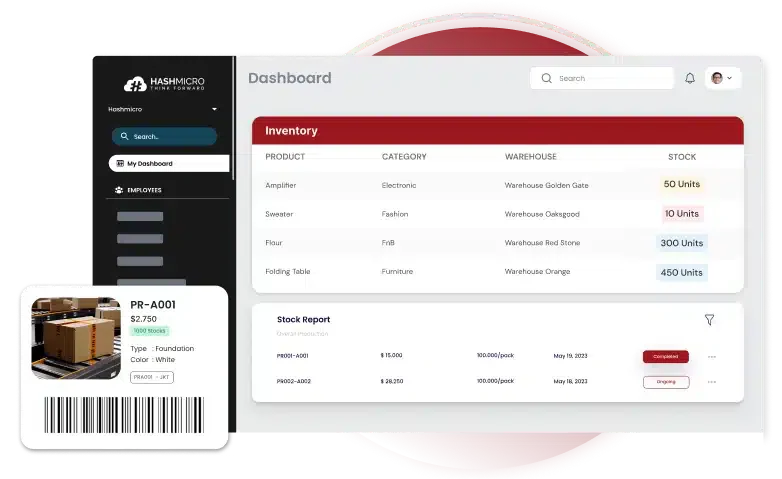
Optimizing my warehouse operations is essential for meeting customer demand and staying ahead in a competitive market. The pick to light system in Singapore has transformed the way I handle order fulfillment, making the process faster and more accurate. By integrating it with a reliable software solution like HashMicro’s Warehouse Management System, I can automate inventory management and significantly improve overall efficiency.
The system can be tailored to your business needs—and is eligible for up to 70% funding through the CTC Grant. Don’t miss the opportunity to try the free demo and experience firsthand how it can reshape your warehouse operations.
FAQ About Pick to Light
Pick to light (PTL) is a warehouse and distribution center technology that uses illuminated lights or LEDs on shelves to mark picking spots and lead workers through the picking process.
Order pickers are guided to specific locations in the warehouse and informed of the quantities to be picked through light indicators and digital displays.
This system accelerates the process, reduces labor costs, and enhances customer satisfaction. It provides real-time inventory updates as stock changes are sent to the WMS, making error detection easier. It’s particularly suited for small, easily handled products.