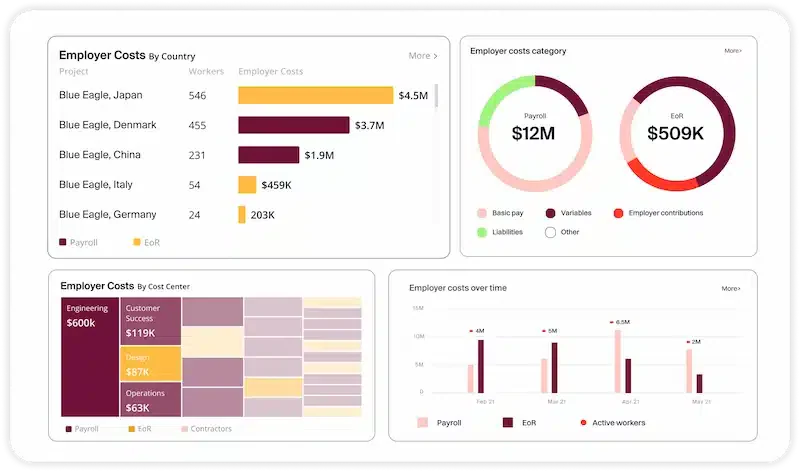
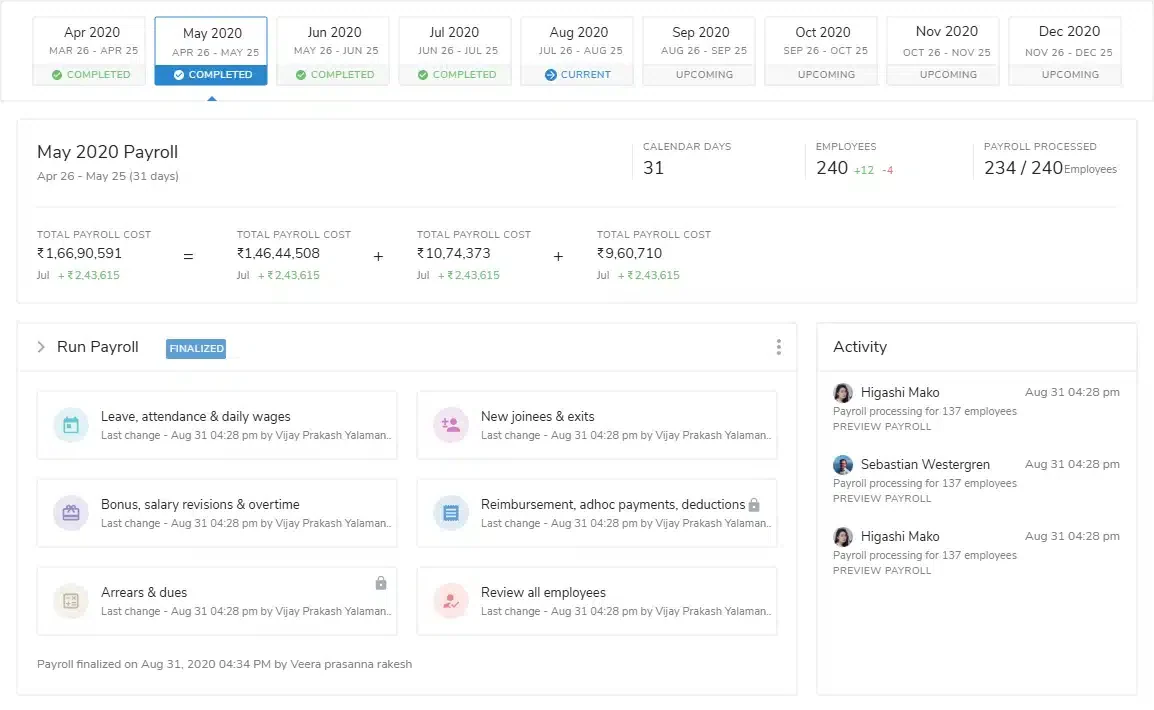
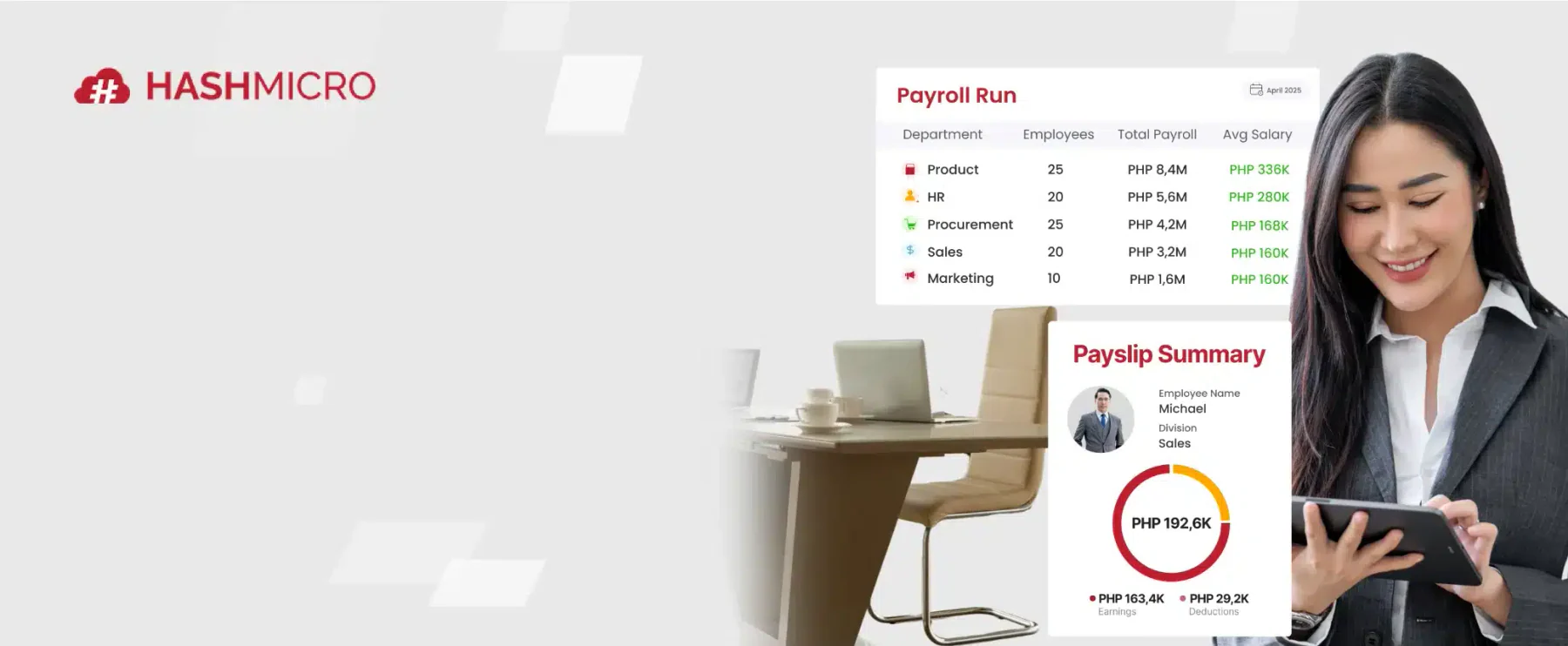
Payroll software is a solution that automates salaries, deductions, tax calculations, and compliance while keeping payroll records organized. Popular options include HashMicro, ADP, Xero, Gusto, and QuickBooks Payroll, with cloud or on-premise features like time tracking, self-service, and reporting.
Have you ever experienced payroll delays, miscalculated 13th-month pay, or last-minute corrections to BIR, SSS, and PhilHealth reports? These issues are common when payroll is done manually, especially as your team grows. Payroll software helps automate salary calculations, contributions, and compliance so you can avoid costly errors and missed cutoffs.
According to Future Market Insights, the global payroll and HR solutions market is expected to grow from USD 32.1 billion in 2025 to USD 65.9 billion by 2035. This rapid expansion shows how businesses worldwide are adopting automated systems to improve payroll accuracy and efficiency.
With so many payroll options in the Philippines, choosing the right one can be challenging. This article will explore the 22 Best Payroll Software in the Philippines for 2026, helping you make an informed decision on the best payroll solution for your business needs.
Payroll software helps businesses handle compressed work week challenges more accurately by automating calculations, managing different schedules, and reducing errors.
Selecting the right payroll system is essential for businesses to ensure accurate salary processing, regulatory compliance, and efficient workforce management. The table below compares the 22 best payroll systems, helping companies evaluate each option based on suitability, key strengths, limitations, and pricing before choosing the most appropriate solution for their needs.
Brand
Best for
Pros
Cons
Pricing
1) HashMicro
Best for fully compliant end-to-end PH payroll automation
High implementation cost · customization limits · no PH compliance
Starts at $35 monthly
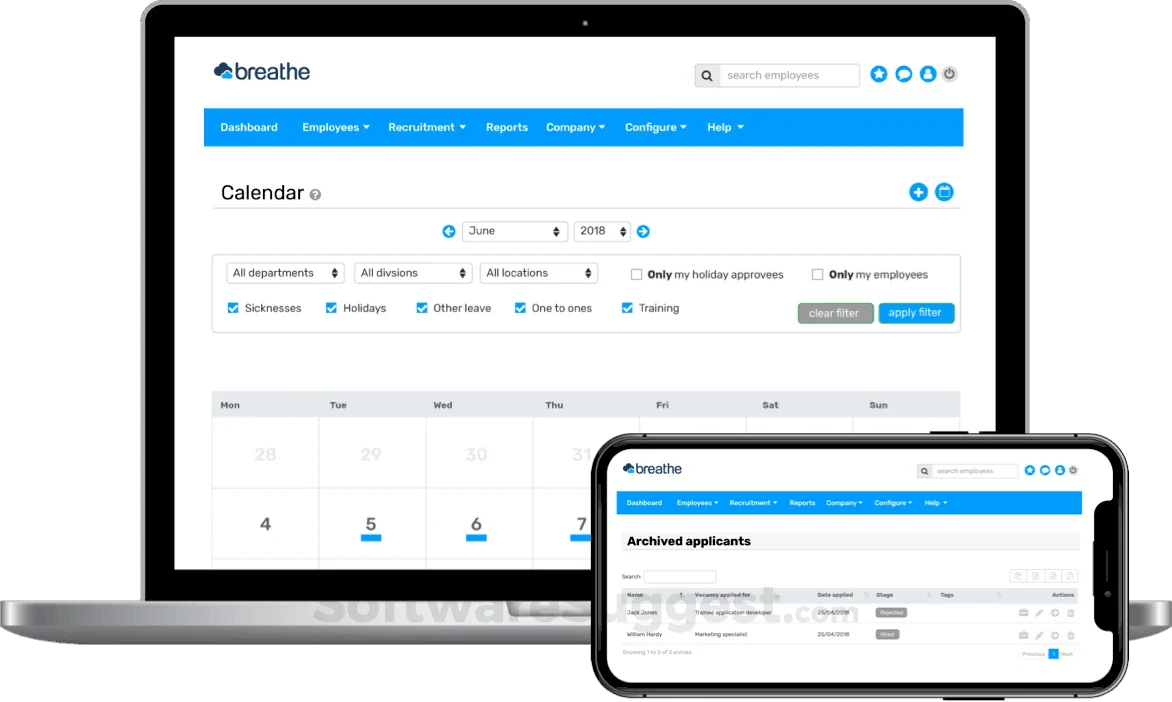
22) Breathe
Best for small businesses needing simple HR + payroll
Simple HR/payroll · easy dashboards · good for small teams
No PH payroll support · no tax automation · needs third-party tools
Starts at £18 monthly
Recomendation for Varios Business Needs
For businesses in the Philippines that need full payroll compliance, unlimited users, and deep HR–accounting integration → HashMicro
For SMEs looking for simple, localized Philippine payroll with basic HR features → Sprout, Payroll.PH, GreatDay HR
For enterprises operating across multiple countries with global payroll needs → ADP, Ramco, Papaya Global, Allsec
For companies prioritizing mobile-first payroll and modern HCM experience → Darwinbox, PeopleStrong, ZingHR
For firms hiring international employees or contractors without local entities → Deel, Remote, Multiplier, Justworks
For accounting-driven teams that only need basic payroll add-ons → QuickBooks, FreshBooks, Kashoo
For small teams seeking simple HR and payroll tools with minimal setup → Keka, Breathe
22 Best Payroll Software in the Philippines 2026
Looking for the perfect payroll system software? We’ve rounded up the 22 Best Payroll Software in the Philippines for 2026, handpicked for their power to simplify payroll, reduce errors, and keep your business running smoothly.
1. HashMicro
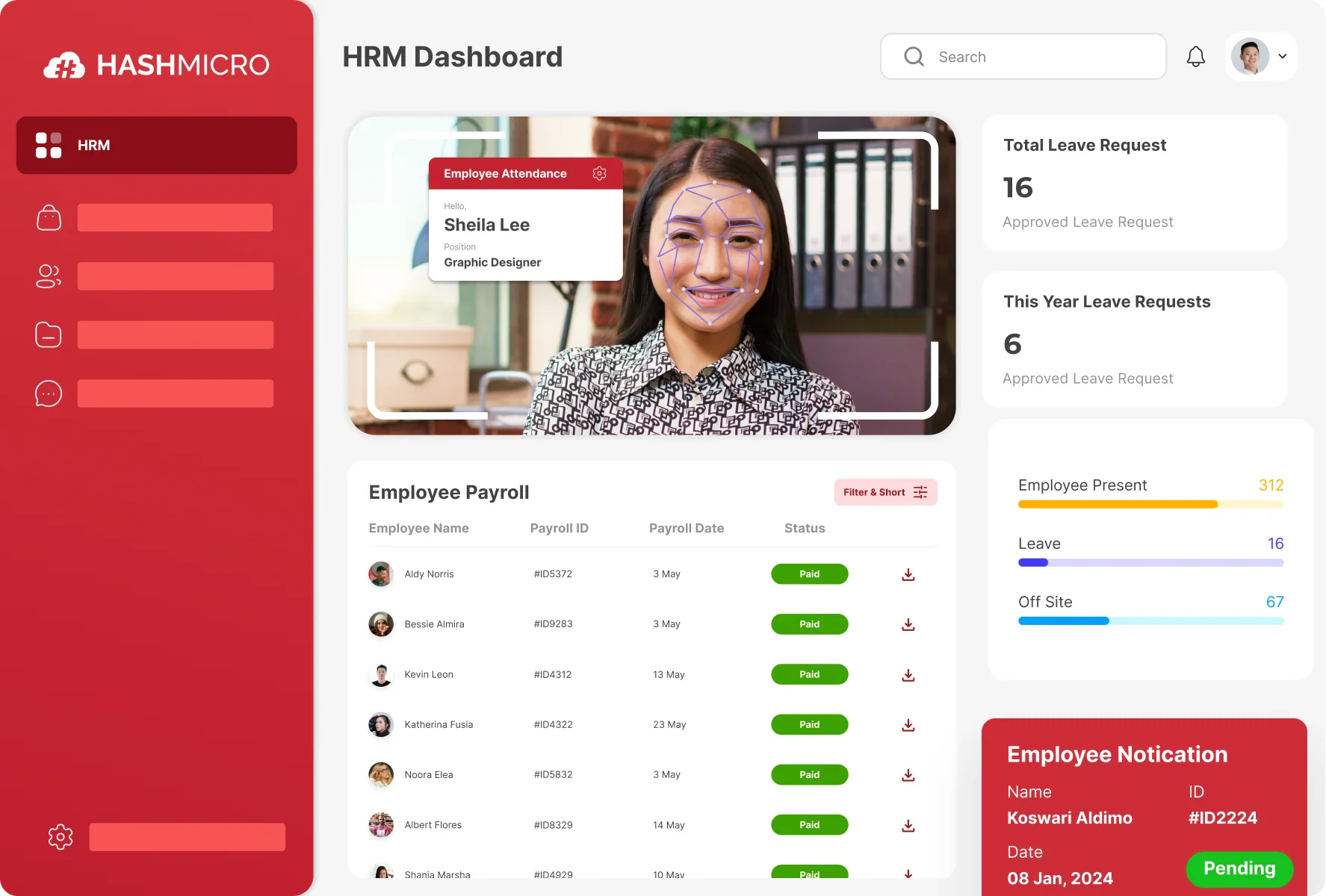
HashMicro Payroll Software Philippines offers the best solution tailored for Philippine businesses, supporting automated salary calculation, BIR compliance, SSS/PhilHealth/Pag-IBIG deduction, and payslip generation. It also integrates fully with HRM and accounting modules for seamless workflows, and trusted by more than 2,000 businesses in Southeast Asia.
With unlimited user access, advanced scheduling tools, and role-based approvals, HashMicro is the best payroll system for mid-sized to large companies managing multi-branch payrolls. HashMicro also offers a free demo and expert consultation to help clients optimize payroll processing.
Key features:
Custom payslip management for daily and hourly employees
Automatic overtime calculation and inclusion in payroll
Built-in professional templates with full customization options
Fully localized tax calculation for SSS, PhilHealth, Pag-IBIG
Delegated payroll approval with automated follow-up notifications
Employee self-service for payroll access, leave requests, and profile updates
Mobile applications for all employees to access payslips
Automated reporting with detailed breakdowns for HR and compliance
Pros
Cons
100% unlimited users without additional user fees
Can be integrated into other systems and modules, including accounting and HRIS
Intuitive and user-friendly interface for easy navigation
Customizable pay rates and payroll scheduling
Scalable for growing business
Features cater to large enterprises and may not be ideal for small businesses
Ideal user: HashMicro Payroll SoftwarePhilippines is suitable for Philippine firms seeking an all-in-one payroll management solution and can cover end-to-end business processes. This payroll software is also fully compliant to the Tax Reform for Acceleration and Inclusion (TRAIN) Law Philippines.
From what I've seen in Philippine companies, payroll errors usually come from mismatched attendance data and manual tax calculations. A system like HashMicro's payroll software solves this by connecting attendance, scheduling, and deductions automatically, which significantly reduces disputes and speeds up payroll releases
Ysabela Manalo, Senior HR Manager
Pricing: The pricing scheme below provides detailed insight into your business’s needs. This vendor also offers transparent pricing and upfront costs, so you don’t need to worry about additional fees when using this software.
Disclosure: This article is published by HashMicro. HashMicro is included in this list and evaluated using the same criteria applied to all other vendors.
Sprout Payroll is a cloud-based payroll management system designed for businesses of all sizes, offering accurate payroll calculations, government report generation, and compliance with BIR, PHIC, SSS, and Pag-IBIG regulations. It helps reduce payroll processing time while maintaining payroll accuracy.
Key features:
Payroll Outsourcing
Payroll Audit
Payroll-on-demand
Government benefits administration
SSS, PHIC, HDMF compliance services
Pros
Cons
Easy access on the go
Financial support with InstaCash
Integrates with the timekeeping and attendance system
Lacks deep customization for complex approval workflows
Limits integration with third-party accounting platforms
Offers fewer advanced analytics for strategic HR insights
Ideal user: Sprout Solutions is perfect for businesses looking to simplify processes and enhance efficiency.
Pricing: Starts from ₱5,000 per month.
3. ADP
The ADP payroll system Philippines is designed to serve companies of all sizes, from small to large corporations. The platform automates essential payroll tasks, including wage calculations, tax withholdings, and payments, ensuring timely and accurate employee compensation.
Additionally, ADP offers comprehensive tax filing services, managing deductions and filings for easy compliance with laws.
Key features:
Centralized benefits management for health plans, retirement, and statutory contributions
Integrated talent management for performance reviews
Built-in compliance checks for local tax laws and labor regulations
Automated payroll runs with multi-cycle options and customizable approval workflows
Analytics dashboards for headcount trends and expense forecasting
Pros
Cons
Offers robust global payroll and compliance coverage
Easy implementation process
Provides built-in automation for taxes and government reporting
Relatively high cost
Less suitable for medium to large-scale businesses
There is a limit to the number of users
Ideal user: ADP cloud-based payroll system Philippines is particularly well-suited for businesses already using ADP suite of products or those looking to integrate their payroll with other business processes in a seamless ecosystem.
Pricing: ₱2,284.62 – ₱4,627.82 per month + ₱234.32 per employee
4. Ramco
Ramco Payroll is a unified global payroll platform for enterprises seeking automation, compliance, and innovation across multi-country operations. The platform ensures compliance across 150+ countries, supports multi-currency transactions, and integrates seamlessly with leading HCM systems like Workday and Oracle.
Key features:
Centralized console
DIY analytics tool for on-demand reporting and insights
Virtual assistant for payroll-related queries
Modern employee self-service portal
Multi-currency support
Pros
Cons
Comprehensive global compliance and multi-currency support
AI-driven tools enhance user experience and analytics
Seamless integration with the existing HCM system
It may be complex for small businesses with limited international operations
Limited self-serve setup
Support delays in certain regions
Ideal user: Ramco is ideal for multinational corporations seeking a comprehensive, integrated payroll solution
Pricing: Starting at $8.00 per month
5. PeopleStrong
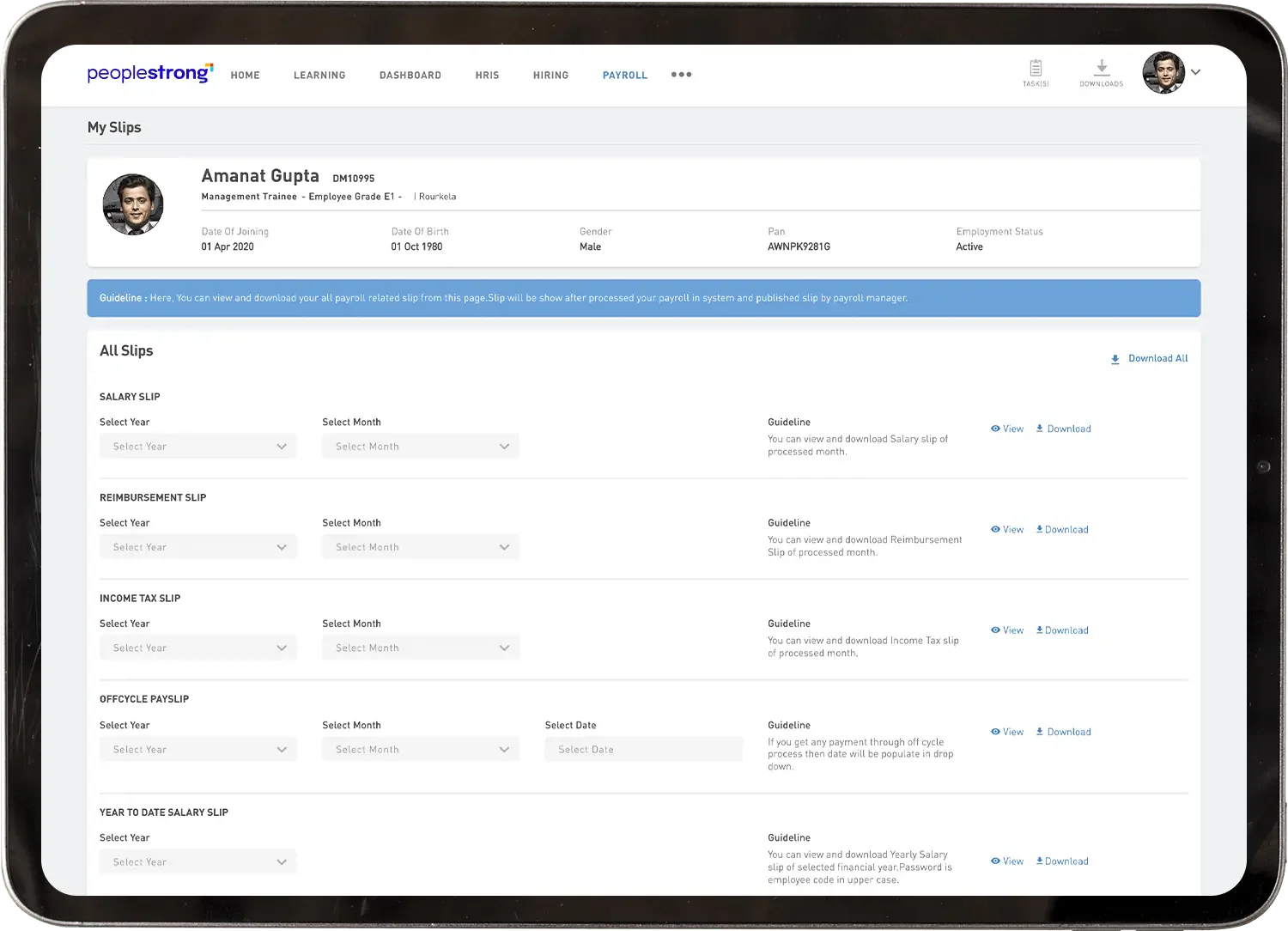
PeopleStrong Payroll helps businesses manage payroll fully compliant with Philippine statutory requirements, including BIR and the Data Privacy Act. Its configurable engine adapts to regulatory changes, while integration capabilities allow seamless data sync across HR platforms.
The platform also supports payslip and tax report generation, employee self-service, and enterprise-grade security.
Key features:
Payslip, tax slip, and BIR Form 2316 generation
Report, bank, and journal voucher (JV) builder
Self-service portal with 24/7 access to payroll info
Income tax self-declaration via portal
Pros
Cons
Strong focus on compliance and adaptability
AI chatbot and self-service features enhance employee experience
Supports employee self-service through mobile and web platforms
May require setup assistance for complex integrations
Does not offer free trials
Reporting features might have a learning curve for new admins
Ideal user: PeopleStrong is ideal for Enterprises in the Philippines that are looking for a secure, adaptable payroll platform with strong compliance features and employee empowerment tools.
Pricing: Available upon request
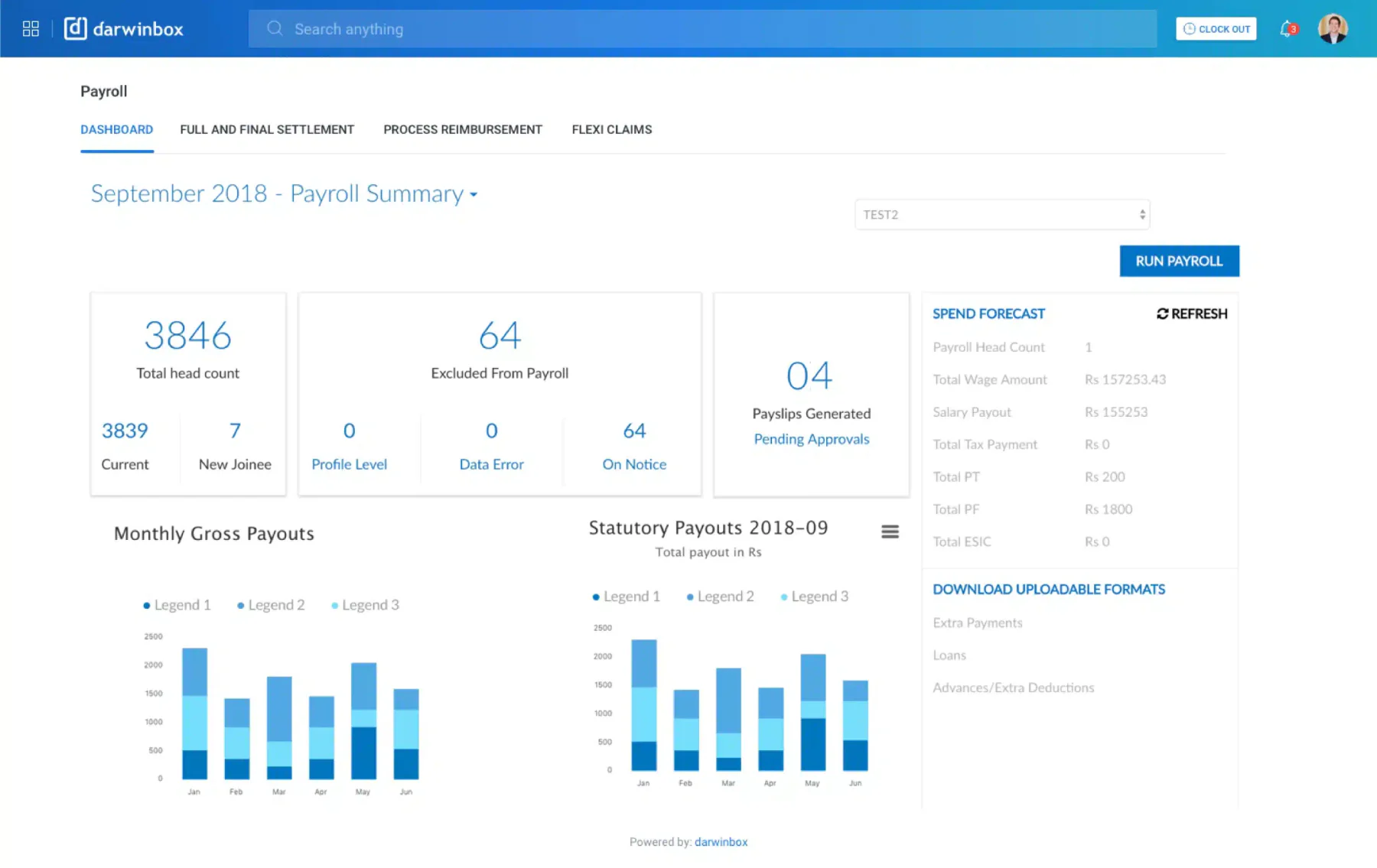
6. Darwinbox
Darwinbox Payroll Payroll Software Philippines designed to streamline payroll processing in a company. It offers a fully digital and audit-ready payroll solution that simplifies processing by integrating real-time inputs such as leaves, overtime, night shift differentials, and 13th-month pay.
It ensures compliance with Philippine government agencies, including SSS, PhilHealth, Pag-IBIG, and BIR.
Key features:
Real-time sync with attendance, holidays, and CTC adjustments
Support for custom pay groups, bi-monthly, weekly, and off-cycle runs
Delta processing & re-processing options for post-cutoff changes
Trend analytics and cost-to-budget analysis
Employee self-service for payslips, tax declarations, and loan tracking
Pros
Cons
End-to-end digital payroll process
Seamless mobile access for both employees and approvers
Enables mobile-based attendance and payroll access
May require deeper system configuration for complex setups
Some features are best utilized within the full Darwinbox HCM ecosystem
Requires external tools to handle end-to-end payroll auditing
Ideal user: Darwinbox is ideal for businesses in the Philippines that aim to digitize payroll and stay compliant while giving employees a smooth self-service experience.
Pricing: Available upon request
7. JeonSoft
JeonSoft Payroll Suite (JPS) is an on-premise payroll management system in the Philippines that offers integrated HR, timekeeping, and payroll modules. It operates on a perpetual license, making it a one-time investment suitable for companies seeking long-term, self-hosted solutions.
JeonSoft has been a notable payroll software provider in the Philippines for over twenty years. It serves more than 1,350 clients and processes over 100 million pesos in payroll.
Key features:
Automated payroll processing that calculates salaries, deductions, and contributions
Time and attendance tracking with biometric integration and shift scheduling tools
Centralized HRIS for managing employee profiles, contracts, and employment history
Loan management module to track employee loans and balances
Payslip generation and distribution via email or employee portals
Pros
Cons
Offers localized payroll features tailored to labor laws
Includes automated SSS, PhilHealth, Pag-IBIG, and BIR calculations
Supports custom payroll cycles and contribution formats
Lacks integration with broader HR and finance ecosystems
Does not support cloud-native deployment by default
Limits access to advanced reporting or real-time dashboards
Ideal user: Jeonsoft is ideal for businesses seeking an efficient, scalable, and secure platform, though its pricing may be a consideration for smaller businesses.
Pricing: Available upon request
8. Payroll.PH
Payroll.ph’s payroll system in the Philippines simplifies payroll management for companies and organizations. The system provides customizable settings for HR, timekeeping, and payroll.
It also makes payroll processing, including allowances, government contributions, taxes, and loans, into a quick, efficient process. With Payroll.ph, businesses can easily generate government reports, HR documents, payslips, certificates, and bank transmittals.
Key features:
Simplified payroll processing with automated salary, tax, and deduction calculations
One-click payroll management
Document management tools to store contracts, payslips, and compliance forms
Built-in HRIS for tracking employee data, job changes, and leave balances
Pros
Cons
Local tax compliance
High standard of safety
Reliable servers
Limited international support
Limited customization
Might have limited integration with other systems in the company
Ideal user: Payroll.ph is ideal for Philippine-based businesses, especially SMEs, needing an integrated payroll system for efficient timekeeping, compliance, and HR management.
Pricing: Available upon request
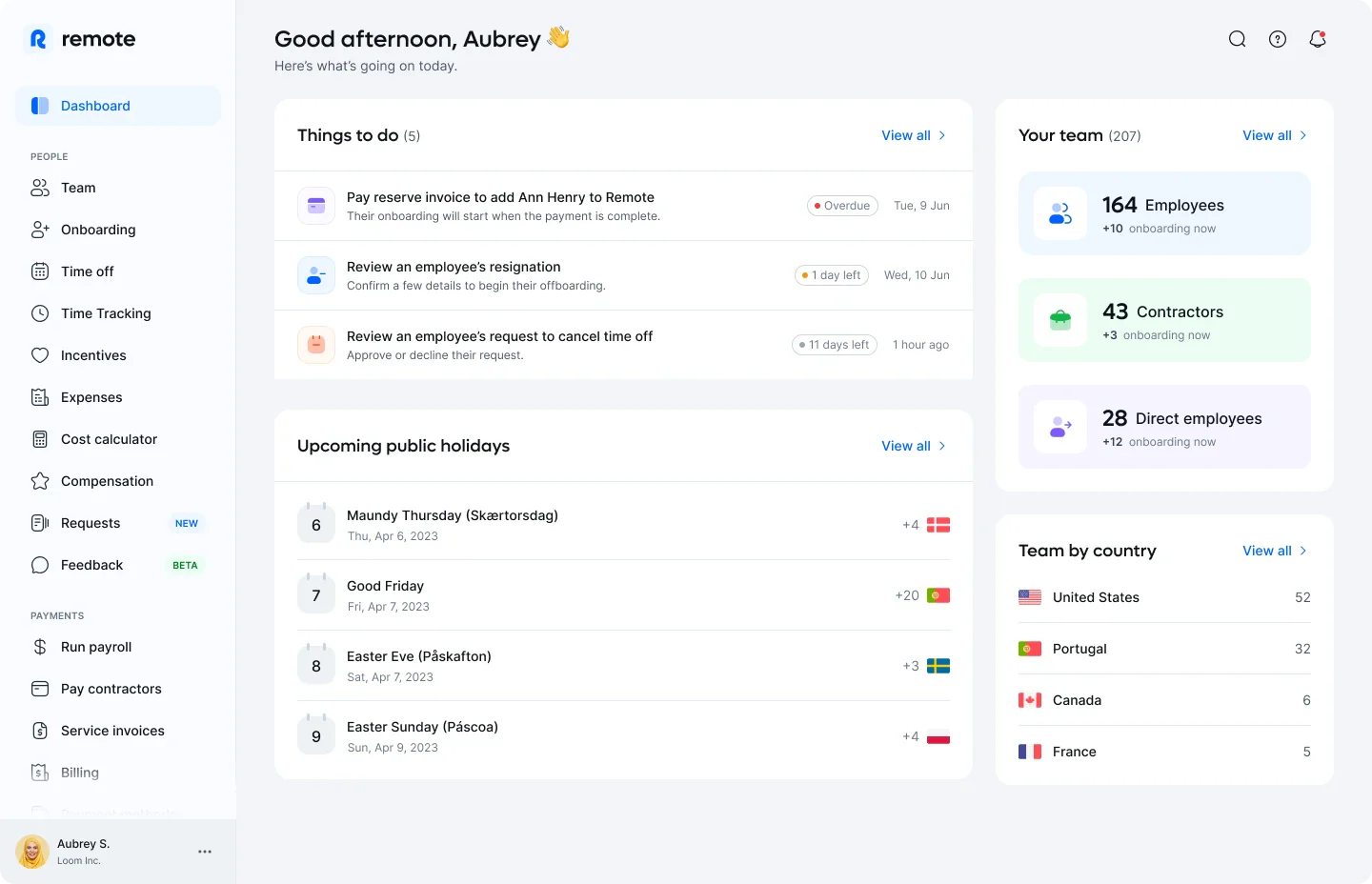
9. Remote
Remote helps businesses manage and pay full-time and contract workers globally. It handles payroll, benefits, taxes, stock options, and compliance in over 50 countries. With a flat-rate price and no hidden fees, it helps you manage costs easily.
Its all-in-one platform simplifies payroll. You can run payroll, automate expense tracking, and create reports in one place for better efficiency.
Key features:
All-in-one payroll and HR management for distributed teams and remote-first companies
Local tax and compliance handling with automatic legal updates
Compensation and benefits tracking across currencies, employment types, and regions
Integrated HR tasks including onboarding, offboarding, and document signing
Global employment support for contractors and full-time hire
Pros
Cons
Supports multi-country payroll with automated tax compliance
Enables contractor and full-time employee management in one platform
Provides localized compliance support for onboarding international hires
Lacks native integration with Philippine government agencies
Does not offer features tailored to 13th-month pay or SSS
Limits in-app HR tools compared to broader HRIS platforms
Ideal user: Remote is perfect for growing businesses looking to streamline their payroll processes and transition to a reliable payroll management software solution.
Pricing: Starts at $299 (₱17,515.42)/employee/month.
10. GreatDay HR
GreatDay HR is a payroll system that helps businesses manage salaries easily and accurately. It lets payroll officers add custom salary components like bonuses, taxes, and deductions to fit company and employee needs.
For companies with different pay schedules, like in construction, it supports custom payroll periods such as weekly or bi-weekly. Employees can securely view their e-payslips anytime through their phones, protected by personal passwords.
Key features:
Automated payroll processing that calculates salaries, deductions, and contributions
Built-in tax and compliance tools to meet BIR, SSS, PhilHealth, and Pag-IBIG requirements
Secure payroll disbursement via direct bank integration or e-wallet transfer
Customizable payroll reports with analytics for cost tracking and payroll summaries
Pros
Cons
User-friendly interface
Comes with comprehensive features
Integrates attendance, leave, and payroll in one system
Integration limitations
Limited customization
Less responsive customer service
Ideal user: GreatDayHR is a good fit for companies seeking an all-in-one payroll management system.
Pricing: ₱70/employee/month for HRIS and payroll.
11. Deel
Deel is a global payroll management software that allows businesses to hire, pay, and manage employees in the Philippines without setting up a local entity. Moreover, it simplifies payroll, taxes, and HR compliance, so companies can easily navigate local regulations.
In addition, Deel automates tax documents, payroll, and benefits, and supports full payroll operations for companies with direct employees in the Philippines. It’s also good for BPOs whose scope of work is managing outsourcing payroll from other companies.
Key features:
Payroll management
Integrated HR tasks and payroll processes
Tax management
Compensation management
Multi-country support
Pros
Cons
Handles global payroll with automated compliance in 150+ countries
Provides localized contracts and tax handling for remote teams
Offers contractor invoicing and salary disbursement in multiple currencies
Complexity for users
Cost may be higher compared to local solutions
Does not support Philippine-specific payroll processing by default
Ideal user: Deel’s payroll system is ideal for businesses in the Philippines that value the flexibility of hiring global talent and are looking for an all-encompassing platform that addresses payroll, compliance, and payments across borders.
Pricing: Available upon request
12. FreshBooks
FreshBooks Payroll is primarily designed for U.S.-based businesses and does not offer direct payroll services for the Philippines.
However, Filipino businesses can still use FreshBooks for core accounting functions like invoicing, expense tracking, and financial reporting while integrating with third-party payroll solutions that handle local compliance, taxes, and employee benefits.
Key features:
Expense tracking
Invoicing and payment processing
Employee time tracking
Financial reporting
Pros
Cons
Mobile Accessibility
User-friendly interface
Flexible integration
Limited payroll features
Need third-party payroll services
Cost might increase
Ideal user: FreshBooks’ payroll software is ideal for businesses looking for flexibility in choosing their payroll provider while keeping their financial management integrated within one platform.
Rippling is a payroll software that can run the entire payment process in minutes. Users can compare pay runs, track changes in gross pay and deductions, and approve with confidence. Custom pay types, such as bonuses and tips, can be set up on a recurring or one-time basis.
Rippling syncs payroll with benefits, expenses, and time tracking as a unified system. Approved hours, reimbursements, and deductions are updated in real time. It also integrates with accounting software like Xero, QuickBooks, and NetSuite.
Key features:
Automated salary calculations, tax withholdings, and filings
Time and Attendance Tracking
Benefits administration
Customizable Workflows
Employee Onboarding
Pros
Cons
Combines payroll, IT, and HR in a single unified platform
Automates global compliance and document management
Offers modular tools for employee onboarding and benefits
Steep learning curve
Requires workarounds for 13th-month pay and BIR filings
Not suitable for medium to large-scale businesses
Ideal user: Rippling employee payroll system is particularly beneficial for companies in the tech, consulting, and creative industries that operate globally and need to scale their workforce quickly and compliantly across borders.
Pricing: Available upon request
14. Papaya Global
Papaya Global is a cloud-based payroll system that manages global payroll, contractor payments, and vendor transactions with guaranteed landing dates. Its cross-border payment platform supports worker payouts worldwide while following local laws.
Through their Professional Employer Organization (PEO) services, businesses can hire and pay employees in the Philippines without establishing a local entity.
Key features:
Global payroll management
Benefits administration
Employer of Record (EOR) Services
Contractor payments
Real-time reporting and analytics
Pros
Cons
Manages international payroll across 160+ countries
Offers automated tax compliance and contractor classification
Integrates with third-party ERP and HR platforms
Complexity for users
High implementation cost
Customization limitations
Ideal user: Papaya Global is ideal for companies with a globally distributed workforce, such as multinational corporations, businesses hiring remote workers, or those with international contractors.
Keka is a comprehensive HR and payroll software designed to streamline employee management for businesses of all sizes. The platform offers a range of features, including automated payroll processing, time and attendance tracking, and employee self-service portals.
Keka connects with Xero, QuickBooks, and other tools as a fully integrated platform. Designed for teams of 30 to 500 employees, Keka simplifies payroll and multiple organizations within a single platform.
Key features:
Automated payroll processing
Employee self-service portal
Expense management
Reporting and analytics
Pros
Cons
User-friendly interface
Remote access and real-time updates
Integration capabilities
Regional focus
Complexity for users
High implementation cost
Ideal user: Keka is suitable for small to medium-sized enterprises (SMEs), particularly in India
Pricing: $139–$222/month for up to 100 employees.
16. QuickBooks
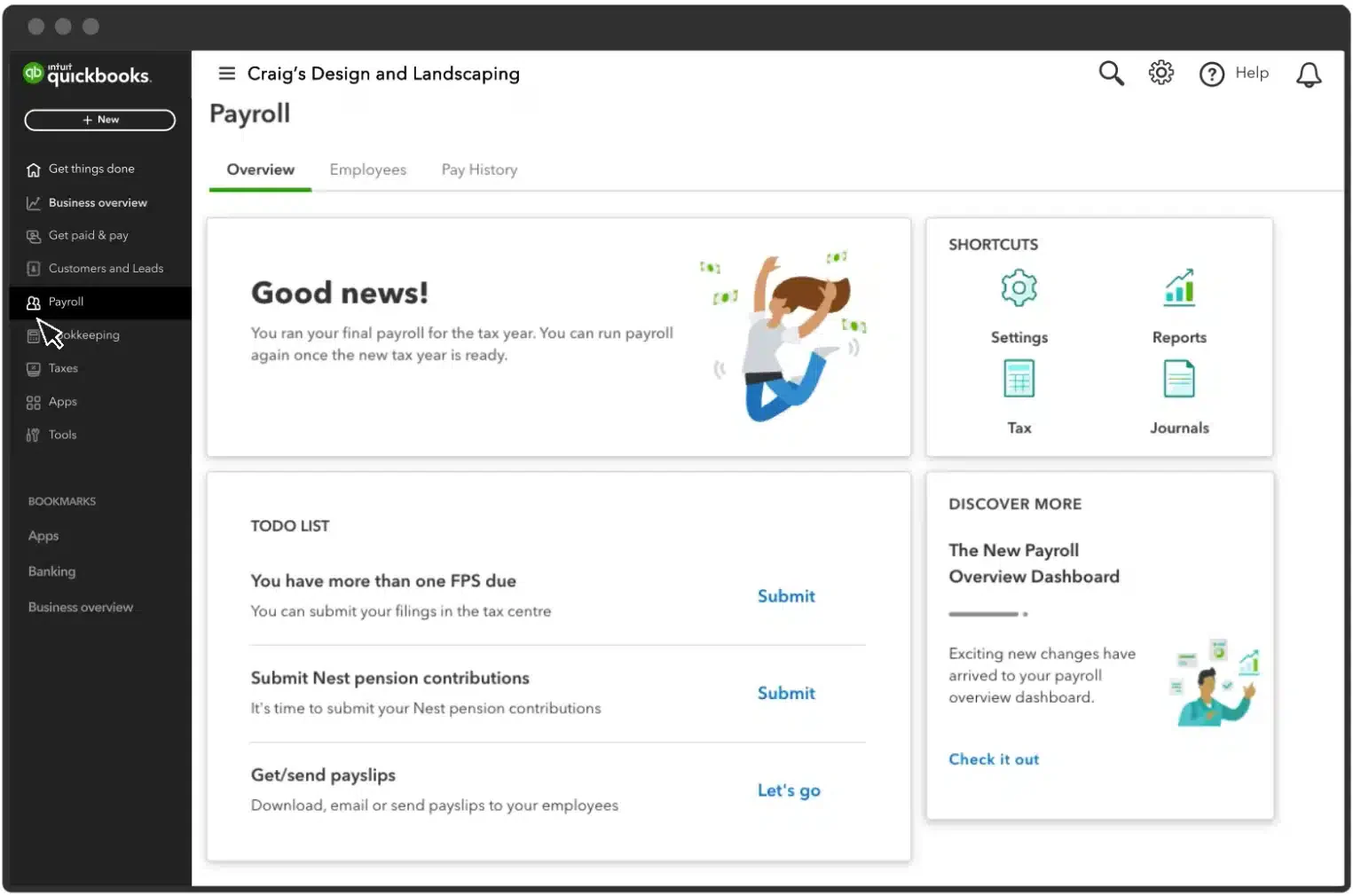
QuickBooks Payroll is an employee payroll system that can integrate with its accounting software. While QuickBooks Online is available in the Philippines, its integrated payroll services are primarily designed for U.S.-based businesses.
However, Filipino businesses can still utilize QuickBooks Online for comprehensive accounting needs and manage payroll through manual entries or by integrating third-party payroll solutions compatible with QuickBooks.
Key features:
Payroll management
Tax calculations
Benefits management
Employee self-service portal
Pros
Cons
Includes basic payroll processing for small businesses
Automatically calculates taxes and generates payslips
Syncs payroll data directly into accounting workflows
Lacks Philippine payroll support and statutory contribution features
Does not provide tools for BIR or government form generation
Requires third-party solutions to handle local compliance
Ideal user: QuickBooks Online Payroll is designed for small to midsize businesses, including accountants, financial professionals, hospitality services, construction firms, and trucking companies.
Pricing: ₱1,116–₱2,349/month
17. Allsec
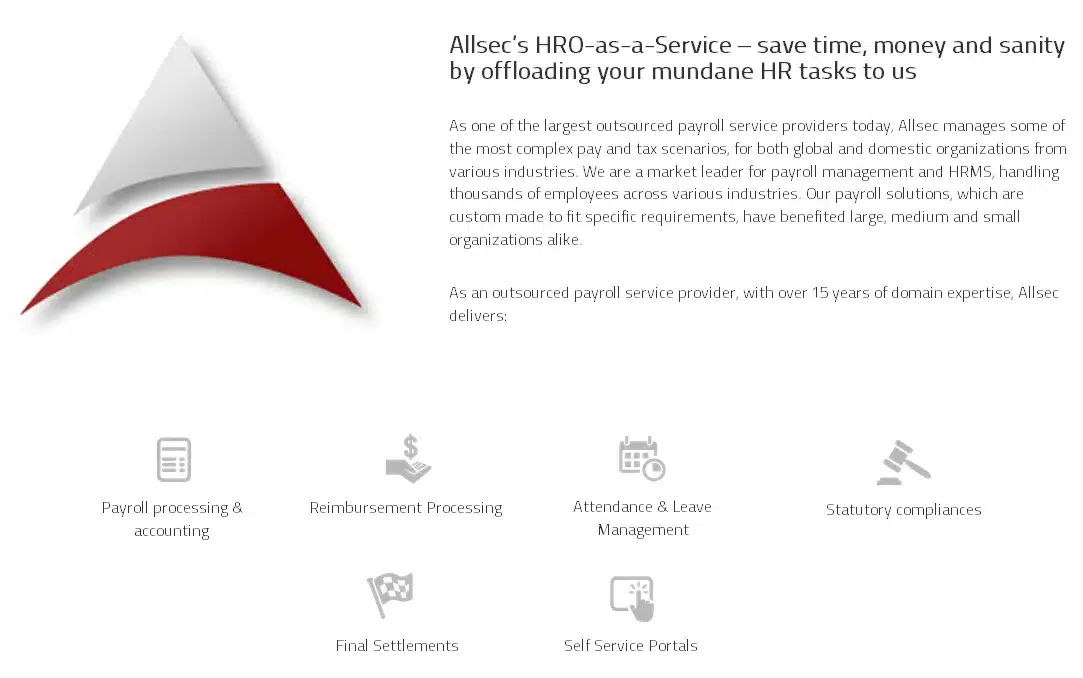
Allsec is a payroll system Philippines to simplify payroll and HR processes for businesses of all sizes. It features an extensive Employee Self-Service (ESS) portal, offering a low-touch, adaptive, and scalable platform suitable for various team sizes and worker profiles.
The system also integrates advanced technologies such as chatbots, Optical Character Recognition (OCR), Artificial Intelligence (AI), and Enterprise Resource Planning (ERP) interfaces.
Key features:
Automated payroll processing
Employee self-service portal
Benefits administration
Reporting and analytics
Pros
Cons
Comprehensive features
Compliance with the local regulations
Includes secure employee self-service portals with payslip access
High learning curve
Does not offer native integrations with local HRIS platforms in the Philippines
Limits real-time reporting and dashboard customization
Ideal user: Allsec HR Payroll suits medium to large businesses with complex, multi-country payroll and compliance needs.
Pricing: Available upon request
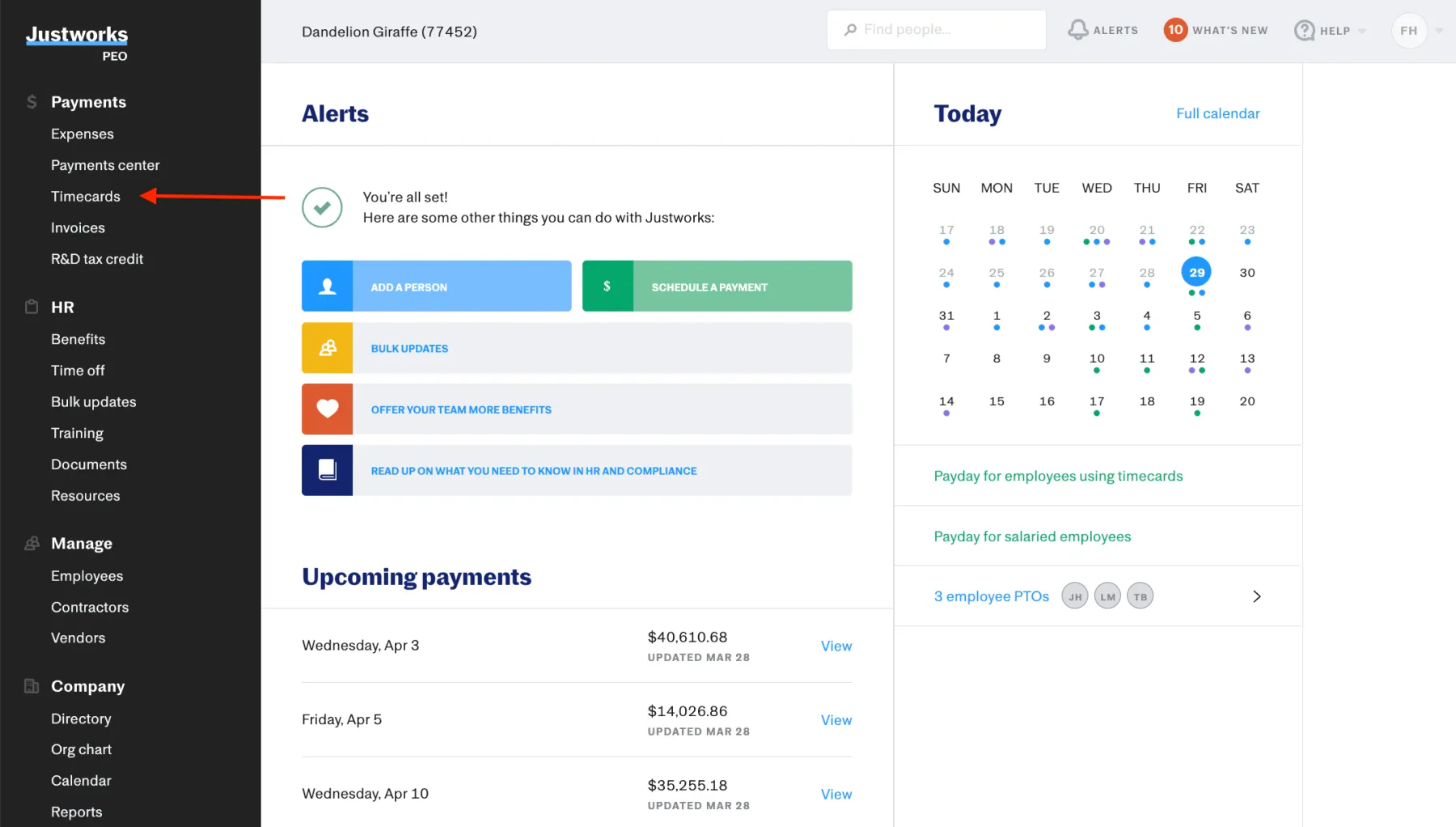
18. Justworks
Justworks EOR is a global Employer of Record (EOR) solution that simplifies payroll, compliance, and HR operations for businesses hiring employees in the Philippines.
This software helps companies manage end-to-end payroll in the Philippines by handling statutory deductions, payroll taxes, and employment contracts. It also supports businesses through onboarding to offboarding.
Key features:
End-to-end payroll management
Full support for 13th-month pay requirements
Handles onboarding, offboarding, and ongoing HR support
Assistance with payroll tax navigation
Local compliance with Philippine pay cycles and tax year
Pros
Cons
Ideal for companies hiring remotely or expanding globally
Saves time and reduces legal risks for international employers
Pricing and service scope may vary
Limited flexibility for businesses wanting direct control over local HR systems
Not a full-suite payroll software
Ideal user: Justwork is ideal for Global businesses looking to hire employees in the Philippines.
Pricing: Contact Justworks for a quote.
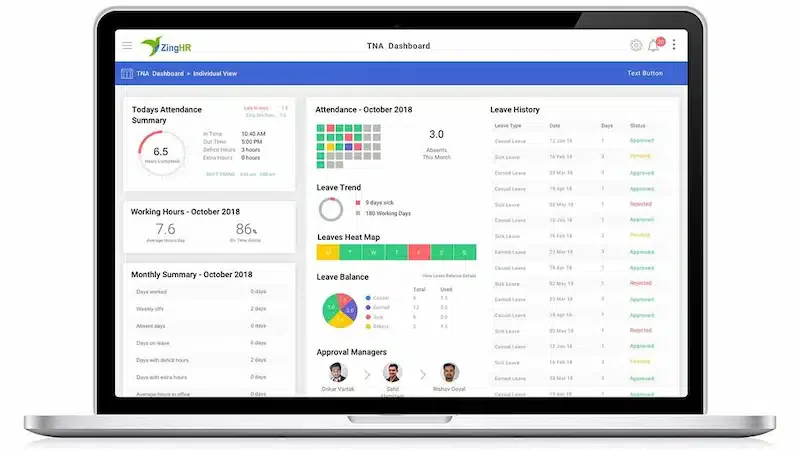
19. ZingHR
ZingHR’s cloud-based payroll software lets businesses outsource payroll processing so they can focus on growth. The platform integrates HR operations, payroll, benefits, and compliance with laws.
With Zero Touch Payroll, businesses can automate weekly, daily, or hourly salary payments. The system also offers real-time payroll data access and automated tax filing. It offers full data security and complies with local laws.
Key features:
Automated payroll processing
Compliance management
Time and attendance management
Analytics and reporting
Pros
Cons
Offers payroll automation with built-in statutory compliance for APAC regions
Supports mobile-based employee self-service features
Provides integrated workflows for attendance, leave, and payroll
Lacks direct support for BIR form generation and PH-specific deductions
Offers limited customization for Philippine labor rules
Requires additional setup for multi-payroll cycles and approvals
Ideal user: ZingHR is ideal for businesses that need payroll management and HR tools like talent management and implementation evaluation.
Pricing: Starts at $5.50 per employee per month and a customized quote.
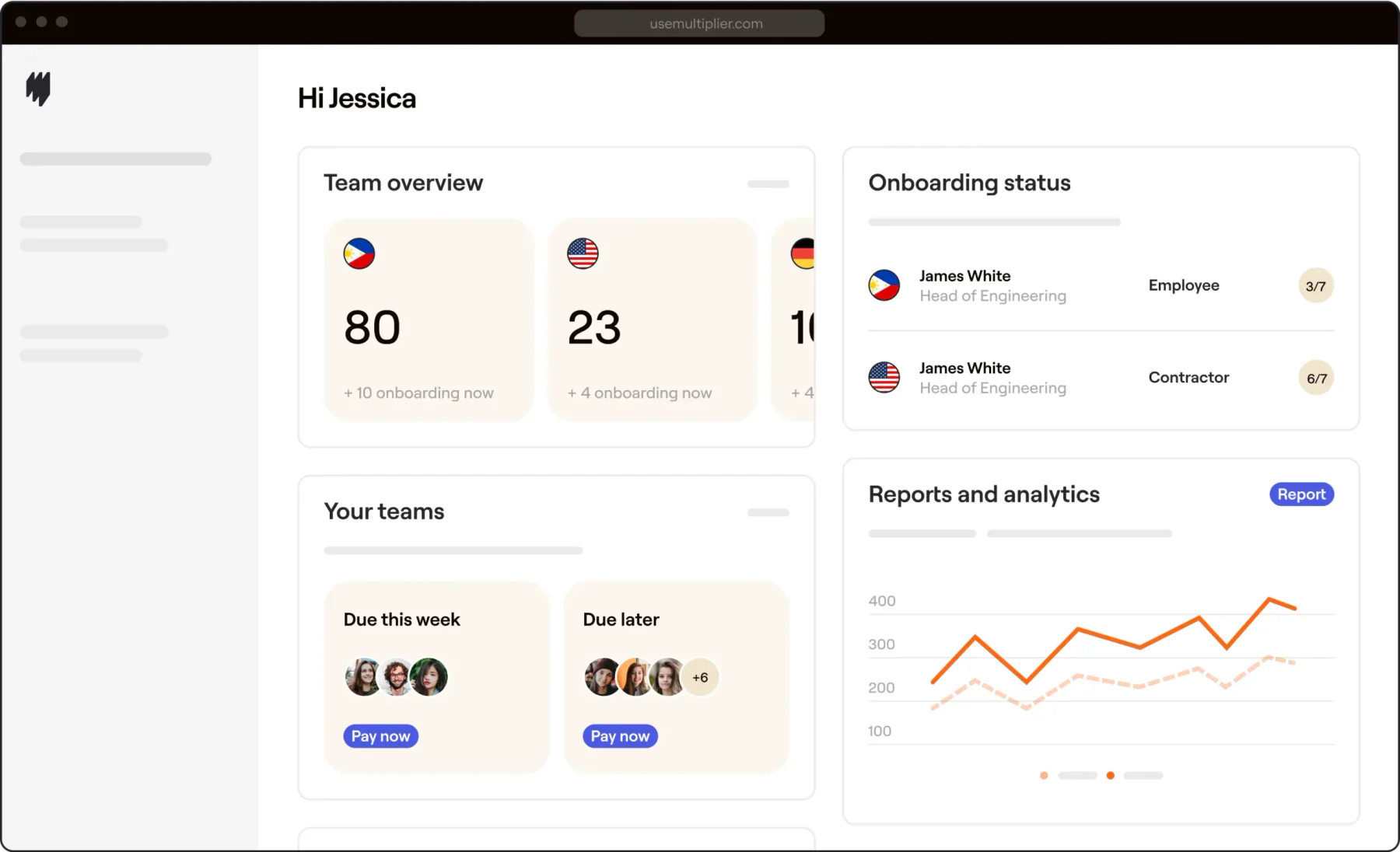
20. Multiplier
Multiplier is a global PEO and payroll solution that helps businesses onboard, pay, and manage international employees with full compliance and localized benefits.
It simplifies international hiring and workforce management by combining payroll, onboarding, benefits, and compliance into one centralized platform.
Key features:
Simplified leave, expense, and activity tracking
Global IT and equipment provisioning
In-house legal and tax experts
24/7 multilingual customer support
Pros
Cons
Fast, compliant hiring in new markets without entity setup
One-stop HR platform with scalable PEO and payroll support
Primarily built for PEO/EOR use cases, not for businesses managing local entities
Limited customization for companies with complex internal HR structures
Pricing is custom-based and not publicly listed
Ideal user: Multiplier is ideal for Fast-growing companies looking to hire and manage international teams quickly, without dealing with the legal, tax, and payroll complexities of setting up local entities.
Pricing: Starting from $40 per month (freelance) and $400 (full-time)
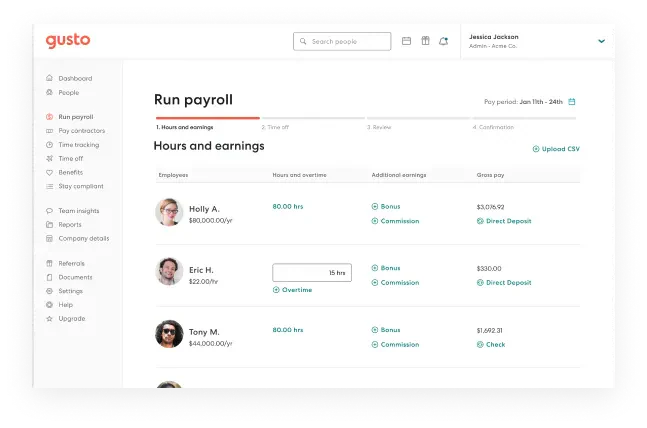
21. Gusto
Gusto is a cloud-based HR system that automates payroll and integrates with benefits like health insurance and pensions. This way, businesses can manage everything in one place.
However, Gusto mainly serves U.S. businesses and doesn’t offer complete payroll services in the Philippines. Still, it helps U.S. companies hire and pay international workers, including those in the Philippines.
Key features:
Tax Filing and Compliance
Employee Self-Service
Payroll Reports and Analytics
Pros
Cons
Streamlines payroll with automated tax filing and employee benefits tools
Provides onboarding, document management, and contractor payments
Includes detailed employee profiles and built-in time tracking
Relatively high implementation costs
Limitations on customization
Does not support Philippine payroll compliance or government filings
Ideal user: Gusto online payroll is well-suited for businesses in the Philippines seeking a payroll solution that is compliant with local regulations and easy to use.
Pricing: $35–$180/month + $6–$22/person.
22. Breathe
Breathe is a modern HR and payroll system Philippines designed to simplify and streamline people management for small businesses. With its user-friendly interface and cloud-based platform, Breathe helps businesses manage key HR tasks, including employee records, payroll, Performance, and leave management.
Key features:
Commitment-free plans
Dedicated service and support
Payroll Entry
Tax Calculation
Pros
Cons
Payroll, leave, and document management in one platform
Enables clear employee recordkeeping and reporting for small teams
Offers user-friendly dashboards and role-based access
Does not support Philippine-specific payroll requirements or statutory deductions
Lacks automation for local tax or contribution calculations
Requires third-party tools for payroll disbursement and compliance
Ideal user: Breathe is suitable for small and medium businesses looking to simplify processes and enhance efficiency in their payroll system.
Pricing: £18–£500/month based on company size, with £10 add-ons.
The Function of Payroll Software
Payroll software plays a critical role in ensuring that every payroll process runs accurately, consistently, and in full compliance with regulations. To understand its full value, it’s important to look at how its core functions operate within an integrated system.
Recordkeeping: Keeps employee payroll and tax data securely organized and easily accessible for every pay period.
Payment processing: Distributes wages via direct deposit or check, ensuring timely, accurate payouts.
Tax management: Applies required tax calculations, withholdings, and submissions in accordance with the latest regulations.
Compliance: Supports adherence to labor and tax laws by automating updates and compliance checks.
Wage and deduction calculation: Computes net pay by factoring in hours worked, salaries, benefits, and all necessary deductions.
Reporting: Provides comprehensive payroll, tax, and HR-related reports to support financial oversight and decision-making.
What are the Benefits of Using Payroll Software?
Here are the key benefits of using the best payroll software in the Philippines to enhance your payroll management:
Improve efficiency and accuracy: Saves time and effort by automating payroll, reducing errors, and ensuring timely, accurate employee payments.
Regulatory compliance: Keeps up to date with tax laws and regulations, reducing the risk of penalties for non-compliance.
Data safety: It offers secure storage and handling of sensitive employee financial information.
Cost-control: This lowers payroll processing costs by reducing the need for a large payroll department.
Payroll Transparency: Often includes employee portals that let workers view their pay slips and tax information and request time off, enhancing transparency and communication.
Payroll system software is valuable for businesses seeking to optimize payroll processes, improve accuracy, ensure compliance, and deliver a better employee experience.
How to Choose the Best Payroll Software Philippines?
Choosing the best payroll system in the Philippines is crucial. Compliance with local tax laws, government mandates, and employee benefits is complex and vital for business operations.
Here’s how Filipino enterprises can select the Best Payroll Software Philippines for their needs:
1. Compliance with local regulations
The software must comply with payroll Philippines tax laws and regulations. It should also automatically update in response to changes in legislation to maintain compliance.
2. Scalability and flexibility
Look for the best payroll software Philippines that can scale with your business growth. Enterprises need the ability to handle a large and diverse employee base, multiple pay structures, and various employment types.
3. Integration capabilities
Choose software that integrates seamlessly with your existing HRIS system, ERP system, and other business tools. Integration ensures data consistency, reduces manual data entry, and streamlines business processes.
4. Ease of use
Prioritize software that’s easy for both HR and employees to use. Look for intuitive dashboards and self-service features that let employees access payslips, tax info, and attendance records on their own. Deloitte research found up to 40% fewer payroll inquiries after adopting self-service tools.
5. Data security and privacy
Choose a provider that takes data protection seriously. Payroll data includes sensitive information, so your software must offer strong security features like encryption, role-based access, and multi-factor authentication. Ask vendors about their compliance with data privacy laws in the Philippines.
6. Mobile access
With 83.8% of the Philippine population using the internet as of early 2025, mobile-friendly payroll systems have become essential. Mobile apps let employees access payroll anytime, while HR can manage tasks remotely. This ensures faster responses for field workers.
7. Support and training
Don’t overlook post-purchase support. Choose a vendor that provides clear onboarding, responsive customer service, and training materials. This ensures your team can use the system effectively and resolve issues quickly, especially during payroll cutoffs.
By following these key factors, you can narrow down your options and select the best payroll system Philippines that supports your business’s specific needs and long-term goals.
Risks of Having An Outdated Payroll Software
Relying on manual or outdated payroll systems might seem cost-effective at first, but the long-term risks can heavily outweigh the savings. Here’s how an older system can impact your compliance, productivity, and visibility:
Risk Area
Impact of Outdated Payroll Software
Tip
Compliance Risks
Frequent updates to Philippine labor and tax laws, including rules for SSS, PhilHealth, and Pag-IBIG, require constant payroll adjustments. Outdated systems often fail to keep up, which can increase the risk of penalties during BIR audits.
Cloud-based payroll software like HashMicro updates payroll rules automatically to help maintain compliance.
Productivity Losses
Manual payroll processing takes more time and increases the chance of errors in deductions, benefits, and calculations. As a result, HR teams may spend days fixing payroll issues instead of focusing on higher-value work.
Automation speeds up payroll processing, reduces errors, and helps generate BIR forms more efficiently.
Lack of Integration
Older payroll tools often operate separately from other HR systems, which limits visibility and creates delays, missed discrepancies, and more manual work.
Advanced systems like HashMicro integrate payroll with attendance, leave, and recruitment to improve real-time accuracy.
Payroll Challenges Under Compressed Work Week & How Software Solves Them
A compressed work week can give employees more flexibility, but it also makes payroll more difficult to manage. Different work hours, schedules, and pay rules can increase the risk of errors, especially when payroll is handled manually. Payroll software helps businesses process payroll more accurately and manage these changes with less effort.
Challenge
How Software Helps
Automatic Overtime Calculation
Calculates overtime automatically based on attendance and shift rules.
Night Differential Tracking
Tracks eligible night hours and applies the correct premium rate.
Multi Schedule Payroll for WFH vs On Site Employees
Handles different schedules and attendance records in one system.
Payslip Generation for Different Schedules
Creates payslips automatically based on each employee’s payroll details.
Conclusion
Selecting the best payroll software is a critical decision for enterprises in the Philippines. With the vast array of options available, it is essential to carefully assess each software’s features against your business to find the perfect match.
HashMicro is one of the best payroll system software available to Philippine enterprises. Its comprehensive features, scalability, and user-friendly interface make it a choice for businesses looking to streamline payroll processes efficiently.
Witness firsthand how HashMicro can streamline payroll processes and support your business’s growth. Don’t miss this opportunity to elevate your payroll system—try the free demo now!
FAQ About Payroll Software
What is payroll software?
Payroll software is a digital tool that automates salary calculations, deductions, taxes, benefits, and payslip generation to help businesses process payroll more accurately.
What is HR and payroll system?
Human resources primarily focuses on managing employee relations, while payroll handles employees’ financial compensation and the payment process. Although these departments have separate roles, they share overlapping responsibilities.
How does the payroll system work in the Philippines?
In the Philippines, payroll usually runs twice a month, with wages paid at intervals not exceeding 16 days. Employers must also comply with tax, contribution, and 13th-month pay requirements.
What are the payroll rules in the Philippines?
Employers must pay employees at least twice a month and comply with BIR, SSS, PhilHealth, and Pag-IBIG requirements. They must also provide 13th-month pay to qualified employees.
Can payroll software handle a compressed work week?
Yes, payroll software can help manage compressed work week schedules by automating overtime calculation, tracking night differential, handling WFH and on-site payroll, and generating payslips for different schedules.
What is the best payroll system in the Philippines?
For SMEs wanting a locally built cloud payroll, Sprout Solutions is the leading local option. For businesses on a tighter budget or needing on-premise deployment, JeonSoft is a practical alternative. For mid-to-large Philippine businesses needing full ERP integration, HashMicro is a strong all-in-one choice. The right choice depends on your team size, budget, compliance requirements, and whether you need integration with existing HR or accounting systems.
Katrina Mendoza is an HRM specialist with experience managing people operations, HR compliance, and workforce data across growing organizations in the Philippines. Her work focuses on structuring HR processes that support operational consistency, regulatory compliance, and informed people decisions.
With years of experience in HR operations and system implementation, I specialize in integrating technology with human capital strategies. My work focuses on helping businesses build efficient, compliant, and people-centered HR processes through smart digital solutions.
HashMicro follows strict editorial standards and uses primary sources such as regulations, industry guidance, and trusted publications to keep content accurate and relevant.