









Did you know that adopting lean manufacturing can significantly enhance the efficiency of your production operations? This approach helps businesses minimize waste, optimize resources, and improve product quality.
Neglecting lean practices may lead to inefficiencies, higher expenses, and missed growth opportunities. Tools like HashMicro’s Manufacturing Software support lean workflows through better planning, real-time monitoring, and inventory control. These features help manufacturers reduce waste and boost productivity.
In this article, you’ll learn how lean manufacturing works and how digital solutions strengthen operational performance to palaguin ang iyong negosyong pagmamanupaktura sa Pilipinas. You can also request a free demo to explore how these tools support continuous improvement in your production processes.

Key Takeaways
Lean manufacturing is a production method that boosts efficiency by eliminating waste and focusing only on activities that add customer value.
Implementing lean manufacturing has various benefits, such as enhancing product quality, saving time, optimizing inventory, and lowering overall expenses.
HashMicro’s Manufacturing Software supports lean principles by automating workflows, centralizing data, and providing real-time insights. It helps businesses reduce waste, improve productivity, and streamline operations efficiently.
What is Lean Manufacturing?
Lean manufacturing is a production approach that maximizes customer value while minimizing waste. It promotes ongoing improvements and operational efficiency by using specific tools and strategies to streamline workflows and eliminate unnecessary activities throughout the production cycle.
This methodology’s core is identifying what truly adds value and mapping the movement of materials through the production process. By removing inefficiencies such as overproduction, surplus inventory, and redundant processing, lean manufacturing helps businesses operate more effectively and sustainably.
5 Principles of Lean Manufacturing
After we discuss the definition of lean manufacturing, you should also know about lean manufacturing principles. Here are five principles that are applied to optimize a lean manufacturing system:
1. Identify and create customer value
The customer’s perspective defines value and reflects what they are willing to pay for a product or service. Manufacturers or service providers must focus on delivering that value efficiently by minimizing unnecessary costs and waste, ensuring a fair price for the customer while securing profit margins.
2. Value stream mapping
This step involves reviewing the entire process, from raw materials to end-of-life disposal, to identify and remove non-value-adding activities, using the Bill of Materials to help detect inefficiencies at every phase.
In today’s manufacturing landscape, where multiple professionals contribute across various stages, aligning all functions within the chain is crucial for improvement.
3. Create a flow
This principle emphasizes the need for a smooth, uninterrupted process. Reducing bottlenecks and removing barriers across departments helps minimize delays, enhancing speed and efficiency across production or service delivery.
4. Establish a pull system
Unlike push systems that rely on forecasts, a pull system begins production based on actual demand. It helps reduce overproduction, storage issues, and mismatched inventory levels. By responding only when needed, teams stay flexible and reduce waste, progressing step-by-step based on real-time needs.
5. Pursuit of perfection
This principle encourages continuous improvement at every level of the organization. Companies can systematically refine operations by regularly reviewing cycle times, throughput, and flow efficiency performance metrics.
A strong culture of ongoing development empowers all employees to contribute to long-term excellence and value creation.
Benefits of Lean Manufacturing
Minimizing waste is a fundamental aspect of lean project management, though the perceived benefits of lean manufacturing may vary. For some, the main goal is boosting profitability, while others focus on creating greater customer value and enhancing satisfaction.
Here are the benefits of lean manufacturing with their explanation:
- Enhancing product quality: Companies must adapt to evolving customer expectations, designing processes that consistently meet or exceed those demands. Total quality management helps place quality at the forefront.
- Optimizing inventory: Lean practices like just-in-time reduce surplus stock, reduce storage expenses, and avoid production slowdowns.
- Ongoing process refinement: Lean manufacturing emphasizes continuous improvement, often using value stream mapping to pinpoint inefficiencies and enhance workflow.
- Eliminating inefficiencies: Wasteful practices add cost and complexity without contributing value. By removing these, lean systems can deliver superior products at reduced costs.
- Saving time: In manufacturing, every minute counts. Reducing delays from project start to finish boosts productivity and adds value through greater efficiency.
- Lowering overall expenses: Avoiding wasteful use of time, resources, and labour directly reduces operational costs. Controlling overproduction also limits unnecessary warehousing fees.
What is Waste in Lean Manufacturing?

In lean manufacturing, waste refers to any action or process that uses time, materials, or labour without contributing value from the customer’s perspective. Lean methodology focuses on recognizing and eliminating these non-value-adding activities.
Waste in lean manufacturing can lower expenses and improve your company’s product or service quality. Its principle centres on eliminating unnecessary manufacturing processes and efforts that hinder productivity.
Types of Waste in Lean Manufacturing
Waste in lean management is not easy to manage. For lean project management to deliver real results, all manufacturing waste categories must be thoroughly recognized and systematically removed.
Taiichi Ohno, former chief engineer at Toyota, identified seven key types of waste within the Toyota Production System:
- Transportation inefficiencies involve the unnecessary movement of materials, tools, or people, which can be minimized through better facility layout planning.
- Surplus inventory can mask quality issues and slow production, making it harder to maintain flow and responsiveness.
- Excessive motion, whether by workers or equipment, can result in energy and time loss, which can be reduced using motion optimization techniques.
- Waiting occurs when operations stall due to delays in receiving materials or when machinery is out of service, causing downtime.
- Producing more than needed causes waste in storage, time, and resources, which just-in-time methods aim to eliminate.
- Unnecessary processing includes adding extra features with no customer value, creating inefficiencies.
- Product defects lead to rework, added expenses, and harm customer trust and satisfaction.
How to Implement a Lean Manufacturing System
After exploring the core benefits, principles, and wastes associated with lean manufacturing, the next step is to examine how to implement the system within your operations.
- Map the value stream
A crucial step in adopting lean manufacturing is fully understanding the flow of value throughout the production process. It involves creating a value stream map outlining each product delivery step, from raw materials to final output.
The goal is to distinguish between value-adding and non-value-adding activities. For example, a beverage company may discover through value stream mapping that there are long wait times between bottling and labeling.
- Establish a pull system
When shifting to lean production, stop producing items unless there is customer demand. It helps avoid overproduction and reduces excess inventory.
- Identify waste in your manufacturing facility
Walk through your production floor to detect inefficiencies such as unnecessary movement of materials, people, or equipment. Then, based on these observations, reorganize the layout to optimize flow.
- Apply the 5S
Implement the 5S (sort, set in order, shine, standardize, and sustain) methodology to set clear procedures for maintaining a clean, organized, and efficient workplace.
- Implement alert and error prevention mechanisms
Equip your facility with visual alert systems so operators can signal issues quickly. Use systems or devices to avoid errors and improve quality control.
- Provide total productive maintenance training
Train employees to identify early signs of equipment issues to perform preventive maintenance, reducing downtime and keeping operations running smoothly.
Choosing the right system to implement lean manufacturing is essential for achieving long-term efficiency and growth. HashMicro’s Manufacturing Software offers robust automation tools that help streamline production processes, reduce waste, and maintain continuous improvement.
Click the banner below to explore HashMicro’s features and pricing and see how it can simplify your lean manufacturing journey while boosting productivity across your operations.

Improve Your Lean Manufacturing with HashMicro’s Manufacturing Software
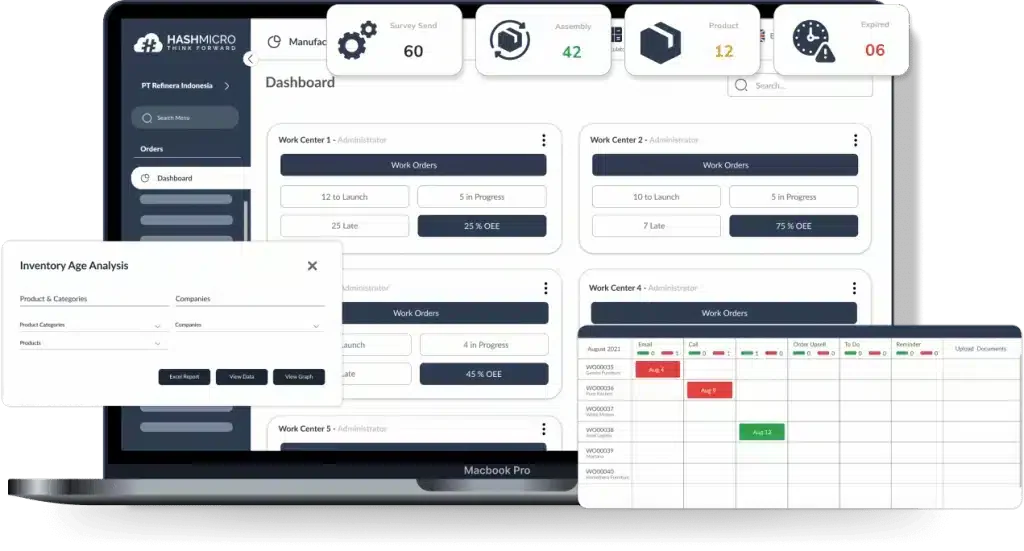
HashMicro’s Manufacturing Software is a powerful web-based solution that supports lean production strategies in the Philippines. It streamlines operations across the entire production line and seamlessly integrates with technologies like barcode scanners, RFID, and weighing devices.
Highly adaptable and fully customizable, this system integrates with the ERP system and core business modules such as inventory, finance, and sales. It is well-suited for various sectors, including automotive, electronics, pharmaceuticals, and food processing.
To help manufacturers begin their lean journey, HashMicro offers a free demo with no obligations. You can consult industry experts to find tailored solutions that match your business needs.
Here are the key features of HashMicro’s Manufacturing Software:
- Real-time shop floor data input: Through kiosk mode, operators can log progress and track productivity on-site, enabling instant visibility into production activities.
- Demand-driven planning: The system leverages past sales and market patterns to optimize production schedules and prevent overproduction.
- Structured Bill of Materials (BoM): Defines precise material requirements and simulations to support standardized and waste-minimized production.
- In-line quality checks: Quality assurance can be implemented at key production stages to catch defects early and reduce rework.
- Intelligent production scheduling: Automatically balances workload, machine availability, and labour capacity to eliminate delays and idle time.
- IoT connectivity: Real-time machine monitoring and predictive maintenance become possible by connecting production equipment to the internet.
- Subcontractor coordination: Ensures outsourced tasks are tracked, evaluated, and aligned with internal standards.
- Cost visibility monitors the use of materials, labour, and overhead in real time, helping teams identify and cut unnecessary expenses.
Conclusion
Adopting lean manufacturing practices has become more efficient with HashMicro’s Manufacturing Software. It helps businesses minimize waste and enhance productivity by automating production workflows, centralizing data management, and offering real-time visibility into operations.
This solution is essential for companies aiming to apply lean principles effectively. With automated production tracking, integrated quality control, and real-time performance monitoring, manufacturers can reduce inefficiencies, eliminate bottlenecks, and improve process consistency.
With HashMicro’s Manufacturing Software, your business can streamline operations, boost agility, and maintain a culture of continuous improvement. See how lean manufacturing can transform your production—book a free demo today!
Frequently Asked Questions
FAQ
Lean is a way of creating needed value with fewer resources and less waste. Lean consists of continuous experimentation to achieve perfect value with zero waste. Lean thinking and practice occur together. Lean thinking always starts with the customer.
The four pillars of Lean are Leader Standard Work, Process Discipline, Daily Accountability, and Visual Management.
Lean manufacturing identifies eight types of waste (defects, overproduction, waiting, non-utilized talent, transportation, inventory, motion, and extra processing) that reduce efficiency.