











Food packaging technologies is driving rapid innovation across the industry as brands respond to shifting consumer preferences and growing demand for packaged foods. Did you know that the global food packaging market is projected to reach $411.3 billion by 2026?
To remain competitive amid rising demand, businesses must adopt smarter technologies. HashMicro’s Manufacturing Software helps improve packaging operations through Production Scheduling, Quality Control, Production Simulation, and Cost Management, boosting both efficiency and profitability.
In this article, we will explore the latest trends in food packaging and discuss how innovative solutions, like food packaging production software, can support businesses in meeting evolving consumer demands. Book a free demo to see how it works, then keep reading to find the strategies shaping the industry in 2026

Key Takeaways
|
What is Food Packaging?
Food packaging refers to the process of enclosing food products to protect them from contamination, damage, and spoilage. It ensures that food stays fresh during transportation and storage, while maintaining its quality and safety for consumers.
Food packaging shares key details like ingredients, nutrition, and expiry dates to guide buying decisions. It also improves convenience and supports sustainability through modern innovations.
The food ERP packaging system also plays a critical marketing role. The design, colors, and overall appearance of packaging can attract attention, build brand identity, and influence purchasing decisions, making it a powerful tool for businesses in competitive markets.
What are the Benefits of Food Packaging?
Food packaging does more than simply contain a product. It plays a key role in protecting food quality, improving usability, strengthening brand value, and supporting sustainability goals.
- Protects food quality and safety
Food packaging shields products from moisture, bacteria, oxygen exposure, and physical impact, helping them stay safe and fresh until purchase. This protection also supports longer shelf life and helps reduce spoilage and food waste across the supply chain. - Improves convenience for customers and retailers
Smart packaging features like resealable closures, portion packs, and microwave-safe containers make products easier to store, handle, and consume. For retailers, well-designed packaging can also streamline stacking, stocking, and transport while keeping products presentable. - Strengthens branding and customer engagement
Attractive packaging design helps a product stand out on crowded shelves and creates a stronger first impression at the point of purchase. Interactive elements like QR codes can drive engagement by linking to recipes, product stories, or promotions that encourage repeat buying. - Supports sustainability and corporate responsibility
Using recyclable, biodegradable, or compostable materials helps businesses reduce environmental impact and align with sustainability commitments. It also appeals to eco-conscious consumers who increasingly value responsible packaging choices when deciding what to buy.
Why is Sustainable Food Packaging Important?
Sustainable food packaging plays a crucial role in minimizing the environmental impact of the food industry, which is responsible for a significant portion of global waste. By shifting to biodegradable, recyclable, or compostable materials, companies can reduce the amount of plastic and other non-degradable materials in landfills.
This transition not only helps in conserving natural resources but also reduces pollution, contributing to a healthier planet. Additionally, sustainable packaging often involves the use of fewer materials or more efficient designs, which can lead to reduced transportation costs and lower carbon emissions.
In the food industry, sustainability extends beyond packaging to include efficient waste management practices. For companies aiming to lead in both areas, integrating strategies for removing BOD from wastewater effectively is critical. These processes not only help maintain regulatory compliance but also support environmental goals by significantly minimizing ecological footprints.
What are the Trends in Food Packaging?
Food packaging is evolving quickly, driven by consumer demands for sustainability, transparency, and innovation. Here are the main trends shaping the industry:
- Sustainable packaging: Brands are adopting biodegradable and compostable materials to reduce environmental impact.
- Minimalist design: Clean, simple visuals not only attract consumers but also cut waste by using fewer materials.
- Interactive packaging: QR codes, AR features, and digital experiences enhance engagement and build stronger brand loyalty.
- Personalization: Customized designs, names, and messages give products an exclusive and memorable touch.
- Transparency: Clear ingredient lists, nutrition facts, allergen warnings, and certifications build trust and credibility.
- Eco-friendly solutions: Recyclable and reusable packaging options are becoming standard to minimize waste.
By embracing these trends, food packaging companies can stay ahead of evolving consumer expectations while promoting efficiency, engagement, and sustainability.
The table below provides a visual summary of the key trends in food packaging:
| Trend | Description |
|---|---|
| Sustainable Packaging | Environmentally friendly packaging solutions that reduce environmental impact. |
| Minimalist Design | Clean and simple packaging aesthetics with a focus on reducing waste. |
| Interactive Packaging | Packaging that engages consumers through technology and unique experiences. |
| Personalization | Customized packaging tailored to individual customers. |
| Transparency | Clear information about the product and its packaging. |
| Eco-friendly Solutions | Packaging alternatives that promote sustainability and reduce waste. |

How Food Packaging Evolves
As the food packaging industry evolves, innovative technologies are shaping the way products are packaged and preserved. This section explores some of the key innovations that are revolutionizing food packaging.
1. Edible Packaging
In response to the growing concern over plastic waste, edible packaging offers a sustainable alternative. Made from edible materials such as seaweed or starch, this type of packaging can be safely consumed along with the food it contains. Edible packaging reduces waste and provides a convenient and eco-friendly solution for consumers.
2. Active Packaging
Active packaging goes beyond simply containing the product. It interacts with the food to extend its shelf life or provide additional benefits. For example, active packaging can incorporate oxygen scavengers to remove excess oxygen and prevent spoilage, or antimicrobial agents to inhibit the growth of bacteria and extend freshness. This technology enhances product quality and safety.
3. Nanotechnology
Nanotechnology has revolutionized the packaging industry by enabling the development of smart packaging with enhanced properties. Nanomaterials can be used to create packaging that is stronger, lighter, and more durable. They can also be engineered to react to external stimuli, such as temperature or moisture, to ensure optimal product conditions. Nanotechnology opens up new possibilities for packaging design and functionality.
4. Biodegradable Packaging
Addressing the issue of plastic waste, biodegradable packaging solutions provide a more sustainable option. These materials break down naturally over time, reducing their impact on the environment. Biodegradable packaging can be made from plant-based materials, such as cornstarch or sugarcane, which are renewable resources. By using biodegradable packaging, companies can contribute to a greener future.
| Types of Packaging Technology | Key Features |
|---|---|
| Edible Packaging | Sustainable alternative Can be consumed along with food |
| Active Packaging | Interacts with the product Extends shelf life and freshness |
| Nanotechnology | Smart packaging with enhanced properties React to external stimuli |
| Biodegradable Packaging | Reduces plastic waste Made from renewable resources |


Regulations and Standards for Food Packaging
In the world of food packaging, adhering to regulations and standards is crucial to ensure the safety, quality, and compliance of products. Let’s take a closer look at the key regulations and standards that govern food packaging.
1. European Union (EU) Regulations
The European Union has established stringent regulations regarding food packaging. These regulations cover various aspects, including the materials used in food contact, labeling requirements, and overall safety standards. Compliance with EU regulations is essential for businesses that export or sell food products within the European market.
2. International Organization for Standardization (ISO) Standards
The International Organization for Standardization (ISO) has developed globally recognized standards for packaging materials and processes. These standards provide guidelines on aspects such as packaging design, materials testing, traceability, and environmental impact. Adhering to ISO standards ensures that packaging meets international benchmarks for quality and safety.
3. Good Manufacturing Practices (GMP)
Good Manufacturing Practices (GMP) are a set of guidelines that ensure consistent quality, safety, and hygiene in the production of packaging materials. GMP regulations encompass various aspects, including facility cleanliness, personnel training, equipment maintenance, and quality control processes. Following GMP guidelines is vital for maintaining the integrity and reliability of food packaging.
4. The Packaging and Labeling Act
The Packaging and Labeling Act is a legislation that sets forth requirements for packaging and labeling of products in various countries. This act typically specifies information that must be included on food packaging, such as product name, ingredients, nutritional information, allergen warnings, and country of origin. Compliance with this act is essential to ensure accurate and informative packaging for consumers.
5. The Toxic Substances Control Act (TSCA)
The Toxic Substances Control Act (TSCA) is a US federal law that regulates the manufacture and use of chemicals, including those used in food packaging materials. This act aims to protect human health and the environment from potentially harmful substances. Compliance with TSCA ensures that food packaging materials do not contain or release hazardous chemicals.
6. The Safe Drinking Water and Toxic Enforcement Act (Proposition 65)
The Safe Drinking Water and Toxic Enforcement Act, also known as Proposition 65, is a California law that requires businesses to provide warnings regarding the presence of chemicals known to cause cancer, birth defects, or other reproductive harm. Compliance with Proposition 65 is essential for businesses that sell food products in California or have a significant presence in the state.
7. The Canadian Food Inspection Agency (CFIA)
The Canadian Food Inspection Agency (CFIA) is responsible for overseeing food safety and regulatory compliance in Canada. The CFIA ensures that food packaging materials meet established quality and safety standards. Compliance with CFIA regulations is essential for businesses that export or sell food products in Canada.
By adhering to these regulations and standards, businesses can ensure the safety, quality, and compliance of their food packaging. It is essential to stay up-to-date with the latest developments in regulations and continuously assess and improve packaging processes to meet the ever-evolving requirements of the industry.
| Regulation/Standard | Description |
|---|---|
| European Union (EU) Regulations | Regulations governing materials, labeling, and safety in food packaging within the European Union. |
| International Organization for Standardization (ISO) Standards | Globally recognized standards for packaging materials and processes, ensuring quality and safety. |
| Good Manufacturing Practices (GMP) | Guidelines for maintaining quality, safety, and hygiene in packaging production. |
| The Packaging and Labeling Act | Legislation specifying information that must be included on food packaging for consumer understanding and safety. |
| The Toxic Substances Control Act (TSCA) | US federal law regulating the manufacture and use of chemicals in food packaging materials. |
| The Safe Drinking Water and Toxic Enforcement Act (Proposition 65) | California law requiring warnings about chemicals known to cause harm on food packaging. |
| The Canadian Food Inspection Agency (CFIA) | Oversees food safety and regulatory compliance in Canada, ensuring quality and safety of packaging materials. |

Best Practices for Food Packaging Production
In order to maintain efficient food packaging production, there are several key strategies that businesses can implement. By following these tips, companies can effectively meet the demands of their clients, while also prioritizing sustainability and ensuring the quality and safety of their packaging.
1. Research Potential Clients
One of the most important aspects of efficient food packaging production is understanding the needs and preferences of your clients. By conducting thorough research, you can gain valuable insights into their requirements, allowing you to tailor your packaging solutions to meet their specific needs.
2. Communicate The Needs
Effective communication with clients is essential to ensuring that your packaging meets their expectations. Regularly engage with your clients to discuss their packaging requirements, address any concerns or issues, and keep them updated on the progress of their orders. Clear and open communication will lead to improved customer satisfaction and successful collaboration.
3. Consider Sustainability
Sustainability is a growing concern for consumers, and incorporating eco-friendly practices into your packaging production is not only beneficial for the environment, but also for your business. Explore sustainable packaging materials and design options, such as biodegradable or recyclable materials, to align with consumer demands and reduce your environmental impact.
4. Packaging Testing
Testing is crucial to ensure the quality and safety of your packaging. Implement thorough testing procedures to assess the durability, functionality, and suitability of your packaging materials and designs. This will help identify any potential issues or improvements needed, allowing you to provide reliable and high-quality packaging solutions to your clients.
5. Adopt an Automation
Automation can significantly improve the efficiency of your food packaging production processes. By automating repetitive tasks, such as labeling, filling, or sealing, you can reduce errors, increase productivity, and streamline your operations. Invest in advanced packaging automation technologies to optimize your production line and maximize efficiency.
| Tips for Efficient Food Packaging Production |
|---|
| Research potential clients to understand their needs and preferences |
| Communicate effectively with clients to ensure packaging meets their requirements |
| Consider sustainability by utilizing eco-friendly packaging materials and designs |
| Implement packaging testing to ensure quality and safety |
| Adopt automation to increase efficiency and reduce errors |
Streamline Food Packaging Production with HashMicro
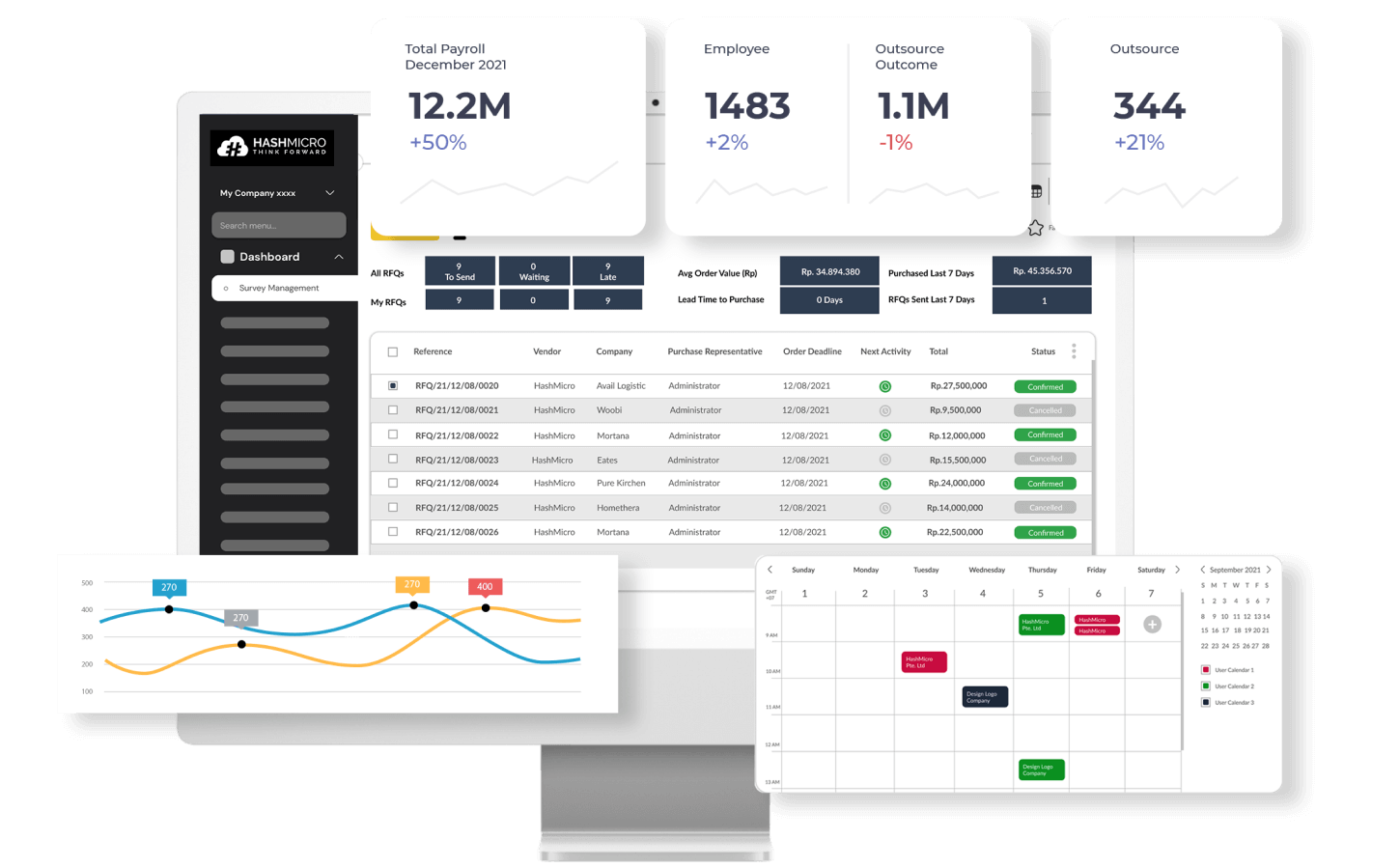
HashMicro manufacturing software is the most suitable software for the food packaging industry in Singapore. It offers comprehensive solutions to ensure efficiency, accuracy, and effective inventory management of food packaging software.
This section will discuss how HashMicro manufacturing software optimizes food packaging production processes. By leveraging advanced features and functionalities, this software streamlines various aspects of food packaging production.
The following are several important features of HashMicro Manufacturing Software:
1. Manufacturing Production Scheduling
HashMicro Manufacturing Software provides robust production scheduling capabilities, enabling businesses to plan and organize their manufacturing operations effectively. With the ability to create detailed production schedules, allocate resources, and track progress, this software ensures that food packaging production runs smoothly and on time.
2. Material Requirements Planning (MRP)
Using HashMicro Manufacturing Software, businesses can perform accurate Material Requirements Planning (MRP) to determine the optimal quantity and timing of raw material purchases. By aligning material availability with production demands, this software minimizes inventory holding costs while ensuring smooth production flow.
3. Regulation Compliance
HashMicro’s Manufacturing Software provides regulation compliance feature that are meticulously crafted to keep your business in line with the latest food packaging laws and guidelines. It automates the process of identifying and applying relevant regulations, reducing the risk of non-compliance. This means less time spent on manual compliance checks and more on strategic growth initiatives.
4. Manufacturing Requisition Planning
HashMicro Manufacturing Software facilitates efficient manufacturing requisition planning, ensuring that the necessary materials and resources are available when needed. By automating the requisition process and tracking inventory levels, this software helps businesses streamline their procurement operations and avoid production delays.
5. Made to Order Completion Forecast
The software enables accurate completion forecasting for made-to-order food packaging production. By considering lead times, resource availability, and production capacities, businesses can generate reliable forecasts that help them meet customer deadlines and maintain a high level of customer satisfaction.
6. Manufacturing Quality Control
HashMicro Manufacturing Software includes robust quality control features that ensure the production of high-quality food packaging. Through comprehensive inspection and testing modules, businesses can monitor quality at different stages of the production process, identify potential issues, and take corrective actions to maintain consistent product quality.
7. Finished Goods Production Simulation
With the software’s production simulation capabilities, businesses can optimize their production processes and identify potential bottlenecks or inefficiencies. By running simulations based on different parameters, businesses can make informed decisions to improve productivity, reduce costs, and enhance overall operational efficiency.
8. Production Order & Work Order Tracking
HashMicro Manufacturing Software enables businesses to track and monitor production orders and work orders in real-time. By providing visibility into the status of each order, businesses can ensure timely execution, identify potential delays, and take proactive measures to maintain production schedules and meet customer demands.
9. Multi-Level Bill of Material (BoM)
The software’s multi-level Bill of Material (BoM) functionality allows businesses to create detailed, hierarchical product structures. By accurately defining the components and sub-components required for food packaging production, businesses can streamline procurement, optimize inventory management, and ensure smooth assembly processes.
10. Planning and Actualization Reports
HashMicro Manufacturing Software generates comprehensive planning and actualization reports, providing businesses with valuable insights into their production operations. These reports facilitate better decision-making, resource allocation optimization, and continuous improvement efforts, ultimately enhancing overall operational efficiency.
11. Monitor Warehouse Stock Capacity
With HashMicro Manufacturing Software, businesses can monitor and manage warehouse stock capacity efficiently. By providing real-time visibility into stock levels, businesses can avoid stockouts, optimize storage space, and ensure that the required raw materials and finished goods are readily available for food packaging production.
Hashy AI Fact

Need to Know
AI automates food packaging management, boosting efficiency and minimizing errors. With AI for Manufacturing, optimize production schedules, monitor inventory, and enhance quality control for cost savings and better operations.
Request a free demo today!
Conclusion
The food packaging industry keeps evolving, so businesses must stay up to date to meet changing consumer expectations and remain competitive. By adopting new trends and investing in the right technologies, companies can refine their packaging strategies and keep up with market demand.
HashMicro manufacturing software offers the best solution for food packaging production. With various features that support automation in packaging production, manufacturers can enhance their production process. There is also a CTC Grants offer that can save you up to 70%, helping reduce the investment burden while adopting cutting-edge packaging solutions.
Try the free demo now!

FAQ About Food Packaging
-
What does “food packaging” mean?
Food packaging refers to the process of enclosing food to protect it from external conditions that can lead to contamination, spoilage, or physical damage. It also helps keep the product safe and intact during transportation, storage, and retail display.
-
What are the common types of food packaging?
Food packaging comes in many forms, including aseptic packaging, flexible packaging, and rigid formats such as boxes, cans, and cartons. Other widely used options include bags, trays, and pallets to support handling, storage, and distribution.
-
Why is food packaging so important?
Proper food packaging helps prevent damage, contamination, and tampering, while improving safety and building consumer confidence in the product. It also supports efficient transport and storage, reduces waste in production, and can contribute to sustainability goals through better material choices and design.