









 Limited to 100 registrants

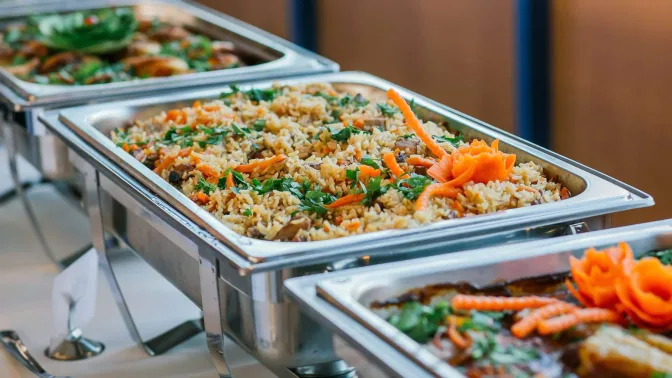
A catering company is a business that offers various fast food and beverages on a big scale for any occasion, such as for meetings, events, or large-scale needs. The catering activities include but are not limited to, raw material preparation and selection, compounding and processing, packaging and distribution, and services such as food preparation, checking, and replenishment. It will be easy to operate catering activities by implementing the best catering management system.
Performing all of those tasks manually while managing your time can be stressful. Therefore, as the owner of a catering business, you must find ways to improve the efficiency of your operations. And how to do it? The answer is simple; catering management software is the right solution you’ve been looking for to strengthen the growth of your catering business. In order to help you maximize the workforce and make an excellent strategy for your catering business, let’s take a look at these benefits, advantages, and features of the most comprehensive catering apps in the market.
What Is Catering Management Software?
Catering management software is an application designed to help catering businesses manage their operations efficiently. It enables catering managers to plan and manage events easily.
It is typically cloud-based, so it can be accessed from anywhere with an internet connection. This makes it easy to stay connected with staff and clients, and it gives you one centralized platform to run the whole catering business.
How to Grow Your Catering Business Effectively?
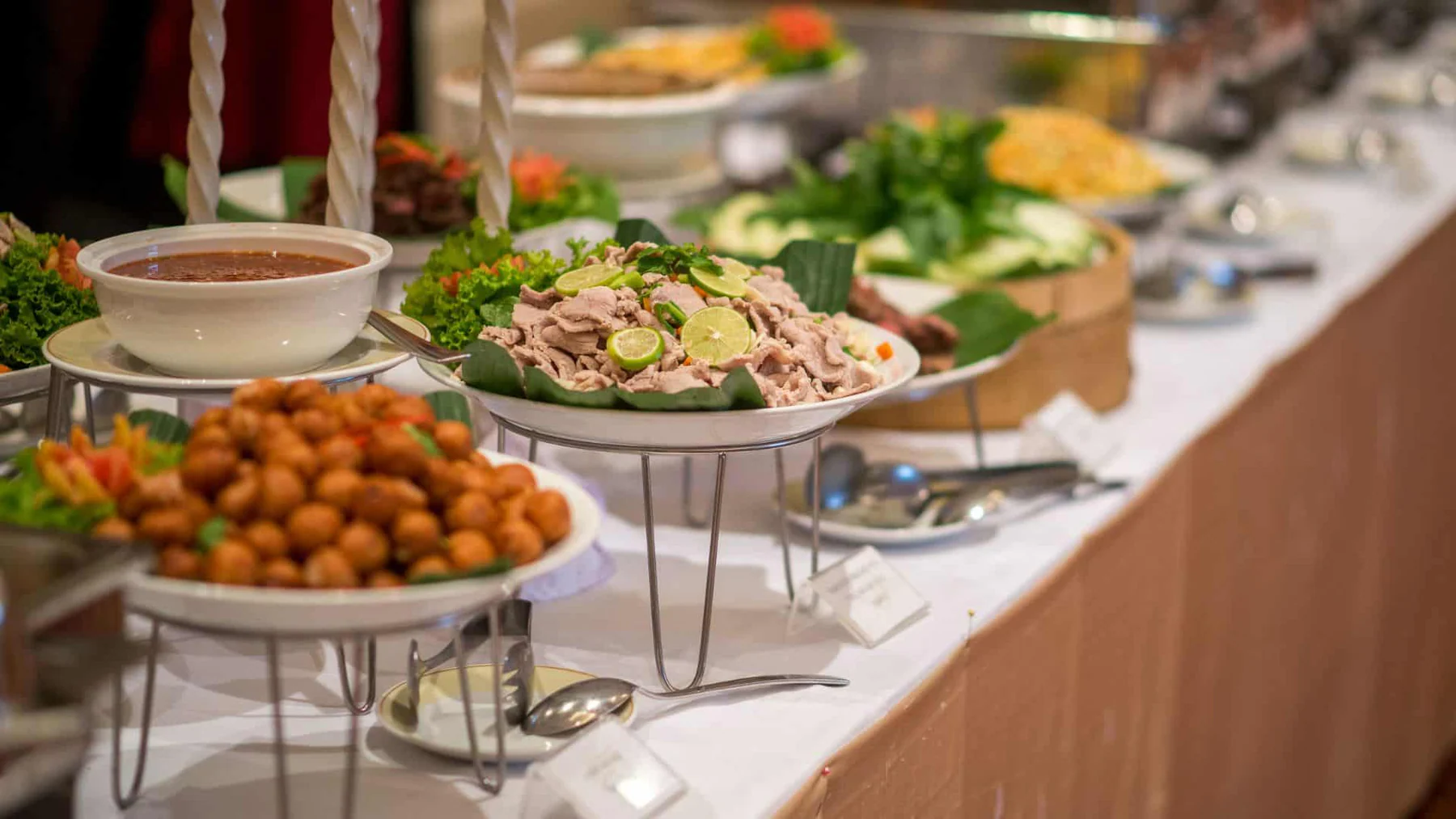
Back to the main topic on how to grow your catering business effectively. This article covers eight ways to increase your catering business effectively with the help of The Catering Management System’s features and advantages, and we will explain below;
1. By Managing Customer Order and Discount Management
Speaking of the customer order in the catering business, surely the amount of orders they will receive will be massive. Catering businesses must make hundreds or even thousands of fast food and beverages immediately before the due time. Managing an enormous amount of orders in the catering business manually will take a lot of time and reduce productivity. Such an ineffective and inefficient way needs to be changed into a digitalized managing customer orders called The Catering Management System. The system will not only manage customer orders but also create personalized promotion programs and calculate them in transactions automatically.
2. Using Fulfilment Management
Managing fulfillment means prioritizing orders based on preparation and delivery times. With this method, you can help your catering business be more organized in handling orders. The features in this system assign couriers with accurate delivery routing, thereby lessening your “will it arrive on time?” concerns. Because on-time delivery is something customers value highly, implementing this strategy will help your catering business attract more clients. Besides, they want the food they ordered from the catering company to be ready to eat before the occasion starts.
3. Monitoring Kitchen Operational Activities with Display System
We all know that the kitchen is the busiest place in the food and beverages industries, especially in the catering business, where food is prepared on a large scale. Throughout the day, a big order of various processed and prepared foods is ready. Therefore, it is crucial to monitor kitchen operation activities and keep the kitchen up-to-date and well-managed to meet customer demands. And how to do it? The best catering management system in Singapore is the solution.
Such a method will enable all your chefs to prepare orders and set the turnaround time with the help of a configurable kitchen display system. As a result of using the system, it will let your customers have a seamless ordering process through the online portal with real-time updates. And will let you know your revenue, expenses, bills, orders, cooking process, and other details in one display system.

4. Managing The Menu
The menu is the most fundamental aspect of operating a restaurant-based business, including a catering business. Because food and beverages are what catering businesses serve and offer. But here the question is, how to inform your customers regarding the available food and beverages in your catering business? The answer; is by listing it in a menu.
What you must include in the menu is information about the food and beverages you provide in the catering business. What will be the food in the catering package? Will it be a cuisine-specific or multi-cuisine type of food? Either way, the menu for your restaurant must be well managed by using the menu management strategy. Which lets you update the menu in all branches, create extensive categorization, and manage meal packages effectively.
5. Managing The Recipe
If a menu is the basic foundation of a restaurant, then a recipe is what built that foundation. For this reason, you should manage the recipe using automated catering software if you want to increase business growth. The system ensures that it standardizes the serving processes and tastes of the food in all branches and manages cooking priority efficiently.
The function of catering management software extends significantly beyond that. And integrating with FIFO management will enable you to track and maintain the quality of food ingredients. The FIFO features also will alert you regarding the quality of foods that are about to expire or have expired. As a result, your sales will increase, and your customers will be satisfied with the high-quality foods your catering business serves. In addition, though it is not necessary, it will be better if your restaurant has its own recipe for each dish on the menu to stand out from other restaurants or competitors.
6. Generating In-Depth Report
Generating an in-depth report on the catering system technology is beneficial. With easy-to-read reports, you can analyze the growth of your catering business. This method allows you to determine your company’s growth over a specific period. Including the growth of sales profits, the successful completion of orders, and the inventory turnover. The greater your understanding of the business growth of your catering business, the more effective your future business strategies will be.
7. Business Forecasting Insight
A catering management system gives you real-time data on inventory levels, sales, and customer trends. You can use it to forecast future sales and see which products and event types are in high demand.
For example, if past records show that corporate lunch orders jump at the end of every quarter, the system helps you estimate the guest count for the coming quarter. From that estimate, you can plan how much of each ingredient to buy before the orders arrive.
Planning your purchases around expected events also helps you reduce wastage and optimize profits.
8. Easier Payments
By providing multiple payment options, catering businesses can serve a wider range of customers with different preferences and needs. Because the payment process is automated, customers can also pay directly from their own devices.
Automated payments reduce the risk of errors and fraud as well. Anomalies and fraudulent activity can be detected and flagged in real time, which adds security for both the business and its customers.
Also read: Tips to Avoid Catering Business Problems.
Benefits of Catering Software
Beyond the eight ways above, catering software brings several other benefits to your day-to-day operations. The table below summarizes them.
| Benefit | How it helps |
| It Allows Your Business to Go Mobile | You can manage the business from any location on a mobile device, including stock lists, order processing, and key financial data. This replaces stacks of paper records. |
| It Helps Your Staff Communicate | Previous customer conversations are shared from one central location. Front-of-house and back-of-house teams see the same customer history, which speeds up their work. |
| It Stores Your Data | Daily business data gives you new insights, and customer information stays accessible so you can keep up meaningful interactions. Client details can be tracked quickly and easily. |
| It Saves Time and Keeps Your Costs Down | Tasks such as collecting inventory items are automated, which avoids slow manual work and human error. The software also analyzes your finances, calculates profit more precisely, and shows every monetary transaction, so you can build cost-saving strategies. |
| Eliminate Business Third-party | Relying less on third parties such as food delivery platforms gives you better control over food quality and lower costs. |
| Increased revenue | Successful marketing campaigns, attractive menus, and unique services help attract more customers. The software streamlines the processes behind them, which contributes to higher revenue. |
| Catering management software enhances reputation | Excellent service and customer satisfaction help build a positive reputation in the market. This leads to more business opportunities and growth. |
| Increased flexibility and employee satisfaction through digital staff planning | Staffing is time-intensive, and the software supports personnel planning, duty roster creation, and control. Employees can enter their preferred working hours and days off, which benefits both the company and its staff. |
| Digital accounting for more commercial control | As a company grows, back-office administrative tasks pile up. A digital accounting system reduces the effort and gives you more transparency and control. |
| Intelligent reservations and simpler payments for guest groups | Guests are placed with the help of artificial intelligence without having to program the system, and variable capacity or overbooking can be automated. Digitizing order taking and billing also relieves pressure in busy periods and makes order taking a chance to generate additional sales. |
Common Main Features of Catering Management App
The main features may vary depending on the specific software and its intended use. However, there are some common features you can expect.
1. Event scheduling
This feature lets you schedule and manage events, including menus, staff schedules, and timelines for food preparation and delivery. You can keep track of upcoming events and make sure each one is properly staffed and prepared.
2. Menu planning
You can create and customize menus for events by selecting dishes, ingredients, and portion sizes. The software can then generate shopping lists and estimate costs based on the number of guests.
3. Inventory management
This feature tracks inventory levels of food, beverages, and supplies and alerts you when supplies are running low. It helps you avoid running out of stock during events.
4. Customer management
It stores client information such as contact details, event preferences, and payment information. With it, you can provide personalized service and keep track of client details easily.
5. Invoicing and payment processing
You can create and send invoices, track payment status, and process payments securely. This reduces the time and effort needed to manage billing and helps you get paid on time.
6. Reporting and analytics
This feature generates reports on sales, expenses, inventory, and other business metrics. These insights help you find areas for improvement and make informed decisions.
The Challenges of Catering Management
Two common challenges in catering are disorganization and food waste. The table below shows what each one looks like and how catering management software helps.
| Challenge | What goes wrong | How the software helps |
| Disorganization | Changing venues and party sizes make it hard to stay on track, which can lead to costly mistakes such as arriving at an event with essential items missing. This often happens when an important task depends on just one or two people. | Event scheduling keeps menus, staff schedules, and timelines in one place. Inventory alerts and shopping lists help make sure supplies are ready. |
| Food waste | Caterers find it hard to estimate how much food an event needs, which can lead to waste or a shortage of food. Tackling this lowers costs and also helps preserve the environment. | Menu planning estimates costs based on the number of guests. Inventory tracking and forecasting help you buy closer to what you actually need. |
How to Digitize Your Catering Company: 5-Step Roadmap
Digitizing your catering business with catering management software helps it grow faster, run more easily, and make more profit. Here is a five-step roadmap to get started.
1. Review your operations for manual, cumbersome, or error-prone processes
Start by documenting what slows you down, such as complaints from staff or customers, hours spent on manual work like order taking and payroll, and errors in services, staffing, production, or deliveries. Then look for themes where technology could help. For example, you may be spending 10 hours a week typing customer information into spreadsheets.
If you are a new caterer, answer a few questions first: what kind of catering you will offer, how customers will place orders, what payments you will accept, whether you will hire staff, and what marketing you will do. Your answers show how your operations will play out and what technology you will need.
2. Research commonly used technology in your industry
Connect with colleagues or your industry network to learn which software they use and what feedback they have. Comparison and rating websites also show what real users say, along with prices and feature suites. Forecast your budget as well, so your research stays realistic.
3. Ensure your file storage and communications are digitally based
A cloud-based server lets your whole team work from one central place, wherever they are. Scattered channels such as written notes, texts, and calls leave you without a single source of truth or a history to refer back to.
4. Explore software suites to your needs
It is easy to get caught up in the hot, new thing, but your decision should stay focused on your actual business needs, budget, and goals. Otherwise you may end up with a complicated setup that you barely use or understand.
5. Create documentation and team training on new technology
Once your systems are set up, create process documentation, troubleshooting notes, and a cheat sheet with important details or contacts for each software. Then schedule training with the appropriate team members so they can practice and own the systems they will use often.
Conclusion
In the past, it was challenging for catering business owners to keep things under control and maintain the business, particularly when managing massive orders of food and beverages while ensuring timely delivery. However, with the implementation of modern technologies in the business world today, it is now easier to manage the catering business effectively.
A digital solution called catering management software can assist catering owners in terms of food service in managing all the challenges and difficulties that come while operating a catering business. These challenges can include managing orders, deliveries, and tracking inventory. It is sufficient evidence to convince you of the catering management system’s usefulness and advantages. Download a pricing scheme or try a free demo if you consider using it.