Are supplier delays, contract renewals, or compliance checks starting to slow procurement and create extra rework? When vendor details live in different places, decisions get inconsistent, and timelines slip.
Vendor management can get messy fast when data is scattered across emails and spreadsheets. Teams end up chasing quotes, tracking performance manually, and reacting late when issues show up.
A clear vendor management approach helps standardize evaluation, keep contracts organized, and reduce dependency on one supplier. In this guide, we’ll cover the basics and how to compare options.
Key Takeaways
Vendor management enhances supplier relationships, streamlines operations, and reduces risks, ensuring both cost efficiency and compliance.
When choosing a VMS, look for centralized data management, automation, real-time performance tracking, scalability, and seamless integration with other systems.
Vendor management is how a business selects suppliers, manages the relationship, and monitors performance over time. The focus is on making sure you work with the right partners, and the expectations are clear from the start.
It covers sourcing goods and services, negotiating terms, tracking delivery and quality, and fixing procurement process issues like delays, contract gaps, and invoice mismatches before they disrupt operations. Done well, it reduces cost and risk so teams get what they need on time.
Who are Vendors?
Vendors are entities that supply goods or services to businesses and consumers. They play a crucial role in the supply chain by sourcing, purchasing, and selling products or services. According to the context of vendor management and systems, vendors typically fall into two primary categories:
Suppliers of goods and services: These vendors deliver products or services, and supplier management tools help streamline purchasing and keep the supply chain running smoothly.
Service providers and contractors: This includes agencies, contractors, and contingent workers, and a VMS helps coordinate them, track performance, and manage engagements more efficiently.
What are the Benefits of Vendor Management Software?
Vendor management software (VMS) is a game-changing tool that helps businesses streamline their vendor relationships while improving performance, reducing risks, and optimizing costs. Here are the top benefits of implementing a VMS:
Improved vendor selection: Compare vendors faster with clear data on pricing, quality, and fit. Bidding and RFP workflows stay structured, so decisions take less time.
Enhanced cost savings: See spending across vendors and categories in one view. Performance and spend insights make it easier to negotiate better rates and cut inefficiencies.
Faster vendor onboarding: Centralized documents and automated compliance checks reduce back-and-forth. Vendors can start work sooner with fewer delays.
Reduced risk of supply chain disruption: Real-time tracking helps flag missed milestones, delivery issues, or compliance gaps early. You can fix problems before they impact operations.
Stronger supplier relationships: One platform keeps communication, updates, and expectations aligned. Performance tracking also makes conversations more objective and consistent.
Optimized contract management: Store, review, and renew contracts on time without hunting through files. This reduces missed deadlines and keeps terms consistent.
Centralized control and visibility: Get a single view of vendor activity, performance, and compliance status. It’s easier to govern vendors and avoid surprises.
How Does the Process of Vendor Management Software Work?
Vendor management software (VMS) streamlines the full vendor lifecycle, from selection to payment, so operations run smoother and supplier relationships stay strong. It also helps teams track procurement performance KPIs like on-time delivery and contract compliance without manual follow-ups, which is how it works:
Vendor selection: Automates sourcing and comparisons so you can choose vendors based on price, quality, and reliability.
Contract management: Standardizes contracts and approval flows to keep terms clear and compliant from the start.
Vendor onboarding: Speeds up onboarding by automating data collection and document checks.
Performance monitoring: Tracks KPIs in real time and flags issues early if performance drops.
Risk and compliance management: Helps monitor compliance, security, and operational risks proactively.
Payments and data centralization: Automates invoice matching and payments while keeping all vendor data in one place.
With VMS, businesses can improve efficiency, reduce risks, and strengthen vendor relationships, leading to better overall performance.
Top 10 Vendor Management Software Recommendations
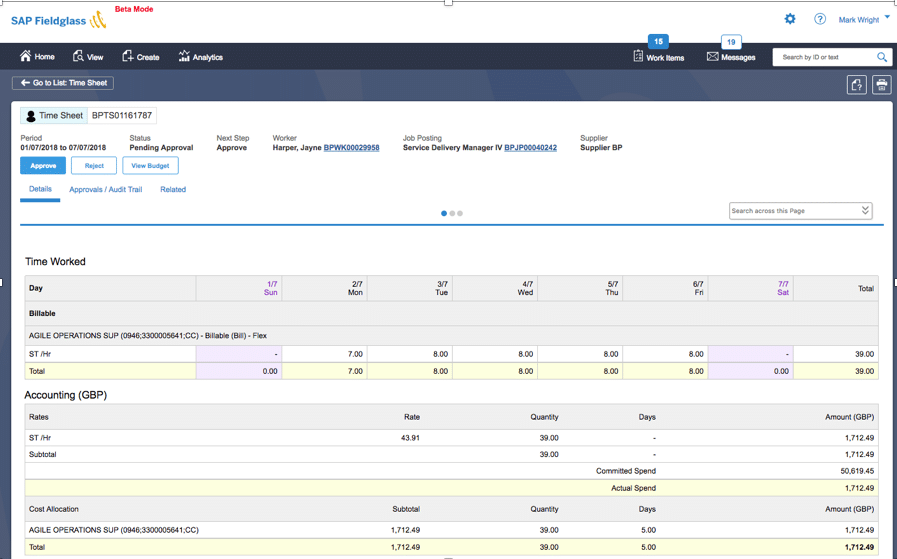
1. SAP Fieldglass
SAP Fieldglass is a vendor management system used globally since 1999. It helps teams manage complex vendor contracts and external workforce arrangements in one place.
It also uses real-time analytics to reduce common procurement workflow issues and connects with existing ERP systems, so vendor tracking and approvals stay consistent across teams.
Why Do We Choose SAP Fieldglass: SAP Fieldglass centralizes vendors and external workers, with real-time insights and smooth ERP integration.
Key Features:
Workforce Management
Vendor Management
Integration Capabilities
Pros
Cons
Enhanced visibility and control
Streamlined processes
Seamless integration capabilities
Global access
Complex user interface
Limited customization option
System performance depends on the system complexities
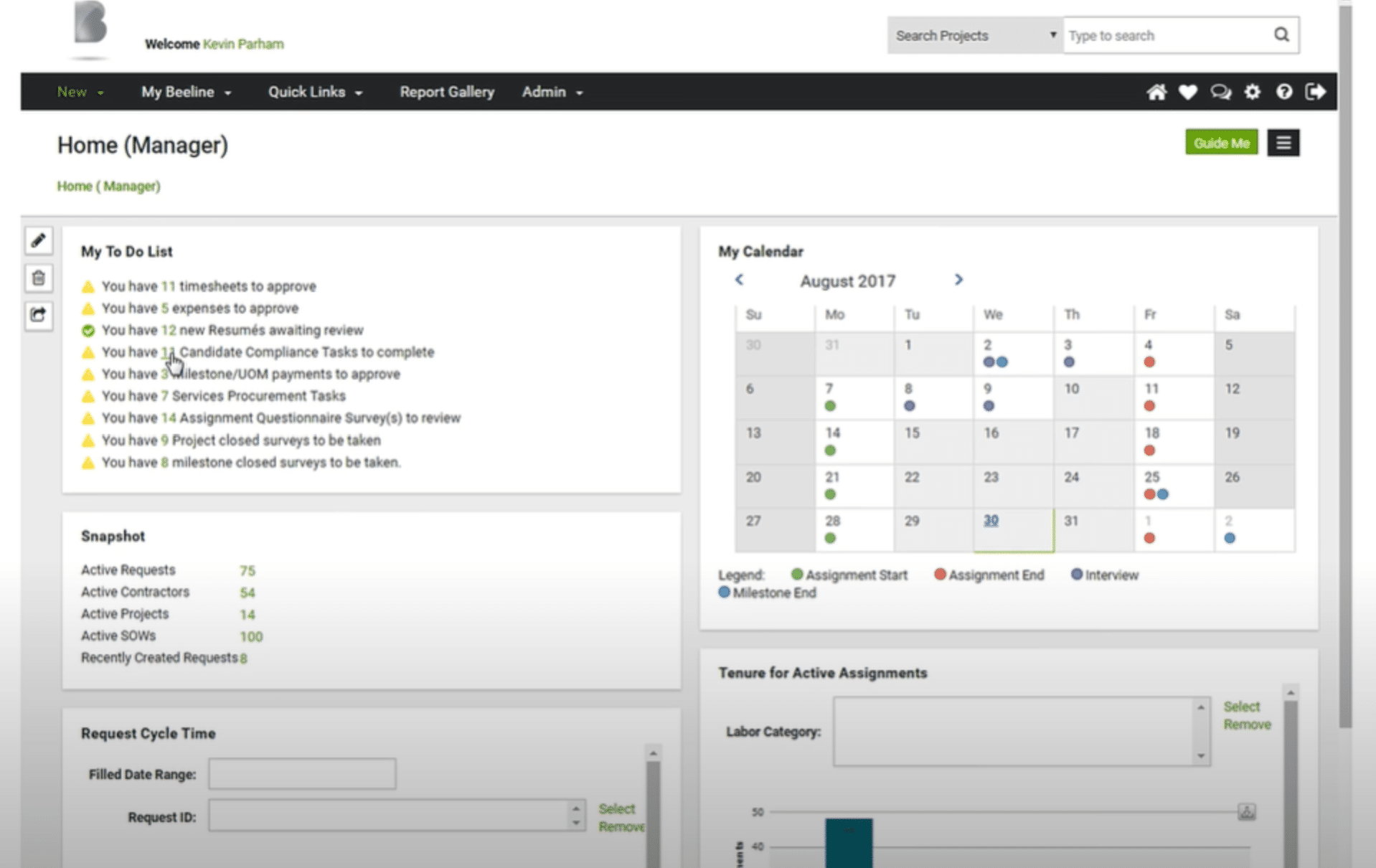
2. Beeline
Beeline Enterprise is a VMS built for large organizations, including many Fortune 500 and Global 1000 companies. It gives real-time visibility into both full-time and contingent workers to help teams manage workforce operations more efficiently.
The platform supports compliance controls, performance tracking, and integrations with existing enterprise systems. This helps businesses run complex, multi-location workforces with fewer gaps and better oversight.
Why Do We Choose Beeline: We choose Beeline for real-time workforce visibility, stronger compliance, and easy integration across locations.
Key Features:
Compliance Management
Performance Tracking
Integration Capabilities
Pros
Cons
Comprehensive workforce management capabilities
Helps ensure compliance and reduce risks
User-friendly and easy to integrate
Implementation can be complex
May require training to fully utilize
Pricing may not suit smaller businesses
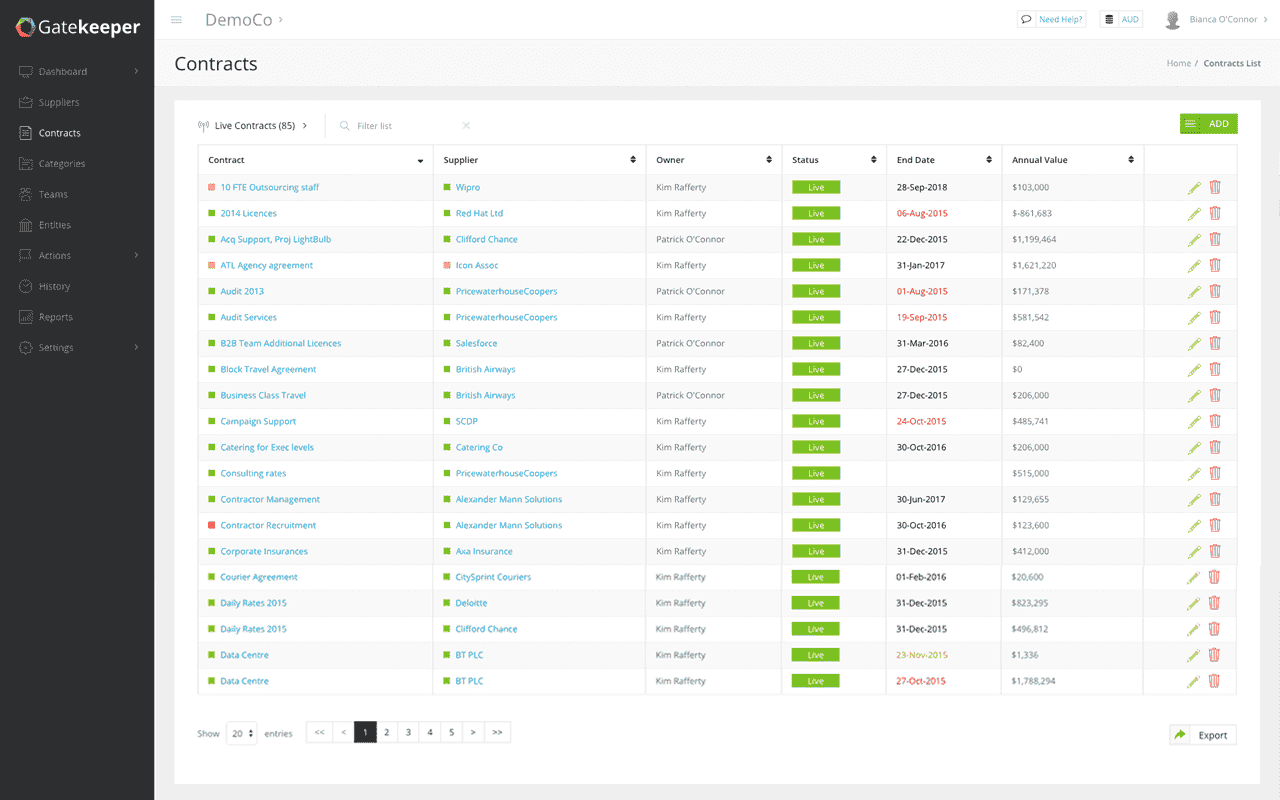
3. Gatekeeper
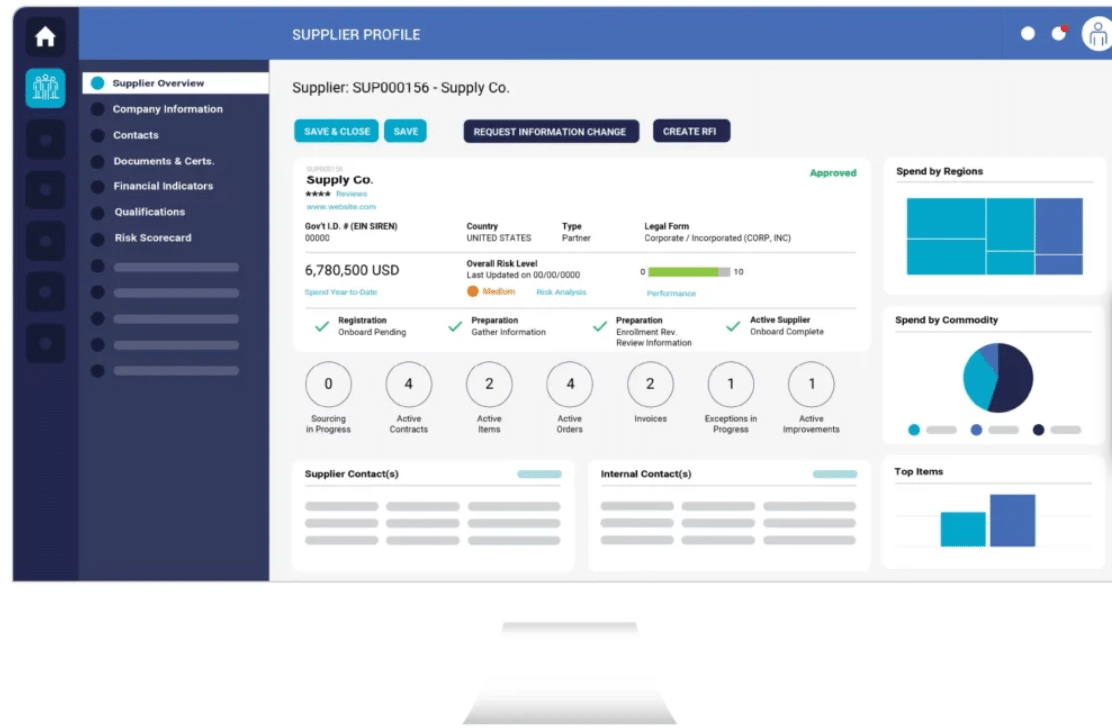
Gatekeeper is a Vendor and Contract Lifecycle Management platform that keeps contracts and supplier relationships organized in one place, with clearer visibility, tighter control, and stronger compliance.
Because it’s cloud-based, it scales as you grow. It also automates CLM and vendor workflows like approvals, renewals, and tracking, reducing manual work so your team can focus on more strategic decisions.
Why Do We Choose Gatekeeper: We choose Gatekeeper for automated contract and vendor management with AI checks, e-signatures, and spend insights.
Key Features:
Centralized Repository: Stores contracts, documents, and vendor information in one secure, easily accessible location.
Automated Workflows: Streamlines contract creation, approval, and renewal processes, saving time and reducing errors.
Risk Management: Helps monitor and assess vendor risks to ensure better control and minimize potential disruptions.
Pros
Cons
Improves operational efficiency by automating routine tasks.
Provides clear visibility into contracts and vendor relationships.
Helps businesses reduce risks and stay compliant with industry standards.
Setup and integration may require significant time and resources.
Users may need training to fully utilize all features.
The cost may be a consideration for smaller businesses.
4. Coupa Contingent Workforce
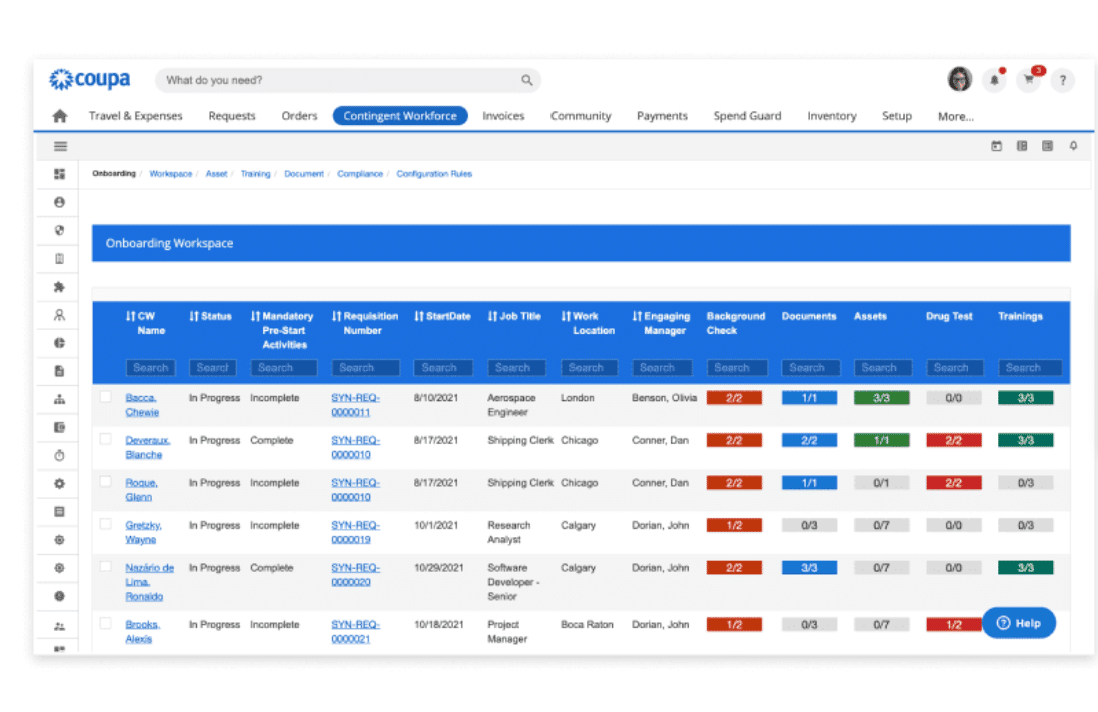
Coupa Contingent Workforce (CCW) is a VMS that helps organizations manage temporary and contract workers more smoothly. Because it’s part of Coupa’s Business Spend Management platform, it connects well with other systems and supports smarter use of non-employee talent.
It covers the full contingent worker lifecycle, from sourcing and onboarding to performance tracking and offboarding. This supports consistent workflows, clearer visibility, and cost control as a procurement solution for growing teams and startups.
Why Do We Choose Coupa Contingent Workforce: We choose Coupa Contingent Workforce because it manages temps end-to-end, integrates smoothly, and improves visibility and cost control.
Key Features
Spend Management
Extended Workforce Platform
Staff Augmentation Optimization
Pros
Cons
End-to-end management of contingent workforce processes.
Offers visibility into workforce spending.
Automates compliance tasks.
Provides real-time worker performance insights.
Initial setup can be complex.
Training may be needed for full feature utilization.
Integration of new features may be ongoing.
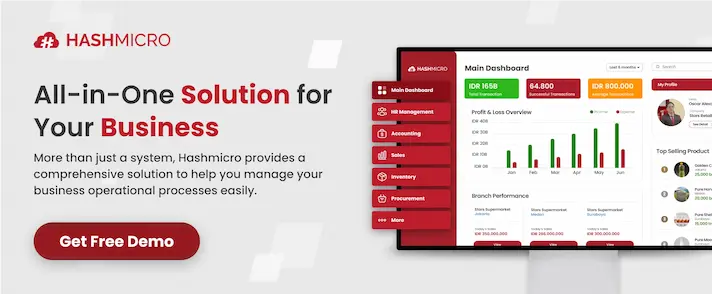
5. HashMicro vendor management software
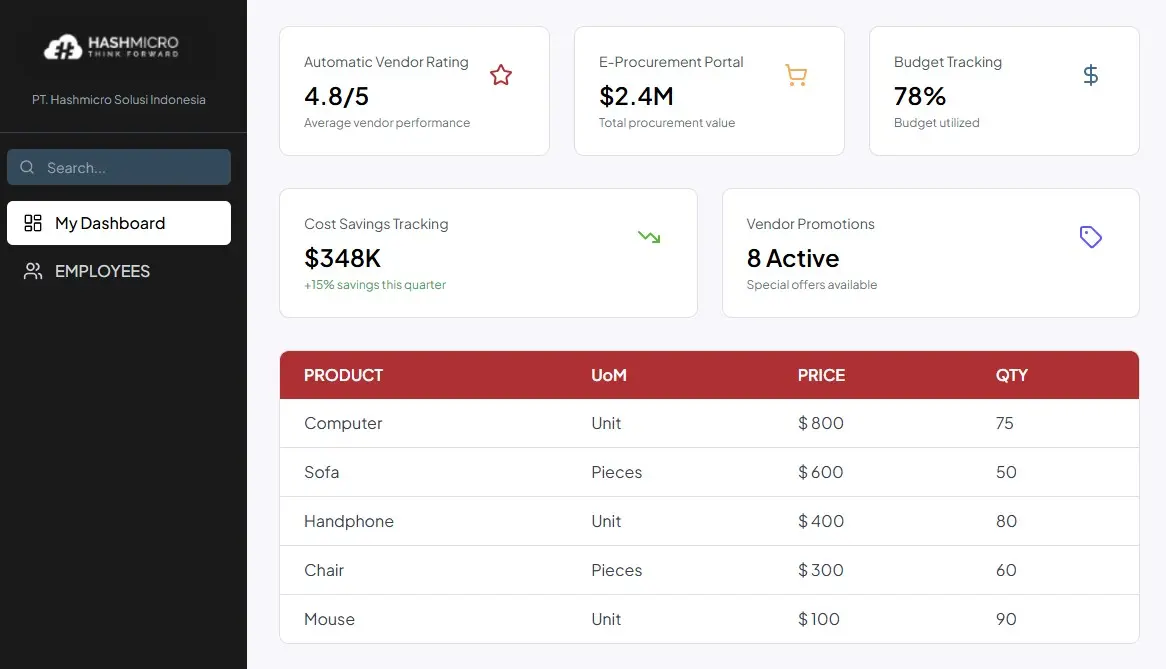
HashMicro’s Vendor Management System (VMS) for procurement is an all-in-one platform that streamlines vendor management and procurement for businesses in Singapore. It improves visibility across the procurement lifecycle, helping teams control costs and keep processes consistent.
It also supports a smoother workflow by connecting vendor data, performance tracking, and contracts in one place, with automation for repetitive tasks. With real-time insights, teams can make faster, data-backed decisions and build stronger supplier relationships.
Why We Choose HashMicro: HashMicro automates vendor management to save time and reduce costs. Real-time insights help improve vendor performance and strengthen supplier relationships for long-term efficiency.
Key Features:
Automatic Vendor Rating
E-Procurement Portal
Budget Tracking and Limits
Cost Savings Tracking
Vendor Promotion Management
Pros
Cons
Streamlined vendor management
Real-time insights
Cost reduction
Integrated system
Customizable
Implementation time depends on the feature complexity
The feature variety may not suit businesses needing a simple solution.
6. Ivalua
Ivalua is a cloud-based procurement and spend management platform that helps companies improve sourcing, supplier relationships, and spend control across categories. Its flexible Source-to-Pay suite can be tailored to different industries and operating needs.
It covers the full procurement cycle, from strategic sourcing and supplier management to contract management, procure-to-pay, and spend analysis. With no-code/low-code configuration, teams can adjust workflows quickly while still scaling for mid-to-large enterprise use.
Why Do We Choose Ivalua: We chose Ivalua for its flexible Source-to-Pay suite and no-code customization that scales procurement and tightens cost control.
Key Features:
Source-to-Pay Suite
Supplier Management
Spend Analysis
Pros
Cons
End-to-end procurement solution.
Highly customizable to business needs.
Automation improves efficiency and reduces manual tasks.
Complex initial setup.
Occasional system performance issues.
Customer support may be slow at times.
7. Airbase
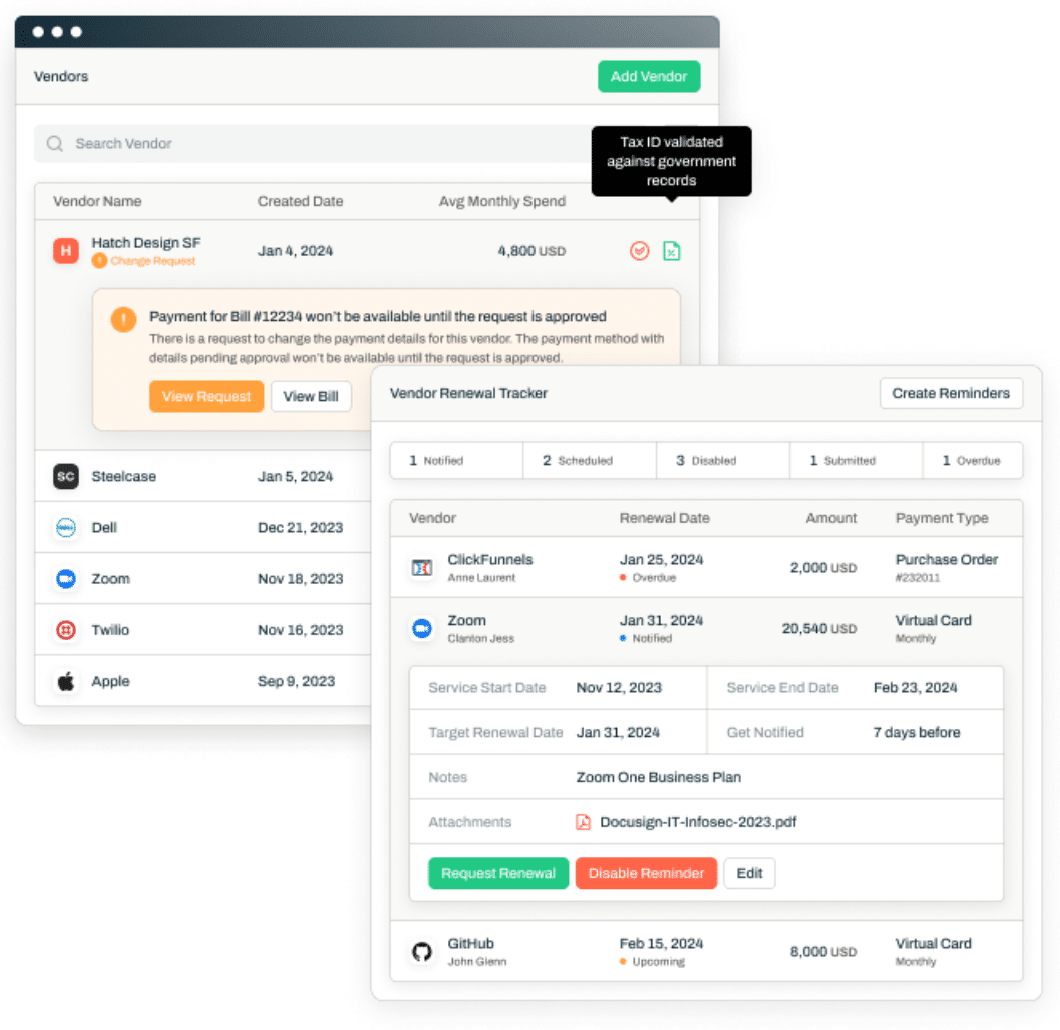
Airbase is an all-in-one spend management platform for mid-market to enterprise teams, combining accounts payable automation, expense management, and corporate cards in one place. This streamlines finance workflows and gives you tighter control and clearer visibility into company spending.
It’s built to scale from early growth through post-IPO stages. Airbase helps automate approvals and purchasing, simplify procurement, and improve financial transparency while staying flexible as your needs expand.
Why Do We Choose Airbase: We choose Airbase because it puts AP, expenses, and corporate cards in one place, giving better spend control, automation, and visibility as you scale.
Key Features
Procure-to-Pay Suite
AI-Powered Automation
Corporate Cards
Pros
Cons
Comprehensive financial management in one platform.
Automation reduces manual effort and improves accuracy.
Customizable approval workflows to align with company policies.
Initial setup may require time and resources.
Some features may require training for full utilization.
International payment support may be limited for some users.
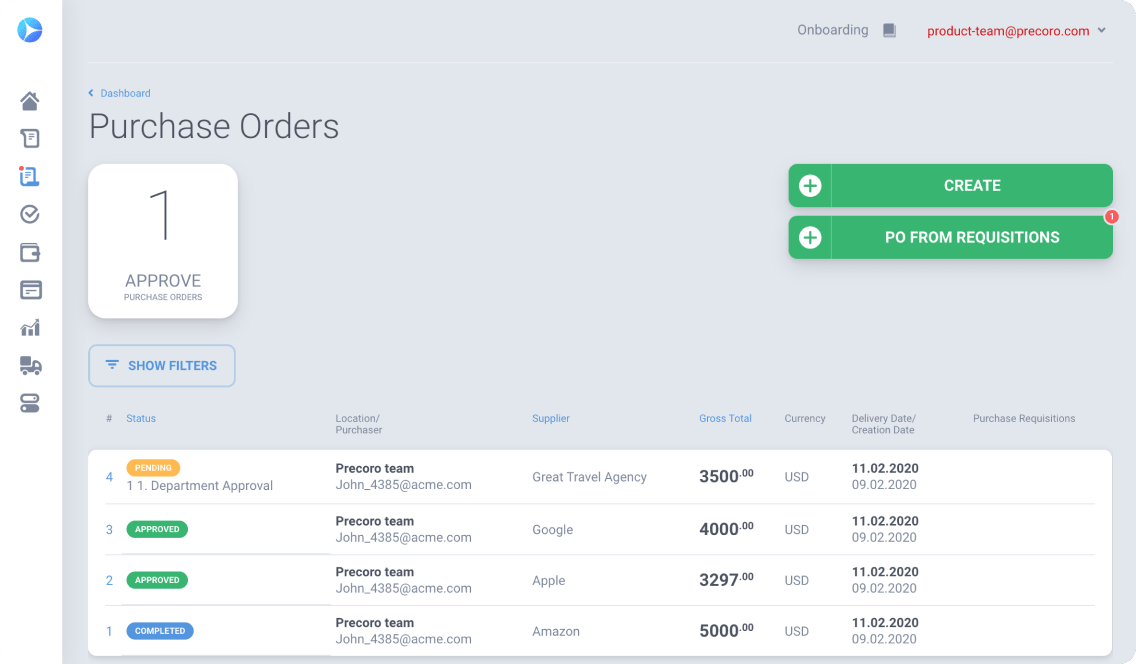
8. Precoro
Precoro is a spend management and procurement automation platform that helps teams run the full procure-to-pay process in one place, from purchase requests to invoices and payments. This keeps purchasing organized and reduces manual work.
It also improves visibility and control over company spend, and it scales as the business grows. With more automation, procurement becomes faster, cleaner, and more cost-efficient.
Why Do We Choose Precoro: We choose Precoro because it centralizes procure-to-pay, automates busywork, and improves spend visibility and control as you scale.
Key Features:
Procure-to-Pay Suite
Budget Management
Approval Workflows
Pros
Cons
Easy-to-use interface for quick adoption.
Integrates multiple functions into a single platform.
Real-time monitoring of spending.
Setup and training may take time.
Limited features for inventory management.
Mobile app experience may need improvement.
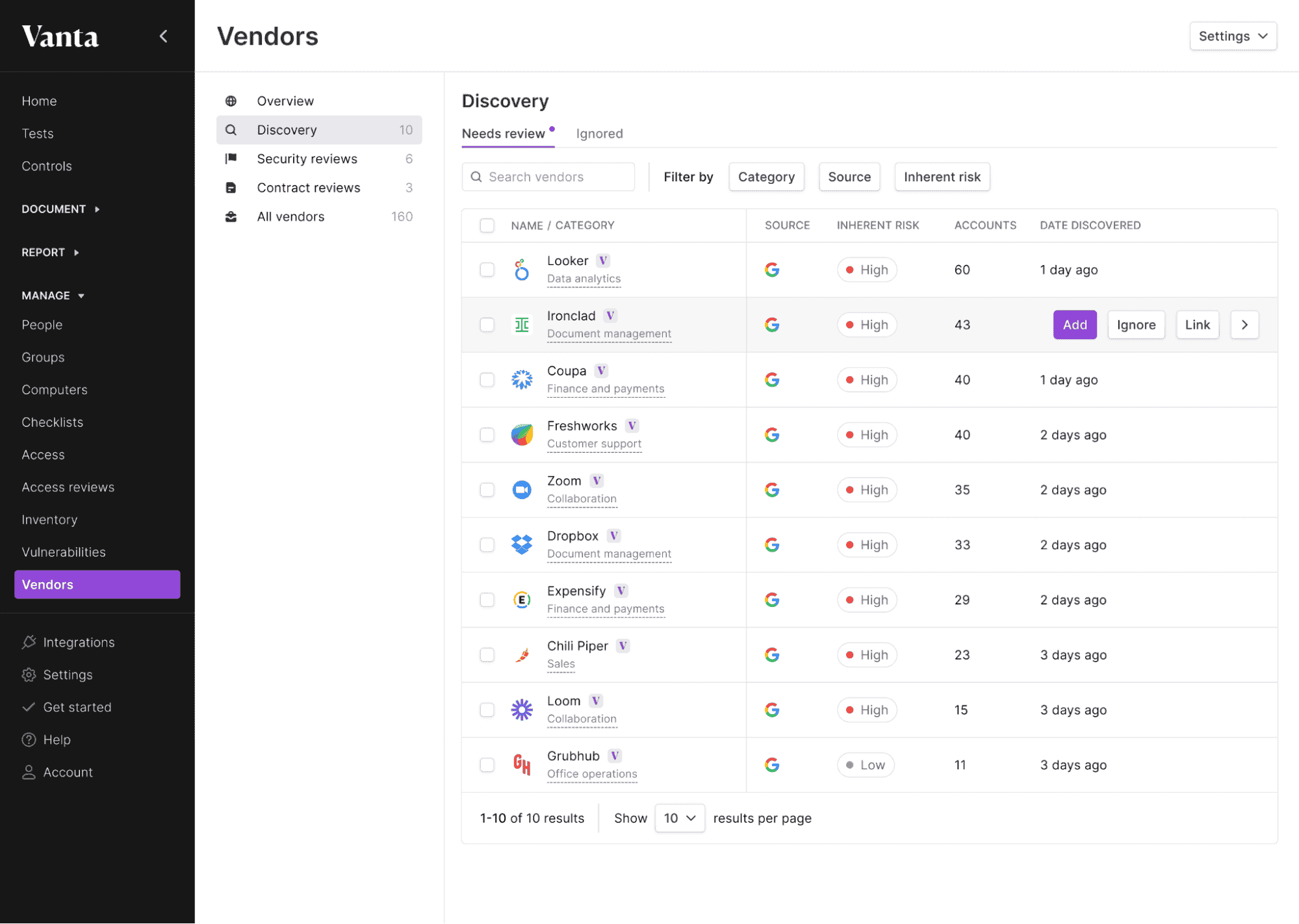
9. Vanta
Vanta is a compliance automation platform that helps companies earn and maintain certifications like SOC 2, ISO 27001, and HIPAA. It streamlines evidence collection, continuous monitoring, and audit prep so teams stay compliant without getting stuck in admin work.
As a SaaS tool, Vanta keeps compliance tasks in one place and is especially popular with growing tech teams that need strong security controls with less overhead.
Why Do We Choose Vanta: We choose Vanta because it automates compliance (SOC 2, ISO 27001, HIPAA) with faster evidence, monitoring, and audit prep in one platform.
Key Features:
Automated Evidence Collection
Continuous Compliance Monitoring
Multi-framework Support
Pros
Cons
User-Friendly
Supportive customer service
Continuous Monitoring
Cost depends on the complexity
Occasional system performance issues
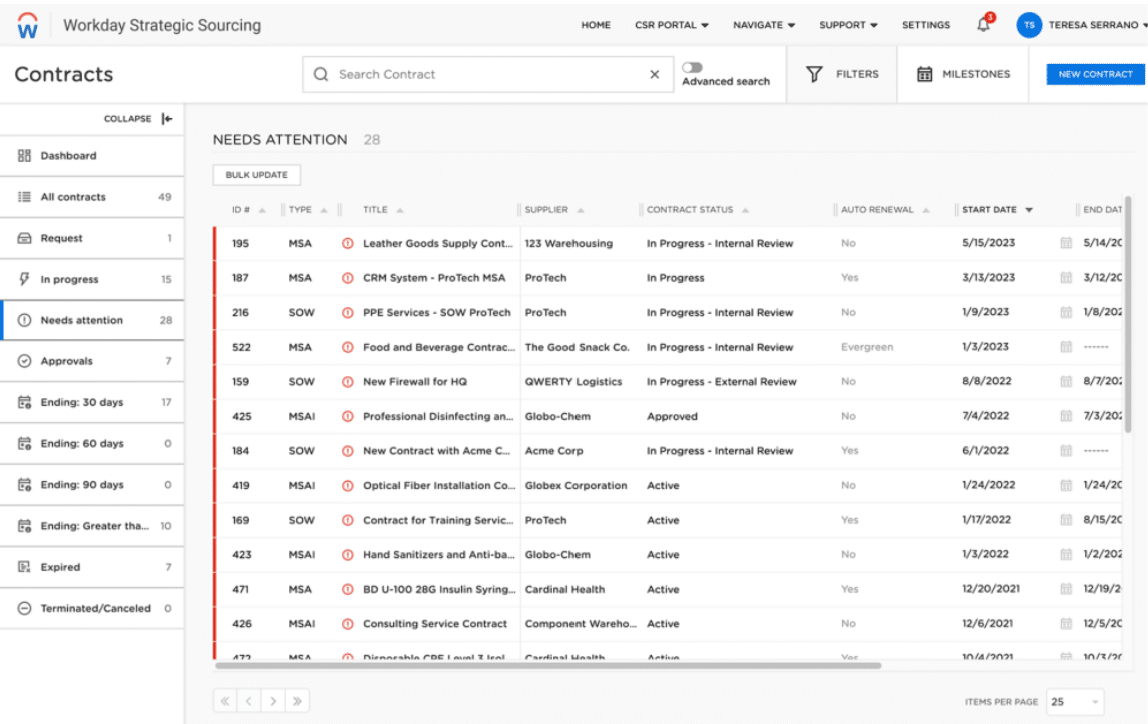
10. Workday Vendor Management
Workday VNDLY is a cloud-based VMS that helps you manage contingent workers and external labor from sourcing and onboarding through invoicing and offboarding. It streamlines the full lifecycle so teams can run workforce operations with less friction.
Because it integrates with Workday HCM, you get a clearer view of your total workforce, with better visibility and control over contingent labor and SOW engagements.
Why Do We Choose Workday Vendor Management: We choose Workday VNDLY because it manages contingent labor end-to-end and integrates with Workday HCM for a single, clear view of the workforce.
Key Features:
Sourcing and Requisition
Vendor Portal
Invoicing and Payment
Pros
Cons
Operational Efficiency
Global Capabilities
Good integration system.
Implementation takes more time.
There is a training session to master all the features
Could be costly for small businesses that depend on the feature customization
How to Choose the Right Software?
Choosing the right VMS helps you work faster, reduce risk, and build stronger supplier relationships. Prioritize tools that support vendor sourcing for procurement and fit your workflows so you can pick the best option.
Understand your business needs: Define your must-haves based on vendor types, workflow complexity, and goals.
Scalability and flexibility: Make sure it can grow with your vendor volume and lets you adjust workflows easily.
Seamless integration: It should connect smoothly with ERP, accounting, procurement, and HR tools to avoid double work.
Analytics and reporting: Look for clear dashboards for spend, vendor performance, and risk signals.
User-friendliness: Choose a system your team will actually use, with simple navigation and approvals.
Security and compliance: Prioritize encryption, role-based access, audit trails, and compliance fit for your industry.
If you get these six right, your VMS choice will be easier, safer, and far more effective long term.
Vendor issues rarely come from price alone. Most problems start with poor visibility, unclear contracts, and slow follow-ups. A structured vendor management system helps teams stay proactive instead of constantly fixing last-minute issues.
Angela Tan, Regional Manager
Conclusion
Vendor management works best when it’s consistent and structured. A VMS centralizes vendor data, contracts, and workflows, helping reduce delays and repeated work.
The real value comes from better control and visibility across vendors. With clearer performance tracking, automated approvals, and risk monitoring, teams can make faster decisions and avoid compliance issues.
Before choosing a system, list your key bottlenecks and required integrations, then shortlist tools that fit. If you need clarity, a short consultation can help validate your requirements.
FAQ About Vendor Management Software
What is vendor management software?
Vendor management software helps businesses manage vendors, contracts, performance, compliance, and payments in one system.
What is the leading vendor management software?
Leading options include SAP Fieldglass, Beeline, Coupa, and Workday VNDLY, depending on business size and needs.
What is an example of a vendor management system?
Examples include SAP Fieldglass, Beeline, Gatekeeper, Precoro, HashMicro, and Workday VNDLY.
Does Microsoft have a vendor management system?
Microsoft does not offer a dedicated VMS, but vendor processes can be supported using tools like Dynamics 365 and Power Platform.
Jessica Huang develops procurement-focused content that guides businesses in optimizing their sourcing and purchasing processes. Her writing is engaging and filled with expert advice tailored to procurement professionals.