














How safe is your warehouse, and what would it cost your company if it isn’t? Too often, safety becomes a priority only after an incident occurs, when it should be a core part of daily operations from the start.
Warehouse safety includes equipment handling, hazard identification, staff training, and emergency preparedness. When overlooked, it can lead to costly downtime, regulatory penalties, and serious injuries that impact both employees and overall business performance.
This guide covers key best practices and risk prevention strategies to help you build a safer and more efficient warehouse.
Key Takeaways
|
Table of Contents
What is Warehouse Safety?
Warehouse safety involves implementing structured policies, procedures, and technologies to create a secure and efficient working environment within warehouse operations.
It consists in identifying potential hazards, ensuring the proper use of equipment, providing employee training, and complying with industry safety standards.
For B2B companies, warehouse safety is not only a regulatory requirement but also a strategic investment that helps minimize downtime, protect inventory, reduce liability, and maintain smooth supply chain performance.
Importance of Warehouse Safety
Warehouse safety isn’t just about compliance, it’s a key factor in protecting your workforce, minimizing risk, and keeping operations running smoothly. Here are the main reasons why it should be a top priority in your business.
- Protects employees and reduces injuries: A strong safety program helps prevent accidents, ensuring a safer working environment for all employees.
- Minimizes downtime and operational disruptions: Fewer incidents result in smoother day-to-day operations and a lower risk of costly delays or shutdowns.
- Reduces legal and financial liability: Effective safety practices, supported by strategic warehouse slotting, lower the risk of fines, lawsuits, and insurance claims that can impact profitability.
- Boosts productivity and efficiency: Safe and well-structured warehouses enable workers to operate more confidently and efficiently.
- Supports compliance and builds trust: Meeting regulatory standards reinforces your company’s credibility and shows a clear commitment to responsible operations.
Key Regulations and Compliance Standards in Warehouse Safety

Compliance with warehouse safety regulations is crucial for protecting workers and ensuring seamless operations. Below are key standards and guidelines every business should be aware of.
1. OSHA (Occupational Safety and Health Administration) standards
In the United States, OSHA sets the baseline for workplace safety, including warehouse environments. OSHA regulations cover areas such as hazarFwd communication, forklift operation (29 CFR 1910.178), fire prevention, and the use of personal protective equipment (PPE).
Companies must ensure that their facilities and training programs comply with these rules to avoid penalties and ensure worker safety.
2. ISO 45001 – Occupational health and safety management systems
SO 45001 is a globally recognized standard that enables organizations to establish a structured health and safety management system. It focuses on proactive risk prevention, legal compliance, and continuous improvement.
Aligning ISO 45001 implementation with a clearly defined Warehouse Process Flow helps identify safety risks at each operational stage and supports continuous improvement. Adopting this standard also demonstrates a commitment to international safety practices, an important asset in global supply chains.
3. NFPA standards (National Fire Protection Association)
NFPA provides fire safety codes and standards relevant to warehouse design and operations, including fire exits, sprinkler systems, and the safe storage of flammable materials.
Following NFPA guidelines helps prevent fires and ensures compliance with local fire codes, especially in high-risk or high-volume facilities.
4. Material handling and equipment safety regulations
Specific regulations govern the use of forklifts, conveyors, pallet jacks, and other warehouse equipment. These standards require routine inspections, operator certifications, and proper maintenance.
Non-compliance can result in serious injuries and equipment damage, making this a critical focus area for safety audits.
5. Local and industry-specific safety codes
In addition to national and international regulations, companies must also comply with local building codes, labor laws, and industry-specific safety standards applicable to their operations.
For example, food storage warehouses must adhere to health and sanitation regulations established by agencies such as the FDA. Understanding these additional layers of regulation is key to maintaining a fully compliant operation.
Read more: WMS vs. SCM: A Guide to Key Differences and Functions
What Are the Safety Risks of a Warehouse?
Understanding these risks is crucial for preventing accidents, reducing liability, and protecting both workers and assets. Below are some of the most common safety risks found in warehouse settings:
- Slips, trips, and falls: Uneven flooring, spills, poor lighting, or cluttered walkways can cause serious injuries. These are among the most frequently reported incidents in warehouses.
- Forklift and equipment accidents: Improperly operated forklifts and other machinery can lead to collisions, product damage, or injuries to personnel, especially in high-traffic areas.
- Falling objects and improper stacking: Items stored incorrectly or stacked too high can fall, posing risks to anyone nearby and potentially damaging goods.
- Manual handling and lifting injuries: Lifting heavy or awkward loads without proper technique or support equipment can result in musculoskeletal disorders or long-term strain injuries.
- Fire and chemical hazards: Poorly stored flammable materials, electrical faults, or lack of fire suppression systems can lead to dangerous fire situations. In some warehouses, exposure to hazardous substances also poses a risk.
- Fatigue and human error: Long shifts, understaffing or a lack of safety training can increase the likelihood of mistakes, accidents, or overlooked risks.
Warehouse Safety Hazards
Warehouse safety hazards refer to conditions or practices within a warehouse that can cause injury, illness, property damage, or operational disruption. These risks range from physical hazards such as slips, trips, and falls, to mechanical dangers involving forklifts and heavy equipment, as well as environmental issues like poor lighting or ventilation.
Identifying and addressing these hazards proactively is essential for protecting workers, ensuring regulatory compliance, and maintaining operational efficiency.
A clear understanding of these risks enables businesses to implement effective safety measures and build a culture of accountability and prevention.
5 Warehouse Safety Tips
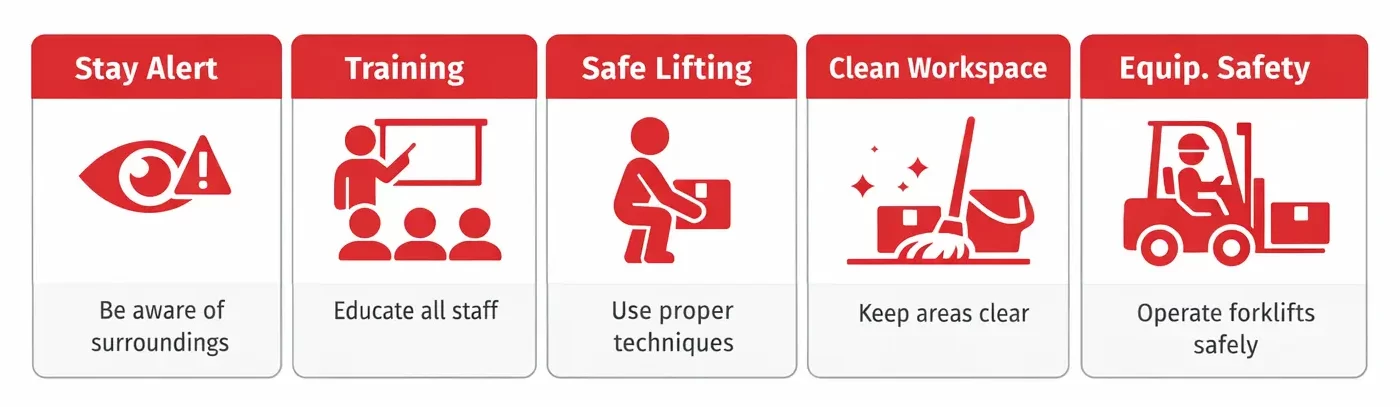
Implementing targeted safety strategies can significantly reduce incidents and operational downtime. Below are five key tips that support long term warehouse safety and compliance.
1. Stay alert to workplace conditions
Encourage all employees to remain attentive to their surroundings, especially in high-traffic or high-risk areas. Being aware of moving equipment, other personnel, and potential hazards helps prevent avoidable accidents and promotes a proactive safety culture.
2. Provide comprehensive training for all staff
Ensure that every worker receives proper training tailored to their specific role, including safety procedures, equipment operation, and emergency response protocols. Well-trained staff are more confident, make fewer errors, and contribute to a safer, more efficient warehouse environment.
3. Practice safe lifting and ergonomic techniques
Prevent strain injuries and long-term physical issues by promoting the correct use of lifting methods and ergonomic principles. This includes using mechanical aids when needed, maintaining proper posture, and avoiding unnecessary repetitive stress.
4. Keep work areas clean and unobstructed
Clear aisles, exits, and walkways of unnecessary materials and debris to reduce tripping hazards and ensure smooth movement throughout the facility. A clean and organized warehouse supports both safety and operational efficiency.
5. Enforce safe operation of forklifts and heavy equipment
Ensure that forklift safety protocols are consistently followed, including speed limits, load limits, and the use of designated travel routes. Only certified operators should handle such machinery to reduce the risk of accidents and equipment damage.
Improving Warehouse Safety with Inventory Management Software
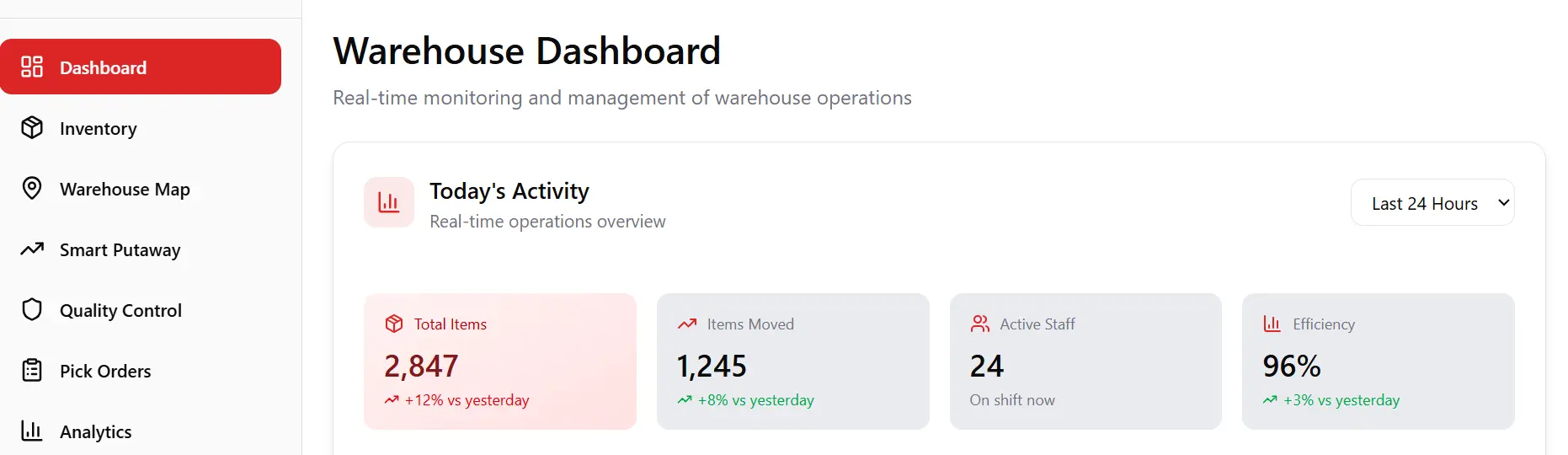
Improving warehouse safety goes beyond procedures. It requires strong visibility, consistent control, and systems that reduce human error. Relying only on manual processes can lead to miscommunication, missed tasks, and delays that increase the risk of accidents and disruptions.
To improve safety and efficiency, businesses can utilize the following capabilities:
-
- RFID-based stock tracking: Automates inventory movement to reduce manual handling errors and improve accuracy
- Warehouse visualization tools: Provide real-time layout visibility to optimize storage and reduce movement risks
- Smart putaway strategies: Ensure items are stored based on capacity and safety considerations
- Quality control systems: Detect defective or unsafe items early to minimize handling risks
- Structured picking workflows: Organize operations to reduce congestion and improve safety in high-traffic areas
For businesses looking to improve warehouse safety and streamline inventory processes, adopting a system with integrated automation and real-time visibility can be a practical next step.

Conclusion
Prioritizing warehouse safety is essential for maintaining efficient, compliant, and resilient operations. By implementing structured practices and proper training, businesses can reduce risks while improving overall productivity.
Integrating the right warehouse systems also enhances visibility and control, helping ensure safer and more efficient daily operations. For businesses looking to strengthen safety and streamline operations, adopting a reliable warehouse management system can be a practical next step.
FAQ Warehouse Safety
-
What are the 5S standards for warehouse?
The methods of 5S – sort, set in order, shine, standardize and sustain – are used to improve and maintain an organized environment.
-
What is WMS in logistics?
WMS meaning: a warehouse management system is software that helps companies manage and control daily warehouse operations, from the moment goods and materials enter a distribution or fulfilment centre until the moment they leave.
-
What is PPE for warehouse?
Safety helmets, safety footwear, high-visibility clothing, hand protection, eye and face protection, and hearing protection are all essential PPE that should be provided to mitigate workplace hazards and prevent injuries.