













A Request for Proposal (RFP) is a document companies use to invite vendors to bid on a project. It lays out the scope, budget, and evaluation criteria so the selection process stays fair and consistent.
Many businesses in the Philippines still deal with slow vendor selection and messy procurement timelines. The RFP process helps by giving everyone a clear, structured way to submit and compare proposals leading to better decisions and fewer surprises.
If you’re still figuring out where RFPs fit in your overall procurement management process, this article will walk you through everything you need to know.
Key Takeaways
|
What is RFP?
Request for Proposal (RFP) is RFPs are commonly used for intricate projects that involve numerous subcontractors. They provide details about the organization requesting the proposal, the project’s scope, and the criteria for evaluating submissions. The RFP also explains the bidding process and outlines the terms of the contract.
The request will typically contain a statement of work outlining the tasks the selected bidder will be responsible for and the project’s timeline. Additionally, RFPs give clear instructions to bidders on how to craft their proposals, including specific formatting and presentation requirements.
How to Run an RFP Process the Right Way
We’ve already briefly explained the Request for Proposal (RFP) definition. But how do you start to use it? We’re going to explain the step-by-step process on how an RFP is usually utilized to give you an overview:
1. Write the RFP
First, you must ensure that your objects’ main aspects are confirmed and finalized. After that, you can finally start to draft your RFQ. Creating an RFP document becomes more straightforward. You need to insert the required information into a suitable request for proposal format. Having a solid purchase order system already in place makes it easier to move from awarded bid to actual procurement without delays.
2. Share the RFP
Distribute your RFP by sending it directly to selected companies, publishing it on your website, sharing it through social media, or posting it on industry-focused platforms. Your chosen method and location will depend on the number of responses you aim for and how much information you’re willing to make public about your project.
3. Receive bids
For larger or more intricate projects, allow extra time for managing responses. Please set up an organized system, such as a spreadsheet or project management platform, to keep track of incoming proposals and assess them efficiently. If a submission lacks essential information, don’t hesitate to ask for clarification.
4. Evaluate bids
Once the submission deadline passes, begin reviewing the proposals using the evaluation criteria outlined in your RFP. It allows you to engage with finalists, ask follow-up questions, and make a more informed decision before awarding the project. This step works best when it’s guided by a clear procurement strategy that defines what good value actually looks like for your organization.
Proposal Requirements and Evaluation Criteria for RFP Respondents

Contractors who respond to an RFP are expected to submit detailed proposals outlining their credentials and the fees associated with their services. Including references is highly recommended, particularly from past collaborations with other EWB chapters, as they help assess the vendor’s reliability.
The RFP should clearly outline the required components that every proposal must address. These elements may include cost structures and payment terms, technical datasheets for key components, timelines for project milestones, execution and build strategies, plans for start-up and testing, references, and potential alternative solutions.
Below are key sections that should be requested within each submitted proposal:
- Overview of the proposal: A concise summary of the offered services and key highlights.
- Company profile and financial stability: Information about the contractor’s background and economic status.
- Experience and client portfolio: List relevant past projects and contact information for references.
- Phased project plan: Step-by-step outline of how the work will be delivered.
- Proposed timeline: Estimated start and completion dates for each phase.
- Pricing structure and payment terms: Full breakdown of estimated costs and how payments will be handled.
- Itemized bid sheet: Detailed list of tasks, cost estimates, and proposed payment method (e.g., fixed price or time-based billing).
The Real Benefits of Running an RFP
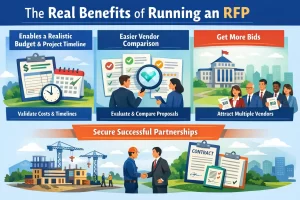
After discussing the requirements of an RFP, you should know that a Request for Proposal (RFP) has its benefits for its proposal process. Here are the benefits of RFP with an explanation:
1. Enables a realistic budget and project timeline
When preparing your RFP, you might already have a rough estimate of your project’s budget and completion timeline. However, collecting proposals from various vendors can provide valuable insights that help validate or refine those initial expectations.
Each vendor brings different approaches, pricing structures, and timelines based on their expertise and available resources. Reviewing these varied proposals, you will better understand the market rate for your needed services.
2. Make it easier to compare vendors
Ensuring every prospective vendor receives identical information and that clearly defined selection criteria allow for an objective comparison. You can assess customized proposals that directly address your project’s requirements. Its approach simplifies the evaluation process and accurately assesses which vendor aligns best with your goals.
3. Get more bids
Government organizations frequently publish RFPs to promote open competition and maintain transparency, ensuring all eligible contractors have an equal opportunity to bid.
Likewise, private companies can benefit from using an RFP by distributing one document to connect with multiple vendors simultaneously. Whether you send it directly to a selected list or post it publicly, an RFP can help you discover high-quality vendors. For project based industries especially, pairing this with a proper construction contract management process ensures the vendor relationship stays on track after the bid is awarded.
Where the RFP Process Usually Goes Wrong
After understanding the benefits of using RFPs, it is also important to realize that this process has several challenges. One of the main obstacles is the time it takes and the complexity of the procedure.
Requests for proposals often require much paperwork and detailed evaluation stages. This overly convoluted process can affect the accuracy of quotes and even make it difficult for some otherwise qualified and competitive vendors to participate in the proposal submission.
In addition, not all vendors responding to the RFP are motivated to provide the most competitive quotes. When the number of bidders is known to the participants, it can influence their strategy, so some vendors choose not to offer their best price immediately.
To overcome these challenges, companies must develop RFPs that are clear, concise, and easy to follow. Leveraging e-procurement systems can significantly enhance the efficiency and transparency of the process, minimizing errors, accelerating timelines, and improving the quality of vendor responses.
Request for Proposal Example
Here are some RFP examples that can guide you in drafting your proposal. These samples can help you understand the structure and content needed to create a clear and effective RFP.
Summary and Background
Bright Start Preschool Philippines is seeking proposals to construct a bike path within its playground area. Since its establishment in 1992, the preschool has served over 20 families as part of our ongoing commitment to promoting student health and wellness. Construction of the bike path is scheduled to begin this June.
This request for proposal (RFP) aims to gather bids specifically for the paving aspect of our playground improvement initiative, located in Quezon City. All proposals must be submitted on or before June 24, 2023.
Guidelines for Bidders
Proposals will be accepted until 5:00 p.m. on June 24, 2023. Bidders must disclose any intention to subcontract parts of the project. All submitted documents must be complete and signed by an authorized representative. Please indicate all pricing in Philippine pesos (PHP). Any additional terms may be discussed after the final selection is made.
Project Purpose and Scope
The bike path project aims to provide preschoolers with a dedicated outdoor space for cycling activities, enhancing their motor skills and encouraging social interaction.
The plan involves building an approximately 200-foot irregular loop, 3 feet wide, using durable asphalt. A 10-by-10-foot asphalt area will also be constructed to serve as a bicycle “parking lot.”
The contractor will handle sod removal, leveling, compaction, and asphalt paving. Bright Start Preschool intends to establish a warranty agreement to address any repair needs within a reasonable period.
Proposal Timeline and Project Deadline
Written proposals must be sent to Bright Start Preschool Philippines before 5:00 p.m. on June 24, 2023. Evaluation will occur from June 25 to June 30, 2023, and all bidders will be notified of the results within three business days after the review period.
Once a contract is awarded, the entire project must be completed within 30 calendar days to ensure the path is operational by the July start of the summer program.
Budget Requirements
Each proposal should include a detailed breakdown of:
- Material costs
- Labor costs
- Overhead or miscellaneous expenses
- Total estimated project cost
Evaluation Criteria
Proposals will be evaluated based on:
- Total cost
- Relevant experience of the contractor
- References from previous clients
- Completeness and professionalism of the proposal
What is the Difference Between an RFP and an RFQ?

Suppose a hardware store is expanding its gardening supplies section and needs suppliers to stock its shelves. In that case, it may send a request for quotation (RFQ) to several potential suppliers of gardening products.
The responses will help the store establish partnerships with suppliers who can provide the required quantity and quality of goods at an agreed-upon price. When a company issues an RFQ, it understands its needs and seeks the best supplier to meet those requirements.
An RFP, however, is a more flexible approach. In this case, the company is looking for qualified contractors to execute a new project. While the project and objectives are detailed, there is room for creative input. For instance, an RFP for a children’s park may allow the contractor to propose the park’s specific layout, equipment, and features.
Conclusion
The RFP process isn’t complicated once you know how it works but skipping steps or rushing through it usually leads to poor vendor matches and wasted time. Getting the structure right from the start makes a real difference in the quality of bids you receive and how smoothly the whole procurement process runs.
That said, managing RFPs manually can get messy, especially when you’re dealing with multiple vendors at once. Knowing which best purchasing software options fit your workflow can save your team a lot of back-and-forth and keep everything in one place.
Frequently Asked Questions
-
What is the request for proposal?
A request for proposal (RFP) is an open request for bids to complete a new project proposed by the company or other organization that issues it. It is meant to open up competition and encourage a variety of alternative proposals that the project’s planners might consider.
-
What is the primary purpose of the RFP?
An RFP is a document that a business, non-profit, or government agency creates to outline the requirements for a specific project. The RFP process helps solicit vendor bids and identify the one best qualified to complete the project. With a good RFP, you can secure offers from different vendors.
-
When should an RFP be used?
Most often, you issue an RFP when you have a new need but do not have the internal resources to meet that need. The RFP can effectively connect with vendors, partners, consultants, or organizations with the resources, skills, and expertise to meet that need.