














Do you feel like your employees are simply clocking in and out? If so, you’re not alone. Many businesses struggled with keeping employees motivated and fully engaged. This leads to missed opportunities and lowered team morale. Employee engagement is the foundation of a resilient business.
But how do you transform disengaged workers into enthusiastic contributors? The answers lie in understanding what engagement truly means and how to improve it. Read on to discover actionable strategies that will create a workplace culture that thrives.
Key Takeaways
|
Table of Contents
What Is Employee Engagement?

Employee engagement means how committed employees are to their work and the business’s success. It shows how much they care about contributing positively to company goals. Engaged employees align their personal goals with their workplace’s vision, creating a lively and productive culture.
Across the globe, engaged teams boost collaboration and spark innovation, leading to exceptional productivity. Creating a workplace where employees feel valued drives collective success in any culture or market.
Why Is Employee Engagement Important?
Engaged employees bring enthusiasm and dedication, leading to higher productivity and better performance. For example, a motivated team in a retail store goes the extra mile to assist customers, creating a welcoming experience. On the flip side, disengaged employees may avoid tasks, which may even result in a high turnover rate.
Imagine a hospitality business where engaged staff ensure guests’ needs are met promptly, encouraging repeat visits. However, disengagement could lead to long wait times, frustrated customers, and dwindling profits, which may even lead to your business being shut down!
Types of Employee Engagement
Employee engagement is about how much employees emotionally commit to their roles and company goals. This defines whether they passionately contribute or just do the bare minimum. Those types are:
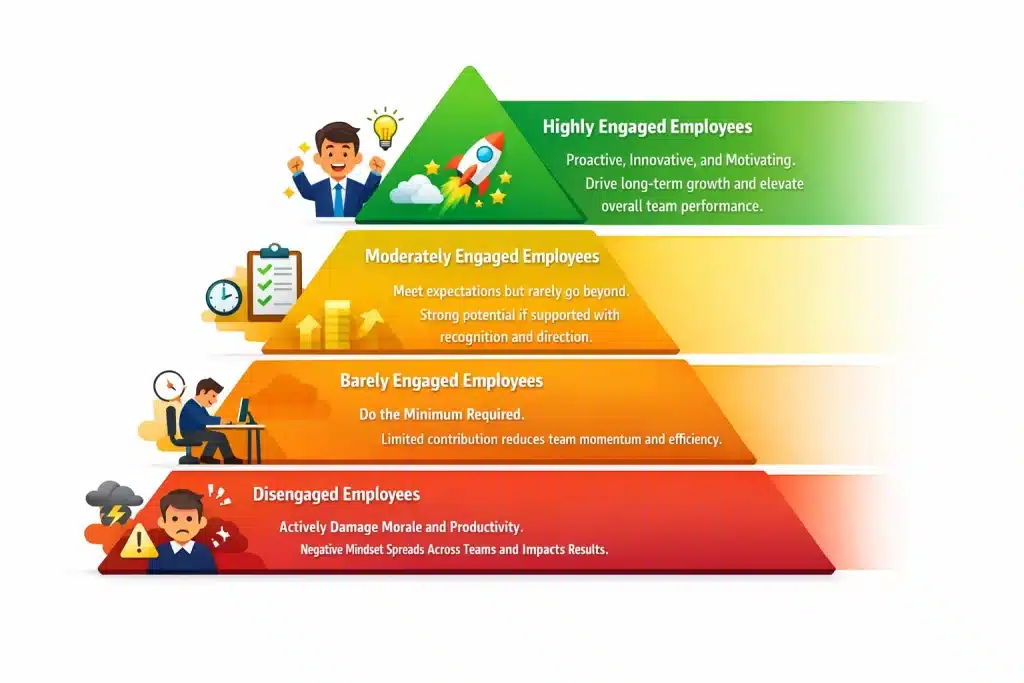
By understanding these types, you can craft tailored strategies to boost engagement at every level. When employees feel valued and motivated, they invest more in their work, which leads to better outcomes for the entire organization. Addressing specific engagement needs ensures a happier, more productive workplace.
How to Measure Engagement Rate
Measuring employee engagement is essential to understanding how your workforce feels and performs. This ensures that businesses can create a work environment where employees thrive. Here are four effective ways to measure employee engagement and turn insights into action:
- Employee Engagement Surveys: These surveys provide a detailed look into workplace dynamics. They cover areas like job satisfaction, team collaboration, and leadership effectiveness. Businesses can uncover deeper insights and target improvements effectively through these surveys.
- Pulse Surveys: These short and frequent surveys are designed to capture real-time employee sentiments. They offer quick snapshots of engagement, making it easier to identify trends and address concerns before they escalate into bigger problems.
- Lifecycle Surveys: These surveys track employee engagement at different stages of their journey with the company. From onboarding to exit interviews, lifecycle surveys help pinpoint engagement highs and lows, offering clarity on what drives retention.
- One-on-One Check-Ins: Regular one-on-one conversations between managers and employees provide a personal touch. They create a space for honest feedback, helping leaders understand individual challenges and motivations better.
By combining these methods, businesses can get a holistic view of employee engagement. This empowers them to create timely, meaningful interventions and maintain a motivated workforce that drives success.
Strategies to Improve Employee Engagement

Improving employee engagement involves creating an environment where employees feel valued, motivated, and connected to their work. Here are practical strategies that businesses can use to enhance engagement effectively:
- Build trust in leadership through transparent communication. Regular updates and open forums encourage collaboration and strengthen employee confidence. When leaders communicate clearly, employees feel more secure and aligned with the company’s direction.
- Encourage employee feedback to foster inclusivity. Providing opportunities for employees to share ideas and concerns allows them to shape workplace improvements. This connection builds trust and makes employees feel their input matters.
- Leverage engagement tools like surveys and analytics platforms to gather insights. Tools that analyze feedback help businesses identify trends, address concerns, and implement targeted improvements. This ensures engagement strategies are based on real data.
- Align engagement initiatives with business goals and employee needs. Flexible work arrangements, recognition programs, and career development opportunities help create a shared sense of purpose. Regularly reviewing and updating these initiatives ensures they remain effective and relevant.
By implementing these strategies, businesses can foster a workplace culture that thrives. When employees feel engaged and motivated, they perform at their best, driving long-term success for the organization.
Challenges in Keeping Employees Engaged
Overcoming employee engagement challenges requires understanding and addressing the most common roadblocks. Here are three of the biggest challenges and how businesses can tackle them:
- The lack of clear objectives undermines engagement efforts. Generic programs that fail to consider workplace dynamics often lead to confusion and wasted resources. Businesses should set specific goals tailored to their unique culture and workforce needs.
- Poor follow-up on feedback erodes trust and motivation. When employees feel their voices are ignored, engagement levels plummet. Companies need to act on feedback promptly and transparently, showing employees that their input drives meaningful changes.
- Ineffective tools and strategies create unnecessary obstacles. Outdated or generic tools fail to provide actionable insights, making it difficult to address engagement issues. Investing in modern, data-driven platforms helps organizations identify trends and implement impactful solutions.
By addressing these challenges with targeted strategies, businesses can create a more connected and motivated workforce. Tailored approaches and consistent follow-through ensure that engagement efforts deliver lasting results.
Common Misconceptions About Employee Engagement
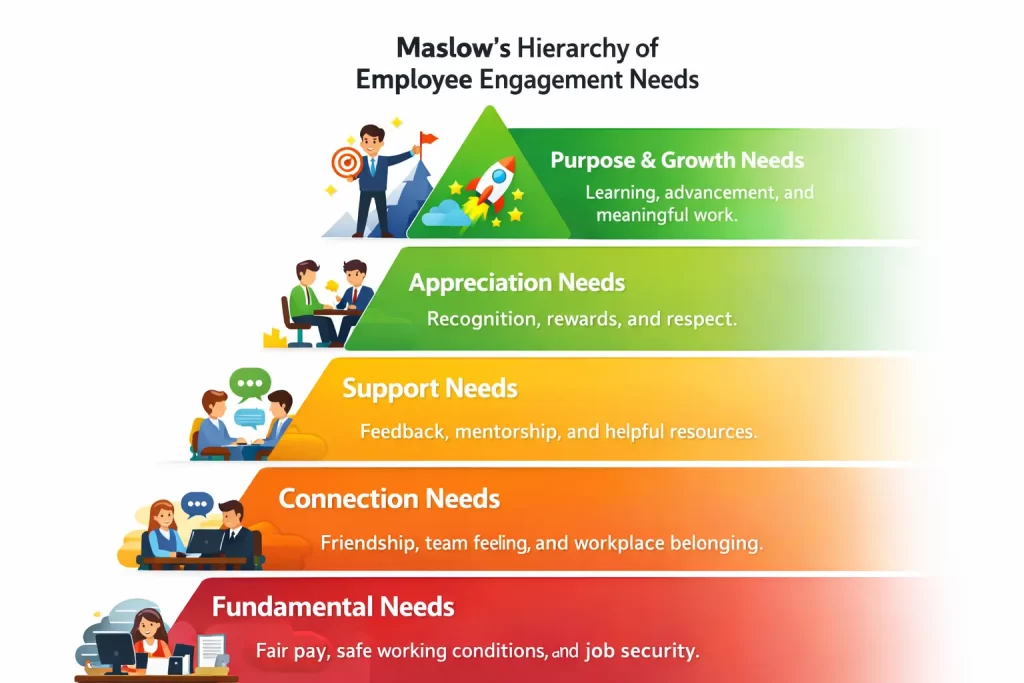
In Maslow’s hierarchy of needs, humans have 5 needs in their life; at the bottom are physiological needs, second are safety needs, third is love and belonging, fourth is esteem, and at the top is self-actualization. Most companies think that by fulfilling their employees’ safety needs and maybe giving them a little bit of love, they would naturally fall in love with their jobs. Yet, that could not be further from the truth.
Without fulfilling their needs for esteem and self-actualization, even the happiest teams can fail to produce useful outcomes. This disconnect often leads to stagnation or missed opportunities, leaving businesses wondering why their efforts to create a cheerful and rich environment don’t yield better results. What they don’t realize is that those hide a person with a lack of purpose.
Employee engagement is not just about keeping employees happy or satisfied; it’s not only about higher salary, bigger office, mandatory team bonding, or even pizzas on Friday. All those things may bring smiles, but true engagement goes deeper. It means employees are emotionally connected to their work, driven by purpose, and aligned with company goals. You have to give meaning to their jobs.
How to Make Work Meaningful

How does one even give meaning to their employee’s work? While it may not be as easy as giving them a Jollibee treat, you can still engage their higher needs through emotional connection. As a leader, you must sincerely design work and the culture surrounding it with a sense of purpose and not just out of some obligation. Purpose does not appear automatically, so here are four methods for making work meaningful:
1. Build real belonging
A lot of companies have joined in the trend of trying to turn their relationship with their employees into one akin to being a family and not something transactional, but in practice, those are just sweet words with not much sincerity behind them. Employees don’t appreciate insincere love, and a contradiction between the company’s attempt at bonding and actual working conditions will only lead them to resent the situation.
To foster real belonging, leaders must include them in actual decision-making that matters, listen to them in meetings with genuine care, and, most importantly, let them speak honestly to show that they truly belong. Essentially, treat them like how actual friends treat each other. Only once you achieve a sense of belonging can you fulfill their higher needs.
2. Connect daily tasks to a bigger mission
Employees often feel like their jobs don’t contribute anything to the world, that every day they do these meaningless tasks just to live. This can quickly turn them into disengaged employees.
To solve this, companies have to create a mythos for the employees, something that gives meaning to the tasks that their employees do. That they have a large impact on the company. Repeat this consistently, not just in meetings but also in everyday actions, so that they can be engaged with their work.
3. Value in recognition rather than outputs
As a society, we often judge others through numerical values, and there is a reason to do so; you can’t run a business without differentiating the workers making 100 outputs vs the workers making only 10. However, many try to encourage their engagement by talking about their economic outputs, which feels impersonal and just makes them feel like they are just tools.
A better attempt at fulfilling their esteem needs is to value them as contributors, not just producers. Recognised their collaborative spirit, clever problem-solving, hard-working sacrifice, and other personal recognitions. Do this enough times, and he will be an enthusiastic, engaged employee.
4. Self-actualization through growth

Conclusion
Employee engagement shows how much employees care about their roles and contribute to the company’s success. Engaged employees align personal goals with organizational objectives, fostering productivity and innovation. Businesses can create strategies that resonate and drive meaningful outcomes by understanding engagement.
Employee engagement can be measured through qualitative and quantitative research methods. Through that research, you can determine the type of employees that you have, which range from disengaged employees, barely engaged employees, moderately engaged employees, and highly engaged employees.
There are several ways to increase employee engagement. A company can build trust, encourage feedback, leverage engagement tools, and align engagement initiatives to both improve engagement and keep them. But the surest way to do it is to understand them on a deeper emotional level and try to fulfil their high needs to keep them truly engaged.
Frequently Asked Questions
-
What are the 5 C’s of employee engagement?
The 5 C’s are: Connect, Career, Clarity, Convey, and Congratulate. These focus on fostering relationships, career growth, clear goals, open communication, and recognition.
-
What is the best description of employee engagement?
Employee engagement is the emotional commitment employees feel toward their organization and its goals. It drives motivation, productivity, and overall workplace satisfaction.
-
What are the 4 Ps of employee engagement?
The 4 Ps are: People, Purpose, Process, and Progress. They highlight the importance of relationships, shared goals, efficient workflows, and measurable growth in engagement efforts.
-
What are the 7 aspects of engagement?
the 7 aspects are: curiosity, responsiveness, anticipation, discovery, persistence, initiation, and investigation.